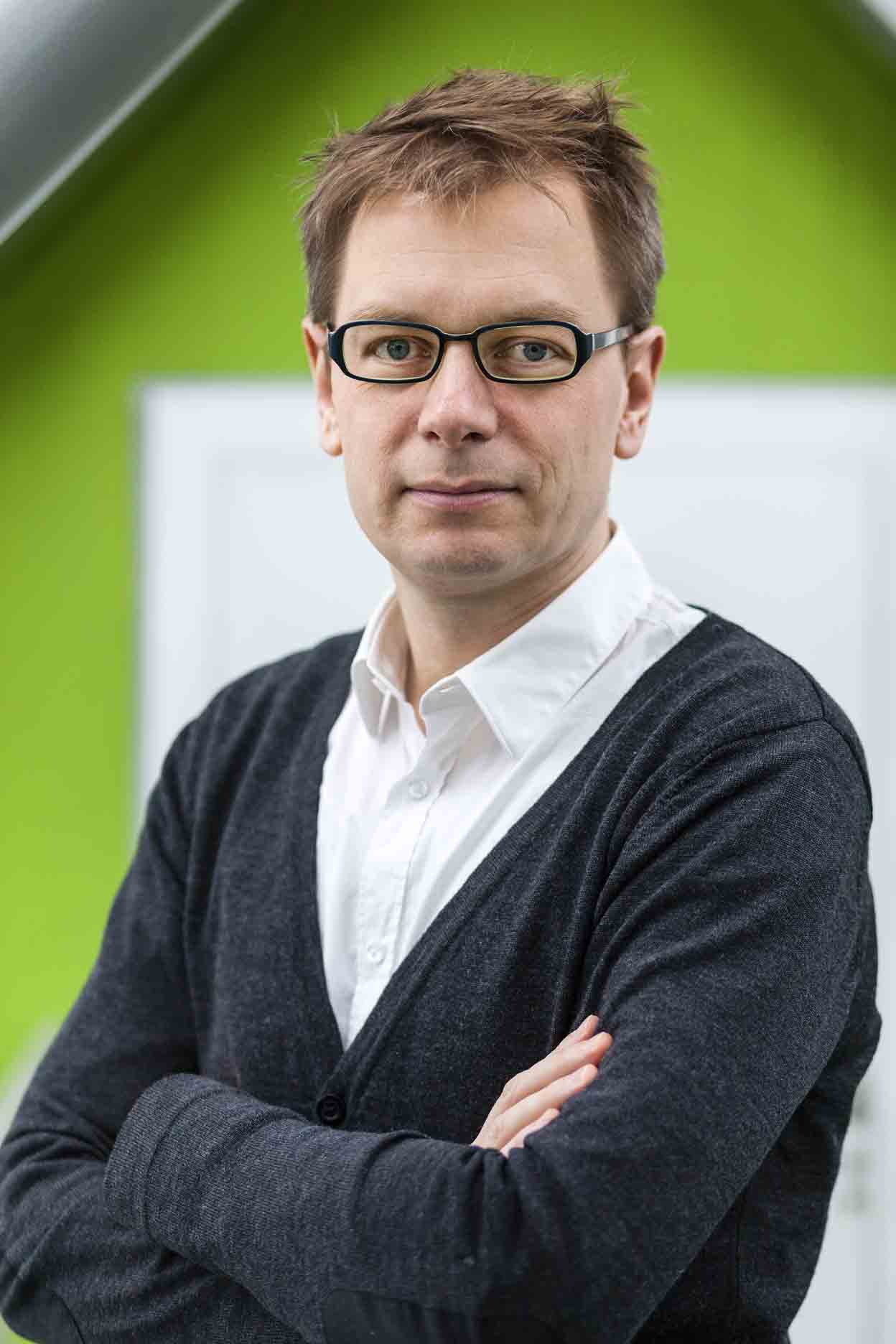
Dr. Yi-Chi Liao is a Lecturer in the Department of Computer Science at ETH Zürich, specializing in intelligent interactive systems. Their research focuses on human-robot interaction, wearable technology, and optimization techniques for user interface design. Key areas include developing datasets for naturalistic handover behaviors with robotic limbs, human-in-the-loop optimization methods, and computational workflows for designing input devices. Research Interests: Explores the intersection of robotics, machine learning, and human-centered design. Recent work emphasizes Bayesian optimization techniques, affordance theory, and tactile feedback systems. Projects like the 3HANDS dataset and ThirdHand wearable robotic arm demonstrate innovation in human augmentation and interaction design. Advising: Supervises doctoral student Peizhuo Li in the D-INFK program. Research outputs span 2015–2025, with notable contributions to haptic interfaces, multi-objective optimization, and wearable computing. Active in conferences and journals addressing HCI, robotics, and design automation.
Dr. Yulia Sandamirskaya is the Head of the Research Center 'Cognitive Computing in Life Sciences' at Zurich University of Applied Sciences (ZHAW), where she leads a research group focused on neuromorphic cognitive architectures for embedded AI systems. Her work integrates neural dynamics with robotic control , spanning real-time tasks such as sensing, planning, decision-making, learning, and motor control for assistive robots. She collaborates extensively with institutions like ETH Zurich and KTH Royal Institute of Technology, utilizing neuromorphic hardware such as dynamic vision sensors (DVS) and robotic platforms. Her research encompasses neuromorphic architectures for obstacle avoidance, path integration, and sequence learning, as well as theoretical frameworks like Dynamic Neural Fields (DNFs) for cognitive modeling. She explores autonomous learning mechanisms, including unsupervised and reinforcement learning, and applies these to robotics in domains such as spatial language grounding and haptic exploration . Her group has published extensively on topics like event-based vision , resonator networks , and hardware implementations of neural algorithms. Dr. Sandamirskaya has supervised multiple MSc theses on neuromorphic systems and robotic applications, with advisees working on projects like UAV obstacle avoidance, tactile object recognition, and neural-dynamic sequence generation. She actively contributes to workshops and conferences, including Science Robotics , CVPR , and IEEE conferences , and her work addresses challenges in low-power, high-speed robotic agents operating in real-world environments.
Christoph Hölscher is a Full Professor and Chair of Cognitive Science at ETH Zurich, Department of Humanities, Social and Political Sciences. He is also an Honorary Senior Research Fellow at University College London’s Bartlett School of Architecture / Space Syntax group and has held visiting positions at UC Santa Barbara. His work bridges cognitive science, architectural design, and human-computer interaction. PhD in Psychology, University of Freiburg (2000) Habilitation in Psychology, University of Freiburg (2009) Project Manager, IT Industry (2000–2003) His research centers on spatial cognition , wayfinding in built environments , and usability in architectural design . He employs methods such as virtual reality, eye-tracking, and behavioral experiments to study how people navigate and interact with complex spaces. His work integrates cognitive psychology with urban planning and architecture to improve building legibility and user experience. The most recent publications reflect a strong interdisciplinary trend, combining cognitive science , urban systems , and virtual environments . Key themes include crowd simulation in emergencies, spatial reference frames in navigation, multi-level wayfinding challenges, and gaze behavior during spatial decisions. These studies often use immersive technologies and space syntax analysis to evaluate architectural configurations. Governing Board, Cognitive Science Society (since 2012) Board of Directors, SFB/TR8 Spatial Cognition (2007–2012) Co-chair, 33rd Annual Conference of the Cognitive Science Society (2011) Co-chair, Spatial Cognition International Conference (2010) Hölscher leads significant research initiatives connecting cognitive science with architectural practice. He has advised on evidence-based design, developed tools for recording spatial behavior (e.g., iPad apps), and promoted the use of personas in architectural design. His lab collaborates across disciplines, involving computer scientists, architects, and psychologists in projects focused on navigation support, spatial learning, and building usability. Future work appears to emphasize real-time spatial behavior analysis, integration of mobile technologies, and cross-modal perception in complex environments.
Prof. Dr. Yulia Sandamirskaya is a faculty member at Zurich University of Applied Sciences (ZHAW) in the School of Life Sciences and Facility Management. She leads the Institute of Computational Life Sciences and is an ORCID-registered researcher with a focus on neuromorphic computing and cognitive systems. Her work bridges computational neuroscience with practical robotics applications. Robotics for dementia care Neuromorphic computing Embodied AI systems Spiking neural networks Industrial force-control systems Human-robot interaction Her recent publications demonstrate expertise in neuromorphic architectures for sensory processing, including visual scene understanding, spectral classification, and real-time control systems. She actively contributes to setting benchmarks in neuromorphic computing and develops practical applications in healthcare robotics. Current projects include RobotCare (service robots for elderly care), Neuromorphic Technology for Embodied AI , and Emerging AI (completed). She collaborates with institutions in Switzerland, UAE, and Italy while working on industrial applications of neuromorphic systems.
Maurizio Caon is a Full Professor and Head of Institute at the Fribourg School of Management (HES-SO), specializing in Human-Computer Interaction and Digital Transformation. His research focuses on health technology interventions for aging populations and adolescents, with a particular emphasis on e-coaching systems, wearable devices, and participatory design. He leads EU-funded projects like NESTORE (2017-2021), developing virtual coaches for older adults' well-being, and PEGASO (2013-2017), targeting adolescent health through gamified mobile platforms. Education: Not explicitly stated in text, but expertise in Ergonomics and Information Systems is implied through research focus. Research Interests: Designing human-centered technologies for health promotion, including tangible interfaces, behavior change models, and cross-cultural co-design. Key areas include aging workforce strategies, digital self-tracking, and ethical data practices. His work bridges HCI, healthcare innovation, and social impact. Publications highlight innovations in e-coach systems (e.g., NESTORE's multi-domain pathway), wearable technology's psychological impact, and VR exergames for seniors. Projects involve partnerships with Politecnico di Milano, EIA HumanTech Institute, and international teams. Grants: Principal investigator and co-investigator on EU H2020 and FP7 grants totaling over 890,000 CHF. Team: Collaborates with researchers like Leonardo Angelini, Elena Mugellini, and Omar Abou Khaled on interdisciplinary projects. Labs/Teams: Leading the NESTORE and PEGASO teams, focusing on digital health solutions for aging and youth populations. Involved in design processes for inclusive public spaces and ergonomic interfaces for cyclists.
Hannes Bleuler is a Professor at École Polytechnique Fédérale de Lausanne (EPFL), affiliated with the School of Engineering and the Laboratory of Robotics Systems (LSRO). His primary email contact is hannes.bleuler@epfl.ch, confirming his active status as a current EPFL member. His research spans multiple disciplines including Robotics, Haptic Interfaces, Mobile Robotics, Field Robotics, Microengineering, and Electrochemistry. Professor Bleuler's work demonstrates strong interdisciplinary connections between mechanical engineering, electrical systems, and human-computer interaction, with particular emphasis on practical applications in medical, industrial, and virtual environments. Analysis of his publication trends shows consistent research activity over two decades, with 206 scholarly works including 32 doctoral theses (suggesting significant student supervision), 45 research articles, and 76 conference papers. His recent work (2020-2023) focuses on advanced haptic feedback systems, energy efficiency in mobile robotics, and novel actuation methods for miniature robotic systems, reflecting ongoing innovation in his field. Professor Bleuler has collaborated extensively with researchers including Rolf Wüthrich, Roger Gassert, Mohamed Bouri, and Francesco Mondada, indicating strong institutional connections within EPFL's robotics community. His research has been published in prestigious venues including Electrochimica Acta, Journal of Micromechanics and Microengineering, and Emerging Trends in Mobile Robotics, demonstrating both theoretical rigor and practical application of his work.
Andreas Sonderegger is a Lecturer at the Department of Psychology , University of Fribourg , and group leader of the Human Factors Lab . His research focuses on Human-Computer Interaction , Usability Engineering , and User Experience (UX) , with particular emphasis on: Web accessibility for diverse user groups Neurofeedback systems for cognitive enhancement Human factors in automated driving Cross-cultural usability testing Physiological computing for user state assessment His recent publications analyze: Neurofeedback applications for tinnitus treatment Human-AI decision-making comparisons Physiological indicators in automated driving Usability of no-code robotics programming He has contributed to journals such as: Computers in Human Behavior Scientific Reports Ergonomics International Journal of Human Computer Studies
Prof. Dr. Sarah Degallier Rochat serves as Head of Humane Digital Transformation at Bern University of Applied Sciences (BFH), where she is a Professor in the Department of Technology and Computer Science. She is affiliated with the Institute for Human Centered Engineering (HuCE) and specifically works within the Laboratory for Computer Perception and Virtual Reality. Her research spans multiple institutional collaborations including the Institute for Data Applications and Security (IDAS) at BFH and partnerships with the University of Fribourg on experimental studies. Professor Degallier Rochat's research focuses on human-robot interaction , collaborative robotics , and humane digital transformation . She challenges the notion of complete human replacement by technology, advocating instead for human augmentation where technology empowers rather than mechanizes workers. Her work examines how humans and robots can work together effectively in industrial settings, with particular emphasis on developing intuitive interfaces for robot programming that promote digital skills acquisition among workers through experiential learning rather than symbolic cognition. Her research has evolved from foundational work in motor primitives for humanoid robots to current applications in industrial settings. She investigates the human factors involved in digital transformation, with special attention to workers with intermediate and lower levels of education who are often overlooked in digital skills training. Her approach emphasizes embodied cognition and work experience as foundations for developing effective human-machine interfaces that leverage existing worker knowledge. Human augmentation through collaborative robotics Intuitive robot programming interfaces (visual programming) Digital skills development for industrial workers Human-centered approaches to digital transformation Ethical considerations in human-robot collaboration Workplace adaptation to new technologies Professor Degallier Rochat has secured funding from diverse sources including Innosuisse, the Gerbert Rüf Foundation, and SNF. With support from the Gerbert Rüf Foundation's First Venture program, she co-founded a spin-off company aimed at making automation profitable for SMEs through employee training. Her research demonstrates significant practical impact, with interface designs tested across 116 participants showing positive effects on programming anxiety and usability. Her laboratory develops practical solutions for human-robot collaboration in manufacturing environments, creating interfaces that workers can use without extensive technical training. Through numerous publications, conference presentations, and media engagements, she actively contributes to the discourse on ethical and human-centered technological development in industry.