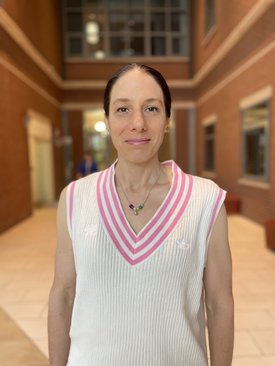
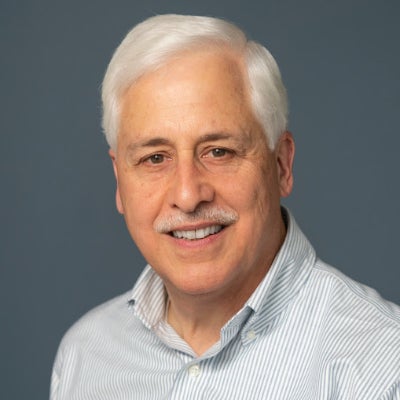
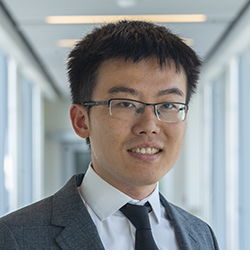
Rachel C. Steinhardt is an Assistant Professor of Chemistry at Syracuse University within the College of Arts and Sciences. Her research focuses on chemical biology and soft polymeric materials , with affiliations in Biochemistry and Biotechnology. She holds a Ph.D. in Organic Chemistry from the University of California, Irvine (2015). Research Interests: Chemical Biology: Designing molecular probes for dopamine/serotonin receptors to study neurodegenerative diseases like Parkinson’s and addiction. Soft Materials: Developing tetherless soft actuators for robotics and mechanobiology, emphasizing dynamic shape changes and 3D structures. Recent Work Trends: Her articles emphasize photochemical control of neuroreceptors (e.g., 5-HT2A, DRD2) and biomechanical systems like soft actuators. Collaborations span immunology (vaccine adjuvants) and nanotechnology (gold nanoparticle actuators). Awards & Grants: NSF CAREER Award (2023–2028): Chemical Tools for Bio-Orthogonal Neuromodulation. h-index: 13 (2023). Teaching & Service: Teaches courses in medicinal chemistry and organic synthesis. Served on search committees for Chemistry and Biology faculty, and reviewed for ACS Chemical Biology and National Science Foundation . Her lab website: https://rcsteinh.expressions.syr.edu/ .
Hugh Durrant-Whyte is a Professor at the University of Sydney and Director of the Centre for Translational Data Science. He holds a BSc (Eng) from the University of London, an MSE, and a PhD from the University of Pennsylvania. Previously, he served as CEO of National ICT Australia (NICTA) and Director of the Australian Centre for Field Robotics (ACFR). His research focuses on robotics, autonomous systems, and data fusion, with over 350 publications and four successful startups. Education: BSc (Eng) in Engineering, University of London MSE in Robotics, University of Pennsylvania PhD in Robotics, University of Pennsylvania Affiliations: Director, Centre for Translational Data Science Former CEO, NICTA (2010-2014) Former Director, ACFR (1995-2010) His research interests span robotics, autonomous systems, and sensor networks. Notable contributions include foundational work on SLAM (Simultaneous Localization and Mapping) and decentralized data fusion. He has pioneered applications in mining automation, autonomous vehicles, and environmental modeling. His work emphasizes practical real-world systems, with projects like autonomous straddle carriers for container terminals and terrain mapping for mining operations. Awards & Honors: NSW Scientist of the Year (2010) Fellow of the Royal Society (FRS), Australian Academy of Science (FAA), and IEEE (FIEEE) Recipient of multiple IEEE Best Paper awards Grants & Labs: Leadership in securing multi-million-dollar grants for robotics and data science initiatives Centre for Translational Data Science: Focuses on translating data science into real-world impact He advises on numerous government and industry projects, bridging academic research with industrial applications. His research teams have developed influential algorithms for autonomous navigation and multi-agent systems.
Prof. Achim Menges is a leading academic and researcher in architecture and computational design at the University of Stuttgart. As Director of the Institute for Computational Design and Construction (ICD), he focuses on interdisciplinary research into sustainable, digitally planned, and robotically manufactured building systems. He is renowned for pioneering projects like the livMatS Pavilion, a biomimetic structure made of robotically wound flax fibers, and for leading the IntCDC Excellence Cluster, Germany's only architecture-focused research consortium. His work integrates computational methods, material innovation, and robotic fabrication to advance resource-efficient and future-proof architectural practices. Research Interests: Menges explores biomimetic design, robotic fabrication, sustainable timber engineering, and circular construction systems. His projects often involve cross-disciplinary collaboration, such as with biologists from the University of Freiburg for the livMatS Pavilion. His methodologies emphasize open-ended experimentation and foundational insights to transform architectural practice. Awards: 2023 Gottfried Wilhelm Leibniz Prize (Germany’s top research honor) Labs/Teams: Institute for Computational Design and Construction (ICD), IntCDC Excellence Cluster Grants/Projects: Leibniz Prize funding ($2.5M), livMatS Pavilion, HYGROSHELL, Terra Incognita His publications span robotic construction workflows, bio-inspired materials, and collaborative human-robot systems, reflecting a commitment to bridging computational design, engineering, and fabrication for scalable, sustainable outcomes.
Fabio Persia is a Professor at the University of Naples Federico II with an extensive publication record spanning 15 years (2009-2025), demonstrating continuous academic engagement. His research portfolio spans multiple institutions through collaborations with over 70 co-authors, most notably Daniela D'Auria (43 publications), Mouzhi Ge (17), and Giovanni Pilato (14). Dr. Persia's research interests focus on the intersection of semantic computing, event processing, and practical applications. His work evolved from foundational contributions to multimedia recommender systems (2013) to developing the ISEQL interval-based surveillance event query language (2016), and most recently to healthcare AI applications. He has pioneered complex event processing frameworks for video surveillance, created multi-agent systems for epilepsy detection (PredictMed-epilepsy), and explored social sensing for personalized routing during the pandemic. His recent work increasingly integrates large language models with healthcare monitoring systems, reflecting current AI trends. Analysis of his publication trends since 2020 reveals a strong healthcare focus (65% of recent work), particularly in patient monitoring architectures, clinical decision support, and medical AI integration. His publications demonstrate consistent methodological rigor across domains, often combining semantic computing with real-time event processing to address practical challenges in healthcare and social computing contexts. Dr. Persia has served as guest editor for six special issues in the International Journal of Semantic Computing (2023-2025) covering Robotic Computing, Transdisciplinary AI, and Multimedia Computing, confirming his leadership in these research communities. His editorial roles complement his extensive publication record, which includes 25 journal articles and 76 conference papers. His collaborative research includes significant projects with Stefania Costantini on patient monitoring systems, with Mouzhi Ge on multimedia recommenders, and with Sven Helmer on interval joins and event detection. While specific grant information isn't detailed in publications, his sustained output suggests successful funding from multiple sources. His current research trajectory indicates growing emphasis on LLM integration in medical contexts and context-aware systems for public health applications.
Stevan Harnad is a Professor of Cognitive Science at UQÀM, McGill University, and the University of Southampton. His research focuses on cognition, consciousness, and the symbolic grounding problem. He serves as Editor of Animal Sentience , a journal exploring sentience across species. Harnad is an advocate for open access publishing, emphasizing equitable scholarly communication. His work bridges cognitive science with interdisciplinary concerns, including AI ethics, animal welfare, and language structure. Key research interests include cognitive architecture, consciousness studies, and the implications of artificial intelligence. He has contributed to debates on open access policies, emphasizing mandates for self-archiving to reduce subscription costs. His interdisciplinary approach integrates neuroscience, philosophy, and linguistics to address foundational questions about mind and language. Recent scholarship explores the ethical dimensions of AI, the neurocognitive basis of categorization, and the latent structures of language. Harnad’s work demonstrates a commitment to both theoretical rigor and practical impact in academic publishing reform.
Roya Haratian serves as Principal Academic (equivalent to Associate Professor) in Electronic Science and Engineering at Bournemouth University's Department of Design and Engineering within the Faculty of Science and Technology. As Deputy Head of Department and Athena SWAN lead, she spearheaded the department's successful Bronze Award in 2021 for gender equality initiatives. Her leadership extends to curriculum development in Mechatronics and Robotics programs across undergraduate and postgraduate levels. Her academic credentials include a BSc (First Class Honours) and MSc (Distinction) in Electrical and Electronic Engineering, followed by a PhD in Electronic Engineering from Queen Mary University of London (2014). Prior to her current role, she worked as an Associate Lecturer at QMUL and Research Associate at Bristol Robotics Lab, focusing on on-body sensing systems and bio-signal processing for human-machine collaboration. Haratian's research centers on electronic engineering applications in human-robot interaction, with particular emphasis on on-body sensing technologies, signal processing, and machine learning. Her work bridges theoretical innovation with industrial implementation, developing assistive technologies for healthcare and safety-critical systems. Recent projects address diabetic foot ulcer prevention, emotion recognition in VR, and human-machine collaboration safety protocols, demonstrating strong translational impact across medical and industrial domains. Analysis of her 15 most recent publications reveals a strategic progression from foundational signal processing techniques toward integrated human-machine systems. Her work increasingly incorporates game theory for resource allocation, AI-driven predictive modeling, and inclusive design principles, with growing emphasis on real-world implementation challenges and ethical considerations in assistive technologies. Key recognitions include: Athena SWAN Bronze Award (Advance HE, 2021) for departmental gender equality leadership Senior Fellowship of Higher Education Academy (2021) BU Doctoral College Outstanding Contribution Award (2025) Design Review Award from Institute of Mechanical Engineering (2023) Student Experience 'You are Brilliant' Award (2017) As Recognised Research Supervisor (UK Council for Graduate Education), she currently co-supervises five PhD students on topics including AI surveillance, biomechatronics, and digital twin simulation. Her £1.2M+ research portfolio features strategic partnerships with Zimmer-Biomet, Computational Mechanics Wessex Institute, and Daido Industrial Bearing, with recent grants including HEIF-funded AI emotion recognition systems (2025) and QR-funded human-machine safety protocols (2024). She actively mentors through AdvanceHE's Aurora program and leads BU's Inclusivity Curriculum Evaluation project. Haratian directs the department's Athena SWAN initiative and collaborates with the Royal Institute on STEM outreach, designing bioelectronic masterclasses for GCSE students. Her public engagement includes 'Café Scientifique' discussions on machine emotion recognition and keynote addresses at Brockenhurst STEM Awards, focusing on translating on-body sensing research into real-world health applications.
László Mérő is a Professor and lecturer in the Department of Affective Psychology at Eötvös Loránd University's Institute of Psychology. His work focuses on the interplay between psychology, game theory, and complex systems, particularly exploring how humans perceive and rationalize rare events, emotions in decision-making, and the boundaries of rational thought. He has also contributed to artificial intelligence research and the philosophical underpinnings of scientific inquiry. His publications often bridge theoretical and applied domains, addressing topics like monetary behavior, social coordination, and cognitive biases. Mérő’s research interests prominently feature the study of 'miracles' as probabilistic anomalies, the evolution of economic systems, and the limits of rationality in both human cognition and AI. He has written extensively on these themes, including books translated into English such as The Logic of Miracles and Moral Calculations . His work integrates empirical psychology with mathematical models to explain phenomena ranging from emotional impulses to collective social behaviors. No scientific awards are explicitly mentioned in the provided texts. While no advising or grant details are available, his publications suggest a focus on interdisciplinary research at the intersection of psychology, philosophy, and computational sciences. His institutional affiliation includes the Institute of Psychology, where he maintains an office at Izabella u. 46, Budapest, and can be reached via email and listed phone number.
Shiwen Mao is a Professor and Earle C. Williams Eminent Scholar Chair at Auburn University's Department of Electrical and Computer Engineering. He serves as Director of the Wireless Engineering Research and Education Center. His education includes a Ph.D. in Electrical Engineering from Polytechnic University, M.S. in Systems Engineering, and dual B.E. degrees in Electronic Engineering and Enterprise Management from Tsinghua University. Research interests span wireless networks, multimedia communications, RF sensing for healthcare IoT, smart grid systems, and machine learning applications. Mao's work focuses on transforming edge intelligence, 6G systems, drone localization, and AI integration for next-generation networks. Recent publications demonstrate strong trends in AI-driven wireless communications, satellite-terrestrial networks, cybersecurity applications of large language models, and generative AI for wireless sensing. Awards and Honors: IEEE Communications Society's Best Paper Award (2021) IEEE Jack Neubauer Memorial Award (2020) Multiple National Science Foundation grants including a $300K award for 6G systems research Best Paper and Best Demo awards from IEEE conferences As Director of the Wireless Engineering Research and Education Center, Mao leads collaborative research involving over 20 faculty members addressing real-world communication challenges. The center develops solutions integrating drone technology, millimeter wave communications, and AI for future wireless systems.
Oliver Kutz is a Full Professor at the Faculty of Engineering, Free University of Bozen-Bolzano, Italy, leading the KRDB Research Centre for Knowledge-based Artificial Intelligence. His roles include Director of KRDB (2022–2024) and President of the International Association for Ontology and its Applications (IAOA) since 2023. He holds Italian habilitations for Full Professor in Informatics (01/B1) and Information Systems (09/H1), and Associate Professor roles in Philosophy of Science (11/C2) and Mathematical Logic (01/A1). Education: PhD (2005) from University of Liverpool, M.Sc. (2000) from Humboldt University Berlin, studies in Architecture, Mathematics, Philosophy, and Cognitive Science across multiple institutions. Research focuses on computational/philosophical logic, cognitive AI, computational creativity, and applied ontology. Organized major conferences: General Chair of FOIS 2018, EKAW 2020/22, ICCC 2022; Program Chair of DL 2023 and FOIS 2014. Editorial roles: Applied Ontology journal and CEUR Workshop Proceedings. Awards include the BCS Distinguished Dissertation Finalist (2005) and the inaugural Best of JOWO Award (2024). Labs/Teams: KRDB Research Centre, leading ontology and computational creativity projects. Active in standardization (OMG OntoIOp) and EU projects like COINVENT.
Richard J. Vaccaro is a Professor in the Department of Electrical, Computer and Biomedical Engineering at the University of Rhode Island. His research focuses on subspace estimation in sensor array signal processing, statistical modeling of inertial sensors, and control system design. Education : Ph.D., Electrical Engineering, Princeton University, 1983 M.S., Electrical Engineering, Drexel University, 1979 B.S., Electrical Engineering, Drexel University, 1979 Research Interests include array signal processing, direction-of-arrival (DOA) estimation, inertial sensor modeling, and control theory. His work explores subspace perturbation expansions, sensor fusion for drift reduction, and robust underwater acoustic localization. Recent Publications highlight advancements in subspace-based parameter estimation, optimal sensor array design, and geometric approaches to signal processing. Key trends involve applications in radar, underwater acoustics, and mobile robotics. Grants include collaborations with MIT (2023) and funding from the Office of Naval Research (2021). His patented technologies address sensor array calibration and noise reduction in inertial measurement units.
Silvia Tolu is an Associate Professor at the Technical University of Denmark's Department of Electrical and Photonics Engineering, specializing in Neurorobotics. She leads the NeuroRobotics Technology Lab (NRT-LAB), focusing on bio-mimetic control architectures for compliant robotic systems. Her research integrates neuroscience, computer science, and biology to develop solutions for assistive robotics and neurodegenerative disease diagnosis. Her research interests span: Neuro-robotics and neuromorphic engineering Bio-inspired control systems and adaptive motor control Machine learning for robotic applications Human-robot compliant interaction Cerebellar control models Publications primarily focus on neurorobotics, bio-inspired control, and human-robot interaction, with recent advances in learning-based control systems for soft robots and aerial manipulation. Awards include the AEG Elektrofonden Research Grant and funding for human-robot interaction safety research. Current projects include LOCOPD (Lundbeck Foundation), AEROTRAIN (EU Marie Curie ITN), and compliant human-robot interaction systems. She supervises multiple PhD students in neurorobotics and maintains international collaborations across Europe and Asia. Laboratory resources include advanced robotic platforms for musculoskeletal and soft robot control.
Pernille Hemmer is a Professor in the Department of Cognitive Psychology at Rutgers University. She joined the faculty in 2012 after completing a postdoctoral fellowship at Syracuse University and earning her Ph.D. from the University of California, Irvine's Department of Cognitive Science. Her research focuses on memory systems, decision-making in naturalistic environments, and Bayesian models of cognition. She leads the CCM Lab (https://sites.rutgers.edu/ccm-lab/), investigating how prior knowledge integrates with episodic memory and influences cognitive processes. Key research interests include: Episodic and semantic memory integration Optimal use of prior knowledge in cognitive tasks Bayesian analysis of individual differences in rational models Belief systems and agency perception Her work spans experimental psychology, computational modeling, and interdisciplinary approaches. Notable contributions include developing generalized Bayesian models of reconstructive memory and frameworks for understanding belief dynamics. Recent research explores socially cognizant robotics and counterintuitive concepts across domains. Awards: Higher-Level Cognition Modeling Prize (2008) Her National Science Foundation CAREER grant (2015) supports applications of Bayesian inference to memory and decision-making. Current projects examine temporal binding mechanisms and the memorability of supernatural concepts through novel methodological tools.
Ana Isabel Pinheiro Nunes Pereira serves as Professor in the Department of Mathematics at Polytechnic Institute of Bragança, where she also holds the position of vice-coordinator for the Research Centre in Digitalization and Intelligent Robotics (CeDRI). She maintains dual institutional affiliations as a research member at Minho University's Algorithm Research Centre and represents Portugal in the European Consortium of Mathematics in Industry. Her academic foundation includes a PhD in Numerical Optimization from Minho University (2006), establishing her expertise in computational mathematics. This background directly informs her current research trajectory. Professor Pereira's research program centers on Optimization and Robotics , with expanding applications in Data Analytics and Precision Agriculture . Her methodology integrates Machine Learning for biosensor enhancement and Computer Vision for agricultural disease detection, while maintaining strong commitments to innovative teaching tools in mathematical education. This interdisciplinary approach bridges theoretical computation with industrial problem-solving through her ECMI role. Recent publications demonstrate a clear trend toward sustainability-focused applications, particularly in agricultural technology (olive/vineyard systems) and medical device optimization. Her work consistently applies multi-objective clustering and predictive modeling to translate complex data into actionable solutions for healthcare and farming industries. With over thirty research projects completed, her grant portfolio emphasizes robotics implementation , optimization frameworks , and educational innovation . She has supervised 62 students across master's and doctoral programs, fostering next-generation expertise in computational mathematics. Her leadership at CeDRI drives the institute's strategic focus on digital transformation, while her Algorithm Research Centre membership enables cross-institutional collaboration on industrial mathematics challenges. These roles position her at the forefront of applied computational research in Portugal.
Huaxia Wang is an Assistant Professor in the Department of Electrical & Computer Engineering at Rowan University, part of the Henry M. Rowan College of Engineering. He holds a Ph.D. in Electrical Engineering from Stevens Institute of Technology (2018) and previously served as an Assistant Professor at Oklahoma State University (2020–2023). His research focuses on deep reinforcement learning, adversarial networks, meta-learning, graph neural networks, robotic control, and wireless communications. Education: Ph.D., Electrical Engineering, Stevens Institute of Technology (2018) M.S., Electrical Engineering, Stevens Institute of Technology (2014) B.S., Information Engineering, Southeast University, China (2012) Research interests include distributed control in wireless communications, robotic arm control in virtual environments, and multimodal learning for visual inspection. Recent work emphasizes applications in healthcare (e.g., lung ultrasound scoring) and infrastructure monitoring (e.g., concrete defect classification). Scientific Awards: Charles Kao Best Paper Award (2024) Grants/Projects: $100K from AeroDefense (2025–2026) $500K from the Department of Energy (2023–2025) $250K from the Institute for Advanced Engineering, Korea (2022–2027) His work integrates AI-driven solutions for robotics, communications, and healthcare, with a focus on practical applications such as remote robotic control and robust signal processing.
Dr. Sham'ah Md-Yunus is a Professor in the Department of Curriculum and Instruction at Eastern Illinois University (EIU), with dual roles in Teaching, Learning, and Foundations. Her office is located in Buzzard Hall (Room 2203), and she can be reached at smdyunus@eiu.edu. She joined EIU in 2005 after earning her PhD in Elementary Education from Indiana State University. Her research focuses on early childhood education, particularly the care and education of immigrant children and families. She employs frameworks like culturally sensitive care, developmentally appropriate practice, and the Critical 'Immigration' theoretical framework (rooted in Positioning Theory and the Model Minority concept) to inform policy and practice. Key areas include Asian American student experiences, immigrant family dynamics, and Montessori education outcomes in Taiwan. Dr. Md-Yunus is active in professional organizations such as WIDA, the American Educational Research Association (AERA), and the National Association for the Education of Young Children (NAEYC). She teaches courses like EDU 5050: Seminar in Educational Research and ELE 5310: Foundations of ESL/Bilingual Education , and supervises 11 research projects. Her work bridges theoretical insights with practical implications for educators and policymakers.