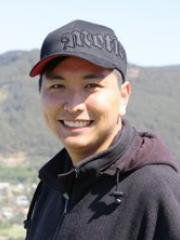
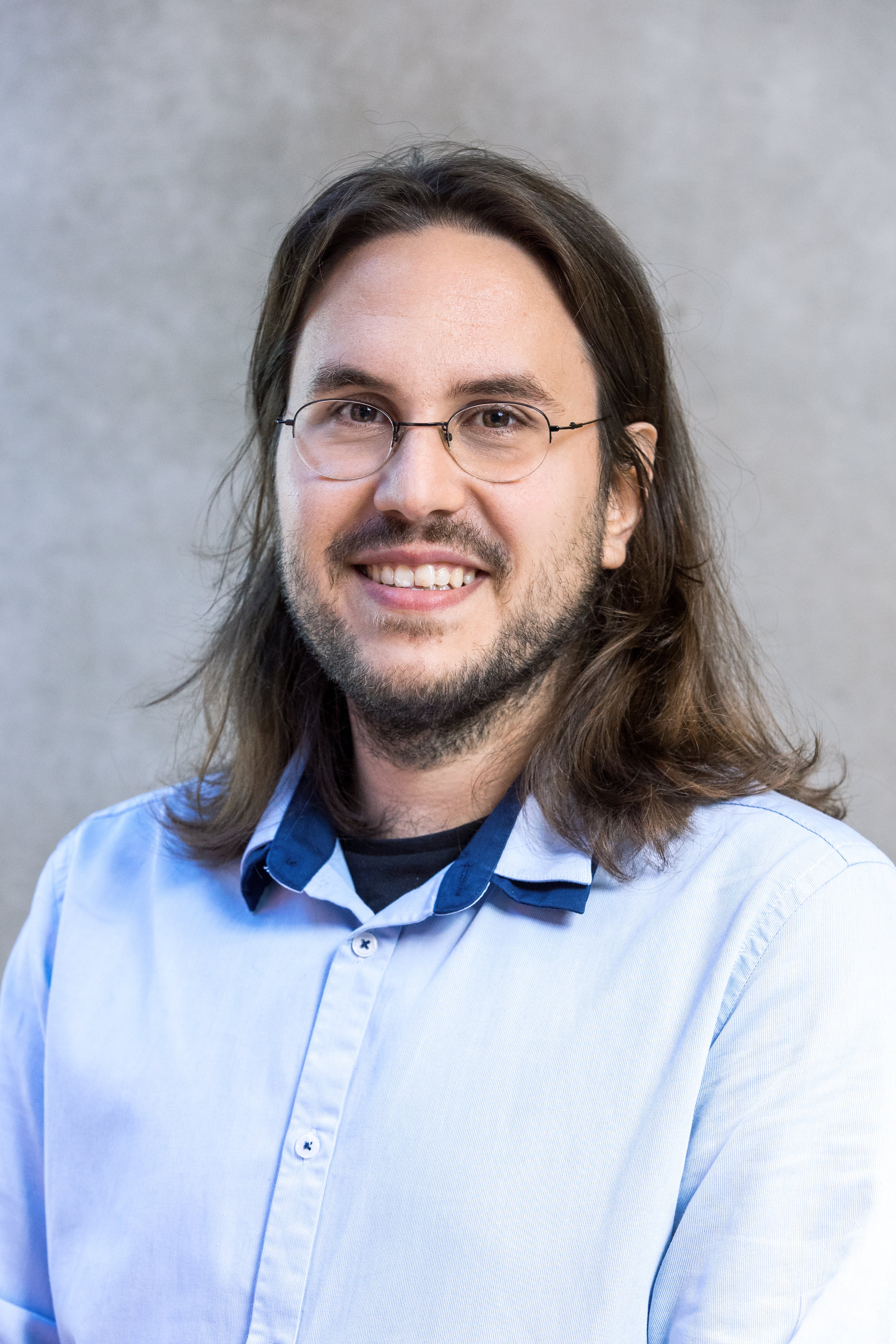
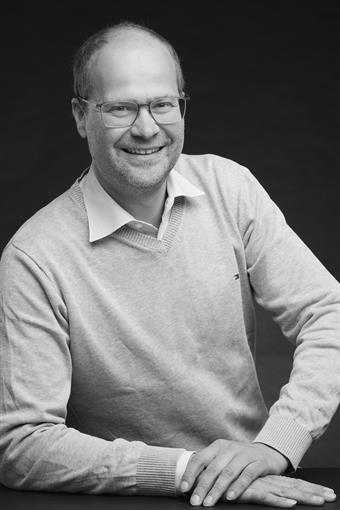
M.Sc. Maximilian Mühlbauer is a researcher at the Chair of Sensor-Based Robot Systems and Intelligent Assistance Systems at Technische Universität München (TUM), part of the Faculty of Computer Science. His work focuses on robotics, artificial intelligence, and space robotics, particularly in areas like in-orbit manufacturing, virtual fixtures, and human-robot interaction. He contributes to projects such as the ACOR initiative and the AI-In-Orbit-Factory, exploring fault-tolerant processes and adaptive robotic systems for space applications. Research Interests: Maximilian’s research emphasizes AI-driven robotics , space robotics , and control systems . He develops methodologies for virtual fixtures , reconfigurable robotic systems , and teleoperation with shared control . His work integrates probabilistic models and machine learning for resilient systems in challenging environments like space. Publications: His recent work spans topics from in-orbit manufacturing and force-sensitive space manipulators to multi-modal haptic teleoperation , reflecting a focus on practical robotic applications in aerospace and industry. Grants/Advising: Maximilian oversees available theses on topics like mixture of experts fixture learning and virtual fixture adaptation , inviting collaboration on AI-driven robotics projects. He collaborates with Prof. Alin Albu-Schäffer and contributes to TUM’s research initiatives in autonomous systems. Labs: He is part of the Sensor-Based Robot Systems lab, advancing robotics for human-centric and space-oriented applications.
Dr. Yelda Turkan is an Associate Professor in the School of Civil and Construction Engineering at Oregon State University, where she leads research in automation, computer vision, and machine learning for sustainable infrastructure. She holds a PhD from the University of Waterloo and dual BS degrees in Civil Engineering and Geomatics Engineering from Istanbul Technical University. Her work focuses on leveraging lidar, digital twins, and BIM to improve construction operations and decision-making in the built environment. She has secured over $4M in grants from NSF, FHWA, and other agencies, and currently leads the NSF Convergence Accelerator-funded 'Deep Reality' project for AI-driven infrastructure management. Education: Ph.D., Civil Engineering, University of Waterloo, 2012 M.S., Engineering Informatics & Remote Sensing, Istanbul Technical University, 2006 B.S., Civil Engineering (double major in Geomatics Engineering), Istanbul Technical University, 2005/2003 Professional Roles: Vice President, International Association for Automation and Robotics in Construction (IAARC) Chair, ASCE Computing Division Education Committee Associate Editor, ASCE OPEN Journal Her research emphasizes automation in construction quality control, infrastructure inspection via drones and lidar, and immersive education tools using VR/AR. Recent projects include automated curb ramp compliance analysis, wildfire impact modeling, and digital twin development for timber structures. She has published over 80 peer-reviewed articles and actively promotes computing integration in civil engineering education and professional practice.
Abhinav Shrivastava is an Associate Professor in the Department of Computer Science at University of Maryland, College Park, with a joint appointment in the Institute of Advanced Computer Studies (UMIACS). Previously, he served as an Assistant Professor at the same institution from August 2018 to June 2024, and spent one year as a Visiting Research Scientist at Google Research from September 2017 to August 2018. His educational background includes: PhD in Robotics and Artificial Intelligence from Carnegie Mellon University (2017), advised by Abhinav Gupta, with thesis titled 'Discovering and Leveraging Visual Structure for Large-scale Recognition' MS in Artificial Intelligence from Carnegie Mellon University (2011), supervised by Alyosha Efros and Martial Hebert BTech in Computer Science and Engineering from Jaypee Institute of Information Technology (2010) Professor Shrivastava's research focuses on computer vision and machine learning, with particular expertise in object detection, image recognition, and neural representations. His work bridges theoretical advances with practical applications, exploring how visual systems can discover and leverage structure in large-scale recognition problems. He has made significant contributions to understanding the role of supervision in vision transformers, developing novel approaches for object-state composition recognition, and creating efficient neural representations for videos and 3D scenes. His research often addresses fundamental challenges in visual recognition, including handling novelty in open-world environments and improving the efficiency of visual systems. An analysis of his recent publications reveals a strong emphasis on neural representations, particularly for dynamic content like videos and 3D scenes. His work demonstrates increasing sophistication in handling open-world vision problems, with research spanning object discovery, localization, and representation learning. The publications show a clear progression toward more efficient and scalable models, with recent work focusing on model compression, sparse representations, and addressing the challenges of working with limited annotations. His scientific contributions have been recognized with several prestigious awards: Best Paper Award (Applications) at IEEE Winter Conference on Applications of Computer Vision (2020) Microsoft Research PhD Fellowship (2014-2016) Best Student Paper Award at IEEE Winter Conference on Applications of Computer Vision (2014) Outstanding Reviewer Award at IEEE CVPR (2015) Professor Shrivastava has successfully mentored numerous graduate students, many of whom have become prominent researchers in computer vision. His Amazon Research Awards (2020 and 2023) have supported innovative projects including 'The pursuit of knowledge: discovering and localizing new concepts using dual memory' and 'Audio-conditioned Diffusion Models for Generating Lip-synchronized Videos.' He has served as Area Chair for major conferences including ICCV, CVPR, and AAAI, demonstrating his leadership in the computer vision community. His research has attracted significant funding from both academic and industry sources, supporting his exploration of fundamental questions in visual recognition and representation learning.
Chao Liu is a Research Scientist at CNRS (French National Center for Scientific Research) since 2008, affiliated with the DEXTER team and the Department of Robotics, LIRMM at University of Montpellier, France. He earned his Ph.D. in Electrical & Electronic Engineering from Nanyang Technological University, Singapore (2006). Current research focuses on surgical robotics , haptics , teleoperation , and nonlinear control theory with applications in computer vision. His work addresses challenges in robotic-assisted telesurgery, including: Stable and transparent human-robot interaction through wave variable compensators and passivity filters Physiological motion compensation using spatio-temporal LSTM and dual Kalman filters EMG-based motion recognition for surgical skill assessment 3D soft-tissue reconstruction with stereo-endoscopes and deep learning Dr. Liu leads European and French projects like: TS2RT (CNRS-funded): Safer teleoperation with motion compensation ROBACUS (ANR-funded): Needle positioning with MPC control HaTUMoCo (CNRS-funded): Haptic teleoperation with uncertainty handling ARAKNES (EU-funded): Microrobotic systems for endoluminal surgery Scientific honors include Senior Member of IEEE and Member of Sigma Xi . He supervises Ph.D. and Master's students working on topics such as concentric tube robot optimization, haptic teleoperation, and EMG-based force estimation. Dr. Liu serves on IEEE Technical Committees for Telerobotics and Haptics , and as Technical Editor of IEEE/ASME Transactions on Mechatronics.
Dr. Ludovic Rapp is a Senior Research Fellow at the Research School of Physics , Australian National University (ANU) , and leads the High-Power Laser group at the Laser Physics Centre (LPC) . His expertise spans ultrafast laser interaction with matter , beam shaping , and laser-induced microexplosions for synthesizing super-dense material phases , including novel silicon allotropes. He is also the Laser Safety Officer for the Research School of Physics.
Professor Marios C. Angelides is a full-time faculty member at Brunel University London , serving as Professor of Computing and Divisional Lead within the College of Engineering, Design and Physical Sciences . He leads the Creative Computing Research Group under the Institute of Digital Futures and contributes to the Digital Media department at Brunel Design School. BSc (First Class Honours) and PhD in Computing from the London School of Economics (LSE) Chartered Engineer (CEng) and Chartered Fellow of the British Computer Society (FBCS CITP) His research focuses on Creative Computing , specifically applying Machine Learning , Serious Gaming , and Cognitive Modeling to develop Smart IoT Applications . His work spans autonomous drone fleets for environmental monitoring, cybersecurity middleware for Android systems, wearable technology for lifestyle recommendations, and historical analysis of Alan Turing’s legacy in modern AI. Recent publications highlight trends in deploying Machine Learning for: IoT systems optimization Autonomous aerial/underwater vehicle coordination Deepfake detection using Turing’s Imitation Game Energy allocation in CubeSats via gaming mechanics Scientific recognition includes being Deputy Editor of The Computer Journal and runner-up for the 2016 Oxford University Press Wilkes Award . He has supervised PhD students in topics like Smart Android Middleware for Cybersecurity and Wearable Recommendation Systems , with active involvement in editorial boards and international conferences.
Garrett Warnell is a Visiting Researcher in the Department of Computer Science at The University of Texas at Austin, specializing in artificial intelligence, computer vision, and robotics with applications in autonomous navigation systems. Education: PhD in Electrical Engineering, University of Maryland Master's in Electrical Engineering, University of Maryland B.S. in Computer Engineering, Michigan State University Research Interests: Dr. Warnell's work focuses on machine learning for robotic control , computer vision for scene understanding , and autonomous navigation in challenging environments . His contributions span imitation learning with limited demonstrations, preference-aware path planning, and off-road mobility. Recent research integrates vision-language models and transformer architectures for social navigation and terrain adaptation, emphasizing human-robot collaboration and robustness in constrained spaces. Publication Trends: Analysis of Dr. Warnell's 2023-2025 publications reveals dominant themes in off-road navigation robustness, with emphasis on particle filtering, diffusion models, and transformer networks for geo-localization and terrain adaptation. A significant trend involves human preference alignment through extrapolation techniques and open-vocabulary models for costmap generation, reflecting growing integration of natural language understanding in robotic systems. Scientific Awards: No awards specified in available documentation. Advising and Grants: Public records indicate no listed advisees or grant funding details. Labs and Teams: Affiliated with UT Austin's Computer Science Department, though specific research group affiliations remain undocumented in provided materials.
Gedas Bertasius is an Assistant Professor in the Department of Computer Science at the University of North Carolina at Chapel Hill. Previously, he served as a postdoctoral researcher at Meta AI (Facebook AI) and earned his PhD in Computer Science from the University of Pennsylvania. His academic journey began with a bachelor’s degree in Computer Science from Dartmouth College. Dr. Bertasius specializes in computer vision and machine learning with specific interests in: Video understanding First-person vision (egocentric vision) Human behavior modeling Multimodal deep learning Transfer learning Computer vision for sports analytics Video+robotics integration His research produces practical frameworks like Video ReCap for hierarchical captioning of long videos, SiLVR for language-based video reasoning, and BASKET for fine-grained skill estimation. He focuses on developing models that can process videos across multiple temporal granularities while maintaining computational efficiency. Key research themes in his work include: Recursive video processing architectures Space-time attention mechanisms Generative video modeling LLM integration with vision systems 3D-aware representation learning Continual learning for video QA He has received notable recognition, including: CVPR 2024 Egocentric Vision (EgoVis) Distinguished Paper Award CVPR 2020 Best Paper Award Nomination First Place at CVPR 2025 Multi-Discipline Lecture Understanding Workshop Dr. Bertasius collaborates with prominent researchers like Mohit Bansal and Lorenzo Torresani . His recent publications demonstrate expertise in advancing video-language models, with applications in semantic alignment, temporal grounding, and cross-modal reasoning. For detailed information about his research, publications, and ongoing projects, please visit his official website .
Amy Vaughan Van Hecke serves as Assistant Chair and Professor in Marquette University's Department of Psychology, leading research on autism spectrum disorder (ASD) and social development across the lifespan using neuroimaging and psychophysiological methods. She directs community initiatives to improve autism services access for underserved Milwaukee populations through the Next Step Clinic. Her academic foundation includes: B.A. in Psychology from Smith College Ph.D. in Developmental Psychology from the University of Miami Dr. Van Hecke's research centers on brain activity, heart rate regulation, and social behavior in individuals with and without ASD, utilizing high-density EEG and MRI to examine neural responses to interventions like PEERS ® . Current projects investigate pandemic impacts on social interaction in autistic adults and neural mechanisms of social isolation remediation. Her work bridges laboratory neuroscience with community-based clinical applications. Publication analysis reveals consistent focus on intervention efficacy (particularly PEERS ® ), neural plasticity measurement, and comorbid conditions across developmental stages. Recent work emphasizes gender-specific outcomes, family impacts, and pandemic-related mental health, demonstrating methodological diversity from EEG asymmetry to community-based participatory research. Her distinguished scientific recognition includes: Kirschstein National Research Service Award (NRSA) from the National Institute of Mental Health Dr. Van Hecke mentors students through her Marquette Autism Project lab and the Next Step Clinic training program while securing major grants from Marquette University, Johnson Controls Foundation, and the Greater Milwaukee Funders’ Collaborative. She teaches undergraduate/graduate courses in developmental psychology and statistics. Advising: Clinical psychology graduate mentorship (excluding 2025 intake); undergraduate research supervision Grants: $500k+ secured for Next Step Clinic serving underserved Milwaukee children She co-directs the Marquette Interdisciplinary Autism Initiative and the Next Step Clinic, which employs a Family Navigation model in Milwaukee's Metcalfe Park neighborhood to provide autism screening, diagnosis, and therapy for children aged 15 months-10 years facing systemic barriers to care.
Prof. Dr. Wolfgang Nejdl is a Professor at the Institute for Data Science within the Faculty of Electrical Engineering and Computer Science at Leibniz University Hannover. He serves as Executive Director of the L3S Research Centre and Leibniz Forschungszentrum Inclusive Citizenship. Web Science Information Retrieval Artificial Intelligence Deep Learning His recent research focuses on AI applications in medicine , multimodal data fusion , and ethical AI systems . Projects include CAIMed (AI in Causal Medicine) and DAISEC (AI & Cybersecurity). His publications span conferences like AAMAS, WWW, and SIGIR. Notable awards include membership in the National Academy of Science and Engineering (acatech) . Former students hold positions at institutions like Stanford, TU Dresden, and ETH Zürich. Current projects involve climate resilience AI , federated learning for healthcare , and quantum-inspired data science .
Dr. Alan Huang is a Senior Lecturer at the School of Mathematics and Physics, University of Queensland. He holds a PhD in Statistics from the University of Chicago (McCormick Fellowship) and an Honours degree in Science (Advanced Mathematics) from the University of Sydney. His academic career includes lecturing roles at the University of Wisconsin-Madison and the University of Technology Sydney before joining UQ. Research Focus: Biostatistics, nonparametric methods, and statistical modeling for dispersed counts. Key Projects: Bayesian methods for agricultural data, trend analysis of pesticide concentrations in the Great Barrier Reef, spectral water quality analysis. Article Trends: His work spans generalized linear models, count data analysis, and environmental statistics, with recent emphasis on Conway-Maxwell-Poisson regression and time-series modeling. Collaborations include environmental science applications. Awards: McCormick Fellowship (University of Chicago). Supervision: Currently advising PhD research on count data methods. Past supervision includes topics in geotechnical uncertainty and rock mechanics. Collaborates with Queensland Department of Environment and Science on water quality projects.
Sebastijan Dumancic is an Assistant Professor at Delft University of Technology, focusing on neuro-symbolic AI through program synthesis and probabilistic programming. He leads the RAIL lab and collaborates with institutions like Harvard, MIT, and CNRS. His research bridges symbolic AI and machine learning, applying program synthesis to scientific discovery, transportation, and robotics. He holds an FWO-funded PhD from KU Leuven and has participated in initiatives like ELLIS and the Symbolic Computation and Machine Learning Initiative. Program synthesis Probabilistic programming Neuro-symbolic AI Constraint-based learning His recent articles highlight advancements in program synthesis, neuro-symbolic integration, and constraint satisfaction. Projects like Find2Fix and Intelligent Greenhouse Horticulture (funded by NWO) demonstrate practical applications. ELLIS Membership University Teaching Qualification He supervises numerous MSc and PhD students in projects involving logic programming, program synthesis, and probabilistic modeling. Active in workshops and symposia, he contributes to neuro-symbolic AI and scientific discovery.
Prof. Dr.-Ing. Ralf Beck serves as Professor for Control and Regulation Technology and Automation Technology at Hochschule Düsseldorf University of Applied Sciences within the Faculty of Electrical Engineering & Information Technology. His academic responsibilities span multiple degree programs including BEng Electrical Engineering, BEng Industrial Engineering, and MSc Electrical Engineering and Information Technology. His educational background includes Mechanical Engineering studies at TU Braunschweig (1998-2004), followed by doctoral research at RWTH Aachen's Institute of Control Engineering where he earned his Dr.-Ing. in 2010 with a dissertation on predictive energy management for hybrid vehicles. Prior to his current professorship, he held progressive roles at FEV Europe GmbH from 2009-2018, culminating as Senior Project Manager for Vehicle and Powertrain Electronics. Beck's research focuses on control engineering systems with particular emphasis on automation technology, regulation systems, and model-based development approaches. His work bridges theoretical control methodologies with practical automotive applications, especially in hybrid vehicle energy management, multi-robot systems, and intelligent air path control. The Modellfabrik Fab21 serves as his primary experimental platform for model-based development applications. His publication record since 2005 demonstrates consistent contributions to control engineering, particularly in hybrid vehicle systems, emission control optimization, and calibration methodologies. Recent work shows increasing focus on distributed robotics and intelligent transportation systems, reflecting evolving research directions while maintaining core expertise in control theory applications. As an educator, Beck teaches foundational and advanced courses including Electrical Engineering III, Control and Regulation Technology, Model-Based Development, Technical Mechanics, and Advanced Control Engineering at the Master's level. His teaching integrates theoretical concepts with practical laboratory applications through the university's Moodle platform, emphasizing hands-on implementation of control algorithms and system modeling techniques.
Dr. Todd D. Murphey is a Professor of Mechanical Engineering at Northwestern University's Robert R. McCormick School of Engineering and Applied Science. He serves as Director of Transformative Research and Director of the Master of Science in Robotics Program at Northwestern, leading initiatives in computational dynamics, control systems, and robotics. His work bridges engineering, neuroscience, and biomedical applications, with a focus on developing systems that interact effectively with humans and their environments. Dr. Murphey received his Ph.D. in Control and Dynamical Systems from the California Institute of Technology in 2002, with a thesis titled "Control of Multiple Model Systems." Prior to that, he earned a B.S. in Mathematics, summa cum laude, from the University of Arizona in 1997. Dr. Murphey's research centers on computational methods in dynamics and control, with applications spanning neuroscience, health science, robotics, and automation. His work in the Interactive & Emergent Autonomy Lab focuses on computational models of embedded control, biomechanical simulation, dynamic exploration, and hybrid control. The group develops mathematical approaches that lead to orders of magnitude improvement in computational efficiency for real-time implementation. Key application areas include assistive exoskeleton control, stabilization of energy networks, bio-inspired active sensing, entertainment robots, robotic exploration, and software-enabled stroke rehabilitation. Analysis of Dr. Murphey's recent publications reveals a strong emphasis on human-swarm interaction, algorithmic matter, and control of cyber-physical systems in uncertain environments. His work increasingly integrates information theory with physical systems, exploring how both autonomous and biological systems interact with environments to learn and improve behaviors. Recent trends show growing applications in rehabilitation technology, with particular focus on human-machine interaction in biomedical devices and embodied intelligence. Dr. Murphey has received numerous honors and awards for his contributions to robotics and engineering: Named Director of Transformative Research at Northwestern University (2025) Appointed IEEE Robotics and Automation Society Vice President of Publication Activities (2022) Co-recipient of Best Paper Award for IEEE Transactions on Robotics (2020) Appointed to Air Force Scientific Advisory Board (2019) Recipient of ABB Best Student Paper Award for CPL-SLAM research (2019) Cole-Higgins Award from Northwestern Engineering (2015) Dr. Murphey has supervised numerous graduate students including Taosha Fan, Giorgos Mamakoukas, and Ian Abraham, with research spanning robotic exploration using electrosense and mechanical contact, human-in-the-loop control, and shared control for rehabilitation devices. His lab has secured significant funding from the National Science Foundation, DARPA, and industry partners including Siemens and Ekso Bionics, supporting research in algorithmic matter, emergent behavior, and human-swarm collaboration. The Interactive & Emergent Autonomy Lab, led by Dr. Murphey, investigates how both autonomous systems and biological systems interact with their environments to learn and improve behaviors. Current projects include active learning and data-driven control, active perception in human-swarm collaboration, algorithmic matter and emergent computation, control for nonlinear and hybrid systems, cyber physical systems in uncertain environments, harmonious navigation in human crowds, information maximizing clinical diagnostics, reactive learning in underwater exploration, robot-assisted rehabilitation, and software-enabled biomedical devices. The lab collaborates with researchers across Northwestern and institutions including Georgia Tech, MIT, and industry partners.
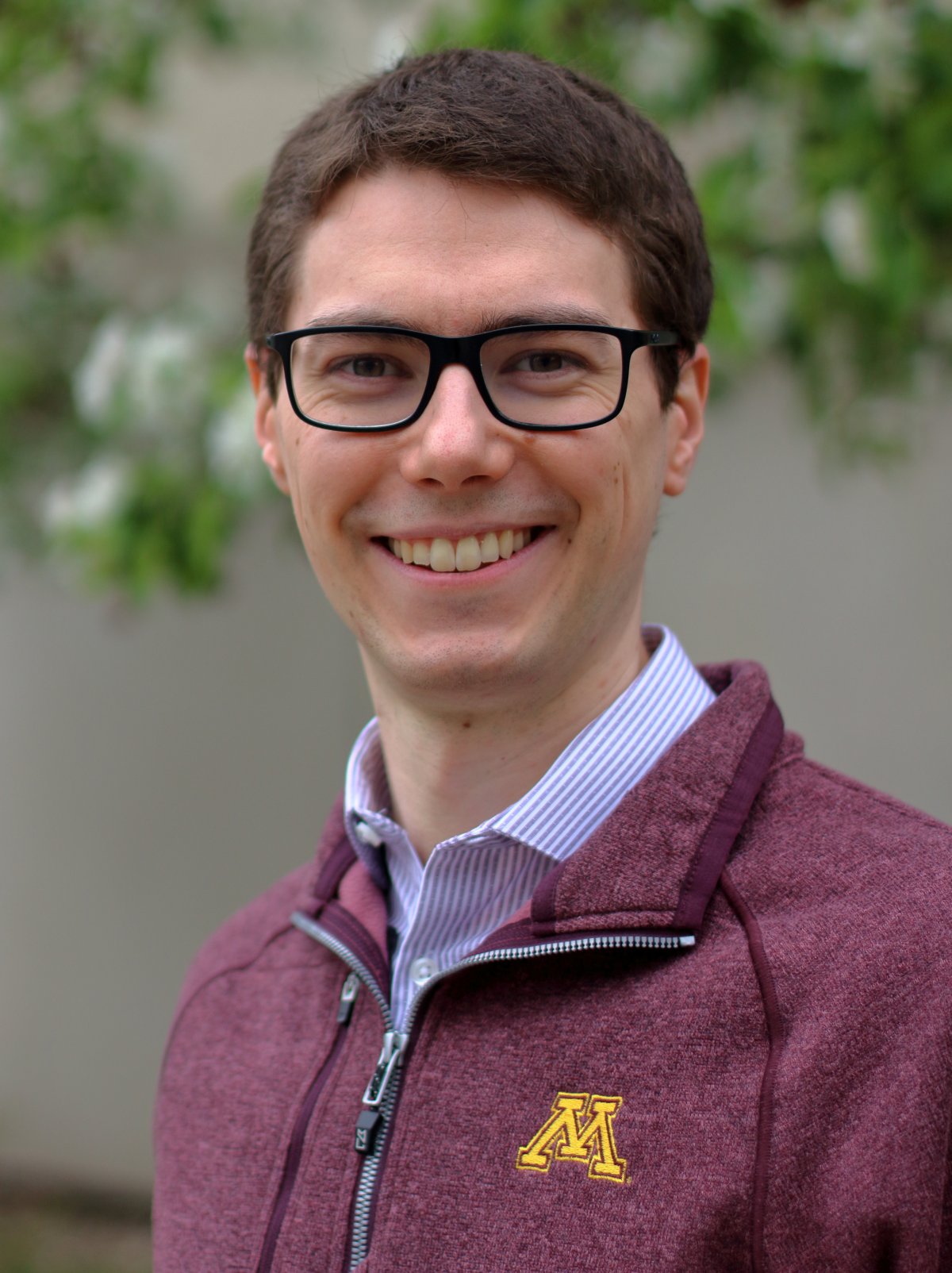
Ryan Caverly serves as an Associate Professor in the Department of Aerospace Engineering and Mechanics at the University of Minnesota, Twin Cities, holding the prestigious McKnight Land-Grant Professorship. His research bridges theoretical control frameworks with practical aerospace and robotics applications, focusing on dynamic modeling and system control. Education: BS in Honours Mechanical Engineering from McGill University MS in Aerospace Engineering from the University of Michigan PhD in Aerospace Engineering from the University of Michigan Professor Caverly's research centers on input-output stability, robust control of nonlinear systems, and computationally efficient modeling of flexible structures. His work spans aerospace vehicles, spacecraft, and robotic manipulators, emphasizing theoretical rigor alongside real-world implementation challenges in structural flexibility and control precision. Recent publications reveal strong emphasis on predictive control for orbital mechanics, hypersonic vehicle dynamics, and cable-driven systems. His work consistently integrates convex optimization, state estimation, and structural dynamics to solve complex problems in solar sail technology, UAV navigation, and hypersonic flow measurement. Scientific Awards: McKnight Land-Grant Professor Caverly leads multiple externally funded projects including NASA-sponsored research on solar sail momentum management, UAV state estimation with Honeywell, hypersonic bow shock measurements with the Air Force, and deployable space structure control. His grants portfolio demonstrates significant industry and government collaboration in aerospace innovation. He directs the Aerospace, Robotics, Dynamics, and Control (ARDC) Lab, which specializes in the intersection of dynamic modeling and control theory for flexible multi-body systems, with particular focus on cable-driven mechanisms and lightweight aerospace structures.