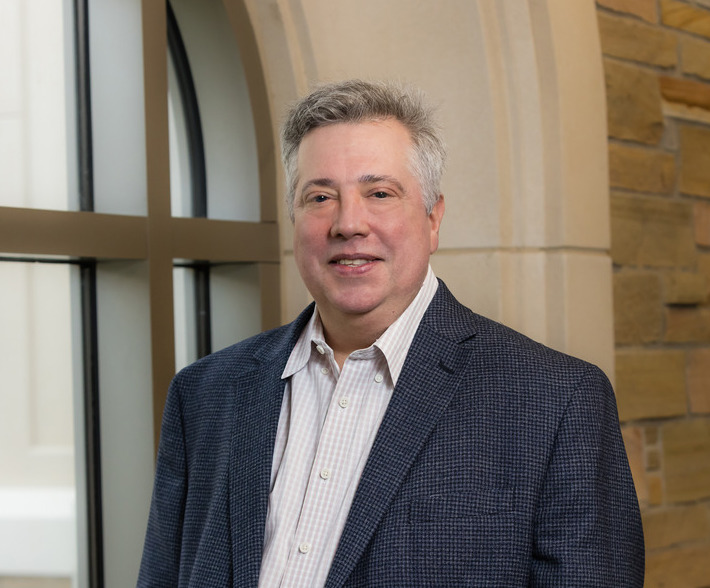
Professor Klavs F. Jensen is the Warren K. Lewis Professor of Chemical Engineering and Professor of Materials Science and Engineering at MIT. His research focuses on integrating automation, machine learning, and robotics to accelerate materials discovery and pharmaceutical synthesis. He leads the Jensen Research Group, pioneering automated reaction systems with online analytics and optimization algorithms. Education: MS in Chemical Engineering (Technical University of Denmark, 1976); PhD in Chemical Engineering (University of Wisconsin, 1980). Research Interests: Thermochemistry, electrochemistry, photochemistry, Bayesian optimization, high-throughput experimentation, and AI-driven synthesis planning. He collaborates with MIT’s Machine Learning for Pharmaceutical Discovery Consortium to develop algorithms for drug development and process chemistry. Awards: Member of National Academy of Sciences (2017), Member of National Academy of Engineering (2002), Fellow of the American Association for the Advancement of Science (2007), and Fellow of the National Academy of Inventors (2022). Grants & Labs: Editor-in-Chief of Reaction Chemistry and Engineering ; holds 63 US patents and over 490 journal articles. His lab’s innovations include ASKCOS (open-source synthesis planning software) and automated platforms for closed-loop molecular discovery.
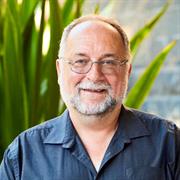
Risto Miikkulainen is a Professor of Computer Science and Neuroscience at the University of Texas at Austin and VP of AI Research at Cognizant AI Lab. He directs the UTCS Neural Networks Research Group and is currently on leave from UT, working on Evolutionary Computation and Deep Learning at Sentient Technologies, Inc. Education: Ph.D. in Computer Science, UCLA, 1990 M.S. in Applied Mathematics, Helsinki University of Technology (now Aalto University), 1986 Risto Miikkulainen's research focuses on biologically-inspired computation such as neural networks and evolutionary computation. His work spans three main areas: (1) Neuroevolution, evolving complex deep learning architectures and recurrent neural networks for sequential decision tasks in robotics, games, and artificial life; (2) Cognitive Science, developing models of natural language processing, memory, and learning that shed light on disorders such as schizophrenia and aphasia; and (3) Computational Neuroscience, studying the development, structure, and function of the visual cortex, episodic memory, and language processing. His research combines theoretical understanding of biological information processing with practical applications for developing intelligent artificial systems. His recent publications (2025) show a strong focus on evolutionary approaches to AI development, particularly in neural architecture search, loss function optimization, and explainable AI. Many papers explore the intersection of evolutionary computation with deep learning, creating more efficient and transparent AI systems. His work spans theoretical foundations and practical applications in areas ranging from environmental control systems to cognitive modeling. Scientific Awards: College of Fellows, International Neural Network Society, 2024 Best Pathway to Impact Award, NeurIPS Climate Change workshop, 2024 AAAI Fellow, 2023 IEEE CIS Evolutionary Computation Pioneer Award, 2020 Gabor Award, International Neural Network Society, 2017 Outstanding Paper of the Decade Award, International Society for Artificial Life, 2017 IEEE Fellow, 2016 Multiple Best Paper Awards at GECCO, CIG, and CEC conferences Deployed Application Award, AAAI/IAAI-2013, AAAI/IAAI-2018 Miikkulainen has extensive experience mentoring students through undergraduate research courses like CS378 Computational Intelligence in Game Design I and II, where students develop independent research projects on the OpenNERO research platform. He has received multiple awards for deployed applications, demonstrating the practical impact of his research. His work has led to the development of the NERO game platform, which serves as both an educational tool and research platform for AI. He directs the UTCS Neural Networks Research Group, which focuses on neuroevolution, cognitive science models, and computational neuroscience. The group has developed the NERO (Neuro-Evolving Robotic Operatives) platform, a machine learning game that allows users to train intelligent agents through evolutionary computation. The group's work spans theoretical research and practical applications in AI, with connections to both academic and industry partners.
Dominik Schörkhuber is a PreDoc Researcher at the Vienna University of Technology (TU Wien) in the Computer Vision department. With a background in Informatics (BSc, Dipl.-Ing.), he focuses on computer vision applications for autonomous driving, robotics, and human-machine interaction. His work spans driver action recognition, pedestrian prediction, and adaptive lighting systems. Current projects: Empathic Vehicle (2024–2026), SyntheticCabin (2021–2025), SmartProtect (2020–2025) Research themes: Video transformers, synthetic data transfer learning, multi-task learning, and sensor-lighting integration Specializes in 3D sensing, nighttime driving analysis, and mobile video creation tools
Michael Mühlebach is a Research Group Leader at the Max Planck Institute for Intelligent Systems in Tübingen, Germany, leading the independent Learning and Dynamical Systems group. His academic journey began at ETH Zurich where he earned his B.Sc. (2010) and M.Sc. (2013) in mechanical engineering, specializing in robotics, systems, and control. He completed his Ph.D. at ETH Zurich in 2018 under Prof. R. D'Andrea, followed by postdoctoral research at UC Berkeley with Prof. Michael I. Jordan. Dr. Mühlebach's research spans machine learning, dynamical systems, control theory, and optimization . His work bridges theoretical foundations with practical applications in robotics, developing methods that incorporate physical constraints and system dynamics into learning frameworks. His group focuses on online learning, physics-informed machine learning, and large-scale optimization for cyber-physical systems, with applications in electromagnetic navigation, robotic table tennis, and energy-efficient flight systems like the shape-changing robot Floaty . His publication record shows a strong focus on constrained optimization, with recent work exploring decision-dependent stochastic optimization, nonlinear feedback, and the theoretical foundations of reinforcement learning. His research integrates perspectives from control theory, dynamical systems, and optimization to develop algorithms with strong theoretical guarantees and practical performance. Outstanding D-MAVT Bachelor Award Willi-Studer prize for best Master's degree ETH Medal and HILTI prize for doctoral thesis Branco Weiss Fellow (2018) Emmy Noether Fellowship (2020) Amazon Fellowship (2024) Dr. Mühlebach actively mentors doctoral researchers and is seeking talented students for PhD and Master's projects. His research group has received funding from multiple prestigious fellowships and maintains collaborations across institutions including ETH Zurich, UC Berkeley, and various Max Planck research units. The group's work spans theoretical developments to practical implementations on robotic systems, demonstrating strong connections between mathematical theory and physical realization.
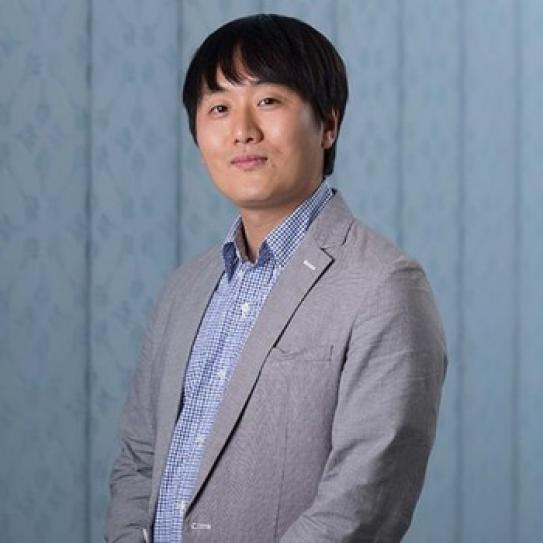
Soo Jeon is a Professor in the Department of Mechanical and Mechatronics Engineering at the University of Waterloo, part of the Faculty of Engineering. He holds a PhD from the University of California at Berkeley (2007) and prior degrees from Seoul National University. His research focuses on mechatronics, dynamic systems, and control, with applications in robotics, autonomous systems, and precision motion control. He has held roles as Assistant Professor (2009–2015), Associate Professor (2015–2024), and Full Professor (2024–present). Professor Jeon’s expertise includes intelligent sensing and control for mechatronic systems, nonlinear dynamics, and autonomous systems. He has received notable awards such as the 2022 Engineer of the Year Award (AKCSE/KOFST), 2015 NSERC Discovery Accelerator Supplement, and 2010 ASME Rudolf Kalman Best Paper Award. He serves as an Associate Editor for several journals, including the ASME Journal of Dynamic Systems and IEEE Transactions on Automation Science and Engineering. His research interests span robotics, control systems, and automation, with recent work on autonomous navigation, tactile exploration, and model predictive control. He supervises graduate students in MASc and PhD programs and teaches courses like ME 649 (Control of Machines and Processes) and ME 360 (Introduction to Control Systems). Jeon holds patents in areas like low-power magnetic locks and remote plasma source seasoning. His lab, the Waterloo Mechanical Systems & Control Laboratory (WMSCL), focuses on advanced mechatronics and robotics projects, including collaborations with international institutions such as the Korea Institute of Machinery & Materials (KIMM).
Jonathan Shihao Ji is an Associate Professor in the School of Computing at the University of Connecticut (UConn), leading the Intelligent Systems Lab. He holds a Ph.D. in Electrical and Computer Engineering from Duke University and previously served as an Associate Professor at Georgia State University and Director of the DoD Center of Excellence (CiARE). His research focuses on deep learning applications in computer vision, NLP, robotics, and high-performance computing, with over 50 publications in top venues like CVPR, NeurIPS, and IEEE journals. He has secured grants from NSF, NIH, DoD, and industry partners including VMware and Nvidia. His work emphasizes efficient algorithms for large-scale data processing, parameter-efficient model fine-tuning (e.g., VB-LoRA), and 3D perception benchmarks for UAVs (UAV3D). Notable contributions include sparse network optimization (Dep-L0), energy-based models (M-EBM), and robust defenses against adversarial attacks (Defense-VAE). He is a Senior Member of IEEE and has developed open-source tools like Parallel Word2Vec and WordRank. Recent projects include accelerating Llama2 models on FPGAs (LlamaF) and improving text-to-image synthesis via contrastive learning. His research spans theoretical advancements and practical applications, with industry collaborations in healthcare, robotics, and embedded systems.
Miroslav Pajic serves as a Professor in the Department of Electrical and Computer Engineering at Duke University's Pratt School of Engineering. He also holds joint appointments as Associate Professor in the Thomas Lord Department of Mechanical Engineering and Materials Science and Associate Professor of Computer Science. As Director of Master's Studies, he oversees the graduate program in Electrical and Computer Engineering and teaches numerous courses spanning embedded systems, cyber-physical systems design, and robotics. Education: Ph.D. in Electrical and Computer Engineering from University of Pennsylvania (2012) Miroslav Pajic's research focuses on the design and analysis of cyber-physical systems (CPS) with varying levels of autonomy and human interaction. His work spans the intersection of embedded systems, artificial intelligence, machine learning, control theory, formal methods, and robotics. He specializes in developing high-assurance autonomous systems with applications in robotics, automotive systems, and medical devices, with particular emphasis on CPS security and resilient autonomy. His research addresses fundamental challenges in creating systems that can operate reliably in uncertain environments while maintaining security against potential cyber attacks. Analysis of Pajic's recent publications reveals a strong interdisciplinary research program bridging theoretical foundations with practical applications. His work spans secure sensor fusion for distributed autonomy, medical applications of CPS (particularly deep brain stimulation for neurological disorders), and innovative sensing technologies for autonomous vehicles. A significant portion of his research addresses security challenges in cyber-physical systems, including stealthy GPS attacks on UAVs and methods for attack-resilient state estimation. His publications increasingly integrate machine learning techniques with traditional control theory to create more adaptive and robust autonomous systems. Pajic actively mentors graduate students and leads research groups focused on cyber-physical systems security and high-assurance autonomy. His research is supported by multiple grants, including the NSF AI Institute for Edge Computing (Athena), which he co-leads. He has received funding from various sources to support his work on secure and resilient cyber-physical systems, medical device security, and autonomous vehicle technologies. Pajic collaborates extensively with medical researchers on applications of cyber-physical systems in healthcare, particularly in deep brain stimulation for neurological disorders. His work bridges the gap between theoretical control systems and practical implementations in safety-critical domains, with a growing emphasis on translating research into real-world applications that improve system security and reliability.
John Hale, Ph.D., is a Professor and Chair of Computer Science at The University of Tulsa's Tandy School of Computer Science, where he holds the Tandy Endowed Chair in Bioinformatics and Computational Biology. He is a founding member of the TU Institute of Bioinformatics and Computational Biology (IBCB) and a faculty research scholar in the Institute for Information Security (iSec). Education: Ph.D., Computer Science, The University of Tulsa (1997) M.S., Computer Science, The University of Tulsa (1992) B.S., Computer Science, The University of Tulsa (1990) Dr. Hale's research spans cybersecurity , bioinformatics , cyber-physical systems , and applied formal methods . His work focuses on neuroinformatics, cyber trust, attack modeling, secure software development, and information privacy. Recent publications highlight trends in large-scale graph analysis for cybersecurity, attack graph generation on high-performance computing clusters, and security frameworks for nuclear reactor control systems. His research also explores hybrid attack graph modeling, reflective deception strategies, and compliance methods for cyber-physical infrastructures. Scientific Awards: 2000 National Science Foundation CAREER Award Dr. Hale has advised numerous research projects and received funding from the U.S. Air Force, Army, NSF, NIH, DARPA, NSA, and NIJ. He has testified before Congress on cybersecurity and holds a patent for anti-piracy technology. His lab work includes developing cyber-physical testbeds and science DMZ security solutions.
Dr. Andrew Cornwell is an Adjunct Assistant Professor in the Department of Biomedical Engineering at Case Western Reserve University’s Case School of Engineering. He serves as the Associate Director of the Case-Coulter Translational Research Partnership (CCTRP) and Director of the Case-Cleveland Incubator in the Office of Strategic Partnerships. Additionally, he holds the role of Director for Industrial and Strategic Collaborations at the Cleveland FES Center, bridging academic research with industry and clinical applications across the School of Medicine and School of Engineering. Dr. Cornwell earned his PhD in Biomedical Engineering from Case Western Reserve University. His early research focused on brain recording and neurotechnology, later transitioning to advancing technology transfer and translational research strategies. His research interests center on neurotechnology, particularly functional electrical stimulation (FES) systems for rehabilitation and clinical applications. He specializes in accelerating the translation of academic innovations into practical healthcare solutions, focusing on aligning clinical needs, market demands, and research priorities. Key areas include neuroprosthetics, assistive technologies for paralysis, and strategic partnerships to enhance technology commercialization. Dr. Cornwell’s publications highlight advancements in neurotechnology, including studies on FES systems, brain-computer interfaces, and clinical assessment tools. His work from 2010–2013 emphasizes improving arm mobility for individuals with paralysis, while earlier research (e.g., 2004) explores neural network approaches to predict movements using electrocorticography (ECoG). While no scientific awards were listed in the provided information, his roles involve managing grants and strategic collaborations through the CCTRP and Cleveland FES Center to fund translational research projects. He is affiliated with the Cleveland FES Center and the Case-Coulter Translational Research Partnership, leading initiatives to commercialize neurotechnology and biomedical innovations.
Jiro Katto is a Professor at Waseda University's School of Fundamental Science and Engineering, where he has been conducting research and teaching since 1999. He received his Ph.D. from the University of Tokyo and has established himself as a leading researcher in multimedia signal processing and computer networks. His academic journey includes positions as Associate Professor (1999-2004), Professor (2004-present), and Director at NEDO (2004-2008), along with research experience at NEC C&C Laboratories (1992-1999) and a Visiting Scholar position at Princeton University (1996-1997). Professor Katto's research interests focus on Multimedia Signal Processing and Computer Networks, with particular expertise in video compression, 5G network performance, and learned image compression techniques. His work bridges theoretical advancements with practical implementations, as evidenced by his extensive publications in top-tier conferences and journals. His research group has made significant contributions to point cloud compression, latency compensation in remote systems, and hardware-accelerated video encoding for UHD streaming. His publication record is impressive, with 276 papers cited 3,323 times in Scopus and 6,169 times in Google Scholar, reflecting his substantial impact in the field. His recent work shows a strong trend toward applying deep learning techniques to traditional signal processing problems, particularly in the areas of image and video compression, where his team has developed novel approaches to improve compression efficiency while reducing computational complexity. Electric Telecommunications Promotion Foundation Telecommunications System Technology Award (2023) Takayanagi Kenjiro Foundation Takayanagi Kenjiro Achievement Award (2020) Institute of Image Information and Television Engineers Fellow (2020) Institute of Electronics, Information and Communication Engineers Fellow (2015) IEICE Communications Society Activity Contribution Award (2006) IEICE Academic Encouragement Award (1995) SPIE VCIP 1991, Best Student Paper Award (1991) Professor Katto has served on numerous prestigious committees including IEEE ComSoC Tech News Editorial Board, IEEE Technical Program Committees for major conferences (Globecom, ICC, ICIP), and editorial boards for several academic journals. His leadership in the academic community extends to chairing conferences like IWAIT 2011 and serving as Editor-in-Chief for journals in his field. His research has practical applications in commercial 5G networks, video streaming services, and remote monitoring systems, demonstrating the real-world impact of his work.
Dr. Mao Shan is a Senior Research Fellow at the Australian Centre for Robotics, part of The University of Sydney. He holds a PhD from The University of Sydney (2014) and has held research positions at Nanyang Technological University (2016-2017) and the Australian Centre for Robotics (2014-2016). His research focuses on autonomous systems, V2X communication, cooperative perception, and sensor fusion. Current students include Yaoqi HUANG, Henry LYU, Zhenxing MING, Nguyen TRAN, Tzu-yun TSENG, and Yupeng WANG. His work spans robotics, intelligent transportation systems, and control systems. Recent publications emphasize 3D object detection, cooperative perception frameworks, and autonomous navigation. He has contributed to the development of the University of Sydney Campus Dataset for robust autonomy testing and led cooperative perception projects funded by iMOVE CRC (2018). His research bridges theoretical advancements with practical applications in autonomous vehicles and multi-robot systems. Labs and affiliations include the Australian Centre for Robotics and the Intelligent Transport Systems Group. His interdisciplinary approach integrates probabilistic modeling, sensor fusion, and machine learning to address challenges in autonomous systems.
Prof. Ivan Cole is an Adjunct Professor at RMIT University's School of Engineering, specializing in rapid materials discovery for corrosion protection, nanostructures, and additive manufacturing. His work integrates computational modeling with high-throughput experimentation, focusing on corrosion inhibitors, biocompatible surfaces, and additive manufacturing process optimization. With over 30 years of experience across academia and industry (including leadership roles at CSIRO and Centro-Svilluppo Materiali), he leads the Rapid Discovery & Fabrication Team (RDF) to advance these research areas. Research Interests: Corrosion science, microbially induced corrosion (MIC), additive manufacturing surfaces, nanostructure sensing, multiscale modeling, and green materials discovery. His team addresses challenges in corrosion protection, biomedical implants, and environmental remediation through innovative methodologies. Awards: 2019 Australian Corrosion Medal 2016 CSIRO Lifetime Achievement Award 2013 Best Paper in NACE Corrosion Supervision & Projects: Active in mentoring PhD/Master’s students across corrosion inhibition, additive manufacturing, and nanostructure design. Notable projects include developing quorum sensing inhibitors for biofilm control, in-situ monitoring for metal AM, and eco-friendly corrosion inhibitors. Labs & Collaborations: Leads the Rapid Discovery & Fabrication Team and collaborates with industry partners to translate research into practical solutions for materials durability and sustainability.
Yogananda Isukapalli is a Teaching Professor and Vice Chair in the Computer Engineering Program at the Electrical and Computer Engineering Department , University of California, Santa Barbara . He joined the faculty in Winter 2017 after a career as a staff scientist at Broadcom (2010–2017), where he designed Wi-Fi chips (11n/11ac/11ax) and worked on underwater wireless communication models during a postdoctoral stint at Scripps Institution of Oceanography (2009–2010). His PhD in Communication Theory and Systems from UC San Diego (2009) forms the basis of his expertise in wireless systems and digital design .
Ambrose Adegbege serves as Professor of Electrical and Computer Engineering and Coordinator for Engineering Science at The College of New Jersey (TCNJ), where he directs the Laboratory for Embedded Control and Optimization (LECO). A Professional Engineer and IEEE member, he holds leadership roles including Faculty Advisor for the National Society for Black Engineers since 2013. Education: Ph.D. in Electrical and Electronic Engineering, The University of Manchester (2011) M.Sc. in Electrical and Electronics Engineering, The University of Manchester (2006) B.Sc. in Electronic and Electrical Engineering, Obafemi Awolowo University (2004) Professor Adegbege's research centers on constrained control systems , fast optimization algorithms , and analog VLSI circuits for embedded implementations . His work bridges theoretical control theory with hardware design, focusing on real-time model predictive control (MPC) for input-constrained systems. Key innovations include analog solvers for MPC, inexact optimization methods, and anti-windup techniques that maintain stability under physical limitations. Analysis of his 15 most recent publications (2018-2026) reveals a dominant focus on hardware-accelerated MPC implementations, with 70% addressing analog/digital architectures for real-time control. His work consistently tackles computational bottlenecks through novel primal-dual dynamics (40% of publications) and constrained optimization (60%), demonstrating strong industry relevance in robotics and renewable energy systems. Scientific Awards: Fulbright Fellowship (2023) Carnegie African Diaspora Fellowship (2021) Excellence in Student Mentoring Award (2023) SOSA Award (2023) Four consecutive Engineering Research Prizes (2018-2021) Secured $432,235 in external funding including an NSF grant for ultra-fast embedded control architectures ($196,380) and a DOD instrumentation grant ($235,855). His mentoring excellence is evidenced by sustained NSBE leadership and student co-authorship on 12 publications since 2018. Current research in LECO integrates FPGA and analog VLSI to overcome computational barriers in safety-critical control systems. LECO advances embedded control through three core thrusts: analog optimization circuits, constrained primal-dual dynamics, and hardware/software co-design. Recent projects include quadruple-tank system implementations and renewable energy grid controllers developed with MIT collaborators during his Masdar Institute postdoc.
Sohmyung Ha is an Associate Professor of Electrical Engineering and Bioengineering at NYU Abu Dhabi and holds a Global Network position at NYU Tandon School of Engineering. He leads the Integrated BioElectronics Laboratory, focusing on advancing silicon integrated technologies for biomedical applications such as implantable devices and wearable sensors. His expertise spans biomedical circuits, neural interfaces, and wireless power systems. Education: MS (2004, KAIST), PhD (2016, UC San Diego) with a Best Thesis Award. Prior industry experience includes analog circuit design at Samsung Electronics (2006-2010). Academic affiliations include NYU Abu Dhabi, NYU Tandon, and global collaborations. Research interests include high-performance biomedical sensors, neural prosthetics, and energy-efficient bioelectronic systems. Notable achievements include a Best Paper Award (ISCAS 2024) and innovations in impedance spectroscopy and neural interface ICs. Current projects emphasize closed-loop neural interfaces, subcutaneous glucose monitoring, and retinal prostheses. His lab develops miniaturized, power-autonomous systems for healthcare applications.