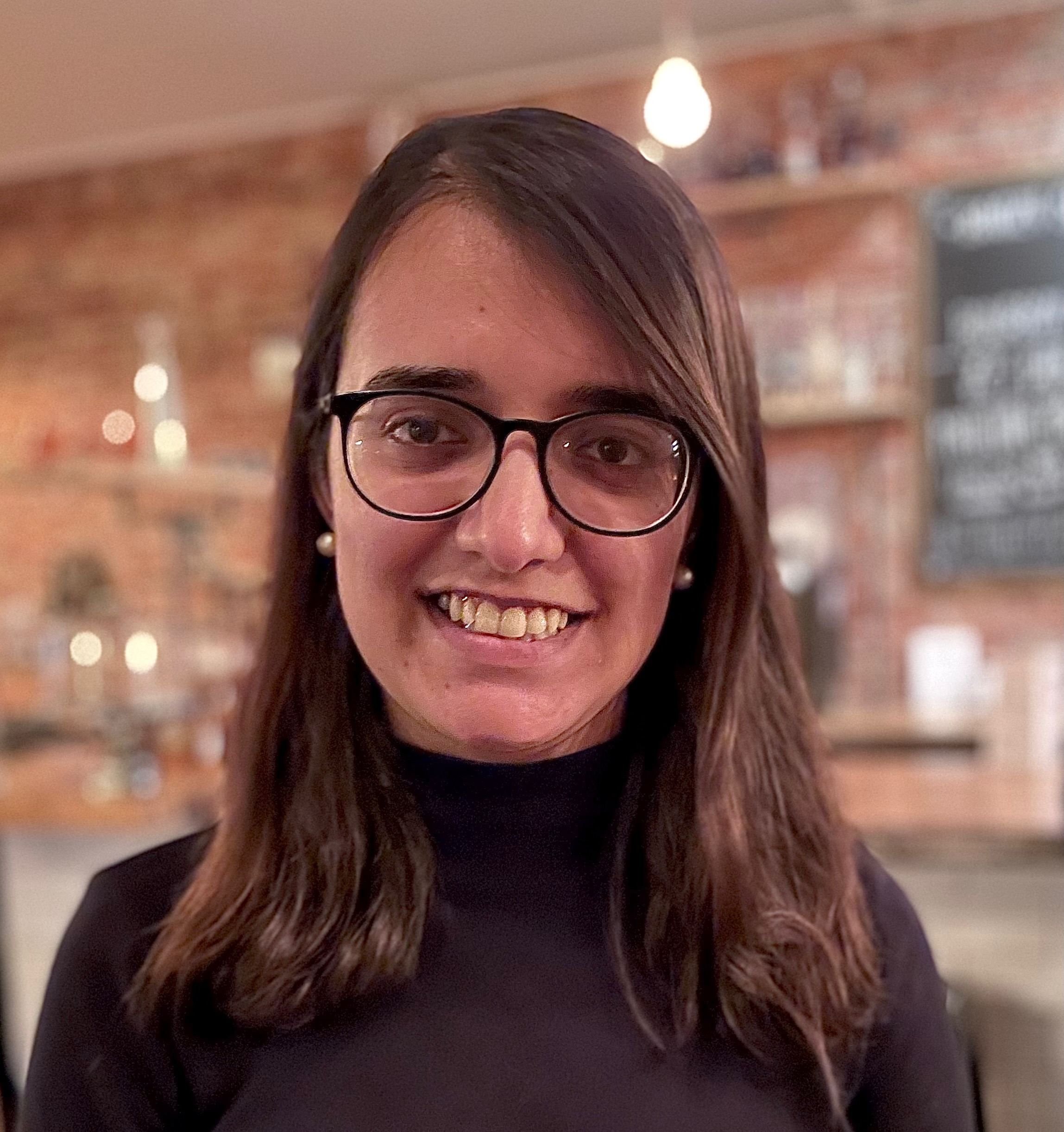
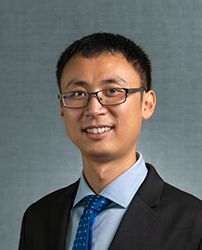
Habiba Farrukh is an Assistant Professor in the Department of Computer Science at the University of California, Irvine , where she directs the Security and Privacy of Emerging Computing Technology (SPECT) Lab . Her research focuses on security & privacy and mobile computing , using system design, machine learning, and human-centered approaches to address threats in emerging computing platforms. Ph.D. in Computer Science from Purdue University (advisor: Dr. Z. Berkay Celik) Research Trends : Her recent work spans XR security (UI attacks, eye gaze privacy), mobile/IoT security (magnetometer side-channels, secure group pairing), online abuse (toxic content against refugees), and wearable privacy . Publications appear at top venues like USENIX Security , IEEE S&P , and ACM CCS . Scientific Awards : Best Poster Runner-Up Award at MobiSys 2025 Outstanding Reviewer Award at VehicleSec 2024 Bilsland Dissertation Fellowship 2021-2022 Teaching : CS190: Introduction to Security & Privacy (Spring 2025) CS204: Usable Security and Privacy (Fall 204) CS295: Security and Privacy of Emerging Computing Platforms (Spring 2024)
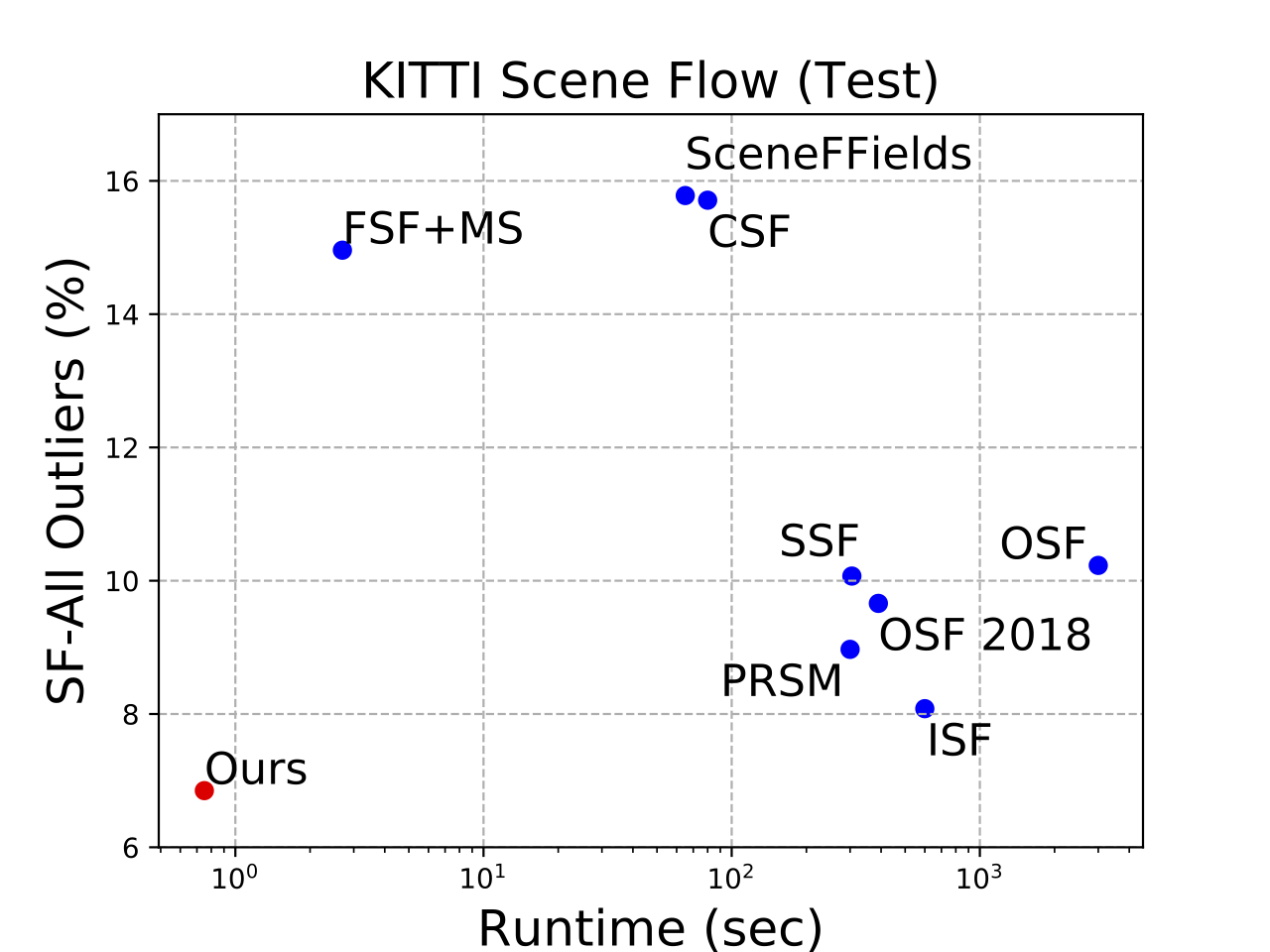
Wei-Chiu Ma is an Assistant Professor of Computer Science at Cornell University, where he leads research at the intersection of 3D/4D computer vision and robotics. His work focuses on building AI systems that can understand, reconstruct, and re-simulate our dynamic world to enable more robust autonomous systems and advance entertainment applications. Prior to joining Cornell, Dr. Ma was a Young Investigator/Postdoc at AI2 / University of Washington. He received his Ph.D. from MIT, working with Antonio Torralba and Raquel Urtasun. Before his Ph.D., he was a Senior Research Scientist at Uber ATG R&D and Waabi working on self-driving vehicles, and completed his M.S. in Robotics at Carnegie Mellon University under the advisement of Kris M. Kitani. Dr. Ma's research interests span several interconnected areas in computer vision and robotics: 3D/4D Computer Vision: Focused on scene reconstruction, modeling, and understanding from visual inputs Neural Radiance Fields (NeRF): Developing techniques for novel view synthesis and scene representation Robotics and Simulation: Creating realistic sensor simulation for autonomous systems Digital Twins: Building interactive, game-engine compatible virtual environments Self-Driving Technology: Working on scene flow estimation, sensor simulation, and vehicle localization His recent publications demonstrate a strong focus on pushing the boundaries of 3D scene understanding, with particular emphasis on extreme-view geometry, neural rendering techniques, and creating realistic simulations for autonomous systems. His work often bridges theoretical computer vision with practical applications in robotics and autonomous vehicles. Dr. Ma has received several notable recognitions including being selected as a Cyber-Physical Systems (CPS) rising star and a Siebel Scholar. He has also earned the Best Application Award for his work on TDTOS: T-Shirt Design and Try On System. As an educator and mentor, Dr. Ma is actively involved in guiding the next generation of researchers. He hosts pro bono office hours for students from underrepresented groups and is committed to fostering diversity in the field. He is currently building his research group at Cornell and plans to hire 1-2 graduate students during the 2024-25 cycle. Dr. Ma has organized several influential workshops including the "Synthetic Data for Computer Vision" workshop at CVPR 2025, the "Agent in Interaction, from Humans to Robots" workshop at CVPR 2025, and the "3D Modeling, Reconstruction, and Generation in the Wild" workshop at ECCV 2024, demonstrating his leadership in the computer vision community.
Daniele Leonardis serves as Associate Professor of Applied Mechanics at the Institute of Mechanical Intelligence (IIM) of the Sant'Anna School of Advanced Studies in Pisa since October 2025. His research centers on wearable haptic interfaces and hand exoskeletons for clinical neurorehabilitation, virtual reality, and teleoperation applications. His primary research domains include: Development of miniaturized actuators for high-fidelity haptic rendering in wearable devices Clinical neurorehabilitation using serious games for children with Cerebral Palsy Integration of tactile feedback in teleoperation systems for complex manipulation tasks Soft exoskeletal devices for movement assistance in spinal/neurological patients Industrial robotics for railway infrastructure inspection Leonardis leads significant research initiatives: Coordinator and scientific director of the completed TELOS project (2024) for VR-based cerebral palsy rehabilitation Scientific director for SSSA in the European SUN project on augmented reality and haptic feedback Director of the SmartNest third-party research project Collaborator in TATTO, LEARN, and AVATAR projects Supervisor for RFI's mobile railway inspection system design His recent publications (2024-2025) demonstrate concentrated advancements in teleoperation interfaces, soft exoskeleton validation, and novel actuation methods for tactile feedback, with strong clinical and industrial validation components. He actively disseminates research through editorial roles in leading robotics journals and public demonstrations at international conferences. As founding partner of Next-Generation-Robotics spin-off, Leonardis bridges academic research and commercial applications in railway inspection robotics, reflecting his commitment to translational impact.
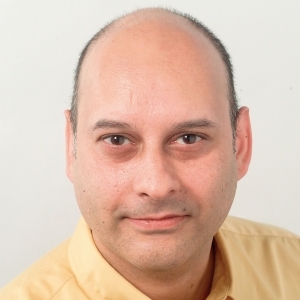
Robert E. Parkin is a Professor in the Department of Mechanical and Industrial Engineering, Robotics at the Francis College of Engineering, University of Massachusetts Lowell. His research spans Solar Energy, Robotics, and Manufacturing. Education: D.I.C (1965), Imperial College, University of London Ph.D. (1965), Imperial College, University of London B.S. in Engineering (1962), University of London Dr. Parkin's research interests include Robotics, Control, and Manufacturing. He has developed simple, robust, and efficient sorting algorithms in group technology for factory applications. His work in solar energy focuses on solar angles and optical properties of materials for solar systems. His publications show a progression from robotics in the 1980s to manufacturing systems in the 1990s and 2000s, and more recently solar energy. The solar energy papers address geometric and material aspects, while the manufacturing work centers on algorithmic improvements in group technology. Awards and Honors: Plymouth Major Award National Research council award (2000) University Scholar (1985) Keynote speaker (1985) - Combustion Engineering, Alexandria, VA Information regarding student advising and research grants was not mentioned in the source material. Dr. Parkin is affiliated with the Center for Energy Innovation at UMass Lowell.
Dr. Simon Watt is a Senior Lecturer in the Department of Psychology at Bangor University's School of Psychology and Sport Science, where he has worked since 2004. He directs the Cognitive Neuroscience Institute and integrates fundamental science with practical applications through his research in Pasteur's Quadrant framework. PhD in Psychology (2001) - University of Surrey MSc in Research Methods in Psychology (1996) - University of Surrey BSc in Psychology (1994) - Cardiff University His research explores sensorimotor control and 3D vision, focusing on tool use, multisensory integration, and visual-haptic interactions. Key applications include prosthetic hand development and VR display optimization . Article analysis shows consistent themes in 3D perception , haptic integration , and robotic control frameworks across 2000-2024. Notable collaborative work includes international projects with institutions like UC Berkeley. 2023 Queen's Anniversary Prize REF 2021 Top 30 UK for Societal Impact As module organizer for Masters Research Rotation (PRP-4013) and Undergraduate Dissertation modules, he supervises Molly Hewitt on next-gen prosthetics research with Ambionics.
Justus Piater is a Professor of Computer Science at the University of Innsbruck, serving as the Head of the Digital Science Center and an ELLIS Fellow. His primary affiliation is the Department of Computer Science within the Faculty of Mathematics, Computer Science and Physics. He has held academic roles since 2002, including Assistant and Associate Professorships at Université de Liège before joining the University of Innsbruck in 2010. His research focuses on robot learning, perception, and manipulation, emphasizing how robots can learn to perceive and act with understanding. Notable projects include the EU-H2020 IMAGINE project and the Euregio International Project Network OLIVER. Education includes a Ph.D. in Computer Science from the University of Massachusetts Amherst (2001), complemented by earlier studies in Germany and Belgium. His service roles include Dean of the Faculty of Mathematics, Computer Science and Physics (2014–2017) and Vice Chair of the Department of Computer Science (2014–present). His research outputs span robotics, AI, and interdisciplinary education, with a strong emphasis on autonomous systems and cognitive development.
Adnan Morshed is a Research Fellow at Tulane University's School of Science & Engineering, Department of Mathematics. His work centers on fluid dynamics, mathematical biology, and computational modeling, particularly in microfluidic systems and cellular mechanics. Current Role: Research Fellow, Department of Mathematics Institution: Tulane University Research focuses on fluid-structure interactions at microscales, including: Deformation dynamics of vesicles and cells under electric fields Modelling of TGF-β signaling pathways in tumor microenvironments Computational analysis of viscoelastic suspensions Stokes flow simulations for biological systems Publications demonstrate expertise in microfluidic device applications and mathematical modeling of cellular responses, with recent work on vortex dynamics and viscoelastic microfiber interactions.
Kimberly Oakes is a Lecturer in the Department of Electrical, Computer, and Systems Engineering at Rensselaer Polytechnic Institute (RPI). Her research focuses on robotic manipulator control for large load manipulation in space applications and human-robot interaction. She holds a dual BS in Electrical Engineering and Physics from Clarkson University (2016) and a PhD in Electrical Engineering from RPI (2022). Education: Bachelor of Science in Electrical Engineering, Clarkson University, USA Bachelor of Science in Physics, Clarkson University, USA Doctor of Philosophy in Electrical Engineering, Rensselaer Polytechnic Institute, USA Her teaching portfolio includes courses such as Robotics I , Intro to Robot Programming , and Signals and Systems , reflecting her expertise in both theoretical and applied engineering domains. She emphasizes interdisciplinary approaches, blending robotics, control systems, and human factors in her instruction. No specific labs or collaborative teams are mentioned in the provided information. Her current courses for 2024-2025 include Robotics I (Fall 2024) and Intro to Robot Programming (Spring 2025).
Foundation for research and technology-hellasGreece
Panos Trahanias is Professor and Vice Chair in the Department of Computer Science at the University of Crete, and heads the Computational Vision and Robotics Laboratory (CVRL) at Foundation for Research and Technology - Hellas (FORTH). His research bridges computational vision, robotics, and embedded systems, with specific focus on humanoid robot navigation, real-time SLAM implementations, and adaptive control systems. Recent investigations include developing climbing quadruped robots, robust grip-lifting mechanisms, and probabilistic contact estimation methods for dynamically challenging terrains. Medical applications feature prominently through neural network approaches for ventilator waveform analysis in critical care settings. Hardware innovation is demonstrated through FPGA-accelerated visual SLAM architectures and reconfigurable embedded systems designed for resource-constrained robotic platforms. His work consistently advances the integration of probabilistic methods, deep learning, and adaptive control in autonomous systems.
Hamid Jafarnejadsani is an Assistant Professor of Mechanical Engineering at Stevens Institute of Technology, where he directs the Safe Autonomous Systems Lab. His research develops resilient control methodologies for autonomous systems operating in adversarial environments, with applications in unmanned aerial vehicles and multi-robot systems. Education: PhD in Mechanical Engineering, University of Illinois at Urbana-Champaign (2018) MS in Mechanical Engineering, University of Calgary (2013) BS in Mechanical Engineering, University of Tehran (2011) Research focuses on cyber-physical security, adaptive control under uncertainty, and adversarial machine learning. Funded projects include NSF-supported work on attack-resilient vision-guided UAVs and IARPA contracts for neural rendering algorithms. Recent publications address distributed attack detection in multi-robot systems, adversarial image perturbations against autonomous vehicles, and emergency landing control under system failures. Dr. Jafarnejadsani teaches dynamics and control engineering courses while leading research in secure autonomous systems. Lab investigations develop novel approaches for maintaining system integrity against evolving cyber threats.
Juan Antonio Carretero is Professor and Associate Dean Academic in Mechanical Engineering at the University of New Brunswick. His research focuses on robot kinematics, parallel manipulators, and motion planning, with applications in autonomous systems and mechanical design. He leads projects on reconfigurable robotic platforms and underwater docking systems, supported by multiple grants including SSHRC and McCain Foundation awards. Dr. Carretero has co-authored over 50 publications on mechanism optimization, cable-driven robots, and motion simulation. He teaches courses in robotics and mechanical design while supervising graduate research in kinematics and automation systems.
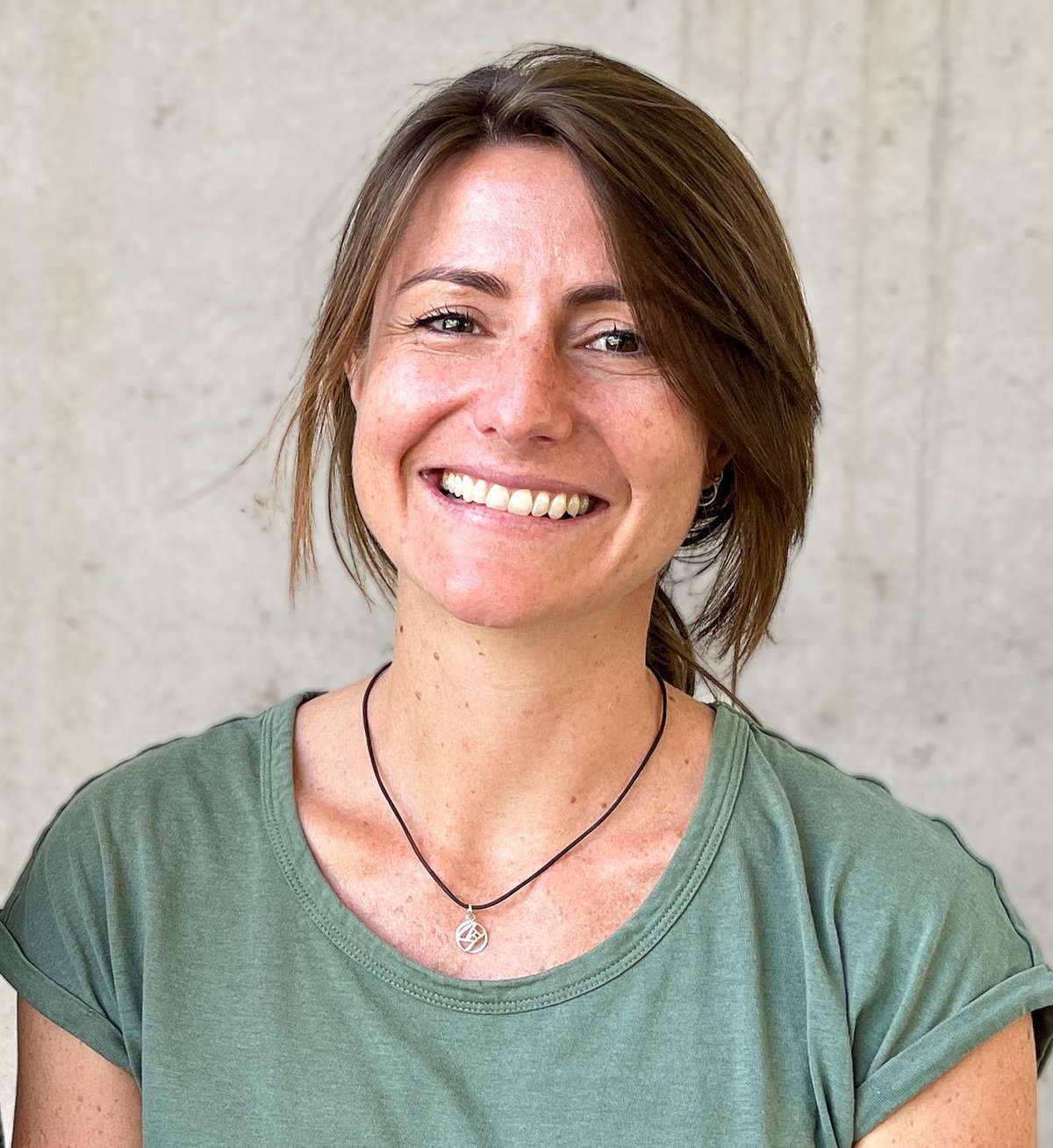
Alex Ellery is a Full Professor (Canada Research Professor) in the Department of Mechanical and Aerospace Engineering at Carleton University. He holds positions in the Faculty of Engineering and Design and is affiliated with research facilities including labs focused on space systems engineering. His work emphasizes advanced space technologies. B.Sc., University of Ulster, UK M.Sc., University of Sussex, UK Ph.D., Cranfield University, UK Research focuses on: - Space Robotics & Satellite Servicing - In-situ Resource Utilization (ISRU) for space mining - Planetary rover design with biomimetic principles - Robotic systems for astrobiological exploration - 3D printing applications in space infrastructure Current technical emphases include optic flow navigation, micro-rover development, and muscle-like robotic actuators for space manipulators. His research addresses challenges in lunar base infrastructure and planetary entry systems. No specific awards or grants are listed in the provided text. Positions are available in his research group, and contact details are provided at Carleton's Mackenzie Building.
National Institute of Science and Technology (INSA)France
Christine Solnon is a Professor of Computer Science at INSA Lyon, affiliated with the CITI lab and Inria EMERAUDE team. Her research bridges Ant Colony Optimization (ACO) and Constraint Programming (CP) to solve complex combinatorial problems in vehicle routing, scheduling, and graph algorithms. Deputy head of science at Inria Lyon Centre Co-investigator in projects like ANR MAMUT (2022-2026) and ANR DeCrypt (2019-2022) Her work focuses on hybridizing ACO with CP for optimization, addressing time-dependent problems (e.g., Time-Dependent TSP with Time Windows ), multi-robot coordination, and differential cryptanalysis. Google Scholar lists 15 recent articles (2025-2023) exploring topics like non-crossing path planning for tethered robots, spatio-temporal traffic modeling, and algorithmic ethics. She mentors PhD students in areas such as Time-Dependent Vehicle Routing Problems and Mathheuristics , often co-supervising with institutions like Lab-STICC and LIRIS. Her software tools (e.g., AntSolver, Castor) demonstrate practical applications of her research.
Dr. Tiare Feuchtner is a Tenure-Track Assistant Professor of Human-Computer Interaction at the University of Konstanz since 2021. She previously worked as a postdoctoral researcher at the Technical University of Vienna and Aarhus University, where she coordinated the MADE Fast project. PhD: Computer Science, Aarhus University (2018), thesis: 'Designing for Hand Ownership in Interaction with Virtual and Augmented Reality' Master's: Computer Science, Berlin Institute of Technology Bachelor's: Media Informatics, Technical University of Vienna Her research focuses on Human-Computer Interaction, emphasizing embodiment and novel user interfaces for immersive cross-reality (XR) technologies. She investigates embodied user interfaces that enable direct interaction through virtual bodies ('avatars') with transformations, augmentations, and 'superpowers' via multisensory feedback. Current projects include Interoceptive Signalling in Mixed Reality and Real-Time Optimization of XR User Interfaces. Her recent articles explore hybrid input devices, haptic props for 3D manipulation, physiological feedback in collaboration, and adaptive XR interfaces. She has received awards for her work, including the Microsoft Imagine Cup (2013). She actively contributes to academic service through conference organization (e.g., AlpCHI'26, QiVC'23), program committees (CHI, ISMAR), and workshops (Women* in Computing, Hybrid User Interfaces). Her teaching includes courses on human-computer interaction, Unity, and spatially-aware interactive spaces.
Xinchen Ni is an Assistant Professor in the Department of Mechanical Engineering at The University of Texas at Dallas (UT Dallas), affiliated with the Erik Jonsson School of Engineering and Computer Science. His research focuses on mechanics, programmable materials, soft robotics, and machine learning applications in materials science. Education : PhD in Mechanical Engineering, Massachusetts Institute of Technology (2020) SM (Master's) in Mechanical Engineering, MIT (2014) BS in Mechanical Engineering, Fudan University (2012) Research Interests : Ni explores advanced composites, bioresorbable materials, and soft robotics with applications in medical devices and wearable technology. His work integrates machine learning for materials analysis and combines experimental techniques like synchrotron X-ray tomography with computational modeling to study fracture mechanics and dynamic material behavior. Key Themes in Articles : Recent publications emphasize programmable shape-morphing materials, self-powered drug delivery systems, and wireless sensor networks for biomedical applications. His work bridges materials science, robotics, and medical engineering, with a focus on adaptive systems and smart materials. Awards and Recognition : Details pending explicit mention in text. Lab and Collaborations : He leads the Ni Research Group, focusing on interdisciplinary projects in soft robotics, bio-integrated electronics, and advanced materials. Collaborations span institutions like MIT and Johns Hopkins University.