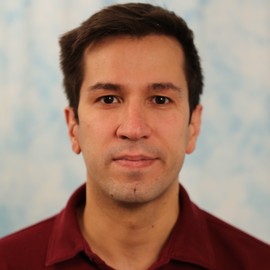
Tristan Clemons is an Assistant Professor in the School of Polymer Science and Engineering at the University of Southern Mississippi. His research integrates polymer chemistry, supramolecular assembly, and biomaterials for therapeutic applications. Current projects focus on antioxidant polymers, peptide-polymer hybrids, photoresponsive materials, and nanoscale drug delivery systems. The Clemons Lab develops biomimetic materials for applications in cancer therapy, neural regeneration, antiviral strategies, and tissue engineering. Recent publications demonstrate innovations in functional polymer design, including dynamic biomolecular condensates, amyloid-based composites, and supramolecular antiviral agents. Materials are characterized for mechanical, biological, and therapeutic properties.
Talal Shaikh is an Associate Professor at Heriot-Watt University's School of Mathematical and Computer Sciences in Dubai. He serves as Director of Undergraduate Studies and Programme Director for BSc Computer Science, BSc CS (AI), and MSc Software Engineering. With a decade of industry experience as a Chief Information Officer and Software Engineer, he bridges practical insights with academic research. Research Interests: Pervasive Computing, IoT/M2M, AI/ML, WiFi Sensing for Healthcare, Financial Machine Learning, Educational Technology Awards: Teaching Excellence Awards (2017/18), Fellow of the Higher Education Academy (FHEA), multiple Learning and Teaching Oscars (2016, 2017, 2018) His work spans Ubiquitous Computing and IoT , focusing on sensor networks and WiFi-based sensing for healthcare. In Artificial Intelligence , he applies ML to robotics, financial analytics, and educational innovation. Recent articles analyze Reinforcement Learning , Emotion Recognition , and WiFi Sensing applications. His teaching emphasizes student-centric learning, with over 100 supervised dissertations achieving distinctions. Collaborations include international conferences and interdisciplinary research in smart environments and adaptive systems.
Yi-Chin Toh is a Professor in the Faculty of Engineering at Queensland University of Technology (QUT), leading the Micro Tissue Engineering Lab. She holds an ARC Future Fellowship and has held prior roles as an Assistant Professor at the National University of Singapore. Her expertise lies in microfluidic tissue models for drug testing and organ-on-a-chip technologies. She earned her B.Eng. (2001) and Ph.D. (2008) in Bioengineering from National University of Singapore, followed by postdoctoral training at MIT and A*STAR. Her research focuses on advancing alternative animal-free technologies, with notable contributions to multi-organ microfluidic platforms and 3D bioprinted tissue models. She has published over 70 peer-reviewed articles, secured eight patents, and received accolades like the 2022 Lab on a Chip Pioneers in Miniaturization Award and 2019 Global 3R Award. She holds editorial roles in journals like Biomicrofluidics and contributes to conferences such as MicroTAS. Key research areas include mechanobiology modeling, hepatic-microbiome interactions, and AI-driven single-cell analysis. Her lab’s work bridges academia and industry, emphasizing translational applications in drug safety and toxicology. Current projects include modular microfluidic platforms for multi-organ interactions and FDA-regulatory compliant non-animal testing systems. Education: B.Eng in Chemical Engineering, National University of Singapore (2001) Ph.D. in Bioengineering, National University of Singapore (2008) Awards & Leadership: Lab on a Chip Lectureship (2022), Global 3R Award (2019), ARC College of Experts member, and leadership roles in MicroTAS conferences. She also leads the ARC Training Centre for Cell and Tissue Engineering Technologies.
Yong-Bin Kim is a Professor in the Department of Electrical and Computer Engineering at Northeastern University, part of the College of Engineering. He has held prior positions at Intel Corp., Hewlett Packard Co., Sun Microsystems, and the University of Utah. His research focuses on integrated circuit design, nanoelectronics, bio-chip interfaces, and low-power VLSI systems. He has contributed to initiatives like the HPVLSI Lab and Microsystems and Electron Devices Lab. Education includes a B.S. in Electronic Engineering from Sogang University (Seoul, South Korea), an M.S. from the New Jersey Institute of Technology, and a Ph.D. in Computer Engineering from Colorado State University (1996). Research interests encompass high-speed low-power VLSI design, system-on-chip (SoC), physical VLSI CAD, and nanoelectronics. Specific areas include bio-sensor interface circuits, electronic neuron design, and adaptive robot controllers. Key projects involve compact power-efficient integrated circuits and high-speed transceiver design. Outstanding Paper Award, 2020 IEEE ISOCC South Korean Patent for Autonomous Impedance Calibration (2021) Best Paper Award, 2016 International SoC Design Conference Patent for Improved Receiver Circuit (2020) Patent for Method to Detect Trojan Circuits (2018) Advisees include graduate student Yixuan He. He has led research projects funded by Winchester Technology and Hynix Semiconductor, focusing on semi-self-calibration transceivers and tunable RF inductors. Labs include the HPVLSI Lab and Microsystems and Electron Devices Lab at Northeastern University, which focus on high-speed/low-power IC design and microfabrication technologies.
Liu Derong is a distinguished academic holding the position of Chair Professor at Southern University of Science and Technology (Shenzhen, China) since 2022. He is also a Full Professor at the University of Illinois at Chicago (UIC) since 2006. His academic journey includes roles as Professor at Guangdong University of Technology (2017–2022) and the Chinese Academy of Sciences' Institute of Automation (2008–2016). He earned his Ph.D. in Electrical Engineering from the University of Notre Dame (1994), M.S. from the Chinese Academy of Sciences (1987), and B.S. from Nanjing University of Science and Technology (1982). His research focuses on neural networks, reinforcement learning, intelligent control, and adaptive dynamic programming. He has authored 19 books and 260+ journal papers, contributing significantly to computational intelligence and control systems. Notable works include Adaptive Dynamic Programming with Applications in Optimal Control (2017) and co-editing volumes like Frontiers of Intelligent Control and Information Processing (2014). Liu Derong has held leadership roles in professional societies, including Editor-in-Chief of Artificial Intelligence Review , Deputy Editor-in-Chief of the IEEE/CAA Journal of Automatica Sinica , and President of the Asia Pacific Neural Network Society (2018). He has organized major conferences such as the IEEE World Congress on Computational Intelligence (2014) and received prestigious awards like the Dennis Gabor Award (2018) and membership in Academia Europaea (2021). His contributions span theoretical advancements and practical applications in control systems, with a focus on optimization, robotics, and energy systems. He has also served on editorial boards of leading journals and as a keynote speaker at 30+ international conferences.
Bassam Bamieh is a Professor of Mechanical Engineering at the University of California, Santa Barbara (UCSB), with affiliate roles in Electrical and Computer Engineering and the Center for Control, Dynamical Systems and Computation (CCDC). His research focuses on control systems, dynamical systems, and their applications in fluid mechanics, quantum control, and network science. He holds fellowships from IEEE and IFAC and has received accolades such as the NSF Early Career Award and IEEE Distinguished Lecturer designation. Education: B.Sc. in Electrical Engineering and Physics from Valparaiso University (1983), M.Sc. and Ph.D. in Electrical and Computer Engineering from Rice University (1986, 1992). Formerly an Assistant Professor at the University of Illinois at Urbana-Champaign (1991–98). Research interests span robust and optimal control, distributed systems, shear flow turbulence, and thermoacoustic energy conversion. He has authored over 200 publications and pioneered work in spatially invariant systems and network controllability. His teaching includes courses on linear systems, vibrations, and control systems design. Awards include the IEEE Axelby Award (twice), Hugo Schuck Best Paper Award, and recognition for student research mentorship (e.g., Outstanding Student Paper Awards at CDC and IFAC NecSys22). His group collaborates across disciplines, integrating mathematical analysis with engineering applications.
Dr. Jose Manuel Sánchez Peña is a Full Professor at Universidad Carlos III de Madrid (UC3M), affiliated with the Grupo Universitario de Tecnologías de Identificación (GUTI). His research focuses on precision agriculture technologies, optoelectronics, and neuroscientific interfaces. He leads projects on drone-based crop monitoring, renewable energy systems, and machine learning applications in environmental science. Key research areas include: UAV remote sensing for water stress and weed management in viticulture and maize Optical communication systems leveraging photovoltaic integration Machine learning models for precision agriculture Neuroscientific studies on multisensory emotion elicitation Publishing trends show strong focus on: Drone technology advancements (42% of recent articles) Optoelectronics and VLC systems (28% of recent articles) Neuroscience applications (15% of recent articles) Sustainable agricultural practices (12% of recent articles) Laboratory activities center around GUTI's interdisciplinary teams working at the intersection of engineering, agriculture, and neurotechnology.
Dr. Yun Seong Song is an Associate Professor in the Department of Mechanical and Aerospace Engineering at Missouri University of Science and Technology (Missouri S&T), directing the Physical Human-Robot Interaction Laboratory. He holds a Ph.D. from MIT (2012), M.S. from Carnegie Mellon University (2006), and dual B.S. degrees from Seoul National University (2004). Prior to joining Missouri S&T, he conducted postdoctoral research at EPFL (2012-13) and served as a postdoc/lecturer at Georgia Tech (2014-16). Recognized for both research and teaching excellence, he has received the NSF CAREER Award (2021) and Faculty Teaching Award (2019). His research focuses on the intersection of robotics and biomechanics, emphasizing physical human-robot interaction (pHRI), rehabilitation robotics, wearable devices, energy harvesting from human motion, and medical device design. Key projects include developing robots for overground interaction experiments and assistive technologies for mobility support. His lab explores human motor communication through stiffness modulation, haptic feedback systems, and energy-efficient human-assistance mechanisms. Notable achievements include pioneering interactive stairs for energy-efficient mobility and a light-touch based virtual cane for walking assistance. His work integrates mechanical engineering, control systems, and biomedical applications to advance assistive technologies and human-robot collaboration. Education: Ph.D. Mechanical Engineering, MIT (2012) M.S. Mechanical Engineering, CMU (2006) B.S. Mechanical Engineering & B.S.E. Computer Science, Seoul National University (2004) Awards: NSF CAREER Award (2021) Missouri S&T Faculty Teaching Award (2019) Lab Focus: Physical Human-Robot Interaction, Wearable Robotics, Biomechanical Energy Harvesting
David E. Breen is a Professor in the Department of Computer Science within the College of Computing & Informatics (CCI) at Drexel University. He leads the Geometric Biomedical Computing Group and is affiliated with the Metadata Research Center and the Center for Biological Discovery from Big Data. His research spans interdisciplinary domains including biomedical image informatics, geometric modeling, textile modeling, and bio-inspired self-organization algorithms. Education: PhD, Computer and Systems Engineering, Rensselaer Polytechnic Institute MS, Computer and Systems Engineering, Rensselaer Polytechnic Institute BA, Physics, Colgate University His research interests focus on computational methods for biomedical applications, including shape and image analysis for cancer diagnosis, 3D reconstruction of biological tissues, and video analysis of animal behavior. He also investigates geometric modeling techniques for textiles and self-organizing systems. His work integrates computer science with biology, medicine, and engineering to solve complex problems in biomedical computing. The recent publications highlight a strong trend in computational modeling of textiles, biomedical image informatics, and AI-driven data analysis. Key themes include geometric modeling of knitted fabrics, deep learning for medical image classification, agent-based modeling of cancer metastasis, and metadata generation for biological image collections. His work bridges fundamental geometric algorithms with practical applications in healthcare and digital archives. Scientific Awards: No specific awards mentioned in the provided text. Breen has advised numerous students and collaborators across multiple domains, particularly in biomedical computing and textile modeling. His research has been supported through affiliations with major centers and collaborations with institutions such as Johns Hopkins University and the Max Planck Institute. He has been involved in projects related to NSF Center for Visual & Decision Informatics and has contributed to over 100 technical publications. He leads the Geometric Biomedical Computing Group , which conducts research at the intersection of biology, medicine, engineering, and computer science. The group develops algorithms and software for geometry-related computing problems in biomedical applications. Collaborations include the Drexel Integrated Laboratory for Cellular Tissue Engineering, Dr. Dan Marenda's Lab, and Dr. Aleister Saunder's Lab in Drexel's Biology Department.
Jana Tumova is an Associate Professor at the Division of Robotics, Perception and Learning, KTH Royal Institute of Technology. Her research focuses on designing algorithms for safe, purposeful autonomous systems using formal methods to ensure rigorous specifications and guarantees. Applications span autonomous driving, UAV exploration, and network control. She teaches courses like Artificial Intelligence (DD2380) and leads the Robotics, Reading Group (FDD3316) . Her work emphasizes formal methods integration with AI, safety-critical control, and human-robot interaction. Notable research directions include risk-aware planning, belief space control, and contingency planning under uncertainty. She has published extensively on motion planning, robust control synthesis, and multi-agent systems. Key technical contributions include techniques like Belief Control Barrier Functions , Backward Underapproximate Reachability (BURNS) , and Transitional Grid Maps . She actively participates in interdisciplinary initiatives like the Control for Societal-Scale Challenges: Roadmap 2030 .
Professor Jouni Mattila is a leading academic in Machine Automation at Tampere University's Faculty of Engineering and Natural Sciences, affiliated with the Automation Technology and Mechanical Engineering department. He is part of the IHA-Innovative Hydraulics and Automation research group. His expertise spans autonomous mobile working machines, nonlinear control engineering, and safety-critical systems like those in the ITER project. He holds a Technical Editor role in ASME/IEEE Transaction on Mechatronics (2015-2020). Research interests include real-world autonomous systems, whole-body motion control for rough-terrain robots, energy-efficient actuators, and teleoperation systems. His work integrates advanced control theory, AI, and robotics for heavy-industry applications. Recent publications focus on robust control frameworks, LiDAR-inertial SLAM navigation, and fault-tolerant systems for mobile robots. Publications highlight advancements in hydraulic/electromechanical actuator systems, visual-inertial feedback control, and energy-efficient robotics. Awards/recognitions are not explicitly listed, but his contributions are evident through collaborations with Finnish industry and big science projects. Advising focuses on MSc and Dr (Tech) students in robotics and automation, with a mission to bridge academia and industry for high-tech innovation. Labs/teams include the Intelligent Hydraulics and Automation (IHA) group, emphasizing practical R&D in cleantech and heavy-duty robotics. Ongoing projects address challenges in autonomous rock-breaking systems, exoskeleton control, and energy-efficient robotic actuators.
Dr. Nikhil Chopra is a Professor in the Department of Mechanical Engineering at the University of Maryland, College Park, with affiliate appointments in Electrical and Computer Engineering. He earned his Bachelor of Technology from IIT Kharagpur (2001) and his M.S. and Ph.D. from University of Illinois at Urbana-Champaign (2003, 2006). As Director of Undergraduate Studies, he leads academic programs while advancing research in systems, control, and robotics. His work focuses on robotic system control, soft robotics, teleoperation, and machine learning integration. Research highlights include co-authoring the book *Passivity-Based Control and Estimation in Networked Robotics* (2015), co-chairing the IEEE Technical Committee on Telerobotics, and serving as Associate Editor for *Automatica* and related journals. His lab, the Semi-Autonomous Systems Lab, explores control-theoretic frameworks for robotics and optimization, collaborating with institutions like Sintef and IEEE RAS Technical Committees. Key projects involve underwater robotics navigation, cyber-physical system privacy, and distributed optimization algorithms. His team has exhibited strong presence at ICRA and IROS conferences, including awards for work on 3D water quality mapping and control frameworks. Current initiatives include robotic parasitic arrays for communication enhancement and secure bilateral teleoperation systems. Lab: Semi-Autonomous Systems Lab (SAS Lab) Affiliations: Institute for Systems Research, Maryland Robotics Center Recent Funding: NSF grants, industry partnerships
Alexander Refsum Jensenius is a Professor of Music Technology and Director of the RITMO Centre for Interdisciplinary Studies in Rhythm, Time and Motion at the University of Oslo. He also leads the fourMs Lab and co-founded the MishMash Centre for AI and Creativity. His work bridges musicology, psychology, and technology, focusing on embodied music cognition, human motion analysis, and creative applications of AI. Notably, he pioneered research on air guitar motion and human micromotion through projects like the Oslo Standstill Database . Educated at the University of Oslo (BA in Music and Mathematics, MA in Musicology) and Chalmers University of Technology (MSc in Applied IT), Jensenius holds a PhD in Music Technology from UiO. He has held visiting researcher roles at UC Berkeley, McGill University, and KTH. Leadership roles include Department of Musicology Head (2013–2016) and Steering Committee Chair for the International Conference on New Interfaces for Musical Expression (NIME, 2011–2022). Research interests span music-related body motion, AI in creative contexts, and open research practices. Key contributions include the Music Moves and Motion Capture MOOCs, the Musical Gestures Toolbox software, and monographs like Sound Actions and Sonic Design . His work emphasizes interdisciplinary collaboration, with projects addressing ventilation systems' acoustic properties and cell culture vibrational effects. Awards include the European Open Data Champion recognition. He advocates for open science and maintains extensive digital archives of research materials, emphasizing institutional web pages as critical research infrastructure.
Ruben Martins is an Assistant Professor at Carnegie Mellon University's School of Computer Science and serves as the program director of the Master of Science in Computer Science (MSCS) . His research focuses on the intersection of constraint programming, program synthesis, analysis, and verification, with recent work aiming to make formal methods tools more accessible through automated reasoning. Ruben earned his Ph.D. with honors from the Technical University of Lisbon, Portugal (2013) , followed by postdoctoral research at the University of Oxford (2014-2015) and UT Austin (2015-2017) . Research Interests : Ruben's work bridges constraint programming and program synthesis , with applications in software verification , optimization , and automated reasoning . He has developed award-winning tools like Open-WBO , a modular MaxSAT solver that has won gold medals in international competitions. His publications span top-tier venues such as POPL , PLDI , FSE , SAT , and CP , often addressing real-world challenges from program analysis to network security. Scientific Awards include: Distinguished Paper Award at PLDI 2018 Distinguished Paper Award at FSE 2021 Distinguished Paper Award at SAT 2022 Gold medals for Open-WBO in MaxSAT competitions Teaching & Advising : Ruben mentors Ph.D., Master’s, and undergraduate students in research projects related to program synthesis, formal methods, and constraint solving. He teaches courses such as Bug Catching: Automated Program Verification and Advanced Topics in Logic: Automated Reasoning and Satisfiability , emphasizing hands-on experience with tools like Why3. His advising spans topics from AI-driven program repair to network protocol verification , fostering collaboration across disciplines.
Ramses Martinez is an Assistant Professor in the Department of Industrial Engineering and Biomedical Engineering at Purdue University . He holds a B.A. in Applied Physics from Universidad Autonoma de Madrid (2004) and a Ph.D. in Physics and Materials Science from the Spanish National Research Council (CSIC) in 2009. Prior to joining Purdue, he conducted postdoctoral research in the lab of Prof. George M. Whitesides at Harvard University, focusing on nanofabrication, microfluidics, and soft robotics. Education B.A. in Applied Physics, Universidad Autonoma de Madrid (2004) Ph.D. in Physics and Materials Science, Spanish National Research Council (CSIC) (2009) His research bridges soft robotics , flexible electronics , and nanofabrication , with a focus on creating self-powered e-textiles , omniphobic paper-based devices , and programmable mechanical metamaterials . His work has led to over 25 publications and 9 patents, emphasizing practical applications in health monitoring and industrial automation . Notable projects include waterproof electronic decals for biofluid monitoring, smart bandages for chronic wound detection, and laser nanoforming methods for scalable metallic structures. His research has been recognized through the Fulbright Fellowship and the Marie Curie IOF Grant .