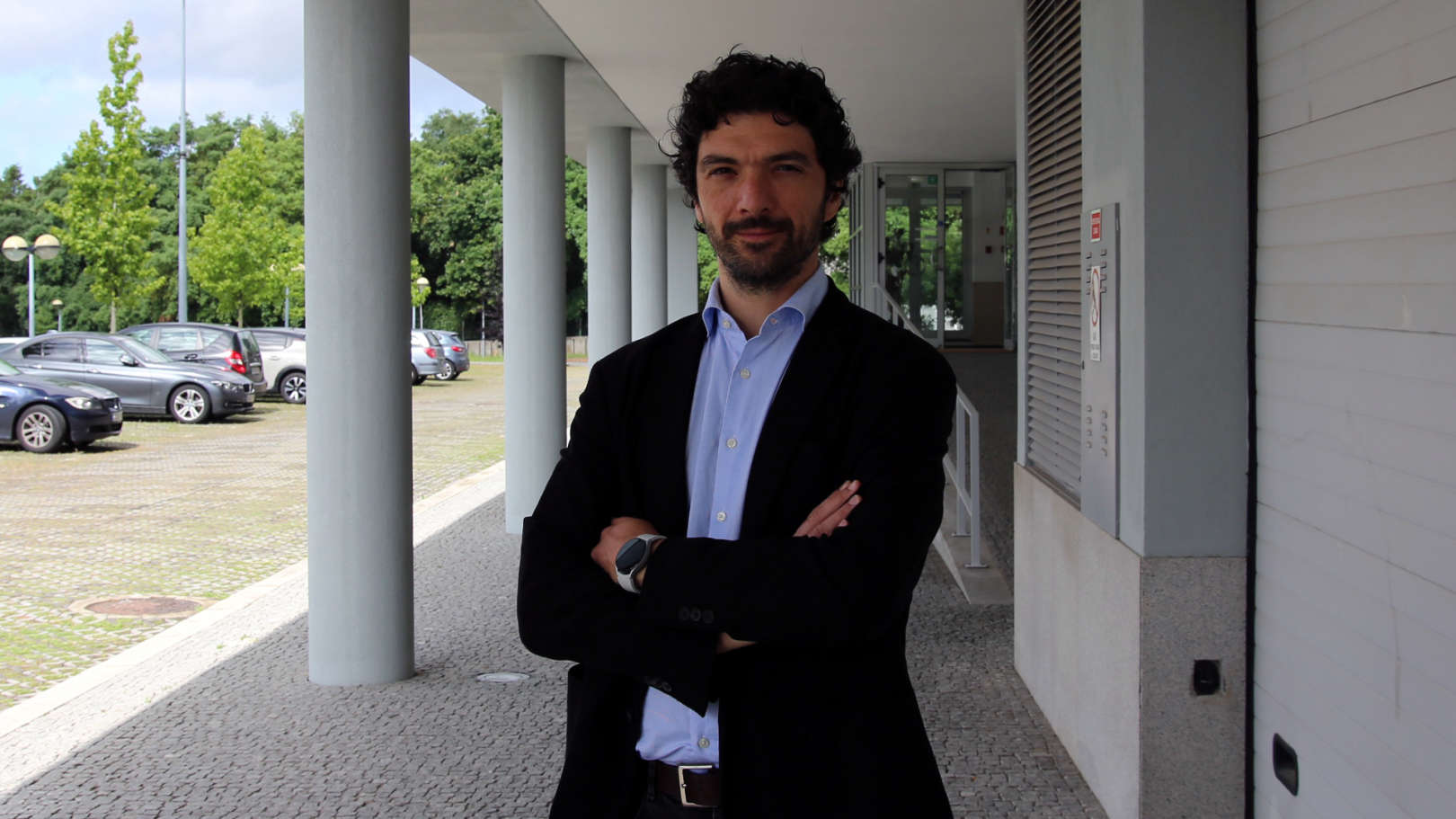
George Dimitri Konidaris is a Professor at Brown University in Providence, RI, USA, specializing in artificial intelligence and robotics. His research focuses on developing advanced algorithms for reinforcement learning, robotic planning, and hierarchical skill acquisition. He leads investigations into model-based reinforcement learning, temporal abstraction, and human-robot interaction frameworks. Konidaris's research bridges fundamental machine learning concepts with applied robotics. Key interests include: Hierarchical reinforcement learning for complex decision-making Robotic skill transfer and generalization Language-guided agent learning Continuous control in high-dimensional spaces Uncertainty-aware planning systems His publications demonstrate consistent focus on reinforcement learning theory applied to robotic systems, with recent emphasis on language integration and hierarchical abstraction. Work frequently appears in premier venues including ICML, NeurIPS, ICRA, and IROS.
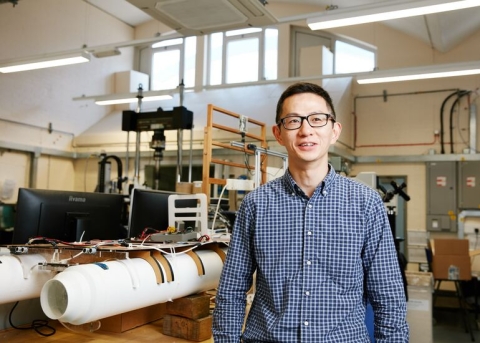
Marco Dadda is an Associate Professor at the Department of General Psychology, University of Padova. His research focuses on the evolution of behavioral asymmetries and lateralized brain functions in vertebrates, alongside studies on animal cognition. He investigates mechanisms underlying perception, learning, and decision-making in species like zebrafish, guppies, and plants. Key interests include lateralization costs/benefits, numerical cognition in fish, and environmental enrichment effects. Research highlights include groundbreaking work on plant communication via volatile compounds and perceptual completion in pea plants. His studies on zebrafish explore early learning, anxiety modulation through environmental factors, and operant conditioning methodologies. He also examines laterality's role in spatial navigation and simultaneous task performance across species. Publications consistently bridge behavioral biology with neuroethology, emphasizing cross-species comparisons (e.g., plant-fish cognition parallels). Ongoing work investigates how developmental experiences (light exposure, predation cues) shape lateralization patterns and cognitive capabilities. His lab employs innovative tools like automated behavioral tracking systems and minimally invasive testing protocols for neonatal fish.
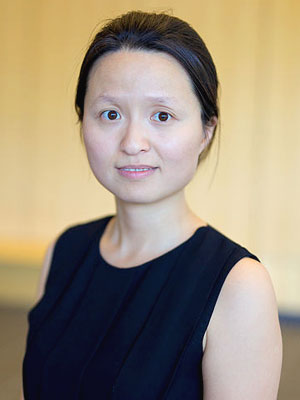
Xiaoxiao Cheng is a Lecturer in Engineering Systems for Robotics at the University of Manchester's Department of Electrical and Electronic Engineering. Previously, he held roles as a Research Associate at Imperial College London (2020-2023) and a Research Fellow at Stanford University (2019-2020). He earned a Ph.D. in Electrical and Electronic Engineering from The University of Melbourne (2019), M.Phil. in Mechanical Engineering from Tsinghua University (2014), and B.Eng. in Mechanical Engineering from Beijing Institute of Technology (2011). His research focuses on intelligent autonomous systems and human-machine interfaces, integrating robotics, control theory, AI, and neuroscience. Key areas include adaptive control for human-robot interaction, sensory integration, intention detection, and multi-sensory feedback for applications in manufacturing and hazardous environments. He actively explores autonomous navigation and computational modeling to enhance human-machine collaboration. Recent publications emphasize haptic feedback systems, shared control in robotic surgery, and multimodal sensory datasets. His work contributes to SDGs related to industry innovation and infrastructure, and sustainable cities. Xiaoxiao Cheng welcomes prospective PhD students in robotics, control systems, and human-machine interaction. He is open to collaborations and can be contacted at Xiaoxiao.cheng@manchester.ac.uk .
Sangyun Shin is a Researcher in the Department of Computer Science at the University of Oxford, supervised by Professors Niki Trigoni and Andrew Markham. His work focuses on advancing object localization systems for robotics through 3D vision technologies. He specializes in integrating multimodal sensing (e.g., RGB-D cameras, acoustic arrays) to enhance robotic perception in challenging environments. His research interests include 3D motion capture for wildlife, domain-adaptive 3D detection, and self-supervised learning for nighttime vision. He has explored applications ranging from long-range wildlife tracking to autonomous drone navigation using reinforcement learning. Recent efforts emphasize sensor fusion and neural network architectures tailored for dynamic environments. Key technical contributions include the SoundLoc3D system for 3D sound localization and the WildPose framework for wildlife motion capture. His publications span topics like acoustic neural warping fields (SPEAR), spherical point cloud segmentation, and LiDAR-based object detection for urban driving. Shin's work bridges theoretical advancements in machine learning with practical robotics applications, addressing challenges such as cross-domain adaptation and low-resource sensor setups. His research has implications for autonomous systems, environmental monitoring, and human-drone interaction interfaces.
Todor Stoyanov is a Senior Lecturer in Computer Science and an affiliated faculty member of the WASP program at Örebro University. He serves as the subject manager in computer science and is part of the Centre for Applied Autonomous Sensor Systems (AASS). His research focuses on autonomy for mobile robots, particularly perception algorithms and motion synthesis for manipulation. He holds a PhD in Computer Science from Örebro University (2012), specializing in autonomous robot navigation. Education: PhD in Computer Science, Örebro University, 2012 (Thesis: Reliable Autonomous Navigation in Semi-Structured Environments Using the 3D Normal Distributions Transform) Research Interests: Dr. Stoyanov's work spans autonomous mobile robots, robot perception, motion planning, and manipulation. Key areas include behavior trees for control, deformable object tracking, and reinforcement learning for knowledge transfer. His research often integrates advanced algorithms with real-world robotics applications in logistics, manufacturing, and environmental monitoring. Research Projects: Ongoing: Labour market effects of AI in knowledge-intensive services Ongoing: Dynamic Agile Production Robots (DARKO) Ongoing: TeamRob - Teams of Robots Working for and with Humans Completed: Action and Intention Recognition in Human-Robot Interaction (AIR) Completed: Autonomous Wheeled Loaders for Material Handling (ALL-4-eHam) Labs/Groups: He leads the Autonomous Mobile Manipulation Lab, focusing on full-body mobile manipulation and human-robot collaboration.
Prof. Dr. Stephan Pareigis is the Head of the Department of Computer Science at Hamburg University of Applied Sciences. He holds a professorship in Applied Mathematics and Technical Informatics. His career includes leadership roles such as Chair of the Examination Board for Computer Science (2005–2018) and founding director of the autosys research lab . His expertise spans autonomous systems, reinforcement learning, robotics, and embedded machine learning. He has extensive industry experience, including roles at Heidelberger Druckmaschinen AG and Siemens AG before joining academia in 2004. His research focuses on bridging simulation and real-world applications in autonomous systems, particularly in miniature platforms for reliable AI development. Education and Academic Journey: 1992: Diplom Mathematiker (LMU Munich, minor in Computer Science) 1998: Dr.rer.nat in Numerical Methods for Reinforcement Learning (CAU Kiel) Research Interests: Autonomous and Intelligent Systems Reinforcement Learning for robotics Embedded Machine Learning Miniature autonomy testing frameworks His work emphasizes real-world applicability through projects like Miniature Autonomy for scalable AI validation. Labs and Teams: Leads the autosys research lab , focusing on autonomous systems research and industry collaboration through the Forschungs- und Transferzentrum Smart Systems .
Krishnanand Kaipa is an Associate Professor in the Department of Mechanical & Aerospace Engineering at Old Dominion University (ODU), affiliated with the Batten College of Engineering and Technology. He holds a Ph.D. in Aerospace Engineering from the Indian Institute of Science (2007) and has held roles such as J R D Tata Research Fellow (2007-2008). His research focuses on collaborative robotics, social robotics, swarm intelligence, and embodied cognition, with notable contributions to glowworm swarm optimization algorithms and human-robot collaboration systems. Kaipa leads the Collaborative Robotics and Adaptive Machines Laboratory, advancing applications in manufacturing, assistive robotics, and bio-inspired design. His work bridges robotics, AI, and biology, yielding over 30 peer-reviewed articles and a seminal book on Glowworm Swarm Optimization (Springer, 2017). Key projects include safe human-robot collaboration frameworks, perception-driven robotic bin-picking systems, and bio-inspired quadrupedal robots. Kaipa has received awards such as the ASME Best Paper Award (2013) and the Outstanding Book Chapter in Handbook of Swarm Intelligence (2010). Education and mentorship are central to his career: he advises Ph.D. students like Michael Wang and Siqin Dong, and integrates interdisciplinary teaching in robotics, computational methods, and assistive technologies. His lab explores cutting-edge topics like non-repetitive robotic drilling, underwater robotics, and surgical robotics, emphasizing real-world applications in manufacturing and healthcare. Publications span journals like Robotica , IEEE Transactions on Automation , and Swarm Intelligence , while his research is supported by grants addressing perception uncertainty, swarm algorithms, and collaborative robotics safety. Kaipa’s work has been featured in venues like ScienceNews, Popular Mechanics, and Vermont Public Television, highlighting his transdisciplinary impact.
Dr. Andrew Hogue is an Associate Professor at Ontario Tech University within the Faculty of Business and Information Technology's Game Development and Interactive Media program. His research focuses on virtual reality (VR), stereoscopic visualization, and user experience optimization. He leads the Game Development Lab, equipping students with cutting-edge technology for research and training. Hogue holds a PhD, MSc, and BSc in Computer Science from York University. He has supervised over 40 undergraduate and five graduate students, securing over $4 million in research funding. His work spans gaming, robotics, simulation, and forensics, with over 30 publications in journals and conferences. Research Interests include developing photorealistic 3D models via photogrammetry, evaluating VR's environmental and design parameters, and enhancing immersive experiences through computer vision. Notable contributions include frameworks for VR user studies (StudyXR/StudyVR) and volumetric video techniques for gaming and education. His articles highlight advancements in volumetric video compression, XR therapeutic tools, and serious games addressing social issues. Collaborations include projects with McMaster Children’s Hospital and IBM, emphasizing real-world applications of VR/AR technologies. Through experiential learning initiatives, Hogue bridges academic research with industry needs, fostering innovation in interactive media and technology-driven solutions.
Dr. Andrew Kolarik is a Research Fellow at Anglia Ruskin University's School of Medicine within the Faculty of Health, Medicine and Social Care. His primary affiliation is with the Vision and Eye Research Institute. He holds a PhD in Auditory Psychology from Cardiff University and is a Fellow of the Higher Education Academy. His research focuses on how visual impairment affects auditory spatial perception, particularly in navigation and sensory substitution. He has held visiting roles at Cambridge University and the University of London's Centre for the Study of the Senses. Key research interests include echolocation in blind individuals, auditory distance perception, and cross-modal cortical reorganization. He has supervised multiple students, including PhD candidate Elena Altobelli. His teaching experience includes Cognitive Psychology modules at undergraduate level. Recent grants include funding from Anglia Ruskin University for studies on spatial abilities in visually impaired individuals and a 2018 review role for the Netherlands Organization for Health Research and Development. His work combines psychophysical techniques, virtualization, and human movement analysis to explore auditory spatial representations in blind listeners. Scientific Awards: Fellow of the Higher Education Academy (HEA) Key Lab Affiliations: Vision and Eye Research Institute, Anglia Ruskin University
Henny Admoni is an Associate Professor in the Robotics Institute at Carnegie Mellon University (CMU), with a courtesy appointment in the Human-Computer Interaction Institute. She leads the Human And Robot Partners (HARP) Lab, focusing on assistive and collaborative robotics, particularly how robots can interpret human nonverbal cues like eye gaze to improve interactions. Her research spans healthcare, human-robot teamwork, and socially assistive robotics, supported by NSF, ONR, and industry partners. Admoni holds a PhD in Computer Science from Yale University and a BA/MA from Wesleyan University. Education PhD in Computer Science, Yale University BA/MA in Computer Science, Wesleyan University Research Interests Admoni’s work emphasizes human-centered robotics, including assistive systems for mobility-impaired users, driver situational awareness modeling, and fostering social support networks through AI. She investigates how robots can proactively learn from humans, adapt to team dynamics, and communicate transparently to build trust. Key themes include nonverbal communication, shared autonomy, and ethical design. Grants & Awards NSF CAREER Grant (2020) Okawa Research Grant (2021) A. Nico Habermann Career Development Professorship (CMU) Advising & Teaching Admoni advises graduate students on topics like robot learning, assistive systems, and human-robot teaming. She teaches courses on Human-Robot Interaction at both undergraduate and graduate levels, emphasizing interdisciplinary approaches that blend robotics, AI, and cognitive science. Labs & Projects The HARP Lab develops robots for meal preparation assistance, driving support, and socially assistive interventions. Current projects include the HARMONIC dataset for collaborative tasks and COHUMAIN for socio-cognitive architectures in human-machine teams. Admoni is on sabbatical at KTH University through 2025.
Sharon Di: Academic Overview Sharon Di is an Associate Professor in the Department of Civil Engineering and Engineering Mechanics at Columbia University. She holds affiliations with the Data Science Institute (DSI), serving as Co-Chair of the Smart Cities initiative. Her research bridges theoretical frameworks with practical applications in transportation systems, leveraging emerging technologies like AI, data analytics, and cyber-physical systems to enhance infrastructure resilience and urban mobility efficiency. Research Focus: Di's work emphasizes travel behavior analysis during disruptions (e.g., natural disasters), optimization of traffic networks, and the integration of autonomous vehicles and ride-sharing services. Her methodologies include game theory, reinforcement learning, and physics-informed deep learning applied to large-scale sensor data. Recent projects explore digital twins for urban planning and causal inference in transportation decision-making. Key Contributions: Di has pioneered frameworks for adaptive traffic signal control, resilient infrastructure design, and multimodal mobility modeling. Her lab, DitectLab ( website ), develops AI-driven solutions for smart cities, with applications in real-time traffic management and safety optimization. She also serves on the Center for Smart Cities committee within Columbia's Data Science Institute.
Germano Veiga is an Assistant Professor at the Faculty of Engineering of the University of Porto and Senior Researcher at INESC TEC in Porto. He holds a PhD in Mechanical Engineering (Robotics and Automation) from the University of Coimbra (2010). His research focuses on future industrial robotics, including plug-and-produce technologies, mobile manipulators, and human-robot interfacing. He has led major EU projects such as H2020 ScalABLE4.0 and coordinated teams in FP7 initiatives like CARLoS and STAMINA. His work emphasizes automation in automotive manufacturing, sensor integration, and collaborative robotics. Education: PhD in Mechanical Engineering (Robotics and Automation), University of Coimbra, 2010 Mechanical Engineering Degree Research Interests: Industrial robotics, human-robot collaboration, automated manufacturing systems, 3D sensing, and quality control. His recent projects address challenges in automotive assembly lines, bin-picking robotics, and ergonomic laboratory automation. Recent Projects: Coordinator of H2020 ScalABLE4.0 (2017-?) FP7 ECHORD Executive Committee (2009-2012) FP7 SMErobotics (part of coordination team) Advising & Grants: Supervised 6+ graduate theses in robotics and automation. Active in EU-funded research coordination. Labs & Teams: Leads robotics teams at INESC TEC focusing on Industry 4.0 solutions and cyber-physical systems integration.
Dr. Hammadi Nait-Charif is an Associate Professor in Animation at Bournemouth University. His research spans computer graphics, medical imaging, and neural networks, with a focus on applications in healthcare technology and interactive systems. He has contributed to advancements in motion tracking, 3D reconstruction, and assistive elderly care frameworks like ANGELAH. His work integrates interdisciplinary approaches combining computer vision, biomedical engineering, and machine learning. Research Interests : His key areas include computer animation techniques, medical image analysis (e.g., mammography and vertebra tracking), human motion capture systems, and fault-tolerant neural network architectures. Recent projects involve multi-modal feature fusion for medical report generation and holographic display technologies. Grants & Contributions : He secured a grant for developing a handheld POS system (InnovateUK, 2011). His collaborations span institutions worldwide, addressing challenges in elderly care, surgical training simulators, and spinal imaging. Labs & Teams : His work often involves interdisciplinary teams focusing on medical imaging solutions and animation systems integration.
Ya Huang is an Associate Professor in Human Motion Dynamics at the University of Portsmouth, affiliated with the School of Electrical and Mechanical Engineering within the Faculty of Technology. He specializes in human responses to motion, signal processing, and vibration analysis. Huang joined Portsmouth in 2009 after postdoctoral research at the University of Sheffield on structural dynamics and earned his PhD in human responses to whole-body vibration from the Institute of Sound and Vibration Research (ISVR), University of Southampton (2008). Education: PhD in Human Responses to Whole-Body Vibration, University of Southampton (2008) Postdoctoral Researcher, Blast and Impact Dynamics Group, University of Sheffield Research Interests: Dr. Huang focuses on applying analytical and computational methods to understand human biomechanical responses to whole-body vibration and mechanical shocks across land, air, and sea transport. Key areas include: - Development of signal reconstruction methodologies for vibration analysis - Maritime safety through real-time wave imaging and vessel seakeeping optimization - Musculoskeletal modelling for crew bracing strategies on fast lifeboats Grants & Projects: EPSRC-funded project (EP/X035778/1) for real-time semantic wave imaging in maritime safety Royal National Lifeboat Institution (RNLI)-funded studies on crew dynamics on lifeboats Development of stereo vision systems for ocean wave analysis Awards: Best Conference Paper Award at IEEE Conference on Intelligent Systems (2020) Labs & Teams: Part of the Centre of Excellence in Defence, Risk & Resilience. Collaborates on projects involving hydrodynamics, autonomous vessels, and human-centred marine transport design.
Anuradha Ravi is a Research Assistant Professor in the Department of Information Systems at the University of Maryland, Baltimore County (UMBC). Previously, she served as a Research Scientist at the Living Analytics Research Center, Singapore Management University (2018-2023), and as an Assistant Professor at Shiv Nadar University (2016-2018). She holds a Ph.D. in Computer Science from the Indian Institute of Technology Roorkee, where her doctoral research focused on optimizing energy efficiency and latency reduction for mobile devices through intelligent offloading strategies in heterogeneous networks. Her research interests span multiple cutting-edge domains in computing and networking: Distributed machine intelligence at the edge Low-power AI systems for IoT devices Indoor localization and occupancy sensing Wireless networking protocols Mobile and ubiquitous computing Smart building management systems Analysis of her recent publications (2015-2025) reveals a consistent focus on efficiency optimization in constrained environments, with key themes including autonomous robotics, AI-driven compression techniques, multi-sensor localization, and energy-aware mobile systems. Her work increasingly emphasizes real-world applications in contested or resource-limited settings, leveraging machine learning for adaptive solutions. She actively mentors graduate students at UMBC in projects related to perception systems for unmanned vehicles, compression-aware federated learning, and network middleware development. During her tenure at Shiv Nadar University, she supervised undergraduate research on cooperative IoT strategies and 5G edge computing. She previously contributed to the Living Analytics Research Center's initiatives in smart building occupancy detection and collaborative machine intelligence frameworks for IoT devices.