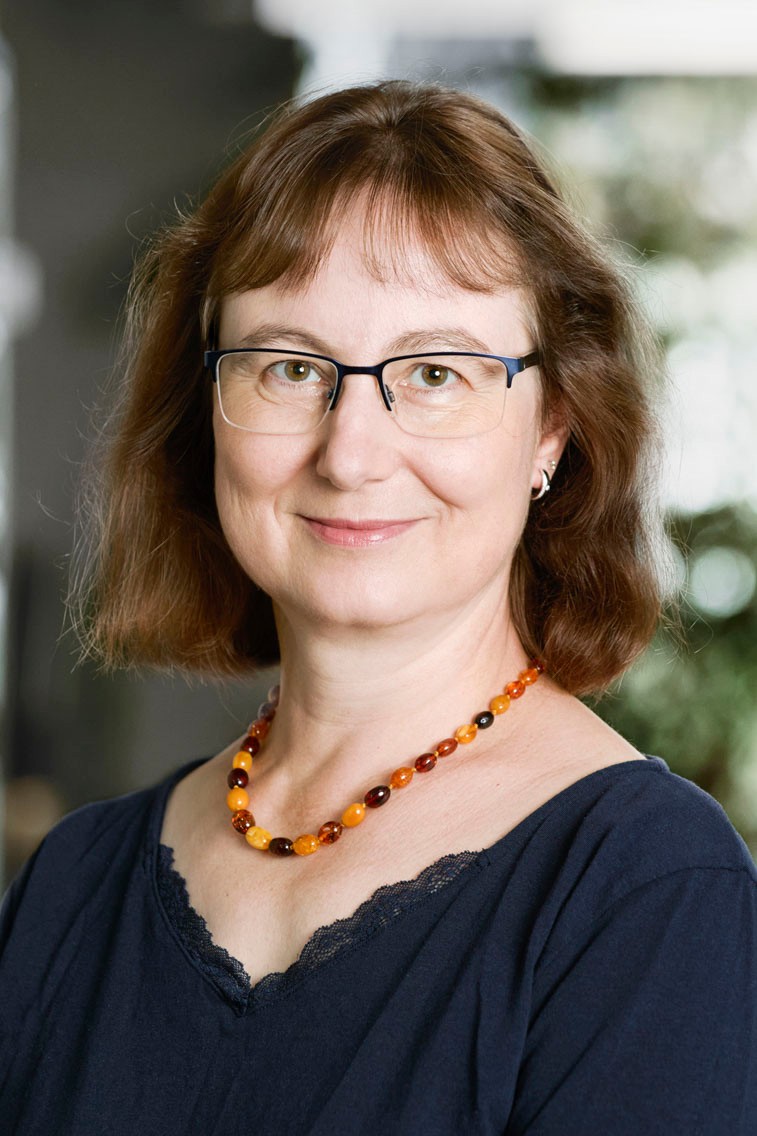
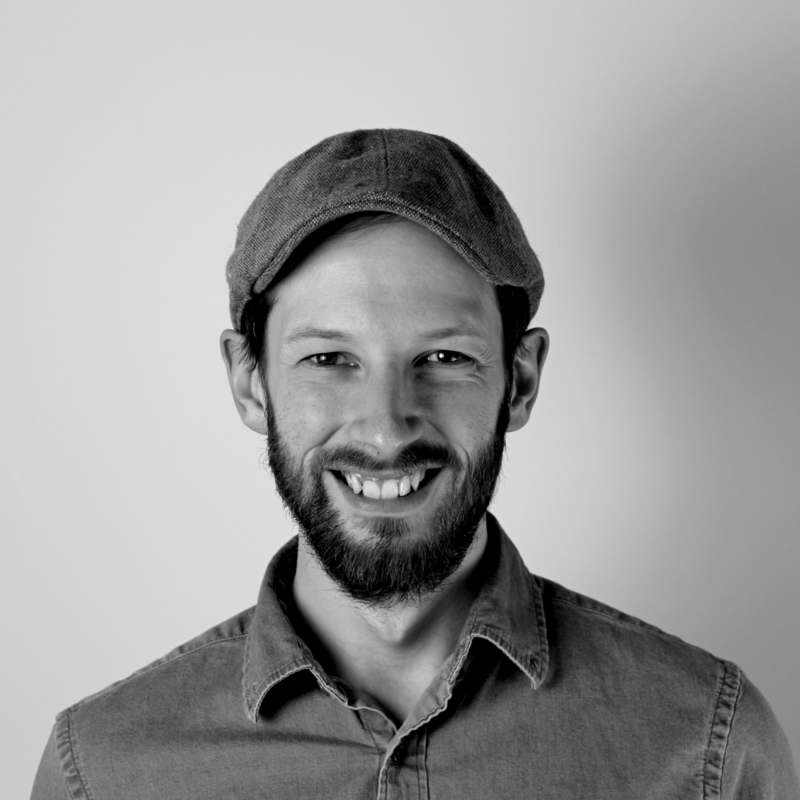
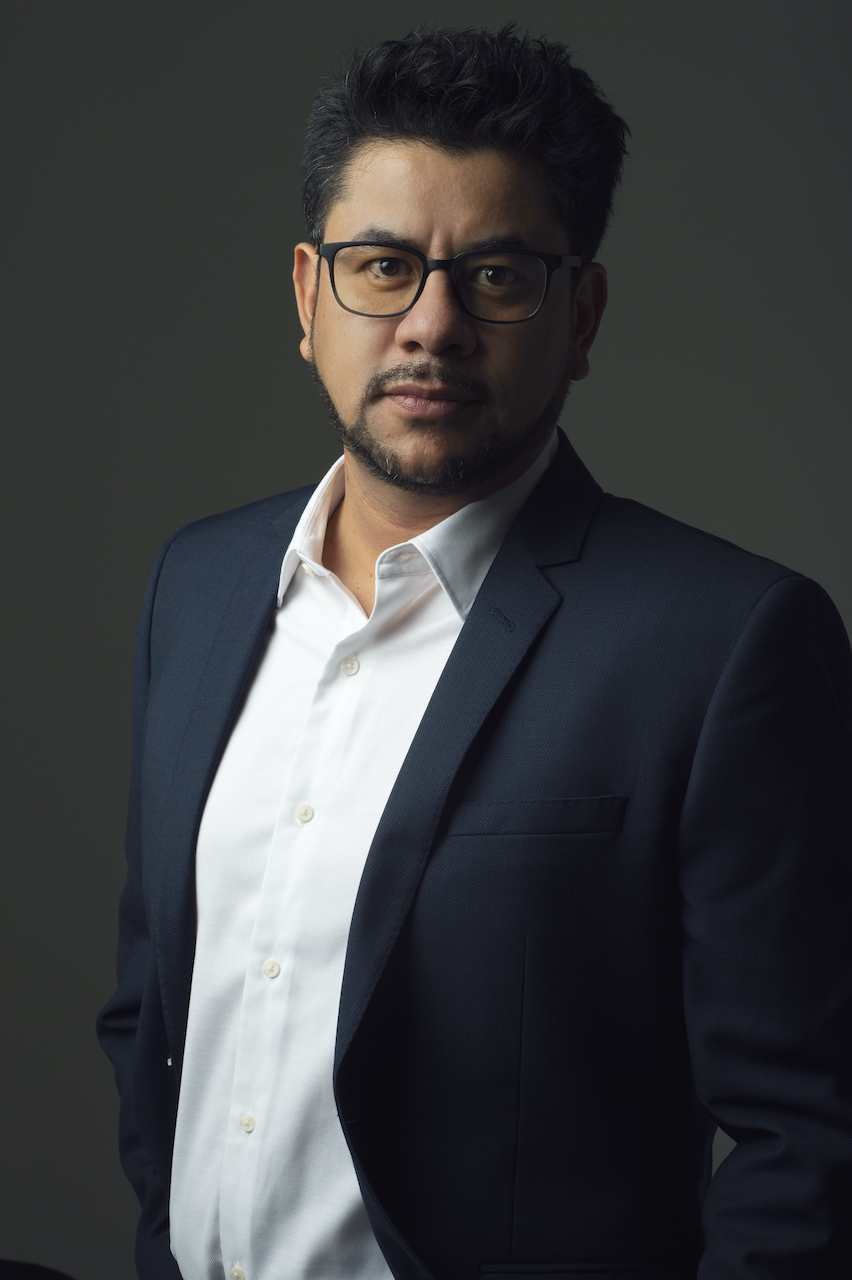
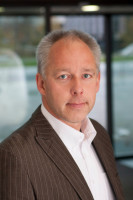
Changan Chen holds the Professorship for Robotic Systems at ETH Zürich, Switzerland. His research focuses on advancing robotic systems, particularly in autonomous navigation, sensor fusion, and safe path planning for mobile robots. He is affiliated with the Department of Robotic Systems and can be contacted at chencha@ethz.ch . His work emphasizes practical applications in challenging environments, leveraging interdisciplinary approaches from computer science and engineering. Recent contributions include advancements in floorplan localization and multi-goal planning algorithms.
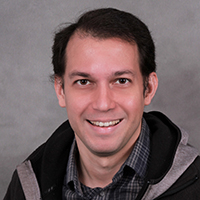
Cornelia Della Casa is a Researcher affiliated with the Professorship for Autonomous Systems at ETH Zürich's Department of Mechanical and Process Engineering. Her work focuses on advancing robotics and autonomous systems, with notable involvement in European Commission-funded projects such as HERON (2021-2025), AERO-TRAIN (2021-2024), and HARMONY (2021-2024). These projects address challenges in robotic maintenance, healthcare assistance, and infrastructure maintenance. Key projects include developing autonomous robotic platforms for roadworks maintenance (HERON), training next-gen European infrastructure technicians (AERO-TRAIN), and enhancing healthcare through robotic mobile manipulation (HARMONY). She has also contributed to earlier initiatives like CROWDBOT (2018-2021) on safe robot navigation in crowds and V-Charge (2011-2015) for autonomous e-mobility charging. No scientific awards or specific publications are explicitly listed, though her extensive project portfolio underscores her research contributions in robotics and automation.
Christian Muise is an Assistant Professor at Queen's University's School of Computing, part of the Faculty of Arts and Science. He holds a PhD (2014) in Artificial Intelligence from the University of Toronto, where he was advised by Sheila McIlraith and J. Christopher Beck. His research focuses on automated planning under uncertainty, combining planning with learning for applications like goal-oriented dialogue systems and multi-agent coordination. He previously held postdoctoral roles at the University of Melbourne's Agentlab and MIT's CSAIL, and was a Research Staff Member at the MIT-IBM Watson AI Lab. Education: PhD in Artificial Intelligence, University of Toronto (2014) MSc in Computer Science, University of Toronto (2009) BSc in Computer Science, Carleton University (2007) Research Interests: His work bridges automated planning and machine learning, emphasizing robustness in uncertain environments. Key areas include non-deterministic planning, model acquisition with large language models (LLMs), and human-aware planning. He explores applications in healthcare (e.g., treatment response prediction), robotics (autonomous navigation), and dialogue systems for safety-critical domains. Current projects include developing explainable planning systems and mitigating bias in AI decision-making. Awards: Scotiabank Scholar (Scotiabank Centre for Customer Analytics) Advising & Labs: Leads the Mu Lab, supervising PhD and Master's students in topics like model acquisition, dialogue systems, and planning bias. Active in open-source tools (e.g., L2P, MACQ library) to democratize planning research. Collaborates on projects like PRP Rebooted and FixMyPlan to advance FOND planning and LLM integration. Labs/Teams: Mu Lab at Queen’s University, focusing on planning under uncertainty, AI safety, and neuro-symbolic systems.
Evangelos Boukas is an Assistant Professor at Aalborg University Copenhagen and a former PhD Candidate in Robotics Vision at the Democritus University of Thrace. He is affiliated with the Group of Robotics & Cognitive Systems (Gryphon Lab) and ESA's Automation and Robotics Laboratory (ESTEC). His research focuses on robotic vision, autonomous systems, and space exploration technologies. He has contributed to projects like SPARTAN and ESA-funded localization initiatives. Boukas has co-taught courses in Robotics, Mechantronics, and Robotics Vision, and co-supervised diploma theses in areas like 3D object recognition and robot navigation. His work employs open-source frameworks (ROS/ROCK) and tools like MATLAB. Education: PhD Candidate (2012-current): Robotics Vision, Democritus University of Thrace MSc (2010-2012): Electrical and Computer Engineering, Democritus University of Thrace Diploma (2005-2010): Production & Management Engineering, Democritus University of Thrace Research Highlights: Designed robots like the Heavy Duty Planetary Rover (HDRP) and MAGGIE, developed algorithms for planetary rover localization, and worked on ESA-funded projects. His interests include modular robotics systems and probabilistic approaches in autonomous systems. Labs/Teams: Gryphon Lab, ESA's Automation and Robotics Laboratory (ARL).
H. Paco Kang, MD, is a Clinical Assistant Professor of Orthopaedic Surgery at the University of Southern California's Keck School of Medicine. He specializes in musculoskeletal oncology, treating benign and malignant tumors in the pelvis and extremities while managing skeletal metastases in lung, breast, and thyroid cancer patients. He practices at USC Norris Comprehensive Cancer Center within Keck Medicine of USC, collaborating with multidisciplinary teams. Education: MD from Columbia University Fellowship: Musculoskeletal Oncology at Harvard Medical School Dr. Kang's clinical research focuses on improving functional outcomes and survival for metastatic cancer patients through innovations like carbon-fiber implants, 3D-printed reconstructions, and robotic surgery. His recent publications highlight trends in technology-assisted arthroplasty, surgical complications in orthopaedic oncology, and outcomes in sports medicine procedures. His work spans areas such as: Robotic and navigation-assisted joint replacements Functional outcome metrics for sarcoma patients Anticoagulation safety in arthroplasty Biomechanical risk factors in postoperative stability Impact of preoperative imaging on surgical planning
Moharram Challenger is a tenure-track Assistant Professor in the Department of Computer Science at the University of Antwerp's Faculty of Sciences. Previously, he served as an assistant professor at Ege University (2017-2018) and as a post-doctoral researcher at the University of Antwerp (2019-2020) working on Flanders Make projects PACo and DTDesign. His academic journey includes R&D leadership roles at UNIT IT Ltd. (2012-2016), post-doctoral research at Wageningen University (2016-2017), and tenure-track faculty positions at IAU-Shabestar University (2005-2009). His research spans Cyber-physical Systems , Multi-agent Systems , and Domain-specific Modeling Languages , with recent publications focusing on quantum machine learning, digital twinning, and IoT optimization. Key projects include ITEA ModelWriter, ITEA Assume, and Flanders Make initiatives. His work demonstrates strong integration of model-driven engineering with emerging technologies like quantum computing and reinforcement learning. Challenger actively contributes to the academic community as a member of IEEE and ACM . His publication record shows consistent output across top venues, with 2025 featuring significant work in quantum-enhanced learning and CPS security. Current research emphasizes practical applications in drone energy modeling, medical diagnostics, and industrial IoT systems. His advising activities focus on cyber-physical systems and agent-based modeling, supported by grants from TUBITAK and Flanders Innovation & Entrepreneurship. Key collaborations include European ITEA projects and partnerships with industrial entities through UNIT IT Ltd. Challenger maintains active development through GitHub repositories related to code refactoring, model-driven engineering, and legacy system modernization, reflecting his commitment to practical software engineering solutions.
Markus Bader is a PostDoc Researcher at the Technische Universität Wien's Faculty of Informatics, Department of Automation Systems. He holds roles as Curriculum Coordinator for Master's programs in Automation Systems and Mobile Robotics, and serves on multiple academic committees including the Faculty Council and Curriculum Commissions for Informatics and Computer Engineering. He earned his Diplom-Ingenieur (2006) and Doctor Technica (Dr.techn.) from TU Wien. His research focuses on autonomous systems, mobile robotics, and control systems, with notable work on multi-robot coordination, path planning algorithms, and real-time navigation in human environments. Key projects include TransportBuddy (2018), exploring navigation in human spaces, and the Formula Student Driverless race car design (2017). Bader has led or contributed to funded projects such as the Austrian Research Promotion Agency (FFG)-supported Green Facade Digital Twin (2025–2027), Independent Wheel Offset Steering (2016–2017), and MPCv1 (2015–2017), emphasizing model predictive control and sensor integration. Research Highlights : Prioritized multi-robot route planning (MRRP), human motion prediction for autonomous navigation, and sensor fusion for vehicle localization. Grants : FFG-funded projects totaling over €2.5M, including autonomous vehicle coordination and mobile robotics tool development. He advises students on topics like ROS2-based route planning and independent steering systems, with 7+ supervised theses documented. Bader's work bridges theoretical robotics research with practical applications in industrial automation and autonomous vehicle systems.
Mehmet Çayören is a Professor at Istanbul Technical University in the Department of Electronics and Communication Engineering. His research focuses on applying microwave imaging techniques to medical diagnostics, particularly for early detection of breast cancer. He leads the development of the SAFE (Screening and Early Detection) microwave imaging system, which has shown promising results in clinical investigations. His work bridges electrical engineering, biomedical applications, and machine learning for improved cancer screening. Dr. Çayören's research interests span multiple domains within electromagnetic applications for medical imaging: Microwave imaging systems for breast cancer detection and screening Determination of dielectric properties of biological tissues Development of open-ended coaxial probe techniques for material characterization Application of machine learning algorithms (XGBoost, SVM) to enhance medical imaging Monitoring of intracerebral hemorrhage using microwave imaging Development of tissue-mimicking phantoms for medical device validation His recent publications demonstrate a strong trend toward integrating advanced machine learning techniques with microwave imaging systems to improve diagnostic accuracy. The SAFE platform represents a significant advancement in non-invasive breast cancer screening, particularly for dense breast tissue where traditional mammography has limitations. His work also extends to neurological applications, with research on microwave-based monitoring of brain hemorrhages. Scientific awards received by Dr. Çayören include: Teknoloji Ödülü (Technology Award) in 2014 Dr. Çayören has supervised 24 students and leads multiple research projects funded by various sources including TUBITAK. His current projects focus on microwave imaging systems for breast cancer screening, monitoring of intracerebral hemorrhage, and hardware design for microwave imaging systems. He collaborates extensively with medical professionals to validate his imaging systems in clinical settings. Dr. Çayören leads a research group focused on microwave imaging applications in medicine. His team develops both hardware systems (like the SAFE platform) and advanced signal processing algorithms to improve medical diagnostics. The group maintains close collaborations with hospitals for clinical validation of their imaging systems.
Frank Steinicke is a Professor at the University of Hamburg and previously affiliated with the University of Münster. His research focuses on Virtual Reality (VR), Human-Computer Interaction (HCI), and immersive technologies. He holds a PhD in Computer Science from the University of Münster (2007). Affiliations: University of Hamburg (Computer Science Department), University of Münster (previous). Roles: Professor, Researcher in VR and HCI. Research Interests: Steinicke specializes in redirected walking techniques, exergames, haptic feedback, and immersive analytics. His work spans VR navigation, human-agent interaction, and neural radiance fields (NeRF) for 3D reconstruction. Recent projects include real-time 3D scans for medical applications and mobile VR teleoperation systems. Publications: Over 300+ publications in top venues like IEEE TVCG, VR, and CHI. Key contributions include foundational work on redirected walking thresholds and immersive locomotion systems. Awards: Not explicitly listed in the provided data. However, his extensive publication record suggests recognition in VR and HCI communities. Labs/Teams: Collaborates with interdisciplinary teams on projects involving medical VR, exergame design, and intelligent virtual agents.
Dr. Eduardo Benitez Sandoval is a social robotics researcher at UNSW Sydney, affiliated with the School of Arts, Design & Architecture. His work focuses on reciprocity in Human-Robot Interaction (HRI), robots in education and healthcare, and ethical implications of social robotics. He holds a PhD in Human Interface Technology from the University of Canterbury (2016) and a Master's in Industrial Design from UNAM (2012). He has received notable awards including the 1st Place Video HRI Award (2016) and recognition as one of Mexico's 30 Promising Young Mexicans (2015). His research explores decision-making in HRI, robot design principles, and the societal impact of AI. He emphasizes 'robot ergonomics' and 'human-centric design' in creating socially meaningful machines. Current supervision includes two master’s students at UNSW's School of Computer Science and availability to mentor PhD candidates in HRI, social robotics, and interaction design. Teaching includes 'Research Foundations' and 'Human Centred Design' courses. Key research themes include addiction to robots, conflict mediation via robots, and cultural preservation through robotic agents (e.g., Robot Maori Haka project). He advocates for robots 'in the wild' testing, combining quantitative and qualitative HRI evaluation. Collaboration opportunities exist in multidisciplinary projects blending robotics, psychology, and design. His work has led to over 50 publications including designs/architecture works like the 3D-printed social robot prototype (2020). Awards reflect both academic excellence (e.g., Alfonso Caso Medal) and innovation (e.g., Startup Weekend recognition). He actively engages in public discourse via media appearances and maintains professional profiles on LinkedIn, ResearchGate, and Google Scholar.
Izabela Ewa Nielsen is a Professor at Aalborg University's Department of Materials and Production under The Faculty of Engineering and Science. Her research focuses on artificial intelligence applications in operations research, unmanned aerial vehicles (UAVs), genetic algorithms, and mobile robotics. She holds a degree from Warsaw University of Technology (25 Oct 2025). Research Interests: Her work integrates AI with logistics optimization, health data analysis, and sustainable supply chains. Notable projects include the EU-funded 'Operational Reliability Management System (ORMS)' and 'UAWORLD', exploring UAVs in industrial settings. Projects & Collaborations: Leading ORMS (2016-2019) to enhance operational reliability through AI-driven solutions. Contributing to TAPAS (2010-2014), advancing robotics in factory automation. Co-developing ValuePole (2008-2011) for SME performance optimization. Advising & Grants: Supervised projects such as the EU classification methodology study (2022-2023) and contributed to over 6 major research initiatives. Her work frequently involves interdisciplinary teams and industry partnerships. Labs & Teams: Active in AI for Operations Research labs, collaborating with robotics and logistics experts. Her group focuses on real-world applications of autonomous systems in manufacturing and healthcare.
Juan Carlos Torres Zafra is a Visiting Professor at Universidad Carlos III de Madrid. His research focuses on optoelectronics, liquid crystal technologies, visible light communication (VLC), and sensor systems. His work spans interdisciplinary areas including energy-harvesting IoT nodes, indoor positioning systems, and optical communication interfaces for high-definition media transmission. Torres Zafra has contributed to advancements in semiconductor materials (e.g., perovskites), low-cost sensor networks, and hybrid RF-VLC positioning systems. His research also extends to educational technology, exploring tools like Telegram and Google Workspace for improving student engagement in cybersecurity engineering programs. Notable projects include the GUTI group's work on optical vortices using liquid crystal devices and the development of tunable resonators based on liquid crystal capacitance. His publications from 2020–2025 highlight trends in VLC system optimization, AI-driven disinformation detection (SmartVote-AI initiative), and medical studies on amyloidosis therapy outcomes. Torres Zafra’s work often emphasizes practical applications in robotics, automotive systems, and sustainable energy solutions. While no formal awards are listed, his extensive publication record (over 80 entries from 2004–2025) reflects sustained contributions to photonics, sensor engineering, and liquid crystal device innovation. His research integrates hardware design, algorithm development, and material science to address challenges in modern communication systems and assistive technologies for visually impaired patients.
Prof. Dr. Christof Büskens is a Professor of Technomathematics at the University of Bremen, leading the AG Optimierung und Optimale Steuerung (Optimization and Optimal Control Group) within the Faculty of Mathematics and Computer Science . His research focuses on Optimization, Optimal Control, and their applications in industrial and real-time systems. He holds leadership roles in interdisciplinary projects such as BESTVILLE and Safety Control Center for autonomous vehicle systems, and has contributed to maritime navigation, renewable energy management, and agricultural robotics. Büskens has supervised numerous PhD and master's students, advancing topics like autonomous exploration, neural architecture search, and trajectory optimization. His work integrates advanced numerical methods with practical applications, emphasizing real-world problem-solving in dynamic systems. Key affiliations include the ZeTeM (Center for Industrial Mathematics) and collaborations with industry partners. He has led over 20 projects since 2020, addressing challenges in autonomous systems, energy systems, and robotics. His educational contributions include courses on numerical analysis and optimal control, fostering interdisciplinary training for future researchers. Büskens' expertise bridges theoretical optimization and applied engineering, with over 100 publications and contributions to software tools like the WORHP solver.
Ricardo A. Calix is a Professor of Computer Information Technology at Purdue University Northwest. His research focuses on Machine Learning, Natural Language Processing, AI applications in Cyber Security and Healthcare, and Deep Learning methodologies. He holds a Ph.D. in Engineering Science from Louisiana State University. Key research areas include ethical AI model analysis, reinforcement learning for aerospace control systems, and industrial automation through machine learning. His work spans cybersecurity tools (e.g., CyberSecTK) and healthcare data mining from social media. Calix has secured grants as PI/Co-PI for projects like 'Detection of Potential Drug Effects from Twitter Data' (NIH) and 'A Smart and Fast IDS' (Northrop Grumman). He authored Getting Started with Deep Learning: Programming and Methodologies Using Python (2017). Recent publications (2023-2024) address biases in AI models, blast furnace automation, and autonomous aircraft control via reinforcement learning. His work bridges theoretical AI with practical applications in industry and security.
Sven Schewe is a Professor in the Department of Computer Science at the University of Liverpool, affiliated with the School of Electrical Engineering, Electronics and Computer Science. He leads the AI Section and is a founding member and former leader of the Verification Group. He also has secondary affiliations with the Algorithms, Complexity Theory and Optimisation Group and the Institute for Risk and Uncertainty. Research Interests: His research centers on automata theory and game theory, particularly their applications in the verification and synthesis of reactive and safety-critical systems. He investigates infinite-duration games, automata over infinite words and trees, and develops algorithms and tools for automated verification, synthesis, and learning of optimal control strategies. His work extends to reinforcement learning with formal guarantees, cyber-physical systems, and AI safety. Recent Research Trends: His recent publications demonstrate a strong integration of formal methods with machine learning, particularly in adversarial training, neural network robustness, and model-free reinforcement learning under omega-regular objectives. He also applies formal reasoning to interdisciplinary domains such as chemical space exploration and materials science. Scientific Awards: Finalist for the ERCIM Cor Baayen Award 2010 Dr. Eduard Martin Preis 2009 GI Dissertation Award 2008 Advising and Grants: He actively supervises numerous PhD students and postdoctoral researchers. He is Principal Investigator (PI) or Co-Investigator (CI) on multiple major grants, including EPSRC Programme Grants, Royal Society Fellowships, and Horizon Europe projects. His funded research spans topics such as game theory, verification, synthesis, reinforcement learning, and risk analysis. He has hosted visiting researchers and collaborated internationally with institutions in Germany, France, India, Taiwan, and the US. Labs and Teams: He co-founded and led the Verification Group and previously led the AI Section at the University of Liverpool. These groups focus on formal methods, automata, games, and their applications in AI and safety-critical systems.