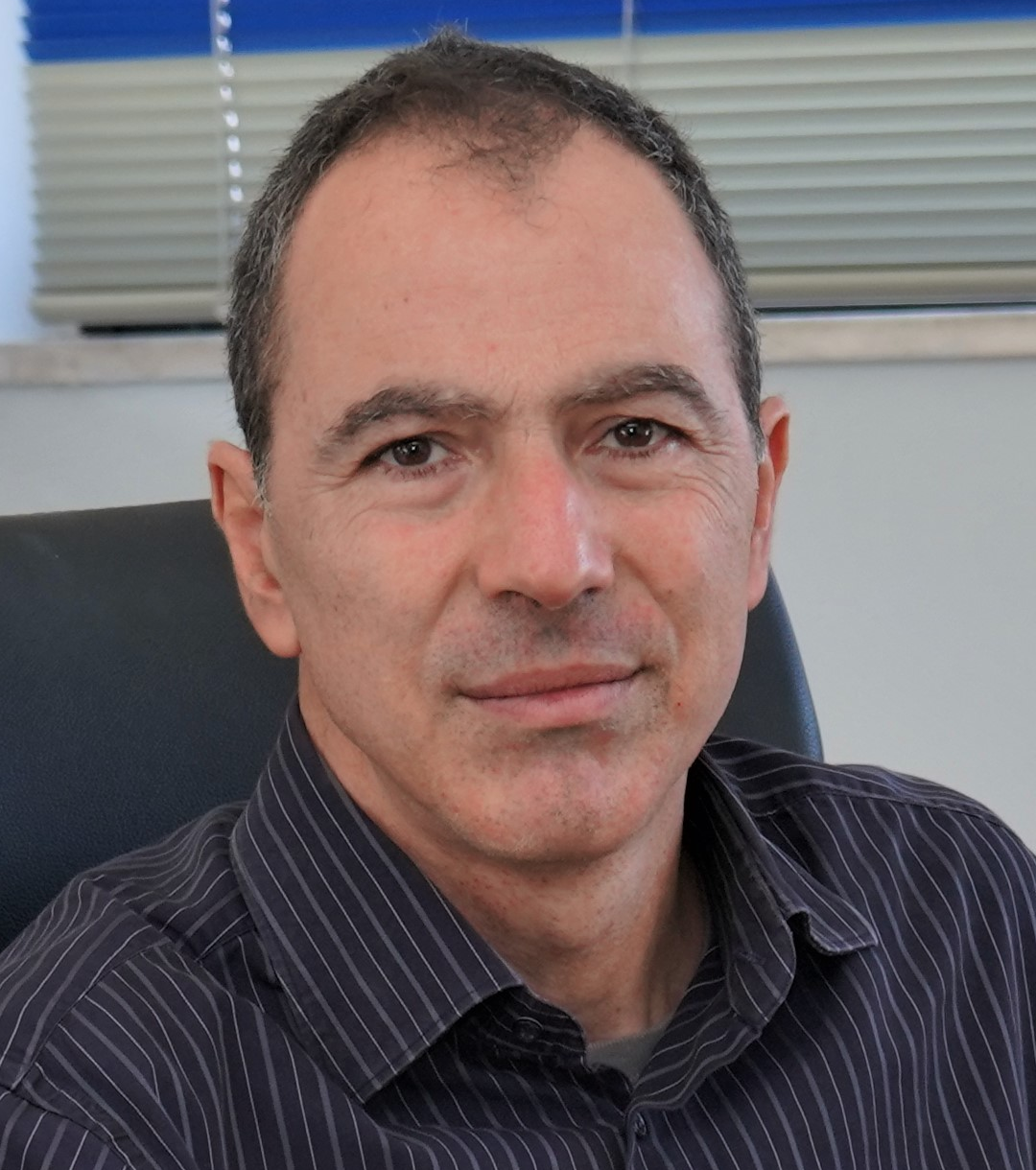
Amalia Foka is an Assistant Professor in Computer Science Applications for the Arts at the Department of Fine Arts & Art Sciences , School of Fine Arts , University of Ioannina , Greece. She has held academic positions at the University of Patras (2005-2013), University of Ioannina (2005-2008), and Computer Technology Institute & Press "Diophantus" (2014-2015). Her research bridges Artificial Intelligence with Digital Art , focusing on Generative AI , Social Media Mining , and Human-Computer Interaction within artistic contexts. Education: BEng in Computer Systems Engineering (1998) from the University of Manchester Institute of Science & Technology (UMIST) , UK MSc in Advanced Control (1999) from UMIST PhD in Robotics (2005) from the Department of Computer Science , University of Crete Her artistic research includes projects like Bushwalking (StyleGAN2 landscape generation), Breaking the Silence (NLP analysis of taboo topics), and The Invisible Structures of the Artworld (social media-driven network visualization). She leads the Multimedia Lab at the University of Ioannina, focusing on AI in Creative Processes and Digital Interaction methodologies.
Athanasios Rontogiannis is an Associate Professor at the School of Electrical and Computer Engineering of the National Technical University of Athens (NTUA). He holds a PhD in Signal Processing from the National University of Athens (1997) and has held roles including Research Director at the National Observatory of Athens (2017–2021). His research focuses on signal processing, machine learning, and hyperspectral image analysis. Education: MEng (Electrical Engineering, NTUA, 1991), M.A.Sc. (University of Victoria, Canada, 1993), PhD (Signal Processing, National University of Athens, 1997). Research interests include adaptive algorithms, sparse representations, and tensor models. He has served on editorial boards of IEEE Transactions on Signal Processing and EURASIP journals, receiving an honorary distinction in 2020. He is a Senior Member of IEEE and affiliated with EURASIP and the Technical Chamber of Greece. Key contributions span hyperspectral unmixing, Bayesian algorithms, and space data exploitation. His work integrates machine learning for applications in space science and signal processing.
Ioannis Z. Emiris is a Professor in the Department of Informatics & Telecoms at the National & Kapodistrian University of Athens and concurrently serves as President and General Director of the ATHENA Research Center in Greece. He holds a BSc in Computer Science from Princeton University (1989) and a PhD in Computer Science from UC Berkeley (1994). His research spans computational geometry, algebraic algorithms, robotics, structural bioinformatics, and optimization. He is a leading expert in sparse elimination theory, geometric modeling, and algorithmic algebra. Affiliations: ATHENA Research Center, National & Kapodistrian University of Athens, INRIA Sophia Antipolis (France via joint AROMATH team). Education: BSc (Princeton), PhD (UC Berkeley). Research Interests Emiris's work focuses on geometric algorithms, algebraic systems, and their applications. His contributions include advancements in sparse elimination theory, computational geometry for high-dimensional data, and robotics. He has developed algorithms for polynomial system solving, Voronoi diagrams, and geometric predicates for ellipses. Articles Overview His recent work bridges theoretical advances with practical applications, such as deep learning for protein structure prediction (HydraProt) and geometric algorithms for high-dimensional data analysis. He explores intersections between algebraic geometry and computational methods, with applications ranging from robotics to bioinformatics. Scientific Awards Best Paper Award at ISSAC 2003 and 2010 MSCA Network GRAPES (2019-2023) Advising & Grants Emiris has supervised numerous students and researchers, contributing to interdisciplinary projects. He has secured grants for initiatives like the GRAPES network and has led teams in algorithm design and geometric software development. His work on MARS (Maple/Matlab/C Resultant-Based Solver) exemplifies his focus on practical algorithm implementation. Labs & Teams He directs the Lab of Geometric & Algebraic Algorithms and collaborates with the AROMATH team at INRIA. His research group develops open-source tools for computational geometry and algebraic computations.
Aris T. Pagourtzis is a Professor of Computer Science at the School of Electrical and Computer Engineering of the National Technical University of Athens (NTUA), where he also serves as the Head of the Computer Science Division. He is additionally a Lead Researcher at the Archimedes Research Center, Athena RC. His academic career includes positions at the University of Ioannina, the University of Liverpool, the ETH Zuerich, the University of Athens, and the Athens University of Economics and Business. Education: Diploma in Electrical Engineering (1989) and Ph.D. in Electrical and Computer Engineering (1999), both from the National Technical University of Athens Professor Pagourtzis's research spans multiple areas of theoretical computer science, with particular emphasis on computational complexity, graph algorithms, distributed algorithms, approximation algorithms, network algorithms, cryptography, and counting complexity. His work often bridges theoretical foundations with practical applications in network design, security protocols, and optimization problems. He has developed novel algorithms for problems ranging from community detection in networks to Byzantine fault-tolerant protocols and privacy-preserving voting systems. His recent publications show a continued focus on fundamental algorithmic problems while expanding into newer areas like temporal graph analysis, blockchain applications, and privacy-preserving technologies. There's a clear trend toward addressing real-world challenges through rigorous theoretical frameworks, particularly in distributed systems, secure computation, and optimization under constraints. Professor Pagourtzis has served on program and organizing committees for numerous theoretical computer science and cryptography conferences, co-chairing CIAC 2017 and FCT 2021. His research has received funding from diverse sources including US, UK, French, EU, and Greek national resources. He is actively involved in teaching both undergraduate and graduate courses at NTUA, including Algorithms and Complexity, Foundations of Computer Science, Computational Cryptography, and Network Algorithms and Complexity. He leads the Computation and Reasoning Laboratory (corelab) at NTUA, which focuses on theoretical computer science research.
Stavros Demetriadis is a Full Professor at the School of Informatics, Aristotle University of Thessaloniki, Greece. His research focuses on Learning Technologies, including Conversational Agents in Education, Learning Analytics, Computer-Supported Collaborative Learning (CSCL), Computational Thinking, and Massive Open Online Courses (MOOCs). He has led EU-funded projects like colMOOC and developed educational tools such as 'pytolearn' for Python instruction and 'Cubes Coding' (winner of Open Education Challenge 2014 and NUMA Competition 2014). He has supervised 5 completed PhD theses, 4 ongoing PhDs, and over 60 Master’s theses. Academic Appointments: Full Professor (2020–present), Associate Professor (2015–2020), Assistant Professor (2012–2015), Lecturer (2002–2008), Informatics Teacher (1989–2002) Education: PhD in Multimedia Technology in Education (2000), MSc in Electronic Physics (1986), BSc in Physics (1983) His work bridges AI and education, with over 161 publications and an h-index of 27. Recent research explores ChatGPT integration, ethics in Learning Analytics, and AI-driven assessment tools. He has delivered invited talks at institutions like the University of Valladolid (2024) and coordinates the 'Teachers' Fast-paced Distance Training on Tele-education' project. Awards include three international best paper awards and recognition for his 'Cubes Coding' project. Key Research Contributions: Developed frameworks for Conversational Agents in CSCL Innovated Computational Thinking pedagogy through robotics Explored ethics and culture in Learning Analytics adoption Created Python-based MOOCs for non-programmers He has taught courses like Human-Computer Interaction and Learning Analytics, and led short programs on Conversational AI. His collaborations span institutions in Spain, Denmark, and Greece. ORCID: 0000-0002-1561-6372; Google Scholar, Semantic Scholar, and Scopus profiles list his extensive output.
Evangelos Boukas is an Assistant Professor at Aalborg University Copenhagen and a former PhD Candidate in Robotics Vision at the Democritus University of Thrace. He is affiliated with the Group of Robotics & Cognitive Systems (Gryphon Lab) and ESA's Automation and Robotics Laboratory (ESTEC). His research focuses on robotic vision, autonomous systems, and space exploration technologies. He has contributed to projects like SPARTAN and ESA-funded localization initiatives. Boukas has co-taught courses in Robotics, Mechantronics, and Robotics Vision, and co-supervised diploma theses in areas like 3D object recognition and robot navigation. His work employs open-source frameworks (ROS/ROCK) and tools like MATLAB. Education: PhD Candidate (2012-current): Robotics Vision, Democritus University of Thrace MSc (2010-2012): Electrical and Computer Engineering, Democritus University of Thrace Diploma (2005-2010): Production & Management Engineering, Democritus University of Thrace Research Highlights: Designed robots like the Heavy Duty Planetary Rover (HDRP) and MAGGIE, developed algorithms for planetary rover localization, and worked on ESA-funded projects. His interests include modular robotics systems and probabilistic approaches in autonomous systems. Labs/Teams: Gryphon Lab, ESA's Automation and Robotics Laboratory (ARL).
Aggelos Bletsas Aggelos Bletsas is a Professor at the School of Electrical and Computer Engineering (ECE) at the Technical University of Crete (TUC). He holds a PhD from MIT and has expertise in wireless communication, backscatter radio, and IoT. His research focuses on ultra-low-cost sensor networks and ambiently-powered systems. Education PhD in Media Arts and Sciences, MIT (2005) MSc in Media Arts and Sciences, MIT (2001) 5-year Diploma in Electrical & Computer Engineering, Aristotle University of Thessaloniki (1998) Research Interests Bletsas' work spans scalable wireless networks, backscatter radio, RFID systems, and energy harvesting. He pioneers batteryless IoT devices and environmental sensing technologies. His lab develops hardware and algorithms for low-cost, long-range communication. Awards & Recognition IEEE Fellow (2023) 2012-2013 TUC Research Excellence Award Multiple Best Paper Awards (ISWCS, RFID-TA, SENSORS) IEEE ComSoc and RFID Council Distinguished Lecturer (2022-2025) Labs & Projects Bletsas leads the Telecommunications Laboratory at TUC, focusing on batteryless sensors, scatter radio, and robotic inventory systems. Key projects include 'Internet of Plants' and ambiently-powered inference networks.
Nick Bassiliades is a Professor at the School of Informatics , Aristotle University of Thessaloniki , Greece. His academic roles include serving as President of the Digital Governance Committee and the Digital Transformation of Greek Universities Committee, as well as Director of the Web, Data, and Knowledge Engineering Sector. Education: B.Sc. in Physics, Aristotle University of Thessaloniki (1991) M.Sc. in Applied Artificial Intelligence, University of Aberdeen (1992) Ph.D. in Parallel Knowledge Base Systems, Aristotle University of Thessaloniki (1998) His research focuses on Semantic Web , Ontologies , Knowledge Graphs , and applications in Artificial Intelligence , eGovernment , and Intelligent Agents . Recent publications emphasize ontological frameworks for requirements engineering, explainable AI, and electric vehicle knowledge graphs. He actively contributes to scientific communities as a Senior Member of IEEE and ACM , and serves as Co-Editor-in-Chief for the International Journal of Artificial Intelligence in Business and Management . His work involves collaborations with the Intelligent Systems laboratory and projects like XR4DRAMA for disaster management.
Dimitrios D. Vergados is a Professor in the Department of Informatics at the University of Piraeus, holding the UNESCO Chair in 'Creative Cities in Motion: Urban Sustainable Mobility and Utilization of Cultural Resources.' As an IEEE Senior Member, he specializes in wireless networks, computer networks, and advanced digital technologies, with a focus on 5G, IoT, and smart systems. His research spans telecommunications systems , cloud computing , machine learning for industrial applications , and digital cultural heritage preservation . Recent work explores vehicular networks, drone communication in 5G architectures, and privacy challenges in smart cities. He has contributed to energy optimization, security frameworks, and digital twin implementations for sustainability. Key trends in his publications include the intersection of 5G security , IoT , and machine learning in industrial and healthcare contexts, alongside digital heritage modeling for cultural preservation. His work bridges theoretical and applied domains in telecommunications and smart technologies. Scientific Awards IEEE Senior Member Vergados has served as a committee member, technical program committee member, and reviewer for international conferences and journals. He previously chaired the UNESCO Chair and participated in national and international evaluations, including roles at the Hellenic Telecommunications and Post Commission. His research emphasizes interdisciplinary applications of digital systems in mobility, healthcare, and cultural management.
Charalampos Karagiannidis is a Professor at the University of Thessaly (UTH) in the School of Educational Design (SED), Department of Information and Communication Technologies in Learning and Special Education. He has been affiliated with UTH since 2005 and previously worked at the University of the Aegean, ITI-CERTH, and ICS-FORTH. His academic roles include chairing the TeDISABLE Special Interest Group (SIG) of the IEEE TCLT. Education: BSc in Mathematics, Aristotle University of Thessaloniki MSc in Information Technology, University of London PhD in Electronics Engineering, University of Kent, UK Research Focus: Technology-Enhanced Learning (TEL) Accessibility & Universal Design Assistive Technologies for Special Needs Augmented Reality (AR) and Gamification in Education Educational Robotics for Inclusion Cognitive Assessment Technologies for Aging Populations Publications Trends: Recent work emphasizes ICT applications for autism spectrum disorders (ASD), inclusive robotics, MOOC design for K-12 education, and digital tools to address mild cognitive impairment. His research often bridges theoretical learning models with practical software development, particularly for marginalized populations. Awards & Recognition: No explicit awards listed, but active participation in 150+ publications, editorial roles, and international conference committees demonstrates peer recognition. Grants & Labs: Involved in projects like the TeDISABLE SIG and development of tools such as the Virtual Learning and Social Stories for Autism (VLSS) system . Collaborates on EU-funded initiatives addressing aging populations and cognitive assessment via digital tools.
Michail G. Lagoudakis is a Professor at the Department of Electronic and Computer Engineering, Technical University of Crete. His academic journey includes a Ph.D. in Computer Science from Duke University (2003), an M.Sc. from the University of Louisiana, Lafayette (1998), and a B.Sc. from the University of Patras (1995). He has held prestigious positions such as Postdoctoral Fellow at Georgia Institute of Technology's School of Industrial and Systems Engineering. Research Interests : Spanning machine learning (especially reinforcement learning), decision-making under uncertainty, robotics, algorithm selection, computational biology, and human-computer interaction. Publications : Over 15 recent works, including key contributions to robotics (auction-based multi-robot routing), medical diagnosis (urgent endoscopy prediction), and foundational machine learning (Least-Squares Policy Iteration, RCPI algorithm). Scientific Recognition : Recipient of Duke University's Outstanding Dissertation Award (2002-2003) and two Outstanding Teaching Assistant Awards. Professional Affiliations : Member of AAAI, IEEE, and ACM. Collaborations include industrial applications in disassembly planning, dynamic packet routing, and medical imaging. He advocates for computational biology and interdisciplinary research, aiming to integrate tools from mathematics and control theory into machine learning.
Emmanouil Z. Psarakis is an Associate Professor at the Department of Computer Engineering & Informatics , University of Patras, Greece. Born in 1963, he has been affiliated with the university since 2005 and is a member of the Signal Processing and Communications Lab . His academic journey includes teaching courses such as Signals and Systems Theory , Digital Signal Processing , and Computer Vision and Graphics . PhD in Computer Engineering and Informatics, University of Patras (1991) Dr. Psarakis is renowned for his research in image processing , computer vision , and signal processing , with applications in biomedical imaging , seismology , and robotics . His work spans deep learning , filter design , and 3D reconstruction , reflecting a multidisciplinary approach. His 15 most recent publications (2020–2025) focus on sign language recognition , adversarial defense , 3D shape analysis , and medical imaging . These works integrate machine learning , stochastic modeling , and computer vision to address challenges in video summarization , image inpainting , and seismic signal analysis . Dr. Psarakis has supervised over 10 PhD students , including Fotini Fotopoulou (2016–2019) and Panagiotis Georgantopoulos (2020–2023). He has participated in EU-funded , Hellenic , and bilateral R&D projects related to biomedical signal processing , robot vision , and forest fire monitoring . He leads the Signal Processing and Communications Lab , which collaborates with institutions like the Computer Technology Institute and international universities. His contributions include filter design , image alignment , and stereopsis techniques , with a focus on practical implementations in telecommunications and medical diagnostics .
Nikolaos Efkolidis is an Assistant Professor at the University of Western Macedonia in the Department of Product and Systems Design Engineering . He is a member of the Computational Design and Digital Fabrication Research Lab ( codeplus.uowm.gr ) and co-founder of the design studio heptahedron.studio . Research Focus : Computational design, digital fabrication, AI-driven optimization, and sustainable product development. Key Techniques : Response Surface Methodology (RSM), Genetic Algorithms, Finite Element Analysis (FEA), and Additive Manufacturing. His recent publications highlight trends in multi-material 3D printing , machine learning for machining processes , and user-driven customization . Applications span footwear, marine robotics, and industrial design.
Ioannis Stamelos is a Professor of Software Engineering at the School of Informatics, Aristotle University of Thessaloniki (since 2015, research/teaching staff since 1997). He serves as Director of the Postgraduate Master Course in Interactive Hardware & Software Technologies. Major Research Areas: Open Source Software, Software Effort/Quality Estimation, Agile Methods, Enterprise Information Systems Key Projects: Deep Blue/AUTH Research Hub (2018-2022), BlockAdemic (blockchain-based micro-credentials), European Commission Open Source Policy Studies Research Trends from recent publications include: Process mining in library information systems Reusability metrics for software assets Bayesian networks in software project management Impact of design patterns on gaming software defects Technical debt assessment via structural metrics Blockchain applications in supply chain management Scientific Awards: Best Paper Award at IEEE DEST’09 Best Student Paper Award at ICSR 2012 Best Paper Award at QUATIC2012 Education & Leadership: PhD in Computer Science (1988), Diploma in Electrical Engineering (1983). Led numerous EU-funded projects (IST, ERASMUS, FP7) and national initiatives (ΓΓΕΤ, ΕΠΕΑΕΚ). Supervised PhD/MSc students in software reuse, OSS quality, and agile practices.
Ioannis Andreadis is a Professor in the Department of Electrical and Computer Engineering at the School of Engineering, Democritus University of Thrace. He has been a faculty member since 1993, following his appointment as a Visiting Professor at the School of Technological Applications of TEI Kavala (1991-1992). His academic journey began with a Diploma in Electrical Engineering from Democritus University of Thrace (1983), followed by an M.Sc. in Electrical Engineering & Electronics (1985) and a Ph.D. in Instrumentation & Analytical Science (1989), both from the University of Manchester. Professor Andreadis's research spans the Design and Implementation of Electronic Systems with particular emphasis on Intelligent Systems and Machine Vision . His work has resulted in over 230 publications in international journals, book chapters, and conference proceedings. He has made significant contributions to image processing, particularly in mathematical morphology, color image processing, and real-time implementation of image processing algorithms. His research has practical applications in seismic signal processing, crowd management systems, and 3D reconstruction technologies. The analysis of his recent publications reveals a strong focus on advanced image processing techniques, with increasing integration of deep learning approaches. His work spans both theoretical foundations (such as entropy estimation and moment calculations) and practical applications (including image stabilization, multi-focus image fusion, and crowd management systems). The interdisciplinary nature of his research connects electrical engineering, computer vision, and signal processing with applications in safety engineering, structural analysis, and robotics. Among his notable achievements are the IET Image Processing Premium Award (2009) , Best Paper Award at PSVIT 2007 , and Best Paper Award at EUREKA 2009 . He was elected Fellow of the Institute of Engineering & Technology (IET) in 2006 and Fellow of the Institute of Measurement & Control (InstMC) in 2021. He has also served as Subject Editor of the IET Electronics Letters and as Guest Editor for special issues of Pattern Recognition journal. Professor Andreadis has supervised 14 PhD theses , 21 Master's theses , and 88 Diploma works , demonstrating his commitment to academic mentoring. His research has been supported by significant grants including the EDUnet project (€280,000), wireless network implementation (€37,000), laboratory infrastructure development (€120,000), school information systems support (€478,000), the RESCUER project (€350,000 as Deputy P.I.), and the EDUSAFE project (Marie Curie Actions). He leads the Electronics Laboratory at Democritus University of Thrace, which has undergone significant infrastructure development through multiple funding sources. His work on the RESCUER project demonstrates collaboration with European partners on emergency risk management systems, while his EDUSAFE involvement shows commitment to advanced AR/VR safety systems development. His research group applies computational intelligence techniques to diverse challenges from seismic analysis to pedestrian evacuation modeling.