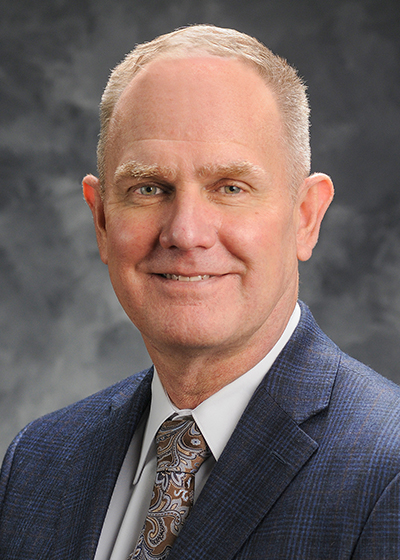
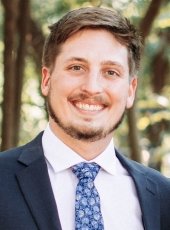
J. Alex Thomasson is a Professor, Department Head, and William B. and Sherry Berry Endowed Chair in the Department of Agricultural and Biological Engineering at Mississippi State University. With expertise in precision agriculture, remote sensing, and agricultural robotics, he focuses on cotton production, drone-based monitoring, and sensor development for soil and fiber quality analysis. Education : Ph.D., M.S., and B.S. in Agricultural Engineering from University of Kentucky, Louisiana State University, and Texas Tech University Experience : Department Head at Mississippi State University (2020–Present), Endowed Chair at Texas A&M University (2005–2020), USDA Agricultural Research Service (1989–1997) His research spans optical sensing technologies, cotton fiber quality mapping, and UAV applications in crop phenotyping and disease detection. Recent work includes: Autonomous grain cart navigation using motion planning algorithms UAV thermal calibration via temperature-controlled references Adsorbent-SERS systems for plant volatile organic compound analysis Publications highlight advancements in: Drone-based cotton root rot classification Multi-scale frictional property analysis of cotton fibers Wavelet spectroscopy for soil and biomass characterization
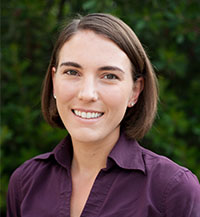
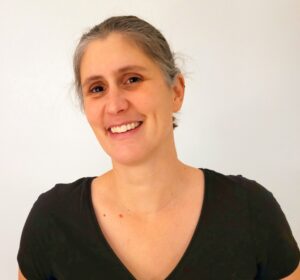
Laura Redmond serves as an Associate Professor of Civil Engineering at Clemson University's College of Engineering, Computing and Applied Sciences, where she heads the Clemson Advanced Structures Laboratory (CASL). Her research spans civil, mechanical, and aerospace applications with a focus on advanced simulation techniques and model validation. Education: B.S., Civil Engineering, 2010, Georgia Institute of Technology M.S., Civil Engineering, 2012, Georgia Institute of Technology Ph.D., Civil Engineering, 2015, Georgia Institute of Technology Dr. Redmond's research expertise centers on creating models for complex material and structural behavior with experimental validation. Her work spans seismic behavior of concrete and masonry structures, test-validated finite element simulations for bridge health monitoring, modeling of rigid-flex PCB robotics for extreme environments, and Bayesian calibration techniques for finite element models. She has developed innovative approaches for drive-by health monitoring of bridges using vehicle-mounted sensors and has contributed to NASA's Mars 2020 mission through her work on sample tube sealing mechanisms. Her recent publications reveal a strong emphasis on structural health monitoring, robotics, and computational modeling across civil, mechanical, and aerospace applications. The research shows increasing integration of Bayesian methods, machine learning, and advanced computational techniques to solve complex engineering problems in structural dynamics, materials science, and planetary exploration. Dr. Redmond actively mentors numerous graduate and undergraduate students across various research projects, including drive-by bridge monitoring, rigid-flex robotics, lightweight grout for masonry, and buckling-restrained braced frames. Her research is supported by multiple funding sources including the National Science Foundation, NASA, South Carolina Space Grant Consortium, Precast/Prestressed Concrete Institute, National Concrete Masonry Association, and U.S. Army DEVCOM GVSC. Her laboratory, CASL, focuses on creating new models to analyze complex material and structural behavior while utilizing experiments to validate these models for diverse engineering applications. Current projects include design and analysis of rigid-flex PCB robots for extreme impact resistance, drive-by health monitoring using Bayesian model updating, buckling-restrained braced frames in precast structures, lightweight grout research, and end-to-end validation of autonomy-enabled ground vehicles.
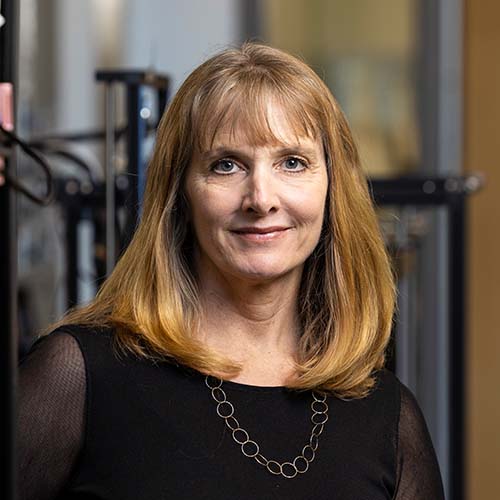
Missy Cummings is a Professor and Director of the Mason Autonomy and Robotics Center (MARC) at George Mason University's Volgenau School of Engineering. She holds concurrent faculty appointments in Mechanical Engineering, Electrical and Computer Engineering, and Computer Science. Previously, she served as a U.S. Navy fighter pilot (1988–1999), one of the first women in that role, and later as senior safety advisor to the National Highway Traffic Safety Administration (NHTSA). Education: BS in Mathematics, U.S. Naval Academy (1988) MS in Space Systems Engineering, Naval Postgraduate School (1994) PhD in Systems Engineering, University of Virginia (2004) Her research focuses on human-autonomy collaboration, ethical AI, unmanned systems policy, and the societal impacts of technology. She leads MARC, a hub for robotics and responsible AI innovation. Cummings is an AIAA Fellow and frequently advises on national security and AI governance. Awards & Recognition: AIAA Fellow Her advisory roles include work with NHTSA on autonomous vehicle safety. She is affiliated with multiple departments and actively engaged in cross-disciplinary research at George Mason University.
Mari F Tietze is a Professor and Myrna R. Pickard Endowed Professor at the University of Texas at Arlington (UTA) College of Nursing and Health Innovation (CONHI). She leads the graduate certificate and master’s in nursing (MSN) Health Informatics program and represents nursing in UTA’s Multi-Interprofessional Center for Health Informatics (MICHI). Her expertise spans nursing informatics, health equity, robotics in healthcare, and EHR optimization. Dr. Tietze earned her PhD from Texas Woman’s University, with earlier degrees from Washburn and Kansas Universities. She holds Fellowships in the Healthcare Information and Management Systems Society (FHIMSS) and the American Academy of Nursing (FAAN). Education: PhD in Nursing, Texas Woman's University (2002) MSN in Nursing, University of Kansas (1986) BSN in Nursing, Washburn University (1977) Research Interests: Focuses on nurses' EHR experiences, health equity, and robotics in nursing. Her work includes statewide studies on nurse-EHR interactions and co-authorship of the AJN Book of the Year-winning textbook Nursing Informatics for the Advanced Practice Nurse . Grants & Awards: Recent grants include NIH-funded projects on cardiovascular health equity and pain management. Awards include the 2023 CONHI Teaching Mentor Award and recognition as a Fellow in the American Academy of Nursing. She chairs committees on telehealth, health IT policy, and workforce development. Advising & Mentorship: Mentors numerous graduate students in informatics, telehealth, and health equity research. Leads curricular redesign initiatives and supports over 20+ DNP and PhD projects annually. Labs & Collaborations: Directs the CONHI Health Informatics programs and collaborates with interdisciplinary teams on projects like TExBioMed and the GET PHIT initiative. Engages in national/international conferences on health informatics education and policy.
Elaine Schaertl Short is an Assistant Professor in the Department of Computer Science and a secondary appointment in the Department of Mechanical Engineering at Tufts University School of Engineering. She also serves as a CEEO Fellow at the Center for Engineering Education Outreach. Her research focuses on human-robot interaction with an emphasis on accessibility and assistive technology. Education: Doctor of Philosophy, Computer Science, University of Southern California, 2017 Master of Science, Computer Science, University of Southern California, 2012 Bachelor of Science, Computer Science, Yale University, 2010 Dr. Short's research applies human-centered design and disability community values to the development of AI and machine learning for robotics. Her work spans several key areas including human-centered human-in-the-loop machine learning, disability-friendly assistive robotics, autonomous human-robot interaction in groups and public spaces, and accessibility inclusion in robotics education. She leads the Assistive Agent Behavior and Learning (AABL) Lab at Tufts, where her team develops algorithms that enable robust assistive human-robot interaction in natural environments like schools and homes. Her recent publications demonstrate a clear trajectory toward making robots more adaptable to human needs through interactive learning techniques. The research shows increasing focus on how robots can learn effectively from non-expert users in noisy real-world environments, with particular attention to inclusive design approaches that address the needs of diverse user populations including children, older adults, and people with disabilities. Her work bridges technical innovation with social impact, creating pathways for more equitable human-robot systems. Scientific Awards: National Science Foundation Graduate Research Fellowship USC Provost's Fellowship Google Anita Borg Scholarship Viterbi School of Engineering Merit Award Women in Science and Engineering (WiSE) Merit Award Best Research Assistant Award Best Teaching Assistant Award Service Award from USC Department of Computer Science Saybrook College Mary Casner Prize from Yale Dr. Short has secured multiple competitive grants including an NSF Collaborative Research grant for "Designing Social Robots to Promote Equity in Collaborative Teams" (2024-2027) and the "BPC-AE: AccessComputing Fifth Extension" (2024-2029). She actively mentors students through dissertation research and specialized courses like "HCI for Disability." Her professional service includes advisory roles for PACT4PWD and the EU Telepresence Robots in Schools Project, as well as committee work on diversity, equity, and inclusion initiatives at Tufts University. She leads the Assistive Agent Behavior and Learning (AABL) Lab, which focuses on three main research thrusts: Learning on-the-Fly and in-the-Wild (enabling robots to learn from non-expert users in real-world environments), Fluent Interaction with Groups and Crowds (developing algorithms for natural robot interactions in social settings), and Understanding and Addressing the Needs of Diverse Users (using inclusive design approaches to serve "non-normative" user populations).
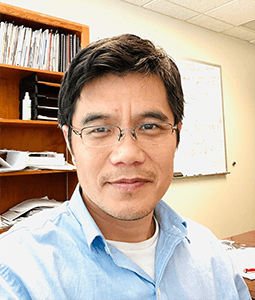
Xiaofeng Wang is an Associate Professor in the Department of Electrical Engineering at the University of South Carolina, affiliated with the Molinaroli College of Engineering and Computing. He holds a Ph.D. in Electrical Engineering from the University of Notre Dame (2009) and prior degrees in Applied Mathematics and Control Theory from East China Normal University. Education Ph.D., Electrical Engineering, University of Notre Dame (2009) M.S., Operation Research and Control Theory, East China Normal University (2003) B.S., Applied Mathematics, East China Normal University (2000) His research spans control systems, robotics, and machine learning, with applications in cyber-physical systems (CPS), autonomous vehicles, and urban air mobility (UAM). Key methodologies include Lebesgue-approximation model predictive control, robust adaptive control, and physics-informed neural networks. Recent projects focus on DeSimplex architecture for safe learning-enabled systems, morphing drones, and resilient CPS under cyber-physical threats. The 15 most recent publications emphasize sampled-data control, distributed systems, and deep learning integration. Notable trends include lebesgue sampling for nonlinear systems, generative adversarial networks for aerial image analysis, and adaptive control for uncertain environments. Awards include the 2014 PHM Society Best Paper Award and 2013 ICCPS Best Paper Finalist. Scientific Awards Best Paper Award, Prognostics and Health Management Society (2014) Best Paper Finalist, International Conference on Cyber-Physical Systems (2013) He has supervised numerous students, including PhD graduates Xin Zhang, Rabab Abdelfattah, and Lixing Yang, many of whom now hold academic or industry positions. Current research involves NSF-funded work on guaranteed tubes for safe learning in autonomy architectures and collaborations with institutions like UIUC and Zhejiang University.
Dr. Pablo Borja is a Lecturer in Control Systems Engineering at the University of Plymouth, UK. He holds a PhD in 'Automatique' from Paris-Saclay University (2017) and has held postdoctoral roles at the University of Groningen (2017–2021) and Delft University of Technology (2021–2022). His academic journey includes visiting research stints at Zhejiang University (2015) and the University of Groningen (2016). He currently teaches courses such as Engineering Mathematics and Control, Marine Engineering, and Autonomy Principles. Educations: Bachelor’s in Electrical and Electronics Engineering (UNAM, 2011) Master’s in Electrical Engineering (UNAM, 2013) PhD in Automatique (Paris-Saclay University, 2017) Research Interests: Pablo’s work focuses on control systems engineering, with an emphasis on energy-based and passivity-based control methodologies for mechanical systems, robotics, and DC microgrids. His research applies to underactuated systems, soft robotics, and stabilization techniques under uncertainty. He explores theoretical frameworks such as port-Hamiltonian systems and PID-PBC (Passivity-Based Control), with practical applications in robotics and energy systems. Advising & Collaborations: He supervises PhD projects on topics like energy-based control strategies for spasticity modeling, variable-stiffness actuators for bipedal locomotion, and structural analysis of floating energy storage systems. His past collaborations include supervising projects on satellite formation control and port-Hamiltonian system stabilization. Labs & Teams: While specific lab affiliations are not explicitly mentioned, his active role in teaching and research at the School of Engineering, Computing, and Mathematics reflects involvement in interdisciplinary projects. His work integrates robotics, control theory, and energy systems, fostering collaboration across mechanical, electrical, and systems engineering disciplines.
Prof. Sebastien Nicolas Gros is a Full Professor and Head of the Department of Cybernetics at NTNU (Norway). He holds a PhD from EPFL (2007) and has held positions at Strathclyde University, KU Leuven, and Chalmers University of Technology. His research focuses on Model Predictive Control (MPC), Reinforcement Learning, Stochastic Optimal Control, and their applications in energy systems, autonomous systems, and bioengineering. Education: PhD in Control Systems, EPFL, Switzerland (2007) Postdoc at KU Leuven (2011-2013) Associate Professor at Chalmers University (2013-2017) Research Interests: Safe Reinforcement Learning, Data-Driven MPC, Energy Management in Buildings, Wave Energy Conversion, Artificial Pancreas Systems. His work is applied to industries like Equinor, DNV, and CorPower Ocean. Collaborations: Co-supervises PhD projects on Multi-Rotor Wind Turbine Control and Artificial Pancreas Industry partnerships with Volvo, SINTEF, and Pixii Labs: ITK Smart House, Hydroponics Units, Wave Energy Testbeds Grants & Projects: MAIDOM project for smart home energy management AWEbox framework for Airborne Wind Energy National and industrial grants for control systems research
Nicolas Pope is a Senior Researcher at the School of Computing, University of Eastern Finland. He actively contributes to AI education research, focusing on social media literacy, gamification in K-12 education, and pedagogical frameworks that cultivate data agency among children. His work spans projects like Generation AI (2017-present) and Technologies for Learning and Development (since 2017). nicolas.pope@uef.fi | +358 50 528 8449 University of Eastern Finland, School of Computing His research addresses critical gaps in children's understanding of data traces, profiling, and algorithmic biases in digital platforms. He develops interactive classroom games and no-code tools to demystify social media mechanics and generative AI for young learners. Recent work explores mixed reality remote learning and interdisciplinary approaches to increase diversity in computer science education. Key publications (2023-2025) include studies on gamified AI education, social media literacy frameworks, and bias-awareness tools for text-to-image generative AI. His projects often involve collaboration with Finnish schools and international research teams. Pope's work bridges technical AI concepts with pedagogical strategies to foster critical thinking about data-driven technologies among children.
Elinor Sloan is Professor of Political Science at Carleton University specializing in defence policy and military technology. A former Canadian Armed Forces logistics officer and DND analyst, her research examines NATO strategies, Arctic security, and naval procurement. Current projects study domains of warfare evolution and comparative naval shipbuilding strategies. Key publications analyze: Hybrid warfare tactics Space-based security systems US-Canada defence coordination Robotics in combat Awarded top honors from Canadian Association of Slavists and Central Eurasian Studies Society for contributions to security studies. Teaches courses on international security and North American defence policy.
Michael Walker is an Assistant Professor in the Department of Computer Science at Michigan Technological University's College of Computing. His research focuses on Human-Robot Interaction (HRI), emphasizing the design of immersive virtual and mixed reality interfaces to enhance human-robot teaming in both indoor and outdoor environments. He explores applications in domains such as household robotics, manufacturing, disaster response, space exploration, and education. His work emphasizes user-centered design principles, robotic teleoperation, and artificial intelligence integration. Key research themes include augmented reality (AR) coordination mechanisms, mixed reality supervision systems, and trust dynamics in autonomous guidance systems for planetary rovers. He is a contributor to NASA's Artemis Program, advancing telerobotic interfaces for lunar surface operations and the FARSIDE Low Frequency Radio Telescope project. Dr. Walker's publications span advanced interface frameworks like VAM-HRI (Virtual/Augmented/Mixed Reality for HRI) and tools such as TOBY for academic survey analysis. His work bridges theoretical research with practical applications, addressing challenges in both terrestrial and extraterrestrial robotics environments. No scientific awards are listed in the provided materials. His advising and grant activities are not detailed here, though his research aligns with federal and institutional funding priorities in robotics and extended reality. His lab's collaborations focus on advancing surface telerobotics and cross-domain HRI solutions.
Neil T. Dantam is an Associate Professor of Computer Science at the Colorado School of Mines, focusing on robot planning and control at the intersection of symbolic and continuous domains. His work emphasizes mathematical verification, physical applicability, and user-friendly robot programming. Education: Ph.D. in Robotics from Georgia Institute of Technology (2014) Double B.S. in Computer Science and Mechanical Engineering from Purdue University (2008) Research Interests: Neil's research combines discrete and geometric planning, improves Cartesian control, and analyzes robot policies. He prioritizes methods connecting theoretical development with practical validation through robot manipulation and software design. Recent Trends: His publications address motion planning infeasibility proofs, robot team coordination under communication constraints, and hybrid task-motion planning frameworks. Keywords include Robotics, Algorithm Design, Computational Geometry, and Human-Robot Interaction. Scientific Awards: Georgia Tech President's Fellowship Georgia Tech/SAIC Paper Award American Control Conference '12 Presentation Award HUMANOIDS '14 Best Paper Finalist HUMANOIDS '14 Mike Stilman Award Finalist Students & Grants: Neil is actively recruiting students for research. He has secured grants for projects on robot team data collection, communication jamming resilience, and infeasibility proof scaling. Labs: He contributes to robotics research at Colorado School of Mines and previously at Georgia Tech, Rice University, and institutions like MIT Lincoln Laboratory and Raytheon.
Dr. Tom Williams is Associate Professor of Computer Science and Director of the MIRRORLab at Colorado School of Mines. His research program centers on natural language-based human-robot interaction with emphasis on ethical, social, and contextual dimensions of communication. Williams investigates how robots can understand and generate context-sensitive language, particularly in morally complex situations. Current projects explore role-based moral reasoning, politeness strategies, and cultural variations in human-robot interaction. His work integrates cognitive science, artificial intelligence, and human-computer interaction methodologies. He has received significant recognition including NSF CAREER, NASA Early Career Faculty, and AFOSR Young Investigator awards. Williams teaches courses in Human-Robot Interaction, Robot Ethics, and Computer Vision, maintaining international collaborations on socially intelligent robotic systems.
Antonio Loquercio is an Assistant Professor in the Department of Electrical and Systems Engineering at the University of Pennsylvania's School of Engineering and Applied Science. His research focuses on physical intelligence, emphasizing agile autonomy in robotics, including high-speed drone navigation and perception-action systems using on-board sensing and computation. He holds a PhD from the University of Zurich and completed a postdoc at Berkeley Artificial Intelligence Research (BAIR). Education: Doctoral Degree in Robotics, University of Zurich (2020) Postdoctoral Researcher at BAIR, UC Berkeley (2020–2023) Research Interests: Agile robotics: high-speed flight, autonomous drone racing, and dynamic locomotion Machine learning for sensor fusion, uncertainty estimation, and cross-modal supervision Applications in aerial robotics, legged systems, and biologically inspired control Key Awards: Georges Giralt PhD Award (2022) Cover article in Nature (2023) on vision-based drone racing Multiple best paper nominations and awards at robotics conferences Labs & Recruitment: Founded new lab at Penn in 2023, focusing on autonomous systems and robotics Recruiting students/postdocs interested in agile autonomy and machine learning
Marie Babel is a Full Professor at INSA Rennes, affiliated with the Rainbow team within IRISA/Inria. She specializes in assistive robotics, focusing on mobility aids for people with disabilities, including sensor-based servoing, haptic interfaces, and virtual reality applications. She leads major projects like the DORNELL Challenge and coordinates international collaborations, such as the ISI4NAVE team with University College London. Her academic Chair IH2A (Innovations, Disability, Autonomy, Accessibility) drives interdisciplinary research in assistive technologies. She holds a PhD in image processing (2005) and an habilitation in signal processing (2012). Teaching: Robotics, Image Processing, Mathematics for Engineers at INSA Rennes. Key Projects: ADAPT (€2M budget), H2020 Crowdbot, PRISME/Ambrougerien. Research Interests: Multimodal sensor-based systems, human-robot interaction, and clinical trials for assistive technologies. Notable contributions include wheelchair navigation assistance, wearable haptic feedback, and VR simulators. Awards: Best Paper at Eurohaptics 2022, Innovation Award at SOFMER 2019. Grants & Labs: Leads INSA's contributions to ADAPT and coordinates DORNELL Challenge. Active in Inria's research networks.