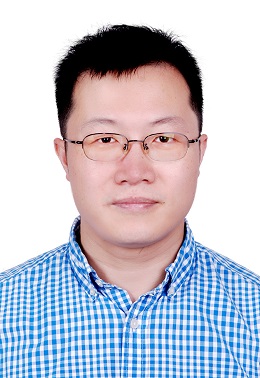
Daniel Goldman is a Professor at the School of Physics within the College of Sciences at Georgia Institute of Technology. He directs the Complex Rheology And Biomechanics (CRAB) Lab and leads interdisciplinary research bridging physics, biology, and robotics. His work focuses on locomotion principles in organisms and robots interacting with complex media like granular materials. Research areas include robophysics, biomechanics, and nonequilibrium systems Co-founder of startup Ground Control Robotics Research Trends : His publications emphasize principles of locomotion, interaction with complex substrates (sand, bark, etc.), and robotics applications, using experimental, computational, and robophysical modeling approaches. Scientific Awards Dunn Family Professor (2017-2023) APS Fellow (2014) Georgia Power Professor of Excellence (2014) PECASE (2014) DARPA Young Investigator Award (2012) NSF CAREER Award (2012) Blanchard-Milliken Fellowship, Georgia Tech (2010) Sigma Xi Young Faculty Award, Georgia Tech (2010) Burroughs Wellcome Fund Career Award (2006) Outstanding Dissertation Award, UT Austin (2003) Advising & Grants : While specific students aren't listed, he leads a research group studying organism-robot interactions. His grants include NSF CAREER, DARPA Young Investigator, and Burroughs Wellcome Fund Career Award. He also participates in IRI's Robotics and Bioengineering and Bioscience initiatives.
Dr. Zhu Lailai serves as Assistant Professor in the Department of Mechanical Engineering at the National University of Singapore (NUS), appointed in January 2020. His research bridges fundamental fluid mechanics with cutting-edge engineering applications through computational and theoretical approaches. Dr. Zhu holds a PhD from KTH Royal Institute of Technology (Sweden) and completed postdoctoral training at Princeton University. His research program centers on: Low-Reynolds-number fluid-structure interactions and bio-inspired adaptive systems Active matter dynamics (Janus colloids, active droplets, flagella/cilia) Intelligent fluids integrating machine learning for fluid dynamics Microrobotics with reinforcement learning-based chemotactic navigation Non-Newtonian/multiphase flows and microfluidics applications Analysis of his 2017-2025 publications reveals a clear trajectory toward AI-enhanced fluid mechanics, evolving from foundational theoretical models to machine learning integration. Recent work emphasizes foundation models for fluid dynamics prediction and topology-adaptive microrobotic navigation, demonstrating interdisciplinary convergence of physics, AI, and bionics. Scientific Awards: No major scientific awards specified in source materials Advising and Grants: While specific advisees and grants aren't detailed, his active publication record across high-impact journals (Nature Communications, Journal of Fluid Mechanics) indicates ongoing supervised research and likely grant funding through NUS and collaborative projects. Research Group: Dr. Zhu leads a computational/theoretical research team at NUS investigating active and intelligent fluids, with current projects on PCM thermal systems, microrobotic navigation, and active matter phase transitions, collaborating with experimentalists globally.
José Alvarado is an Assistant Professor of Physics at the University of Texas at Austin, affiliated with the College of Natural Sciences. His research focuses on biophysics, soft matter, and active matter, particularly exploring mechanical design principles in biological systems. He investigates topics such as planar cell polarity (PCP), actomyosin networks, and morphogenetic processes. Alvarado’s work integrates experimental and theoretical approaches, often involving collaborations with centers like the Center for Nonlinear Dynamics and Texas Robotics. His studies address questions about how biological systems achieve mechanical efficiency and how active matter principles apply to biological actuation and control. Key themes in his research include the nonlinear mechanics of actomyosin gels, the role of PCP in tissue shaping during convergent extension, and the design of biomimetic actuators for robotics. He has also contributed to understanding fluid dynamics in microscale systems, such as hairy surfaces and colloidal liquid crystals.
Simon Sponberg is the Dunn Family Associate Professor at Georgia Institute of Technology, holding joint appointments in the School of Physics and School of Biological Sciences within the College of Sciences. He directs the Agile Systems Lab and serves as Physics & Biological Sciences Director. His research bridges physics, biology, and engineering to understand the principles of animal locomotion. Dr. Sponberg received his Ph.D. in Integrative Biology from UC, Berkeley and completed postdoctoral research at the University of Washington. His academic journey began with undergraduate studies at Lewis & Clark College, where he first explored biomechanics research focusing on gecko adhesion. Dr. Sponberg's research centers on neuromechanics - an integrative science examining how physics and physiology enable animals to achieve remarkable stability and maneuverability. His work specifically investigates insect flight mechanics, particularly in hawkmoths (Manduca sexta), exploring how nervous systems interact with muscle mechanics to produce locomotion. Key research areas include: Mechanisms of Maneuverability: How animals maintain stable flight during perturbations Sensing in Complex Environments: Multisensory integration of vision and mechanosensation Multiscale Physics of Muscle: How muscle structure relates to function across scales Evolution of Flight: Comparative studies of different insect flight strategies His publication record reveals a strong focus on the intersection of biomechanics, neuroscience, and physics, with recent work emphasizing resonant mechanics in insect flight, precise neural control of movement, and multisensory integration for robust performance across varying environmental conditions. A notable trend is the integration of experimental biology with computational modeling and robotics to extract general principles of movement. Dr. Sponberg's scientific achievements have been recognized with numerous awards and fellowships: Hertz Fellow (since 2002) National Science Foundation Fellowships American Physical Society Awards Society of Integrative and Comparative Biology Awards Woods Hole Marine Biological Institute Fellowships University of California Fellowships International Association of Physics Students Awards As an advisor, Dr. Sponberg mentors a diverse team of graduate students and postdoctoral researchers through the Quantitative Biosciences Graduate Program, Neuroscience and Neurotechnology Graduate Program, and Bioengineering Graduate Program. His lab has received significant funding, including an NSF-funded Biological Integration Institute (the Integrative Movement Sciences Institute) and a FLAP MURI grant. His mentoring philosophy emphasizes interdisciplinary collaboration and hands-on research experience, with over 120 undergraduate students having participated in his lab through Georgia Tech's Vertically Integrated Projects program. The Agile Systems Lab, housed in the Howey Physics Building at Georgia Tech, brings together researchers from physics, biology, engineering, and neuroscience to study the fundamental principles of movement. The lab features state-of-the-art equipment for high-speed videography, electrophysiology, robotic flower tracking systems, and X-ray diffraction studies of living muscle. Current collaborative projects include the NSF-funded Integrative Movement Sciences Institute, which explores movement across scales from molecules to organisms, and the FLAP MURI grant investigating resonant mechanics in flapping flight.
Laura Treers is an Assistant Professor in the Department of Mechanical Engineering at the University of Vermont (UVM), affiliated with the UVM CREATE Center. She holds a PhD from UC Berkeley (2023) and a B.S. from MIT (2018). Prior to UVM, she was a postdoctoral scientist at Georgia Tech in Physics and Biological Sciences. Her research focuses on robotic mobility in complex terrains, combining robotics, physics, and biomechanics. The Interact Lab at UVM explores terramechanics, experimental robotics, and complex terrains, with key interests in granular media modeling, mechanism design, and 'robophysics' principles. Her work bridges robotics, biology, and environmental systems. Her academic awards include the 2023 Outstanding Graduate Student Instructor Award, 2019 National Defense Science Fellowship, and MIT's Thomas Sheridan Prize. She teaches courses like Control Systems (ME 3320A) and Mechatronics (ME 2990). Committed to equity in STEM, she mentors underrepresented students in robotics and science outreach programs. Key research themes include collective behavior in robotic and biological systems, granular material manipulation, and field robotics applications. Her lab's projects emphasize interdisciplinary innovation, leveraging biological insights to enhance robotic performance in unstructured environments.
Henry Astley is an Assistant Professor of Biology and Polymer Science at the University of Akron, with joint affiliation to the Biomimicry Research & Innovation Center (BRIC). His research integrates biology and physics to study locomotion biomechanics across diverse organisms including snakes, frogs, and early tetrapods. Dr. Astley employs motion capture, robotics, and computational modeling to investigate how morphology, neuromuscular control, and environmental interactions enable movement. His work has significant applications in biomimetic robotics, particularly for extraterrestrial exploration and underwater mobility. Recent publications demonstrate advances in understanding undulatory motion, muscle-tendon dynamics, and terrain adaptation strategies. His laboratory develops innovative instrumentation like underwater force plates and utilizes robotics to test biological hypotheses. Funded by NSF CAREER and other grants, his research program trains students in interdisciplinary approaches to organismal biomechanics.
Roberto Zenit is the Royce Family Professor of Teaching Excellence and Professor of Engineering at Brown University's School of Engineering. He leads the Zenit Research Lab, focusing on fluid mechanics with emphasis on two-phase flows, biological systems, non-Newtonian fluids, and the fluid dynamics of artistic painting. His research bridges fundamental science and applications in engineering, biology, and art. He holds a B.Sc. from the National Autonomous University of Mexico (UNAM) and M.Sc. and Ph.D. from the California Institute of Technology (Caltech). Research Interests: Two-Phase Flows: Studying bubbly and granular flows, including turbulence dynamics in non-Newtonian fluids. Biological Flows: Investigating locomotion of microorganisms and fluid-structure interactions in biological systems (e.g., heart valves). Artistic Painting Mechanics: Analyzing fluid dynamics in techniques by artists like Pollock and Siqueiros, focusing on pattern formation and material rheology. Recent Research Trends: Recent articles highlight advancements in bubble dynamics, viscoelastic fluid behavior, and applications in biomedical engineering. Key themes include turbulence in polymeric fluids, granular media locomotion, and microgravity experiments. Labs/Teams: The Zenit Research Lab collaborates across disciplines, with ongoing projects on artistic painting fluid mechanics and biomedical fluid dynamics. He is affiliated with the American Physical Society.
Nelson Rosa is an Assistant Professor in the Mechanical, Materials, and Aerospace Engineering Department at Illinois Institute of Technology, affiliated with the Armour College of Engineering. His research focuses on hybrid dynamical systems, robotics, legged locomotion, and algorithmic design. He holds a B.E. and B.A. in Engineering Sciences from Dartmouth College (2005/2006), a Ph.D. in Mechanical Engineering from Northwestern University (2018), and a postdoctoral fellowship at the University of Stuttgart (2020). Education: Postdoctoral Fellow, University of Stuttgart (2020) Ph.D. Mechanical Engineering, Northwestern University (2018) B.E./B.A. Engineering Sciences, Dartmouth College (2005–2006) His research interests emphasize gait generation for bipedal robots, energy-efficient locomotion, and dynamic system analysis. Key contributions include topological approaches to gait optimization and the application of virtual holonomic constraints. He received the Humboldt Postdoctoral Research Fellowship (2021–2023) from The Alexander von Humboldt Foundation. Publications span topics like energetically optimal gaits and passive dynamic walking, with notable work in IEEE Transactions on Robotics and the IEEE International Conference on Robotics and Automation (ICRA). His work bridges theoretical dynamical systems with practical robotic implementations.
Brett Aiello is an Assistant Professor of Biology specializing in organismal comparative anatomy and physiology. His research focuses on comparative neuromechanics, studying neural and mechanical processes underlying animal movement in moths and fishes. He earned a B.A. in Zoology from Miami University (2009), an M.S. in Biological Sciences from Youngstown State University (2012), and a Ph.D. in Integrative Biology from the University of Chicago (2017). Aiello completed postdoctoral work at Georgia Tech before joining his current institution. His work bridges evolutionary physiology, biomechanics, and robophysics, with a focus on insect flight modes and tetrapod adaptations to land life. Research interests include the evolution of flight strategies in moths, sensory feedback mechanisms in fish locomotion, and neuromechanical adaptations in terrestrial and aquatic species. His findings span interdisciplinary journals like Nature and Proceedings of the National Academy of Sciences . Aiello has received an NSF Postdoctoral Fellowship in Biology (2019–2021). He has mentored numerous undergraduate researchers, including Bhinderwala, Minoguchi, and Hamilton. His contributions span academic service, including symposium leadership on sensory feedback in animal movement and biorobotics. Key research themes include: 1) Mechanosensory roles in fin and wing structures, 2) Evolutionary links between blinking and terrestrial life, and 3) Morphological adaptations for flight across insect groups. His work emphasizes functional morphology across scales, integrating organismal design with ecological performance.
Chen Li is an Associate Professor in the Department of Mechanical Engineering at Johns Hopkins University (JHU), affiliated with the Whiting School of Engineering and the Laboratory for Computational Sensing and Robotics (LCSR). He also holds a secondary appointment in the Center for Functional Anatomy & Evolution. His research focuses on terradynamics—understanding animal locomotion in complex terrain and applying these principles to robot design. Li’s work integrates biomechanics, robotics, and physics, with notable contributions to bio-inspired robots like the OmniRoach and SenSnake. Li earned a BSc in Physics and Economics from Peking University (2005) and a PhD in Physics from Georgia Tech (2011). As a Miller Postdoctoral Fellow at UC Berkeley (2011–2014), he studied integrative biology and robotics. He joined JHU in 2016. His lab investigates movement in environments like rubble, mud, and arboreal spaces, with applications in search and rescue, planetary exploration, and environmental monitoring. Key research interests include: terradynamics of legged robots, snake-like locomotion, and amphibious fish mobility. Li’s team has published in Science , PNAS , and Advanced Robotics , and received awards such as the Army Research Office Young Investigator Award and the Beckman Young Investigator Award. Education : BSc, Peking University, 2005 PhD, Georgia Tech, 2011 Miller Postdoc, UC Berkeley, 2011–2014 Awards : Miller Research Fellowship (UC Berkeley) Burroughs Wellcome Fund Career Award Army Research Office Young Investigator Award Lab & Collaborations : LCSR (Interdisciplinary robotics and sensing) Focus on bio-inspired robots and terradynamics
Yun Chen is an Associate Professor in the Department of Mechanical Engineering at Johns Hopkins University's Whiting School of Engineering. Her research focuses on mechanobiology, developing biophysical tools to study disease mechanisms and clinical applications. Key areas include cancer imaging, quantum biotechnology, and biomaterials. She leads a lab with patents and industrial collaborations, and her work has been published in top journals like Nature Physics . Awards include NSF and NIH Trailblazer Awards and a DARPA Young Faculty Award. Education: PhD in Biomedical Engineering from UNC Chapel Hill, specializing in multi-scale imaging of biophysical and biochemical behaviors. Her lab integrates engineering principles with biology, aiming to expand into quantum mechanics for cell studies. Research emphasizes understanding how altered biophysics contributes to diseases, with projects on cancer cell migration, fluid viscosity sensing, and tissue engineering. Collaborations include developing treatments and diagnostic tools. Students advised include Junjie Chen, whose work on magnetosensitive proteins was highlighted at the Biophysical Society Annual Meeting.
Robert Ambrose is a University Distinguished Professor in the J. Mike Walker '66 Department of Mechanical Engineering at Texas A&M University, holding concurrent roles as Associate Agency Director at the Texas A&M Engineering Experiment Station (TEES) and Director for Space and Robotics Initiatives. He leads the Robotics and Automation Design (RAD) Lab, which focuses on resilient robots for harsh environments and human-robot collaboration. His academic background includes a Ph.D. in Mechanical Engineering from The University of Texas at Austin (1991), and earlier degrees from Washington University in St. Louis. His research spans robot manipulation, mobility, wearable robotics, and space systems design. Notable projects include the Robonaut series, Robo-Glove, and spherical robots like Roboball. Ambrose has been honored as a National Academy of Engineering member (2020) and received prestigious awards including NASA’s Outstanding Leadership Medal (2010, 2013) and the Thomas A. Edison Patent Award (2022). Lab Leadership: RAD Lab (31+ staff/students as of 2024) collaborates with the HERC Lab and operates at RELLIS Campus. Grants & Partnerships: Extensive NASA collaborations, including Robonaut 2 deployment on the ISS and projects with General Motors. His work emphasizes human-centric robotics, space exploration, and translating robotic innovations into real-world applications through partnerships with industry and government agencies.
Kelimar Diaz is an Assistant Professor of Physics at Oglethorpe University, specializing in biomechanics and robotics. Her work focuses on robophysical models inspired by biological systems, particularly in locomotion mechanics, undulatory movement, and bio-inspired engineering. Education: B.S., Physics, University of Puerto Rico Ph.D., Quantitative Biosciences Program, Georgia Institute of Technology (School of Physics) Research interests include the dynamics of limbless and multi-legged locomotion, adaptive navigation in heterogeneous environments, and the application of biological principles to robotics. Her studies often involve analyzing organisms like centipedes, nematodes, and algae to develop more efficient robotic systems. Her recent publications highlight themes such as centipede locomotion on rough terrain, omega turns in C. elegans, and passive navigation strategies for limbless robots. While no scientific awards are listed, her work demonstrates innovation in biomimetic robotics and biomechanical modeling. No grants, advising roles, or lab affiliations are explicitly mentioned in the provided text.