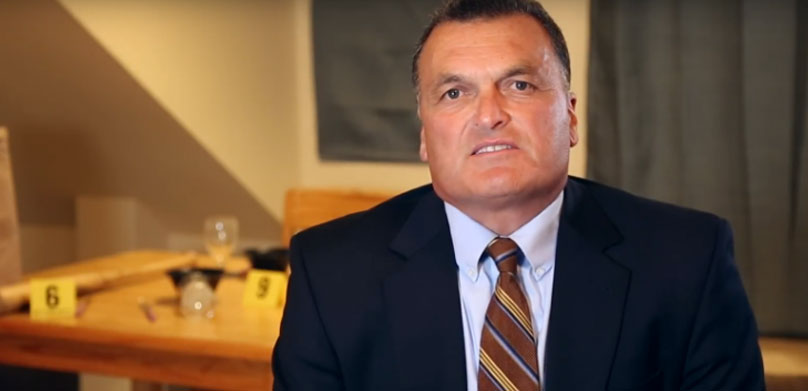
Kelly G. Carmena is a Clinical Professor in the Criminal Law Clinic at Southern University Law Center, where she has been a faculty member since 2014. Her areas of expertise include criminal law, criminal litigation, and criminal defense. Prior to joining academia, she served as a felony and misdemeanor assistant public defender at the East Baton Rouge Parish Office of Public Defender for five years, handling serious criminal cases including murder, rape, and armed robbery. Professor Carmena earned dual B.A. degrees in English Literature and Women’s and Gender Studies from Louisiana State University (2004) and her Juris Doctor from Southern University Law Center (2009), where she served as Associate Editor of the Law Review.
Clayton Delancey is a Researcher at the University of Georgia's Warnell School of Forestry & Natural Resources, specializing in avian ecology with a focus on habitat preferences and movement patterns of birds. He leads projects examining Ruffed Grouse genetic connectivity in North Georgia and employs acoustic monitoring and genetic sampling techniques. His research integrates population dynamics, climate adaptation, and conservation strategies for edge populations. Delancey holds an M.S. in Biology from Ball State University and B.S./A.S. degrees in Wildlife Science from Penn State. Education: M.S. Biology, Ball State University B.S. Wildlife and Fisheries Science, Penn State University A.S. Wildlife Technology, Penn State University Research Interests: Delancey investigates habitat selection, dispersal mechanisms, and genetic connectivity in avian species. His work emphasizes migratory patterns, edge population dynamics, and conservation applications through stable isotope analysis, geolocator tracking, and acoustic monitoring. Current projects focus on songbird breeding ecology and population viability assessments. Labs/Affiliations: Chandler Applied Ecology Lab (Spatial Population Dynamics) Bothwell Conservation Genetics Lab G.A.M.E. Lab (Dr. James Martin) Key Research Themes: His 2020-2024 studies reveal migration corridors for Cerulean Warblers, Northern Saw-whet Owls, and Northern Bobwhite, while 2018-2022 work addresses post-fledging survival and hybridization events in warbler species. Recent findings highlight climate-driven dispersal patterns in trailing-edge populations.
T. Clayton Kamm is a Part-time Professor of Practice at the University of Arizona, College of Law, where he teaches Criminal and Civil Procedure, Criminal Law, Evidence (Law 408/508/608), and Basic Trial Advocacy. He has also taught at the University of Arizona's international microcampuses in Qingdao, China, and Hanoi, Vietnam, contributing to dual-degree legal education programs. His research and teaching interests focus on practical legal training and criminal justice. Key areas include: Criminal Law and Procedure Trial Advocacy and Jury Trials Evidence and Legal Argumentation Public Defense and Criminal Defense Litigation Legal Education and Curriculum Development Civil Procedure in Comparative Contexts His teaching integrates extensive real-world experience from over a thousand felony cases and approximately 50 jury trials, covering serious offenses such as first-degree murder, sexual assault, and armed robbery. Professor Kamm is also involved in online course design, particularly for Evidence courses, reflecting a commitment to modern pedagogical methods. He has no listed scientific awards or publications in the provided text. He has served as an instructor and facilitator for the BA and MLS programs, as well as the JD program, but there is no mention of formal student advising or grant-funded research. He has been actively involved with the University of Arizona since 2009 and continues his role as a part-time faculty member.
Dr. Zoe Alker is a Lecturer in Historical Social Data Science at Lancaster University's History Department within the School of Global Affairs, joining the institution in 2022. Her research establishes interdisciplinary approaches combining history, osteoarchaeology, criminology, and digital humanities to advance histories of crime, justice, and punishment in Britain from the eighteenth to twentieth centuries. She has pioneered innovative methods for enhancing public engagement with digital history through open access digital archives containing approximately 35 billion words of primary sources, including the Digital Panopticon, Convict Tattoos, and Skin and Bone projects. Dr. Alker's research focuses on the digital history of crime, justice, and punishment, with particular emphasis on creating interdisciplinary methodologies that merge historical analysis with data science. Her work examines embodied experiences of injury, accidents, and interpersonal violence during the Industrial Revolution by merging ten disparate datasets from criminal, hospital, and osteoarchaeological records. She has developed data mining and visualization techniques to analyze tattooed convicts (76,000 descriptions) and their cultural significance in British society. Her current research includes examining deaths in prison custody using machine learning and writing a monograph on the history of femicide, violence, and misogyny in Victorian England. Her methodological innovations have applications across various humanities and social sciences disciplines dealing with complex, multivariate data. Dr. Alker's publications reveal a consistent focus on historical criminology, digital methodologies, and interdisciplinary approaches. Her work demonstrates how digital humanities techniques can transform traditional historical research, particularly in analyzing large-scale historical datasets related to crime and punishment. The publications show evolving sophistication in data analysis methods, from basic digital archives to advanced data mining and machine learning applications. A notable trend is the increasing integration of gender analysis into crime history, with growing attention to femicide, gendered violence, and women's experiences within historical justice systems. Her research also demonstrates strong connections between historical patterns of crime and contemporary criminal justice issues. Dr. Alker actively engages in academic service and knowledge dissemination. She serves as Chief Editor of the SOLON Explorations in Crime and Criminal Justice book series, demonstrating leadership in her field. Her research has been supported by prestigious funding bodies including the British Academy and Leverhulme Trust, with grants for projects like 'Skin and Bone' and 'Analysing Convict Tattoos.' She maintains active collaborations with scholars at institutions including the University of Sheffield and University of Exeter. Her work extends beyond academia through media appearances on BBC, The Times, Independent, Observer, CNN, and the Smithsonian, as well as collaborations with activist organizations and policy think tanks including the Howard League for Penal Reform. Dr. Alker supervises PhD students in Historical and Social Data Science, Digital Humanities, Crime and Criminal Justice History, and Gender History. Her supervision interests reflect her interdisciplinary approach, bridging traditional historical research with computational methods. She has developed the 'Digital Classroom' approach, incorporating new social media into teaching Victorian crime, demonstrating innovation in pedagogy alongside research. Her commitment to public engagement is evident in her creation of open access digital archives that provide searchable access to primary historical sources, making academic research accessible to broader audiences.
Michael Andrew Arntfield is a Canadian academic, criminologist, and Professor in the Department of English and Writing Studies at the University of Western Ontario. He is the founder of the Cold Case Society , an interdisciplinary initiative analyzing unsolved crimes through forensic writing and emerging technology, and serves as co-director of the Murder Accountability Project in Washington, D.C. His research intersects literary criminology , forensic linguistics , and true crime as social history , with a focus on sociolinguistic patterns in cyberdeviance, Gothic narratives in criminal justice, and the medical humanities. He holds a Canadian federal research grant on cyberbullying and has published seminal work on serial offender algorithms, workplace violence, and media forensics. Arntfield is a Fulbright scholar , recipient of the Western Humanitarian of the Year award, and author of over a dozen books including the controversial Murder City . His television appearances span HBO, Investigation Discovery, CBC, and A&E, and he consults for entities like the Canadian Broadcasting Corporation, CarProof Vehicle History Reports, and health care organizations. Courses : Literary Criminology, Crime Writing, Forensic Writing, Directed Study in Criminal Humanities Consulting : Workplace violence assessment, statement analysis, investigative training Partnerships : Murder Accountability Project, Ellipsis Digital, Vanderbilt University
Professor Emmeline Taylor is a leading academic in criminology at City, University of London , affiliated with the School of Policy and Global Affairs . She specializes in serious acquisitive crime , business crime (particularly in the retail sector ), and emerging surveillance technologies . Chair of the Business Crime Reduction Partnerships (BCRP) National Standards Board Member of the National Retail Crime Steering Group (NRCSG) Academic Lead on the Strategic Oversight Board for Business Crime (SOBBC) Member of the Home Office Commercial Victimisation Survey Expert Panel Her research spans surveillance and technology's societal impact , armed robbery , retail crime , and criminal justice evaluations . She has authored influential works including Armed Robbers: Identity and Cultural Mythscapes in the Lucky Country (Oxford University Press, 2022) and co-edited The Palgrave International Handbook of School Discipline, Surveillance, and Social Control (2018). Recent publications focus on urban violence reduction (2024) and retail sector safety (2022), with empirical studies on police body-worn cameras , CCTV in schools , and SWIPERS (self-checkout theft) . She hosts the Retail Crime Uncovered podcast and regularly appears on major media outlets like BBC1, BBC2, and The Guardian.
Yolanda Iglesias is an Associate Professor at the University of Toronto, jointly appointed in the Department of Spanish and Portuguese and the Centre for Medieval Studies. She holds a PhD from Boston University (2007) and an MA from the University of Western Ontario. Her research focuses on medieval Iberian literature, legal texts, and social history, particularly exploring themes like prostitution, matrimony, violence, and law in works such as La Celestina and Alfonso X’s Siete Partidas and Cantigas de Santa María. She has authored books and numerous articles on medieval legal discourses, literary adaptations, and historical-critical analysis of medieval texts. Notably, her work has received the John K Walsh Award (2020). She has held administrative roles including Associate Chair of Undergraduate Studies (2018–2021) and President of the Canadian Association of Hispanists (2020). Her educational background includes a B.A. in Spanish Literature and further postgraduate studies. Her research bridges legal history with literary analysis, examining how medieval texts reflect socio-legal realities and monarchic strategies. She regularly presents at international conferences and has reviewed scholarly works in her field. Her publications often emphasize interdisciplinary approaches, combining legal, historical, and literary methodologies to uncover new insights into medieval Iberian culture and governance.
Gerald C. Clark is an Associate Professor in Criminal Justice at Gannon University with 27 years of federal law enforcement experience (FBI, DEA, NCIS). He led the high-profile "Pizza Bomber" investigation (FBI Major Case #203). His office is PC 1205, contact: +1 8148717121. Research expertise includes forensic psychology, criminal investigations, and terrorism. His publications analyze serial killers, bank heists, and fugitive manhunts. He directs Gannon's annual Criminal Investigators Summer Camp and developed a MOOC on investigative concepts using the "Pizza Bomber" case. Media appearances include Netflix's "Evil Genius" and Oxygen Channel documentaries. No awards or student advisees are listed.
Michael Arntfield is a Professor at the University of Western Ontario within the Faculty of Arts & Humanities , specifically the Department of English and Writing Studies . He is a Fulbright scholar, Western Humanitarian of the Year (2018), and recipient of multiple teaching awards. Arntfield founded the Cold Case Society , a multidisciplinary research group tackling unsolved crimes via partnerships with the Murder Accountability Project , and co-developed corporate training programs with Ellipsis Digital . His research spans Literary Criminology , Forensic Linguistics , and Cyberdeviance , analyzing how language, digital media, and true crime narratives intersect with social history and criminal justice. He pioneered the study of cyberbullying as a paraphilia and integrated Victorian Gothic literature into modern profiling techniques. His work also examines serial killers' digital footprints, media influence on crime, and Gothic fiction's role in forensic education. Arntfield's recent publications focus on Cybercrime , Serial Offender Algorithms , and Digital Harassment , with a trend toward interdisciplinary methodologies combining literature, technology, and criminology. He contributes to peer-reviewed journals, encyclopedias, and edited volumes, often linking historical crime contexts to contemporary investigative practices. Scientific Awards Fulbright Research Chair in Crime and Literature (2016) Western Humanitarian of the Year (2018) Multiple Excellence in Teaching Awards Arntfield mentors students through his Cold Case Society and Criminal Humanities curriculum , which serves as an international academic foundation. He holds a Canadian federal grant on Cyberdeviance and collaborates with global think tanks like the American Society of Criminology and Center for Homicide Research . His corporate workshops with Ellipsis Digital train employees in real cold case investigation, emphasizing skill transferability and public service.
Dr. Aref Fakhry is an Associate Professor at World Maritime University, specializing in maritime law and policy. His expertise spans commercial maritime law, maritime security, marine environmental law, and ocean governance. He holds a Ph.D. from the University of Southampton, an M.M.M. from Dalhousie University, an LL.M. from the University of Montreal, and an LL.B. from the University of Montreal. His research focuses on international maritime regulations, anti-corruption frameworks, hazardous materials transport, piracy countermeasures, and cybersecurity in shipping. His publications frequently address legal inefficiencies in environmental compliance and cross-border maritime governance. Dr. Fakhry's recent work emphasizes MARPOL documentation standards, maritime corruption prevention, and ethical frameworks for ship security. His articles demonstrate consistent engagement with legal challenges in maritime safety and sustainability.
Giancarlo Pellegrino is a faculty member at CISPA Helmholtz Center for Information Security , where he leads the Application Security (AppSec) research group. His work focuses on web security, program analysis, and the security of emerging technologies like the metaverse/WebXR. He has developed tools such as YuraScanner (LLM-based), MAK (RL-crawlers), Black Widow, and CHARON for vulnerability detection. Research Interests: Autonomous vulnerability detection, cross-site request forgery (CSRF), DOM clobbering, web API security, and adversarial attacks on physical systems. Committee Roles: PC co-chair for USENIX Security 2025, vice PC chair for USENIX Security 2023-2024, and served on PCs for IEEE S&P, ACM CCS, and others. Scientific Awards: Best paper at CHI 2025 for 'Permission Rationales in the Web Ecosystem.' Distinguished paper at IEEE S&P 2024 for 'The Great Request Robbery.' Distinguished papers at IEEE S&P 2023 for DOM clobbering and cross-site information leaks. His work bridges practical tool development (e.g., JAW JavaScript analysis framework) and theoretical studies on emerging threats like RAG-based systems and perceptual ad-blocking security. He also investigates cyberattacks involving clickbait PDFs and social media account trading.
Arthur Vasquez is an Assistant Professor of Instruction in Criminology and Sociology at the University of Texas at Dallas (UT Dallas), affiliated with the School of Economic, Political and Policy Sciences. He holds a Doctor of Philosophy in Public Administration and Public Policy from UT Arlington (2022), a Master of Science in Criminology from UT Dallas (2016), and prior degrees in Education and Public Administration. His research focuses on gangs, graffiti, qualitative delinquency policy, and ethical issues in crime research. Dr. Vasquez’s work combines qualitative methods with policy analysis, examining topics like crime prevention strategies, robber behavior, and the impact of social media on criminal activities. He has conducted field research for municipal projects, including gang assessments in Arlington, Texas, and evaluations of municipal services. His publications explore themes such as ethical dilemmas in qualitative research, graffiti deterrence through environmental design, and power dynamics in traffic stops. He is a National Gang Specialist and holds certifications in youth counseling and conflict resolution. Vasquez advises the UT Dallas True Crime Association and has received grants for projects like analyzing law enforcement perceptions of border gangs and pre-vocational education programs. His career spans roles from SACS Assessment Coordinator to Visiting Assistant Professor, reflecting his commitment to both academic and applied criminology.
Helga Sedlmayer (Mag. Dr.) is a Senior Councillor and Senior Academy Scientist at the Austrian Institute of Archaeology (ÖAI), part of the Austrian Academy of Sciences. She has been affiliated with the ÖAI since 1997, initially as a freelancer, then as an FWF project member (1999-2002), and as a contract employee since 2002. Education: Studied Classical Archaeology and Prehistory/Early History at the University of Vienna Key Roles: Senior Councillor at ÖAI, Senior Academy Scientist Her research focuses on military infrastructure and transport routes in Noricum and Pannonia, particularly along the Amber Road . She has led projects like 'Research on the Urbanism of Noric Cities' and 'Settlement Archaeology on the Amber Road,' analyzing Roman military camps, urban structures, and material culture in Central Europe. Her 15 most recent publications (2025-2011) span topics including Roman military equipment, burial customs, urban development, and transport systems. Notable works include studies on the Legio XI Claudia Pia Fidelis (2025), Germanic settlements (2023), and Danube frontier fortifications (2018). She frequently collaborates with Stefan Groh on Noric-Pannonian research. While no formal awards or advised students are documented in the provided texts, her extensive fieldwork and publications demonstrate significant contributions to understanding Roman military and civilian settlements north of the Danube. She participates in international conferences and contributes to anthologies on topics ranging from Roman bathhouses to late antique transitions.
Anna Zehetbauer is a University Assistant at the WU Vienna University of Economics and Business , affiliated with the Institute for Austrian and European Economic Criminal Law . Her work focuses on criminal law, particularly economic criminal law, fraudulent subsidies, property crimes, and statutory interpretation within the Austrian and European legal frameworks. Education details are not explicitly stated in the provided text. She has contributed to multiple publications including analyses of legal codes (e.g., §§ 83–88 StGB) and case studies on subsidy fraud and property crimes. Her research spans both theoretical legal analysis and practical applications within criminal justice systems. Recent publications include an article on fraudulent co-financed subsidies in the Journal of Economic and Financial Criminal Law (ZWF) (2025), a chapter on theft and robbery in the Handbook of Property Crimes (2023), and an upcoming contribution to Criminal Law: Special Part Compact (2025). No scientific awards or grants are mentioned in the provided texts. She collaborates with colleagues like Maria Kattavenos-Lukan and Robert Kert on interdisciplinary legal research projects.
Sung-suk Violet Yu is an Associate Professor at the John Jay College of Criminal Justice within the City University of New York (CUNY) . Prior to joining CUNY, she was a Senior Research Associate and Principal Investigator at the Vera Institute of Justice , focusing on corrections research. Her academic background includes a Ph.D. in Criminal Justice from Rutgers University—Newark, an M.A. in Criminology from Simon Fraser University, and a B.A. in Criminology from the same institution. Education: Ph.D., Criminal Justice, Rutgers University—Newark (2009) M.A., Criminal Justice, Rutgers University—Newark (2006) M.A., Criminology, Simon Fraser University (2004) B.A., Criminology, Simon Fraser University (2002) Dr. Yu specializes in crime prevention , corrections , and the impact of environments on spatial patterns of crime . Her methodological expertise includes ArcGIS , GeoDa , CrimeStat III , MS SQL , SPSS , and Stata , enabling rigorous spatial and statistical analyses of criminal justice data. Her scholarly work spans firearm availability and violence , suicidal ideation in criminal justice populations , and transit-related crime prevention . Articles highlight her use of GIS to map crime hotspots, analyze correctional healthcare delivery , and evaluate public transit safety in urban settings. Scientific Awards: Excellence Fellowship, Rutgers University Dr. Yu’s research on adolescent suicidal ideation and environmental criminology underscores her commitment to understanding the intersection of mental health, criminal behavior, and urban environments in policy contexts.