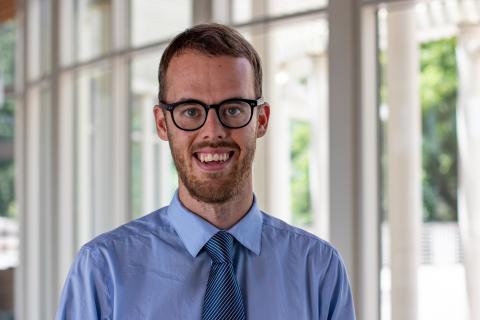
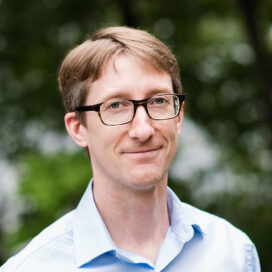
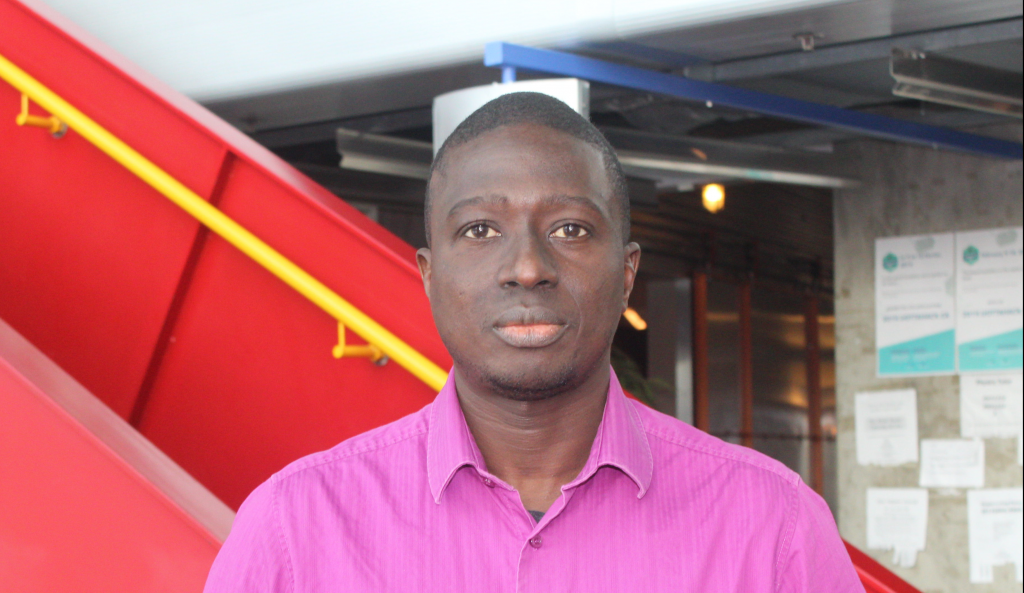
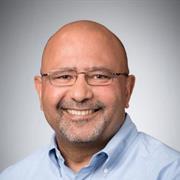
Alexis Berne is an Associate Professor at the Environmental Remote Sensing Laboratory (LTE) within the School of Architecture, Civil and Environmental Engineering (ENAC) at École Polytechnique Fédérale de Lausanne (EPFL). He co-directs the SSIE-GE program and serves as a member of the CDS (Commission for Doctoral Studies) . His research spans radar meteorology, precipitation microphysics, polar precipitation, and geostatistics, with a focus on mountainous and polar regions. Current Positions Associate Professor, LTE, EPFL (2013–present) Co-Director, SSIE-GE, EPFL PhD Program Committee Member, EDCE-GE, EPFL Research Interests include the remote sensing of precipitation, particularly snowfall and ice production mechanisms, using radar and geostatistical methods. His work addresses atmospheric processes in extreme environments like Antarctica and the Swiss Alps, leveraging machine learning and numerical modeling for climate analysis. Teaching encompasses courses on remote sensing, atmospheric processes, and climate change, emphasizing interdisciplinary approaches and spatiotemporal variability. He advises current PhD students such as Heather Anne Corden and Gionata Ghiggi, alongside mentoring past students like Jacopo Grazioli and Timothy Hugh Raupach.
Professor Cedo Maksimovic is a leading academic in the Department of Civil and Environmental Engineering at Imperial College London, Faculty of Engineering. He is a Principal Research Fellow and heads the Urban Water Research Group (UWRG), with affiliations to the Environmental and Water Resource Engineering group, Grantham Institute, Space Lab, and Urban Systems Lab. His research focuses on urban water systems , including storm drainage, urban flooding, water supply, and the interaction between urban infrastructure and the environment. He has pioneered work in applied fluid mechanics , smart water infrastructure , and flood risk management , with innovations such as the AOFD method for urban surface flood modelling and intelligent sensor networks recognized by the ICE Telford Gold Medal. His recent research, as reflected in publications, spans urban pluvial flooding , leakage detection , integrated urban water management , and blue-green infrastructure . These works emphasize computational modelling, real-time monitoring, and climate resilience in urban environments. UNESCO/IAHR Lecturer of the Year 2001 ICE Telford Gold Medal (WINES project team) Prof. Maksimovic has led major projects funded by EPSRC, EU (Climate-KIC, Interreg), UNESCO, and ERANET_CRUE. He advises postgraduate students and has created international educational initiatives like the EDUCATE programme. He also serves as Editor-in-Chief of the Urban Water Book Series and co-founded the Urban Water journal. He leads the UNESCO-endorsed IRTCUD/CUW network with centres in Banjaluka, Belgrade, Cairo, Kuala Lumpur, London, Porto Alegre, Tehran, and Trondheim, promoting global collaboration in urban water research and education.
Knut Tore Alfredsen is a Professor in the Department of Civil and Environmental Engineering at NTNU. His research focuses on cold climate hydrology, environmental impacts of hydropower, river ice dynamics, and water resource management. He leads projects like Trygg Elv (flood detection tools) and Hydro Connect (climate change mitigation in hydropower). He supervises numerous PhD and master’s students and teaches courses in hydrology, hydropower engineering, and environmental design. His work combines field measurements, data analysis, and advanced modelling, often using LiDAR and remote sensing technologies. Key projects include Sagelva research catchment studies and evaluations of environmental impacts from hydropeaking and reservoir operations. He is an active contributor to international conferences and collaborates with organizations like NVE and the IAHR. Education: Not explicitly stated in the provided text. Affiliations: HydroCen, Center for Renewable Energy (FME), NTNU’s Civil and Environmental Engineering Department. Grants: Involved in projects like HydroFlex (turbine development) and Klima 2050 (runoff estimation). Awards: None explicitly mentioned. Labs/Teams: Leads research groups in ecohydraulics, river modelling, and cold climate hydrology. Research Highlights: Focuses on ice-jam flood hazards, hydropeaking effects on fish, and sustainable hydropower practices. Recent work includes LiDAR-based river bathymetry and historical river development analysis using AI.
Joseph Seeley is an Assistant Professor in the Department of History at the University of Virginia , specializing in Korean history, the Japanese Empire, and East Asian environmental history. His research explores borderlands dynamics through ecological and imperial lenses, utilizing multilingual sources. Education : Ph.D. from Stanford University (2019), B.A. from Brigham Young University (2013), A.S. from Dixie State College (2007) His forthcoming book Border of Water and Ice (Cornell University Press, 2024) investigates the Yalu River's role in Japanese imperial boundary-making, while his publications span topics like colonial animal disease control, riverine development, and cultural symbolism of tigers. Supported by the Korea Foundation and Freeman Spogli Institute, his work combines environmental history with geopolitical analysis. Seeley teaches courses on East Asian environmental history, Korean civilization, modern Korean history, border conflicts, and North Korea. His research methodology emphasizes interdisciplinary approaches to imperial geography and ecological change.
Taylor Perron is the Cecil and Ida Green Professor of Earth, Atmospheric and Planetary Sciences at Massachusetts Institute of Technology (MIT), where he also serves as the EAPS Undergraduate Officer. His research program at MIT spans multiple interdisciplinary areas within Earth and planetary sciences, with strong connections to the MIT-WHOI Joint Program in Oceanography/Applied Ocean Science and Engineering. Dr. Perron's academic background includes an AB in Earth and Planetary Sciences and Archaeology from Harvard University (1999) and a PhD from the University of California, Berkeley (2006), followed by postdoctoral work at Harvard. His leadership roles at MIT have included serving as chair of the Program in Geology, Geochemistry, and Geobiology, and as Associate Department Head for Education. His research focuses on three interconnected areas: Landscape Evolution, Planetary Surfaces, and the Human Landscape. Within Landscape Evolution, he investigates dynamic river networks, climate-landscape interactions, grain-scale sediment transport mechanics, and the connections between landscape evolution and biological diversification. His Planetary Surfaces research examines river systems on Mars and Titan, using spacecraft data to understand extraterrestrial hydrological processes. The Human Landscape component explores archaeological applications of geomorphology, particularly in the Amazon basin. Analysis of his recent publications reveals a strong emphasis on comparative planetary hydrology, with significant work on Earth, Mars, and Titan. His research increasingly integrates field observations, mathematical modeling, and remote sensing to address questions about landscape evolution across different planetary environments and timescales, with growing attention to anthropogenic impacts on Earth's surface processes. Scientific Awards & Honors: MacArthur Fellowship (2021) James B. Macelwane Medal, American Geophysical Union (2014) Fellow, American Geophysical Union (2014) Editorial Committee Member, Annual Review of Earth & Planetary Sciences (2017-present) Dr. Perron has established a productive research group that collaborates across disciplines and institutions, including significant partnerships with WHOI, NASA missions, and archaeological teams. His work bridges fundamental questions about planetary evolution with practical implications for understanding climate change impacts on Earth's surface systems.
Craig Lee is a Professor of Oceanography at the University of Washington, where he also serves as Senior Principal Oceanographer and Assistant Director for Research at the Applied Physics Laboratory. His work focuses on physical oceanography with emphasis on observational studies and instrument development. Lee leads research programs studying upper ocean dynamics, coastal processes, and high-latitude oceanography across diverse regions including the Arctic, North Atlantic, and South China Sea. Dr. Lee's educational background includes: B.S. in Electrical Engineering and Computer Science from the University of California, Berkeley (1987) Ph.D. in Physical Oceanography from the University of Washington (1995) Lee's primary research interests center on three interconnected areas: (1) upper ocean dynamics, particularly mesoscale and submesoscale fronts and eddies; (2) interactions between biology, biogeochemistry and ocean physics; and (3) high-latitude oceanography in changing Arctic environments. His work often combines field observations with instrument development to address fundamental questions about ocean circulation and its role in climate systems. He has pioneered approaches using autonomous platforms to study difficult-to-access regions like ice-covered waters. Analysis of Lee's recent publications reveals a strong focus on Arctic oceanography, upper ocean mixing processes, and the application of autonomous observing technologies. His research spans multiple ocean basins with particular emphasis on the Arctic, North Atlantic, and western Pacific. A notable trend is the increasing integration of biogeochemical measurements with physical oceanography to understand coupled systems. His work often addresses climate-relevant questions about ocean circulation, heat transport, and ecosystem responses to environmental change. Dr. Lee provides leadership through service on science steering committees for large research programs and advisory panels for U.S. Arctic efforts. He actively supports and advises graduate students while teaching courses on ocean circulation observations and experimental design. His team has developed innovative technologies including autonomous gliders for ice-covered waters, high-performance towed vehicles, and lightweight mooring systems. Lee leads a research team pursuing diverse field programs including Arctic PISCES, Stratified Ocean Dynamics of the Arctic (SODA), and studies of the Kuroshio Current. His group collaborates extensively with institutions worldwide and contributes to major international research initiatives focused on understanding ocean processes and their climate implications.
Gaetano Sardina is a Professor in Fluid Dynamics at Chalmers University of Technology, Sweden. His research spans mechanical engineering and environmental sciences, focusing on turbulence in urban heat islands, microplastic transport in marine environments, and cloud microphysics. In 2023, he secured an ERC Consolidator Grant for studying turbulence effects in mixed-phase clouds. Key Research Areas: Fluid dynamics, environmental engineering, multiphase flow, atmospheric science Recent Projects: 2024–2029: MixClouds - Turbulence in mixed-phase clouds (European Commission) 2021–2025: MicroPlastiX - Microplastic fate in marine ecosystems (Formas) 2020–2022: PICTURE - Urban particle transport modeling (VINNOVA) Scientific Awards: ERC Consolidator Grant (2023) Collaborations: Partners with European Commission, Swedish Research Council, Formas, VINNOVA
Chang Xu is a Professor and Ph.D. supervisor at Nanjing University, affiliated with the State Key Laboratory for Novel Software Technology, School of Computer Science, and Institute of Computer Software (ICS). He has been a full-time faculty member since 2010, when he joined as an associate professor and was later promoted to full professor in 2015. Education: Ph.D. from The Hong Kong University of Science and Technology (HKUST) in 2008 (advisor: Prof. S.C. Cheung) M.Eng. from Institute of Software, Chinese Academy of Sciences (ISCAS) in 2003 B.Eng. from University of Science and Technology of China (USTC) in 2000 Research Interests: Professor Xu's research focuses on big data software engineering, intelligent software testing and analysis, and adaptive and autonomous software systems. His recent work centers on constructing and providing runtime support for intelligent software in open environments, with emphasis on inconsistency detection and resolution for environments, and quality assurance for adaptive, concurrent, learning-based, smartphone-based, and spreadsheet-based applications. His work bridges theoretical foundations with practical applications in software engineering, particularly in program analysis, software testing, and self-adaptive systems. Scientific Awards: ACM SIGSOFT Distinguished Paper Award from ICSE 2025 Best Student Paper Award from EUROSYS 2025 ACM Distinguished Member in 2024 Best Paper Award from SOSP 2023 Best Paper Candidate from ISSRE 2022 Yangtze River Scholar by the Ministry of Education in 2021 Multiple ACM SIGSOFT Distinguished Paper Awards from conferences including ASE, ICSE National Science and Technology Progress Award (Second Class) in 2011 Academic Service and Advising: Professor Xu has served on numerous program committees for top software engineering conferences including ICSE, ASE, ESEC/FSE, and ISSTA. He is an editorial board member for several journals including Journal of Computer Science and Technology and Frontiers of Computer Science. He has supervised numerous Ph.D. and MSc students, with research topics spanning program analysis, software testing, self-adaptive systems, and more. His students have gone on to successful careers in both academia and industry. Research Groups: Professor Xu is associated with the SPAR research group at Nanjing University and the CASTLE research group at HKUST, focusing on software analysis, reliability, and testing.
Dr. Jonathan T. Overpeck is the Samuel A. Graham Dean of the School for Environment and Sustainability (SEAS) at the University of Michigan, where he also holds the William B. Stapp Collegiate Professorship of Environmental Education. He is a Professor of both Climate and Space Sciences and Engineering, and Earth and Environmental Sciences, with a career spanning climate-vegetation interactions, abrupt climate change, monsoon dynamics, drought hydroclimate, sea level rise research, and interdisciplinary climate assessment. Overpeck has published over 230 works cited 60,000+ times, emphasizing public education, university-community partnerships for climate solutions, and environmental justice initiatives. PhD in Geological Sciences, Brown University MSc in Geological Sciences, Brown University BA in Geology (Honors), Hamilton College His research spans climate-biosphere interactions , climate variability and abrupt change , monsoon dynamics , drought and hydroclimate , sea level rise , climate law , and climate adaptation . Overpeck pioneered studies on megadrought terminology, temperature-driven drought intensification, and the aridification of North America. His work with the NOAA Paleoclimate Program and World Data Center for Paleoclimatology established foundational understanding of climate dynamics through annually-laminated sediment analysis in the Cariaco Basin. Overpeck's 2020-2024 research includes climate aridification , hydroclimate scaling mismatches , and temperature-precipitation interactions , with recent focus on Antarctic heatwaves, Mississippi River Basin changes, and corporate climate accountability. His article trends show concentration in climate attribution , hydrological extremes , paleoclimate modeling , and climate policy analysis . Scientific Honors: 2024 U.S. National Academy of Sciences 2015 American Geophysical Union Fellow 2009 AAAS Fellow 2007 Nobel Peace Prize contributor (IPCC) 2005 Guggenheim Fellowship Multiple U.S. Department of Commerce awards Overpeck has led or participated in significant climate adaptation projects , including NSF grants totaling $5.1M+ for Southwest Hydroclimatic Extremes (2017-2020), Amazon Drought Impacts (2014-2018), and Quantifying Drought Risk (2013-2018). He serves on the Colorado River Research Group (2014-present) and advises Climate Communication (2011-present). Current initiatives include Great Lakes University positioning, Michigan's climate resilience planning, and the Audacious Water podcast series examining Mississippi River Basin transformations. Overpeck actively contributes to climate policy discourse , advocating for science-informed decision-making and stakeholder collaboration across government, military, and corporate sectors.
Dr. Zoe Li is an Associate Professor in the Department of Civil Engineering at McMaster University, with an additional role as an Associate Member in the Department of Computing and Software. She specializes in developing modeling and decision-support tools to address challenges in water resources management, environmental systems analysis, and climate change impacts. Her research focuses on hydrological modeling, probabilistic forecasting, risk analysis, and environmental systems optimization. She holds a B.Eng. from China and M.A.Sc./Ph.D. degrees from the University of Regina. Her work spans interdisciplinary collaborations, including studies on dam safety under climate change, wastewater treatment plant optimization, and AI-driven environmental monitoring. She has been actively involved in projects such as CityDNA, a digital tool to model urban environments for decision-making during crises like the pandemic. Dr. Li teaches courses in environmental systems engineering and principles of environmental engineering, emphasizing uncertainty quantification and sustainable practices. Her research publications (15+ recent articles) address topics like machine learning applications in environmental systems, climate change impacts on water resources, and infrastructure resilience. She advises graduate students in environmental engineering and systems optimization. Notable grants include funding from Roche Canada for pandemic-related urban modeling. Her work is frequently published in high-impact journals like Journal of Environmental Management and Water Resources Research .
Marco Toffolon is a Full Professor at the University of Trento's Department of Civil, Environmental and Mechanical Engineering, where he leads the Physical Limnology Laboratory. He serves as Deputy Director for International Relations and previously directed the Environmental Engineering programs. His research spans ecohydraulics, sediment transport, lake hydrodynamics, and environmental modeling. He investigates physical limnology, tidal morphodynamics, and stratified flows using analytical and numerical approaches. His work integrates field measurements with machine learning for water quality prediction and climate impact assessment. His publications focus on lake dynamics, river morphodynamics, and sustainable water management, with recent emphasis on climate-driven changes in alpine systems. Research demonstrates strong interdisciplinary linkages between hydraulics, ecology, and climate science. Awards: 2016 Coastal Engineering Journal Award 2013 Enrico Marchi Lecture invitation He leads international collaborations with institutions like EPFL and Sun Yat-sen University, and organizes conferences including the Physical Processes in Natural Waters workshop series.
Dr. András Vadas is a habilitated Associate Professor at the Department of Medieval History , Institute of Historical Studies, Eötvös Loránd University (ELTE). He is also an alumnus of Central European University's Medieval Studies program. His career bridges medieval history with environmental history, focusing on the interplay between warfare, climate change, and ecological systems in premodern Hungary.
Dr. Mahdi Sedighkia is a Research Fellow at The Australian National University (ANU), affiliated with the Institute for Climate, Energy & Disaster Solutions (ICEDS) and the Mathematical Sciences Institute (MSI). His research focuses on flood modeling, water resource management, climate change impacts, and the application of AI and GIS/RS techniques. He holds degrees in environmental and water resource engineering from the University of Tehran, Tarbiat Modares University, and James Cook University. Education: B.Eng: Environmental Engineering, University of Tehran M.Sc: Water Resource Engineering, Tarbiat Modares University PhD: Environmental Engineering, James Cook University Research Interests: Flood/river hydraulic modeling and damage assessment AI and fuzzy systems in water resources management Climate change impact on ecosystems and water resources RS/GIS applications in hydrology and ecology Collaborations and Projects: Conserving floodplains to mitigate flood risk (2025–2028) Community-driven flood resilience initiatives (2022–2025) Groups: Extreme Events, Water and Flooding, Risk Resilience Publications: Focus on integrated modeling, reservoir optimization, and environmental flow assessment in river systems.
Dr. Ousmane Seidou is a Full Professor in the Department of Civil Engineering at the University of Ottawa, where he has served since 2007. He leads the Hydraulics Lab and holds affiliations with the Faculty of Engineering's Centre for Indigenous Community Infrastructure. His academic journey includes a PhD from École Polytechnique de Montréal (2002) and postdoctoral research at the Institut National de la Recherche Scientifique, Quebec. Dr. Seidou specializes in climate change impacts on water resources, hydrological modeling, and transboundary water management. Education: Ph.D. in Civil Engineering (Hydraulics), École Polytechnique de Montréal (2002) M.Sc. in Water Resources Engineering, École Polytechnique de Montréal (2002) Postgraduate Diploma in Hydroinformatics, École Inter-États des Ingénieurs de l'Équipement Rural (1998) Undergraduate Degree in Civil Engineering, École Mohammadia d'Ingénieurs (1996) Research Focus: Dr. Seidou’s work integrates hydrological modeling with climate adaptation strategies, emphasizing Africa’s water security. Key areas include: Climate change impacts on river basins (e.g., Niger, Congo) Development of flood early warning systems in West Africa Water-Energy-Food-Environment (WEFE) nexus frameworks Environmental flow estimation in wetland ecosystems He leads international projects involving multi-country collaborations and agencies like the United Nations Development Programme and the World Bank. Recent Projects: Principal Investigator for the Niger Basin Authority’s WEFE Nexus initiative Technical leadership in the Dutch-funded BAM-GIRE project (Mali/Guinea wetlands) Development of flood early warning systems for Niamey and Gaya (Niger) Teaching: Courses include Climate Change Impacts on Water Resources, Advanced Hydrological Modeling, and Water Resources Management. He mentors PhD students in hydrology and climate adaptation. Grants & Funding: Secured multi-million-dollar projects with organizations like Wetlands International and the UAE-BELEM Programme. Recent funding includes $135,000 for hydrological modeling tools in the Niger Basin. Labs/Teams: Director of the Hydraulics Lab at the University of Ottawa. Active in global initiatives like the Global Goal on Adaptation (GGA) indicator development under the Paris Agreement.
Ridha Khedri is a Professor in the Department of Computing and Software at McMaster University . His research spans formal methods in software engineering, cybersecurity, information security ontology, network segmentation, and covert channels analysis. Full Professor since 2000 Contact: khedri@mcmaster.ca Research Interests : Prof. Khedri develops algebraic frameworks for software security, with recent work on network segmentation , ontology engineering , and covert channel detection . His interdisciplinary efforts include hybrid machine learning-ontology models for environmental predictions (e.g., river ice breakup) and digital twin healthcare systems . Article Trends : His 15 most recent works (2016-2025) focus on network security , knowledge representation , and formal verification . Notable trends include automated security testing , ontology modularization , and multi-context reasoning systems . Teaching : He has taught courses like Software Design (CAS 703), Discrete Mathematics (SFWRENG 2DM3), and Algebraic Methods in Software Engineering (CAS 738) since 2017.