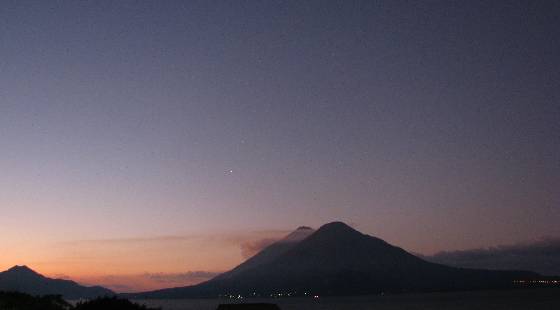
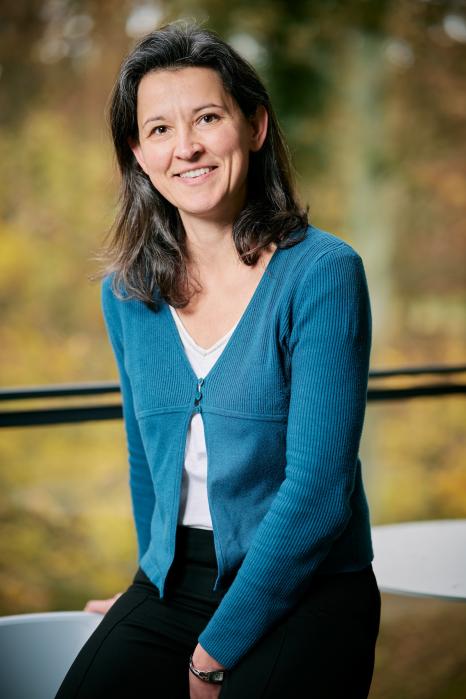
Dr. Karlis Kukemilks is a researcher at the Department of Geology within the Department VI - Spatial and Environmental Sciences at the University of Trier. He leads the DBU-funded project 'Utilization of clay-containing sludge from gravel washing and silicate-rich dust as alkali-activated binders for the production of novel geopolymers for ecologically optimized cement formulations' (2024-2026), aiming to reduce CO₂ emissions in cement production by repurposing industrial byproducts. His work bridges academic research and industrial application through partnerships with regional SMEs. Geomechanical modeling of slope stability Production of eco-cements from industrial waste Hydrogeological modeling and drainage solutions Hydrogeophysical investigations using resistivity tomography and self-potential methods The project develops geopolymer cement with properties like acid resistance and aesthetic versatility, targeting applications in construction and materials science. His computational expertise spans GIS (ArcMap, QGIS), geomechanics (GeoStudio, Rocscience), and hydrogeology (HydroGeoSphere, MODFLOW). Collaboration with industry partners demonstrates his commitment to sustainable innovation in construction. Contact: kukemilks@uni-trier.de , Behringstraße 21, Trier.
Herschel Elliott is a Professor in the Department of Agricultural & Biological Engineering at Pennsylvania State University, conducting research on waste management and water quality systems. Based at the University Park campus in the Agricultural Engineering Building, his work addresses critical environmental challenges in agricultural contexts through innovative engineering solutions. His research focuses on treatment and land disposal of municipal, agricultural, and industrial wastes, with specialization in phosphorus runoff mitigation, soil decontamination, and odor management. Key areas include biosolids recycling, manure management systems, and emerging contaminant behavior in water resources. His interdisciplinary approach integrates environmental engineering principles with agricultural practices to develop sustainable waste recycling methodologies that protect soil and water quality. Analysis of recent publications reveals strong emphasis on pharmaceutical contaminants in water systems, sustainable manure utilization frameworks, and biochar-based adsorption technologies. His work demonstrates consistent investigation into agricultural runoff dynamics, contaminant fate in spray-irrigation systems, and land suitability modeling for waste application. These studies collectively advance understanding of nutrient cycling, contaminant transport mechanisms, and practical interventions for improving water quality in agricultural landscapes.
Marta Richtáriková is a researcher at the Department of Nuclear Physics and Biophysics within the Faculty of Mathematics, Physics and Informatics at Comenius University , Slovakia, where she has been affiliated since 1989. Her work focuses on radiocarbon sample preparation and analysis for climate change and environmental studies. PhD in Analytical Chemistry (1984), Faculty of Natural Sciences, Comenius University Her research spans radiocarbon dating , atmospheric CO2 monitoring , and isotope hydrology , with significant contributions to nuclear power plant impact assessments and cosmic radiation studies . Recent projects include isotope analysis of meteorites and environmental radionuclide monitoring under IAEA grants. Key publication trends involve AMS (Accelerator Mass Spectrometry) , groundwater tracers , and nuclear process investigations , reflecting her expertise in environmental radioactivity and isotope geochemistry. She collaborates on international projects and has contributed to tree-ring radiocarbon records and thermal water dating . Her laboratory work includes optimizing ion sources and target preparation for AMS/IBA facilities, enhancing Slovakia's capacity for nuclear and environmental research. She employs techniques like gas proportional counting and IRMS spectrometry for carbon and cesium isotope analysis.
Moacyr Cunha de Araujo Filho is an Associate Professor in the Department of Oceanography at the Federal University of Pernambuco, Brazil. He holds a B.Sc. in Civil Engineering (1985), M.Sc. in Hydraulics and Sanitation (1991), DEA (1992), and Ph.D. (1996) in Environmental Physics and Chemistry from Institut National Polytechnique de Toulouse, France. Education: B.Sc. (Civil Engineering, UFPE 1985), M.Sc. (Hydraulics and Sanitation, USP 1991), DEA (Environmental Physics, Toulouse 1992), Ph.D. (Environmental Physics, Toulouse 1996) His research spans oceanography, environmental physics, and biogeochemical cycles, focusing on hydrodynamic modeling, sea-air CO2 exchanges, and coastal ocean dynamics in tropical regions. He has contributed extensively to studies on the Brazil-Malvinas Confluence, Caribbean Sea anomalies, and wave energy systems. His recent publications analyze flow-topography interactions, CO2 exchange variability, and numerical modeling of oceanic processes in the tropical Atlantic. Research keywords include hydrodynamics, biogeochemistry, and climate modeling. Moacyr Araujo has no explicitly mentioned scientific awards, students, or grants in the provided data. Collaborative works highlight international partnerships in oceanographic research.
Ali Hassanli is an Adjunct Professor at the School of Natural and Built Environments , University of South Australia. His research focuses on water management, irrigation systems, and groundwater-surface water interactions, with extensive work on salinity mitigation in agricultural and urban environments. Research Interests Hydrogeological modeling of riverbed systems Recycled wastewater applications in irrigation Deficit irrigation strategies 3D numerical simulations of water flow Urban water sustainability Publications Recent work includes climate change impacts on reservoir runoff, UAV-based soil erosion analysis, and advanced irrigation techniques for greenhouse tomato cultivation. His studies frequently address semi-arid regions and integrate field data with computational models like HydroGeoSphere. Collaborations He collaborates with institutions such as the Centre for Water Management and Reuse , SA Water Corporation, and Shiraz University . His role as a Research Degree Supervisor highlights his mentorship in water resource projects.
Vincent Hallet is a Researcher affiliated with the University of Bujumbura, with extensive international collaborations across Burundi, Benin, Romania, and the Philippines. His work spans hydrogeology, karst systems, and environmental science, focusing on groundwater resources, aquifer vulnerability, and subsurface flow dynamics. Doctor of Science, Université de Liège Research Interests: Hallet specializes in karst hydrology, tracer dispersion modeling, and geophysical methods for hydrogeological surveys. His projects address water resource management in developing regions and geopark development. Scientific Awards: Award granted by Université de Liège on 30 Jun 1999 Advising & Grants: Supervised 32 works and led projects such as the Hydrogeological Center at University of Bujumbura and Aquifer Vulnerability Mapping in Romania . Articles Trends: Recent publications emphasize karst conduit heterogeneity, breakthrough curve analysis, and sustainable soil management in tropical regions, employing computational fluid dynamics and geophysical monitoring. Collaborations: Active in Benin (Université d'Abomey-Calavi), Philippines, and Romania, with training programs in geophysical surveys and well logging.
Sedelia Rodriguez is a Senior Lecturer in the Department of Environmental Science at Barnard College, Columbia University. She also holds administrative roles as the Environmental Science Minor Advisor and Assistant Director/Program Coordinator of the Science Pathways Scholars Program. Her academic work bridges geology and environmental science, with a strong research presence in igneous petrology and volcanology. Post Doctoral Research Scientist - Lamont-Doherty Earth Observatory, Columbia University Ph.D. - Florida International University, Miami, FL Her research focuses on large igneous provinces and flood basalts, including the Columbia River Basalt Group and the Siberian Traps. She applies geochemical and petrological methods to understand the origins of massive volcanic eruptions and their impacts on Earth's systems, particularly in relation to mass extinction events. Her work often involves international collaborations and deep-sea drilling projects such as IODP Expeditions. The recent publications reflect a strong trend in Earth system science, integrating geochemistry, volcanology, and paleoenvironmental reconstruction. Her work connects deep Earth processes with surface environmental catastrophes, especially during the end-Permian extinction. Key themes include mantle plume volcanism, oceanic crust formation, and the geochemical fingerprints of global-scale eruptions. Barnard College Faculty Mini-Grant - 2015 Joint Oceanographic Institute Research Grant - 2006 Dissertation Year Fellowship 2004-2005, Florida International University Research Grant Recipient 2003, Geological Society of America Teaching Award 2002 (first place), Florida International University Travel Grants, Graduate Student Association - Florida International University (2002, 2003, 2005) Field Trip Leader: GSA 2003 Annual Meeting field trip, The Columbia Flood Basalts and the Yakima fold belt Sedelia Rodriguez has been actively involved in research grants and collaborative scientific expeditions, particularly through IODP and Lamont-Doherty Earth Observatory. While no formal list of advisees is provided, she teaches senior thesis seminars and advises environmental science minors, indicating active mentorship. Her role in the Science Pathways Scholars Program highlights her commitment to student support and inclusive science education. Her research is closely tied to field and laboratory work associated with the Lamont-Doherty Earth Observatory and IODP (Integrated Ocean Drilling Program) projects. She has participated in major drilling expeditions such as IODP Expedition 309/312 to Hole 1256D, contributing to the study of intact oceanic crust. These efforts are part of international scientific teams focused on understanding seafloor formation and deep Earth processes.
Margaret Chen serves as Water & Climate Research leader at the Department of Water and Climate, Vrije Universiteit Brussel (VUB) in Brussels, Belgium. Her work focuses on addressing critical challenges related to water management and climate adaptation through innovative research and practical applications. Professor Chen's research expertise spans several interconnected domains in water and climate science: Hydraulics and hydrodynamics of coastal and river systems Morphodynamics and sediment transport processes Climate resilient coastal infrastructure and nature-based solutions Flood defense systems in coastal, estuarine, and riverine environments Integrated sustainable watershed management approaches Her recent publications demonstrate continued focus on understanding complex water systems and developing practical engineering solutions. Professor Chen's work bridges theoretical understanding with real-world applications, particularly in adapting to climate change impacts on coastal and freshwater systems. A significant portion of her research involves experimental approaches and field studies to validate theoretical models. Her fingerprint research areas include estuary dynamics (100%), suspended matter (63%), beach processes (51%), sediment dynamics (37%), and hydrodynamics (24%). Professor Chen has successfully led numerous research projects addressing critical water and climate challenges. Her collaborative approach is evident in the extensive network of international partnerships reflected in her research activities. She has supervised 15 graduate students throughout her career, contributing to the development of the next generation of water and climate scientists and engineers. Current projects include VLIR434 (2024-2029) on WASH and climate-resilient agriculture transformation, CONI797 (2024-2025) on advanced experimental research techniques, and VLOV181 (2023-2026) providing sedimentological laboratory support. Her laboratory work focuses on sedimentological analysis and hydraulic experimentation, with significant contributions to understanding coastal processes and developing resilient infrastructure. Professor Chen's research group maintains strong connections with governmental agencies and international organizations working on climate adaptation and water management issues, particularly relevant in the context of rising sea levels and increasing extreme weather events.
Dr. Tapas Biswas is an Honorary Senior Lecturer at the Fenner School of Environment and Society, Australian National University, with 34 years of research, teaching, and consultancy experience in global water resources management. His international work spans institutions across the USA, Israel, Germany, Philippines, India, China, Vietnam, Bangladesh, and Saudi Arabia including the US Salinity Laboratory, Agricultural Research Organisation (Israel), and International Rice Research Institute. His research focuses on River Basin water quality risk monitoring, modelling, and forecasting; river productivity and health (carbon, nutrients, phytoplankton, metabolism); climate change and bushfire impacts on water resources; environmental flows; and land-water resource management. Notably, his water quality digital sensor research forms the foundation of Australia's first satellite mission for space-based water quality monitoring. Scientific Awards: Fellow of the International Organisation for Biotechnology & Bioengineering (IOBB) Dr. Biswas serves as guest editor for 'Soil Research' and sits on editorial boards of 'Journal of South Pacific Agriculture' and 'Journal of Crop and Weed', while holding leadership roles including Vice-Chair of NCWRI (ICID) and executive committee membership in IWA and AOGEO.
Edoardo Rotigliano is a Full Professor in the Department of Earth and Marine Sciences at the University of Palermo, Italy. He teaches Physical Geography, GIS, and Applied Geomorphology courses with office hours held at the main campus (Via Archirafi, 22) and Trapani teaching center for Biodiversity and Technological Innovation students. His contact includes phone (+3909123864649) and email (edoardo.rotigliano@unipa.it). His research spans physical geography and geomorphology with emphasis on landslide susceptibility modeling, erosion processes, and natural hazard assessment. Key interests include geomorphometry, GIS analysis, hydrogeological phenomena, and coastal vulnerability. He employs advanced geospatial techniques and field-based approaches to analyze hazards in Mediterranean environments, particularly Sicily and Central America. Recent publications (2023-2025) reveal strong focus on landslide deposit prediction, inventory completeness validation, and multi-typology susceptibility modeling. His work integrates stochastic approaches, high-precision simulations, and field data to address geomorphological hazards across diverse landscapes from volcanic calderas to coastal zones. Notable case studies include El Salvador's Ilopango Caldera and Sicilian river basins. Scientific contributions include: Development of spatial validation protocols for landslide susceptibility maps Integration of preparatory and triggering factors in coseismic hazard models Analysis of scale effects in geomorphological modeling Experimental pedagogy for geoscience education As faculty member, he supervises student research and participates in geoscience education initiatives. His work demonstrates strong interdisciplinary collaboration between geomorphology, hydrology, and environmental engineering. Current projects focus on refining hazard prediction models through advanced sampling strategies and multi-source data integration for Mediterranean and Central American contexts.
Toomas Tamm is a Professor and Head of the Chair of Rural Building and Water Management at the Institute of Forestry and Engineering, Estonian University of Life Sciences. Based at Kreutzwaldi 5 in Tartu, Estonia, he leads research and educational activities focused on water management systems, hydrological engineering, and sustainable environmental solutions with particular emphasis on Baltic region challenges. Professor Tamm's research spans multiple critical areas including climate change adaptation, sustainable drainage systems, methane degradation technologies, and soil stabilization in peatlands. His work integrates advanced modeling techniques with practical engineering solutions to address water resource challenges in Estonia's unique geographical context. He has made significant contributions to understanding how ecological modeling can mitigate drought impacts on forest ecosystems and how recycled materials can be utilized for environmental protection. Analysis of Professor Tamm's recent publications (2016-2021) reveals a strong thematic focus on climate change adaptation strategies for water resources in the Baltic region. His research consistently bridges theoretical modeling with field applications, particularly through the use of GIS and SWAT modeling approaches. A significant portion of his work addresses practical solutions for landfill management, with innovative approaches to methane degradation using recycled materials from landfill mining. Professor Tamm leads the Chair of Rural Building and Water Management, which serves as a hub for research and education in sustainable water management practices. His department collaborates extensively with the Foundation Järvselja Experimental and Training Centre and participates in numerous INTERREG, SEKMO, and SA KIK research projects addressing environmental challenges in Estonia. As an academic leader, Professor Tamm oversees curriculum development and educational programs in water management engineering. His work has direct implications for Estonian environmental policy, particularly regarding water resource management, landfill operations, and climate adaptation strategies. Future research directions likely include deeper integration of digital technologies in water management systems and expanded applications of circular economy principles to resource management in the Baltic context.
Dr. FLEIT Gábor is a Research Fellow at the Department of Hydraulic and Water Resources Engineering, Faculty of Civil Engineering, Budapest University of Technology and Economics (BME). He teaches courses such as Hydromorphology and Infrastructural Design Project, with a focus on river morphology, sediment transport, and computational fluid dynamics (CFD) modeling. His research addresses hydrodynamic impacts of ship-induced waves, environmental monitoring of large rivers, and sustainable mitigation strategies for hydraulic structures. University: Budapest University of Technology and Economics School: Faculty of Civil Engineering Email: fleit.gabor@emk.bme.hu Room: K. ép / fsz. 15/3 His publications emphasize the application of advanced technologies like LSPIV, acoustic mapping, and CFD to analyze riverbed dynamics, sediment resuspension, and bridge scour. Recent work includes spectral mapping of bedforms, hysteresis in hydraulic variables, and predictive modeling for juvenile fish safety. Scientific awards include the #építő250 scholarship, recognizing contributions to civil engineering research and education.
Dr. KOZMA Zsolt is an Associate Professor at the Department of Sanitary and Environmental Engineering, Budapest University of Technology and Economics. He specializes in hydrological modeling and aquatic ecosystem dynamics, with a focus on river systems like the Tisza River in Hungary. Teaches "Basics of Environmental Engineering" (BMEEOVKAT41) Former instructor for ecology courses and environmental systems His research emphasizes: Phytoplankton dynamics in lowland rivers Surface rainfall-runoff processes Hydrological model comparisons Flow dynamics and resource availability in aquatic systems Scientific contributions include: Analysis of river connectivity effects on ecosystems Water quality assessment frameworks Investigations of hydrodynamic impacts on phytoplankton Awards: #építő250 Anniversary Scholarship
Luke M Bower serves as an Assistant Professor at the USGS South Carolina Cooperative Fish & Wildlife Research Unit, a specialized research institution focused on aquatic ecosystems and wildlife conservation. His position within this USGS cooperative unit places him at the intersection of academic research and practical resource management, working closely with state and federal agencies to address critical issues in freshwater ecology. Dr. Bower's research program centers on stream fish ecology, with particular emphasis on how environmental flows—the quantity, timing, and quality of water flows—affect freshwater biodiversity. His work integrates morphological, ecological, and evolutionary perspectives to understand patterns in fish assemblages across spatial and temporal scales. Drawing from expertise in geometric morphometrics and functional morphology, he investigates how fish traits relate to environmental conditions and community organization. Analysis of Dr. Bower's recent publication record reveals a strong focus on multiple dimensions of biodiversity, including taxonomic, functional, and phylogenetic diversity in stream fish communities. His research spans local studies in South Carolina to intercontinental comparisons, demonstrating how environmental gradients and human impacts shape fish assemblages globally. A recurring theme is the investigation of environmental flow requirements to sustain freshwater ecosystems, with practical applications for water resource management and conservation policy. Dr. Bower maintains an active research program with Kirk O Winemiller's Lab, focusing on fundamental questions in stream ecology while addressing applied conservation challenges. His work bridges theoretical ecology with practical resource management, contributing to both scientific understanding and policy-relevant knowledge about freshwater ecosystems. With 36 publications and over 700 citations, his research has established him as a productive scholar in freshwater ecology and fish conservation.
Aline Lefebvre-Lepot is a Research Director at the National Centre for Scientific Research (CNRS) who joined CentraleSupélec's Mathematics Federation at Université Paris-Saclay in October 2023. She specializes in mathematical modeling of granular flows and viscous suspensions, developing algorithms to simulate particle interactions for better understanding of their behavior. Her research focuses on: Mathematical modeling of granular media behavior Numerical simulations of particle interactions Micro-macro link in dense particle systems Development of contact models for particle simulations Fluid dynamics in particle suspensions Lefebvre-Lepot is renowned for developing the SCoPI (Simulation of Collections of Particles in Interaction) code for simulating granular materials. Her work addresses phenomena like grain jamming in funnels and has applications spanning industrial production of granular materials, environmental phenomena such as coastal dune erosion and river sediment flow, and agricultural applications like wheat storage in silos. She has extended her research to include deformable particles with applications in micro-swimmers and microfluidics. Her interdisciplinary research was awarded the prestigious Blaise Pascal prize by the French Academy of Sciences in 2022. In addition to her research, Lefebvre-Lepot teaches at École Polytechnique and will soon teach at CentraleSupélec, emphasizing the importance of encouraging students, particularly girls, to pursue careers in mathematics.