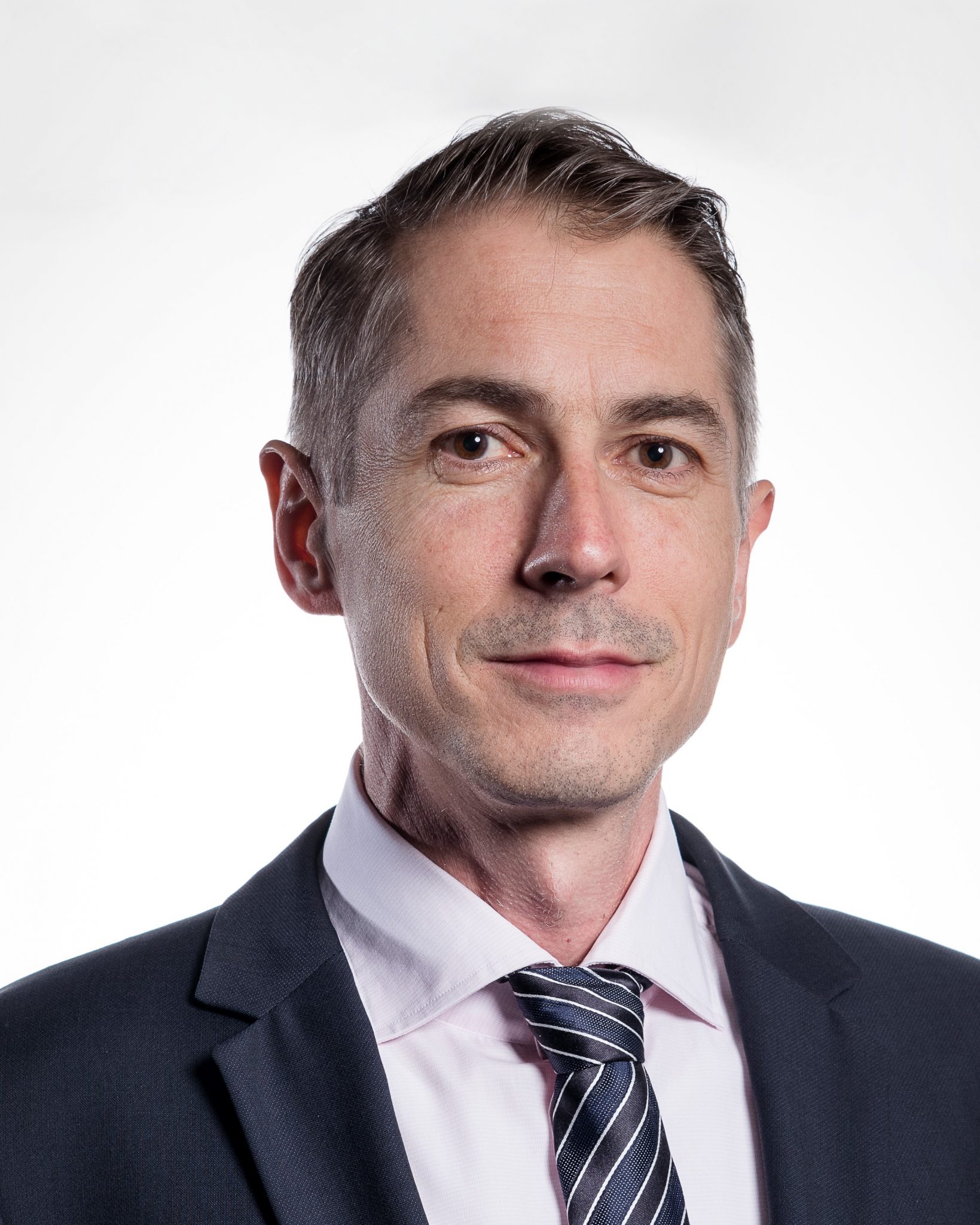
Massimo Mischi is a Full Professor at the Faculty of Electrical Engineering of the Eindhoven University of Technology (TU/e) and chairs the Signal Processing Systems (SPS) Division , the largest division at TU/e with over 250 researchers. He founded the Biomedical Diagnostics (BM/d) Lab in 2012, which now includes 180 researchers and clinical/industrial advisors, focusing on biomedical signal processing for diagnostics and monitoring.
Associate Professor Jiwon Kim is a leading researcher in Transport Engineering at the University of Queensland's School of Civil Engineering. She serves as Director of Higher Degree by Research and was a DECRA Fellow from 2019-2022. Holding degrees from Korea University and Northwestern University, she specializes in AI/ML applications for transportation systems. PhD, Northwestern University BS & MS, Korea University Her research focuses on Artificial Intelligence and Machine Learning applications in transportation, including: Deep learning for traffic management Reinforcement learning in mixed traffic environments Multi-agent systems for urban mobility optimization Spatiotemporal trajectory analysis Recent publications demonstrate expertise in: Eco-driving strategies Traffic incident prediction Queue length estimation Crash risk modeling Scientific recognition includes: ARC DECRA Fellowship (2019-2022) She supervises doctoral students in: Transportation data analytics Autonomous vehicle systems Intelligent traffic management Current projects explore real-time traffic monitoring, synthetic mobility data generation, and connected vehicle technologies.
Dr. Amir Hakami is a Professor in the Department of Civil & Environmental Engineering at Carleton University , where he leads the Carleton Atmospheric Modelling Group . His research focuses on advanced air quality modeling techniques to inform environmental policy. Degrees: B.Sc. (Polytechnic of Tehran), M.Sc., Ph.D. (Georgia Tech), Postdoc (Caltech) Contact: Office 3454 Mackenzie Building, Phone: 613-520-2600 ext. 8609, Email: amir.hakami@carleton.ca Research Interests: Air quality modeling at multiple spatial scales Adjoint sensitivity analysis for atmospheric response Inverse modeling and data assimilation techniques Uncertainty quantification in environmental systems Interdisciplinary applications in policy, public health, and economics Teaching: Courses include Environmental Engineering Systems Modeling , Contaminant Transport , and Air Pollution & Emissions Control at undergraduate and graduate levels. Research Group: The group includes Ph.D. candidates, postdoctoral fellows, and alumni working on topics ranging from atmospheric chemistry to sustainable energy systems. Members come from diverse backgrounds in engineering, science, and policy disciplines.
Mike Kirby is a Professor at the Kahlert School of Computing, University of Utah. He also holds adjunct professorships in the Department of Bioengineering and the Department of Mathematics. His current roles include leadership in scientific computing and informatics initiatives, including former directorships of the Utah Informatics Initiative (2019-2023) and the Multi-Scale Multidisciplinary Modeling of Electronic Materials (MSME) Collaborative Research Alliance (2016-2022). He has extensive experience in strategic research initiatives, including serving as Assistant Vice President for Research (2024-2025). Education: Dr. Kirby earned a PhD in Applied Mathematics (2002) and MS in Computer Science (2001) from Brown University, and a BS in Applied Mathematics and Computer Science from Florida State University (1997). Research Interests: Focus on large-scale scientific computing, physics-informed machine learning, computational science and engineering, high-order numerical methods, and visualization. His work bridges applied mathematics and computer science to address real-world engineering challenges. Publications: Over 150 peer-reviewed articles, including high-impact contributions in journals like Journal of Computational Physics and SIAM Journal on Scientific Computing . Recent work emphasizes machine learning for differential equations, topology optimization under uncertainty, and multi-fidelity modeling. Awards: Recognized for leadership in computational science and informatics, including contributions to University of Utah’s Clery Compliance Program. Advising & Grants: Supervised over 50 graduate students and postdocs. Secured funding from NSF, DOE, and industry partnerships, totaling millions in research grants. Active in interdisciplinary collaborations across engineering, materials science, and medicine. Labs/Teams: Scientific Computing and Imaging (SCI) Institute, Utah Informatics Initiative, and the Center for Multiscale Modeling of Electronic Materials (MSME).
Brian Hie is an Assistant Professor of Chemical Engineering at Stanford University , a Dieter Schwarz Foundation Stanford Data Science Faculty Fellow , and an Innovation Investigator at Arc Institute . He leads the Laboratory of Evolutionary Design , focusing on the intersection of biology and machine learning . His prior roles include a Stanford Science Fellow in the Stanford University School of Medicine and a Visiting Researcher at Meta AI . Education: Ph.D. , Electrical Engineering and Computer Science , Massachusetts Institute of Technology (2021) Bachelor’s Degree , Stanford University Research Interests: Brian’s work bridges machine learning and computational biology , with a focus on protein engineering , single-cell RNA sequencing , and viral evolution . His Evolutionary velocity framework predicts protein evolutionary dynamics across timescales, while his Scanorama algorithm enables efficient integration of heterogeneous single-cell datasets. He also develops structure-informed language models for antibody optimization and uncertainty-aware ML for biological discovery. Publication Trends: His recent work (2023) emphasizes structure-based inverse folding for antibody evolution, evolutionary scale modeling , and unsupervised optimization . Earlier studies (2022-2021) cover evolutionary velocity , multi-modal single-cell analysis , and viral escape prediction using natural language analogies. Scientific Awards: Stanford Science Fellow (2021) National Defense Science and Engineering Graduate Fellowship (2019) Advising: He mentors doctoral students including Brandon Ameglio , Garyk Brixi , and Chang M. Yun , with a focus on biological design and computational methods . Labs & Collaborations: His lab collaborates with Bio-X and the Institute for Human-Centered Artificial Intelligence (HAI) , and he maintains affiliations with Sarafan ChEM-H and Stanford Data Science .
Zion Zibly, MD, MBA is an Associate Professor in the Department of Neurosurgery at Yale School of Medicine . He holds multiple leadership roles including Director of the Center of Neuromodulation , Director of the Center of Neurosurgical Cancer Pain , and Head of Stereotactic & Functional Neurosurgery and the Focused Ultrasound Institute . Previously served as Chair of Neurosurgery at Sheba Medical Center after graduating from Technion’s Faculty of Medicine (MD) and Coller School of Management (MBA). Research Interests: Specializes in Neuromodulation for movement disorders (Parkinson’s, tremors, dystonia), Deep Brain Stimulation , Gene Therapy for pediatric neurodegenerative conditions, Oncological Neurosurgery , and Neurological Pain Management . Combines Functional Neurosurgery with Focused Ultrasound technology. Scientific Contributions: Participated in pioneering Alzheimer’s brain stimulator procedures and Gene Therapy applications. Active member of the North American Association of Functional Neurosurgery and Israeli Neurosurgical Society . Clinical Expertise: Implantation of electrostimulators for Parkinson’s and essential tremor, treatment of Benign/Malignant CNS Tumors , and management of Neurological Pain Conditions . Affiliated with Yale Cancer Center and Center for Brain & Mind Health .
Rina Foygel Barber is the Louis Block Professor in the Department of Statistics at the University of Chicago, where she also serves as Co-chair of the Committee on Community, Diversity, and Inclusion (CCDI) and is a member of the Committee on Computational and Applied Mathematics (CCAM). Her educational background includes: PhD in Statistics, University of Chicago (2012), advised by Mathias Drton and Nati Srebro MS in Mathematics, University of Chicago (2009) ScB in Mathematics, Brown University (2005) NSF postdoctoral fellow, Stanford University Department of Statistics (2012-13), supervised by Emmanuel Candès Professor Barber's research focuses on the theoretical foundations of statistical problems in estimation, prediction, and inference, particularly in high-dimensional settings where classical methods may not be reliable. She specializes in distribution-free inference methods such as conformal prediction, multiple testing methods, algorithmic stability, and shape-constrained inference. Her work also extends to modeling and optimization problems in medical imaging reconstruction. Her recent publications demonstrate a strong focus on distribution-free inference, with particular emphasis on conformal prediction, false discovery rate control, and algorithmic stability. Her work bridges theoretical statistics with practical applications, especially in the medical imaging domain. Professor Barber has received numerous prestigious awards: Elected to National Academy of Sciences (2025) MacArthur Fellowship (2023) IMS Fellow (2023) COPSS Presidents' Award (2020) Peter Gavin Hall Early Career Prize (2020) She actively mentors students and collaborators, with many co-authored publications across statistics, machine learning, and medical imaging. Her research has been supported by significant grants that enable her work on theoretical foundations of statistical inference and practical applications in medical imaging. Professor Barber also co-organizes the International Seminar on Selective Inference. Her research group focuses on developing and analyzing estimation, inference, and optimization tools for structured high-dimensional data problems. They work on false discovery rate control, distribution-free inference, and applications in medical imaging reconstruction.
Dr. Divya Jayakumar Nair serves as Senior Lecturer in the School of Civil and Environmental Engineering at the University of New South Wales (UNSW), where she also holds the position of Associate Dean International – South Asia for UNSW Engineering. Her academic work is centered at the Research Centre for Integrated Transport Innovation (rCITI), focusing on transportation systems, network optimization, and disaster management applications. Dr. Nair's research interests span transportation engineering, disaster management, and urban mobility systems. Her work investigates complex network design problems, particularly in pre-disaster evacuation planning, transportation resilience, and food rescue logistics. She employs advanced analytical methods including traffic equilibrium modeling, network optimization techniques, and data-driven approaches to solve real-world transportation challenges with significant societal impact. Her recent publications demonstrate a strong focus on transportation resilience during disasters, with particular attention to equity considerations in pre-event planning. Dr. Nair's research shows how transportation networks can be optimized to improve emergency response while ensuring equitable access to safety for all population segments. Her work bridges theoretical network optimization with practical applications in urban environments facing climate-related challenges. Dr. Nair collaborates extensively with leading researchers in transportation including S. Travis Waller, Vinay V. Dixit, David Rey, and Taha Rashidi. Her collaborative approach spans multiple institutions and addresses pressing challenges in urban transportation systems worldwide.
Professor Louis Schmidt is a leading academic in the Department of Psychology, Neuroscience & Behaviour at McMaster University , with a research focus on developmental psychophysiology, temperament, and the long-term effects of early adversity. His work bridges neuroscience, psychology, and behavioral science, emphasizing the interplay between brain function and socio-emotional development across the lifespan. Key research themes: Shyness, social anxiety, autism spectrum disorder, schizophrenia, and outcomes of extremely low birth weight. Recognized for mentoring postdoctoral fellow Kristie Poole, who was celebrated as a role model in the Child Emotion Laboratory. Scientific Awards : Royal Society of Canada recognition for contributions to research and scholarship. Research Trends from 15 recent publications include: Neurophysiological mechanisms of shyness (EEG, ERP, RSA) Impact of antenatal corticosteroids on adult brain function Intergenerational effects of maternal mental health interventions Cross-cultural comparisons of temperamental shyness Developmental consequences of preterm birth Behavioral and neural correlates of social anxiety in diverse populations Grants & Collaborations : Led the SNACS randomized controlled trial on antenatal corticosteroids, with applications in obstetrics and developmental neuroscience. Collaborates extensively on topics like autism spectrum disorder, schizophrenia, and emotion regulation. Labs & Teams : Directs the Child Emotion Laboratory at McMaster University, fostering interdisciplinary research on developmental psychopathology and neural mechanisms of temperament.
Jean-Pierre Fouque is a Professor in the Department of Statistics and Applied Probability (PSTAT) at the University of California, Santa Barbara. His research focuses on stochastic processes, financial mathematics, systemic risk, and reinforcement learning, with a particular emphasis on mean field games and multi-scale stochastic models. He explores applications in portfolio optimization, risk management, and algorithmic finance. His work combines theoretical advancements in stochastic analysis with practical applications in economics and finance. Notable contributions include developing models for systemic risk in financial networks, analyzing reinforcement learning algorithms in mean-field frameworks, and studying stochastic volatility effects in derivatives pricing. Recent research trends include integrating deep learning techniques for systemic risk quantification, advancing multi-scale asymptotic methods for portfolio optimization, and investigating strategic interactions in financial systems using game-theoretic approaches. His publications frequently address topics such as stochastic volatility calibration, optimal investment strategies under uncertainty, and the dynamics of financial markets under stress scenarios. Dr. Fouque has contributed to foundational textbooks and edited volumes on systemic risk and mean field games. His interdisciplinary work bridges probability theory, mathematical finance, and computational methods, impacting both academic research and practical risk management practices.
Svetlana Stanišić is an Associate Professor at Singidunum University's Faculty of Informatics and Computer Science, Department of Applied Artificial Intelligence. She holds a dental degree from the University of Belgrade's Dental Faculty (1998-2004) and a PhD in Physical Chemistry from the University of Belgrade's Faculty of Physical Chemistry (2007-2011). Her interdisciplinary research bridges environmental science, artificial intelligence, and public health. Her research interests focus on environmental science, air pollution modeling, and artificial intelligence applications . She investigates the atmospheric fate of pollutants using advanced machine learning techniques, with particular emphasis on polycyclic aromatic hydrocarbons (PAHs), volatile organic compounds (VOCs), and particulate matter. Her work combines environmental chemistry, computational modeling, and public health impact assessment to address urban air quality challenges. Analysis of her recent publications reveals a clear trend toward explainable AI applications in environmental science . She has pioneered the use of SHAP (SHapley Additive exPlanations), XGBoost, and metaheuristic optimization for pollutant fate prediction and source apportionment. Her research spans indoor and outdoor environments, with particular attention to health implications of air pollution exposure in urban settings like Belgrade. Dr. Stanišić leads significant research projects including "crAIRsis" (2024-2026) , which characterizes crisis-caused air pollution alternations using AI frameworks, and "ATLAS" , focusing on artificial intelligence theoretical foundations for spatio-temporal modeling. She has also authored influential books including "Ako je hrana Vaš porok" (2024) and "Ishrana i zdravlje" (2018). Her research group focuses on environmental informatics , developing computational tools to understand pollutant behavior in complex urban environments. The team combines atmospheric chemistry measurements with advanced machine learning techniques to create predictive models with practical applications for urban air quality management and public health protection.
Academic Profile: Damir Filipovic is a Full Professor and the Swissquote Chair in Quantitative Finance at the College of Management of Technology (CDM) of École Polytechnique Fédérale de Lausanne (EPFL), Switzerland. He previously held academic positions at the University of Vienna, University of Munich, and Princeton University, and served as Head of the Vienna Institute of Finance. Research Focus: Quantitative finance, risk management, stochastic processes, term structure modeling, volatility risk, and machine learning applications in financial markets. Industry Collaboration: Co-developed the Swiss Solvency Test for insurance capital requirements while consulting for the Swiss Federal Office of Private Insurance. Publications: Contributed extensively to journals like Journal of Financial Economics, Mathematical Finance, and Annals of Applied Probability, with a textbook on Term-Structure Models. Academic Service: Editorial board member of multiple journals and organizer of advanced workshops on systemic risk and financial technology. Recent Research: His work emphasizes machine learning for portfolio risk management, kernel-based yield curve estimation, and robust stochastic modeling. Keynote speaker at international conferences on finance and insurance mathematics, with over 15 recent publications in 2023-2025 addressing high-dimensional financial problems, neural control systems, and causal inference in market data. Education: Ph.D. in Mathematics from ETH Zurich (2000). Graduate of ETH Zurich and University of Vienna. Teaching & Mentorship: Supervises current and former EPFL Ph.D. students in quantitative finance, including Nicolas Camenzind, Joshua Hayes, Andrea Ruglioni, and ten others. Former students like Damien Ackerer and Lotfi Boudabsa now lead research in risk management. Labs & Programs: Directs EPFL's Finance and Technology Programme, leads the Computational Finance Group (CSF) at EPFL, and contributes to Swiss Finance Institute initiatives. Scientific Leadership: Served on EPFL Committee of Academic Evaluation and Doctoral Program Finance committee.
Helen Nguyen is a Professor in the Department of Civil and Environmental Engineering at the University of Illinois at Urbana-Champaign , where she has held positions since 2006. She also serves as an Affiliate at the Carle Illinois College of Medicine and the Institute for Genomic Biology . Her academic roles include chairing the Environmental Engineering and Science Program (2017-2019) and prior positions as Associate and Assistant Professor at UIUC. Ph.D. (2005), M.S. (2004) in Environmental Engineering from Johns Hopkins University M.S. (2000) in Earth and Environmental Science from University of Illinois at Chicago B.S. (1995) in Geology from Ivan Franko National University of L'viv Nguyen's research focuses on pathogens and biofilms in drinking water distribution systems , environmental surveillance of pathogens , and water and food safety . Her work spans microbial inactivation mechanisms, biofilm dynamics, and innovative water treatment strategies. Her recent 15 articles (2023-2025) emphasize coronavirus stability , legionella contamination , rotavirus on produce , biofilm mechanics , and climate-pathogen interactions . Trends include environmental virology, microbial risk assessment, and disinfection science. Scientific awards include the NSF CAREER award , Fulbright Specialist , AEESP/CH2M Hill Outstanding Dissertation Award , and University of Illinois College of Engineering Research Excellence Awards at both Assistant and Associate Professor levels. Nguyen advises 10 undergraduate students on pathogen removal and has mentored award-winning graduate students like Ruiqing Lu (2015) and Chamteut Oh (2024). She leads Engineers Without Borders teams and collaborates on USDA-funded food safety workshops .
Ziran Wang is an Assistant Professor in the Department of Civil Engineering at Purdue University's College of Engineering, appointed as new faculty in 2022. His research bridges digital twin technologies, autonomous driving systems, and human-machine interaction to advance intelligent transportation solutions. Ph.D. in Mechanical Engineering, University of California, Riverside Prior role: Principal Researcher at Toyota North America His work focuses on creating personalized autonomous driving experiences through machine learning, emphasizing safety and efficiency in real-world applications. Key areas include multimodal large language model integration, federated learning for privacy-preserving data sharing, and cooperative perception frameworks. He develops novel approaches for digital twin-based traffic simulation, medical emergency detection in vehicles, and human behavior modeling in complex urban environments. Analysis of his 2024-2025 publications reveals a dominant trend toward generative AI applications in autonomous driving, particularly for perception-prediction-planning integration and real-world validation. His research increasingly incorporates digital twins for safety-critical testing and explores medical applications through in-vehicle health monitoring systems. Dr. Wang advises graduate students including Wenhui Huang and leads the Purdue Digital Twin Lab, which develops advanced simulation and testing platforms for autonomous systems. His lab maintains strong industry partnerships with Toyota for real-world deployment and validation of research成果.
Jelena Vesković is a Researcher at the Department of Analytical Chemistry and Quality Control, Technical Faculty in Bor, University of Belgrade. Her work focuses on environmental chemistry, health risk assessment, and pollution source apportionment using advanced statistical models. Research Interests: Jelena specializes in analyzing potentially toxic elements in water and soil systems. Her studies integrate Monte Carlo simulations, multivariate analysis, and receptor models to assess contamination sources and health risks. Key areas include groundwater pollution, rare earth elements, and urban sediment toxicology. Recent Publications: Her 2025–2024 articles investigate radiological risks in groundwater, dietary cadmium exposure, PAH contamination in lakes, and soil-to-groundwater heavy metal migration using Monte Carlo and multivariate methods. Laboratory Affiliation: Works in the Department of Analytical Chemistry and Quality Control, contributing to environmental monitoring projects in mining regions and urban environments.