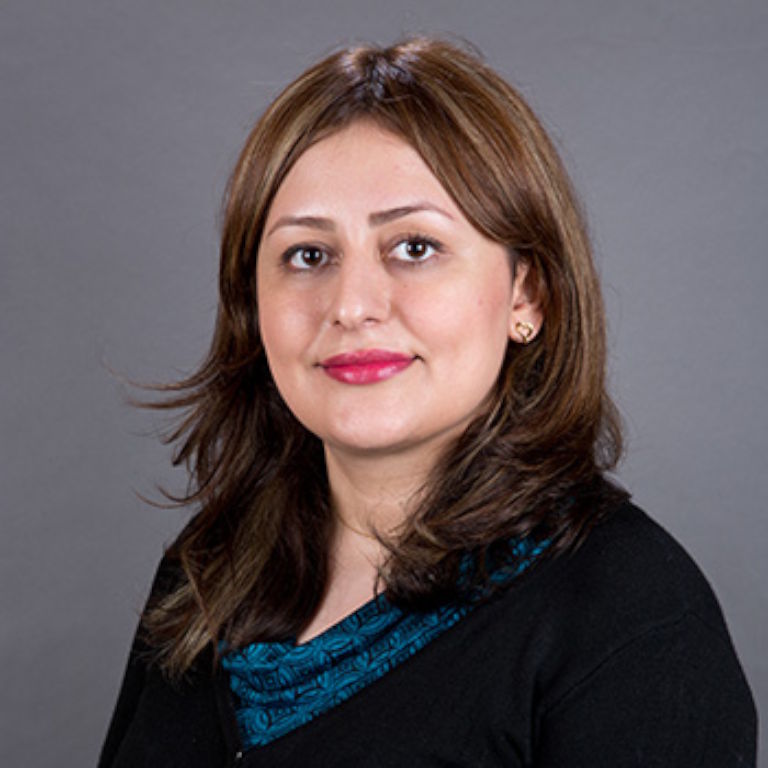
Dr. Marzieh Amini is an Associate Professor at Carleton University, cross-appointed to the School of Information Technology and Department of Systems and Computer Engineering . She coordinates the Optical Systems and Sensors undergraduate program and leads research in computer vision, sensor fusion, and biomedical signal processing . PhD in Electrical and Computer Engineering (2016), Concordia University Postdoctoral Fellow (2020), McGill University Research Interests focus on autonomous vehicle perception systems integrating machine learning and statistical modeling . Her work addresses multi-sensor integration for reliable operation in diverse environments, including biomedical applications and critical infrastructure monitoring . Recent publications emphasize wildfire management , LiDAR-based infrastructure monitoring , and adverse weather adaptation in autonomous systems . She has received grants from NSERC, NRC, and FRQNT . Honors & Awards include: Volunteer Recognition Awards (IEEE Montreal, 2022 & 2019) FRQNT Postdoctoral Fellowship (2018) IEEE ISCAS Travel Support (2016) Professional Service includes leadership roles in IEEE committees and conference organization.
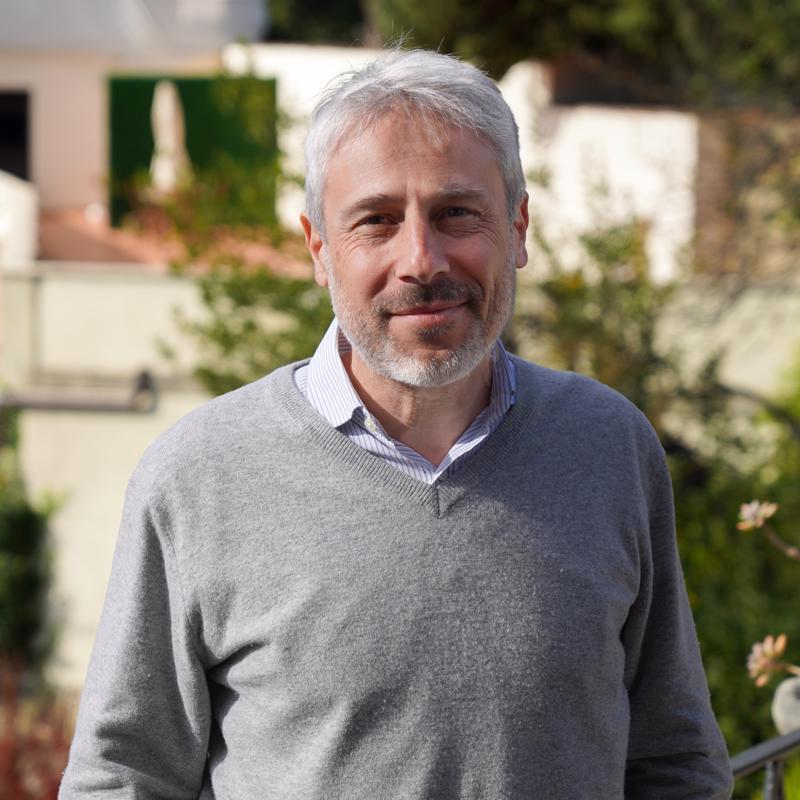
Giacomo Calzolari is a Full-time Professor of Economics at the European University Institute (EUI) in Florence, Italy, and serves as Provost for Research and External Relations. He holds a Ph.D. from the University of Toulouse. His research focuses on Industrial Organization, Competition Policy, Artificial Intelligence, and Banking Regulation, with notable contributions to understanding algorithmic pricing, collusion, and regulatory frameworks. Education: Ph.D. in Economics from the University of Toulouse. Research Interests: Artificial Intelligence and Market Dynamics Competition Policy and Antitrust Economics Algorithmic Pricing and Collusion Banking Regulation and Supervision Behavioral and Experimental Economics Publications: Recent work includes studies on AI-driven markets, algorithmic collusion, and regulatory policy. His research emphasizes the intersection of technology and competition, with over 50 publications in top-tier journals like the American Economic Review and International Journal of Industrial Organization. Awards: Recognized with the 'Best Paper Award' from the Association of Competition Economics (2013) and the 'Young Economist Award' (2005). Advisory Roles: Advises the European Commission on competition policy and the European Parliament on AI in financial markets. Serves as Editor of the International Journal of Industrial Organization and European Economy - Banks and Regulation. Research Groups: Leads projects on digital transformations, technological change, and AI's impact on competition. Supervises numerous graduate students and collaborates with institutions like the Centre for Economic Policy Research (CEPR).
Houtan Jebelli is an Assistant Professor in Civil and Environmental Engineering at the University of Illinois. His research focuses on construction robotics, human-robot collaboration, and wearable sensing technologies for worker health and safety monitoring. He directs research on exoskeleton applications, fall risk detection, and AI-enabled monitoring systems for construction environments. Research interests include: Human-robot collaboration in construction sites Physiological monitoring using wearable sensors Exoskeleton technology and ergonomic assessment AI-enabled safety management systems Robotic inspection and defect detection Jebelli's recent work demonstrates strong interest in bridging robotics with occupational health, particularly studying cognitive and physiological impacts of wearable robotics. His publications frequently address real-time monitoring systems and human factors in construction technology adoption.
Ali Shojaie is a Professor of Biostatistics and Statistics at the University of Washington, serving as Associate Chair for Strategic Research Affairs in the Department of Biostatistics. He leads the Summer Institute for Statistics in Big Data (SISBID) and the Data Management and Statistics (DMS) Core for the UW Alzheimer's Disease Research Center. His research focuses on developing statistical and machine learning methods for high-dimensional data, with applications in genomics, neuroscience, and public health. Shojaie's work includes advancements in graphical models, Granger causality, and spatial statistics. He has contributed to methodologies for analyzing networks from time series and spatial data, with applications in understanding gene regulatory networks and brain connectivity. His recent projects involve NIH-funded grants exploring gene-phenotype associations using omic data and explainable machine learning for brain stimulation research. Scientific awards include the 2022 Leo Breiman Award from ASA's Statistical Learning and Data Science section, and election as a Fellow of the Institute of Mathematical Statistics (IMS) and American Statistical Association (ASA). He serves on editorial boards for journals like the Journal of the American Statistical Association and Biometrika. Shojaie advises numerous PhD students and postdocs, many of whom have secured academic and industry positions. His lab develops open-source software tools, including the netgsa and ngc packages for network analysis and Granger causality estimation.
Luke O'Connor is an Assistant Professor of Biomedical Informatics at Harvard Medical School, affiliated with the Department of Biomedical Informatics. He leads the O'Connor Lab, which focuses on the genetic architecture of common diseases, statistical methods development, and translating genetic associations into biological insight. His work bridges computational and experimental approaches to understand the functional and phenotypic effects of genetic variation. Education: O'Connor earned his Ph.D. in Bioinformatics and Integrative Genomics (BIG) from Harvard Medical School in 2019. He was a Schmidt Fellow/Principal Investigator at the Broad Institute of MIT and Harvard before joining Harvard Medical School. Research Interests: His research emphasizes statistical genetics, functional genomics, and the integration of genetic data with phenotypic outcomes. Key areas include analyzing rare and common genetic variants, developing methods for polygenic risk prediction, and studying the impact of genetic perturbations on cellular and disease mechanisms. Grants: He currently leads an NIH-funded project (R35GM155278) investigating the functional and phenotypic effects of protein-coding genetic variation. This work aims to bridge gaps between genomic data and biological understanding. Labs/Teams: The O’Connor Lab collaborates with institutions like the Broad Institute and engages in interdisciplinary projects to advance precision medicine and genetic discovery.
David Lydon-Staley is an Associate Professor at the Annenberg School for Communication, University of Pennsylvania, where he serves as Principal Investigator of the Addiction, Health, & Adolescence (AHA!) Lab. His research integrates neuroscience with communication science to examine substance use, media effects, and curiosity using fMRI, ecological momentary assessment, and network analysis. Education includes a Ph.D. in Human Development & Family Studies from The Pennsylvania State University, an M.S. from Penn State, an M.F.A. in Creative Writing from Drexel University (2025), and a B.A. in Psychology and English Literature from Trinity College Dublin. Research focuses on three interconnected areas: curiosity in media environments and health communication, media engagement in emotion dynamics, and substance use through dynamic network perspectives. Work emphasizes intensive longitudinal measurement of brain-behavior interactions during daily life. Recent publications (2023-2025) predominantly explore tobacco behavior, neural mechanisms of addiction, curiosity modulation, and social media's emotional impacts. Articles demonstrate consistent themes: fMRI analysis of inhibitory control, real-time geospatial tracking of smoking triggers, curiosity-based health messaging, and emotion regulation networks. Research has been supported by the National Institute on Drug Abuse, Jacobs Foundation, International Society for Behavioral Development, Center for Curiosity, and Brain & Behavior Research Foundation. Leads the Addiction, Health, & Adolescence (AHA!) Lab investigating substance use through network science approaches. Collaborates with the Complex Systems Lab at Penn's Department of Bioengineering.
Professor Kristina Gemzell Danielsson is a Senior Physician and Head of the Department of Women's and Children's Health at Karolinska Institutet. She holds a Docent title (2000) and has been employed at Karolinska since 2006. Her research focuses on reproductive health, obstetrics, and gynaecology, with a particular emphasis on medical abortion protocols, contraception efficacy, and global health equity. She leads initiatives to improve access to safe abortion services and has contributed to policy reforms in reproductive health care. Her academic roles include: Head of Division for Neonatology, Obstetrics, Gynaecology, and Reproductive Health Member of international advisory boards on reproductive medicine Research interests span reproductive medicine, hormonal contraception safety, and the intersection of gender-based violence with healthcare. Key contributions include studies on telemedicine abortion, epigenetic biomarkers in cancer risk, and endometriosis pathophysiology. Her publications analyze over 50 studies, emphasizing translational research and global health impact. Notable work includes randomized controlled trials on medical abortion protocols and systematic reviews on climate change and sexual health.
Yuning Jiang is a Visiting Professor at the École Polytechnique Fédérale de Lausanne (EPFL), affiliated with the Automatic Control Laboratory (LA3) within the School of Engineering (STI). He teaches the doctoral course Optimal Control for Dynamic Systems and contributes to research in distributed optimization, model predictive control (MPC), and smart grid technologies. His work bridges theoretical advancements in control systems with practical applications in power networks and autonomous systems. Current research emphasizes scalable solutions for AC optimal power flow, real-time MPC for embedded systems, and robust optimization under uncertainty. His research interests span Optimal Control , Power Systems , Smart Grids , and Federated Learning . Notable contributions include distributed algorithms for large-scale power systems and privacy-preserving co-simulation frameworks. Recent publications focus on microservice deployment in satellite-terrestrial networks and real-time pricing mechanisms for vehicle-to-grid (V2G) integration. Yuning holds a position in the EDEE-ENS unit under EPFL’s Academic Affairs division (VPA-AVP-DLE), reflecting his role in academic administration and teaching infrastructure. His lab, the Automatic Control Laboratory, focuses on cutting-edge research in control theory and its interdisciplinary applications.
Professor Washington Yotto Ochieng serves as Head of the Department of Civil and Environmental Engineering and Chair Professor in Positioning and Navigation Systems at Imperial College London. He directs the Centre for Active Resilience and Security (CARS) and maintains key affiliations with the Centre for Systems Engineering and Innovation, Centre for Transport Engineering and Modelling, Institute for Molecular Science and Engineering, and Space Lab. His extensive advisory roles include the Science Museum Group Board of Trustees, Royal Institute of Navigation Presidency, and Royal Academy of Engineering Africa Steering Committee. His educational background includes a BSc (First Class) in Engineering from the University of Nairobi and MSc (Distinction) and PhD in Civil Engineering from the University of Nottingham. He received an honorary DSc from Technical University of Kenya in 2023. Ochieng's research pioneers critical infrastructure resilience, user-centric mobility, and positioning/navigation/timing (PNT) systems. He has designed satellite navigation systems (including Europe's EGNOS and GALILEO) for multi-domain applications and advanced Air Traffic Management and Intelligent Transport Systems. His work integrates geomatics, transportation engineering, and sustainable mobility to solve global urban infrastructure challenges, with recent emphasis on decarbonization and AI-driven solutions. His 2024-2025 publications reveal strong trends in sustainable transportation decarbonization, AI-optimized traffic management, and resilient urban positioning systems. Research focuses on hydrogen fuel cell trains, carbon-efficient aviation, and deep reinforcement learning applications for emission reduction, demonstrating interdisciplinary integration of engineering, environmental science, and artificial intelligence to address climate challenges. Fellow of the Royal Academy of Engineering (2013) Harold Spencer-Jones Gold Medal from Royal Institute of Navigation (2019) Doctor of Science (honoris causa) from Technical University of Kenya (2023) Elder of the Order of the Burning Spear (EBS) from Kenya (2023) Commander of the Order of the British Empire (CBE) (2024) Ochieng provides strategic guidance to UK Government bodies (Government Office for Science, Department for Transport, FCDO), European Parliament, and European Court of Auditors. His advisory work shaped the Blackett Review on Satellite-derived Time/Position, UK Space Strategy, and Future of Mobility report. He chairs the Science Museum London Advisory Board and leads FCDO's Sustainable Urban Economic Development program in Africa, with significant grant influence through UK National Physical Laboratory and Department for International Development. He directs the Centre for Active Resilience and Security (CARS) and leads Space Lab initiatives, focusing on mission-critical PNT systems and infrastructure resilience. His teams collaborate with international consortia including RTCM Special Committee 134 and US Institute of Navigation, developing next-generation navigation solutions for safety-critical applications across transport, aviation, and urban environments.
Prof. Dr. Heiko Paulheim is a Professor of Data Science and currently serves as University Vice President at the University of Mannheim. He leads the Data and Web Science Group (DWS), which focuses on Web Data Mining, Knowledge Graphs, and Semantic Web technologies. His research group contributes to open source knowledge graphs like DBpedia and develops new knowledge graphs such as WebIsALOD and DBkWik. As of October 1, 2024, he has limited teaching capacity due to his vice presidential duties. Prof. Paulheim's research interests span Knowledge Graphs, Semantic Web, Web Data Mining, Machine Learning, and Natural Language Processing. His work particularly focuses on knowledge graph refinement, embedding techniques (notably RDF2vec), and applications in various domains including news recommendation, biomedical informatics, and environmental monitoring. His group develops practical tools like the RapidMiner Linked Open Data Extension and RDF2vec for knowledge graph applications. His recent publications demonstrate a strong focus on knowledge graph embeddings, with particular attention to RDF2vec variants, applications in news recommendation systems, biomedical data integration, and spatio-temporal knowledge graphs for environmental monitoring. His work bridges theoretical advances in knowledge representation with practical applications across multiple domains. Among his notable achievements are a nomination for the Best Paper Award at CAiSE 2025 and securing an Open Science Grant for the SpatialBenchRAG project. His research has significant impact in both academic and industrial contexts, with multiple papers accepted at top conferences like ISWC and ESWC. Prof. Paulheim has supervised numerous PhD students including Alexander Brinkmann and Michael Schlechtinger, and has led several research projects including the DFG Project Mine@LOD, State of BW Project SyKoW², and BMBF Project DS4DM. His group maintains strong industry connections with partners like SAP AG, Daimler AG, and IDS.
Roles & Affiliations: King Omeihe is a Senior Lecturer at the School of Business and Creative Industries, University of the West of Scotland, and serves as UoA 17 Associate Research Lead for People, Culture, and Environment. He holds external roles including Chair of African Studies at the British Academy of Management and Chair of Entrepreneurship in Minority Groups at the Institute for Small Business and Entrepreneurship (ISBE). He advises on African economic policy and chairs several parliamentary groups in Scotland. Education: PhD from University of the West of Scotland, MBA from University of Aberdeen, and a diploma from University of Cambridge. Research Interests: Focuses on trust institutions, entrepreneurship in Africa, and the intersection of AI with societal challenges. Recent works include Trust and Market Institutions in Africa (2023), Qualitative Research Methods for Business Students (2024), and Handbook of African Studies (2025). Explores institutional economics, ethical AI applications, and decolonizing business education. Articles Trends: Recent publications emphasize AI ethics in healthcare, institutional resilience in developing economies, and leadership in complex systems. Key themes include sustainable development goals (SDGs), cross-cultural entrepreneurship, and policy interventions for minority entrepreneurs. Awards: Includes the 2025 UWS Innovation Teaching Award, 2022 Entrepreneurial Supporter of the Year, and multiple recognitions for teaching excellence. His work has been highlighted by Bright Red Spark for shaping enterprise education. Grants & Advising: Advises startups, policymakers, and global bodies like UNCTAD. Leads initiatives such as the MSc Entrepreneurship programme and collaborates with organizations like Marcel Advisory and the West African Transitional Justice Centre. Active in cross-party policy groups addressing social enterprise and racial equality. Labs & Teams: Co-leads the Centre for African Research on Enterprise and Economic Development (CAREED) and contributes to Emerald’s African Context of Business and Society as Editor-in-Chief. Oversees the UWS BME Staff Network and Academic Integrity Panel.
Vanessa Nomellini, MD, PhD is an Associate Professor in the Division of Burn, Trauma, Acute and Critical Care Surgery at UT Southwestern Medical Center. She joined UT Southwestern in 2023 as the director of research for her division and leader in the Critical Care Outcomes Research Translation (CORT) group. Education: Dr. Nomellini earned her MD and PhD in Cellular and Molecular Biochemistry from Loyola University. She completed her general surgery residency at the University of Wisconsin and Surgical Critical Care fellowship at the University of Pennsylvania. Research Interests: Her work focuses on immune dysfunction in critically ill patients, particularly sepsis and trauma-induced immunosuppression. She leads studies on immune recovery mechanisms and develops the ICU Recovery Program for long-term patient management. Her NIH-funded research (R35 NIGMS) investigates immune suppression through both animal models and human observational studies. Publications Trends: Her recent work emphasizes sepsis pathophysiology, coagulopathy management, and clinical improvements in critical care. Key areas include immunomodulatory therapies, biomarker utility, and optimizing ICU protocols. Scientific Awards: Recipient of NIGMS R35 grant (2019-current) Advising & Grants: Leads a multi-institutional research team and holds leadership roles in CORT. Her grants focus on translational immunology and critical care outcomes. Labs & Teams: Directs research at UT Southwestern's Critical Care Division, collaborating with Drs. Levi and Carlson in CORT initiatives.
Hilary Sigman is Professor of Economics at Rutgers University and Research Associate of the National Bureau of Economic Research (NBER), specializing in empirical environmental policy analysis. Her work bridges environmental economics, public finance, and legal frameworks through rigorous quantitative methods focused on real-world regulatory challenges. Academic Background: B.A. from Yale University M.Phil. from Cambridge University (U.K.) Ph.D. from Massachusetts Institute of Technology Sigman's research centers on environmental policy effectiveness, with three interconnected pillars: hazardous waste management (Superfund remediation, brownfield redevelopment, and liability systems), water resource economics (transboundary rivers, dam construction, and drought impacts), and waste management systems (municipal recycling and international waste flows). Her methodology combines econometric analysis of regulatory outcomes with institutional insights from policy implementation. Current projects examine climate adaptation for contaminated sites, economic consequences of China's waste import ban, and drought-related economic disruptions. Analysis of her recent publications reveals intensifying focus on climate adaptation challenges within environmental regulation, particularly regarding Superfund site resilience. The work increasingly addresses international dimensions of waste policy and transboundary water management, reflecting growing recognition of globalization's impact on environmental governance. Her empirical approach consistently links micro-level regulatory mechanisms to macro-level environmental outcomes. Professional Engagement: Research funding from National Science Foundation and Environmental Protection Agency Committee service for U.S. EPA Science Advisory Board Contributions to National Academies of Science, Engineering, and Medicine panels Teaching: Environmental Economics (Econ 432) and Applied Econometrics (Econ 609) Sigman maintains active policy engagement through government advisory roles while advancing academic knowledge through NBER affiliation. Her research program demonstrates consistent evolution from domestic regulatory analysis toward globally interconnected environmental challenges, particularly waste flows and climate adaptation in contaminated site management. Though no specific awards are documented in source materials, her sustained research funding and policy appointments indicate significant professional recognition.
Hao Liu is a researcher affiliated with institutions like Chinese Academy of Sciences , Beihang University , and Stanford University . His work spans Computer Science , Artificial Intelligence , and Robotics . Key affiliations: National Space Science Center (Beijing), School of Astronautics (Beihang), Key Laboratory of Pervasive Computing (Tsinghua) Research interests include Machine Learning , Image Processing , Graph Neural Networks , and Wireless Communication Optimization His recent publications focus on: Advanced control systems for fuzzy models Medical imaging via hyperspectral analysis Transformer-based approaches in NLP and vision Quantum-safe and edge computing protocols
Prof. Melanie Schienle is a Professor and Chair of Statistical Methods and Econometrics at the Department of Economics and Management, Karlsruhe Institute of Technology (KIT). She also holds a professorship in the Department of Mathematics at KIT since 2021. Her expertise spans statistical methods, econometrics, financial risk analysis, and forecasting. She leads the HKMetrics Network and the RespiNow Hub for respiratory disease forecasting. She serves as a Senior Fellow at the Rimini Center for Economic Analysis (RCEA), a steering committee member of the German Economic Association, and a member of the University Research Council at KIT. Education: Ph.D. (Dr. rer. pol.) in Economics from Mannheim University (2008), summa cum laude; Diploma in Mathematics (University of Karlsruhe, 2003) with a minor in theoretical physics. She has held academic positions at Leibniz University Hannover (2012–2015) and Humboldt University of Berlin (2008–2012). Research interests focus on financial networks, systemic risk, time series analysis, and machine learning applications in economics. She co-leads projects on nowcasting and forecasting, including collaborative efforts during the pandemic to predict hospitalizations. Her work integrates advanced statistical techniques with real-world policy implications. Prof. Schienle is an Associate Editor for the International Journal of Forecasting and Journal of Time Series Analysis . She has authored over 50 peer-reviewed publications and contributed to high-impact journals like Nature Communications and Journal of Business & Economic Statistics . She leads the Institute of Statistics at KIT and chairs the MathSEE initiative for interdisciplinary mathematical applications.