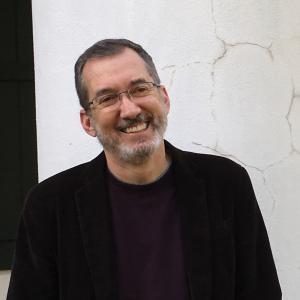
Ryan Heuser is an Assistant Professor in Digital Humanities at the University of Cambridge, specializing in computational approaches to literary and intellectual history, prosody, and artificial intelligence's impact on language. His work bridges data science, machine learning, and literary studies through digital methodologies. Doctoral training in Eighteenth-Century British Literature, Stanford University (2019) Founding member & Associate Research Director, Stanford Literary Lab Junior Research Fellow, King’s College Cambridge (2019-2022) Research interests span computational modeling of semantic revolutions, large-scale literary field analysis, and the intersection of digital methods with historical and intellectual studies. His book Explorations in the Digital History of Ideas (2023) co-edited with Peter de Bolla exemplifies this approach. Recent publications focus on historical semantics, metrical analysis, and digital mapping of emotions in literature, reflecting his interdisciplinary expertise in natural language processing, network theory, and literary data visualization. Currently leads teaching initiatives at Cambridge Digital Humanities and contributes to computational projects exploring textual rhythms and large language models.
Christopher G. Atkeson is a Professor at the Robotics Institute at Carnegie Mellon University (CMU), where he has been since 2000 after previously holding positions at MIT and Georgia Institute of Technology. His research focuses on fulfilling the science fiction vision of machines achieving human levels of competence in perception, cognition, and action, with particular emphasis on understanding how to get machines to generate and perceive human behavior. Atkeson's work spans two complementary approaches: humanoid robotics and human aware environments. His research interests include nonparametric learning, memory-based learning, reinforcement learning, learning from demonstration, and modeling human behavior. He is particularly known for his work on robot learning of challenging dynamic tasks such as juggling, trajectory-based optimization, and soft robotics (including his contributions to the Baymax character in Disney's Big Hero 6). His recent publications demonstrate a strong focus on tactile sensing (FingerVision), human-in-the-loop optimization for exoskeletons, deep learning for locomotion control, and trajectory-based optimization methods. His work consistently bridges theoretical foundations in machine learning with practical implementations on physical robots. Among his scientific recognitions are an NSF Presidential Young Investigator Award, a Sloan Research Fellowship, and a Teaching Award from the MIT Graduate Student Council. Atkeson has advised numerous students who have gone on to successful careers in academia and industry, including notable researchers like Andrew Moore and Stefan Schaal. His teaching includes courses on dynamic optimization, humanoids, kinematics, dynamics, and control.
Takako Fujioka is an Associate Professor of Music at Stanford University, affiliated with the Center for Computer Research in Music and Acoustics (CCRMA). Her research focuses on the neural mechanisms underlying auditory perception, auditory-motor coupling, and music-supported therapy for neurorehabilitation. She holds a Ph.D. in Physiology from the Graduate University for Advanced Studies, Japan, and M.Sc./B.Eng. degrees in Electrical Engineering from Waseda University. Her work combines neurophysiological techniques such as MEG and EEG to study brain plasticity in development, aging, and stroke recovery. Notable contributions include investigating how music influences motor and cognitive recovery in stroke patients, as well as exploring the neural basis of musical perception through rhythmic synchronization and pitch discrimination studies. Supported by awards from the Canadian Institutes of Health Research during her postdoctoral work at the Rotman Research Institute, her research bridges clinical neuroscience and music cognition. Dr. Fujioka’s expertise spans auditory neuroscience, neurorehabilitation, and technology-assisted music therapy. She has pioneered studies on tactile mapping for cochlear implant users and networked music performance systems, emphasizing cross-modal perception and human-technology interaction. Her findings contribute to both theoretical understanding of auditory processing and practical applications in medical and educational settings. Awards: Canadian Institutes of Health Research Awards (postdoctoral phase) Labs/Teams: CCRMA, Stanford Music Perception Laboratory, Rotman Research Institute collaborations Key Themes: Neuroplasticity, Music-Mediated Rehabilitation, Auditory-Motor Integration, Multisensory Processing Her recent work examines aging-related changes in binaural hearing and the role of beta/gamma oscillations in rhythmic processing. She advocates for translational research that connects neural mechanisms with real-world therapeutic interventions.
Josie Hughes is a Tenure Track Assistant Professor at the Swiss Federal Institute of Technology Lausanne (EPFL) within the School of Engineering's Institute of Mechanical Engineering. She leads the Computer Robot Design and Fabrication Laboratory (CREATE Lab) and serves on the doctoral program committee for Robotics, Control and Intelligent Systems. Her roles include teaching courses in product development, engineering design, and data-driven manufacturing methods while maintaining active research and student supervision. Her research centers on soft robotics with emphasis on adaptive design, fabrication techniques, and real-world applications. Key areas include agricultural robotics (exemplified by the GraspBerry raspberry harvester), biomimetic materials like self-healing e-skins, and developmental robotics (BabyBot project). She pioneers approaches integrating morphological computation, variable stiffness mechanisms, and machine learning for robotic control, while championing open-source principles and diversity in robotics through accessible educational initiatives like balloon robot kits. Analysis of her recent publications reveals dominant trends in soft robotics adaptability, particularly in variable-stiffness structures, sensor integration, and task-specific optimization. Her work bridges fundamental material science with practical applications in agriculture, food science, and human-robot interaction, frequently employing computational methods like Bayesian optimization and neural networks for design and control. Scientific awards: No specific awards were mentioned in the source materials. Dr. Hughes actively supervises 16 doctoral students across diverse projects including soft grippers for agriculture, biomimetic locomotion, and robotic manipulation systems. Her advising portfolio shows strong alignment with her research themes, with current students working on topics like modular soft arms, agricultural automation, and developmental robotics. While grant details weren't specified, her high publication volume indicates robust research funding. The CREATE Lab under her leadership focuses on holistic co-design of hardware and software for soft robotic systems, with notable projects including the GraspBerry agricultural harvester and BabyBot developmental platform. The lab emphasizes open-source development and educational outreach, maintaining strong industry and academic collaborations while pushing boundaries in reconfigurable robotics and human-centered applications.
Matthew Santa serves as Professor of Music Theory and Chair of the Music Theory and Composition Area at Texas Tech University School of Music, with prior teaching appointments at Queens College and Hunter College. His leadership shapes curriculum development and academic initiatives within the department. Academic credentials include advanced degrees from Louisiana State University and The City University of New York, establishing foundational expertise in theoretical frameworks and analytical methodologies. Research focuses on post-tonal analysis , diatonic set theory , and parsimonious voice leading , bridging complex theoretical concepts with practical pedagogy. His work integrates popular music analysis and metrical studies, emphasizing accessibility for diverse learners through innovative teaching resources. Publications demonstrate evolving scholarly trends from late-20th century set theory toward contemporary applications in musical form and rhythm. Recent textbooks synthesize Rothstein, Krebs, and Mirka's theories into unified analytical approaches for undergraduate and graduate education. Scientific recognition includes: MTSNYS Young Scholar Award (1998) Mentorship encompasses graduate and undergraduate students across composition and theory disciplines, though specific advisees aren't documented in source materials. No grant funding details appear in available records. Collaborative projects include the Flute/Theory Workout series with Lisa Garner Santa and Thomas Hughes, blending performance technique with theoretical concepts through MIDI accompaniment systems.
Suyi Li is an Associate Professor in the Department of Mechanical Engineering at Virginia Tech's College of Engineering, where he leads the Dynamic and Architected Robot and structurE (DARE) Lab. Previously, he served as an Assistant Professor at Clemson University from 2016-2022 after completing postdoctoral research at the University of Michigan. Ph.D. in Mechanical Engineering, University of Michigan, Ann Arbor (2014) M.Sc. in Mechanical Engineering, Pennsylvania State University (2008) B.S. Summa Cum Laude in Mechanical Engineering, University of Michigan, Ann Arbor (2006) Dr. Li's research focuses on pioneering new paradigms of intelligent robots and functional structures by exploiting the interplay between geometry, mechanics, actuation, and computation. His work spans origami-inspired morphing structures, physically computing materials that perform machine learning tasks without traditional electronics, and soft/reconfigurable robots that can move like animals or grow like plants. His innovative approach combines mechanical engineering principles with computational thinking to create systems with 'mechano-intelligence'. Analysis of Dr. Li's recent publications reveals a strong trajectory toward embodied intelligence and mechanical computing, where physical structures themselves perform computational tasks. His work increasingly integrates origami/kirigami principles with advanced materials to create systems that can sense, process information, and actuate without conventional electronics. The research shows progression from fundamental mechanics of adaptive structures to sophisticated applications in robotics and computing. Dean's Awards of Excellence – Faculty Fellow, Virginia Tech (2024) C.D. Mote Jr Early Career Award, ASME Design Engineering Division (2022) Gary Anderson Early Achievement Award, ASME Aerospace Division (2021) Junior Researcher of the Year Award, College of Engineering, Clemson University (2020) CECAS Dean's Faculty Fellow, Clemson University (2018) CAREER Award, National Science Foundation (2018) ASME Freudenstein Young Investigator Award Dr. Li has secured nearly two million dollars in research funding, including the prestigious NSF CAREER award and an NSF EFRI project to build mechano-bio hybrid reservoir computers. He advises multiple Ph.D. and Master's students in the DARE Lab, with recent successes including Vishrut Deshpande's Ph.D. defense. His research has generated close to 80 journal and conference papers, demonstrating significant impact in the fields of adaptive structures and materials systems. Dr. Li also serves on editorial boards for several prominent journals including Journal of Intelligent Material Systems and Structures and Philosophical Transactions of the Royal Society A. The DARE Lab at Virginia Tech comprises a multidisciplinary team of researchers working on origami-inspired meta-structures, physically computing materials, and soft robotics. Current projects include developing electronics-free crawling robots with mechanical central pattern generators, creating kirigami-based wearable medical devices, and engineering metamaterials with programmable mechanical properties. The lab actively collaborates with institutions across the country and has received recognition for its innovative approaches to combining mechanical design with computational capabilities.
Professor Sławomir Kaczorowski, Ph.D., has been a faculty member at the Grażyna and Kiejstut Bacewicz Academy of Music in Łódź since 1981, where he teaches composition and served as Head of the Department of Composition from 2011 to 2021. He previously held significant leadership roles including Vice-Rector for Artistic and Teaching Affairs (1999-2005) and Vice-Dean of the Faculty of Composition, Music Theory, Music Education and Rhythmics (1996-1999). His educational background includes diplomas in music theory (1981) and composition under Professor Bronisław Kazimierz Przybylski (1981) from the State Higher School of Music in Łódź. Awarded the title of professor by the President of Poland in 2002, he remains an active academic leader currently serving as chairman of the Art Section of the Polish Accreditation Commission. Kaczorowski specializes in contemporary composition with emphasis on instrumental works, chamber music, and choral compositions. His research interests manifest in diverse output featuring piano, accordion, and mixed ensembles, with notable focus on tango-inspired forms and liturgical reinterpretations. He pioneered the MUSICA MODERNA sessions promoting new music through biannual concerts and lectures. Analysis of his 15 most recent compositions reveals consistent exploration of Polish contemporary classical traditions with strong emphasis on instrumental timbre, cross-genre fusion (particularly tango elements), and innovative approaches to sacred music forms. His works demonstrate technical mastery across diverse ensembles from solo piano to full orchestral settings. Silver Medal for Merit to Culture – Gloria Artis (2021) Numerous national composition competition awards Jury membership at international competitions including the T. Baird Young Composers' Competition (Warsaw 2018) and National Association of Composers USA competitions (2017-2018) Professor Kaczorowski has mentored award-winning composers including Grzegorz Duchnowski and Tomasz Szczepanik. His institutional leadership includes directing the Grażyna Bacewicz International Composition Competition (2012, 2015, 2019) and serving as president of the Łódź Branch of the Polish Composers' Union until 2022. He maintains active artistic engagement through premieres across Europe, China, and the United States. His creative work is organized through departmental initiatives including the Department of Composition's performance series and collaboration with the Artur Rubinstein Łódź Philharmonic. Current activities focus on expanding Polish contemporary music's international presence through competitions and cross-border artistic exchanges.
Alexandra BELIBOU is a PhD Lecturer at the Department of Music Performance and Pedagogy, Faculty of Music, Transilvania University of Brașov. Her work bridges musicology with modern interdisciplinary approaches, focusing on music education technology, therapeutic applications, and 20th-century compositional analysis. She holds a prominent position in advancing digital pedagogy through software integration. Research Interests: Music therapy methodologies emphasizing pluralistic approaches in clinical settings AI applications in music composition and education Analysis of 20th-century composers like Schoenberg, Reich, and Pärt Cultural studies of folk music traditions (e.g., Irish dance music, Romanian psalmic liturgy) Publications Trends: Recent work explores pandemic-era musician well-being, AI-assisted composition tools, and the intersection of music with medicine/physics. Earlier research delves deeply into psalmic text settings across centuries, minimalist techniques, and numerical symbolism in atonal music. Her teaching and research emphasize bridging traditional musicology with emerging technologies, as seen in proposals for software-based creativity workshops and interdisciplinary curricula.
Dr. Garth Alper is a Professor and Program Coordinator for Jazz Studies at the University of Louisiana at Lafayette's School of Music and Performing Arts. He holds a Doctor of Arts in Music Theory/Composition from the University of Northern Colorado, a Master of Arts in Piano Performance (Jazz Track) from New York University, and a Bachelor of Professional Studies in Jazz Studies from SUNY Empire State College. His research focuses on Jazz Piano, Jazz History, and Popular Music, with notable contributions to understanding improvisation techniques, postmodernism in music, and the cultural legacy of jazz icons like Duke Ellington. Dr. Alper has authored numerous articles in journals such as College Music Symposium , Rock Music Studies , and Jazz Perspectives , and guest-edited a special jazz issue of Popular Music and Society . His music compositions are featured on multiple CDs, including the acclaimed Spider’s Web (2022) and Stratus (2017). He has received significant grants and awards, including the BORSF Endowed Professorship and funding for jazz pedagogy and recording projects. Education: Doctor of Arts in Music Theory/Composition (University of Northern Colorado) Master of Arts in Piano Performance (Jazz Track, New York University) Bachelor of Professional Studies in Jazz Studies (SUNY Empire State College) Research Contributions: Includes analysis of jazz improvisation, postmodern music theory, and the sociocultural impact of jazz. He has authored encyclopedia entries on influential jazz musicians and contributed to critical discussions on popular music pedagogy. Teaching & Courses: Teaches Jazz Piano, Jazz Theory, Jazz History, Film Scoring, and directs the Jazz Combo program. Courses include MUS 312: Jazz Theory I and MUS 438: Film Scoring I . Grants & Recognition: Over $100K in grants for recording projects, multimedia facilities, and pedagogical initiatives. Holder of the Ruth Stodghill Girard BORSF Endowed Professorship since 2001. Labs/Teams: Coordinates the Jazz Studies program and collaborates on projects blending jazz with film scoring and modern media.
Ewa Kowalska-Zając is a Professor of Musical Arts at the Academy of Music in Łódź, where she has been employed since 1989. She served as Dean of the Faculty of Composition, Music Theory, Conducting, Rhythmics, and Music Education from 2008 to 2016 and has been Head of the Department of Music Theory since 2018. A graduate of the Academy of Music in Łódź, her work focuses on avant-garde composition, string quartets, and the intersection of music and visual art. Education: Diploma in Music Theory and Composition from the Academy of Music in Łódź. Her research explores the evolution of Polish composers' approaches to genres like the string quartet, sacred music, and sonorism, with a particular emphasis on avant-garde experimentation and intermedia tendencies. She has authored several books, including Seeing Music. Notation of the Polish Contemporary Score (2019), and over 50 biographical entries in collective monographs. Her publications analyze themes such as musical archetypes, postmodern reinterpretations of traditional forms, and the impact of intermedia practices in 20th-century scores. Notable works include studies on Olivier Messiaen, Paweł Klecki, and Bogusław Schaeffer. Scientific Awards Silver Cross of Merit (2002) Gold Cross of Merit (2022) Kowalska-Zając is a member of the Polish Composers' Union and the Polish Music Society, contributing extensively to musicological discourse through her academic leadership and editorial work.
Danuta Mirka is a Professor at Northwestern University's Bienen School of Music in the Department of Music Theory and Cognition. She holds the Harry N. and Ruth F. Wyatt Chair in Music Theory and has been recognized with major awards for her scholarship. PhD in Musicology from University of Helsinki Senior Fulbright Fellow at Indiana University Humboldt Fellow and DFG Research Fellow at University of Freiburg Leverhulme Trust Research Fellow at University of Southampton Her research synthesizes historical music theory with contemporary cognitive approaches, focusing on metric manipulations in Haydn/Mozart, sonoristic structuralism in Penderecki, and topic theory in eighteenth-century music. She has developed analytical frameworks for textural and timbral systems in avant-garde compositions. Key trends across her publications include: cross-disciplinary application of semiotics and fuzzy logic to music analysis; systematic studies of cadential structures in Classical-era works; and innovative methodologies for analyzing non-traditional instrumental techniques. Her article on Penderecki's sonoristic style introduced groundbreaking concepts of six-dimensional textural analysis. Society for Music Theory Citation of Special Merit (2015) Wallace Berry Award (2011) Marjorie Weston Emerson Award (2023) Roland Jackson Award (2017) Mirka has edited major reference works and served on editorial boards of leading journals. Her scholarship bridges Polish avant-garde traditions with Western analytical methodologies.
Peter A. Tass is a Professor of Neurosurgery at Stanford University's School of Medicine, where he leads the Tass Lab within the Department of Neurosurgery. His research focuses on developing groundbreaking neuromodulation techniques designed to impact the course of neurological diseases including Parkinson's disease, stroke, epilepsy, and tinnitus. The Tass Lab is part of several prestigious Stanford initiatives including Bio-X, the Wu Tsai Human Performance Alliance, the Maternal & Child Health Research Institute (MCHRI), and the Wu Tsai Neurosciences Institute. MD from Universities of Ulm and Heidelberg, Germany (1989) PhD in Physics from University of Stuttgart, Germany (1993) Diploma (master's degree) in Mathematics from University of Stuttgart, Germany (1993) Habilitation thesis in Physiology from RWTH Aachen University, Aachen, Germany (2001) Dr. Tass's primary research interests center around computational neuroscience approaches to understanding and treating neurological disorders. His lab pioneers neuromodulation techniques based on thorough computational modeling that employs dynamic self-organization, plasticity, and other neuromodulation principles to produce sustained therapeutic effects after stimulation. He specifically focuses on developing stimulation methods that cause sustained neural desynchronization by unlearning abnormal synaptic interactions. His work spans both invasive techniques like deep brain stimulation and non-invasive approaches such as vibrotactile and acoustic stimulation. Current projects involve developing novel therapies for Parkinson's disease, epilepsy, tinnitus, and other neurological conditions using comprehensive computational neuroscience methods derived from non-linear dynamics, statistical physics, and numerics. Analysis of Dr. Tass's recent publications reveals a strong focus on coordinated reset stimulation techniques, neural network modeling with plasticity mechanisms, and computational approaches to brain stimulation. His work consistently bridges theoretical computational neuroscience with clinical applications, particularly for Parkinson's disease treatment. A significant portion of his recent research examines how stimulation parameters, sequences, and timing affect long-lasting desynchronization effects in neural networks. His publications demonstrate an interdisciplinary approach combining physics, mathematics, neuroscience, and clinical medicine to develop novel therapeutic interventions. Member of the European Academy of Sciences and Arts (2012) Nicolaus August Otto Innovation Prize (2011) German Innovation Award in Medicine (2011) Rapid Response Innovation Awards from The Michael J. Fox Foundation (2009, 2010) Runner-up for the German future prize (2006) Erwin Schrödinger prize (2005) Fritz Winter prize (2000) Dr. Tass actively mentors a diverse team of researchers including staff scientists, postdoctoral fellows, clinician-scientists, and students. His lab currently includes researchers with backgrounds in physics, computational neuroscience, biomedical engineering, and clinical neurology. The lab is involved in multiple clinical trials, including studies on coordinated reset spinal cord stimulation and vibrotactile coordinated reset stimulation for Parkinson's disease. His research is supported by various funding sources including foundations focused on neurological disorders and innovation in medical technology. Dr. Tass collaborates extensively with both internal Stanford researchers and external collaborators worldwide. The Tass Lab at Stanford is a multidisciplinary research group comprising physicists, neuroscientists, engineers, and clinicians working together to develop novel neuromodulation therapies. The lab team includes staff scientists like Justus Kromer (theoretical physicist), postdocs like Daniel Ehrens and Kanishk Chauhan, clinician-scientists like Tina Munjal, and clinical research coordinators. The lab maintains active collaborations with Stanford colleagues across departments including Kwabena Boahen, Vivek P. Buch, and Jaimie Henderson, as well as external collaborators like Alexander Neiman and Kęstutis Pyragas. Current research directions include developing non-invasive vibrotactile treatments for Parkinson's disease, acoustic coordinated reset therapy for tinnitus, and responsive deep brain stimulation for conditions like loss-of-control eating.
Dmitri Tymoczko is a Professor of Music at Princeton University, where he has taught composition and theory since 2002. His work bridges the gap between academic music theory and contemporary composition, creating a unique interdisciplinary approach that has earned him recognition as a leading figure in modern music scholarship and creation. Tymoczko's research interests focus on the geometric modeling of musical structures, polystylistic composition that draws from genres spanning Renaissance to rock, and the mathematical foundations of tonality. His theoretical work explores how harmonic structures can be represented geometrically, revealing fundamental patterns that connect diverse musical traditions. He approaches composition as 'a logical deduction from absurd premises,' blending rigorous structural thinking with playful musical exploration. His scholarly publications and compositions reveal a consistent interest in the intersection of mathematical precision and expressive freedom. The articles demonstrate expertise across music theory, composition, and the cognitive aspects of musical perception, with recurring themes of geometric modeling, tonal structure, and genre hybridization. His work often challenges traditional boundaries between academic and popular music forms. Guggenheim fellowship Rhodes Scholarship Leonard Bernstein fellowship from Tanglewood Fellowship from the Radcliffe Institute for Advanced Study Block lectureship from the Society for Industrial and Applied Mathematics First music-theory article published in Science magazine Tymoczko maintains an active performance career alongside his academic work, with his compositions performed by leading ensembles including the Brentano Quartet, Newspeak, and Roomful of Teeth. His teaching integrates theoretical insights with practical composition, fostering a generation of musicians who understand music's structural foundations while embracing creative freedom. He has developed innovative tools like the musical programming language 'arca' to explore new compositional possibilities.
Konstantin Voigt, Professor of Musicology II , serves at the University of Würzburg within the Faculty of Philosophy and Institute of Music Research. His research spans medieval Latin song traditions, music theory, notation systems, and digital humanities applications. He also explores 20th-century composers like Arnold Schoenberg and the reception of medieval music in popular culture. Current: Chair of Musicology II, University of Würzburg (2024–) Previous: Tenure-track Professor, University of Freiburg (2020–2024) Education: PhD (Würzburg), MA (Erlangen-Nürnberg), Musicology & Art History Voigt's research bridges premodern music history with digital methodologies, focusing on: Medieval Latin song structures (9th–13th centuries) Development of musical notation and visualization Digital editions as tools for manuscript analysis Intermedial relationships in postmodern composition Stefan George’s poetry in Schoenberg’s works His recent publications analyze scribal practices in Paris 1139 manuscripts and digital approaches to monophonic music. He co-leads the Weave Lead project on French music reception in Central Europe before 1350 and contributes to the Corpus monodicum digital edition. Collaborations include PD Dr. Hana Vlhova-Wörner (Prague) and institutions like the Schola Cantorum Basiliensis.
Panying Rong, Ph.D. is an Assistant Professor in the Department of Speech-Language-Hearing: Sciences & Disorders at the University of Kansas , within the College of Liberal Arts and Sciences. Her research focuses on the neuromechanical basis of motor speech disorders and the development of quantitative tools for speech assessment. Primary Affiliation: University of Kansas Department: Speech-Language-Hearing: Sciences & Disorders Academic Rank: Assistant Professor Email: prong@ku.edu Research Interests Dr. Rong’s work investigates the biomechanical and neurological mechanisms underlying speech impairments in neurodegenerative diseases like ALS and Parkinson’s. Key areas include: Mechanistic modeling of speech motor control Development of data-driven speech diagnostics Acoustic and kinematic analysis of bulbar disorders Compensatory articulatory strategies in speech pathologies Temporal structuring of speech signals Integration of multimodal assessments for neurological conditions Article Trends Her recent publications emphasize automated, multimodal frameworks for assessing bulbar ALS, neuromechanical biomarkers, and cultural-linguistic influences on speech outcomes. Techniques include EMA, EMG, kinematic modeling, and computational analysis of speech subsystems.