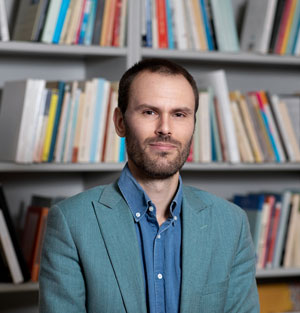
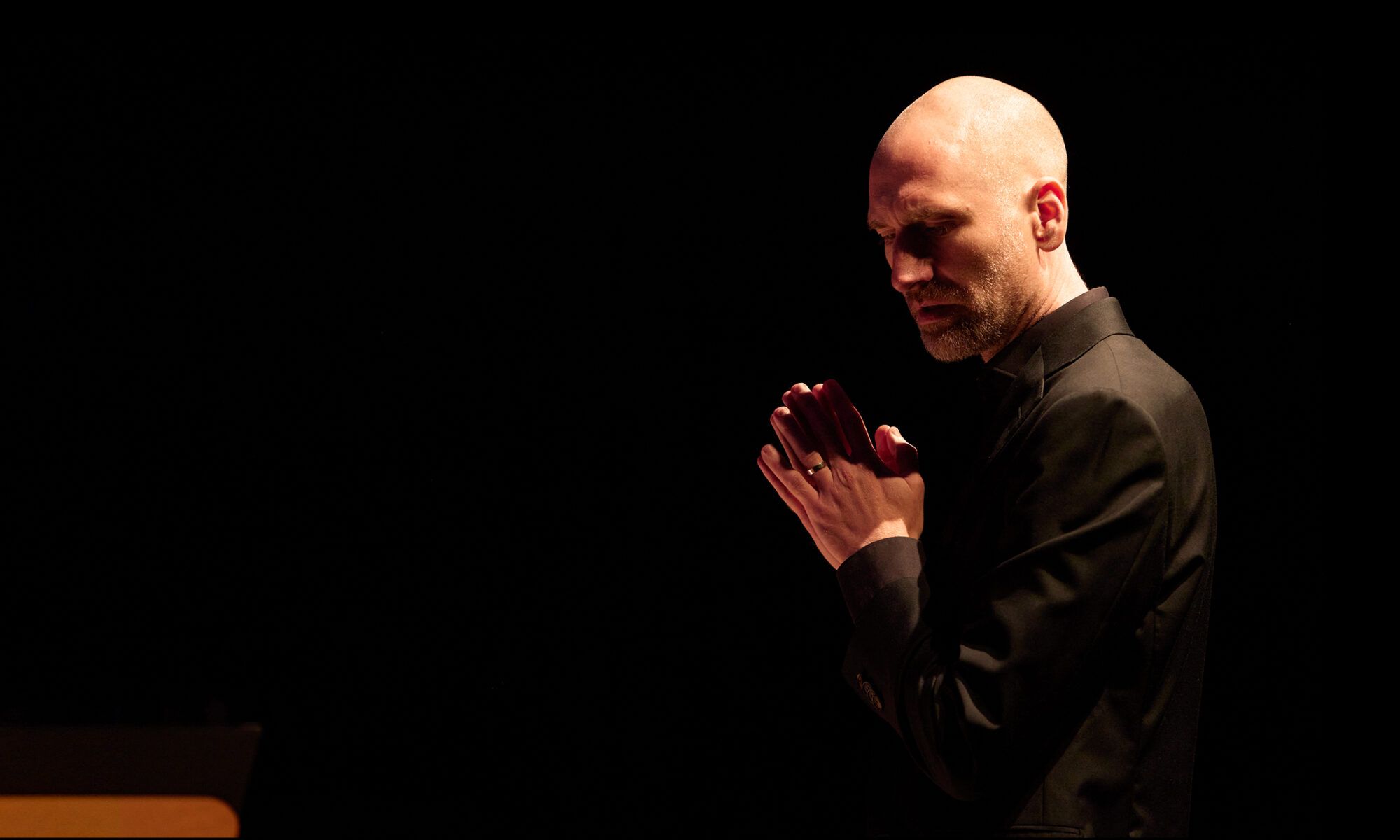
Ryan Heuser is an Assistant Professor in Digital Humanities at the University of Cambridge, specializing in computational approaches to literary and intellectual history, prosody, and artificial intelligence's impact on language. His work bridges data science, machine learning, and literary studies through digital methodologies. Doctoral training in Eighteenth-Century British Literature, Stanford University (2019) Founding member & Associate Research Director, Stanford Literary Lab Junior Research Fellow, King’s College Cambridge (2019-2022) Research interests span computational modeling of semantic revolutions, large-scale literary field analysis, and the intersection of digital methods with historical and intellectual studies. His book Explorations in the Digital History of Ideas (2023) co-edited with Peter de Bolla exemplifies this approach. Recent publications focus on historical semantics, metrical analysis, and digital mapping of emotions in literature, reflecting his interdisciplinary expertise in natural language processing, network theory, and literary data visualization. Currently leads teaching initiatives at Cambridge Digital Humanities and contributes to computational projects exploring textual rhythms and large language models.
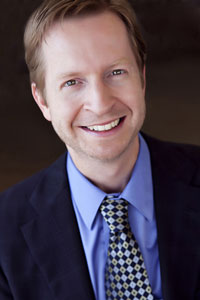
Dr. Ewan Jones is Associate Professor in Nineteenth-Century Literature at the University of Cambridge's Faculty of English and a Fellow at Downing College, where he serves as Director of Studies for Part II. He completed his BA, MPhil, and PhD at King's College, Cambridge, and was previously Thole Research Fellow at Trinity Hall. His educational background includes comprehensive training in English literature at Cambridge, with specialization in nineteenth-century literary studies. His academic journey reflects deep engagement with both traditional literary scholarship and innovative computational approaches to textual analysis. Dr. Jones's research concentrates on poetics, embodied cognition, and computational approaches to intellectual history. His work fundamentally questions how we understand 'close reading' not as interpretation but as a specific cognitive practice. He explores how aesthetic phenomenology can illuminate historical reading communities, develops pedagogical routines to de-habituate standard attention modes, and seeks constructive engagement between computational analysis and traditional reading practices. His scholarship bridges literary studies with cognitive science, demonstrating how rhythm, attention, and cognition intersect in literary form. His research trajectory shows increasing focus on attentional practices in reading, with recent work examining group attention practices and rhythm in Victorian poetry. The computational dimension of his work has grown steadily, moving from individual textual analysis to large-scale corpus studies through projects like the Concept Lab. Fulbright Scholar Leverhulme Research Fellowship (2021/22) on 'Close Reading as Attentional Practice' Residential fellow at the Swedish Collegium of Advanced Study Visiting fellow at Ludwig Maximilian Universität Visiting fellow at Pomona College Dr. Jones supervises doctoral work on diverse topics including 'radical conservatism' in Victorian poetry, queer theory and historical poetics, Wagner reception in Anglophone poetry, morphogenetic conceptions of form, and metre and exact measurement. His interdisciplinary collaborations include work with Phyllis Weliver on digitizing Tennyson manuscripts and with Peter de Bolla on computational concept analysis projects that have secured significant research funding. He has developed innovative teaching approaches that integrate cognitive science with literary analysis. He co-founded and participates in the Concept Lab, an interdisciplinary project developing open-source computational resources for historical dataset analysis. This initiative has fostered collaborations across humanities and computer science disciplines, creating tools that bridge traditional literary scholarship with digital methods. His work with the Princeton Prosody Archive demonstrates his commitment to building scholarly infrastructure for rhythm and meter studies.
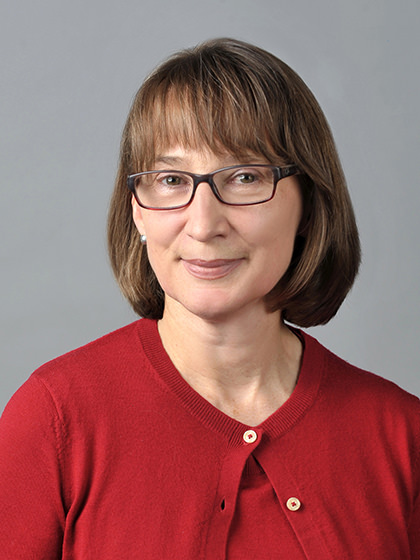
Matthew Santa serves as Professor of Music Theory and Chair of the Music Theory and Composition Area at Texas Tech University School of Music, with prior teaching appointments at Queens College and Hunter College. His leadership shapes curriculum development and academic initiatives within the department. Academic credentials include advanced degrees from Louisiana State University and The City University of New York, establishing foundational expertise in theoretical frameworks and analytical methodologies. Research focuses on post-tonal analysis , diatonic set theory , and parsimonious voice leading , bridging complex theoretical concepts with practical pedagogy. His work integrates popular music analysis and metrical studies, emphasizing accessibility for diverse learners through innovative teaching resources. Publications demonstrate evolving scholarly trends from late-20th century set theory toward contemporary applications in musical form and rhythm. Recent textbooks synthesize Rothstein, Krebs, and Mirka's theories into unified analytical approaches for undergraduate and graduate education. Scientific recognition includes: MTSNYS Young Scholar Award (1998) Mentorship encompasses graduate and undergraduate students across composition and theory disciplines, though specific advisees aren't documented in source materials. No grant funding details appear in available records. Collaborative projects include the Flute/Theory Workout series with Lisa Garner Santa and Thomas Hughes, blending performance technique with theoretical concepts through MIDI accompaniment systems.
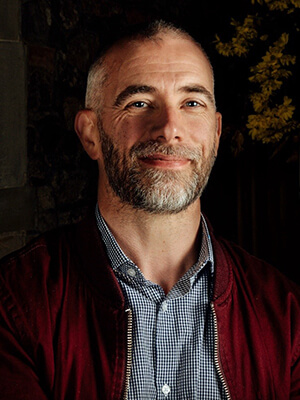
Danuta Mirka is a Professor at Northwestern University's Bienen School of Music in the Department of Music Theory and Cognition. She holds the Harry N. and Ruth F. Wyatt Chair in Music Theory and has been recognized with major awards for her scholarship. PhD in Musicology from University of Helsinki Senior Fulbright Fellow at Indiana University Humboldt Fellow and DFG Research Fellow at University of Freiburg Leverhulme Trust Research Fellow at University of Southampton Her research synthesizes historical music theory with contemporary cognitive approaches, focusing on metric manipulations in Haydn/Mozart, sonoristic structuralism in Penderecki, and topic theory in eighteenth-century music. She has developed analytical frameworks for textural and timbral systems in avant-garde compositions. Key trends across her publications include: cross-disciplinary application of semiotics and fuzzy logic to music analysis; systematic studies of cadential structures in Classical-era works; and innovative methodologies for analyzing non-traditional instrumental techniques. Her article on Penderecki's sonoristic style introduced groundbreaking concepts of six-dimensional textural analysis. Society for Music Theory Citation of Special Merit (2015) Wallace Berry Award (2011) Marjorie Weston Emerson Award (2023) Roland Jackson Award (2017) Mirka has edited major reference works and served on editorial boards of leading journals. Her scholarship bridges Polish avant-garde traditions with Western analytical methodologies.
Dmitri Tymoczko is a Professor of Music at Princeton University, where he has taught composition and theory since 2002. His work bridges the gap between academic music theory and contemporary composition, creating a unique interdisciplinary approach that has earned him recognition as a leading figure in modern music scholarship and creation. Tymoczko's research interests focus on the geometric modeling of musical structures, polystylistic composition that draws from genres spanning Renaissance to rock, and the mathematical foundations of tonality. His theoretical work explores how harmonic structures can be represented geometrically, revealing fundamental patterns that connect diverse musical traditions. He approaches composition as 'a logical deduction from absurd premises,' blending rigorous structural thinking with playful musical exploration. His scholarly publications and compositions reveal a consistent interest in the intersection of mathematical precision and expressive freedom. The articles demonstrate expertise across music theory, composition, and the cognitive aspects of musical perception, with recurring themes of geometric modeling, tonal structure, and genre hybridization. His work often challenges traditional boundaries between academic and popular music forms. Guggenheim fellowship Rhodes Scholarship Leonard Bernstein fellowship from Tanglewood Fellowship from the Radcliffe Institute for Advanced Study Block lectureship from the Society for Industrial and Applied Mathematics First music-theory article published in Science magazine Tymoczko maintains an active performance career alongside his academic work, with his compositions performed by leading ensembles including the Brentano Quartet, Newspeak, and Roomful of Teeth. His teaching integrates theoretical insights with practical composition, fostering a generation of musicians who understand music's structural foundations while embracing creative freedom. He has developed innovative tools like the musical programming language 'arca' to explore new compositional possibilities.
Jill Thorson serves as Assistant Professor in the Department of Communication Sciences and Disorders within the College of Health and Human Services. Recognized with the 2024 Excellence in Teaching Award, she demonstrates exceptional commitment to student-centered pedagogy across undergraduate and graduate curricula, particularly in courses like Language Acquisition and Clinical Phonetics where she transforms complex concepts into accessible learning experiences through active strategies and technological integration. Her research investigates prosodic mechanisms in child language development, with emphasis on naturalistic caregiver-child interactions, autism spectrum communication patterns, and clinical assessment methodologies. She examines how pitch contours, intonation, and rhythmic patterns facilitate language acquisition in diverse populations, employing acoustic analysis of museum visits, classroom settings, and spontaneous speech to uncover links between prosody and cognitive processing. Recent publications (2020-2025) reveal consistent focus on prosodic assessment innovations, cross-linguistic autism studies, and the role of intonation in attentional guidance. Key trends include statistical learning networks, referent processing through pitch variation, and clinical applications for minimally verbal children, demonstrating her commitment to bridging theoretical linguistics with therapeutic practice. Scientific Awards: Excellence in Teaching Award, College of Health and Human Services (2024) Dr. Thorson maintains an active research laboratory mentoring undergraduate and graduate students in hands-on projects, with advisees consistently crediting her one-on-one consultations and collaborative environment for their professional development as clinicians. While specific grant details aren't provided, her extensive publication record indicates sustained research funding supporting naturalistic methodology development. Her laboratory specializes in acoustic analysis of real-world communication, conducting studies in preschool classrooms and museum settings to document prosodic patterns in typically developing children and those with autism spectrum disorders, with current work advancing assessment tools for clinical speech pathology applications.
Dr Peter Batchelor is a Senior Lecturer in Music and Music Technology at De Montfort University, affiliated with the Leicester Media School and the Music, Technology and Innovation – Institute of Sonic Creativity (MTI²). He serves as Programme Leader for the BA Music Technology programme and is actively involved in research, teaching, and creative practice. Education: BMus, University of Wales, Bangor (1996) MPhil, University of Wales, Bangor (1997) PhD, University of Birmingham (2004) FHEA (2024) His research and creative work focuses on electroacoustic composition, multichannel sound installations, public art, and aural landscape construction. He explores sound spatialisation, immersion, theories of space and place, and audience engagement through large-scale sonic artworks. His practice integrates technical innovation with artistic inquiry, often using custom Max/MSP tools for spatial audio and generative systems. The 15 most recent publications reflect a consistent trajectory in immersive sound art, emphasizing environmental sonification, spatial perception, and public engagement. Key themes include multichannel deployment (up to 288 channels), interactive and solar-powered installations, and blending natural and synthetic soundscapes. Projects like Dendrophone and Contraption highlight his focus on accessibility, sustainability, and audience interaction in sonic environments. Scientific Awards and Recognitions: Finalist, Sounds Electric ’07 Competition Mention, Concours de Musique Electroacoustique de Bourges (2007, 1998, 1997) 2nd Prize, CIMESP'99, São Paulo Honourable Mention, CIMESP'97, São Paulo Prize, 'Residences' category, Bourges 1997 Peter Batchelor supervises several PhD students including Stefano Catena, Cristiana Palandri, and Michael Uwins. He has secured external funding as Co-Investigator on projects such as Interfaces (EU Culture Project, 2016–2019) and Sensing the Forest (AHRC Early Career Research Grant, 2023–2025). He has delivered keynote and invited talks internationally and serves as a reviewer for Organised Sound and for REF panels. His creative installations have been exhibited globally, from Helsinki to São Paulo, and he develops open-source Max/MSP tools like N-CHAN and CLATTER to support multichannel sound design. He leads the Dendrophone project, a solar-powered, DIY sound installation in Alice Holt Forest that sonifies environmental data (humidity, sunlight, CO2), offering both on-site and live-streamed access. This project exemplifies his commitment to public engagement, ecological awareness, and accessible sonic art.
Dr. John Hails is a Senior Lecturer and Reader in Music at Edinburgh Napier University , where he teaches aesthetics, music psychology, composition, and ethnomusicology. He holds a PhD in Music from Durham University (2008) and has trained under notable composers like Brian Ferneyhough and Richard Barrett. His research focuses on experimental composition, marginal musical practices, and interdisciplinary aesthetics. Educations: Bachelor’s and Master’s training at Durham University and University of Huddersfield PhD by Portfolio of Compositions (Durham University, 2008) Research Interests: John’s work explores unorthodox intonations, fixed media installations, and the intersection of composition with philosophy and ethnomusicology. He actively presents at international conferences on topics like post-structuralist critiques in music education and communal performance practices. Notable Works: His compositions have been performed by ensembles like the London Sinfonietta and broadcast on BBC Radio 3. Key pieces include enlightenment (microtonal trumpet and media) and Nine for ones in nine , reflecting his experimental approach. Awards & Grants: While no explicit awards are listed, his research is funded by Edinburgh Napier University. He is a core member of the Applied Music Research Centre . Supervision & Grants: He has supervised over 15 postgraduate projects, including PhDs on topics like Musical Cultures of Melanesia and Dialogical Music Systems . His supervisory roles span composition, ethnomusicology, and interdisciplinary studies. Labs/Teams: Active in the Applied Music Research Centre , focusing on creative practice and experimental music dissemination.
Aaron Cassidy is an American composer and conductor based in Berlin and Hannover. He serves as Professor of Composition and Director of Incontri – Institut für neue Musik at the Hochschule für Musik, Theater und Medien Hannover. His work emphasizes innovative graphical notations prioritizing physical sound production and non-geometrical rhythm theory. Cassidy’s compositions have been performed globally across 29 countries, with 12 commercial recordings on major labels like Kairos and NEOS. As a conductor, he specializes in contemporary and historical repertoire, leading over 100 world premieres with ensembles such as Ensemble Musikfabrik and ELISION. Notable engagements include the Munich Biennale and Melbourne Recital Centre. His recent research includes a 2025 reflection on non-geometrical rhythm and collaborative Erasmus+ residencies in Klagenfurt. Current projects include works for bassoon, violin-piano duet, and ANAM residency with ELISION in Melbourne (2025). Cassidy’s academic focus bridges compositional theory and performance practice. His research explores notation’s role in shaping musical interpretation, with particular attention to rhythm’s non-metric frameworks. Recent works like Reassessing Non-Geometrical Rhythm (2025) synthesize a decade of theoretical development. His teaching integrates experimental techniques and historical context, fostering innovation in Hannover’s new music institute.
Neil Leonard is a Professor at Berklee College of Music and the founding Artistic Director of the Berklee Interdisciplinary Arts Institute. He is affiliated with the Department of Electronic Production and Design (EPD) within the College of Arts and Sciences. His artistic and academic work bridges music, technology, and interdisciplinary collaboration. Ph.D. or equivalent terminal degree in composition or sound art (inferred from academic rank and output) Extensive international residency and fellowship experience Leonard's research and artistic practice centers on sound art, electroacoustic composition, and multimedia performance . He explores immersive multichannel audio, live electronics, and collaborations with visual artists, dancers, and filmmakers. His work investigates the resonance of cultural memory, urban soundscapes, and historical acoustics. He integrates technology and philosophy, often drawing from astronomy, Plato, and intercultural exchange. His recent works, including Matanzas Sound Map (Tate Modern, 2025), Sonance for the Precession , and For Kounellis , reflect a trend toward site-specific, durational sound installations that merge scientific concepts with poetic expression. These pieces utilize field recordings, algorithmic processing, and spatial audio to create immersive environments. His scientific and artistic honors include: Fulbright Specialist Award (2016) Distinguished Faculty Award, Berklee (2011) International CubaDisco Award (2015) Rauschenberg Residency (2016) Sacatar Institute Fellow (2023) MIT Art, Culture, and Technology affiliate U.S. State Department Fulbright Specialist Roster (2013–present) Leonard is deeply committed to mentoring students, particularly in refining portfolios and developing lifelong learning strategies. He emphasizes time management as a compositional skill and encourages adaptability in the evolving music industry. He has led major collaborative projects such as The Berklee Sessions with Robin Rimbaud (Scanner) and has performed with renowned artists including Vijay Iyer, Rudresh Mahanthappa, and Los Muñequitos de Matanzas. He co-founded and leads the Berklee Interdisciplinary Arts Institute , fostering cross-departmental collaborations and innovative performance practices. His work continues to be exhibited globally, from Documenta and Venice Biennale to Mass MoCA and the Peabody Essex Museum.
Prof. Ahmet Mutlu Terzioglu is an Associate Professor at the Music Education Department of Alanya Alaaddin Keykubat University's Education Faculty. His academic journey includes a PhD from Gazi University (2020), focusing on Music Education, and a Master's from Atatürk University (2015). He has held positions at Ağrı İbrahim Çeçen University and currently serves as Deputy Chair of the Department of Music Education. His research focuses on Turkish folk music integration into education, instrument teaching methods (e.g., melodika, bağlama), and early childhood music pedagogy. He has published extensively on topics like folk song analysis, music curriculum evaluation, and cultural heritage preservation. His recent work includes studies on the educational applicability of Denizli folk songs and the efficacy of the melodika instrument in achieving middle school music curriculum goals. Terzioglu actively participates in academic events, organizing concerts and cultural initiatives such as the 'Alkü Baharı Concert' and 'Commemorating Atatürk' events. He co-edited books like Türkülerle Melodika Eğitimi/Öğretimi and contributed chapters to volumes on music education methodologies.
Matt DeChamplain serves as Assistant Professor of Jazz at the Jackie McLean Institute of Jazz within The Hartt School at the University of Hartford, while also teaching at the Greater Hartford Academy of the Arts and directing Glastonbury High School's big band. His academic credentials include: Master of Music (MM) from the University of Toledo Bachelor of Music (BM) from The Hartt School, University of Hartford Artistic Focus: DeChamplain specializes in synthesizing historical jazz traditions with contemporary expression. His creative work centers on fusing Harlem stride piano techniques with bebop and hard bop language, emphasizing rhythmic innovation and harmonic sophistication. He actively explores the continuum between early jazz pioneers like Fats Waller and modern innovators including McCoy Tyner, seeking to honor jazz heritage through original compositions and arrangements that integrate stride, swing, bebop and blues elements. His recorded output reveals an artistic trajectory from collaborative sideman work to leadership roles, consistently investigating the dialogue between historical jazz forms and modern sensibilities. Key thematic threads include reimagining jazz standards through stride-bebop synthesis and developing original compositions that bridge traditional piano techniques with contemporary ensemble concepts. Notable recognitions: Betty Carter Jazz Ahead Program selection (2008) Semifinalist in Martial Solal Jazz Piano Competition (2010) DeChamplain mentors students across multiple institutions including The Hartt School, Greater Hartford Academy of the Arts, and Glastonbury High School where he directs the big band program. His pedagogical reach extends to summer intensives at Litchfield Jazz Camp and New Hampshire’s Jazz All State. While specific research grants aren't detailed, his active performance schedule and recording projects demonstrate sustained professional development funding. He leads Glastonbury High School's big band and performs regularly with ensembles that have shared stages with jazz legends including Hank Jones, Wynton Marsalis, and Dave Brubeck.
Gerd Grupe serves as Professor of Ethnomusicology and Vice Rector for Research at the University of Music and Performing Arts Graz (KUG), where he has held his faculty position since 2002. His academic career spans multiple institutions including Free University Berlin, Frankfurt am Main, Hildesheim, Bayreuth, and Krems. His educational background includes doctorate in Comparative Musicology (1990, FU Berlin) with dissertation on Afro-Jamaican Kumina music, and habilitation (1996) on Shona music published as The Art of Mbira Playing (2004). His research spans sub-Saharan African music , African-American traditions , Central Javanese gamelan , and cross-cultural comparative studies , with fieldwork in Jamaica, Zimbabwe, and India. His scholarly output reveals consistent focus on traditional African musical systems (particularly Shona mbira and Jamaican Kumina), notation challenges in oral traditions , and pedagogical approaches to non-Western music . The article corpus demonstrates progression from specific case studies (Kumina, 1990s) toward broader theoretical frameworks (2000s) examining cognitive dimensions, performance practices, and cross-cultural learning methodologies. As academic leadership, he established KUG's Central Javanese Gamelan ensemble (2004) for research and teaching, and co-edits the Translingual Discourse in Ethnomusicology journal while editing Grazer Beiträge zur Ethnomusicologie . His work bridges performance practice, cognitive analysis, and cultural context with emphasis on learning through performance methodology.
Professor Beata Wróblewska is a distinguished conductor, composer, and pedagogue at the Stanisław Moniuszko Academy of Music in Gdańsk, where she serves as Professor in the Faculty of Choral Conducting, Church Music, Artistic Education, Rhythmics and Jazz. Appointed professor in 2019, she has been employed since 2013 and currently holds the position of Deputy Director of the Institute of Choral and Oratorio-Cantata Conducting and Head of the Composition, Arrangement, and Music Education Studio since 2016. Her academic journey includes studies in Music Education and Choral Conducting (1989), Music Theory (1994), and Composition (1995) at the Academy, followed by Doctor of Musical Arts from the Ignacy Jan Paderewski Academy of Music in Poznań (2001) and a postdoctoral degree in conducting (2013). Professor Wróblewska's research focuses on Polish and world a cappella choral music and vocal-instrumental music, with particular emphasis on cross-cultural collaborations. Her creative work demonstrates a unique synthesis of Polish choral traditions with international influences, especially evident in her compositions that incorporate Chinese musical elements and UNESCO-recognized cultural heritage. She actively participates in doctoral and habilitation committees and serves on juries for national and international music competitions. Her recent compositions reveal a strong trend toward international collaboration, particularly between Polish and Chinese musical traditions. Works like 'Mu Guiying Takes Command of Troops' (2019) and the 'Damit sie alle eins sind/May all be one' project demonstrate her commitment to using music as a vehicle for cultural exchange and peace promotion. Her compositions often integrate traditional instruments from different cultures and draw inspiration from UNESCO's Intangible Cultural Heritage List. Gold Badge of Honor from the Polish Association of Choirs and Orchestras (2014) Diploma of Recognition from Puebla, Mexico (2019) Gold Medal for Long Service (2021) Scholarship from Sopot City Council for promoting Polish choral music in Israel (2022) Multiple Rector's Awards from both Pomeranian University in Słupsk and Academy of Music in Gdańsk Professor Wróblewska maintains an active conducting career with the Festival Choir of the Sopot Academy of Applied Sciences, Mundus Cantat, with which she has won numerous international awards. She also serves on doctoral committees and as a jury member for music competitions worldwide, contributing significantly to the development of emerging musical talent. Her international collaborations span performances in Italy, Vatican, Germany, Czech Republic, Slovakia, Austria, Sweden, Spain, Romania, Northern Ireland, Greece, Lithuania, Mexico, Israel, Canada, and China.
Maria Argyriou is an Associate Lecturer for Applied Music Preschool Education in the Department of Preschool Education & Educational Design at the School of Humanities, University of the Aegean (Rhodes, Greece). She holds a postdoctoral degree in Practical Aspects and Praxial Philosophy of Music Education from the same institution, a PhD in Music Studies from Ionian University specializing in cultural policy and music education, and two Master's degrees in Education from The Open University of Greece. PhD: Department of Music Studies, Ionian University (specializing in cultural policy and music education) Postdoctoral Degree: Practical Aspects and Praxial Philosophy of Music Education, University of the Aegean Master of Education: The Open University of Greece Second Master in Education: Specialization in education leadership and school unit assessment Argyriou's research focuses on the intersection of music education, cultural policy, and early childhood development. Her work explores praxial philosophy in music education, interdisciplinary connections between music and other subjects (particularly language and mathematics), and innovative approaches to music teaching in preschool settings. She has developed significant contributions to understanding how music can serve as a tool for cognitive development, emotional expression, and cultural citizenship in young children. Her recent publications demonstrate a clear trend toward multimodal and technology-enhanced music education approaches, with increasing focus on praxial philosophy applications in digital learning environments. Her work consistently bridges theoretical frameworks with practical classroom applications, particularly in early childhood settings. Scientific Awards: Kiveli-Y. Horn scholarships/Special Grants 2024 for archival research at The Music Library of Greece—Lilian Voudouri Argyriou actively participates in multiple professional organizations including the International Society of Music Education (member of SIG Practice and Research Group in Integrated Music Education, PRIME), European Music Council (EMC), European Association for Music in School (EAS), and serves as chairperson of the Greek Association of Primary Music Education Teachers (GAPMET). She has made significant contributions to educational materials as author of official Greek Music Education textbooks for School-Age 6-8 and as editor for multiple academic journals. She co-edits the open-access 'Hellenic Journal of Music, Education, and Culture' (HeJMEC) and serves as editor for the open-access journal 'Music in the First Grade' published by her department. Her current research focuses on archival work with children's songs from the Minos Dounias collection at The Music Library of Greece.