Charles M. Bachmann is a Professor at the Chester F. Carlson Center for Imaging Science , part of the College of Science at Rochester Institute of Technology (RIT) . He also holds the Frederick and Anna B. Wiedman Chair and serves as the CIS Graduate Program Coordinator since 2016. His research focuses on hyperspectral remote sensing of coastal and desert environments, with expertise in BRDF and radiative transfer modeling, goniometer development, and manifold/graph algorithms for multi-sensor imagery analysis. Recent work emphasizes UAS-based soil moisture and carbon mapping for climate studies. Education : AB in Physics (Princeton, 1984), Sc.M. (1986) and Ph.D. (1990) in Physics (Brown University). Scientific Awards : U.S. Patents for hyperspectral remote sensing methods. Teaching : Radiometry, Radiative Transfer, Mathematical Methods of Imaging Science, and graduate thesis/research courses. Students : Mentored research on soil moisture, coastal biomass, and UAS applications.
Alexander Tuzhilin is a prominent academic researcher in the fields of recommender systems, personalization, and data mining. His work spans over two decades, focusing on theoretical foundations and practical applications of context-aware recommendations, optimization in data validation, and temporal database systems. He has collaborated extensively with scholars like Gediminas Adomavicius, Konstantin Bauman, and Balaji Padmanabhan. Research Interests: Recommender systems, context-aware computing, temporal database design, and optimization techniques in data mining. Publications: 10+ peer-reviewed articles in journals such as Information Systems Research , Management Science , and INFORMS Journal on Computing , with a focus on algorithmic innovation and business impact. Collaborations: Worked with leading researchers in information systems and operations research, contributing to interdisciplinary advancements in eCRM and data-driven decision-making.
Christine Bauer is a Professor of Interactive Intelligent Systems at the Department of Artificial Intelligence and Human Interfaces (AIHI), University of Salzburg, Austria. She is also Co-Lead of the interdisciplinary focus area InterMediation. Music—Effect—Analysis at the inter-university organization Wissenschaft & Kunst. Her research lies at the intersection of artificial intelligence, human-computer interaction, and human-centered computing, with a strong emphasis on fairness, context-awareness, and multi-method evaluation in recommender systems. Doctoral degree in Social and Economic Sciences (Business Informatics), 2009, University of Vienna MSc in Business Informatics, 2011, TU Wien Diploma in International Business Administration, 2002, University of Vienna Study of Jazz Saxophone, Konservatorium der Stadt Wien Her research interests center on interactive intelligent systems , particularly recommender systems in music and media, with a human-centered approach. She investigates how technology can align with societal and individual needs, focusing on fairness in algorithms , culture-aware recommendation , and multi-stakeholder evaluation . Her work often integrates interdisciplinary methods and real-world impact. The recent publications highlight a consistent trend in fairness and diversity in music and news recommendation, cross-cultural user behavior , and evaluation frameworks . Her research bridges technical rigor with ethical considerations, particularly in algorithmic bias and artist equity. She has made significant contributions to understanding gender imbalance , cultural granularity , and user conformity in digital music ecosystems. Elise Richter laureate (FWF) 6 best paper awards, 5 nominations Women in RecSys Journal Paper of the Year Award (2023, 2024) 5 awards and 6 recognitions for reviewing excellence Christine Bauer has supervised over 70 theses and taught at 17 institutions worldwide. She is deeply involved in academic service, including editorial roles (AE at TOIS, TORS, JITT), conference organization (RecSys, CHI, CIKM), and mentoring initiatives (WiMIR, LEA, Allyship at CHI). She leads impactful projects such as FairRecKit and SpART: Spotlight on Artists in Recommender Systems , aiming to create more equitable and transparent recommendation technologies. She frequently engages in public outreach through keynotes, media appearances, and policy discussions. She is affiliated with the University of Salzburg as her primary institution and was previously associated with JKU Linz and the University of Klagenfurt. Her labs and research teams focus on interactive intelligent systems , music recommenders , and fair AI , often in collaboration with interdisciplinary partners in arts and social sciences.
Navid Rekab-saz is an Assistant Professor at the Institute of Computational Perception, Johannes Kepler University Linz (JKU), Austria. He is actively involved in research and teaching, offering courses such as Natural Language Processing and Natural Language Processing with Deep Learning . He maintains regular office hours and is accessible via email and a dedicated booking system for meetings. His research focuses on natural language processing , information retrieval , fairness and bias in AI , and recommender systems , with applications in humanitarian action and ethical AI. He employs deep learning and machine learning techniques to address challenges in bias mitigation, explainability, and domain adaptation. His work often bridges technical innovation with societal impact, especially in developing inclusive and fair AI systems. The recent publications of Navid Rekab-saz reflect a strong trend in debiasing strategies , parameter-efficient learning , and evaluation of societal biases in search and recommendation systems. His research spans from foundational work on word embeddings and retrieval models to applied studies in humanitarian NLP and gender bias in user queries. He frequently collaborates with a broad network of researchers and contributes to the development of datasets and benchmarks. Scientific Awards: Best Student Paper Award at ISMIR 2022 for 'Traces of Globalization in Online Music Consumption Patterns and Results of Recommendation Algorithms' Advising and Grants: Navid Rekab-saz has advised and collaborated with numerous students and researchers, many of whom are co-authors on his publications. While specific grant details are not listed in the provided text, his extensive publication record in top-tier venues suggests active involvement in funded research projects, likely supported by national or European funding bodies. He is also engaged in interdisciplinary research, particularly at the intersection of technical AI and legal or social implications. Labs and Teams: He is a core member of the Institute of Computational Perception at JKU, where he contributes to research projects in computational linguistics and AI. He collaborates closely with the team led by Prof. Markus Schedl and participates in initiatives related to music information retrieval, fairness in AI, and humanitarian applications of NLP.
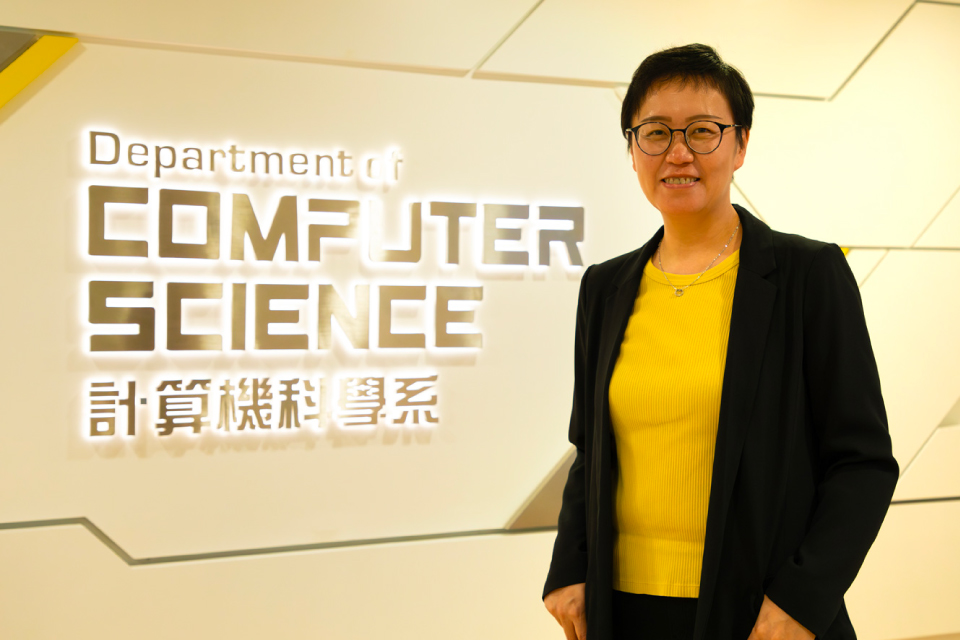
Professor Li Chen is a full Professor and Associate Head (Research) in the Department of Computer Science at Hong Kong Baptist University (HKBU), with an affiliate appointment at the Academy of Wellness and Human Development. She leads the Positive Intelligence Lab , focusing on intelligent technologies for human well-being. Her research spans conversational AI, explainable AI, recommender systems, and human-computer interaction. Education: PhD in Computer Science, Swiss Federal Institute of Technology in Lausanne (EPFL), Switzerland (Nominee for Best PhD Thesis Award) Master in Computer Software and Theory, Peking University, China Bachelor in Computer Science, Peking University, China Her research interests revolve around personalized conversational and explainable AI, with applications in entertainment, education, e-commerce, and mental well-being. She has published over 150 papers in top venues including ACM TOIS, IJHCS, CHI, SIGIR, AAAI, RecSys, and UMAP . Her work has been recognized with awards such as the RecSys Best Student Paper Award (2024), CHI Honourable Mention (2022), and multiple best paper awards at UMAP and UMUAI. The most recent publications reflect a strong trend toward fair, explainable, and user-centric recommender systems , with increasing integration of large language models , mental health applications , and conversational agents . Her research emphasizes user feedback, negative sampling techniques, and evaluation frameworks grounded in real user behavior. Scientific Awards & Recognition: President’s Award for Outstanding Performance in Teaching (Individual), HKBU (2024/25) President’s Award for Outstanding Performance in Research Supervision (2022/23) World’s Top 2% Most-Cited Scientists, Stanford University (2021–2024) ACM Senior Member (2015) RecSys’24 Best Student Paper Award CHI’22 Honourable Mention Award UMAP’20 Best Student Paper Award UMUAI 2018 Best Paper Award THE Awards Asia 2021 Excellence and Innovation in the Arts (Co-I) Professor Chen is actively involved in mentoring PhD and Master’s students such as Wanling Cai and Yuhan Zhao, who have co-authored award-winning papers. She has secured research funding through grants like the HKBU IRCMS Project. Her editorial leadership includes serving as Co-Editor-in-Chief of ACM Transactions on Recommender Systems (TORS) , Associate Editor for ACM TiiS , and Editorial Board Member for UMUAI . She has chaired major conferences including ACM RecSys’23 (General Co-Chair), RecSys’20 (Program Co-Chair), and UMAP’18 (Program Co-Chair). She leads the Positive Intelligence Lab , which conducts interdisciplinary research on AI for well-being. The lab has developed datasets like the Intent Annotation of Recommendation Dialogue (IARD) and focuses on user-centric AI design, mental health chatbots, and personalized recommendation interfaces.
Dr. Haibo He is the Robert Haas Endowed Professor in the Department of Electrical, Computer, and Biomedical Engineering at the University of Rhode Island (URI). As an IEEE Fellow and NSF CAREER awardee, his research focuses on computational intelligence, neural networks, and reinforcement learning with applications to smart grids and microgrid systems. Ph.D. in Electrical Engineering, Ohio University, 2006 M.S. in Electrical Engineering, Huazhong University of Science and Technology, 2002 B.S. in Electrical Engineering, Huazhong University of Science and Technology, 1999 His research interests include: Computational Intelligence Adaptive Dynamic Programming Reinforcement Learning Deep Learning for Power Systems Distributed Control in Microgrids Imbalanced Data Learning Recent research trends from publications (2018-2025) show a focus on: Multi-agent reinforcement learning for energy systems Digital twin frameworks for grid security Event-triggered control mechanisms Finite-time convergence algorithms Cyber-attack resilient control systems Evolutionary computation in power networks Awards: IEEE Fellow (2018) NSF CAREER Award (2017) Dr. He leads the Computational Intelligence and Self-Adaptive Systems (CISA) Laboratory at URI, which conducts fundamental research on computational intelligence methods with applications to power systems, data mining, and neural networks.
Dr. Stevan Rudinac is a Researcher at the University of Amsterdam's Faculty of Economics and Business , Section Business Analytics . His work focuses on interactive learning systems and multimodal data analysis, particularly in urban contexts and multimedia modeling. Education: PhD in Multimedia and Information Retrieval from Delft University of Technology (2013). Research Interests: Stevan specializes in multimedia modeling , hypergraph learning , and interactive video search . He develops frameworks for scalable analysis of social networks, urban imagery, and large multimodal datasets, bridging machine learning with practical applications in city planning and financial social media. Recent Trends: His 2024-2025 publications highlight large language model optimization , diffusion model evaluation , and dynamic graph embedding for meme stocks. Collaborative projects include the CASTLE 2024 dataset and Exquisitor , a system for 100 million image exploration. Labs & Teams: He contributes to the Business Analytics group at UvA, collaborating with Prof. Marcel Worring and Dr. Björn Þór Jónsson. He co-organized the UrbanMM'21 workshop and participates in ACM Multimedia and MMM conferences.
Dr. Marie Monfils is Professor of Psychology and Neuroscience at the University of Texas at Austin, where she leads the Monfils Memory Lab in the Department of Psychology within the College of Liberal Arts. Her research focuses on understanding fear memory mechanisms and developing interventions to attenuate maladaptive fear memories. Dr. Monfils received her Ph.D. in behavioral neuroscience from the Canadian Centre for Behavioural Neuroscience and conducted a postdoctoral fellowship at New York University. Her work bridges basic rodent models with translational applications for anxiety, trauma-related, and addiction disorders. Her research program investigates three primary streams: Post-consolidation manipulations that can persistently attenuate fear memories Factors underlying affiliative kinship and social transmission of information Individual differences and their impact on fear attenuation Her work integrates behavioral, neural, and molecular approaches to understand memory modification processes, with particular focus on reconsolidation and extinction mechanisms. Dr. Monfils' publication record demonstrates consistent contributions to understanding fear memory mechanisms. Her recent work examines CO2 reactivity as a biomarker for treatment response, social transmission of fear in rodent models, and optimizing fear attenuation techniques through reconsolidation-extinction interactions. Her research spans both basic neuroscience and clinical applications, with implications for improving exposure therapy for anxiety disorders. 2025: Published work on neural mechanisms of social learning, mechanisms of change in exposure therapy, and social context as a source of variability 2024: Published research on fear attenuation collaborations, carbon dioxide reactivity predicting fear expression, and social transmission dynamics 2023: Published updates on reconsolidation-extinction interactions, estrous cycle effects on behavior, and retrieval-extinction effects on alcohol seeking Dr. Monfils actively mentors graduate students and is accepting applicants for Fall 2026 and 2027. Her lab follows rats through their lifespan with a commitment to humane treatment, euthanizing only when necessary to minimize suffering or at the end of life. She acknowledges the Indigenous lands of Turtle Island where her research takes place, specifically recognizing the Alabama-Coushatta, Caddo, Carrizo/Comecrudo, Coahuiltecan, Comanche, Kickapoo, Lipan Apache, Tonkawa and Ysleta Del Sur Pueblo.
Oleg Lashinin is an active researcher in the field of Recommender Systems , with a focus on Machine Learning , Temporal Modeling , and User Behavior Analysis . He has contributed to 15 recent publications spanning 2021–2025, including conference papers at ECIR, SIGIR, RecSys, and workshops like KaRS@RecSys and ORSUM@RecSys. His work explores advanced techniques such as Self-Attention Models , Time-Aware Item Weighting , and Cost-Constrained Recommendations . Key research trends in his publications include Deep Learning for sequential recommendation tasks, Crowdsourcing for explanation evaluation, and Temporal Dynamics in user behavior. Notable projects include the GPT3RecBot Telegram chatbot and the RecBaselines2023 dataset for benchmarking recommender systems.
Fraser King is an incoming Assistant Professor in the Department of Atmospheric and Oceanic Sciences (AOS) at the University of Wisconsin–Madison, starting in Winter 2026. He holds a PhD in Machine Learning and Remote Sensing of Precipitation from the University of Waterloo (2022) and is currently a postdoctoral research associate at NASA Goddard Space Flight Center. His research integrates machine learning with atmospheric physics to advance precipitation and snowfall retrieval, cloud microphysics, and climate modeling. He has held research positions at the University of Michigan and NASA Jet Propulsion Laboratory. His research interests include: Climate and Climate Change Radiation and Remote Sensing Synoptic Meteorology Atmospheric and Cloud Physics Large Scale Dynamics Machine Learning and Model Interpretability Arctic Snowfall Prediction His recent publications reflect a strong trend in applying deep learning (e.g., U-Net, CNNs) and unsupervised methods (PCA, t-SNE, UMAP) to radar and satellite data for precipitation and snow microphysics. Key themes include radar gap inpainting, melting layer detection, and dimensionality reduction for physical interpretation. His work bridges geoscience and AI, aiming for interpretable models that enhance physical understanding. Scientific awards and professional service include: Finalist for the 2023 Governor General's Gold Medal, University of Waterloo Associate Editor, Journal of Atmospheric and Oceanic Technology (AMS) Member, AMS Committee on Artificial Intelligence Applications to Environmental Science Executive Council Member, AGU Precipitation Technical Committee Executive Member, Eastern Snow Conference Research Board Fraser King has mentored students through research projects and led educational initiatives such as a 12-week course on machine learning for land cover classification. He has secured research experience through internships at Aquanty Inc. and multiple NASA-affiliated institutions. He founded MapsByFraser, a company combining cartography and satellite data, and has collaborated with Google's Quantum AI team. His technical skills span Python, deep learning frameworks, and high-performance computing platforms. He leads several major research projects: Towards Interpretable Physical Models : Using sparse autoencoders and nonlinear dimensionality reduction to interpret geoscience models. Microphysical Dimensionality Reduction : Applying PCA, t-SNE, and UMAP to identify physical modes in precipitation data. BlindPaint : A U-Net for radar gap inpainting in spaceborne systems. DeepPrecip : A deep learning model for surface precipitation retrieval. iPhone LiDAR : Using consumer smartphones for snow depth measurement via drones. NRCan Machine Learning Land Cover Classifier : Training ML models on Sentinel-2 data. Climate Model Calibration : Using ML to correct biases in snow-related climate variables. CloudSat Snowfall Validation : Validating high-latitude snowfall estimates. Snow Modelling : A Rust-based physical/temperature-index snow model.
Dr. Axel Lubk is a Group Leader at the Institute for Solid State Research (IFW Dresden) , specializing in advanced electron microscopy techniques for materials science. His research spans four key areas: (1) TEM method development (high-resolution imaging, tomography, holography, and in-situ techniques), (2) charge particle optics and scattering theory , (3) magnetic nanotextures (domain walls, skyrmions), and (4) plasmonics (mode hybridization in heterogeneous structures and semiconductor heterostructures). Dr. Lubk’s work focuses on three-dimensional magnetic texture analysis using electron holography and tomography, particularly in systems like skyrmion tubes , FeGe , and Cr2O3 thin films . He has pioneered techniques for vector-field electron tomography and phase retrieval under varying boundary conditions, advancing nanoscale magnetic imaging. His recent studies include plasmonic properties in AgAu nanosphere chains , thermoelectric multilayer systems , and topological insulators like NiRh2Sb and TaTMTe4 . Dr. Lubk has published extensively in high-impact journals such as Nature Communications and Advanced Materials , with a focus on TEM instrumentation and quantitative analysis . He frequently presents at international conferences like the International Microscopy Congress and European School of Magnetism , emphasizing applications in spintronics , quantum materials , and nanostructured systems . His contributions to holographic vector-field electron tomography and machine learning for spectrum-image data have set new standards in electron microscopy.
David Lowe is a Professor of Physics at Brown University, where he has been a faculty member since 1997. His academic journey includes a B.A. and M.A. from Cambridge University and a Ph.D. in theoretical physics from Princeton University (1993), followed by postdoctoral research at UC Santa Barbara and Caltech. His research focuses on string theory applications to gravitational physics , particularly black hole thermodynamics, quantum gravity, and cosmological implications of holographic principles. Key contributions include foundational work on AdS/CFT correspondence, black hole information paradox resolution, and de Sitter space holography. His publications span high-impact journals including Journal of High Energy Physics and Physical Review D , with recent emphasis on quantum information aspects of black holes. Richard B. Salomon Faculty Research Award BSF Research Grant NSF Travel Award Lowe has maintained extensive international collaborations, holding visiting positions at U. Tokyo, Max Planck Institute, CINVESTAV, KITP, and Aspen Center for Physics. His teaching portfolio includes graduate courses in general relativity, quantum field theory, and advanced electrodynamics, reflecting his expertise in theoretical physics.
Dr. Manuel Fierro Calisto is an Assistant Professor in the Department of Genetics and Biochemistry at Clemson University, affiliated with the Eukaryotic Pathogens Innovation Center. His research focuses on understanding malaria parasite biology to identify novel antimalarial interventions. He holds a B.S. (2014) and Ph.D. (2020) in Cell Biology from the University of Georgia, followed by postdoctoral training at Iowa State University studying Plasmodium protein export mechanisms. His lab employs advanced molecular tools like proximity labeling and mass spectrometry to characterize host-pathogen interactions during blood-stage infections. Research emphasizes the Plasmodium Translocon of Exported proteins (PTEX) and the EXP2 nutrient pore, exploring their roles in parasite survival and host cell remodeling. Current projects include identifying the exportome of malaria parasites and elucidating EXP2 insertion mechanisms into the parasitophorous vacuole membrane. The lab's work bridges molecular parasitology with translational research for vaccine and drug development. Dr. Fierro's academic journey includes key contributions to understanding merozoite invasion mechanisms, proteolytic cascades during egress, and essential chaperone functions in Plasmodium life cycles. His lab, known as The Fierro Team, collaborates widely and is committed to advancing global health through parasite biology research.
Dr. Latifur Khan is a Professor in the Department of Computer Science at the University of Texas at Dallas' Erik Jonsson School of Engineering and Computer Science. He directs the Database and Data Mining Laboratory and conducts research in data mining, cybersecurity, and semantic web technologies. Research domains include: Large language models for threat detection Fairness in machine learning Vulnerability analysis in software systems Graph-based information retrieval Recent publications focus on AI security applications in transportation systems, political conflict analysis using NLP, and federated learning for IoT security. His work consistently bridges theoretical algorithms with practical cybersecurity implementations. Research grants include funding from NSF, NASA, Raytheon, Nokia, and SUN Microsystems. Teaching includes courses in Plant Breeding (PBG 450/550) and Breeding Clonal Crops (PBG 551).
Deborah McGuinness is a Professor of Computer Science, Cognitive Science, and Industrial and Systems Engineering at Rensselaer Polytechnic Institute (RPI), holding the Tetherless World Senior Constellation Chair. She leads research in semantic web technologies, ontology engineering, explainable AI, and applications in health and environmental informatics. Her work emphasizes semantic technologies to enhance human-machine collaboration through knowledge representation and reasoning. Education: B.S./B.A. (Computer Science & Mathematics, Duke University, 1980), M.S. (Computer Science, UC Berkeley, 1981), Ph.D. (Knowledge Representation, Rutgers University, 1997). Research interests include: ontology creation/evolution, commonsense AI, machine learning fairness, clinical decision support systems, knowledge graphs for scientific data, and policy modeling. Recent work focuses on AI explainability, semantic data dictionaries for public health surveys, and leveraging knowledge graphs for personalized health recommendations. Her publications span semantic web standards, AI commonsense benchmarks, clinical informatics applications, and policy frameworks. Notable projects include the Explanation Ontology for user-centered AI and the CHEAR Data Repository for environmental health research. McGuinness has pioneered semantic technologies for data integration across diverse domains like nanomaterials science and stroke care policy analysis.