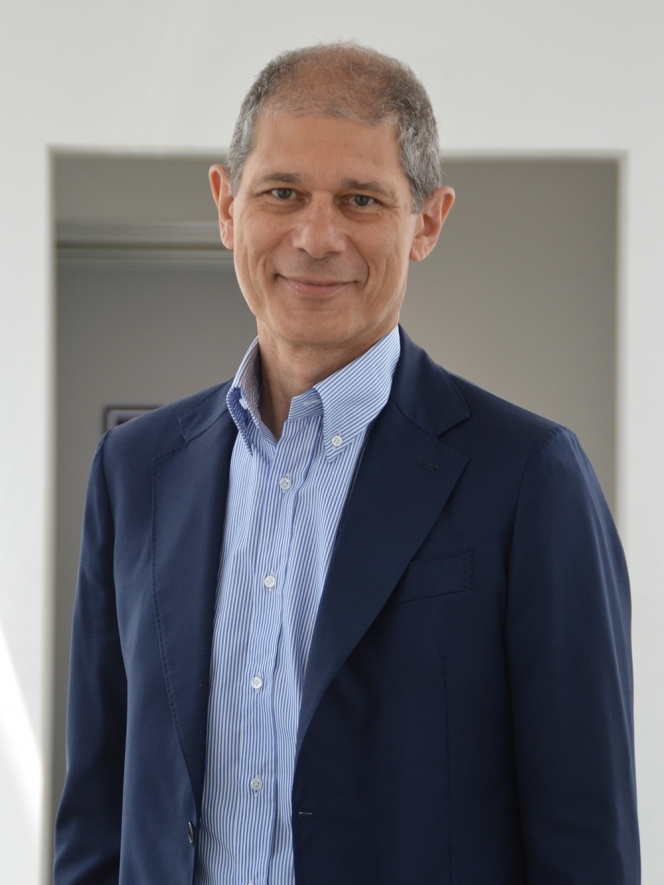
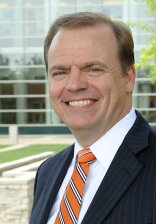
Prof. Sergio Ginebri is an Associate Professor at the Department of Jurisprudence, University of Rome Tre. He holds a PhD in Economics from Sapienza University of Rome and has extensive experience in fiscal policy, pension systems, and public finance research. His work focuses on topics like pension sustainability, social inequality, and the political economy of public debt. Education: PhD in Economics, Sapienza University of Rome (1988–1992) MA in Economics, University of Warwick (1987–1988) Laurea in Statistics and Demography, Sapienza University of Rome (1977–1984) Research Interests: Prof. Ginebri specializes in public policy, fiscal sustainability, and the social impacts of pension reforms. His research explores how demographic trends, wealth distribution, and political dynamics shape economic policies. Recent work includes analyses of longevity risks, pension equity, and fiscal policy integration in the EU. Key Projects: Coordinated studies on pension system sustainability (2002–2018) Developed models for forecasting public pension expenditure Contributed to EU tax policy observatories Awards: Recipient of the national PhD award (1994) and recognition for academic excellence in tax policy research (2001). Teaching: Teaches courses in political economy, public finance, and macroeconomics at undergraduate and graduate levels.
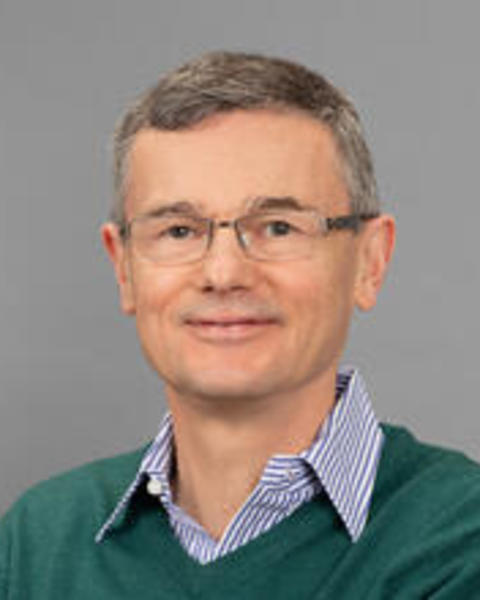
Maria Fitzpatrick is Professor in Cornell University's Department of Policy Analysis and Management and Director of the Cornell Institute for Public Affairs. A Research Associate at the National Bureau of Economic Research, she holds a Ph.D. from the University of Virginia (2008) and specializes in child/family policy and education economics. Research examines early childhood education impacts, teacher compensation and retirement systems, child maltreatment reporting, and incarceration effects on families. Notable studies analyze universal pre-kindergarten programs, teacher pension reforms, and maternal incarceration's impact on birth outcomes. Current projects investigate child welfare decision-making algorithms and prison visitation policies. Fellowships include the Henry Luce Foundation/ACLS Early Career Fellowship and postdoctoral positions at Stanford's Institute for Economic Policy Research. She has advised government agencies including the Australian Prudential Regulation Authority and Queensland Rail.
Rebecca Diamond is the Class of 1988 Professor of Economics at Stanford University’s Graduate School of Business, a Senior Fellow at the Stanford Institute for Economic Policy Research (SIEPR), and holds a courtesy appointment in the Economics Department. Her research focuses on urban economics, housing policy, economic inequality, and labor markets. Key areas include analyzing rent control effects, gig economy dynamics, nutritional disparities, and spatial sorting of workers by skill. She advises doctoral students on topics like urban economics and public policy. Her work has been published in top journals such as the American Economic Review, Quarterly Journal of Economics, and Review of Economic Studies. Teaching responsibilities include courses on applied econometrics, public economics, and social insurance. She has been involved in doctoral training through practicums and independent studies. Her research has influenced policy debates on housing affordability, racial disparities in housing returns, and the impacts of high-skilled immigration on innovation. Positions: Professor of Economics (GSB), SIEPR Senior Fellow, Courtesy Professor (Economics) Key Research Themes: Urban policy, labor market inequality, gig economy, food deserts, rent control
Jesper Rangvid is a Professor of Finance and Director of the Pension Research Centre (PeRCent) at Copenhagen Business School (CBS), where he also serves as Associate Dean of the Executive MBA program . His research focuses on financial markets, macroeconomics, financial crises, household finance, and mutual funds. He has authored influential works such as How Low Interest Rates Change the World (Oxford University Press, 2025) and From Main Street to Wall Street (Oxford University Press, 2021), exploring topics like interest rate trends, economic growth, and policy impacts. He chairs the Council for Return Expectations and holds board positions at Formuepleje, Advantage Investment Partners, and Finansiel Stabilitet, among others. His advisory roles include Levring & Levring and projects for Danish institutions like Forenet Kredit and BankInvest. Recent research highlights include analyzing Denmark’s pension system reforms, fiscal-monetary policy interactions, and the implications of low interest rates on global economies. Rangvid’s publications combine rigorous academic analysis with policy relevance, addressing topics like dividend predictability, economic growth’s impact on asset returns, and the behavior of professional investors. His work often bridges theoretical frameworks with empirical data, offering insights into macro-financial linkages and policy design.
Emmanuel Saez is a Professor of Economics and Director of the Stone Center on Wealth and Income Inequality at the University of California, Berkeley , where he has been a leading figure in the Department of Economics within the College of Letters and Science. His research is foundational in the study of income and wealth inequality, optimal taxation, and empirical public policy. His academic journey began with a PhD from MIT in 1999. His work, particularly in collaboration with Thomas Piketty and Gabriel Zucman, has revolutionized how economists measure and understand economic inequality. He is best known for constructing long-term top income share series, which reveal the dramatic rise in U.S. inequality since the 1980s. His influential 2019 book, The Triumph of Injustice , co-authored with Gabriel Zucman, presents a compelling critique of the decline in U.S. progressive taxation and proposes bold policy reforms for the 21st century. Saez's recent research spans a wide range of topics including real-time inequality measurement, wealth tax enforcement, labor market dynamics for older workers, and macroeconomic models of unemployment. His publications, often appearing in top journals like the Quarterly Journal of Economics , American Economic Review , and Brookings Papers on Economic Activity , consistently focus on empirical analysis with direct policy relevance. His work shows a strong trend toward integrating macroeconomic models with distributional data and evaluating the real-world impact of fiscal and social policies. John Bates Clark Medal, American Economic Association, 2009 MacArthur 'Genius' Fellowship, 2010 Honorary degree from Harvard University, 2019 Saez is deeply involved in mentoring and advising, though specific student names are not listed in the provided texts. He has been instrumental in major data initiatives such as the World Inequality Database (WID.world) and Real-Time Inequality , which provide open-access, high-quality data on economic distribution. He has also secured significant research funding from foundations like the Bill & Melinda Gates Foundation, the Russell Sage Foundation, and the Alfred P. Sloan Foundation. He leads the Stone Center on Wealth and Income Inequality, fostering interdisciplinary research on economic disparity.
Professor John Piggott AO FASSA is Scientia Professor of Economics at the University of New South Wales, where he serves as Director of the Australian Research Council Centre of Excellence in Population Ageing Research (CEPAR). He has held significant leadership roles at UNSW including three terms as Head of School of Economics, Associate Dean Research for the Business Faculty for 7 years, and Interim Dean of the Faculty. His expertise spans retirement economics, pension systems, and population ageing issues, with particular focus on Asia-Pacific region. His educational background includes: BA from University of Sydney MSc from London School of Economics PhD from University of London Professor Piggott's research focuses on retirement and pension economics, population ageing, and public finance. His work examines pension system designs across different countries, with particular emphasis on emerging Asian economies. He has conducted extensive research on retirement income systems, long-term care financing, and the economic implications of demographic change. His research has significant policy relevance, having informed government reviews and international organizations' work on ageing populations. He has published widely in leading international economics and actuarial academic journals, with recent work analyzing pension reforms in Indonesia, Thailand, and China. His recent publications demonstrate a strong focus on population ageing in the Asia-Pacific region, particularly examining pension systems and long-term care in emerging economies. His work bridges economics, public policy, and health services research, with increasing attention to the interconnections between demographic change, economic development, and social policy in aging societies. His research has directly influenced policy discussions through participation in the Henry Tax Review and Australian Ministerial Superannuation Advisory Committee. Professor Piggott has received numerous prestigious awards and honors: Fellow of the Academy of the Social Sciences in Australia (1992) Scientia Professor at UNSW (2011-present) ARC Australian Professorial Fellow (2011-2015) UNSW Business School's Staff Excellence Global Impact Award (2020) Officer of the Order of Australia (AO) (2020) Professor Piggott has supervised numerous PhD students including Rafal Chomik, Hoang Hoyen, and T Le Trang. He has secured substantial research funding including multiple ARC grants totaling over $27 million for the CEPAR Centre, Japan Economic and Social Research Institute projects, and Rockefeller Foundation support. His research has directly informed policy discussions through participation in the Henry Tax Review and Australian Ministerial Superannuation Advisory Committee, and he was appointed co-chair of the Think20 Task Force on Aging Population during Japan's G20 Presidency. As Director of CEPAR, Professor Piggott leads a major research center focused on population ageing research, bringing together interdisciplinary expertise to address the challenges of aging societies. The center collaborates with international partners including the US National Academy of Medicine and OECD, and has played a key role in establishing the International Pension Research Association. His work has significant real-world impact, with his research on JobKeeper transition proposals during the COVID-19 pandemic receiving widespread media attention.
Javier Fernandez Blanco is an Associate Professor and Chair of the Department of Economics and Economic History at the University Autonomous of Barcelona (UAB), affiliated with the Barcelona School of Economics (BSE). He holds a PhD in Economics from the University of Minnesota (2008) and degrees in Economics and Mathematics from the Universitat de Barcelona. His research focuses on labor markets, public insurance design, and macroeconomic policy, with a particular interest in unemployment dynamics, household insurance mechanisms, and aging populations. He has held visiting positions at the University of Toronto (2018-19 as Visiting Associate Professor), UNSW Sydney (2012), and Carlos III University of Madrid (2008-12). His work has been published in top journals like the International Economic Review, Journal of Economic Theory, and European Economic Review. He has secured research grants, including two BSE Seed grants as Principal Investigator, and contributed to national research initiatives. He currently co-directs research projects on labor markets and education, and has advised numerous PhD and master’s students. His awards include fellowships from the Generalitat, Ramon Areces Foundation, and University of Minnesota. He actively participates in academic service, including organizing conferences, serving on editorial boards, and holding leadership roles in academic governance at UAB and BSE.
John Y. Campbell is the Morton L. and Carole S. Olshan Professor of Economics at Harvard University, affiliated with the Department of Economics within the Faculty of Arts and Sciences. He is on leave during Fall 2024 and Spring 2025. His research focuses on financial economics and macroeconomics, including asset pricing, household finance, and portfolio choice. Campbell has authored influential books such as Fixed: Why Personal Finance is Broken (2025) and Financial Decisions and Markets (2018). He served as President of the American Finance Association (2005), delivered the American Economic Association’s Ely Lecture (2016), and holds honorary doctorates from multiple institutions. His roles include Research Associate (former Director) at NBER’s Program in Asset Pricing, and board member of Arrowstreet Capital, a quantitative asset management firm. Education: Honorary doctorates from BI Norwegian Business School, Maastricht University, University of Paris Dauphine, and Copenhagen Business School. Professional affiliations include Fellowships with the Econometric Society, American Academy of Arts and Sciences, British Academy, and honorary fellowships at Oxford’s Corpus Christi College. Research interests emphasize asset pricing dynamics, macroeconomic influences on financial markets, and household financial decision-making. His work integrates empirical methods to address policy-relevant questions in consumer finance and institutional investing. Recent trends in his publications focus on systemic risk, mortgage market design, and sustainable long-term investment strategies. Key contributions include analyzing fiscal policy impacts, equity valuation frameworks, and behavioral biases in household finance. Scientific awards highlight his academic leadership: multiple honorary degrees, prestigious fellowships, and recognition in global economic institutions. His advisory roles extend to policy-making via the Squam Lake Report (2010) and co-founding Arrowstreet Capital, applying academic insights to practical asset management challenges. Grants and advising: Campbell’s research has been supported by NBER and institutional partnerships. He advises on macroeconomic stability, financial regulation, and university endowment management strategies. His work often bridges theory and practice, influencing both academic discourse and real-world financial systems.
Patricia K. Tong is an economist at RAND and a Professor of Policy Analysis at the RAND School of Public Policy. She specializes in public finance and labor economics, with a strong focus on military and civilian personnel policy, compensation, and health economics. Her research addresses critical issues in military personnel retention, family caregiving, retirement benefits, and access to mental and behavioral health services. Research Interests: Tong’s work combines qualitative and quantitative methods to evaluate monetary and nonmonetary compensation policies, labor market outcomes, and social welfare impacts. Her expertise spans economic policy, health economics, military personnel systems, and family support structures. She has led studies on Social Security survivor benefits, tax policy anti-poverty effects, and nurse staffing standards. Publication Trends: Her recent research centers on military compensation, health care access for service members and families, and financial inclusion. Articles reflect a consistent policy-oriented focus, often supporting governmental reviews such as the Quadrennial Review of Military Compensation, and addressing timely issues like pandemic caregiving and unbanked populations. Scientific Contributions: Published in top journals including American Economic Review and Health Economics Key contributor to national policy discussions on military pay, retention, and health care Research used to inform federal and state-level policy decisions Advising and Grants: While specific students are not listed, her leadership in major research projects indicates a supervisory and mentoring role. She has led federally funded studies on military compensation, health care access, and financial inclusion, demonstrating sustained grant support from defense and public policy agencies. Labs and Teams: Tong conducts research within RAND’s interdisciplinary policy teams, particularly those focused on defense, health, and economic security. Her work often involves collaboration with military stakeholders, federal agencies, and public health experts to develop actionable policy solutions.
Ankush Agarwal is an Associate Professor in the Department of Statistical and Actuarial Sciences at the University of Western Ontario. His research focuses on mathematical finance, financial statistics, and Monte Carlo methods, with applications to risk management and derivatives pricing. He supervises PhD students in quantitative finance and has taught courses on Monte Carlo methods and advanced financial modeling at Western University. Education: PhD in Mathematics from Tata Institute of Fundamental Research (2015) Research interests span regime-switching models, longevity risk hedging, stochastic differential equations, and rare event simulation. His work combines theoretical probability with computational techniques for financial applications. Recent publications include studies on McKean-Vlasov SDEs, implied Sharpe ratio estimation, and optimal portfolio strategies under stochastic volatility. These works demonstrate his expertise in stochastic processes and financial engineering. Supervision: Current PhD advisees include Ying Liao, Buchun Wang, and Shuya Zhang at the University of Glasgow. Former advisees include Yongjie Wang and Yihan Zou.
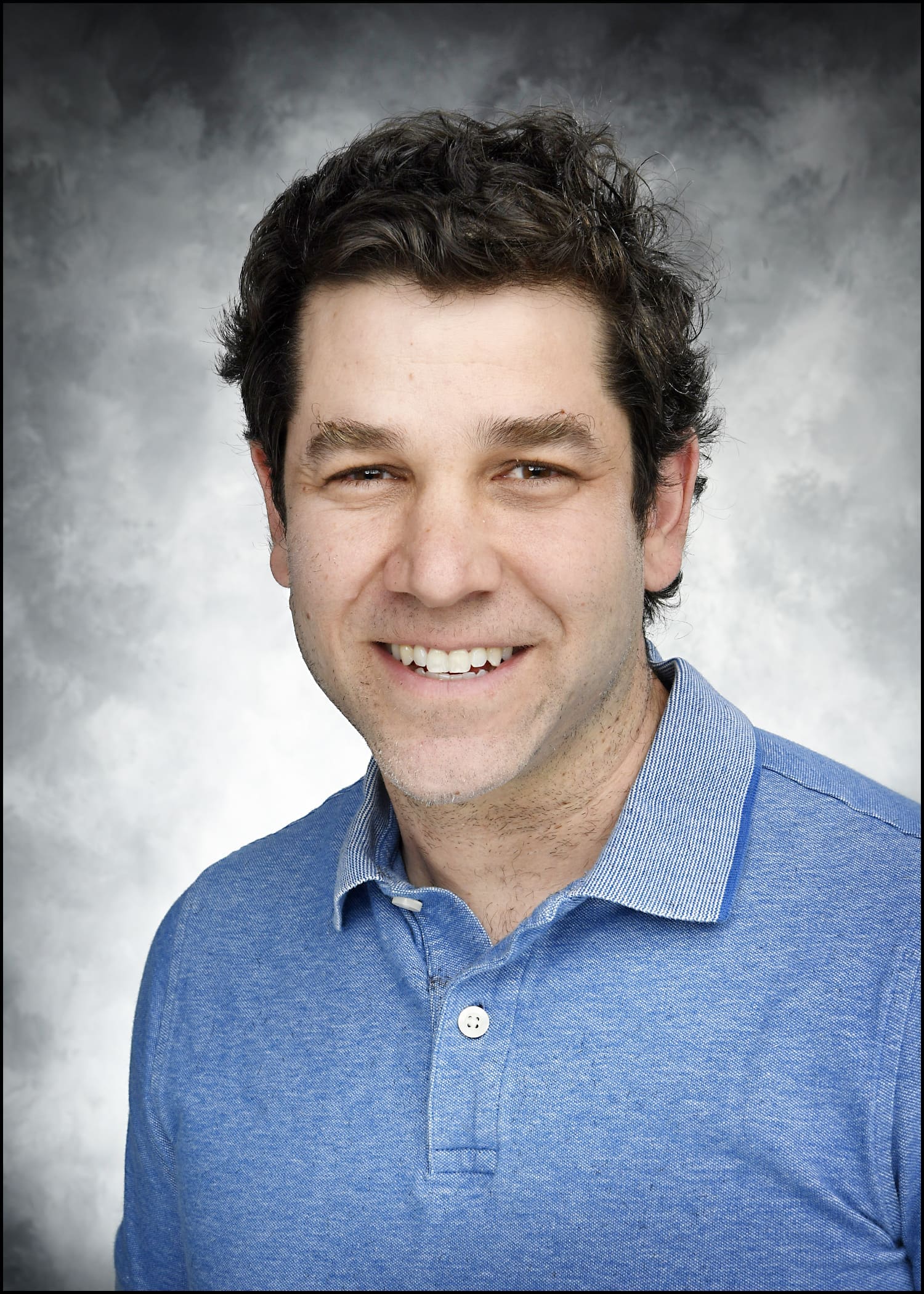
Adam Isen is an Associate Professor of Economics at Johns Hopkins University, specializing in labor and public economics. His research focuses on the impact of government policies on households and firms, particularly exploring causal mechanisms behind economic inequality and intergenerational mobility. He holds a Bachelor's degree from Stanford University and a PhD in Economics from the Wharton School at the University of Pennsylvania. Education: Bachelor's Degree: Stanford University PhD in Economics: Wharton School, University of Pennsylvania Research Interests: Labor Economics: Analyzing how policies affect labor markets, employment, and household decisions. Public Economics: Evaluating tax policies, social programs, and their long-term societal impacts. Intergenerational Mobility: Studying how policies influence outcomes across generations through mechanisms like military service, education access, and wealth distribution. Key Research Themes: His work often uses lottery-based natural experiments to isolate causal effects, such as studying lottery winners to assess wealth impacts on criminal behavior, homeownership, and education choices. Recent papers explore tax policy's effects on firm financing, pandemic-era unemployment insurance fraud, and the long-term consequences of historical policies like the Clean Air Act. Awards: None explicitly listed in the provided materials. Grants/Advising: No specific grants or advisee names are mentioned, but his research frequently involves collaborative projects with institutions and datasets such as the U.S. Social Security Administration and Swedish administrative records. Labs/Teams: Not explicitly detailed in the provided texts, though his work suggests collaboration with interdisciplinary teams focused on policy evaluation and empirical analysis.
Sander Muns is a Researcher at Tilburg University's Economics Department within the Tinbergen Institute . His work focuses on pension economics, labor economics, and welfare economics, with significant contributions to understanding pension risk allocations, demographic challenges, and wealth redistribution mechanisms in the Netherlands context. Expertise: Pension systems, life-cycle consumption, capital market impacts, and population dynamics External Roles: Researcher at SCP (Social Cultural Planning Office) since 2023 Key Collaborations: Interdisciplinary work with actuarial scientists, social policy experts, and public finance researchers Muns' research explores how pension systems can achieve Pareto-optimal risk allocations and how population decline affects labor markets and welfare policy. His work has been cited in Dutch policy discussions and academic journals. Current projects examine home equity utilization for retirement consumption smoothing and demographic shifts' implications on social security systems. His research output spans from 2007 to 2025 with particular activity in recent years.
David Saunders is an Associate Professor in the Department of Statistics and Actuarial Science at the University of Waterloo, affiliated with the David R. Cheriton School of Computer Science. His research focuses on quantitative risk management, mathematical finance, and stochastic optimization with applications to credit risk, portfolio optimization, and derivatives pricing. Professor Saunders has held academic positions at the University of Pittsburgh and Cyprus International Institute of Management, and has consulted for institutions like RiskMetrics, TD Bank, and Central Bank of Cyprus. Education: PhD studies at the University of Toronto with industry collaboration at Algorithmics Inc., followed by roles at Cyprus International Institute of Management and University of Cyprus's HERMES Center. His work bridges theoretical stochastic analysis and practical financial risk management challenges. Research interests prominently feature credit risk management, optimal stopping problems, and analytical techniques in finance. Recent work addresses inverse default boundary problems, wrong-way risk in derivatives, and efficient algorithms for portfolio optimization under complex return distributions. Collaborations with financial institutions drive applied research in capital allocation, operational risk modeling, and regulatory compliance. Advising and grants include directing the Professional Science Master's in Mathematical Finance at Pitt, supervising student-industry projects on credit risk and CDO pricing, and securing funding for computational finance initiatives. Active in RiskLab Cyprus and HERMES European Center, his research extends to equity risk management and market risk frameworks.
Jeffrey R. Brown is the Josef and Margot Lakonishok Professor of Business and Dean of the Gies College of Business at the University of Illinois at Urbana-Champaign. He also serves as Director of the National Bureau of Economic Research (NBER) Retirement Research Center and previously led the Center for Business and Public Policy. His expertise spans macroeconomics, finance, and political economy, with a focus on retirement security, public insurance markets, and policy design. Education: Brown holds a PhD in Economics from MIT (1999), an M.P.P. from Harvard (1995), and B.A. degrees in Economics and Political Science from Miami University (1990). He has held roles at the White House Council of Economic Advisers, the Social Security Advisory Board, and as a consultant to federal agencies and financial firms. Research Interests: His work examines the intersection of public and private insurance markets, particularly retirement-related topics like annuities, pensions, Social Security, and long-term care. He explores behavioral economics barriers to optimal retirement planning and the impact of tax policies on savings behavior. Publications: Brown’s recent work analyzes trends in retirement income strategies, political connections and firm value, and the effects of policy interventions on consumer decisions. His articles appear in leading journals such as the Review of Economics and Statistics and Journal of Financial Economics . Awards: He has received prestigious honors including the Paul A. Samuelson Award and Lumina Award. His leadership roles include trustee positions at TIAA and advisory roles at the Brookings Institution’s Tax Policy Center. Administration & Governance: As Dean, Brown oversees strategic initiatives and academic programs. He also chairs the TIAA Audit Committee and contributes to policy discussions through roles at the Center for Audit Quality and UI Singapore Research LLC.
Yogi Vidyattama is an Associate Professor at the Canberra School of Politics, Economics and Society, University of Canberra. He specializes in spatial microsimulation modeling, economic growth, income distribution, and fiscal decentralization. Previously affiliated with the University of Indonesia, he contributed to regional economic analysis in Indonesia. His research focuses on linking economic policies with spatial outcomes, including corruption determinants, healthcare access, and disaster resilience. Education: PhD in Patterns of Provincial Economic Growth from Australian National University (2008), Master's from ANU (2003), and Bachelor's in Fiscal Decentralisation from University of Indonesia (2000). Research interests include microsimulation modeling, regional economic disparities, and policy impacts. He has led 49 projects, including studies on electric vehicle policy, disaster capability mapping, and regional fast rail economic impacts. His work contributes to UN SDGs related to economic growth, inequality reduction, and disaster resilience. Publications span over 117 outputs, analyzing topics like Indonesia's regional corruption, Australian housing crises, and pandemic policy effects. Awards and recognitions are unspecified, but his roles in executive councils of ANZRSAI and PRSCO highlight peer recognition. Advised 10 students and maintains NATSEM's spatial models and GIS systems.