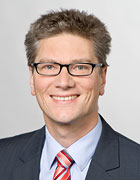
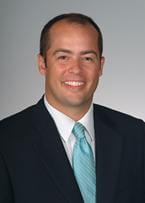
Joseph van Batenburg-Sherwood is a Lecturer in Biofluid Mechanics at Imperial College London's Department of Bioengineering (Faculty of Engineering). He leads the vBS Lab and holds a Royal Academy of Engineering Research Fellowship (2017–2022). His research focuses on biofluid dynamics, particularly in microvascular diseases, intraocular pressure regulation, and ventilator design for resource-limited settings. Education: MEng in Mechanical Engineering, King’s College London (2005–2009) PhD in Biofluid Dynamics, University College London (2009–2013) Research interests include experimental techniques for microscale biological flow analysis, with specializations in: Red blood cell dynamics in microvascular diseases Aqueous humor flow mechanics in glaucoma Ventilator design optimization Benchtop perfusion systems (e.g., iPerfusion) Publications emphasize translational research in ocular fluid dynamics and medical device innovation. Notable contributions include consensus guidelines for outflow facility measurement protocols and MMP-3-based glaucoma therapies. Advising: No listed advisees. Grants: Unspecified in provided text. Labs: vBS Lab at Imperial College London's White City Campus.
Ramses Martinez is an Assistant Professor in the Department of Industrial Engineering and Biomedical Engineering at Purdue University . He holds a B.A. in Applied Physics from Universidad Autonoma de Madrid (2004) and a Ph.D. in Physics and Materials Science from the Spanish National Research Council (CSIC) in 2009. Prior to joining Purdue, he conducted postdoctoral research in the lab of Prof. George M. Whitesides at Harvard University, focusing on nanofabrication, microfluidics, and soft robotics. Education B.A. in Applied Physics, Universidad Autonoma de Madrid (2004) Ph.D. in Physics and Materials Science, Spanish National Research Council (CSIC) (2009) His research bridges soft robotics , flexible electronics , and nanofabrication , with a focus on creating self-powered e-textiles , omniphobic paper-based devices , and programmable mechanical metamaterials . His work has led to over 25 publications and 9 patents, emphasizing practical applications in health monitoring and industrial automation . Notable projects include waterproof electronic decals for biofluid monitoring, smart bandages for chronic wound detection, and laser nanoforming methods for scalable metallic structures. His research has been recognized through the Fulbright Fellowship and the Marie Curie IOF Grant .
Prof. Dr. Franz Pfeiffer is a full professor at the Chair of Biomedical Physics within the Department of Physics at the Technical University of Munich (TUM) . He has served as director of the Munich School of BioEngineering since 2016. His research focuses on translating advanced X-ray physics concepts to biomedical imaging and clinical applications, particularly for early cancer and osteoporosis diagnostics. Research Interests: X-ray phase-contrast and dark-field imaging, synchrotron instrumentation, CT reconstruction algorithms, and medical imaging technology. Awards: Alfred Breit Prize (2017) ERC Advanced Grant (2016) Leibniz Prize (2011) National Latsis Prize (2010) ERC Starting Grant (2009) His work bridges fundamental X-ray physics with clinical translation, involving collaborations with radiologists, engineers, and medical researchers. Recent publications emphasize AI integration in CT, dark-field chest radiography, and spectral imaging applications.
Verena Siewers is a Research Professor at the Department of Biology and Biological Engineering, Chalmers University of Technology. Her work focuses on synthetic biology and metabolic engineering of yeast cell factories for producing biofuels, pharmaceuticals, nutraceuticals, and bioplastics, with particular emphasis on developing biosensor tools for pathway optimization. Key research themes: yeast-based biosensors, lipid metabolism engineering, CRISPRi/a applications, and dynamic gene regulation Notable projects include: Development of acetic acid tolerance mechanisms Optimization of fatty acid ethyl esters production Engineering phosphoketolase pathways for acetyl-CoA overproduction Her recent articles reveal trends in: CRISPR-mediated pathway engineering Stress response transcriptional profiling Heterologous plant gene expression in yeast Promoter and transcription factor engineering Funding sources: VINNOVA Novo Nordisk Foundation Carl Tryggers Stiftelse EU Horizon grants Swedish Research Council (VR) Formas
Sarah Cartmell is a Professor of Bioengineering and Head of the Department of Materials at The University of Manchester. She holds senior roles in the School of Natural Sciences, including Senate membership and leadership in advanced materials initiatives like the Royce Institute. Her research focuses on biomaterials for regenerative medicine, including tendon repair, stem cell differentiation, and bioreactor design. Cartmell has secured over £34.7 million in grants, authored 70+ publications, and serves on editorial and review boards for journals like Science and Technology of Advanced Materials . Her work contributes to UN Sustainable Development Goals in health and innovation. Education : B.Eng (Materials Science with Clinical Engineering, University of Liverpool, 1996), Ph.D. (Clinical Engineering, University of Liverpool, 2000), Postdoc at GeorgiaTech, and academic roles at Keele University. Research Interests : Translation of novel tissue repair products, mechanical force effects on stem cells, and advanced biomaterials for bone and cartilage regeneration. Grants & Funding : £12.7M as lead PI and £22M as PI/Co-I across 22 sources (government, industry, charities). Awards : President of UK Tissue and Cell Engineering Society, IOM3 Fellow, and TERMIS EU council member. Leadership : Led the Royce Institute’s biomedical materials initiative, coordinating 200+ stakeholders, and chairs major international conferences in biomaterials and tissue engineering. Projects : Includes AMFaces (3D-printed facial prosthetics), biomaterials for regenerative medicine, and bioelectronics networks. Labs/Teams : Biomaterials Research Group, Manchester Bioelectronics Network, and advanced materials in medicine initiatives. Her research bridges clinical and industrial applications, emphasizing translational solutions for musculoskeletal disorders and regenerative therapies.
Andrew Goodwin, M.D., MSCR, is a Professor of Medicine and Section Chief of Critical Care at the Medical University of South Carolina (MUSC). His research focuses on clinical and translational studies to improve critical illness outcomes through electronic health record (EHR) innovations, clinical decision support systems (CDSS), and multicenter clinical trials. He leads MUSC’s ICU clinical trials program, collaborating with networks like PETAL, ACTIV, and STRIVE, and investigates EHR-driven adherence to ICU best practices and machine learning applications in clinical trials. Dr. Goodwin received his B.S. in Bioengineering from Syracuse University, M.D. from SUNY Stony Brook, and completed residency at Massachusetts General Hospital and fellowship in Harvard’s Combined Program. He joined MUSC faculty in 2011, where he directs research infrastructure through the CTSA program and trains early-career clinical trialists. Critical Care Clinical and Translational Research EHR-enabled Investigation Clinical Decision Support Systems Sepsis Respiratory Failure His recent publications span 2014–2024, addressing topics like EHR harmonization, CDSS for fluid prescribing, driving pressure in ARDS, and microRNA in sepsis. Awards include the Department of Medicine’s Research Faculty Mentor of the Year.
Dr. Masato Inoue is a Professor at the Faculty of Science and Engineering , School of Advanced Science and Engineering at Waseda University. He holds a Doctor of Medical Science from Kyoto University. Education: 2003 - Kyoto University Graduate School of Medicine 2003 - Kyoto University His research spans multiple disciplines at the intersection of Medical Informatics , Bioinformatics , and Statistical Mechanics . Key areas include: Medical Imaging : Developing Bayesian super-resolution algorithms and Prior Ensemble Learning for improved MRI reconstruction Voice Analysis : Creating innovative voice quality quantification systems for clinical diagnostics Genetic Analysis : Advancing haplotype inference methods and gene network modeling Signal Processing : Applying statistical mechanics to diverse problems from coding theory to neuroscience His recent publications (2021-2012) demonstrate consistent contributions to medical imaging algorithms , voice disorder classification , and genetic data analysis . Notable collaborations include work with Kyoto University researchers , Swedish medical institutions , and cross-disciplinary teams in bioengineering.
Jinho Kim is an Assistant Professor in the Department of Biomedical Engineering at Stevens Institute of Technology. He holds positions at the Charles V. Schaefer, Jr. School of Engineering and Science. His research focuses on advanced medical technologies including image-guided drug delivery systems, tissue-engineered lungs, and microfluidic diagnostic devices. He has led grants from the NSF and NIH, and his work bridges bioengineering with clinical applications. Education: PhD (2013) in Mechanical Engineering from Columbia University; MS and BS (2009, 2007) in Mechanical Engineering from Temple University. He has held roles as a Postdoctoral Research Scientist (2013–2017) and Associate Research Scientist (2017–2018) at Columbia University’s Department of Biomedical Engineering. Research Interests: Kim’s lab develops ex vivo lung regeneration platforms, minimally invasive cell replacement therapies, and smart medical devices for disease diagnosis. Recent innovations include lung-mimetic hydrofoam sealants and sound-guided pulmonary leak detection systems. Awards: NSF CAREER Award (2022) American Thoracic Society Innovation Award (2019) Columbia Translational Fellows Award (2016) Grants & Entrepreneurship: $1.2M+ in NSF/NIH funding. Participated in NSF I-Corps (2023) and secured patents for lung tissue engineering and imaging technologies. His team includes collaborations with medical device startups XYLYX BIO and Strategic Pacing Systems. Labs & Teams: Leads the Bioengineering Innovations Lab at Stevens, affiliated with the Center for Health Innovation. Active in training students through courses like BME 750 (Lab-on-a-Chip Technology) and BME 520 (Cardiopulmonary Mechanics).
Professor Minh N. Do is the Thomas and Margaret Huang Endowed Professor in Signal Processing & Data Science at the University of Illinois at Urbana-Champaign (UIUC), with primary appointment in the Department of Electrical and Computer Engineering. He holds multiple affiliate appointments across campus including with the Coordinated Science Laboratory, Beckman Institute for Advanced Science and Technology, Department of Bioengineering, Department of Computer Science, Institute for Genomic Biology, College of Medicine, and School of Computing and Data Science. Additionally, he serves as Director of the joint VinUni-Illinois Smart Health Center and holds an Honorary Vice-Provost position at VinUniversity. Professor Do received his B.Eng. in Computer Engineering (First Class Honors) from the University of Canberra, Australia in 1997, followed by his Dr.Sci. in Communication Systems from the Swiss Federal Institute of Technology Lausanne (EPFL) in 2001. His educational journey was marked by exceptional achievement, earning the University Medal from the University of Canberra and a Silver Medal from the 32nd International Mathematical Olympiad. Professor Do's research focuses on developing new multidimensional signal processing tools with applications across several domains. His primary research interests include smart health, data science, computational imaging, and signal processing. His work spans biomedical imaging, machine learning, computer vision, and robotics, with particular emphasis on geometric image representations, integrating image formation and processing, and image processing from multiple sensors. His research bridges theoretical investigations with practical applications, creating impactful solutions in healthcare, diagnostics, and AI systems. His recent publications demonstrate a consistent trajectory toward multimodal AI systems, robust learning frameworks, and healthcare applications. Professor Do's work increasingly integrates signal processing with deep learning approaches to address challenges in medical imaging, cross-modal transfer, and real-world deployment of AI systems. His research shows strong emphasis on practical applications with societal impact, particularly in healthcare diagnostics and smart health technologies. Professor Do's scientific achievements have been recognized with numerous prestigious awards: Member of the National Academy of Artificial Intelligence (2025) Fellow of Asia-Pacific Artificial Intelligence Association (2023) Thomas and Margaret Huang Endowed Professor, UIUC (2020-present) Fellow of IEEE (2014) Young Author Best Paper Award, IEEE Signal Processing Society (2008) CAREER award from the National Science Foundation (2003) Best Doctoral Thesis Award from EPFL (2001) As an educator, Professor Do has taught numerous courses spanning digital signal processing, probability, data science, and image processing. His teaching excellence has been recognized with multiple "Teachers Ranked as Excellent" awards at UIUC. He also maintains active industry connections through tech-transfer efforts, having co-founded Personify and served as Chief Scientist of Misfit. His leadership extends to administrative roles, having served as Vice-Provost for VinUniversity during 2020-2021. Professor Do leads research initiatives at the intersection of signal processing and healthcare applications, with particular focus on the Smart Health Center collaboration between UIUC and VinUniversity. His lab develops innovative solutions for medical diagnostics, point-of-care testing, and neurological assessment using advanced signal processing and AI techniques.
Dr. Haydar Aygun serves as Associate Professor in Acoustics and Building Services at the Bioscience and Bioengineering Research Centre, Department of Civil and Building Services Engineering, University of Salford. He holds multiple leadership roles including Course Director for the MSc Environmental and Architectural Acoustics, Diploma in Acoustics and Noise Control, and The Acoustics Apprenticeship programs. With a PhD in Acoustics and Vibration from the University of Hull (2006), his academic foundation includes a MSc in Advanced Materials, Processes and Manufacturing (2002) and a BSc in Mechanical Engineering. Dr. Aygun's research spans multiple critical domains of acoustics: Development and characterization of novel acoustic materials and metamaterials for noise control Duct acoustics and sound propagation through complex media Biomedical applications including bone analysis and respiratory sound detection Vibration control of porous materials using advanced computational methods Environmental noise assessment and building acoustics solutions His publication record shows consistent scholarly output with 46 research items from 2006-2025, demonstrating particular productivity in recent years (7 publications in 2023). His work shows increasing integration of computational methods with experimental validation, expanding applications in medical diagnostics and sustainable building technologies. Dr. Aygun actively contributes to the academic community through multiple service roles: Editorial Board Member for Journal of Applied Acoustics EPSRC Grant Reviewer Reviewer for Journal of Applied Acoustics and Journal of the Acoustical Society of America Deputy leader of Biomedical Acoustics Special Interest Group within UK Acoustics Network As an educator, Dr. Aygun has supervised numerous PhD students and teaches across multiple levels from undergraduate Building Services Engineering to specialized postgraduate Acoustics programs. His consultancy work bridges academic expertise with practical industry applications in noise assessment, building acoustics, and event sound management.
Dr. Weiwei Ai is a Research Fellow at the Auckland Bioengineering Institute , University of Auckland, New Zealand. With a multidisciplinary background in biomedical engineering and computational modeling, he focuses on developing energy-consistent physiological models and closed-loop validation frameworks for implantable medical devices. Education PhD in Bioengineering, University of Auckland (2019) Master of Engineering (ME) in Electrical Engineering, Beijing University of Technology (2005) BSc in Electronic Engineering, Qingdao University (2002) Dr. Ai's research centers on computational physiology and medical device validation , utilizing bond graph formalisms and hybrid automata to create thermodynamically consistent models for glucose transport, cardiac pacemakers, and gastrointestinal systems. His work bridges mathematical modeling with clinical applications through formal verification techniques. His recent publications highlight trends in closed-loop biomedical device design and energy-based physiological modeling , including: (1) bond graph models for SLC transporter dynamics, (2) adaptive respiratory pacemaker frameworks with biofeedback, (3) formal verification of cardiac devices using timed automata, and (4) compositional cyber-physical epidemiology models. He also explores AI-driven integration of digital twins in healthcare through FAIR data principles. Supervision Opportunities : Dr. Ai is an accredited PhD supervisor at the University of Auckland, offering projects on AI-driven energy-based platforms for credible digital twins in healthcare. Labs : Affiliated with the Auckland Bioengineering Institute, focusing on computational models and in-silico validation systems.
Dr. Emily Gibson is an Associate Professor in the Department of Bioengineering at the University of Colorado School of Medicine. She holds a PhD from the University of Colorado Boulder (2004) and a BS from the Colorado School of Mines (1997). Her multidisciplinary research focuses on developing advanced optical technologies for neuroscience applications. Her primary research interests include: Development of implantable miniature microscopes for two-photon brain imaging in freely behaving animals Superresolution STED microscopy for subcellular imaging of protein dynamics Optical interfaces for neural modulation and sensing in central and peripheral nervous systems Applications in brain mapping, neural circuit analysis, and bioelectronic medicine Dr. Gibson's recent publications demonstrate a strong focus on neurophotonic tool development, including miniature microscopes, fiber-optic imaging systems, and superresolution techniques. Her work consistently applies these technologies to study neural coding, learning mechanisms, and neurodegenerative processes. She leads the Biophotonics Lab at CU Anschutz, which actively develops open-source neurophotonic tools. Current projects include BRAIN Initiative-funded work on voltage imaging and NSF-supported research on odor navigation. Her lab maintains active collaborations with neuroscientists and clinicians to translate optical technologies into neuroscience research and clinical applications.
Louis S. Bouchard is an Associate Professor in the Department of Chemistry at the University of California, Los Angeles (UCLA). His interdisciplinary research spans physical chemistry, biomedical engineering, and quantum computing, with a focus on NMR/MRI technologies, immunotherapy, and materials science. He earned a B.Sc. in Physics and Business Management from McGill University, a M.Sc. in Medical Biophysics from the University of Toronto, and a Ph.D. in Chemistry from Princeton University. His postdoctoral work at UC Berkeley with Alex Pines advanced low-field NMR and hyperpolarization methods. Research Interests : Physical & analytical chemistry, materials for immunotherapy, MRI contrast agents, biosensors, quantum control, machine learning in biomedical imaging. Lab Focus : Operando NMR methods, molecular kinetics, tissue engineering, quantum computing, and machine learning algorithms. His group has developed groundbreaking technologies, including: NMR methods for topological insulator surface states 12% 15N hyperpolarization catalysts for MRI Operando NMR in catalytic reactors Multi-channel 3D tissue bioreactors Scientific awards include the Beckman Young Investigator Award (2012), Dreyfus New Faculty Award (2008), and multiple UCLA faculty development grants. Current projects recruit students in machine learning , molecular kinetics , and quantum computing applications to chemistry and biology.
Mingyang Tan is a Postdoctoral Research Associate at the Department of Mechanical and Industrial Engineering, Northeastern University. Their research focuses on intersections of biomedical engineering, rheology, 3D printing, and materials science, with applications in pharmaceutical manufacturing and biofluid dynamics. Role: Postdoctoral Research Associate Department: Mechanical and Industrial Engineering Email: mi.tan@northeastern.edu Research Interests Mingyang Tan's work explores rheological properties of complex systems, including 3D bioprinting for tissue engineering, magnetic particle dynamics in fluids, and microrheology of biofluids. Their studies address biomedical applications like plasma coagulation and osteochondral graft development, alongside innovations in pharmaceutical manufacturing using binder jetting 3D printing . Publication Trends Recent articles highlight advances in additive manufacturing , biomaterials , and microrheology , particularly for medical and pharmaceutical contexts. Key themes include magnetic alignment of particles, sustained drug delivery , and anisotropic suspensions . The work spans computational simulations, experimental validations, and translational applications. Scientific Awards Advising & Grants No formal advising or grant information is explicitly mentioned in the provided text. Labs & Collaborations Details about specific labs, teams, or collaborative networks are unavailable in the provided materials.
Prof. Robert Grass is a Lecturer at the Department of Chemistry and Applied Biosciences at ETH Zurich, affiliated with the Institute for Chemical and Bioengineering Sciences. His research focuses on innovative applications of nanotechnology, DNA-based storage systems, and sustainable catalytic processes for CO2 valorization. Grass has pioneered silica-encapsulated DNA technologies for traceability in healthcare, environmental monitoring, and anti-counterfeiting measures. His work bridges chemical engineering with information technology, addressing challenges in long-term data preservation and molecular-level security. Current projects include developing compostable DNA storage materials and designing catalysts for methanol synthesis from CO2, contributing to both environmental sustainability and energy systems. Grass's interdisciplinary approach integrates nanomaterials design, enzymatic processes, and machine learning to advance next-generation storage and sensing technologies. Research Interests: Development of DNA-based storage systems with error-correction mechanisms Nanoparticle engineering for medical and environmental applications Catalytic materials for CO2 conversion and green chemistry Bio-inspired security systems using molecular randomness Sustainable materials for long-term data preservation His recent work highlights advancements in silica-encapsulated DNA tracers for tracking pathogen transmission dynamics, as well as low-nuclearity catalysts enabling efficient methanol synthesis from CO2. Grass actively explores the intersection of nanotechnology and digital information, including cryptographic applications leveraging DNA's inherent complexity.