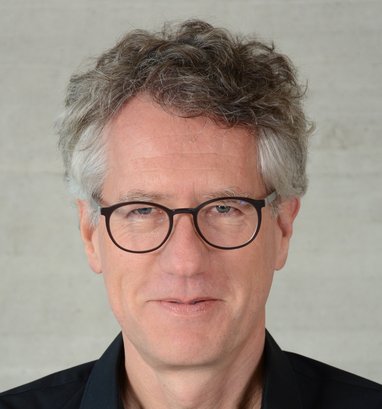
Edgar Weiss serves as Professor and Department Head of Personal Development and Methodological Competence at the University of Applied Sciences BFI Vienna since 2007, specializing in the intersection of human factors research and project management. His academic leadership spans all university degree programs with a focus on practical organizational development. His research centers on team and organizational dynamics and decision management , with deep exploration into uncertainty handling in project environments. Drawing from human factors, resilience engineering, and high-reliability organization theories, his work develops frameworks for adaptive project execution in volatile contexts. Analysis of his 2010-2020 publications reveals consistent thematic progression from expert integration in organizations toward sophisticated models for managing unexpected challenges through human factors principles. His work increasingly emphasizes cross-disciplinary transfer between safety-critical domains and project management. Currently leading an MA23-funded research project (2016-2020) with Iris Schirl-Böck and Andreas Nachbagauer, he investigates organizational responses to uncertainty in project-oriented structures. His department oversees methodological competence development across all academic programs while maintaining strong industry-practice connections through prior consulting experience in HR development. The research team operates at the nexus of organizational management, project-organization interfaces, and collaborative dynamics, developing practical methodologies for enhancing project resilience through human-centered design principles.
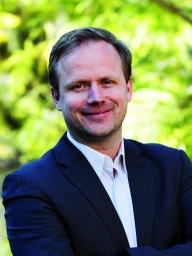
Gerhard Wanner serves as Professor of Computer Science at Stuttgart University of Applied Sciences (HFT Stuttgart) within the Faculty of Surveying, Computer Science, and Mathematics since 2002. He leads the Distributed Information Systems Laboratory (LVIS) and previously directed the university's Information Center (2012-2023) and Computer Center (2004-2012), while maintaining freelance management consultancy work. His research focuses on sustainable software engineering, examining how architectural decisions impact CO2 emissions through green IT practices, enterprise architecture management, and software modeling. Wanner investigates resource-efficient development methodologies and digital transformation in educational contexts, emphasizing software architects' critical role in climate crisis mitigation through architectural design choices and quality models. Recent publications demonstrate a clear trajectory toward sustainability, with 2023-2024 works establishing frameworks for measuring CO2 efficiency in software systems, developing sustainability-focused architecture curricula, and creating resource-optimized development pathways. His scholarship bridges theoretical architecture principles with practical environmental impact reduction strategies. Wanner actively contributes to professional communities as a member of the German Informatics Society (GI), Association for Computing Machinery (ACM), Java User Group Stuttgart (JUGS), and International Software Architecture Qualification Board (iSAQB), where he serves as deputy head of the Audit working group. The Distributed Information Systems Laboratory (LVIS) under his direction explores green IT solutions, distributed systems architectures, and cross-platform service integration, notably demonstrated through the HFT-App project providing unified university service access.
Dr. Ira Leeds is an Assistant Professor in the Department of Surgery's Division of Colon & Rectal Surgery at Yale School of Medicine, with a secondary appointment as Assistant Professor in Biomedical Informatics & Data Science. He is also a Clinical Member of the Cancer Prevention and Control Program at Yale Cancer Center and serves as a Clinical Fellow at the Department of Veterans Affairs' Clinical Epidemiology Research Center. Dr. Leeds earned his AB in Politics from Princeton University (2006), MBA from University of Oxford (2012), and MD from Emory University (2013). He completed his surgical training at The Johns Hopkins Hospital, where he also earned an ScM in Clinical Investigation (2018), and finished subspecialty training in colon and rectal surgery at the Cleveland Clinic (2021). He is board certified in both General Surgery (2023) and Colon and Rectal Surgery (2022). His research focuses on preoperative decision-making between surgeons and patients, particularly identifying where inputs and outputs of these decisions don't align with patient, surgeon, and societal goals. His work examines how signal noise in patient histories and clinical data combined with clinical atmospheres impairs effective shared decision-making. He develops interventions like data visualization schemes, clinical decision support tools, and rapid psychosocial assessment techniques to improve decision quality, with emphasis on high-morbidity diseases like colorectal cancer and inflammatory bowel disease. His recent publication output shows a strong focus on cost-effectiveness analyses, social determinants of health, and psychosocial factors affecting surgical outcomes. His work spans multiple disciplines including surgical oncology, health economics, and public health, with particular attention to vulnerable patient populations and long-term cancer survivorship. VA Research Award for AI, Housing Study (2024) Dr. Leeds leads a clinical research lab focused on identifying and optimizing modifiable risk factors of abdominal surgery. His collaborations span multiple institutions, with frequent co-authors including Haddon Pantel, Kurt Schultz, Anne Mongiu, and Vikram Reddy. He emphasizes the importance of shared decision-making with patients, particularly for complex cases involving inflammatory bowel disease and rectal cancer, stating that 'pelvic anatomy is one of the few areas of the body where both surgical approaches and function require a true three-dimensional awareness and understanding.' His clinical practice broadly covers benign and malignant diseases of the colon, rectum, and anus. He particularly enjoys helping patients work through difficult re-operative decision-making and determining the optimal surgical approach (endoscopic, open, laparoscopic, or robotic surgery) for each individual case.
Jan Brinckmann is a Professor at ESADE Business School (Universitat Ramon Llull) in the Department of General Management and Strategy. He serves as Director of the MSc in Innovation & Entrepreneurship, Academic Director of the EWorks venture-creation program, and leads the ESADE Entrepreneurship Institute (EEI) and Research Group on Entrepreneurial Initiative (GRIE). Previously, he held faculty positions at Loyola University Chicago, Cornell University, and Technical University of Berlin, with visiting roles at Stanford University and Case Western Reserve University. His research specializes in empirical quantitative analysis of entrepreneurship, with key interests in: Entrepreneurial marketing and financing Business development and internationalization Lean startup methodologies Strategic flexibility in new ventures Human capital and business planning His recent publications demonstrate a focus on meta-analyses of entrepreneurial behavior, venture resilience during crises (e.g., COVID-19), and resource optimization in startups. Trends include high-impact collaborations and empirical rigor in top-tier journals. Notable recognitions include: Four Best Paper Awards from leading entrepreneurship conferences He actively advises PhD students at ESADE and WHU Vallendar (Germany), and oversees ESADE's global entrepreneurship initiatives through EWorks—including accelerator programs, founder networking events, and international ecosystem visits to Silicon Valley, London, and Berlin.
Prof. Dr. Rüdiger Glaser holds the Chair of Physical Geography at the University of Freiburg within the Faculty of Environment and Natural Resources. His extensive academic career spans over three decades with significant contributions to climatic geography, particularly in historical climatology and climate change research. He maintains active roles in multiple research projects, editorial boards, and academic committees at both national and international levels. Glaser completed his geography studies at Julius-Maximilians-University in Würzburg (1981-1986) with minors in Botany and Administrative Law, plus additional credits in Geology, Sociology, Spanish, Statistics and IT. His academic progression includes: Diploma thesis on remote sensing with Landsat-5 Thematic Mapper (1986) Doctoral research on climate reconstruction for Mainfranken, Bauland, and Odenwald (1989) Habilitation with thesis on historical climatology in Central Europe since 1000 AD (1997) C3 Professorship at Heidelberg University (2001-2004) C4 Professorship at Freiburg (since 2004) His research focuses on historical climatology, including weather and climate reconstruction, climate extremes analysis, and social conceptualization of climate phenomena. Glaser has developed the Historical Climate Database Germany and conducts scale-related analyses of global change across different landscape zones. His environmental planning work addresses sustainability processes, Agenda 21 implementation, and assessment procedures like ecological footprint analysis. In e-Geography, he applies remote sensing techniques and develops e-learning modules for physical geography education. His regional expertise centers on Central Europe and North America, with particular attention to global change manifestations in these regions. His publication record shows a clear trend toward applied climate research with increasing focus on municipal climate adaptation, risk archetypes, and cross-border cooperation in the Upper Rhine region. Recent work integrates climate science with social dimensions, particularly examining how climate change impacts different demographic groups and economic sectors, with special attention to vulnerable populations like the elderly. Glaser's scientific recognition includes: Instructional Development Award from University of Freiburg (2014) Media Prize of the University of Freiburg (2004) Virtual Teaching Award from Baden-Württemberg (2003) Canadian Government Scholarship (2002) Election as full member of the German Academy of Regional Studies (2004) As an academic advisor, Glaser has supervised numerous doctoral and master's students whose research spans climate vulnerability assessment, energy efficiency, renewable energy potential, and urban climate adaptation. He serves on multiple examination boards and selection committees, including for the M.Sc. Geography of Global Change program. His current research is supported by diverse funding sources including EU INTERREG, DFG, and the German Federal Ministry for the Environment. Glaser leads research teams working on transnational climate adaptation projects like Clim'Ability Care and RiverDiv, which involve collaboration between German, French, and Swiss institutions. His work emphasizes practical applications of climate science for municipal decision-making and cross-border environmental management in the Upper Rhine region.
Danel Ahman is an Associate Professor of Programming Languages at the Institute of Computer Science, University of Tartu, Estonia. He is a member of the Chair of Programming Languages and the Laboratory for Software Science (SWS). His academic journey includes postdoctoral positions at the University of Ljubljana and Inria Paris, as well as research internships at Microsoft Research. Education: PhD in Theoretical Computer Science, University of Edinburgh (2012-2017), thesis: "Fibred Computational Effects" MPhil in Advanced Computer Science, University of Cambridge (2011-2012), thesis: "Computational effects, algebraic theories and normalization by evaluation" BSc in Informatics, Tallinn University of Technology (2007-2010), Cum Laude Danel Ahman's research focuses on programming languages, their design and semantics. He is particularly interested in dependent and refinement types, computational effects (especially algebraic effects, effect handlers, and runners), modal types for verifying temporal resource usage, and category-theoretic denotational and operational semantics. His work bridges theoretical foundations with practical applications in verified software development, exploring how programming language features can ensure correctness while maintaining expressiveness and efficiency. His recent publications demonstrate a consistent focus on computational effects, modal types, and verified programming. The trajectory shows increasing sophistication in handling temporal resources and asynchronous effects, with several papers published in top programming languages conferences (POPL, ICFP) and journals. His work often combines theoretical category-theoretic foundations with practical implementations, particularly using the F* verification language. Scientific Awards: 2025: Estonian Research Council grant on "Explainable Verification" (co-investigator) 2024: EuroProofNet COST Action Short-Term Scientific Missions to University of Ljubljana 2019: Horizon 2020 Marie Skłodowska-Curie Individual Fellowship 2018: 1st prize at the Estonian Ministry of Education and Research dissertations competition 2012: Google prize and Citrix prize for best research dissertation at University of Cambridge Ahman actively supervises graduate students and has served on numerous program committees for programming languages conferences. His grant portfolio includes significant funding for research on programming language foundations and verification. He collaborates extensively with researchers across Europe and the US, particularly in the F* verification ecosystem and effect handler communities. He is a key member of the Laboratory for Software Science at the University of Tartu, contributing to research on programming language theory and verified software development. His work intersects with several research groups focusing on formal methods, programming language design, and software verification.
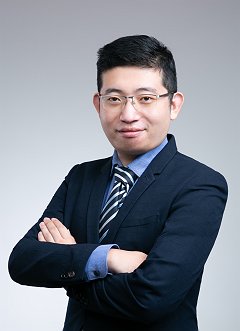
Yintong Huo is an Assistant Professor at the School of Computing & Information Systems, Singapore Management University (SMU), where he leads research in intelligent software engineering. He received his PhD from The Chinese University of Hong Kong (CUHK) in 2024 under Prof. Michael R. Lyu and holds a Bachelor's degree from the University of Electronic Science and Technology of China. His research focuses on empowering AI models (particularly LLMs) for software development, testing, and operations, with two flagship projects: LogPAI (open-source AI platform for automated log analysis) and WebPAI (multimodal intelligence for automatic webpage development). His work spans log analysis, code intelligence, UI generation from prototypes, and configuration diagnostics. Huo's publication record shows strong trends in leveraging multimodal LLMs for practical software engineering challenges, with recent work on interactive webpage generation (Interaction2Code), configuration logging (ConfLogger), and log parsing (LILAC). His research bridges theoretical AI advancements with real-world system reliability needs. ICSE Distinguished Reviewer Award (2025) ISSRE Distinguished Reviewer Award (2024) IEEE Open Software Services Award (2022) ACM SIGSOFT CAPS Travel Grants National Scholarship (2019) Huo actively supervises PhD students (including Shi Ying Chang and Dan Huang) and research engineers. His lab has secured funding for multiple projects including WebPAI and LogPAI. He serves on program committees for major conferences (ASE, ICSE, FSE) and reviews for top journals. Current projects include dynamic webpage generation and configuration diagnostics, with ongoing work on small language models for logging systems. Huo leads the LogPAI and WebPAI research groups, developing open-source tools for automated log analysis and multimodal UI code generation. The LogPAI project has garnered over 3,000 GitHub stars and 70,000 downloads. His team collaborates with industry partners on AIOps challenges and is expanding into configuration diagnostics through the ConfLogger project.
Hui Liu is a Professor in the School of Computer Science and Technology at Beijing Institute of Technology, where he leads research in AI-based software development with a focus on LLM applications. His work spans software refactoring, quality improvement, and maintenance, funded by the National Natural Science Foundation of China and the National Key Research and Development Program of China. PhD from Peking University (2008) Former graduate student at Software Engineering Institute, Peking University Distinguished member of China Computer Federation Secretary-General of CCF Technical Committee on Software Engineering Professor Liu's research centers on LLM-based program generation, evaluation and testing of large language models, software refactoring techniques, and automatic construction of software engineering datasets. His work bridges artificial intelligence and software engineering, with particular emphasis on improving code quality through empirical studies and machine learning techniques. Current projects include code contamination detection, context-aware naming recommendations, and refactoring validation using LLMs. His research has evolved from traditional code smell detection to cutting-edge applications of large language models in software development. Liu's publication record shows a strong trend toward LLM applications in software engineering, with recent work focusing on code review generation, commit message generation, and refactoring validation using large language models. His research combines empirical methods with machine learning approaches, often analyzing large code corpora from open-source projects. The work spans both theoretical foundations and practical tool development, with several contributions merged into Eclipse as part of the open-source community. ACM Distinguished Paper Award (ESEC/FSE 2023) ACM Distinguished Paper Award (ICSE 2022) RE'2021 Best Research Paper Award IET Software Premium Award (2018) New Century Excellent Talents in University (2013) Beijing Higher Education Young Elite Teacher (2013) Professor Liu actively mentors PhD and Master's students, with recent graduates including Waseem Akram (awarded Outstanding Graduate) and several students publishing at top venues. His research is supported by major Chinese funding agencies, and he serves on program committees for leading software engineering conferences including ASE, ICSE, and FSE. He maintains strong industry connections through contributions to Eclipse and studies of open-source ecosystems like Rust. Liu leads a research group focused on AI for software engineering, with active projects on code generation, refactoring, and quality improvement. The group collaborates extensively with international researchers and contributes directly to open-source tools, particularly in the Eclipse ecosystem where multiple refactoring improvements have been merged.
Dr. Yutian Tang serves as an Assistant Professor (UK Lecturer) and Principal Investigator at the School of Computing Science, University of Glasgow, where he supervises PhD students and leads research in AI-driven software engineering. His academic journey includes a PhD from The Hong Kong Polytechnic University's Department of Computing. His research spans AI+SE integration , particularly focusing on Large Language Models for program analysis, software testing, and Android security. Key areas include: LLM-assisted vulnerability detection and repair Empirical studies of real-world software systems Privacy protection mechanisms Configuration compatibility in mobile applications Smart contract security optimization His publication portfolio shows a clear trajectory toward AI-augmented software engineering , with recent work demonstrating how LLMs can enhance taint analysis, binary code similarity detection, and test generation. This evolution reflects the field's broader shift toward AI integration while maintaining rigorous empirical validation. Award highlights include: Best Industry Paper Award at ISSRE'18 Elevation to IEEE Senior Member (2024) Three Android OS defects confirmed by Google Security Team As an active researcher and community contributor, Tang serves on 40+ program committees including PLDI, ICSE, and FSE. His work receives funding from National Natural Science Foundation of China, Shanghai Science Commission, OpenAI, and Google. Current projects focus on automated bug localization and LLM-based testing frameworks, with recent grants from OpenAI Cybersecurity and Google Cloud programs. He leads research groups investigating Android security and AI-assisted program analysis, collaborating with institutions like Lund University.
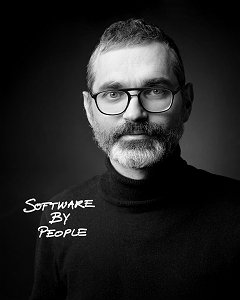
Alexander Serebrenik is a full professor of social software engineering at the Eindhoven University of Technology in the Netherlands, working within the Department of Mathematics and Computer Science. His academic profile spans decades of interdisciplinary research bridging computer science and social sciences. Professor Serebrenik's research focuses on facilitating software evolution through understanding social aspects of development. His work integrates computer science methods (socio-technical coordination theory, natural language processing, machine learning) with organizational psychology principles. A consistent theme across his publications is empiricism - addressing software engineering challenges through observation and experimentation while balancing social and technical perspectives. His recent work increasingly emphasizes diversity, equity, and inclusion in software engineering, culminating in his 2024 book "Equity, Diversity, and Inclusion in Software Engineering: Best Practices and Insights" (APress). His publication record reveals evolving interests from socio-technical coordination to human factors, community dynamics in open source, and now DEI-focused research. Distinguished Paper Award at ICSE 2023 Distinguished Paper Award at MSR 2023 Distinguished Reviewer Award at FSE 2020 Senior member of IEEE Member of ACM As an academic leader, Professor Serebrenik has mentored PhD students including Tukaram Muske, and actively participates in doctoral symposia. His service includes roles as Diversity and Inclusion Co-Chair at multiple conferences and extensive program committee participation across the software engineering conference landscape. His research group at TU/e maintains an active program studying the social dimensions of software engineering through empirical investigations, contributing significantly to understanding how human factors influence development processes and outcomes.
Nira Liberman is a Professor of Social Psychology at Tel Aviv University, where she has been a faculty member since 2001. She completed all her formal education at Tel Aviv University, earning her Bachelor's degree in Psychology and Comparative Literature, Master's degree in Social Psychology, and PhD in 1997. She also completed postdoctoral work at Columbia University and taught at Indiana University, Bloomington before returning to Tel Aviv University. Professor Liberman's research focuses on psychological distance and its effects on decision making, evaluation, motivation, and mental representation. She is particularly known for her work on Construal Level Theory (CLT), which examines how psychological distance influences cognitive processing. Her research also extends to Obsessive-Compulsive Disorder (OCD), where she developed the Seeking Proxies for Internal States (SPIS) model, as well as to essentialism, disgust, and conservatism. Her Social Psychology Lab investigates how people mentally traverse beyond the immediate 'here and now' to consider future and past time, distant locations, other people, and hypothetical (counterfactual) events. The lab examines what enables such expansion of mental scope and the consequences of this expansion, including how psychological distancing affects cognitive performance, working memory, and decision making. Professor Liberman's publication record shows consistent productivity across multiple domains of psychology. Her recent work continues to explore the intersection of Construal Level Theory with OCD mechanisms, moral judgment, and cognitive performance. Her research demonstrates strong theoretical integration across social, cognitive, and clinical psychology domains, with particular attention to the embodied and neural correlates of abstract thinking. Professor Liberman has established productive collaborations with researchers worldwide, most notably with Yaacov Trope with whom she has co-authored numerous foundational papers on Construal Level Theory. Her work has been published in top-tier psychology journals including Journal of Personality and Social Psychology, Psychological Review, and Journal of Experimental Psychology. Her lab continues to investigate fundamental questions about how people navigate between proximal and distal concerns, how abstraction enables traversing psychological distance, and how these processes relate to clinical phenomena like OCD. Professor Liberman's research program represents a sophisticated integration of basic cognitive processes with real-world applications in clinical and social domains.
Prof. Dr. Ralf Bruns is a full-time Professor in the Department of Computer Science at the Faculty of Business and Information Technology, Hannover University of Applied Sciences and Arts. His office is located at Ricklinger Stadtweg 120, 30459 Hanover, with direct contact available via phone (+49 511 9296 1817) and email. His research focuses on cutting-edge computational methodologies including: Real-time data stream processing systems Bio-inspired algorithms ( evolutionary and swarm intelligence ) Machine learning applications in enterprise systems Semantic Web technologies for knowledge representation Software architecture patterns for event-driven systems Complex Event Processing (CEP) frameworks His publications demonstrate a consistent focus on event-driven architectures applied to logistics, healthcare, IoT, and urban mobility systems. Recent work emphasizes agent-based modeling and real-time analytics for decision support in dynamic environments. Prof. Bruns leads two key research initiatives: the Software Architecture Working Group (AG SWA) and the Smart Data Analytics Research Cluster . He also serves as faculty representative in the Fachbereichstag Informatik (FBTI) and contributes to academic selection committees.
Steffen Altmann serves as Professor of Economics at the University of Würzburg and Director of the research unit "Behavioral Economics and Labor Market Performance" at the University of Copenhagen. He maintains an active association with IZA (Institute of Labor Economics) as an Associated Member following leadership roles including Team Leader of the "Personalized Labor Market Policy" research team (2019-2023) and Deputy Program Director for "Behavioral and Personnel Economics" (2007-2014). He earned his Economics degree from the University of Mannheim and completed his Ph.D. at the University of Bonn in 2009, establishing foundational expertise in experimental methodologies. Altmann's research synthesizes behavioral economics , labor economics , and organizational economics to investigate how psychological factors and cognitive constraints interact with economic incentives. His work particularly examines job search dynamics, unemployment duration, and labor market program efficacy through rigorous field experiments , with significant contributions to understanding relational contracts and incentive psychology. His publication trajectory from 2005-2016 reveals an evolution from foundational studies on default effects and cognitive spillovers toward contemporary analyses of digital job search platforms and UI benefit comprehension. This body of work consistently applies behavioral insights to real-world policy design, primarily disseminated through IZA Discussion Papers with subsequent journal publications in top-tier outlets. No public information exists regarding his students or specific research grants, though his directorship roles indicate substantial research leadership. His current focus centers on the Copenhagen-based research unit analyzing behavioral determinants of labor market performance.
Jana Reddemann is Professor for Intermediale Gestaltung (Intermedia Design) at Burg Giebichenstein Kunsthochschule Halle, where she has held both full and substitute professorships since 2023. She is also co-founder of the interdisciplinary design studio Liebermann Kiepe Reddemann (LKR), which specializes in digital design, web development, and typography. Prior to her current position, she served as Assistant for digital projects and web design at HFBK Hamburg since 2018. Her research focuses on the intersection of digital media, design, and user experience, with particular emphasis on innovative approaches to web design, typography, and the evolving nature of digital interfaces. She explores how technological advancements transform artistic and design practices while maintaining a strong connection between academic research and professional application. Reddemann's recent work demonstrates a consistent focus on variable fonts and digital typography, most notably through her projects 'Times New Arial' and 'Cursor.otf.' Her publications and projects address the evolving nature of web design with attention to user experience, accessibility, and cultural implications of digital interfaces. She has developed websites for numerous art institutions, artist portfolios, and cultural events, showcasing her expertise in creating effective digital presences for the arts community. Scientific Recognition Output Award 14 from output foundation, Amsterdam (2011) Adobe Design Achievement Awards (2011) As an educator, Reddemann has lectured internationally at institutions including Weltformat Graphic Design Festival Lucerne, Beckmans College of Design Stockholm, Hasselt University, HFBK Hamburg, and Hochschule Mainz. Her teaching focuses on digital design, web development, and typography, often incorporating her professional practice into academic settings through lecture series such as 'Howww to Code' at HFBK Hamburg. Through her design studio Liebermann Kiepe Reddemann, Reddemann maintains an active professional practice that serves as both a platform for innovation and a bridge between academic research and industry application. The studio's notable projects include 'Times New Arial,' which reimagines traditional system fonts for the digital age, and 'Cursor.otf,' which integrates system cursors into design workflows to indicate interactive elements.