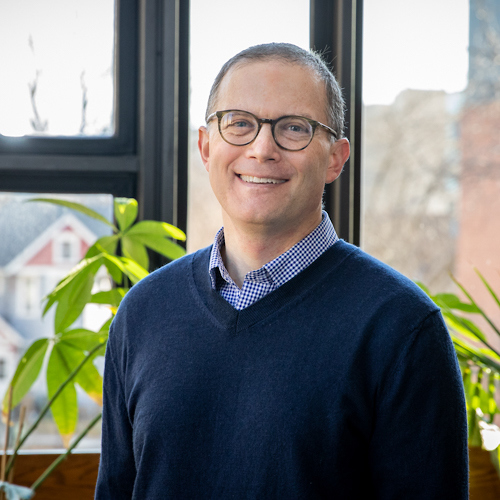
Peter Wardripمشاهده پروفایل
استادیار
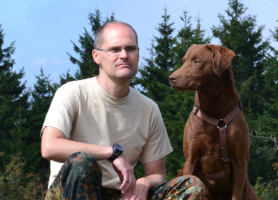
Peter Wardrip is an Assistant Professor of STEAM Education at the University of Wisconsin-Madison School of Education. His research focuses on bridging informal and formal learning environments, professional learning communities, formative assessment strategies, and making/tinkering pedagogy. He holds a PhD in Learning Sciences and Policy from the University of Pittsburgh, an MS in Human Ecology, and a BS in Latin Education from UW-Madison. Education Background: PhD in Learning Sciences and Policy (University of Pittsburgh, 2014) MS in Human Ecology (Centre for Human Ecology, 2004) BS in Latin Education (University of Wisconsin-Madison, 1997) Research Interests: Peter's work emphasizes collaborative learning frameworks, educator professional development, and innovative assessment methods in makerspaces. He has developed national frameworks for museum and library makerspaces, and co-designed observation tools for maker educators. His research often explores how educators use data to inform instruction and how informal learning spaces can enhance traditional education systems. Recent Article Trends: Recent publications focus on pandemic-era educational adaptations, assessment challenges in makerspaces, and role evolution of librarians/museum educators. He has contributed to foundational texts on maker pedagogy including Handbook of Research on Educational Communications and Technology and Makeology . Awards: INSPIRE Fellow (2018-2019), Research+Practice Collaboratory Fellow (2016), DML Design Research Committee Member (2014-2015) Grants & Advising: Peter has led projects funded by the Institute of Museum and Library Services, co-authored a national framework for museum makerspaces, and advised on digital badge systems in educational settings. He actively collaborates with institutions like the Children’s Museum of Pittsburgh and Carnegie Mellon’s Learning Media Design Center. Labs/Teams: Involved with the University of Pittsburgh’s UPCLOSE research group and the MIT Teaching Systems Laboratory through his INSPIRE fellowship. His work bridges university, museum, and K-12 partnerships to create scalable educational tools and frameworks.