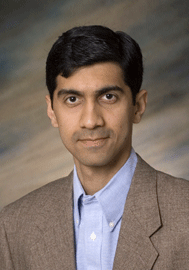
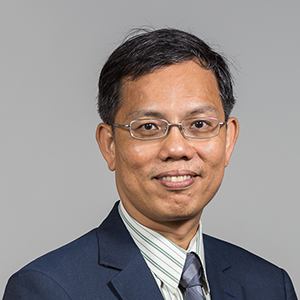
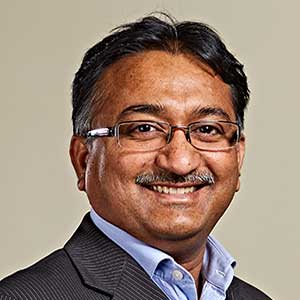
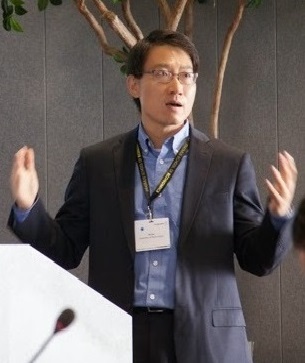
Sam Yam is a Professor and Head of the Management & Organisation Department at the National University of Singapore's (NUS) Business School. He holds the Jardine Cycle & Carriage Professorship and serves as Associate Dean. His research spans strategy, organisational behaviour, applied psychology, ethics, and human-technology interaction. Yam has contributed to over 125 publications, focusing on AI ethics, workplace dynamics, and cross-cultural management. He explores topics like robot replacement effects, abusive supervision, and financial anxiety's intergenerational impacts. His work bridges psychology, ethics, and organisational theory, addressing contemporary challenges in automation, leadership, and human-AI collaboration. Appointments: Head of Management & Organisation (2022–present), Joint Appointment in Arts & Social Sciences (2023–present). Key Research Themes: Future of work, human-technology interaction, ethical leadership, and Machiavellian dynamics. Notable Contributions: Multimodal ADHD diagnostics, leader biases toward robot-using employees, and cultural impacts on team performance. Yam’s interdisciplinary approach integrates psychology, technology, and management, addressing societal issues like AI ethics and workplace automation. His research frequently appears in top journals like the Journal of Management and Annual Review of Organizational Psychology .
Craig Davis is a Professor and holds the Bollenbach Chair in Wildlife Management at Oklahoma State University's Department of Natural Resource Ecology & Management. He has been a faculty member since 2001, advancing from Assistant Professor (2001-2007) to Associate Professor (2007-2012), and has served as Bollenbach Chair since 2014. Davis earned his PhD in Wildlife Science from Texas Tech University (1996), an MS from Iowa State University (1991), and a BS from Ohio State University (1988). He is also a Certified Wildlife Biologist through The Wildlife Society. His research focuses on avian ecology, wetland restoration, and gamebird management, with specific interests in fire-grazing interactions, invertebrate communities, and climate change impacts on ecosystems. Key areas include grassland bird survival, wetland classification systems, and the effects of anthropogenic development on wildlife habitats. Davis actively collaborates with conservation organizations and agencies, addressing challenges like invasive species management and water infrastructure resilience. Teaching responsibilities include undergraduate courses on Wildlife Management Techniques and Wetland Ecology, as well as graduate courses like Advanced Wetland Ecology. His grants emphasize wetland restoration outreach, climate adaptation strategies, and studies on northern bobwhite and wild turkey populations. Notable projects include evaluating cellular transmission technology in wildlife monitoring and assessing the impact of extreme weather on gamebird survival. Grants (Selected): Expansion of potential wetland restoration opportunities in Oklahoma (2024-2027) Linking Research and Stakeholder Engagement for Wetland Conservation (2024-2026) Effects of Extreme Weather and Hunting on Northern Bobwhite (2023-2025) Research Themes: Aligns with UN Sustainable Development Goals 15 (Life on Land), 13 (Climate Action), 6 (Clean Water), 11 (Sustainable Cities), 14 (Life Below Water), and 9 (Industry/Infrastructure).
Vijay Raghunathan is a Professor in the Department of Electrical and Computer Engineering at Purdue University's College of Engineering. His work focuses on hardware and software architectures for embedded systems, wireless sensors for IoT, and wearable/implantable electronics with emphasis on low power design, energy harvesting, emerging memory technologies, and secure system design. Academic Rank: Professor Department: Electrical and Computer Engineering University: Purdue University Research Focus: Energy-efficient embedded systems, IoT, wearable devices His research explores low power design at both board-level and system-on-chip scales, micro-scale energy harvesting , and reliable/secure system design for medical devices. Recent work focuses on Processing-in-Sensor/Memory for battery-free AIoT devices, state space models for neural processing units, and security coprocessor integration in autonomous systems. Analysis of his publications reveals trends in energy-efficient neural network acceleration , approximate computing for edge inference , and compute-in-memory architectures . Key subfields include collaborative edge-cloud partitioning , sparse DNN accelerators , and security frameworks for medical devices. Vijay's work also addresses energy-accuracy tradeoffs in multimodal cognitive systems and intermittent computing using non-volatile memory technologies. His contributions span from microcontroller energy management to security protocols for implantable electronics.
CHAN Mun Choon is a Professor at the School of Computing, National University of Singapore (NUS) , where he directs the NUS-NCS Joint Laboratory for Cyber Security . He previously worked at Bell Labs (1997-2003) and holds a PhD from Columbia University (1997). His research spans systems and networking with specific interests in mobile computing, software-defined networking, and cyber-physical systems . PhD, Electrical Engineering (1997), Columbia University M.Phil., Electrical Engineering (1993), Columbia University MS, Electrical Engineering (1993), Columbia University BS, Computer & Electrical Engineering (1990), Purdue University His recent work focuses on 5G network architecture , data center fault debugging , and energy-efficient mobile sensing . He has published over 100 papers and holds 7 US patents , including cache-based compaction techniques with 210+ citations. His projects include fronthaul slicing for 5G, network-wide packet history frameworks, and participatory indoor localization. Scientific recognition includes: Best Paper Awards: IEEE ICNP 2019, ACM SOSR 2019, ICDCN 2016 Best Demo: IPSN 2016 Distinguished Member, INFOCOM TPC (2016, 2020, 2021) He serves as Vice-Dean, Graduate Studies and Vice-Dean, Academic Affairs at NUS Computing, and has graduated 21 PhD students . His lab develops solutions for network security , latency-sensitive applications , and mobile sensing .
Salikoko S. Mufwene is the Edward Carson Waller Distinguished Service Professor of Linguistics at the University of Chicago. He holds additional appointments on the Committees on Evolutionary Biology, Conceptual and Historical Studies of Science, and African Studies. His research integrates ecological perspectives into evolutionary linguistics, focusing on language contact, creole genesis, language endangerment, and the impact of colonization and globalization on linguistic diversity. Education: PhD in Linguistics, University of Chicago (1979) Key Themes: Language evolution, creole languages, population structure, decolonial linguistics, language policy Mufwene’s work emphasizes the role of population dynamics in language change, drawing parallels with biological evolution. His recent articles examine topics such as the cultural-artifact nature of language, the ecological drivers of creole hybridization, and the decolonization of linguistic paradigms. He has also contributed extensively to debates on language endangerment and multilingualism in super-diverse societies. Scientific Awards: Fellow, Linguistic Society of America (2018) Fellow, American Philosophical Society (2022) Fellow, American Academy of Arts and Sciences (2023) Collège de France lectures (2003, 2023-24) Summer Institute of the Linguistic Society of America (1999, 2005, 2015, 2017)
Heather Congdon Fors is a Senior Lecturer at the Department of Economics, University of Gothenburg. She holds a Ph.D. in Economics from the University of Gothenburg (2006), an M.A. in Economics from the University of Waterloo (1999), and a B.A. (Honours) in Economics from the University of Manitoba (1997). Her research focuses on development economics, education, child labor, and political economy. She has led the research project 'Child labor and school attendance in India' (2014–2018) and serves as a reviewer for journals such as the European Journal of Political Economy and Economic Inquiry. Her teaching expertise includes macroeconomics, statistics, institutional economics, and international economics. She has completed pedagogical training programs including HPE201 to HPE103. Her work explores topics such as the impact of globalization on education, land certification on schooling in Ethiopia, and the persistence of harmful cultural norms like female genital cutting in Africa. She has published extensively in peer-reviewed journals and authored reports on child labor policies, institutional change in post-colonial states, and gender biases in education. Fors has contributed to interdisciplinary projects, including analyses of bureaucrats' use of cost-benefit analysis in environmental policy and the long-term impacts of colonial missions on cultural practices. Her research bridges theoretical frameworks with empirical studies, addressing global challenges such as sustainable development goals and educational inequalities. She is based at Vasagatan 1, Gothenburg, and can be reached at heather.fors@economics.gu.se.
Christopher Turbill is an Associate Professor in Animal Science at Western Sydney University's School of Science, where he maintains an active research program focused on animal physiological ecology. He is affiliated with the Hawkesbury Institute for the Environment and serves as a Principal Investigator on multiple research projects while accepting HDR candidates for supervision. PhD from University of New England (2006) Thesis: Thermoregulatory Ecology of Tree-roosting Bats Supervised by Prof. Fritz Geiser Postdoctoral fellowships from Austrian Science Fund and Australian Research Council (DECRA) Former ecologist with NSW Government Professor Turbill's research integrates thermal and metabolic physiology with behavioral ecology to understand animal-environment interactions. His work has revealed significant ecological consequences of controlled body temperature variation in mammals and birds, linking these processes with metabolic energy expenditure, activity patterns, and life-history strategies. He specializes in bat biology and investigates conflicts between human environmental change and animal conservation requirements. His research keywords include ecophysiology, thermoregulation, energy expenditure, life-history ecology, body temperature, torpor, hibernation, and wildlife conservation. Analysis of Turbill's recent publications reveals a strong focus on thermal biology and conservation physiology, particularly regarding bats and birds. His work examines how animals manage energy through torpor, respond to climate change through thermal regulation, and adapt to anthropogenic disturbances. The research spans field studies of flying-foxes, microbats, and passerine birds across Australian ecosystems, with increasing emphasis on conservation applications related to white-nose syndrome, fire impacts, and wind energy development. Turbill leads significant research projects including the Ecology of the eastern horseshoe bat and its sensitivity to fire impacts (2024-2027), Vulnerability of Australian bats to white-nose syndrome (2021-2026), and Torpor use and burrowing behaviour in an arid zone passerine (2024). His work attracts funding from diverse sources including the Australian Research Council, Department of Planning and Environment, and various conservation organizations. Professor Turbill directs the BatsLab research group, which maintains a virtual hub for bat research at Western Sydney University. His team employs advanced methodologies including thermal imaging, GPS tracking, and physiological monitoring to study animal responses to environmental challenges. Current work focuses on developing conservation interventions for heat-stressed flying-foxes and assessing vulnerabilities of Australian bat species to emerging diseases.
Dr. Praneet Prakash is a Researcher in the Department of Applied Mathematics and Theoretical Physics at the University of Cambridge, working under Prof. Raymond Goldstein. His research focuses on interdisciplinary approaches combining microfluidics, microscopy, and theoretical physics to study biological systems. Key areas include microbial motility, active matter dynamics, and the interplay between physics and living systems. He utilizes experimental techniques such as microfluidics and advanced microscopy to investigate phenomena like bacterial swimming, nutrient exchange in microbial communities, and growth oscillations in filamentous fungi. His work bridges Soft Matter Physics, Statistical Mechanics, and Biophysics, with applications ranging from understanding microorganism behavior to developing biosensor technologies. Recent studies explore phototactic algae behavior, ciliary surface interactions in animalcules, and adaptive motility in marine microorganisms. Publications highlight contributions to microbial ecology, active matter systems, and biophysical modeling. While no formal awards are listed, his research has been published in high-impact journals like Journal of the Royal Society Interface and Physical Review Fluids . He is affiliated with the Biological Physics and Mechanics research group and maintains an active presence on academic platforms like Twitter and LinkedIn.
Samir Dani is a Professor of Operations and Supply Chain Management at Keele University’s Keele Business School. He holds Chartered Manager status and is a Fellow of multiple professional bodies, including the Higher Education Academy and Chartered Institute of Logistics and Transport. Prior to academia, he worked in India’s automotive industry. His research focuses on supply chain resilience, sustainability, food logistics, and Industry 4.0 technologies like AI and Blockchain. Affiliations: Keele University (current), University of Huddersfield (2014–2019), Loughborough University (2005–2008) Leadership: Former Head of Logistics, Marketing, Hospitality, and Analytics Department at University of Huddersfield Industry Engagement: £5M Leeds City Region LEP Supply Chain Program, UK-India trade advisory roles Research Interests: Supply chain risk and resilience Food supply chain sustainability AI, IoT, and Blockchain applications Industry 4.0 transformations Recent Article Trends: Focus on climate action impacts, blockchain trust mechanisms, and SME net-zero strategies. His work bridges academic theory with industry challenges, emphasizing technology adoption and sustainability. Awards: Prix des Associations (2015), UK Top 100 Logistics Professional (2017/18) Grants: £800K+ from EPSRC, IMCRC, and KTP Advisory Roles: Editorial Board member of Supply Chain Management: An International Journal, Academic Review Board member of International Journal of Operations and Production Management.
David A. Hsieh is the Bank of America Professor of Finance at the Fuqua School of Business, Duke University, where he has been a faculty member since 1993. Previously, he served as Associate Professor and Assistant Professor at the University of Chicago's Graduate School of Business from 1981-1989. His extensive research has significantly contributed to the understanding of hedge funds, financial risk management, and nonlinear dynamics in financial markets. Massachusetts Institute of Technology, Ph.D. in Economics, 1981 Yale University, B.S. in Economics and Mathematics, 1976 (Summa Cum Laude, Phi Beta Kappa) Phillips Academy, Andover, 1972 (Cum Laude) Dr. Hsieh's research primarily focuses on the dynamics of asset prices and their implications for financial risk management. He has made significant contributions to understanding risk and return characteristics in hedge funds and commodity funds, pioneering work on nonlinear dynamics applications to financial markets. His research has evolved from early work on exchange rates and volatility modeling to more recent comprehensive analyses of hedge fund strategies, performance measurement, and industry structure. Hsieh's publication history reveals a clear progression from foundational work on nonlinear dynamics in financial markets to increasingly sophisticated analyses of hedge fund strategies and risk characteristics. His recent work, often in collaboration with William Fung and other prominent finance researchers, has focused on mega hedge fund firms, franchise value in the industry, and the evolution of hedge fund strategies toward more index-like products. The research consistently combines rigorous theoretical frameworks with robust empirical analyses across diverse market conditions. CAIA Award for Excellence in Alternative Investment Research (2015) CFA Institute Graham and Dodd Award of Excellence (2004) Bank of America Faculty Award (2002) Duke Cross-Continent Executive MBA Teaching Excellence Award (2002) Fischer Black Memorial Foundation Robert J. Schwartz Memorial Prize (1999) Smith Breeden First Prize (1990) Yale Science and Engineering Association High Scholarship Award (1976) Russell Henry Chittenden Prize (1976) Dr. Hsieh has served as a consultant for the International Monetary Fund (2007-2016) and the Bank for International Settlements (1998), and as a Visiting Scholar at both the International Monetary Fund and the Board of Governors of the Federal Reserve System. His editorial service includes Finance Editor for Management Science (2003-2009) and Associate Editor roles for several leading finance journals. He has developed extensive research resources including a Hedge Fund Data Library that has become widely used in academic and industry research.
Fahui Wang is the Cyril & Tutta Vetter Alumni Professor in the Department of Geography & Anthropology at Louisiana State University (LSU). He holds a B.S. in Geography from Peking University (1988), an M.A. in Economics (1993), and a Ph.D. in City & Regional Planning (1995), both from The Ohio State University. His research focuses on spatially-integrated social sciences, public policy, and GIS applications in healthcare, urban planning, and public safety. He has authored/co-authored multiple influential books and peer-reviewed articles, including works on computational methods in GIS and healthcare accessibility analysis. Professor Wang’s work has been supported by grants from the National Institutes of Health, National Science Foundation, and U.S. Departments of Housing and Urban Development and Justice. His accolades include LSU’s Distinguished Research Master Award (2023) and CPGIS Distinguished Scholar (2023). He teaches advanced courses in GIS, urban geography, and quantitative methods, and leads research initiatives in the LSU Geoscience department. His lab focuses on geospatial technologies for addressing societal challenges in healthcare access, urban planning, and crime analysis.
Deborah Fox is Associate Professor in Midwifery at the University of Technology Sydney (UTS), Faculty of Health, and a core member of the Centre for Midwifery, Child and Family Health. She serves as Co-lead of the Maridulu Budyari Gumal SPHERE Maternal and Women's Clinical Theme and Chair of the National Publicly Funded Homebirth Consortium. In 2024, she received the Faculty of Health Dean's Academic Excellence Award for Research (Mid Career Researcher), following her 2021 award as Highest Performing Early Career Researcher from the School of Nursing and Midwifery. Her research focuses on optimizing physiological processes and positive experiences for women with complex pregnancies, with particular emphasis on the mediation of technology in midwifery practice. Current projects include evaluation of non-invasive fetal ECG beltless and wireless fetal monitoring in labor and birth, and examining the social, economic and environmental impacts of telemonitoring and telehealth in pregnancy and postpartum care. Dr. Fox's scholarly work demonstrates consistent focus on technology's role in maternity care, women's experiences of monitoring during labor, and innovative approaches to midwifery practice. Her recent publications show increasing emphasis on digital health solutions, AI applications in women's health, and pandemic impacts on maternal care systems globally. Faculty of Health Dean's Academic Excellence Award for Research (Mid Career Researcher) 2024 Highest Performing Early Career Researcher award from School of Nursing and Midwifery 2021 Editorial Board Member, Women and Birth journal Dr. Fox is actively involved in higher degree research supervision and has developed innovative teaching resources, including an Objective Structured Clinical Examination for perinatal mental healthcare. She is scheduled to spend three months as a Visiting Scholar at the University of Oxford in 2025.
Laverne Jacobs, PhD, is a Full Professor at the University of Windsor's Faculty of Law where she holds the Research Chair in Disability Equality & Administrative Justice. She serves as the founder and Director of the Law, Disability & Social Change Project, a research and public policy center dedicated to fostering inclusive communities. Notably, Professor Jacobs was elected to the United Nations Committee on the Rights of Persons with Disabilities in 2022, becoming the first Canadian to serve on this UN Human Rights Treaty Body. She also serves as Co-Director of the Disability Rights Working Group at Berkeley Law's Center for Comparative Equality & Anti-Discrimination Law and previously held the position of Associate Dean (Research & Graduate Studies) for the Faculty of Law from 2018-2021. B.A. (Honours), McGill University, 1994 LL.B., McGill University, 1999 B.C.L., McGill University, 1999 Ph.D., Osgoode Hall Law School, York University, 2009 Professor Jacobs' research sits at the intersection of disability equality law and administrative law and justice, characterized by an interest in the everyday work of the administrative justice system and the lived experiences of people who use it, particularly persons with disabilities. Her work spans disability rights, administrative justice, human rights law, socio-legal theory, and empirical research methodologies. She has made significant contributions to understanding accessibility legislation, transportation inequality, post-secondary education access for students with disabilities, and the implementation of disability equality principles in administrative decision-making. Her scholarship bridges theoretical legal frameworks with practical applications, emphasizing citizen participation in policy development and the importance of inclusive design in legal systems. Analysis of Professor Jacobs' recent publications reveals a consistent focus on how administrative law can better serve persons with disabilities through inclusive design and accessible processes. Her work demonstrates growing attention to intersectional issues, particularly how women with disabilities experience administrative systems, and increasingly examines the implementation challenges of accessibility legislation across Canadian jurisdictions. She frequently employs empirical research methods to ground her legal analysis in real-world experiences of marginalized communities. Scientific Awards and Honors: Canadian Bar Association Touchstone Award (2021) Canadian Association of Law Teachers (CALT) Academic Excellence Award (2022) Hummingbird Award from the Disabled Women's Network of Canada (DaWN), 2022 Election to the United Nations Committee on the Rights of Persons with Disabilities (2022) Professor Jacobs has held significant leadership roles including service on the Board of Directors of the Income Security Advocacy Centre and the Canadian Institute for the Administration of Justice. Through her role as Director of the Law, Disability & Social Change Project, she has secured research funding to support policy-relevant scholarship on disability rights and administrative justice. Her work has influenced accessibility legislation development across Canada, particularly through her annotated version of the Accessible Canada Act. She provides expert consultation to government bodies and international organizations on disability rights implementation. The Law, Disability & Social Change Project serves as Professor Jacobs' primary research hub, bringing together interdisciplinary scholars, disability advocates, and policy makers to develop practical solutions for creating more inclusive legal and administrative systems. The project has produced numerous research reports, policy briefs, and public resources that translate academic research into actionable recommendations for improving accessibility and disability equality in Canadian society.
Zhi Da is the Howard J. and Geraldine F. Korth Chair in Finance and Professor of Finance at the University of Notre Dame , Mendoza College of Business, Department of Finance. He completed his Ph.D. in Finance at Northwestern University’s Kellogg School of Management (2006), preceded by an M.Sc. in Financial Engineering from the National University of Singapore (2001) and a B.B.A. with First-Class Honors (1999) from the same institution. Holding editorial roles at Journal of Finance , Management Science , Review of Financial Studies and several other top journals, he is a leading voice in empirical finance research. Education Ph.D. in Finance, 2006 – Kellogg School of Management, Northwestern University M.Sc. in Financial Engineering, 2001 – National University of Singapore B.B.A. (1st Class Honors), 1999 – National University of Singapore Research Interests Zhi Da’s scholarship sits at the intersection of asset pricing , behavioral finance , and market microstructure . He investigates how investor attention, institutional trading, liquidity frictions, and information flows jointly determine the cross-section of expected returns. His work delves into retail margin trading, the role of pension-fund flows in exchange-rate dynamics, the informational content of SEC filings, and the efficiency of short-selling mechanisms. By combining large-scale data analytics, textual analysis, and structural modeling, he uncovers novel predictors of returns ranging from presidential approval ratings to real-time attention measures. Recent projects explore fractional trading ’s impact on price efficiency, hedging demand as a driver of intraday momentum, and the hidden effort problem in delegated portfolio management. These themes collectively advance our understanding of limits to arbitrage and the formation of extrapolative beliefs. Publication Landscape Spanning 2025 back to 2009, his 15 most recent articles in Journal of Finance , Review of Financial Studies , Management Science , Journal of Financial Economics , and Journal of Financial and Quantitative Analysis converge on three broad motifs: (1) micro-level trading frictions—liquidity costs, margin requirements, and short-selling constraints; (2) macro-finance linkages—exchange rates, fiscal policy, and global capital flows; and (3) information economics—attention allocation, media analytics, and regulatory disclosures. The collective evidence demonstrates that seemingly small trading or informational frictions aggregate into large, persistent cross-sectional return predictability. Honors and Awards 2017 William F. Sharpe Award for Best Paper, Journal of Financial and Quantitative Analysis Lead-article distinctions in Journal of Finance , Review of Financial Studies , and Management Science Featured coverage in SmartMoney and CNBC Teaching & Mentorship At Notre Dame’s Mendoza College, Professor Da teaches Investments (undergraduate and MBA) and Fixed Income Securities , integrating cutting-edge research insights into the curriculum. While specific advisees are not listed, his extensive co-author network (22+ recurring collaborators) attests to a vibrant mentoring environment. Laboratory & Data Resources He publicly distributes the NAT (Net Arbitrage Trading) dataset, a stock-quarter panel of arbitrage positions used in Chen, Da & Huang (2019). This resource has become a standard tool for researchers studying arbitrage capital movements.
Chris Chesterfield is a Professor of Practice at Monash University's Monash Sustainable Development Institute (MSDI), specializing in water governance, urban planning, and sustainable development. He joined Monash in 2014 as part of the executive team at the Cooperative Research Centre for Water Sensitive Cities, leading strategic research on water system transformations. His work focuses on developing tools like the Water Sensitive Cities Index, adopted globally to drive policy and practice changes. He has held senior roles at Melbourne Water and the Office of Living Victoria, contributing to Melbourne's leadership in water-sensitive urban design. Chris chairs key committees including the Victorian Environmental Water Holder and the Birrarung Council (Yarra River advisory body). He leads projects on integrated water management and urban sustainability, collaborating with government agencies and international stakeholders. His research emphasizes governance frameworks for water-sensitive cities, policy reforms, and nature-based solutions. Chris has contributed to over 20 research outputs since 2002, with recent work focusing on urban water governance, river management, and policy integration. He actively advises government bodies such as the Victorian Planning Authority and Infrastructure Victoria, shaping legislative reforms and urban development strategies.