

Sébastien Thomassey is an Associate Professor at the National School of Arts and Textile Industries (ENSAIT), specializing in AI-driven solutions for textile engineering. His research focuses on optimizing fashion supply chains through machine learning applications in production management, sales forecasting, and sustainable manufacturing. He leads the Research Human Centered Design Group and coordinates multiple EU-funded projects including H2020's FBD-BModels and Erasmus+'s Digital Fashion initiative. His core research integrates: Supply chain optimization using AI forecasting models Textile manufacturing process automation Sustainable production lifecycle management Human-machine interaction in industrial settings Recent publications demonstrate strong emphasis on AI applications in textile anomaly detection (2024), digital twin technology (2023), and reinforcement learning for process optimization (2021). Awards include: Top 25 Most Cited Article in International Journal of Information Management (2021) He coordinates €5M+ in collaborative grants including: Fashion Trends 4.0 (Région Hauts-de-France) SMDTex Erasmus Mundus doctorate program H2020 FBD-BModels textile supply chain project Leads the Human Centered Design Group developing sensor-based textile tracking systems and industrial AI solutions.
جستوجوی استاد و پژوهشگر
استاد راهنما، استاد دانشگاه یا پژوهشگر مناسب برای مسیر پژوهشیتان را پیدا کنید و با او ارتباط بگیرید.
نمایش ۳۰۱-۳۰۶ از ۳۰۶ استاد راهنما
اطلاعات این پروفایلها از صفحات عمومی دانشگاهها جمعآوری شده و ممکن است بهروز نباشد.
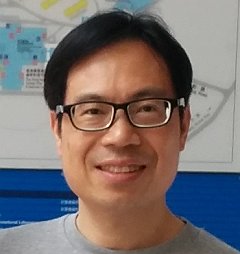
Shing-Chi Cheung is a Professor of Computer Science and Engineering at the Hong Kong University of Science and Technology (HKUST), School of Engineering. He founded the CASTLE research group and co-founded the International Workshop on Automation of Software Testing (AST) in 2006. His leadership includes serving as General Chair of FSE 2014 and chairing multiple APSEC conferences. His research focuses on software quality enhancement through program analysis, testing, debugging, and AI techniques, targeting Android apps, open-source software, deep learning systems, smart contracts, and spreadsheets. Current projects include metamorphic testing frameworks, binary analysis tools, and vulnerability detection systems for emerging technologies. His publication portfolio demonstrates consistent contributions to software engineering since 2016, with recent work emphasizing AI-integrated testing methodologies, smart contract security, and deep learning system reliability. Key trends show increasing focus on cross-language analysis, data visualization quality, and compiler-level verification for modern software stacks. Distinguished Member of the ACM Fellow of the British Computer Society Editorial board member: Science of Computer Programming (SCP), Journal of Computer Science and Technology (JCST) Former editorial board member: IEEE Transactions on Software Engineering (2006-2009), Information and Software Technology (2012-2015) Four patents in China and the United States Cheung actively mentors through the CASTLE research group and serves on program committees for major conferences including ICSE, ESEC/FSE, and ISSTA. His work bridges academic research with practical applications through industry collaborations and tool development. He has contributed to numerous workshops and symposia as steering committee member and program chair.
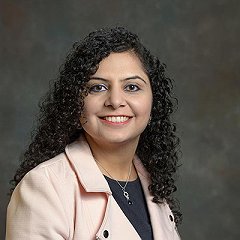
Sandeep Kaur Kuttal serves as an Associate Professor at North Carolina State University, where she directs the Human-Centric Software Engineering Lab. Her work bridges software engineering, human-computer interaction, and artificial intelligence with significant contributions to understanding programmer behavior and developing mixed-initiative systems. Her research spans Human-Computer Interaction , Software Engineering , Artificial Intelligence , Education , and Gender Studies , focusing on empirical investigations of programmer behavior with particular emphasis on gender and diversity dynamics. Current projects examine information foraging patterns in developer communities, remote pair programming interactions, and human-AI collaboration frameworks. Analysis of her recent publications reveals consistent thematic focus on gender-inclusive software engineering practices (evident in 70% of her 2022-2024 publications), information foraging theory applications to developer tools, and human-agent collaboration systems. Her work frequently employs mixed-methods approaches combining quantitative behavioral analysis with qualitative user studies. Dr. Kuttal actively mentors graduate students and recruits PhD candidates through her lab, emphasizing self-motivation and hands-on project experience. Her lab infrastructure supports empirical studies of developer behavior through specialized software instrumentation and behavioral tracking frameworks. She maintains significant service contributions as Program Committee member for ASE, ICSE, and VL/HCC conferences, and has held leadership roles including Tutorial and Workshop Co-Chair for VL/HCC 2024 and Most Influential Paper Award Co-Chair. Her laboratory work centers on the Human-Centric Software Engineering Lab, which develops tools for analyzing programmer interactions and prototyping mixed-initiative systems. Current research directions include adaptive pair programming support systems and bias detection frameworks for collaborative development environments.
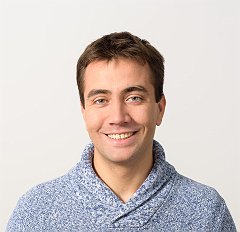
Đorđe Žikelićمشاهده پروفایل
استادیار
Đorđe Žikelić is an Assistant Professor of Computer Science at the School of Computing and Information Systems at Singapore Management University (SMU) in Singapore. He completed his PhD in 2023 at the Institute of Science and Technology Austria (ISTA) under Krishnendu Chatterjee and Petr Novotný, receiving both Outstanding PhD Thesis and Outstanding Scientific Achievement awards. Prior to his doctorate, he earned bachelor's and master's degrees in mathematics from the University of Cambridge. His educational background includes: PhD in Computer Science, Institute of Science and Technology Austria (ISTA), 2023 Bachelor's and Master's in Mathematics, University of Cambridge Dr. Žikelić's research focuses on advancing formal methods to ensure software and AI systems are correct, safe, and trustworthy. His work bridges theoretical aspects of formal reasoning about probabilistic systems with practical automated verification methods. His primary research interests span three interconnected areas: Program Analysis and Verification: He develops techniques for analyzing probabilistic programs, numerical programs, and efficient quantifier elimination methods, addressing fundamental challenges in verifying complex software systems. Trustworthy AI and Safe Autonomy: He creates formal verification frameworks for learning-enabled control systems and neural networks, ensuring AI operates safely in uncertain environments through methods like runtime monitoring and certificate repair. Probabilistic System Verification: He explores broader applications including bidding games on graphs and blockchain protocol analysis, extending formal methods to novel domains beyond traditional finite-state verification. His publication trajectory shows a consistent progression from theoretical foundations to practical applications, with recent work increasingly focused on integrating formal verification with machine learning. His 2024-2025 publications demonstrate growing expertise in verifying learning-based systems and developing practical tools like PolyQEnt for quantified entailment solving. His scientific achievements have been recognized with: Outstanding PhD Thesis Award at ISTA Outstanding Scientific Achievement Award at ISTA Distinguished Paper Award at FM 2024 Dr. Žikelić serves on program committees for major conferences including TACAS, PLDI, AAAI, and CAV. He actively mentors through the Programming Languages Mentoring Workshop (PLMW) at PLDI 2025. His research group at SMU focuses on developing novel algorithms for verifying correctness of programs and AI systems, with current projects spanning formal methods, artificial intelligence, and programming languages.

Dr. Alfonso González Briones is an Associate Professor in the Department of Computer Science and Automation at the University of Salamanca, where he conducts cutting-edge research in intelligent systems and their applications. He is a prominent member of the BISITE Research Group and has also worked with the GRASIA Research Group at Complutense University of Madrid as a 'Juan De La Cierva' postdoc. His academic journey at the University of Salamanca includes a Bachelor of Technical Engineering in Computer Engineering (2012), a Bachelor's Degree in Computer Engineering (2013), a Master's Degree in Intelligent Systems (2014), and a PhD in Computer Engineering (2018). His research focuses on Ubiquitous Computing and Ambient Intelligence for developing smarter, more energy-efficient cities that improve social welfare and promote sustainable development. His work spans Multiple Agent Systems (MAS), energy optimization, smart cities infrastructure, Industry 4.0 applications, and machine learning techniques for various domains including social networks, transportation, and agricultural systems. Dr. González Briones has published extensively with over 30 journal articles and 60 conference proceedings publications, demonstrating consistent productivity across multiple domains of computer science and artificial intelligence. His research trends show a clear progression from foundational work in multi-agent systems toward increasingly sophisticated applications in smart cities, energy management, and Industry 4.0 contexts, with a growing emphasis on practical implementations that address real-world challenges. 2nd place in 1st SENSORS+CIRTI Award for best national thesis in Smart Cities (CAEPIA 2018) Juan de la Cierva State Program Grant in ICT - Information and Communication Technologies (2018) Member of scientific committees for Advances in Distributed Computing and Artificial Intelligence Journal (ADCAIJ) and British Journal of Applied Science and Technology (BJAST) Reviewer for prestigious journals including Supercomputing Journal, Journal of King Saud University, Energies, Sensors, Electronics, and Applied Sciences As an active researcher, Dr. González Briones has participated in 10 international research projects and served on technical committees for prestigious international conferences including AIPES, HAIS, FODERTICS, PAAMS, and KDIR. His work bridges academic research with practical industry applications, particularly in energy optimization systems, IoT, and Machine Learning solutions for real-world problems. He has also collaborated with private research centers including Virtual Power Solutions in Portugal and AIR Institute, where he worked as Project Manager in Industry 4.0 and IoT projects. His research infrastructure includes work with the BISITE Research Group, where he develops and implements multi-agent architectures for optimizing energy consumption and other complex systems. His laboratory work spans smart home energy management, intelligent transportation systems, semantic analysis for Industry 4.0, and social network analysis applications.
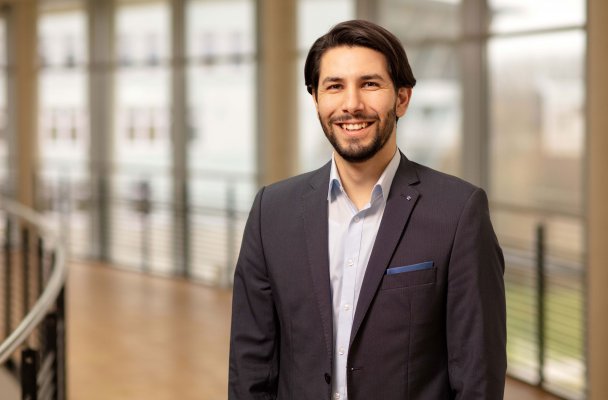
Laurence Alhrshy is a Lecturer at Flensburg University of Applied Sciences working in the School of Energy and Life Science with a focus on the Wind Energy Technology Institute (WETI). Alhrshy serves as a scientific employee for the Flywheel research project, focusing on resource efficiency in wind energy systems. Alhrshy's research interests include: Wind Energy Engineering Wind Turbine Technology Flywheel Systems for wind turbines Resource Efficiency in wind energy systems CO2 Footprint Reduction in wind turbine manufacturing Wind Turbine Structural Dynamics Hydraulic-Pneumatic Systems for energy applications Alhrshy's research focuses on innovative approaches to improve wind turbine efficiency through engineering solutions that reduce mechanical loads and environmental impact. The work primarily centers on integrating flywheel systems into wind turbine rotor blades to vary inertia, which enables better power production control and reduced component stress. This research has significant implications for reducing material requirements and the CO2 footprint of wind energy infrastructure. Alhrshy has developed expertise in adapting load simulation tools like OpenFAST to model these innovative systems. Key publications demonstrate a consistent research trajectory from material development (2019) through system integration (2020-2021) to resource efficiency analysis (2023-2025), reflecting a comprehensive approach to sustainable wind energy technology development. Alhrshy teaches in the Wind Energy Engineering program and collaborates with researchers including Prof. Dr. Clemens Jauch, Andreas Gagel, Alexander Lippke, Lennart Vogt, and Peter Kloft. Current research continues to focus on optimizing hydraulic-pneumatic flywheel systems for wind turbine applications with emphasis on achieving net CO2 savings through reduced material usage.