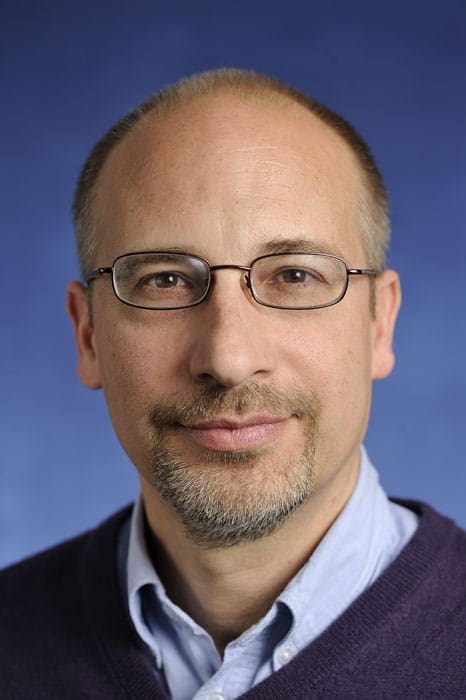
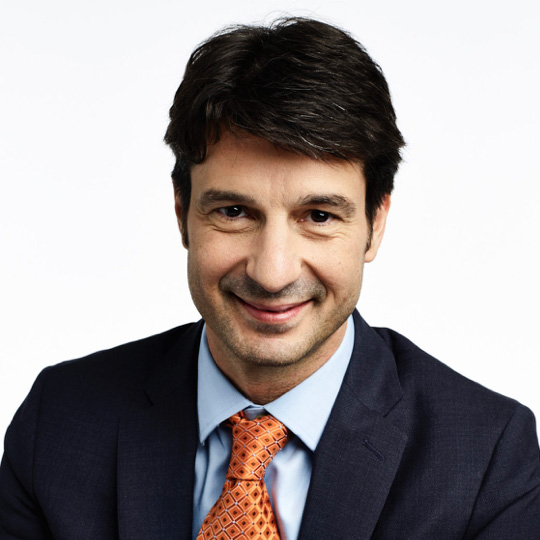
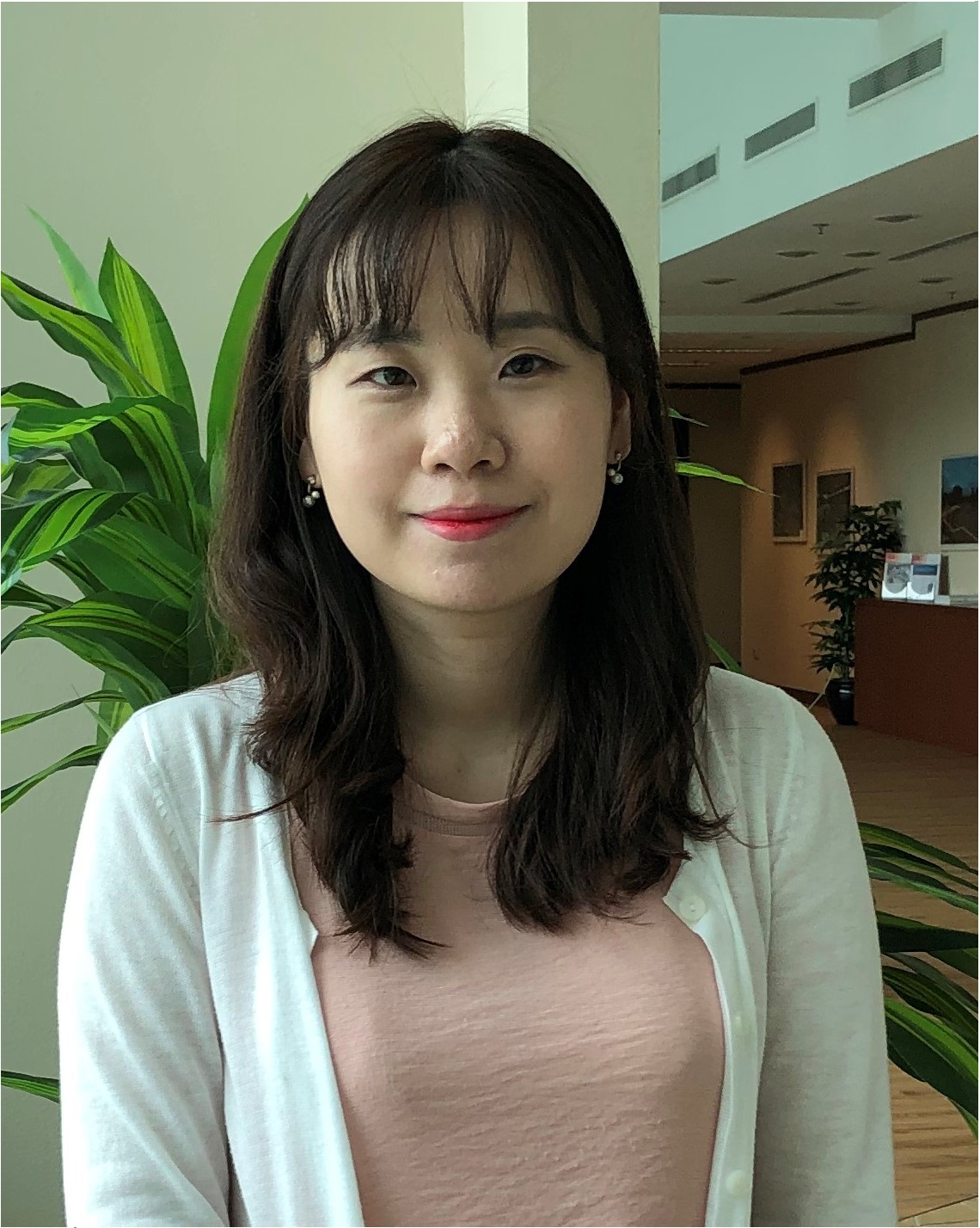
Joel Andreas is a Professor of Sociology at Johns Hopkins University since 2003, serving as Program Director of the East Asian Studies Program. His research focuses on political contention, social inequality, and social change in contemporary China. He holds a PhD in Sociology from UCLA and teaches social theory, political sociology, and courses on Chinese society. He has held visiting positions at universities including the University of Sydney, Hong Kong University, and Ningxia University. His work examines labor movements, rural land policies, and class dynamics in China. Recent research includes analyses of staff-worker congresses, rural land dispossession, and the persistence of militarism in U.S. policy. He critiques market reforms and explores the legacy of the Cultural Revolution. Andreas has contributed to debates on China’s transition to capitalism and the decline of socialist systems. His publications span topics from urbanization to state coercion in rural development. He maintains an active role in academic exchanges and policy-relevant research on China’s socio-political landscape.
Ruben Juanes is a Professor of Civil and Environmental Engineering and Earth, Atmospheric, and Planetary Sciences at MIT. His research focuses on multiphase flow in porous media, energy resources, and CO₂ sequestration. He holds appointments in both departments and has a strong interdisciplinary focus on geosciences and environmental engineering. His work bridges theory, simulation, and experimentation to address energy and environmental challenges. Education: Ingeniero de Caminos (Civil Engineering), University of La Coruña, Spain (1997) MS in Civil Engineering, UC Berkeley (1999) PhD in Civil Engineering, UC Berkeley (2003) Research interests emphasize fluid dynamics in geologic media, especially CO₂ storage, methane hydrates, and ecohydrology. His group develops computational models to predict large-scale Earth processes, with applications to carbon capture and storage, energy resource management, and subsurface engineering. Notable contributions include advancing understanding of fluid displacement mechanisms, capillary trapping in aquifers, and induced seismicity risks during CO₂ injection. His work has been recognized through awards like the APS Fellowship (2024), DOE Early Career Award (2010), and ARCO Energy Professorship (2008). Advising and Grants: Juanes advises graduate students in CEE and EAPS, focusing on thesis research in multiphase flow and geomechanics. His grants include NSF and DOE funding for projects on subsurface energy systems and induced seismicity. His lab, the Juanes Research Group, collaborates on experimental facilities like the FluidFlower CO₂ storage simulator. Labs/Teams: Active in MIT's Carbon Capture, Utilization, and Storage (CCUS) initiatives and the MIT Energy Initiative (MITEI). Collaborates with industry partners on field-scale CO₂ storage validation and subsurface monitoring technologies.
Dr. Kim Jeong Won is a Senior Research Fellow at the Energy Studies Institute (ESI), National University of Singapore, where she has been since March 2019. She holds a PhD in Energy and Environmental Policy from Korea University's Green School, an MPA from Korea University, and a MPP from the Harris School of Public Policy Studies, University of Chicago. Her research focuses on renewable energy and climate change policy, policy diffusion among governments, and quantitative policy evaluation methods. Dr. Kim has extensive experience in policy analysis and project management, including roles at the Korea Environment Institute (KEI), UNWTO ST-EP Foundation, and Global Green Growth Institute (GGGI). Her work emphasizes vertical and horizontal policy diffusion mechanisms, particularly in energy and climate sectors. She specializes in analyzing policy instrument combinations and designing evaluation frameworks for development projects. Her publications explore urban climate adaptation strategies in South Korea, renewable energy investment requirements for developing countries, and comparative analyses of energy storage systems competitiveness. She has contributed to policy reports for South Korean governments and international organizations, focusing on sustainable energy transitions and green growth frameworks. Dr. Kim's research bridges academic rigor with practical policy implementation, emphasizing quantitative methodologies to assess policy effectiveness. She actively participates in international development projects and contributes to global discussions on climate finance and energy policy design.
Bernard Comrie is a Research Professor Emeritus in Linguistics at the University of California, Santa Barbara (UCSB), affiliated with the College of Letters and Science. He previously served as Director of the Department of Linguistics at the Max Planck Institute for Evolutionary Anthropology in Leipzig (1998–2015) and held a Distinguished Professorship at UCSB (2002–2021). His career includes teaching positions at the University of Cambridge, University of Southern California, and leadership roles in major research institutions. Comrie’s research focuses on Language universals and typology Historical linguistics Languages of the Caucasus, New Guinea, and Great Andamanese He emphasizes fieldwork-driven cross-linguistic analysis of topics like tense/aspect, transitivity, numeral systems, and prehistoric migration studies through collaborations with archaeologists and geneticists. His recent publications explore morphosyntactic variation (e.g., verb indexing in Asian languages, reflexivity in Tsez), language contact (Kanashi prehistory), and numeral system typology. Articles often bridge theoretical linguistics with empirical data from understudied languages. Notable contributions include the World Atlas of Language Structures and foundational work on Nakh-Daghestanian and Andamanese languages. He advocates for interdisciplinary approaches to reconstructing prehistoric human movements via linguistic evidence.
Romain Lopez is an Assistant Professor of Computer Science and Biology at New York University, with a joint appointment in the Courant Institute of Mathematical Sciences and the Department of Biology. He will be joining NYU in September 2025, bringing expertise at the intersection of machine learning and computational biology. Prior to joining NYU, he was a Postdoctoral Fellow at Genentech and Stanford Medicine from 2021 to 2025, working with Jonathan Pritchard and Aviv Regev. Dr. Lopez received his educational training at prestigious institutions: PhD in Computer Science (2021) from the University of California, Berkeley, advised by Mike Jordan and Nir Yosef M.S. in Applied Mathematics (2016) from École polytechnique, Palaiseau, France Dr. Lopez's research focuses on developing machine learning methods to understand biological systems at the cellular level. His work bridges computational techniques with biological applications, particularly in single-cell and spatial omics analysis. He pioneered probabilistic approaches for single-cell analysis with scVI and co-developed scvi-tools, now widely adopted tools in the field. His research spans deep generative models, causal inference, perturbation modeling, and representation learning for biological data. His publication record demonstrates a consistent trajectory of innovation in computational biology, with recent work focusing on spatial biology, disentangled representations of cellular perturbations, and causal modeling of cellular responses. He has made significant contributions to the field of single-cell analysis, developing methods that help scientists interpret complex cellular data and predict how cells respond to various perturbations. Dr. Lopez has received numerous honors and awards for his research: Best Paper Award from the ICML Workshop on AI for Science (2024) Best Paper Award Honorable Mention from the AAAI Conference on Artificial Intelligence (2021) Best Student Poster Award from the ICML Workshop on Computational Biology (2019) UC Berkeley EECS Departmental Graduate Fellowship (2016) Carnot Foundation Fellowship (2016) Monahan Foundation Fellowship (2016) French National Defence Medal, Bronze Echelon (2014) At NYU, Dr. Lopez will lead the Biological Machine Learning group, which develops probabilistic machine learning methods to uncover biological mechanisms governing cellular behavior and disease. His lab focuses on creating tools that transform complex cellular data into biological insights, with applications in understanding cancer, immune responses, and fundamental cellular processes. His work has significant implications for precision medicine and drug discovery.
Emily Hannum is a Professor of Sociology and Education at the University of Pennsylvania's College of Arts & Sciences, where she also serves as Associate Dean for Social Sciences. She is affiliated with the Population Studies Center, Center for the Study of Contemporary China, Graduate School of Education, and Penn Development Research Initiative. Education: PhD in Sociology from University of Michigan (1998) Research Focus: Poverty and child welfare, gender and ethnic stratification, sociology of education Projects: Gansu Survey of Children and Families, climate-environment-childhood inequalities in LMICs Workshops: Co-organizer of Penn Education and Inequality Workshop Her research explores childhood poverty in China, demographic impacts on education systems, and climate risks affecting children's welfare. She investigates environmental hazards, educational disparities, and family separation effects across China, India, and low/middle-income countries. Recent publications analyze educational expansion in East Asia, climate crisis impacts on child health, and gender disparities in Latin America. She directs longitudinal studies on rural poverty and collaborates on cross-national projects related to environmental and educational equity. Scientific awards include the Stanley I. Sheerr Term Professorship in Social Sciences.
Lori Escallier, PhD, RN, CPNP-PC, FAAN is a Professor and Dean at the College of Nursing, Downstate Health Sciences University. With over 36 years of experience in nursing education, she is recognized nationally for developing innovative mentorship models and educational engagement strategies that have significantly impacted underrepresented and minority nursing students. Academic Qualifications BSN from Salve Regina College (1980) MSN from SUNY Stony Brook (1988) PhD from Adelphi University (1995) Her research focuses on diversifying the nursing workforce, addressing healthcare disparities, and leveraging veteran experiences in academic settings. She pioneered the Veteran to BS Program, translating military experience into academic credit, and co-authored the award-winning RWJF/AACN Transition to Practice Toolkit. Scientific Awards RWJF Innovation Award Above and Beyond Award (2015) Fellow of the American Academy of Nursing (FAAN) Her publications emphasize nurse mentorship, veteran healthcare transitions, and digital tools for reducing disparities. She has secured over $9M in grants from RWJF and HRSA to support these initiatives.
Per Krusell is Professor of Economics at Stockholm University and holds the Torsten and Ragnar Söderberg Chair at the Institute for International Economic Studies (IIES). He is a Fellow of the Econometric Society and served as President of the European Economic Association in 2020. He is currently the Secretary of the Prize Committee for the Sveriges Riksbank Prize in Economic Sciences in Memory of Alfred Nobel. Education: PhD in Economics, University of Minnesota Research Interests: Per Krusell’s research spans macroeconomics , inequality , climate economics , labor markets , and political economy . He has made foundational contributions to understanding incomplete markets, wealth distribution, optimal taxation, and the macroeconomic effects of climate change. His work often integrates dynamic stochastic general equilibrium (DSGE) models with heterogeneous agents to study long-run outcomes and policy impacts. Publications Trend: His recent publications (2022–2025) reflect a strong focus on climate policy , integrated assessment modeling , and macro-labor dynamics . Key themes include carbon taxation, labor supply responses to productivity growth, fiscal multipliers in heterogeneous-agent settings, and the macroeconomic consequences of vaccination and epidemic control. Awards & Honors: Fellow of the Econometric Society Torsten and Ragnar Söderberg Chair in Economics President, European Economic Association (2020) Secretary, Nobel Prize Committee in Economic Sciences Advising & Grants: While specific student names are not listed, his leadership roles in global economic associations and policy committees indicate extensive academic advising and grant involvement in macroeconomic policy and climate economics. Labs & Teams: He is affiliated with the Institute for International Economic Studies (IIES) at Stockholm University, a leading research institute in macroeconomics and international economics.
Syed Hani Hassan Abidi is an Associate Professor at the Department of Biomedical Sciences , School of Medicine , Nazarbayev University , Kazakhstan. His research integrates virology , immunology , viral oncology , and bioinformatics , with a focus on HIV molecular epidemiology , viral evolution , and drug resistance . He has led international projects across Pakistan, Kenya, Afghanistan, and Kazakhstan, and is recognized for innovative teaching and MOOC development. Education: PhD in Virology and Immunology Research Interests: His laboratory employs bioinformatics (machine learning, AI), genomics , and proteomics to study HIV phylodynamics , viral co-infections , and oncogenic viruses like EBV in prostate cancer. He also explores microbiome-immunity interactions and designs antiviral drugs/vaccines . Recent Research Trends: His 2025 publications emphasize COVID-19 immunopathology , HIV/syphilis epidemiology in Pakistan , and particle physics contributions via ATLAS , showcasing interdisciplinary impact. Awards & Recognition: Outstanding Teachers Award (2019, Aga Khan University) Fellowship of Higher Education (UK, 2022) Teaching & Grants: He pioneered Pakistan’s first MOOC on Computer-Based Drug Discovery (2014) and received a 2022 SoTL grant for MOOC-based molecular biology education. His teaching integrates animations , films , and flipped classrooms . Collaborations & Labs: Leads projects on HIV drug resistance , HCV genomics in Kazakhstan , and AI-driven dementia diagnostics (Kazakh Brain Atlas). His lab collaborates with global institutions to advance viral disease surveillance and therapeutic innovation .
Simon King is a Professor of Speech Processing at the University of Edinburgh , affiliated with the School of Philosophy, Psychology and Language Sciences . He serves as Director of the Centre for Speech Technology Research (CSTR) and teaches courses like Speech Processing and Speech Synthesis , while directing the MSc in Speech and Language Processing . Research Interests His research focuses on: Developing new acoustic models (e.g., Linear Dynamical Models, factorial-HMMs) for speech recognition Advancing unit selection and HMM-based speech synthesis Integrating articulatory measurement data for enhanced modeling Exploring perceptual measures in synthesis criteria Building multilingual speech systems to identify universal speech building blocks Publication Trends Simon's recent work emphasizes deep learning (DNNs, LSTMs) in speech synthesis, multilingual frameworks , and articulatory-acoustic feature integration . His studies often bridge grapheme-based modeling , perceptual error reduction , and noise-robust synthesis . Scientific Awards EPSRC Advanced Research Fellowship (2005-2009) Students & Collaborations He has supervised numerous PhD students including Rasmus Dall, Tom Merritt, and Srikanth Ronanki. Current research fellows like Mirjam Wester and Zhizheng Wu contribute to projects such as Natural Speech Technology (NST) and Simple4All .
Junfu Zhang is a Professor of Economics and Department Chair at Clark University. His research focuses on applied microeconomics, particularly urban and regional economics, with an emphasis on urbanization in China, entrepreneurship, regional development, and racial housing segregation. He holds a B.A. from Renmin University of China (1993), and M.A. and Ph.D. from Johns Hopkins University (1999, 2001). Prior to joining Clark in 2006, he was a research fellow at the Public Policy Institute of California and a Brookings Institution fellow (2000–2001). He has been an IZA Research Fellow since 2007 and served as President of the Chinese Economists Society (2019–2020). Education: B.A., International Economics, Renmin University of China, 1993 M.A., Economics, Clark University, 1997 M.A., Economics, Johns Hopkins University, 1999 Ph.D., Economics, Johns Hopkins University, 2001 Research Interests: Dr. Zhang's research explores urbanization dynamics in China, including land use policies, housing tenure systems, and economic segregation. His work also addresses entrepreneurship, high-tech industrial clusters, and the economic impacts of urbanization. Recent studies include analyses of land regulation, Super Bowl economic effects, and gender competition in labor markets. Recent Research Trends: His articles reflect a focus on China's socio-economic challenges, such as urban land policies, housing wealth effects, and regional development disparities. Collaborative projects with institutions like IZA and CES highlight interdisciplinary engagement. Awards and Affiliations: IZA Research Fellow (2007–present) Former President, Chinese Economists Society (2019–2020) Advising and Grants: No specific grant or student advising details are listed, though his research often involves collaborative teams. His work is supported by institutional affiliations and academic networks. Labs and Teams: No dedicated labs are mentioned, but his research engages interdisciplinary teams focusing on urban economics and regional policy.
Karl Gustafsson is a Professor at Stockholm University within the Department of Economic History and International Relations. His work bridges security studies , collective memory , and digital research methods in international relations. Current Role: Professor of International Relations, Stockholm University Previous Positions: Post-Doc at Lund University, Researcher at Swedish Institute of International Affairs Visiting Appointments: University of Tokyo, Osaka University, Keio University, Academia Sinica, Nordic Institute of Asian Studies Research Focus: Karl specializes in memory politics , ontological security , and anxiety-driven international dynamics , particularly in Sino-Japanese relations and digital platforms . His studies explore how historical narratives and online memory construction influence state identity and policy. Awards & Grants: Recipient of the Wang Gungwu Prize (2014) and Stockholm University Association’s award (2011). Holds Swedish Research Council and Marianne & Marcus Wallenberg Foundation grants for projects on apologies in international politics and digital memory in East Asia . Publications: His work appears in journals such as International Studies Quarterly , European Journal of International Relations , and Memory Studies , addressing topics like narrative power in East Asia, anxiety’s role in policy change , and digital humanities applications in IR.
Prof. Magnus Fröhling is a Full Professor of Circular Economy and Sustainability Assessment at the Technical University of Munich (TUM), leading the Chair of Circular Economy and Sustainability Assessment at TUM Campus Straubing. He holds a doctorate and habilitation from the Karlsruhe Institute of Technology (KIT), specializing in material flow analysis and resource efficiency. His career includes roles as a professor at TU Bergakademie Freiberg before joining TUM in 2018. Fröhling’s research focuses on quantitative approaches for circular economy systems, including industrial value chains, built environments, and bioeconomy. He co-leads the TUM Mission Network Circular Economy, an interdisciplinary platform for research and innovation. **Education:** Bachelor/Master in Industrial Engineering, Karlsruhe University (TH) PhD in Industrial Engineering (2005), Karlsruhe University Habilitation in Business Administration (2011), KIT **Research Interests:** Circular economy concepts for automotive industry, buildings, and energy systems; sustainability assessment in bioeconomy; policy instruments for resource efficiency. His work emphasizes lifecycle analysis and closed-loop systems. **Awards:** TUM Sustainability Award (2021) and recognition for groundbreaking research on sustainability in industrial biotechnology (2020). **Advising & Grants:** Leads research initiatives like CirculaTUM, focusing on interdisciplinary collaboration. His work integrates policy analysis, technological innovation, and industrial ecology to advance sustainability goals. **Labs/Teams:** Active in TUM’s Green Fuel Center and SynBioFoundry@TUM, promoting sustainable energy and biotechnology solutions.
Frank Li is an Assistant Professor at Georgia Tech, affiliated with the School of Cybersecurity and Privacy and School of Electrical & Computer Engineering . His research focuses on computer security and privacy , particularly internet, network, and web security, with a data-driven approach. Education : PhD in Computer Science from UC Berkeley, BS in Computer Science from MIT (Course 6-3) Experience : Previously a visiting researcher at Facebook, with internships at Google and Microsoft Research Research interests include empirical computer security , internet measurement, password policies, IoT security, browser extensions, and DeFi vulnerabilities. His work combines large-scale data analysis, network traffic studies, and user behavior experiments. His publications highlight trends in IPv6 adoption , security notifications, password masking, third-party web content, and PLC security evaluation. Teaching awards include the Student Recognition of Excellence in Teaching (Annual CIOS Award and Semester Honor Roll) at Georgia Tech. He leads the BEES Lab (Better Empirically Established Security), which investigates security and privacy issues through internet-wide measurements, network traffic analysis, and data mining. Lab members include PhD and MS students in computer science.
Dr. K. Max Zhang is a Professor in the Sibley School of Mechanical and Aerospace Engineering at Cornell University. He is the director of the Energy and the Environment Research Laboratory (EERL) and a fellow at the Atkinson Center for a Sustainable Future. His research is deeply interdisciplinary, focusing on sustainable energy systems, air quality, and environmental justice, with significant impacts on policy and community development in New York and beyond. Ph.D., Mechanical Engineering, University of California-Davis, 2004 B.S., Thermal Engineering, Tianjin University, 1998 B.A., English Language, Tianjin University, 1998 Dr. Zhang’s research centers on the integration of energy and environmental systems. He investigates air pollution dynamics using advanced numerical models like CTAG, with applications in near-source pollution, indoor air quality, and environmental justice. His work on renewable energy systems includes designing sustainable solar farms and managing distributed energy resources such as heat pumps to enhance grid flexibility. He also leads a pioneering initiative to create the first statewide public IoT network in the U.S., enabling hyperlocal weather forecasting and microclimate monitoring. His recent publications reflect a strong trend toward agrivoltaics, peer-to-peer energy markets, and IoT-based environmental monitoring. These works demonstrate a consistent focus on data-driven modeling, community-scale energy solutions, and the integration of social considerations into technical systems. The keywords across his articles highlight expertise in sustainability, machine learning, air quality, and energy transition. Cornell Town-Gown Achievement Award (2022) Engaged Scholar Prize, Cornell University (2017) People's Choice Sign of Sustainability Award, Sustainable Tompkins (2016) Scientific and Technological Achievement Award, Environmental Protection Agency (2015) Fellow of the American Society of Mechanical Engineers Dr. Zhang is actively involved in mentoring students and securing research grants from agencies such as the National Science Foundation (NSF) and the New York State Energy Research and Development Authority (NYSERDA). His projects often involve interdisciplinary collaboration across eight Cornell colleges and 16 academic departments. He has led initiatives such as the Cornell Atkinson Academic Venture Fund projects and the development of a county-level energy roadmap for Tompkins County. He also teaches courses in engineering thermodynamics, future energy systems, and air quality, emphasizing experiential and community-based learning. Dr. Zhang leads the Energy and the Environment Research Laboratory (EERL) and collaborates with the Atkinson Center for a Sustainable Future. His lab functions as a hub for innovation in sustainable communities, combining advanced modeling with real-world applications. Through partnerships with community organizations, government agencies, and industry, his team develops science-driven solutions to urban and rural sustainability challenges.