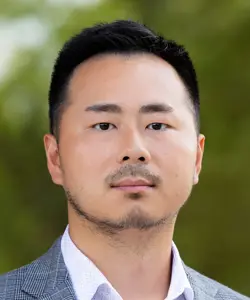
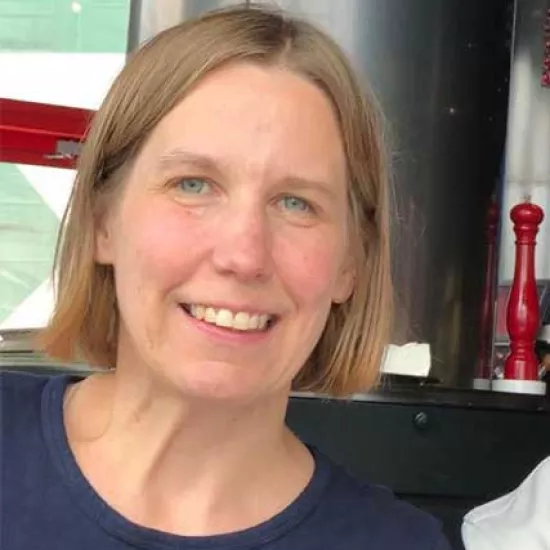
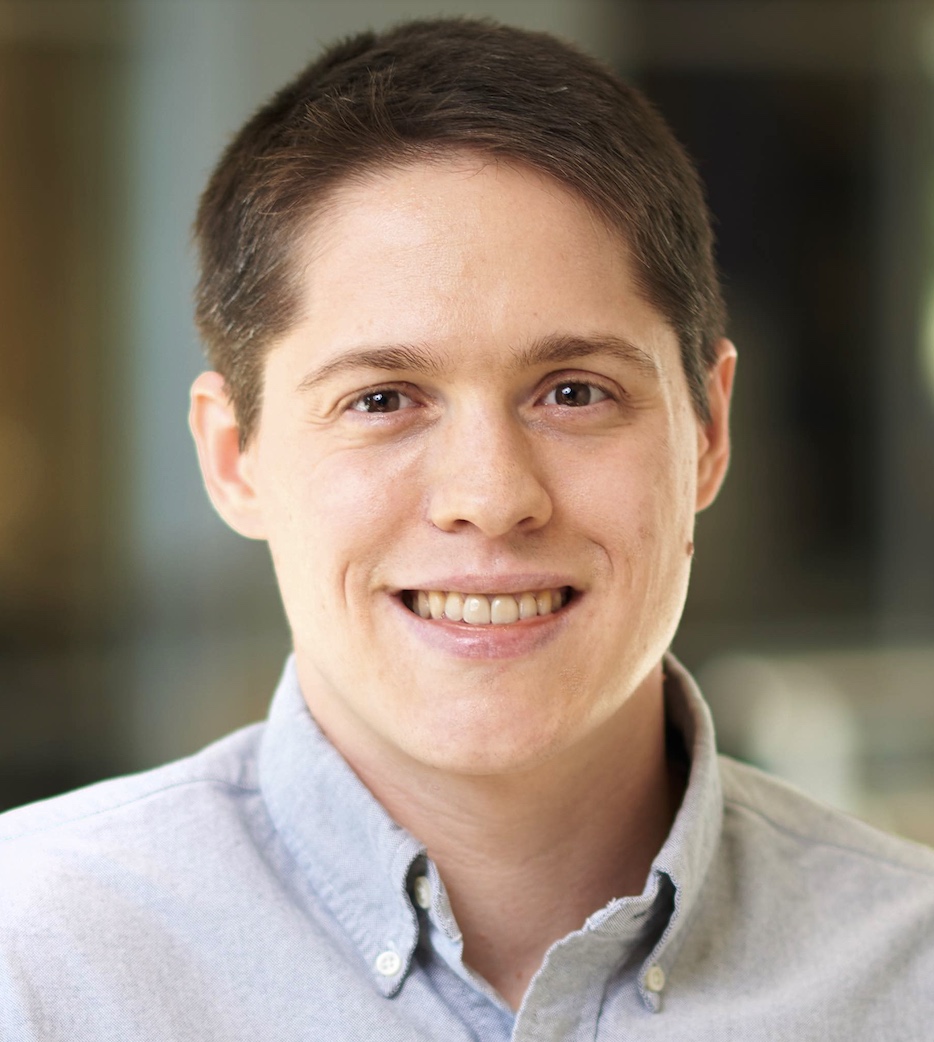
Dr. Yan Xia is an Associate Professor in the Department of Educational Psychology at the University of Illinois at Urbana-Champaign. He holds a Ph.D. in Educational Psychology and Learning Systems from Florida State University and completed a postdoctoral fellowship at Arizona State University's T. Denny Sanford School of Social and Family Dynamics. Key research areas: Statistical methods for structural equation modeling, item response theory, categorical/nonnormal/missing data analysis, and applications in special education, child development, organizational behavior, and sports psychology. Current appointments: Faculty, College of Education, University of Illinois (since 2025). Recent contributions: 2025 Monte Carlo simulation on developmental research generalizability, 2024 work on parallel analysis improvements, and meta-analysis of autism eye-tracking studies. His methodological work critically examines fit indices like RMSEA, CFI, and TLI in ordered categorical data contexts. Collaborations span autism research, educational interventions, and cross-cultural studies. Publications demonstrate expertise in DWLS/ULS estimation, factor retention, and missing data techniques. Scientific awards: Not explicitly mentioned in provided texts. Advising: Accepts new graduate students (2025). No student list provided.
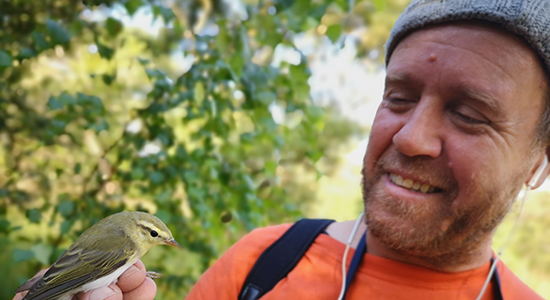
Kasper Thorup is a Professor in Movement Ecology at the Globe Institute , University of Copenhagen , and serves as Section Head of the Center for Macroecology, Evolution and Climate . He is also an Affiliated Scientist at the Max Planck Institute of Animal Behavior in Radolfzell, Germany, and holds advisory roles at the Copenhagen Bird Ringing Centre and the Natural History Museum of Denmark . Education PhD in Zoology , University of Copenhagen (2004) MSc in Biology , University of Copenhagen (2000) Research Interests Thorup’s research lies at the intersection of movement ecology , behavioral ecology , ornithology , and conservation . His work focuses on the mechanisms and drivers of bird migration , using advanced tracking technologies such as satellite telemetry, geolocators, and radio transmitters. His lab investigates orientation systems , climate change impacts , and conservation strategies for migratory birds across continents. His team also explores animal navigation , disease spread via migratory birds , and habitat use across breeding and wintering grounds. Fieldwork has taken him to remote locations including Kamchatka, Angola, Svalbard, and the Ural Mountains. Scientific Awards Corresponding Member , Deutsche Ornithologen-Gesellschaft Sapere Aude – Research Leader , Danish Fund for Independent Research Fellow , International Ornithologist's Union Post-doc Scholarship , Danish Fund for Independent Research DTUsat Payload Competition , DTU Supervision and Teaching Thorup has supervised 6 postdocs , 9 PhD students , and 19 Master’s students since 2005. He teaches Danish vertebrates (BSc) and Ornithology (MSc) at the University of Copenhagen, and welcomes theoretical and field-based student projects in bird migration, orientation, and conservation. Labs and Teams He leads the Bird Migration Lab and is head of the Thorup Group within the Section for Biodiversity at the Globe Institute. His team is closely affiliated with the Copenhagen Bird Ringing Centre and collaborates globally with institutions like the Max Planck Institute and Lund University.
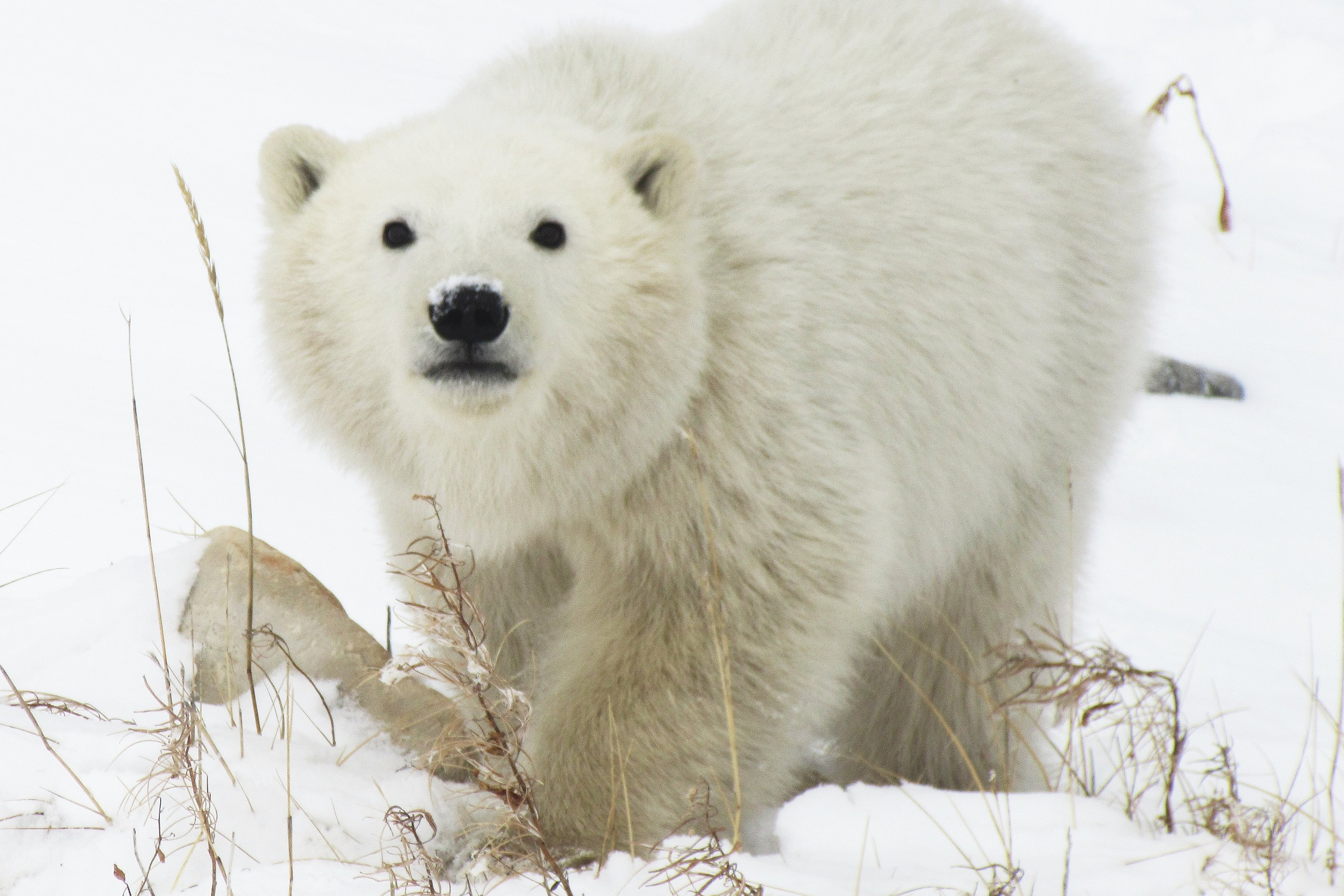
Jody Reimer is an Assistant Professor jointly appointed in the Department of Mathematics and the School of Biological Sciences at the University of Utah. Her interdisciplinary work bridges mathematical theory with ecological applications, focusing on extreme environments including polar regions and Great Salt Lake. She maintains offices in both the Mathematics building (LCB 301) and South Biology building (227), reflecting her dual departmental affiliation and commitment to collaborative research across disciplines. Dr. Reimer's research explores the intersection of mathematics, ecology, and statistical/computational methods to connect models with data. Her work leverages advances in uncertainty quantification, optimal control theory, and data science to understand ecological phenomena. Much of her research is motivated by questions in polar marine biology and Great Salt Lake ecology, with additional collaborative projects spanning diverse biological systems. She develops mathematical approaches to study sea ice ecosystems, polar bear navigation in warming Arctic, and long transient dynamics in ecological systems. Analysis of Dr. Reimer's recent publications reveals a strong focus on mathematical approaches to pressing ecological questions. Her work spans theoretical developments in uncertainty quantification and transient dynamics, alongside applied research on polar ecosystems, wildlife management, and disease modeling. A recurring theme is the development and application of optimal control theory to ecological problems, particularly in understanding animal behavior under environmental change. Her interdisciplinary approach consistently bridges mathematical theory with empirical ecological challenges. Shortlisted for the Robert May Prize for her paper "Matrix methods for stochastic dynamic programming in ecology and evolutionary biology" Dr. Reimer actively mentors a diverse group of students across multiple disciplines, including PhD candidates in Mathematics and Biology, as well as numerous undergraduate researchers. Her lab recently received a 1U4U Seed Grant to support data collection on Great Salt Lake microbialites. She co-organizes significant research initiatives including the ICERM Workshop on Uncertainty Quantification for Mathematical Biology (May 2025) and the SLMath graduate summer school on Mathematics of Climate, Sea Ice, and Polar Ecosystems (June 2025). Current funding supports research on polar bear navigation, sea ice ecology, and Great Salt Lake microbial communities. The Reimer lab operates at the interface of mathematics and biology, with members working on diverse projects spanning polar ecology, Great Salt Lake research, and theoretical ecology. The lab maintains strong connections with field researchers in the Arctic and collaborates with biologists, statisticians, and applied mathematicians across institutions. Recent work includes the "Mathpedition" project documenting academia in the Arctic and collaborative efforts with Polar Bears International on educational initiatives.
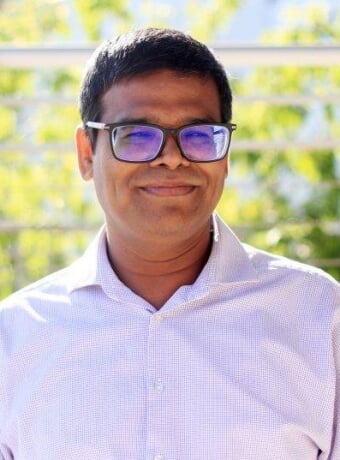
Snehamoy Chatterjee serves as Associate Professor and Witte Family Endowed Faculty Fellow in the Department of Geological and Mining Engineering and Sciences at Michigan Technological University. His expertise spans ore reserve estimation, mine planning optimization, and AI-driven safety systems, with significant contributions to remote sensing applications in mining and geological hazard assessment. Chatterjee earned his PhD in Mining Engineering from the Indian Institute of Technology Kharagpur, followed by postdoctoral research at the University of Alaska Fairbanks and the COSMO Stochastic Mine Planning Laboratory at McGill University. His academic journey includes prior faculty positions at India's National Institute of Technology. His research program integrates cutting-edge artificial intelligence with geospatial technologies to solve critical challenges in mining safety and resource management. Key focus areas include: Generative AI frameworks for real-time mining hazard prediction Hyperspectral and InSAR remote sensing for mineral exploration Deep learning applications in geophysical inversion Stochastic optimization of mine planning under uncertainty Machine learning-driven landslide and earthquake hazard mapping Chatterjee's 15 most recent publications (2023-2024) reveal a pronounced shift toward AI-geospatial fusion , with 60% of works applying deep learning to satellite imagery for hazard monitoring. His team's research spans three critical domains: mining safety systems (33%), geological hazard prediction (47%), and resource optimization (20%), demonstrating strong interdisciplinary collaboration across environmental science and engineering disciplines. Professional recognition includes: Editor's Best Reviewer Award 2014 from Mathematical Geosciences Journal APCOM Young Professional Award 2015 at the 37th APCOM conference Chatterjee actively mentors graduate students and leads multiple federally funded research initiatives focused on mine safety innovation and critical mineral exploration. His professional service includes editorial responsibilities for Mining, Metallurgy & Exploration and committee roles in major international conferences through IAMG, SME, and AGU. Current projects emphasize generative AI applications for predictive safety analytics and hyperspectral remote sensing for critical mineral discovery. His research extends through collaborations with the COSMO Laboratory network and industry partners across North America, India, and Australia, with recent fieldwork focusing on Alaskan platinum deposits and Indian coal reserves.
Yoshitaka Tanimizu is a Professor at the School of Creative Science and Engineering, Faculty of Science and Engineering, Waseda University. His research focuses on intelligent manufacturing systems, scheduling optimization, and human-centered production models. He holds a Doctor of Engineering degree from Osaka University and maintains an active research laboratory.
Professor Shunji Matsuoka is a distinguished academic at Waseda University's Faculty of International Research and Education (Graduate School of Asia Pacific Studies), where he serves as Director of both the Waseda Resilience Research Institute (WRRI) and the Fukushima Hirono Future Creation Research Center. With extensive expertise in environmental economics, disaster recovery, and international development, Professor Matsuoka has established himself as a leading scholar addressing some of the most pressing sustainability challenges of our time. Professor Matsuoka's academic journey began with his PhD from Hiroshima University after withdrawing from Kyoto University's Graduate School of Economics in 1988 with study certification. His career progressed from Hiroshima University, where he served as Lecturer at the Faculty of Integrated Arts and Sciences and later as Professor at the Graduate School of International Cooperation Studies, to his current position at Waseda University since April 2007. His research interests span Environmental Economics , Sustainable Development , Disaster Recovery , and International Development Assistance , with particular focus on the intersection of policy, society, and environmental challenges. Professor Matsuoka's work on nuclear policy and the Fukushima disaster has made significant contributions to risk governance frameworks. His innovative approach integrates social acceptance theory with environmental policy analysis, creating new methodologies for understanding community resilience against complex disasters. His research demonstrates exceptional interdisciplinary integration across economics, political science, and environmental studies. Professor Matsuoka's 15 most recent publications reveal an evolution from international development cooperation and environmental economics in Asia to contemporary focus areas including nuclear policy, social innovation, and Fukushima disaster lessons. His research consistently examines institutional mechanisms affecting environmental governance across multiple scales, from local communities to international agreements. The interdisciplinary nature of his work bridges theoretical frameworks with practical policy applications. His professional recognition includes the Asian Economic Research Association's Outstanding Paper Award (2000) , reflecting the quality and impact of his scholarly contributions. Professor Matsuoka has secured substantial research funding from prestigious sources including JSPS Grant-in-Aid for Scientific Research and Nippon Life Insurance Foundation Environmental Research Grant. His research projects span environmental impact assessment, nuclear waste disposal social acceptance, sustainable city development, and climate change adaptation. As Director of WRRI, he oversees interdisciplinary research initiatives focused on building societal resilience against complex disasters, fostering collaboration between academics, policymakers, and community stakeholders. Through his leadership of the Fukushima Hirono Future Creation Research Center, Professor Matsuoka transforms disaster lessons into practical frameworks for recovery and prevention. His 'dialogue spaces' research examines how science, politics, and society can collaboratively address 'difficult problems,' with particular focus on boundary knowledge workers who bridge different domains of expertise. His work on social acceptance models has significantly advanced understanding of how controversial environmental technologies can gain community support.
Alexei Maklakov is a Professor of Evolutionary Biology and Biogerontology at the University of East Anglia, School of Biological Sciences. He is an active faculty member and principal investigator leading a research group focused on the evolution of ageing and life histories. He is affiliated with several research centers, including the Norwich Institute for Healthy Aging, the Centre for Ecology, Evolution and Conservation, and the Organisms and the Environment research group. Research Interests: His research centers on fundamental questions in evolutionary biology, particularly: Why do organisms age? Why do males and females exhibit different life histories and lifespans? How do trade-offs shape the evolution of ageing? His lab investigates the evolution of life histories, sexual dimorphism, and conflicts between the sexes, integrating evolutionary theory of ageing with sexual selection theory. Current interests include age-specific nutrient-sensing signaling, transgenerational effects of lifespan extension, and sex differences in ageing. Research is conducted using diverse organisms such as roundworms (C. elegans), beetles, fruit flies, birds, and human population data. Research Trends: His recent publications reveal a consistent focus on experimental and theoretical approaches to ageing. Key themes include transgenerational fitness effects, cost-free lifespan extension, and trade-offs between early-life fitness and reproductive ageing. The work combines molecular genetics (e.g., RNAi, gene expression), experimental evolution, and long-term ecological studies, demonstrating a multidisciplinary approach bridging molecular biology and evolutionary ecology. Scientific Awards: No specific awards or fellowships are mentioned in the provided text. Advising and Grants: Alexei Maklakov is accepting PhD students and actively supervises research. He leads several major externally funded research projects, including: Leverhulme Trust: The mechanisms and adaptive value of transgenerational epigenetic effects (2023–2027) BBSRC: I see / smell / touch / hear and therefore I am: sex differences in perception alter survival and reproduction (2022–2025) NERC: Testing classical and emerging evolutionary theories of ageing in ecologically relevant environments (2022–2025) NERC: Understanding the breadth and depth of heatwave damage to reproduction across insect systems (2020–2024) BBSRC: The cost of longevity: transgenerational consequences of parental lifespan extension for offspring fitness (2018–2021) These grants reflect sustained funding and leadership in evolutionary gerontology. Labs and Teams: He leads his own research lab, accessible via alexeimaklakov.com . He collaborates closely with researchers such as Professor Tracey Chapman, Dr. Simone Immler, and Dr. Edward Duxbury. He is also a member of the BIO Executive and serves as Director of Research within his school, indicating significant administrative and leadership responsibilities.
Assoc. Prof. Dr. Umut Asan is an active faculty member in the Department of Industrial Engineering at Istanbul Technical University (ITU), Faculty of Management. He holds the academic rank of Associate Professor and has been affiliated with ITU since 1999, progressing from Research Assistant to his current role. He earned his PhD from Technische Universität Berlin and holds a Master’s and Bachelor’s from ITU in Engineering Management and Industrial Engineering, respectively. PhD: Technische Universität Berlin (2003–2009) MSc: Istanbul Technical University, Engineering Management (1999–2001) BSc: Istanbul Technical University, Industrial Engineering (1995–1999) Dr. Asan's research lies at the intersection of decision science and industrial systems, with a strong emphasis on Multi-Criteria Decision Making (MCDM) , Fuzzy Cognitive Mapping , Scenario Planning , and Digital Twins . His work applies advanced modeling techniques such as Bayesian networks and fuzzy logic to solve complex problems in supply chain resilience, urban mobility, technology adoption, and organizational behavior. His recent publications (2023–2025) reveal a consistent trend toward integrating artificial intelligence and data-driven methods into decision support systems. Topics include electric vehicle adoption in urban logistics, digital twin frameworks for manufacturing, risk analysis in forestry and rail systems, and consumer behavior in digital platforms. These works demonstrate interdisciplinary applications across engineering, business, and social sciences, often using fuzzy and probabilistic models to handle uncertainty. Dr. Asan is actively involved in research leadership, having served as Vice Dean (2018–2023) and currently supervising numerous graduate theses. He is the principal investigator of funded projects, including BAP grants on qualitative cross-impact analysis and consumer cognitive models. Principal Investigator, "A New Approach to Qualitative Cross-Impact Analysis" (BAP Project, 2016–2020) Principal Investigator, "A New Approach to Consumer Causal Chain Models" (BAP Project, 2022–2024) He is a member of several international academic societies, including the International Society on MCDM, ENBIS, and EURO, reflecting his active engagement in the global operations research community. His research has been published in journals such as IEEE Access, European Journal of Forest Engineering, and Decision Science Letters, with a growing citation impact (Scopus h-index: 13). Dr. Asan advises a large cohort of graduate students, both at the Master’s and PhD levels, in areas ranging from risk modeling to digital transformation. His lab or research group focuses on decision support systems and cognitive modeling, supervising theses on FMEA, Bayesian networks, and digital twins. Future work appears to be directed toward enhancing predictive capabilities in industrial and societal systems through hybrid AI models.
Professor Tenley Conway is a faculty member at the University of Toronto Mississauga within the Department of Geography, Geomatics and Environment. Her research focuses on urban forest governance, human-environment interactions, and geospatial analysis of urban ecosystems, with specific interests in environmental justice, green infrastructure, and socio-ecological systems. PhD in Geography from Rutgers University MSc in Geography from Rutgers University BSc in Natural Resources from Cornell University Conway's work integrates environmental geography, urban ecology, and landscape ecology to examine urban forest governance structures, resident engagement with green infrastructure, and the ecological impacts of policy decisions. She employs diverse methodologies including GIS, remote sensing, statistical analyses, and community surveys to address questions about urban tree distribution equity, invasive species management, and the effects of urban greening initiatives. Recent publications demonstrate her focus on quantifying urban forest diversity using national datasets, developing cost-effective canopy monitoring techniques through Landsat imagery, and analyzing the ethical frameworks of arboricultural practices. She has contributed to understanding how invasive pests reshape distributional justice in urban forests and the relationship between tree proximity and subjective wellbeing across Canadian and Australian cities. As associate editor of Urban Forestry and Urban Greening and board member of LEAF and EcoSpark, she actively participates in urban forestry governance discussions. Her HOUSE Laboratory examines human-environment interactions across urban-suburban-exurban gradients, emphasizing community engagement in sustainable urban forest management.
Onur Ulgen is a Professor in the Industrial and Manufacturing Systems Engineering department at the University of Michigan-Dearborn , where he has held positions since at least 2011. His work focuses on applying simulation techniques to solve complex problems in manufacturing and industrial systems. Education Ph.D., Industrial Engineering , Texas Technological University M.S., Industrial Engineering , Texas Technological University B.S., Mechanical Engineering , Robert College Research Interests Professor Ulgen specializes in Discrete-Event Simulation (DES) applications across multiple domains. His work addresses Automotive Manufacturing challenges like assembly line optimization, selectivity bank modeling, and deadlock prevention. He also investigates Steel and Metal Manufacturing systems, high-speed production lines, and Medical Logistics resource allocation. Key subfields include production scheduling, software selection for industrial simulation, and integrated systems modeling. Recent Article Trends His publications from 2015 to 2007 demonstrate a sustained focus on simulation for Automotive , Aerospace , and Healthcare industries. Topics include capacity planning, material handling optimization, and simulation-based design validation. Specific methodologies emphasize discrete-event simulation , throughput analysis , and deadlock prevention in complex systems. Grants and Projects Ford Motor Company (2011-2012): Modeling selectivity buffers for conflicting constraints in vehicle assembly SAP America, Inc. (2000): Nonlinear demand forecasting and inventory management uncertainty SME Education Foundation (1996-1997): Manufacturing engineering support
Alberto Gottardi is a Professor at the University of Genoa's Department of Electrical, Electronic, Telecommunications Engineering, and Naval Architecture, with a distinguished research career spanning over two decades in satellite communications and next-generation networking technologies. His work bridges theoretical research with practical applications in telecommunications infrastructure. Dr. Gottardi's research interests focus on Satellite Communications , 5G/6G Networks , Non-Terrestrial Networks , UAV Communications , Federated Learning , and Internet of Things . His work demonstrates a consistent trajectory from traditional satellite communication protocols toward integrating AI techniques with next-generation wireless networks, particularly focusing on the convergence of terrestrial and non-terrestrial network architectures. Analysis of his recent publications (2022-2025) reveals a strong emphasis on AI-driven approaches for satellite-terrestrial network integration, with particular focus on federated learning applications, UAV communications, and 6G non-terrestrial network architectures. His research increasingly incorporates machine learning techniques to solve traditional telecommunications challenges, showing a clear evolution toward data-driven network optimization. Dr. Gottardi has maintained an exceptionally productive research output, with over 99 publications documented in the dblp database spanning from 2005 to projected 2025 publications. His work demonstrates consistent collaboration with key researchers including Pietro Cassarà (45 joint publications), Manlio Bacco (33), and Erina Ferro (23), indicating stable research partnerships and team leadership. His research has significant practical applications in maritime communications, intelligent transportation systems, and emergency response networks, with several publications addressing real-world implementation challenges in satellite-based IoT systems and vehicular communications.
James C. Davis is an Assistant Professor at the Elmore Family School of Electrical and Computer Engineering (Purdue University). His research focuses on socio-technical approaches to software engineering , emphasizing security , correctness , and usability in software-intensive systems. He leads the Duality Lab , which publishes in top venues like ICSE , USENIX Security , and EMSE , with funding from the NSF , Google , Cisco , and Rolls Royce . PhD in Computer Science from Virginia Tech Current research themes: software supply chain security, pre-trained model engineering, and empirical studies of developer practices His recent publications (2025) analyze LLM jailbreaking , software signing (Sigstore), IoT model optimization , and deep learning reproducibility . Supported by grants from NSF OAC Core (multi-modal deep learning infrastructure) and RFE (prompt engineering education). Recognized with the ASEE Best Paper Award (2024) for trust engineering research. Current students include Paschal Amusuo (PhD candidate), Wenxin Jiang (now at Socket), and Dharun Venkatraman (Chateaubriand Fellow). Advising highlights : Guided 7 PhD/MSc theses (2022-2025) Developed CodeQL experience report (709 defects in 258 projects) Industry collaborations: Google , Microsoft Research , Qualcomm Research trends from 2022-2025 show sustained focus on: Software security (supply chains, signing, ReDoS) Model engineering (IoT optimization, naming conventions) Empirical methods (interview studies, defect analysis) Human factors (developer practices, training effectiveness)
Prof. Dr. Bruno Studer is a Full Professor at the Department of Environmental Systems Science, ETH Zürich, and Head of the Zurich-Basel Plant Science Center. His research focuses on plant genetics, genomics, and agricultural innovation, particularly in crop improvement, disease resistance, and microbiome interactions. He leads projects on genomic selection, plant breeding, and phenotyping technologies, addressing challenges in food security and environmental resilience. Affiliations: Department of Environmental Systems Science, ETH Zürich; Zurich-Basel Plant Science Center Research interests span plant-microbe interactions, genetic diversity in forage crops, and the development of tools for precision agriculture. His work integrates genomic prediction, digital phenotyping, and machine learning to enhance crop yields and environmental adaptability. Recent studies address bacterial leaf spot diseases, stomatal trait variation, and root rot resistance mechanisms in plants. Publications highlight advancements in genomic approaches for apple and ryegrass breeding, as well as microbial community dynamics linked to plant health. He contributes to initiatives like the Swiss Apple Core Collection and develops technologies like the FruitPhenoBox for rapid fruit trait analysis.
Dr. Dongmei Zhao is a Professor in the Department of Electrical & Computer Engineering at McMaster University, part of the Faculty of Engineering. She specializes in wireless networking, network resource management, mobile edge computing, mobile computation offloading, and digital twins. Her research clusters focus on Digital & Smart Systems. Dr. Zhao holds a Ph.D. from the University of Waterloo. She teaches courses such as COMPENG 4DK4 (Computer Communication Networks), COMPENG 4DN4 (Advanced Internet Communications), and graduate-level courses like ECE 729 (Resource Management in Wireless Networks). Her research interests span cutting-edge topics including UAV-enabled edge computing, digital twin migration, vehicular networks, and reinforcement learning applications in resource allocation. She actively contributes to advancing 6G networks, security redundancy in autonomous systems, and decentralized manufacturing platforms. Dr. Zhao's recent publications emphasize optimization techniques for dynamic networks, platooning systems, and multi-agent learning frameworks. She has been recognized for her work in vehicular edge computing and digital twin integration, though explicit awards are not listed here. She advises on graduate studies in networking and edge computing, though no specific student names are provided in the text. Her work often intersects with practical challenges in smart infrastructure and autonomous vehicle systems.
Nikos Drosos serves as Assistant Professor at the Department of Social and Behavioral Sciences, School of Humanities, Social and Education Sciences, European University Cyprus, where he coordinates the MA programme in Career Guidance and Counselling. His academic career spans over a decade with significant contributions to career counseling theory and practice, particularly in vulnerable populations and crisis contexts. Dr. Drosos' educational background includes: PhD in Psychology (2011), National & Kapodistrian University of Athens, thesis: 'Career Maturity and Career Decision-Making of adolescents from diverse cultural background' MSc in Counselling and Career Guidance (2006), National & Kapodistrian University of Athens BA in Psychology (2007), National & Kapodistrian University of Athens BA in Philosophy, Pedagogy & Psychology (2002), National & Kapodistrian University of Athens His research focuses on career decision-making mechanisms, career adaptability in volatile labor markets, and psychosocial interventions for migrants, refugees, and mental health service users. He investigates how economic crises impact career development trajectories and develops culturally adapted assessment tools like the NADINE Soft Skills Tests. His work bridges vocational psychology with social inclusion policy, emphasizing evidence-based career counseling practices in multicultural contexts. Analysis of his 2021-2024 publications reveals a strong thematic cluster around career resilience in post-pandemic and economic crisis scenarios, with growing emphasis on digital assessment tools for vulnerable populations. His research consistently addresses methodological innovation in cross-cultural psychometrics while maintaining practical applicability for career counselors. Key recognitions include: Wiley’s Research Headlines selection (2021) for career services innovation International award for innovative social inclusion work (2017) Sylff Fellowship for academic excellence (2002) Multiple national distinctions for academic achievements As MA programme coordinator, he mentors graduate students in career counseling methodologies. He has secured over €2M in EU research funding through ERASMUS+ and Creative Europe projects including Work4Psy (supporting mental health NEETs), ART4PSY (art-based social inclusion), and Learn4Carers (caregiver training). His grants consistently target marginalized groups through interdisciplinary collaborations across 12 European countries. Dr. Drosos co-leads the NADINE research consortium developing migrant assessment tools and serves on the Scientific Committee of the European Doctoral Programme in Career Guidance and Counselling (ECADOC). He actively contributes to PEPSAEE (as Treasurer) and ELETYPE, shaping national policies for psychosocial rehabilitation and supported employment in Greece.