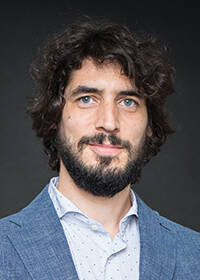
Raphaël LEVY is an Associate Professor of Economics and Decision Sciences at HEC Paris. His research focuses on information economics with applications in industrial organization, corporate finance, political economy, and behavioral economics. He holds a Ph.D. in Economics from Toulouse School of Economics (2009), an M.Sc. in Economics (2005), and a Diplôme de Grande Ecole from HEC Paris (2004). His work explores topics like strategic information disclosure, social learning in dynamic environments, and the economics of academic publishing. He has served as a visiting professor at HEC Paris and held roles at the European University Institute and University of Mannheim. LEVY is an active referee for top journals including the American Economic Journal: Microeconomics and Review of Economic Studies. His recent research analyzes preemption races in markets, stationary social learning models, and open access publishing economics. He co-organized the 2012 Workshop on 'Reputations in Organizations and Markets' and contributes to editorial activities in economic theory and policy domains.
A. Perea y Monsuwé is an Associate Professor at Maastricht University's Department of Quantitative Economics, part of the School of Business and Economics. His career includes roles at Universidad Carlos III de Madrid and the Universitat Autònoma de Barcelona. He holds a PhD from Maastricht University (1997) and a Master's in Mathematics from the Technical University Aachen (Germany, 1993). His research focuses on epistemic game theory, exploring how individuals reason in strategic interactions, with applications in economics and social sciences. Key areas include rationality, belief revision, and strategic decision-making under uncertainty. He has authored influential textbooks such as Epistemic Game Theory: Reasoning and Choice (2012) and Rationality in Extensive Form Games (2001). Recent work extends to belief-dependent utility, correlated equilibrium, and models of unawareness in game theory. Perea has contributed to prestigious journals like Games and Economic Behavior , Journal of Mathematical Economics , and Economics and Philosophy . His publications span algorithmic game theory, bargaining solutions, and dynamic game analysis. No scientific awards are explicitly listed in the provided texts. His research integrates formal mathematical models with philosophical insights, emphasizing foundational questions in decision theory and rationality.
Prof. Martin van Hees is a Full Professor at Vrije Universiteit Amsterdam's Faculty of Humanities, specializing in Moral and Political Philosophy. He holds ancillary roles as a board member of the Royal Netherlands Academy of Arts and Sciences (KNAW) and the Telders Foundation. His research focuses on freedom, moral responsibility, rights, and formal models in ethics. With 84+ publications, his work bridges philosophy with practical policy, exploring topics like immigration ethics, academic freedom, and Kantian ethics. Recent contributions include analyses of amendment arguments, capability frameworks, and collective responsibility. His interdisciplinary approach integrates political theory, legal philosophy, and decision theory. Research Interests: Freedom and autonomy in political systems Moral responsibility for collective outcomes Formal models in ethics and law Capabilities approach to justice Liberalism vs. republicanism Publications Trends: Recent works emphasize legal-political structures (e.g., amendment procedures, immigration debates), while earlier research explored foundational concepts like negative/positive freedom and rights frameworks. His 2020 paper on Kantian optimization exemplifies formal logical approaches to moral imperatives. Advising/Grants: Supervised 2 PhD theses (names unspecified). Active in interdisciplinary research networks, evidenced by frequent collaborations on legal-political topics. No grant details provided in text. Labs/Teams: No specific labs mentioned, but his work engages with interdisciplinary ethics and policy groups at VU Amsterdam.
Alexander Frug serves as an Associate Professor at Pompeu Fabra University and holds an Affiliated Professor position at the Barcelona School of Economics. Based at the Jaume I building (office 20.2E08) in Barcelona, he maintains active research and teaching responsibilities with contact via alexander.frug@upf.edu. His Ramon y Cajal researcher status reflects Spain's recognition of his scholarly contributions. His academic focus spans: Information Economics Game Theory Economic Theory Frug's research program investigates strategic interactions under information asymmetry, with particular emphasis on communication dynamics, contract design, and incentive structures. His theoretical frameworks address real-world economic phenomena including boycott coordination, task scheduling, and organizational hierarchies. The consistent application of game-theoretic methods across his publication record demonstrates deep expertise in modeling strategic behavior in dynamic environments where information evolves gradually or arrives stochastically.
William Cunningham is a Professor at the University of Toronto, cross-appointed at the Vector Institute for Artificial Intelligence and the Department of Computer Science. His research integrates artificial intelligence with multi-level approaches from neuroscience, psychology, sociology, and cultural anthropology to study social cognition and group dynamics. The Social Cognitive Science and SocialAI lab focuses on computational models of cooperation, competition, and social judgment, leveraging deep neural networks and multi-agent systems. Cunningham’s work addresses how societies navigate collective challenges through emergent behaviors and algorithmic frameworks like Sorrel and Concordia. Research interests include generative AI ethics, stereotype persistence, and the interplay between computational models and human social structures. He explores how technology and social systems co-evolve, examining topics like polarization, punishment psychology, and cultural influences on cognition. Recent projects use reinforcement learning to simulate generational social norms and analyze mental health in the context of autistic trait camouflage. Cunningham’s interdisciplinary approach bridges machine learning, neuroscience, and social science to address pressing questions about human behavior and societal progress. His work on societal and technological progress emphasizes adaptive systems through frameworks akin to 'patchwork quilts,' highlighting incremental innovation and cultural integration. Public health studies during the pandemic demonstrated how national identity influences policy support, reflecting broader interests in crisis-driven social coordination and computational epidemiology.
Teppo Felin is the Douglas D Anderson Endowed Professor of Strategy & Entrepreneurship at Utah State University's Huntsman School of Business. Previously, he served as Professor of Strategy at the University of Oxford's Saïd Business School (2013–2021) and Director of the Oxford Diploma in Strategy & Innovation (2016–2021). His research focuses on strategy, entrepreneurship, innovation, and AI-driven decision frameworks, with publications in Organization Science , Strategic Management Journal , and interdisciplinary outlets like Psychonomic Bulletin and Review . Felin's work bridges microfoundational theory, cognitive science, and organizational economics, emphasizing causal reasoning and scientific methodologies in entrepreneurial contexts. Teaching expertise includes doctoral strategy courses at Oxford, MBA programs, and executive education on blockchain strategy and innovation. His research explores themes like AI rationality, lean startup critiques, and evolutionary approaches to organizational capability. Felin’s interdisciplinary approach integrates insights from philosophy, biology, and technology to address strategic challenges in dynamic environments.
Karim Jamal is Professor and Chair of the Department of Accounting and Business Analytics at the Alberta School of Business, University of Alberta. Became chair in 2009 and was named Fellow of Chartered Accountants by Alberta Institute. Joined the University of Alberta in 2002, holding various academic and professional positions. Education: Ph.D. in Business Administration (Accounting) from University of Minnesota M.Sc. in Business Administration from University of British Columbia Bachelor of Commerce from University of Manitoba Research examines cognitive models of expert decision-making in accounting and auditing, understanding knowledge development in financial markets, and testing e-commerce privacy practices. Recent publications explore market equilibrium formation and audit engagement profitability. Teaching experience spans financial accounting, management control, accounting theory, and auditing courses at undergraduate, MBA and Ph.D. levels. Current courses include honors seminars and research workshops. Honors include: CPA Alberta Lifetime Achievement Award (2023) Canadian Accounting Hall of Fame induction (2023) Fellow of Chartered Accountants (2009) Contributes to standards development through SEC and PCAOB commentary on auditing disclosures and reporting standards.
Dr Sherif Abbas is a Research Fellow at the Applied Artificial Intelligence Institute (A2I2) within Deakin University, Australia. Since 2021 he has held this role after being awarded the competitive Alfred Deakin Postdoctoral Research Fellowship at the Institute for Frontier Materials. His work is positioned at the intersection of material science, physics, chemistry and artificial intelligence, leveraging cutting-edge AI methodologies to solve complex challenges in energy storage, sensing and computational materials discovery. Education PhD in Physics, University of Sydney (2017) Research Interests Abbas’s research focuses on the accelerated discovery and rational design of advanced functional materials through the synergistic use of density-functional theory (DFT) and state-of-the-art machine-learning techniques. Specific thrusts include: Rechargeable battery chemistries (Li-ion, solid-state, Al-rich cathodes) Solar-energy-harvesting and photovoltaic materials Supercapacitor and superionic conductor design Gas-sensing surfaces and CO₂-capture frameworks Superconducting, ferroelectric and multiferroic compounds 2D van der Waals heterostructures and their optoelectronic applications His methodological toolkit spans Bayesian optimisation, generative models, graph neural networks and physics-informed machine-learning potentials that enable multiscale simulation from the atomic level to device performance. Publication Trends Across 103 outputs (2019–2025), Abbas demonstrates a clear trajectory toward physics-informed AI for materials. There is a marked concentration on energy-storage interfaces (solid-state electrolytes, dendrite suppression) and on low-dimensional systems where quantum confinement and van der Waals interactions govern functionality. Recent work increasingly couples rigorous first-principles data with scalable ML surrogates, underscoring a shift from static property prediction to dynamic, device-relevant simulations. Scientific Awards & Fellowships Alfred Deakin Postdoctoral Research Fellowship (Deakin University, 2021–present) Doctoral Supervision & Funding Abbas currently co-supervises two doctoral candidates: Thuy Linh La: "Enhancing Scalability of Machine Learning Models for Material Simulation" Hajer Abdulhafid Mohamed Derbi: "Applied Artificial Intelligence in Dental Field" Both projects are embedded within Deakin’s Applied Artificial Intelligence Initiative and benefit from internal fellowship funds and external ARC linkage grants coordinated by A2I2. Laboratory & Entrepreneurial Activities He is an integral member of the cross-disciplinary teams at A2I2, collaborating closely with the Institute for Frontier Materials and external partners across Australia. In parallel, he founded mathpractice.xyz (2023–present), an educational technology venture aimed at democratising advanced mathematics and AI training resources for students and early-career researchers.
Shlomo Zilberstein is a Professor of Computer Science and former Associate Dean of Research and Engagement at the Manning College of Information and Computer Sciences, University of Massachusetts Amherst. He directs the Resource-Bounded Reasoning Lab and holds a B.A. from Technion – Israel Institute of Technology and a Ph.D. from UC Berkeley. His research focuses on automated reasoning, planning under uncertainty, multi-agent systems, and decision-theoretic principles for autonomous agents. He has pioneered work on decentralized Markov Decision Processes (DEC-MDPs) and meta-reasoning mechanisms to optimize deliberation under computational constraints. Dr. Zilberstein has received prestigious awards, including the 2025 ACM/SIGAI Autonomous Agents Research Award, the 2019 AAAI Distinguished Service Award, and the 2019 IFAAMAS Influential Paper Award. He has served as Editor-in-Chief of the Journal of Artificial Intelligence Research and held leadership roles in AAAI, ICAPS, and the AI Access Foundation. His research spans theoretical foundations and practical applications in autonomous systems, including safe AI, ethical decision-making, and human-centered AI. He has led multi-institutional grants, such as a $5M NSF grant to improve causal decision-making and a Schmidt Science grant for multi-agent AI safety. Zilberstein’s work emphasizes balancing computational efficiency with rational action in uncertain environments, with applications in robotics, self-driving vehicles, and collaborative systems. His lab develops frameworks for competence-aware autonomy, introspective perception, and explainable AI systems.
Selorm Agbleze is a Lecturer in Enterprise and Entrepreneurship at the Leeds University Business School, University of Leeds. He holds a PhD in Strategy & Entrepreneurship from Copenhagen Business School, an MPhil in Marketing from the University of Ghana, and a BSc (Hons) in Agricultural Economics from the same institution. His research focuses on decision-making in institutional incongruence, particularly exploring how informal firms decide to formalize through a behavioural theory lens. Education: PhD (Strategy & Entrepreneurship), Copenhagen Business School MPhil Marketing, University of Ghana BSc (Hons) Agricultural Economics, University of Ghana Research interests center on firm formalization dynamics in resource-scarce contexts, leveraging behavioural theory, institutional theory, and social embeddedness concepts. His work examines how bounded rationality shapes formalization decisions, with a focus on informal firms' strategic choices. Key themes in his publications include performance discrepancies, social embeddedness, and aspiration-driven formalization. His work spans entrepreneurship, institutional theory, and development economics, with implications for policy and regulatory environments. Awards & Memberships: Fellow of the Higher Education Academy (Advance HE) Academy of Management Africa Academy of Management Advising & Grants: No formal advisees listed. Active researcher affiliated with the Centre for Enterprise and Entrepreneurship Studies, contributing to interdisciplinary collaborations on entrepreneurship and development. Labs/Teams: Core member of the Centre for Enterprise and Entrepreneurship Studies at Leeds University Business School.
Özgür Şimşek is a Professor in the Department of Computer Science at the University of Bath. He holds affiliations with the UKRI CDT in Accountable, Responsible and Transparent AI (ART-AI), the Centre for Mathematics and Algorithms for Data (MAD), and the EPSRC Centre for Doctoral Training in Statistical Applied Mathematics (SAMBa). He also contributes to the Bath Institute for the Augmented Human. His research focuses on advancing machine learning and artificial intelligence, particularly in reinforcement learning, bounded rationality, and network science, with applications in diverse domains such as healthcare, aerospace, and economics. He is actively involved in interdisciplinary collaborations and project leadership. Şimşek earned his Doctor of Philosophy in Computer Science from the University of Massachusetts in 2008, along with two master's degrees in Computer Science (2004) and Industrial Engineering and Operations Research (1997). His educational background underscores his expertise in computational methods and interdisciplinary problem-solving. His research interests span core AI topics including reinforcement learning frameworks, decision heuristics, and skill hierarchy design. He also explores bounded rationality models to bridge gaps between human cognition and AI systems. Additionally, he applies machine learning to network science, healthcare diagnostics, and food processing optimization. His work aligns with UN Sustainable Development Goals, emphasizing education and innovation. Şimşek has contributed to multiple research projects funded by Innovate UK and the Engineering and Physical Sciences Research Council (EPSRC). These include developing autonomous systems for wind propulsion, enhancing NHS medicine delivery technologies, and analyzing antisocial behavior patterns. He collaborates internationally on projects involving policy design, environmental resource management, and biomedical signal processing. He leads the Artificial Intelligence and Machine Learning group at SAMBa and is part of the ART-AI CDT, focusing on ethical AI and transparent decision-making. His work often involves creating interpretable models and addressing challenges in data efficiency and exploration strategies within reinforcement learning systems.
Luigi Acerbi is an Associate Professor at the Department of Computer Science, University of Helsinki, leading the Machine and Human Intelligence research group. He is affiliated with the Finnish Center for Artificial Intelligence (FCAI) and ELLIS (European Laboratory for Learning and Intelligent Systems). His research focuses on probabilistic machine learning, statistical inference methods (e.g., amortized and surrogate-based approaches), and computational and cognitive neuroscience, including Bayesian models of perception and resource-constrained rationality. Previously, he held postdoctoral positions at the University of Geneva and New York University. He earned his PhD from the Doctoral Training Centre in Computational Neuroscience at the University of Edinburgh, working with Sethu Vijayakumar and Daniel Wolpert. His work includes developing open-source tools like BADS (Bayesian Adaptive Direct Search) and VBMC (Variational Bayesian Monte Carlo), widely used for optimization and Bayesian inference in MATLAB/Python. He actively contributes to the academic community through teaching (e.g., BAMB! 2022 summer school tutorials on model fitting) and software development (GitHub repositories for optimization, inference, and AI tools like Athanor). His research bridges machine learning, neuroscience, and cognitive science, emphasizing robust and efficient statistical methods.
Prof. Conrad Heilmann is a Full Professor in the Erasmus School of Philosophy at Erasmus University Rotterdam, co-director of the Erasmus Institute for Philosophy and Economics (EIPE), and a member of the core team for the 'Dynamics of Inclusive Prosperity' initiative. He holds a PhD in Philosophy from the London School of Economics (LSE) and degrees in Economics, Political Science, and Philosophy of Social Science. His research focuses on fairness , behavioral economics , discounting , and measurement , with broader interests in philosophy of science and moral philosophy . Recent work includes groundbreaking studies on fairness frameworks in economics and the epistemological foundations of financial models. He collaborates internationally, notably with LSE’s Choice Group and CPNSS. His contributions bridge philosophy and economics, addressing topics like model evaluation in financial economics and the ethical dimensions of economic theory. Education: PhD in Philosophy, London School of Economics (LSE) Masters in Political Science, IEP Lille Bachelor in Economics, Hamburg University His research outputs emphasize interdisciplinary rigor, with recent articles exploring fairness axioms ( Economics and Philosophy ), contextualist model evaluation in finance, and the philosophical implications of financial economics as a scientific discipline. He has delivered over 30 academic talks globally on topics ranging from fairness in healthcare to the ethics of refugee crisis management. His work frequently intersects with practical policy issues, such as proportional representation and duty in global contexts.
Dr. Franka Glöckner is a Postdoctoral Researcher at the Department of Psychology, Technische Universität Dresden. She specializes in cognitive neuroscience, aging research, and decision-making processes. Her work focuses on neuroplasticity, neuromodulation (e.g., dopamine effects), and interventions targeting cognitive decline in older adults. She leads initiatives in good scientific practice and advises international applicants for the Cognitive-Affective Neuroscience (CAN) Master's program. Her research explores how environmental factors, pharmacological agents (e.g., levodopa), and brain stimulation (e.g., galvanic vestibular stimulation) influence decision-making, memory, and spatial navigation across the lifespan. Recent studies investigate the neural correlates of interventions in dementia care and the role of circadian rhythms in cognitive performance. Dr. Glöckner is actively involved in clinical trials like the TRAINSTIM-COG project, examining combined cognitive training and brain stimulation effects on aging populations. She advocates for accessibility, serving as faculty representative for disabled students and coordinating student internships.
Shaun Wen Huey Lee is a Professor at the Malaysia School of Pharmacy, Monash University. His research focuses on health policy and systems in low-resource settings, evidence-informed policymaking, and capacity strengthening. He leads interdisciplinary projects addressing pharmaceutical interventions, public health challenges, and aging populations. Lee has secured funding for initiatives like 'Boosting Culturally Appropriate Medication Management for Older People in the Indo-Pacific' and 'Development and Validation of Chronic Kidney Disease Predictive Model for the Malaysian Population'. He actively mentors PhD students in public health and healthcare services research, emphasizing non-communicable diseases. His work contributes to UN Sustainable Development Goals (SDGs), particularly in health equity and aging. Lee has been recognized with awards including the Global Health Policy Fellowship (2020) and the PVC Commendation Award for Teaching Innovations (2020). Lee’s research spans 224 publications, including studies on mobility challenges in older adults, healthcare access barriers, and vaccine economics. He collaborates internationally, with projects in Thailand, Indonesia, and the ASEAN region. His teaching innovations, such as flipped classroom models, aim to improve pharmacy education quality. Lee also engages in public health advocacy, contributing to media discussions on diabetes management and pandemic preparedness. Key grants include projects on Malaysian pharmacists’ burnout (2023–2026) and chronic kidney disease predictive modeling (2024–2026). His lab develops culturally adapted interventions for medication management and aging populations. Lee’s work bridges clinical practice, policy, and community health, fostering sustainable health systems in resource-limited settings.