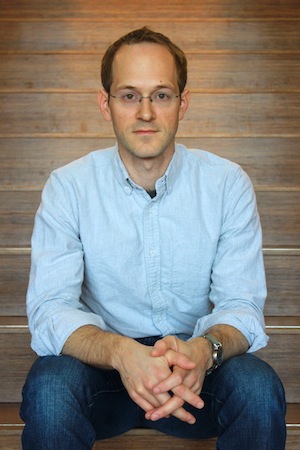
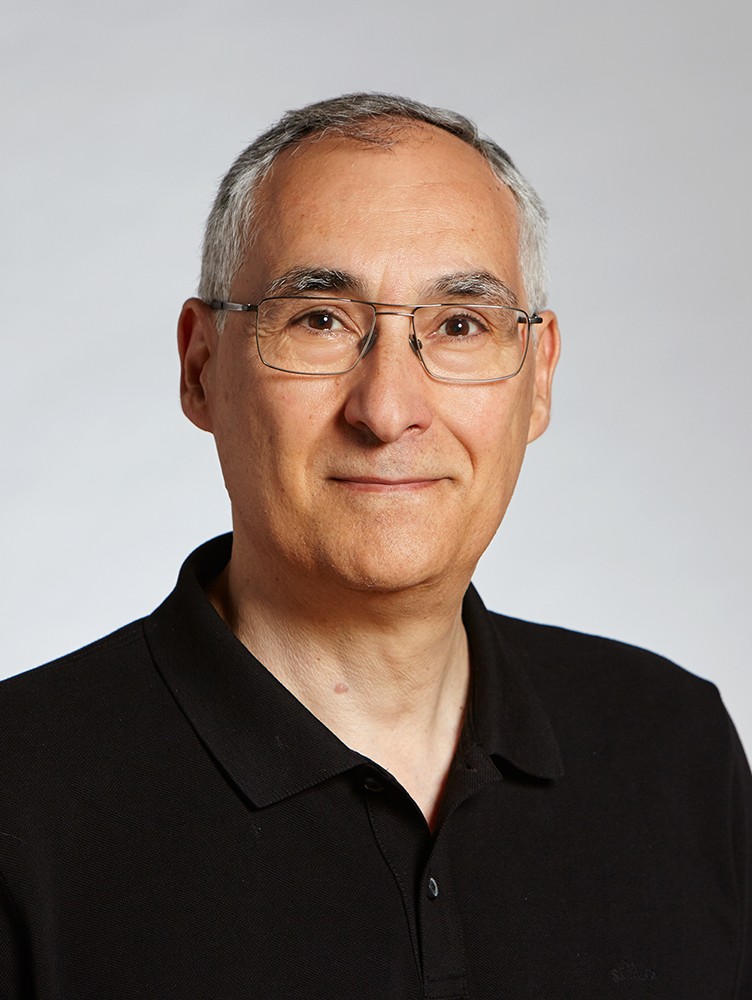
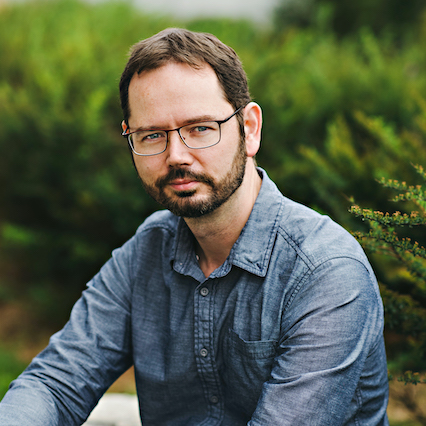
Fabian Fagerholm is an Assistant Professor in the Department of Computer Science at Aalto University. His work bridges software engineering, human-computer interaction, and empirical research methodologies. He actively participates in research groups such as Software and Service Engineering (SSE) and Human-Computer Interaction and Design (HCID). Fagerholm's research explores: Continuous experimentation in software development Developer cognition and mental models Agile methodologies and team dynamics Low-code platforms and end-user programming Software engineering education and pedagogy His publications reflect a strong empirical focus, with recurring themes of human factors in technical systems and educational innovation. He has received notable awards including: Journal of Systems and Software Best Paper Award (2018) EUROMICRO SEAA Distinguished Paper Award (2017) Teacher of the Year (2013) Nokia Foundation Scholarship (2013) Fagerholm contributes to software engineering infrastructure through tools for experimentation and boundary artifacts, enhancing collaboration in distributed teams.
Virginia Smith is the Leonardo Associate Professor of Machine Learning at Carnegie Mellon University (CMU), with a courtesy appointment in the Department of Electrical and Computer Engineering. She holds a Ph.D. from UC Berkeley and undergraduate degrees from the University of Virginia. Her research focuses on developing efficient, privacy-preserving machine learning systems, particularly in federated learning, distributed optimization, and resource-constrained settings. Key areas include federated learning frameworks like CoCoA and Ditto, unlearning algorithms, and privacy amplification techniques. Smith's work bridges theory and practice, addressing challenges such as data heterogeneity, fairness, and robustness. She has led initiatives like the LEAF benchmark for federated learning and has contributed to open-source tools for scalable ML systems. Her awards include the Sloan Research Fellowship, Samsung AI Researcher of the Year (2023), and an NSF CAREER Award. She is actively involved in curriculum development, teaching courses on federated learning and large-scale ML at CMU. Her research group explores cutting-edge topics like federated optimization with sparse communication, unlearning in LLMs, and secure ML pipelines. Collaborations span academia and industry, with applications in healthcare, IoT systems, and AI safety. Smith serves as Program Chair for ICML 2025 and frequently contributes to workshops on federated learning and trustworthy AI.
Giuseppe Ateniese is a Professor and Eminent Scholar in Cybersecurity at George Mason University, affiliated with the Department of Computer Science and Cyber Security Engineering. Formerly, he held the Farber Endowed Chair and chaired the Department of Computer Science at Stevens Institute of Technology. His research focuses on cloud security, applied cryptography, blockchain technology, and AI-driven cybersecurity solutions. He has received prestigious awards including the NSF CAREER Award and Google/IBM Faculty Awards. AIFurther, he teaches courses on blockchains, cryptography fundamentals, and cryptofinance. His work includes pioneering contributions to rewritable blockchains, password cracking via AI (e.g., PassGAN), and secure decentralized systems. Education: PhD in Computer Science, University of Genoa (2000) Laurea (M.Sc.), University of Salerno (1995) Master of Engineering (Honoris Causa), Stevens Institute of Technology (2020) Research Interests: Ateniese’s work bridges theoretical and applied cryptography, with emphasis on blockchain scalability, privacy-preserving machine learning, and secure data storage. He has developed foundational techniques like proxy re-cryptography and accountable storage systems. His recent efforts address AI’s dual role as both a cybersecurity tool and threat vector, including AI-based password cracking and defense strategies against LLM-driven attacks. Awards: NSF CAREER Award (for privacy/security research) Google Faculty Research Award (cloud security) IBM Faculty Award IEEE CISTC Technical Recognition Award Teaching & Labs: He teaches advanced courses on blockchains (CS695), cryptography fundamentals (CYSE/ECE476), and introductory cryptography (CS487/587). His research team focuses on cryptographic protocols, decentralized systems, and AI-security intersections. Collaborations include projects with Accenture on editable blockchain prototypes and NSF-funded work on password security.
Dr. Khurram Aziz is a Senior Instructor in the Faculty of Computer Science at Dalhousie University , Halifax, Canada. He is actively engaged in teaching and research, with a focus on optical networks, data center interconnects, and network performance modeling. Education: PhD in Electrical Engineering, Vienna University of Technology, Austria (2008) MSc in Electrical Engineering, National University of Singapore (2003) BSc (Hons) in Electrical Engineering, University of Engineering and Technology, Lahore, Pakistan (1998) His research interests include optical packet and burst switched networks , optical interconnects for data centers , analytical modeling and simulation , and network routing and switching . He has contributed extensively to the design and performance evaluation of scalable optical switches and hybrid switching systems. The recent publications reflect a strong trend in data center optical networks , focusing on performance, blocking probability, signal degradation, and architectural classification. His work bridges theoretical modeling with practical simulation frameworks, such as CloudNetSim++ in OMNeT++, contributing to cloud and high-capacity network research. Dr. Aziz has no listed scientific awards in the provided text. He teaches several core computer science courses including CSCI 2141: Intro to Database Systems , CSCI 3171: Network Computing , CSCI 3132: Object Orientation and Generic Programming , and CSCI 3120: Operating Systems . There is no mention of graduate student supervision or external research grants. He has co-authored book chapters in major handbooks on data centers and switched systems. Dr. Aziz has not listed any formal lab or research team affiliations in the provided content.
Mika Järvinen serves as Associate Professor in the Department of Energy and Mechanical Engineering at Aalto University, leveraging fundamental sciences—physics, thermodynamics, chemistry, and numerical modeling—to address cross-sector energy challenges. His research spans sustainable bioenergy and inter-linked circular economy systems integrating energy, materials, and environmental considerations across biomass, pulp/paper, metallurgy, and waste-to-energy industries. His expertise centers on sustainable bioenergy and circular economy frameworks, utilizing numerical modeling to optimize combustion engineering and metallurgical processes. By maintaining diverse industrial engagement, he ensures research continuity during economic fluctuations while advancing black liquor spraying technologies and energy-material-environment synergies. This approach enables flexible, physics-based solutions for complex industrial energy conversion problems. Professor Järvinen's 2025 publications reveal a cohesive focus on renewable energy systems operating within planetary boundaries, spanning carbon capture (calcium looping), low-temperature heat engines, and comprehensive textbook development. His work integrates solar, wind, bioenergy, and storage technologies into holistic frameworks that balance technical innovation with ecological constraints, emphasizing system-level sustainability over isolated component optimization. His scientific recognition includes: Best Dissertation Award (2002) from Helsinki University of Technology's Department of Machine Technology for research on black liquor droplet conversion Resonate Award (2015) from Caltech University's Resnick Institute As lead of the Energy Conversion and Systems research group, he directs projects bridging fundamental modeling with industrial applications while developing educational resources for next-generation energy engineers. His laboratory work emphasizes experimental validation of numerical models across combustion, metallurgical, and biomass conversion processes.
Barbara Caputo is a Full Professor at Politecnico di Torino, leading the VANDAL Laboratory and directing the AI@PoliTo Interdepartmental Lab. She holds a double affiliation with the Italian Institute of Technology (IIT) and has held roles at Idiap-EPFL and Sapienza University. Her research focuses on AI, computer vision, domain adaptation, and federated learning. She contributes to national AI policy, including the Italian Strategy on AI and the National PhD on AI for Industry 4.0. She is an ERC Laureate and ELLIS Fellow, co-founding ELLIS society. Her work spans visual place recognition, action recognition, and cross-domain learning. Education: PhD in Computer Science from KTH Royal Institute of Technology (2005). Major roles include Rector’s Advisor on AI at PoliTo, Board Member of ELLIS, and coordinator of the AI & Industry 4.0 vertical in the National PhD program. Awards include ERC Laureate (2017), ELLIS Fellow (2019), and Inspiring Fifty Italy (2018). Her research emphasizes federated learning, domain adaptation, and AI ethics. Recent articles explore domain generalization, resource-efficient federated models, and AI-environment interactions. She collaborates with institutions like MUR, CNR, and the European Commission on AI policy and tech initiatives.
Vijay Raghunathan is a Professor in the Department of Electrical and Computer Engineering at Purdue University's College of Engineering. His work focuses on hardware and software architectures for embedded systems, wireless sensors for IoT, and wearable/implantable electronics with emphasis on low power design, energy harvesting, emerging memory technologies, and secure system design. Academic Rank: Professor Department: Electrical and Computer Engineering University: Purdue University Research Focus: Energy-efficient embedded systems, IoT, wearable devices His research explores low power design at both board-level and system-on-chip scales, micro-scale energy harvesting , and reliable/secure system design for medical devices. Recent work focuses on Processing-in-Sensor/Memory for battery-free AIoT devices, state space models for neural processing units, and security coprocessor integration in autonomous systems. Analysis of his publications reveals trends in energy-efficient neural network acceleration , approximate computing for edge inference , and compute-in-memory architectures . Key subfields include collaborative edge-cloud partitioning , sparse DNN accelerators , and security frameworks for medical devices. Vijay's work also addresses energy-accuracy tradeoffs in multimodal cognitive systems and intermittent computing using non-volatile memory technologies. His contributions span from microcontroller energy management to security protocols for implantable electronics.
CHAN Mun Choon is a Professor at the School of Computing, National University of Singapore (NUS) , where he directs the NUS-NCS Joint Laboratory for Cyber Security . He previously worked at Bell Labs (1997-2003) and holds a PhD from Columbia University (1997). His research spans systems and networking with specific interests in mobile computing, software-defined networking, and cyber-physical systems . PhD, Electrical Engineering (1997), Columbia University M.Phil., Electrical Engineering (1993), Columbia University MS, Electrical Engineering (1993), Columbia University BS, Computer & Electrical Engineering (1990), Purdue University His recent work focuses on 5G network architecture , data center fault debugging , and energy-efficient mobile sensing . He has published over 100 papers and holds 7 US patents , including cache-based compaction techniques with 210+ citations. His projects include fronthaul slicing for 5G, network-wide packet history frameworks, and participatory indoor localization. Scientific recognition includes: Best Paper Awards: IEEE ICNP 2019, ACM SOSR 2019, ICDCN 2016 Best Demo: IPSN 2016 Distinguished Member, INFOCOM TPC (2016, 2020, 2021) He serves as Vice-Dean, Graduate Studies and Vice-Dean, Academic Affairs at NUS Computing, and has graduated 21 PhD students . His lab develops solutions for network security , latency-sensitive applications , and mobile sensing .
Jian Huang is an Associate Professor of Electrical and Computer Engineering at the University of Illinois at Urbana-Champaign (UIUC), holding a 100% appointment since August 2024. He is also an affiliated Associate Professor in Computer Science and serves as the Y. T. Lo Faculty Fellow in ECE. Huang leads the Systems Platform Research Group and received his Ph.D. in Computer Science from Georgia Institute of Technology in August 2017, where his dissertation earned the College of Computing Dissertation Award. His research focuses on Computer Architecture, Memory and Storage Systems, AI Infrastructure, Distributed Systems, and Systems Security . Huang has pioneered work in sustainable AI infrastructures, modular data centers, neural processing unit virtualization, and ransomware-aware storage systems. His research has been featured in top-tier conferences including ISCA, MICRO, ASPLOS, OSDI, SOSP, and USENIX ATC, with over 50 publications and multiple patents issued worldwide. Huang's research has significant industry impact, with some work transferred into products and featured in popular media outlets including ACM CACM, TechXplore, and Science Daily. His work on non-volatile memory and storage systems has received extensive coverage, with some projects generating over 50 media reports. Among his notable achievements are the ACM SIGMICRO Early Career Award, NSF CAREER Award, IEEE Micro Top Picks (three times), USENIX Best Paper Award, and the MICRO Best Paper Runner Up in 2024. He has secured over $4.01M in grants ($11.12M with collaborators) from NSF, DARPA, Army Research Office, and industry partners. ACM SIGMICRO Early Career Award NSF CAREER Award IEEE Micro Top Picks (three times) USENIX Best Paper Award MICRO Best Paper Runner Up (2024) Google Faculty Research Award NetApp Faculty Fellowship Award Huang actively contributes to the academic community as program co-chair of NVMW'23 and organizer of HotInfra'23. He currently advises 12 Ph.D. students, 1 master student, and multiple undergraduates. His teaching innovations include developing ECE522: Emerging Memory/Storage System and revising ECE511: Computer Architecture with cutting-edge content.
Hamed Rahmani is an Assistant Professor of Electrical and Computer Engineering at New York University (NYU Tandon School of Engineering). He is affiliated with NYU WIRELESS and the Center for Advanced Technology in Telecommunications (CATT), leading the Research in Advanced Integrated Systems and Electronics (RAISE) Lab. His research focuses on integrated circuits and systems for biomedical applications, IoT, and 5G/6G communication. Education: Ph.D., Electrical and Computer Engineering, UCLA (2020) M.Sc., Electrical and Computer Engineering, Rice University (2017) B.Sc., Electrical Engineering, Sharif University of Technology (2014) Research Interests: RF/mm-Wave circuits, low-power biomedical sensors, energy-efficient IoT systems, and wireless power transfer. His work emphasizes miniaturized implants, smart healthcare, and sustainable electronics. Awards: Recipient of the NSF CAREER Award (2025), IEEE MTT-S Graduate Fellowship (2019), and the 2023 Best Paper Award in the Journal of Microwave. He serves on technical committees for major conferences like CICC and IMS. Labs & Groups: Directs the RAISE Lab, collaborating with NYU WIRELESS on 6G research and CATT for technology transfer.
Ming Hu is a Professor and University of Toronto Distinguished Professor of Business Operations and Analytics at Rotman School of Management, University of Toronto. He serves as Area Coordinator for the Operations Management & Statistics Area and holds editorial leadership roles including Editor-in-Chief of Naval Research Logistics and Associate Editor for multiple top journals. MS in Applied Mathematics, Brown University (2003) PhD in Operations Research, Columbia University (2009) His research focuses on sharing economy , social operations , and platform economics , examining how operational decisions can maximize societal benefit. Key areas include crowdfunding , two-sided markets , crowdsourcing , and group buying , with applications to DEI , sustainability , and AI-empowered operations . Recent work analyzes spatial operations in delivery systems, algorithmic fairness , and climate change adaptation in agricultural supply chains. His publications span top journals like Management Science and Operations Research , covering topics from blockchain traceability to quantum-inspired optimization . Scientific recognitions include: Wickham Skinner Early-Career Research Award (2016) Best Operations Management Paper in Management Science (2017) 2018 Poets & Quants Best 40 Under 40 MBA Professors As an Amazon Scholar (2022–) and Chair of Chain Analytics Institute (2023–), he bridges academic research with industry applications in AI-driven logistics and sustainable operations.
Andrew Childs is a Professor at the University of Maryland, affiliated with the Department of Computer Science and the Institute for Advanced Computer Studies (UMIACS). He serves as Director of the NSF Quantum Leap Challenge Institute for Robust Quantum Simulation (RQS) and is a Fellow at the Joint Center for Quantum Information and Computer Science (QuICS). His research focuses on quantum algorithms for simulating physical systems, algebraic problems, and quantum walk protocols, with applications in quantum computing and computational complexity. University of Maryland Institute for Advanced Computer Studies (UMIACS) Joint Center for Quantum Information and Computer Science (QuICS) NSF Quantum Leap Challenge Institute for Robust Quantum Simulation Childs' research spans quantum simulation, quantum Fourier transform, phase estimation, and Hamiltonian dynamics. He has developed techniques to reduce quantum computational resources for simulating quantum systems and explored limitations of quantum computers through hidden subgroup problems and non-unitary dynamics. His publications cover diverse areas including quantum walk optimization, Hamiltonian simulation methods, and applications to cryptography and condensed matter physics. Recent works address spatial search algorithms, product formulas for commutators, and quantum routing protocols. As an educator, Childs has taught courses on quantum algorithms and information processing at both the University of Maryland and University of Waterloo, with lecture notes and materials spanning multiple years. Contact: amchilds@umd.edu | Office: ATL 3359 | Affiliated with University of Maryland's quantum research institutes.
Gustavo Alonso is Full Professor at the Department of Computer Science (D-INFK) of ETH Zurich and Head of the Institute for Computing Platforms . He has been at ETH since 1995, first as a post-doc, then as Assistant Professor from April 1998, and promoted to Full Professor in October 2001. Within the Systems Group he leads the Information and Communication Systems Research Group . Education: 1989 – Telecommunications Engineering (undergraduate), Madrid Technical University (UPM-ETSIT), Spain 1992 – M.S. Computer Science, University of California, Santa Barbara (UCSB) 1994 – Ph.D. Computer Science, University of California, Santa Barbara (UCSB) Research Interests: His work spans databases, distributed systems, cloud-computing architecture, FPGAs, hardware acceleration for data science, parallel and reconfigurable computing . The group investigates how modern heterogeneous hardware—from GPUs to SmartNICs—can be integrated into data-processing systems to achieve orders-of-magnitude performance gains, energy savings, and new functionality such as in-network computation and serverless acceleration. Scientific Awards & Honors: Fellow of the ACM (Association for Computing Machinery) Fellow of the IEEE (Institute of Electrical and Electronics Engineers) Distinguished Alumnus, Department of Computer Science, UC Santa Barbara Four Test-of-Time / Most Influential Paper Awards across databases, programming languages, cloud computing, and software engineering Labs & Projects: He directs the Information and Communication Systems Research Group within the Systems Group ( systems.ethz.ch ). The lab develops open-source platforms such as Coyote v2 for FPGA abstractions, Shuhai for HBM benchmarking, and MicroRec for micro-second recommendation serving, while collaborating with industry on SmartNICs, serverless analytics, and cloud-scale data analytics.
Goran Strbac is a Professor of Energy Systems at Imperial College London's Faculty of Engineering, holding the Chair in Electrical Energy Systems. He leads the Department of Electrical and Electronic Engineering and directs the joint Imperial-Tsinghua Research Centre on Intelligent Power and Energy Systems. His roles include IPCC WG 3 Leading Author, OFGEM RIIO-2 Challenging Group Member, and member of multiple EU energy platforms. Strbac's research focuses on multi-energy systems integration, energy market design, renewable integration, distributed energy resources, and grid resilience. Notable contributions include whole-energy system modeling across operation and investment scales, market mechanisms for flexibility services, and security assessments for low-carbon infrastructure. His work emphasizes resilience and decarbonization, with over 500 publications and 4 co-authored books. He advises governments and regulatory bodies on energy policy, including contributions to UK Smart System Forum and European Technology and Innovation Platforms. His recent articles explore AI-driven grid optimization, hydrogen integration, and transactive energy systems. Strbac leads major initiatives like the UK Centre for Grid Scale Energy Storage and chairs resilience-focused research clusters. His research bridges academia and industry, informing policy through rigorous systems analysis and innovative modeling frameworks.
Mark Crowley is an Associate Professor in the Department of Electrical and Computer Engineering at the University of Waterloo, with a cross-appointment in the Cheriton School of Computer Science. He is a member of the Waterloo Artificial Intelligence Institute (WAII) and the Waterloo Institute for Complexity and Innovation (WICI), and serves as National Secretary of the Canadian Artificial Intelligence Association (CAIAC). His educational background includes a Ph.D. and M.Sc. in Computer Science from the University of British Columbia, where he worked in the Laboratory for Computational Intelligence, and a B.A. in Computer Science from York University. He completed a postdoctoral fellowship at Oregon State University working with Tom Dietterich's machine learning group. Crowley's research focuses on developing dependable and transparent algorithms to augment human decision-making in complex domains with multiple agents, spatial structure, or uncertainty. His work spans Reinforcement Learning , Deep Learning , Ensemble Methods , and Manifold Learning . He frequently collaborates with researchers in applied fields including Computational Sustainability, Sustainable Forest Management, Autonomous Driving, Medical Imaging, and Material Design. His research is motivated by both theoretical opportunities and real-world challenges such as forest fire management, automotive applications, and medical imaging. His recent publications demonstrate a strong focus on addressing challenges in reinforcement learning, particularly around observation costs, multi-agent systems, and causal representation learning. His work on ChemGymRL provides a significant contribution to digital chemistry and material design through reinforcement learning frameworks. The textbook Elements of Dimensionality Reduction and Manifold Learning represents a major contribution to the theoretical foundations of machine learning. Crowley actively supervises graduate students, with recent thesis completions including Shayan Shirahmadi Gale Bagi (PhD, Feb 2025) and Oleksandra Nahorna (MASc, Dec 2024). His lab, UWECEML (Waterloo ECE Machine Learning Lab), focuses on developing new algorithms at the intersection of Machine Learning, Optimization, and Probabilistic Modeling. He teaches courses including ECE 457C (Reinforcement Learning), ECE 657A (Data & Knowledge Modelling & Analysis), and ECE 457B (Fundamentals of Computational Intelligence). His blog Computationally Thinking explores AI, machine learning, and the societal impact of these technologies.