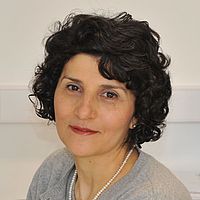
Prof. Dr. Deniz Tasdemir is a Full Professor (W3) of Marine Natural Products Chemistry at GEOMAR Helmholtz-Zentrum für Ozeanforschung Kiel and serves as Director of the GEOMAR-Biotech center and Head of the Marine Natural Product Chemistry Research Unit. Her career spans institutions including the National University of Ireland Galway and UCL School of Pharmacy. PhD in Pharmacy, ETH Zurich (1997) Post-doctoral work, University of Utah (2001) Dr. Helmut Legerlotz Fellowship, University of Zurich (2002-2025) Her research focuses on marine chemical ecology , metabolomics , and bioprospecting for bioactive compounds from sponges, algae, and marine microbiomes. Recent work explores seagrass pathogen reduction, microbiome interactions, and aquafeed applications. Scientific awards include: Waters Award for Natural Products Innovation (2016) Egon Stahl Silver Medal (2005) Pierre Fabre Prize (2004) ETH Zurich Medal (1997) She leads collaborative projects on ocean sustainability and marine drug discovery, with editorial roles in Marine Drugs , Planta Medica , and Phytochemistry Letters .
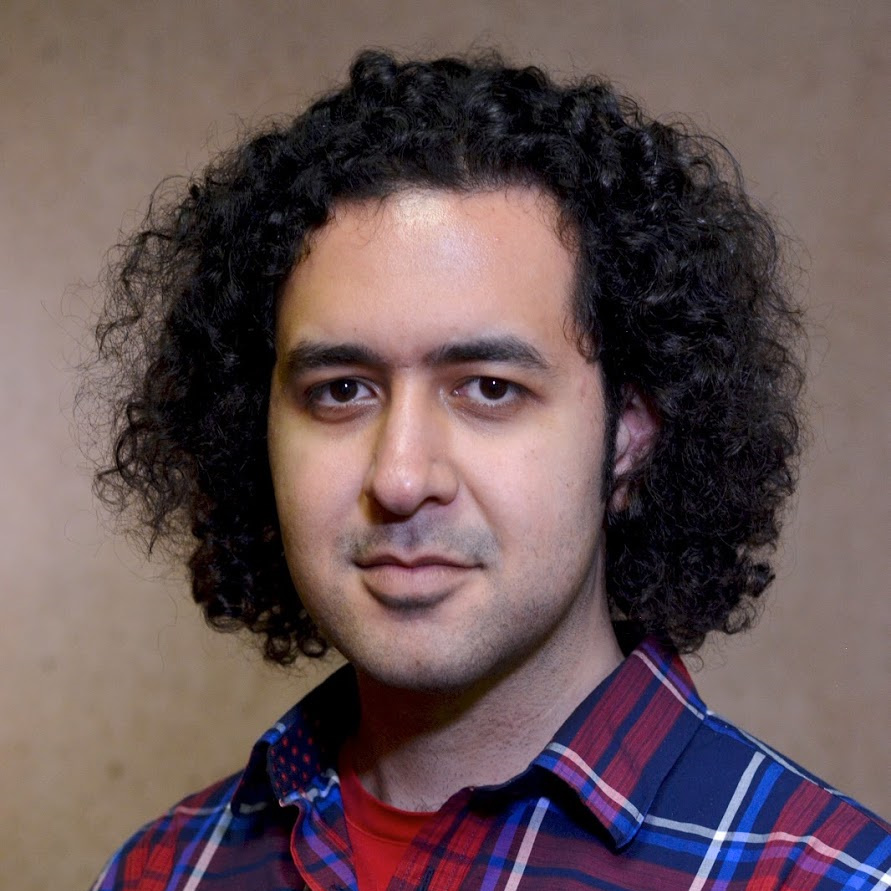
Prof. Dr. Alex Hall is an Associate Professor at the Department of Environmental Systems Science and Head of the Institute of Integrative Biology at ETH Zürich , Switzerland. He holds a PhD from the University of Edinburgh (2008), followed by postdoctoral work at the University of Oxford and ETH Zürich, including prestigious SNSF Ambizione and Marie Curie Intra-European fellowships. Research Focus: The Hall lab investigates Microbial interactions in human microbiomes Antibiotic resistance evolution Horizontal gene transfer dynamics Computational and in vitro modeling of microbial communities Evolutionary medicine applications Scientific Contributions: His recent studies analyze probiotic treatments for Staphylococcus aureus decolonization, strain-specific ecological success in gut microbiomes, and CRISPR-Cas system roles in plasmid conflicts. The lab employs computational frameworks combined with experimental validations. Scientific Awards: SNSF Ambizione fellowship Marie Curie Intra-European fellowship He also serves on the SNSF PRIMA fellowship evaluation panel and the ETH Zürich Coordination Council Medicine .
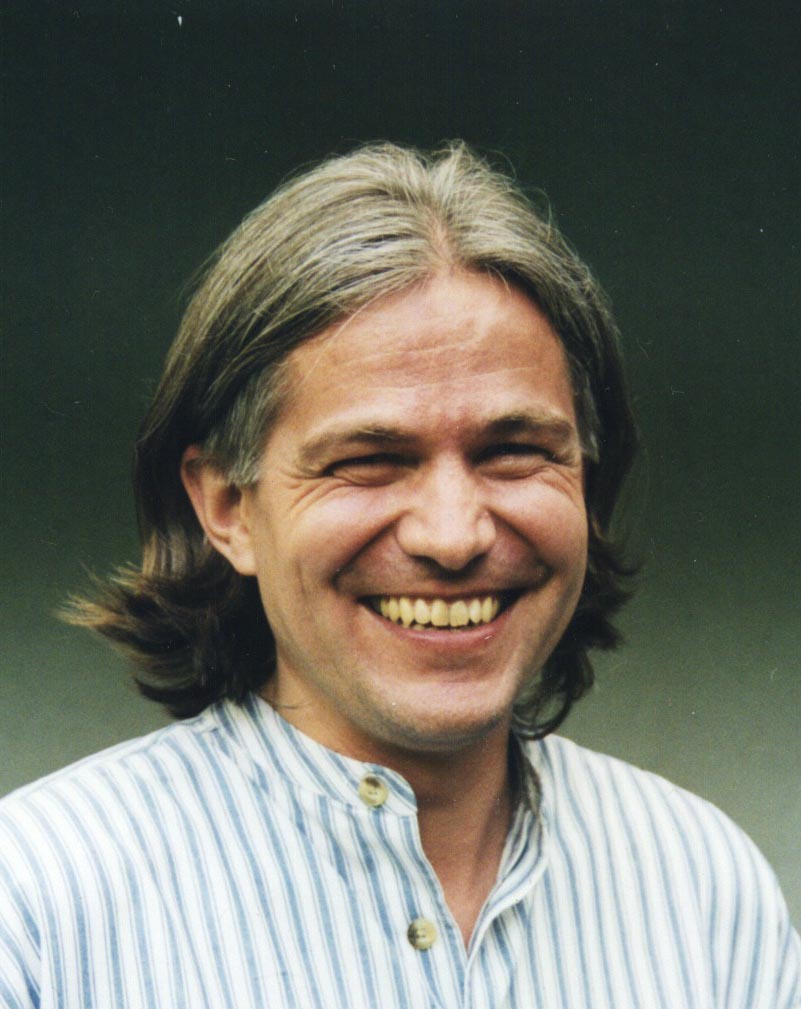
Ardalan Amiri Sani is an Associate Professor in the Computer Science Department at the University of California, Irvine (UCI), affiliated with the Donald Bren School of Information & Computer Sciences. He leads the Trustworthy Systems Lab (TrussLab), focusing on secure and reliable mobile systems, operating systems, and virtualization. His research bridges mobile computing, security, and OS design, addressing challenges in I/O devices, kernel hardening, and verifiable provenance. Education: Ph.D. and M.Sc. from Rice University (ECE), B.Sc. from Sharif University of Technology. Awards include the NSF CAREER Award, Google ASPIRE Award, and UCI Dean's Mid-Career Research Award. He has advised numerous graduate and undergraduate students, many of whom now work in academia and industry. Research highlights include Tabellion (secure legal contracts on mobile devices), ProvCam (verifiable video provenance), and work on minimizing smartphone TCBs via hardware isolation. His grants include NSF funding for OS kernel security and NSA support for provenance systems. Education: Ph.D., Electrical and Computer Engineering, Rice University, 2014 B.Sc., Electrical Engineering, Sharif University of Technology Grants: $500K NSF Award (with UCR) for OS kernel security (2020) NSF SaTC Award for GPU security in browsers Google ASPIRE Award for Android system call filtering Labs/Teams: Trustworthy Systems Lab (TrussLab), collaborating with industry partners like Intel and Broadcom.
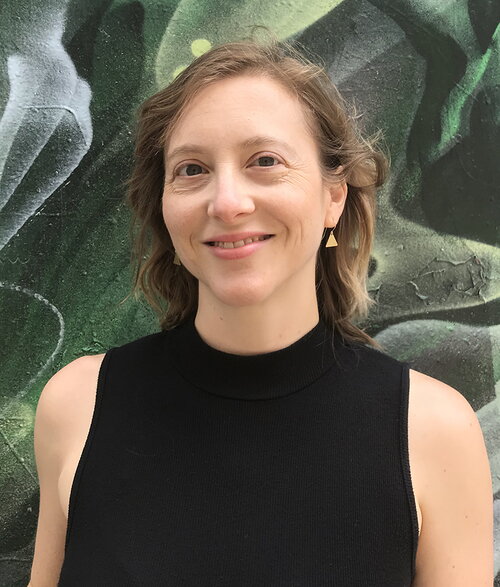
Robert M. Holt is a Professor in the Department of Geology and Geological Engineering at the University of Mississippi. His research focuses on geological CO2 sequestration, fluid transport in porous media, and hydrogeological characterization for nuclear waste disposal. Holt investigates how fluid behavior in heterogeneous geological formations impacts environmental processes ranging from carbon storage to groundwater contamination. His work examines the fundamental physics governing multiphase flow through porous and fractured geological media, with applications to contaminant transport, energy resources, and waste isolation. Holt has developed experimental methods for visualizing and modeling fluid behavior in heterogeneous subsurface environments, improving understanding of capillary processes and flow dynamics. Holt's research includes field studies of evaporite karst systems, geochemical assessments of aquifer systems, and investigations of hydraulic properties in low-permeability mudrocks. His work on CO2 injection monitoring has contributed to safer implementation of carbon sequestration technologies.
Peter Druschel is a Professor and founding Director of the Max Planck Institute for Software Systems (MPI-SWS) in Saarbrücken, Germany. He holds adjunct professorships at Saarland University and the University of Maryland. His research focuses on distributed systems, operating systems, and privacy-preserving technologies. He earned his Ph.D. from the University of Arizona in 1994 and has held roles at Rice University since 1994, including Professor of Computer Science (2002–2005). Education: Ph.D. in Computer Science, University of Arizona (1994) Research Interests: Distributed systems, operating systems, network security, accountable computing, and privacy technologies. Current projects include privacy compliance in data systems (Thoth), secure communication (EbN), and privacy-aware image capture (I-Pic). Awards: SIGOPS Mark Weiser Award (2008) NSF CAREER Award (1995) Member of Academia Europaea and German Academy of Sciences Leopoldina Grants & Leadership: Leads the ERC Synergy Project imPACT, chairs the Max Planck Society’s Chemistry, Physics, and Technology Section, and collaborates with institutions like Cornell and Google. Advises on policy issues related to technology and privacy. Labs/Teams: Distributed Systems Group at MPI-SWS, collaborations with Microsoft Research and MIT. Current team includes students and postdocs working on privacy, security, and distributed systems.
Mehdi Abdollahi is an Associate Professor at Chalmers University of Technology's Department of Food and Nutrition Science. His research focuses on alternative proteins, food biotechnology, and plant-based hybrid foods, with emphasis on sustainable utilization of food side streams, legumes, cereals, and microalgae as future protein sources. Develops pH-shift technology and ultrasound-assisted methods for protein extraction Specializes in hybrid food engineering via fermentation and biorefinery Works on 3D food printing and high-moisture extrusion for food analogs Researches collagen and biobased food packaging materials His work includes >100 peer-reviewed publications, 4 book chapters, and 3 patents. Current projects involve collaborations with Arla Foods, Lantmännen, and Nordic Seafarm, addressing sustainable seafood systems and plant-protein hybridization. 2024 Bertebos Prize recipient 2025: Recognized among Sweden's Top 101 Sustainability Figures Mentors 7 PhD students and 3 postdocs while collaborating with European institutions like Kristianstad University and Ankara University. His group explores biorefinery strategies, hybrid food functionality, and innovative packaging solutions.
Nam Sung Kim is the W. J. "Jerry" Sanders III-Advanced Micro Devices Inc. Endowed Chair and holds a Professorship in Electrical and Computer Engineering at the University of Illinois. He is also affiliated with the Siebel School of Computing and Data Science, Coordinated Science Lab, and National Center for Supercomputing Applications (NCSA). His research focuses on computer architecture, memory systems, chiplet integration, and hardware security. Key areas include energy-efficient computing, processing-in-memory (PIM), and mitigating hardware vulnerabilities like rowhammer attacks. Kim has received prestigious awards including IEEE Fellow (2016), MICRO Hall of Fame (2018), NAI Fellow (2023), and NSF CAREER Award (2015). His work spans publications in top venues like ASPLOS and IEEE journals, addressing topics such as CXL-based memory systems, DRAM module optimization, and GPU architecture improvements. Collaborations emphasize interdisciplinary research in hardware-software co-design and emerging technologies. His labs and teams at Coordinated Science Lab and NCSA drive innovations in scalable computing, near-memory processing, and cloud infrastructure for AI workloads. Ongoing projects include developing resilient memory hierarchies and accelerating large-scale machine learning models through novel architecture designs.
Katy D. Heath is a Professor of Plant Biology and Affiliate Professor in Microbiology at the University of Illinois Urbana-Champaign (UIUC). She leads the Plant Biology department and is affiliated with the Carl R. Woese Institute for Genomic Biology. Her research focuses on the evolution of mutualisms, particularly plant-microbe interactions such as legume-rhizobium symbiosis, emphasizing genetic and ecological factors influencing symbiotic stability and adaptation. She investigates how environmental pressures (e.g., global change) shape mutualistic relationships and microbial community dynamics. Education: B.S. (2000) and Ph.D. (2007) from the University of Illinois and University of Minnesota, respectively, followed by postdoctoral work at the University of Toronto (2007–2009). Research Interests: Symbiosis evolution, microbial genetics, plasmid transmission dynamics, and the impacts of agricultural practices on rhizobia populations. She studies diverse systems, including Medicago-Sinorhizobium, soybean-Bradyrhizobium, and invasive legume-rhizobium interactions. Recent publications (2020–2025) highlight studies on endophyte impacts on soybean yield, rhizobia diversity under conventional farming, and genomic analyses of symbiotic coevolution. Her work integrates molecular biology, quantitative genetics, and ecology. Grants & Collaborations: Lead PI on a $12.5M NSF Biology Integration Institute (Genomics and Eco-evolution of Multi-scale Symbiosis). Her team includes collaborations with institutions like Indiana University and the University of Chicago. Labs & Teams: Heath Lab focuses on symbiosis research, with active projects on microbiome dynamics, plasmid-host coevolution, and community outreach (e.g., Boys and Girls Club collaborations). Recent lab highlights include student graduations (e.g., Ivan Sosa Marquez, Chase) and awards like the John R. Laughnan Award in Plant Biology.
Nicholas Kortessis is an Assistant Professor in the Department of Biology at Wake Forest University, within The Undergraduate College. His research lies at the intersection of ecology, evolution, and theoretical modeling, focusing on how environmental variability shapes biological diversity. Research Interests: His primary areas include statistical and theoretical ecology, adaptation in variable environments, population and community dynamics, and ecosystem modeling. He uses mathematical frameworks to simulate ecological processes across large spatial and temporal scales, bridging experimental data with predictive theory. Publication Trends: His recent work spans topics such as habitat fragmentation, disease in invasive species, character displacement, seed dormancy evolution, and pandemic transmission dynamics. These reflect a strong emphasis on theoretical and synthetic approaches to ecological problems, often involving collaboration across institutions. Scientific Awards: No awards are mentioned in the provided text. Advising and Grants: While no specific students or grants are listed, Dr. Kortessis leads an active research lab and collaborates widely, indicating ongoing mentorship and likely grant-supported research. His lab engages in theoretical and data-driven ecological studies, suggesting funding from agencies supporting environmental and theoretical biology. Labs and Teams: He runs the Kortessis Lab at Wake Forest University, which focuses on modeling ecological and evolutionary processes. The lab emphasizes mathematical and conceptual tools to explore biodiversity, coexistence, and ecosystem responses to environmental change.
Mirjana Stojilovic is a Researcher at École Polytechnique Fédérale de Lausanne (EPFL) in the School of Computer and Communication Sciences (IC), specifically within the Institute of Computer Engineering (IINFCOM) and the Parallel Systems Architecture Laboratory (PARSA). She also serves as a Lecturer in the SSC - Teaching department at EPFL. Her office is located at INJ 235, Station 14, 1015 Lausanne, Switzerland. Mirjana Stojilović received her Dipl. Ing. and Ph.D. degrees from the School of Electrical Engineering, University of Belgrade, in 2006 and 2013, respectively. Her academic journey includes collaborating with the Processor Architecture Laboratory at EPFL as a Guest Researcher from 2010 to 2013, working at the University of Applied Sciences Western Switzerland as a senior researcher from 2013 to 2016, and joining the Parallel Systems Architecture Lab at EPFL in October 2016. Dr. Stojilovic's research spans field-programmable technology, electronic design automation (EDA), and electrical-level attacks and countermeasures for reconfigurable hardware. Her work bridges the gap between hardware design and security, with a particular focus on vulnerability analysis and protection mechanisms for FPGA-based systems in cloud environments. She has made significant contributions to understanding side-channel attacks, fault injection techniques, and secure multi-tenancy solutions for shared hardware resources. Her extensive publication record reveals a clear research trajectory from traditional FPGA design and EDA topics toward increasingly security-focused investigations. Recent work demonstrates deep expertise in power analysis attacks, hardware trojans, and countermeasures for cloud-based FPGA systems, reflecting the growing importance of hardware security in distributed computing environments. Scientific Awards and Recognitions: Best Paper Award at 2016 International Symposium on Electromagnetic Compatibility (EMC Europe 2016) Young Scientist Award at 33rd International Conference on Lightning Protection (ICLP2016) Young Author Best Paper Award at the 20th Telecommunication Forum in Belgrade (TELFOR 2012) EPFL School of Computer and Communication Sciences (IC) Teaching Award (2015) Nominated for Best Paper Award at the International Conference on Field-Programmable Technology (FPT) (2020) Dr. Stojilovic has advised numerous PhD students including Coulon Louis, Pirayadi Rouzbeh, and Shrivastava Shashwat, along with past EPFL PhD students Glamocanin Ognjen and Mahmoud Dina. She has supervised dozens of semester and diploma projects focusing on hardware security, FPGAs, design automation, side-channel attacks, and cloud computing. Her service to the academic community includes serving on program committees for FPGA, FCCM, FPL, and DATE conferences, reviewing for multiple IEEE and ACM journals, and acting as associate editor for IEEE ESL and ACM TRETS. As a member of the Parallel Systems Architecture Laboratory at EPFL, Dr. Stojilovic leads research projects investigating security aspects of reconfigurable hardware systems. Her team works at the intersection of computer architecture, electronic design automation, and hardware security, with particular emphasis on vulnerabilities and protections for shared FPGA resources in cloud environments.
Associate Professor Bambang Trigunarsyah holds a position at RMIT University since 2018, affiliated with the School of Property, Construction and Project Management (PCPM). He earned his BSc in Civil Engineering from Colorado School of Mines, a Master's in Civil Engineering (Construction Management) from the University of Indonesia, and a PhD in Engineering Project Management from the University of Melbourne. His career spans industry roles, including project engineering in Indonesia's oil and gas sector, academic leadership at the University of Indonesia, and international teaching/research appointments at Queensland University of Technology (QUT) and King Fahd University of Petroleum and Minerals in Saudi Arabia. Research interests focus on post-disaster reconstruction, infrastructure project governance, constructability of infrastructure, and project management in developing countries. Notable projects include risk management frameworks using blockchain, circular economy in Saudi construction, and BIPV energy solutions. He actively supervises HDR students in areas like public-sector project success determinants and thermal environment studies. Bambang serves as Higher Degree Research Delegate Authority (HDR DA) for the School of PCPM and teaches postgraduate project management programs. Professional memberships include AIPM, PMI, and ASCE. His industry advisory roles include Indonesia's National Construction Service Development Board (2002-2007) and Australia-Indonesia Centre's Infrastructure Cluster (2016-2018). Recent research emphasizes BIM applications in infrastructure preservation, risk assessment methodologies, and climate-resilient construction. His work bridges theory and practice, addressing challenges in emerging economies and complex project environments.
Gian Antonio Susto is an Associate Professor at the Department of Information Engineering , University of Padova . With a Ph.D. in Information Technology and post-doctoral experience at National University of Ireland, Maynooth, he leads research in Machine Learning , Semiconductor Manufacturing , and Industrial IoT . His work bridges Anomaly Detection , Continual Learning , and Algorithmic Fairness with applications in Hydroelectric Power Plants , Particle Accelerators , and Smart Mobility . B.Sc. and M.Sc. in Controls Engineering, University of Padova (cum laude) Ph.D. in Information Technology, University of Padova (2013) Post-Doc at National University of Ireland, Maynooth (2012-2013) Assistant Professor at University of Padova (2013-2021) His research focuses on Explainable AI , Virtual Metrology , and Deep Learning for manufacturing and infrastructure monitoring. Recent projects include the AIMS5.0 (AI for Manufacturing Sustainability) and MICS (Circular Economy in Italy) initiatives. His publications span Engineering Applications of Artificial Intelligence , IEEE Transactions , and Information Processing & Management , with 15+ recent papers on topics like Fault Diagnosis , Continual Learning , and Fair Ranking . Key scientific awards include: IEEE CCTA Best Student Paper Award (2021) IP&M 2020 Ph.D Paper Award Best Industry Paper Award, European Workshop on Advanced Control and Diagnosis (ACD 2019) He has supervised Ph.D. students on projects involving Particle Accelerators , Plant Behavior Modeling , and Explainable AI , with alumni now at institutions like Max Planck Institute , IBM , and Scripps Research . Current teaching includes Reinforcement Learning and Explainable Machine Learning at graduate and Ph.D. levels.
Claudio Canizares is a University Professor and Hydro One Endowed Chair in the Department of Electrical and Computer Engineering at the University of Waterloo. He also serves as Executive Director of the Waterloo Institute for Sustainable Energy (WISE). With a career spanning over 30 years, his research focuses on power systems stability, smart grids, microgrids, and renewable energy integration. He has secured nearly $118 million in grants and supervised 180+ researchers/students. Education: PhD (1991) and MSc (1988) in Electrical Engineering from University of Wisconsin-Madison; Electrical Engineering Diploma (1984) from Escuela Politécnica Nacional, Ecuador. Research Interests : Nonlinear systems theory, FACTS/HVDC applications, energy storage systems, microgrid stability/control, renewable integration in remote communities, and smart grid analytics. His work emphasizes bridging academic research with industrial applications through collaborations with utilities and tech firms. Key Achievements : IEEE Transactions on Smart Grid Editor-In-Chief; multiple IEEE Fellowships (IEEE, Royal Society of Canada, Canadian Academy of Engineering); 2017 IEEE PES Outstanding Educator Award; 2016 IEEE Canada Electric Power Medal. His publications (370+) include landmark papers on microgrid stability definitions and control frameworks, cited over 29,000 times. Teaching: Recently taught ECE 140 (Linear Circuits), ECE 467 (Power Systems Analysis), and graduate courses ECE 6601PD/ECE 6613PD on power systems modeling and analysis.
Björn Brandenburg is a researcher at the Max Planck Institute for Software Systems (MPI-SWS) in Kaiserslautern, Germany. His work focuses on real-time systems, scheduling algorithms, and operating system design, with a particular emphasis on predictable resource allocation and performance guarantees in multiprocessor and cyber-physical environments. His research interests include real-time response-time analysis (e.g., PROSA ), locking protocols for multiprocessor systems, side-channel mitigation in cloud environments, and the verification of real-time scheduling policies. He has contributed to foundational studies on deadline failure probabilities, self-suspending tasks, and predictable real-time Linux implementations. Scientific awards include recognition for outstanding papers on TimerShield (2017) Offline Equivalence (2017) . His work intersects with practical systems like LITMUSRT and ROS 2, aiming to bridge theoretical guarantees with real-world applications in safety-critical and distributed real-time systems.
Kyle C. Hale is an Associate Professor at Oregon State University's School of Electrical Engineering and Computer Science (College of Engineering). He holds a Ph.D. and M.S. from Northwestern University (2016, 2013) and a B.S. in Computer Science from UT Austin (2010). Prior to joining Oregon State in 2024, he served as an Associate Professor at Illinois Tech in Chicago. His research spans operating systems, high-performance computing (HPC), virtualization, computer architecture, and system security. Current work focuses on specialized system software stacks for emerging computing paradigms like memory disaggregation and parallelism optimization. He leads the HExSA Lab and collaborates with the HiPCastor group. Scientific Awards: NSF CAREER Award (2023-2028) Illinois Tech College of Computing Excellence in Research (2023) Illinois Tech College of Computing Excellence in Teaching (2021) Illinois Tech Department of Computer Science Teacher of the Year (2020) EuroSys '22 Best Artifact Award Recent Research Trends: His publications emphasize compiler techniques for memory-disaggregated systems, optimizing parallel runtimes through hardware-software integration, virtualization at fine granularities, and accelerating machine learning workloads via system-level innovations. Keywords include HPC, virtualization, parallelism, and secure execution contexts. Teaching: Courses taught include Computer Architecture (CS/ECE 472), System Security (CSP 544), Operating Systems (CS 450), and advanced topics in serverless/edge computing. He actively recruits PhD students to the HExSA Lab.