
Thomas D. C. Little is a Professor at Boston University, USA, specializing in Visible Light Communication (VLC), Optical Wireless Communication, and Mobile Ad Hoc Networks. His research focuses on hybrid RF/VLC systems, interference mitigation, and dynamic network optimization under illumination constraints. Recent work includes 3D localization via zone-based positioning Dynamic FOV receiver optimization Multi-tier transmission for 5G Li-Fi Security-aware OFDM modulation Research interests center on integrating optical wireless with traditional RF networks, developing energy-efficient communication protocols, and creating positioning systems for smart spaces. Publications analyze spectral efficiency, channel modeling, and coexistence strategies in dense optical environments. Collaborations span institutions in the USA and Germany, with applications in Industry 4.0 and coastal monitoring systems. His team has contributed to ns-3 simulator extensions for VLC, beam control in FSO systems, and interference analysis in optical networks. Current projects address reconciling SNR models and optimizing handover parameters via Q-learning for heterogeneous deployments.
جستوجوی استاد و پژوهشگر
استاد راهنما، استاد دانشگاه یا پژوهشگر مناسب برای مسیر پژوهشیتان را پیدا کنید و با او ارتباط بگیرید.
نمایش ۶۹۱-۷۰۵ از ۴٬۱۶۲ استاد راهنما
اطلاعات این پروفایلها از صفحات عمومی دانشگاهها جمعآوری شده و ممکن است بهروز نباشد.
Marta Catilloمشاهده پروفایل
پژوهشگر
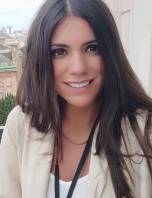
Marta Catillo is a Researcher at the Department of Engineering (DING) of the University of Sannio (UNISANNIO) . She specializes in Cybersecurity , with focus on Machine Learning applications for intrusion detection , IoT security , and cloud auto-scaling mechanisms . Her research addresses challenges in Denial of Service (DoS) mitigation , anomaly detection , and deep learning architectures for security. Teaching: [803004] PROGRAMMING 1 for Electronic and Biomedical Engineering students (2025 cohort) Contact: Office hours: Thursdays 3-5 PM, Room 23, Bosco Lucarelli Palace Research trends: From 2019-2025 publications, her work spans adversarial attack resistance , collective anomaly detection , outlier-aware architectures , and empirical analysis of defense mechanisms , with recurring collaborations with Antonio Pecchia , Umberto Villano , and Massimiliano Rak . Key methodologies include deep autoencoders , hybrid detection systems , and measurement-based security evaluation . Technical Contributions: Developed the ZED-IDS framework for zero-day threat detection, MultiCIDS for multivariate time series intrusion detection, and DEFEDGE for edge-cloud security testing.

Ashish Nandaمشاهده پروفایل
پژوهشگر ارشد
Ashish Nanda is a Research Fellow at the Deakin Cyber Research and Innovation Centre (Deakin Cyber) at Deakin University, Australia, where he contributes expertise to pioneering cybersecurity research. Prior to his current role, he served as a Research Fellow at the Centre for Cyber Resilience and Trust (CREST), Centre for Cyber Security Research and Innovation (CSRI), and the Deakin Blockchain Innovation Lab (DBIL). He has also enriched the academic community as a Lecturer at the University of Technology Sydney. Dr. Nanda's educational background includes: PhD in Computer Science from the University of Technology Sydney Bachelor of Technology in Computer Science & Engineering from Amity University, India His research spans cybersecurity, authentication technologies, digital identity, and usable security. Nanda has contributed to national projects funded by the Cyber Security CRC, focusing on multi-factor authentication, privacy-preserving digital credential wallets, and ambient intelligence-based continuous authentication systems. His work bridges technical security measures with human factors, emphasizing that security solutions must be both robust and user-friendly to achieve widespread adoption. This human-centered approach to security has become increasingly prominent in his recent publications. Dr. Nanda's publication trajectory shows a clear evolution from foundational network security protocols toward increasingly human-centered security approaches. While his earlier research focused on technical aspects of secure routing for wireless mesh networks and IoT infrastructure, his recent work emphasizes usable security, authentication devices, and digital identity systems. This shift reflects the growing recognition in cybersecurity that technical solutions alone are insufficient without considering human factors and user experience. Dr. Nanda has received significant research funding through: Cyber Security Cooperative Research Centre (CRC) Australia's Economic Accelerator program He actively contributes to public discourse through articles in The Conversation and interviews with major media outlets including SBS News, The Guardian, and The Feed. His research collaborations extend across multiple institutions with emphasis on practical applications addressing real-world cybersecurity challenges. Nanda has also co-founded Adroit Explorer Innovation Chambers, a not-for-profit organization dedicated to fostering innovation and exploration in technology.
Line Katrine Harder Clemmensen is a Professor at the Department of Mathematical Sciences, University of Copenhagen. She specializes in statistical modeling, machine learning, and AI, with emphasis on low resource domains, explainability, and fairness in health/life science applications. She co-founded Interhuman AI as Chief Scientific Officer and maintains an active research program across multiple disciplines. Statistical Modeling Machine Learning Explainable AI Fairness in AI Health/Life Science Applications Her recent publications (2024-2025) span computational biology, neuroscience, environmental science, and emotion recognition. Notable collaborations include interdisciplinary work in pediatric OCD analysis, fungal microbiome prediction, and facial emotion recognition systems. She actively explores fairness and scalability in AI models. Dr. Clemmensen holds 60 publications with significant impact across computational biology (40+ citations), neuroscience (68+ readers), and machine learning (20+ Scopus citations). She has been referenced in news outlets, blogged, and discussed across multiple social platforms.

Ashwinkumar Venkatanaga Machanavajjhala is an Adjunct Associate Professor of Computer Science at Duke University's Trinity College of Arts & Sciences since 2024, with prior roles as Associate Professor (2018-2024) and Assistant Professor (2012-2018). His research focuses on differential privacy, secure multi-party computation, and privacy-preserving data analysis frameworks. Education: Ph.D. from Cornell University (2008) His work spans privacy-preserving algorithm design, synthetic data generation, and privacy-utility trade-offs. Recent research themes include differential privacy for aggregate queries, foreign key constraints in database systems, and policy-aware privacy frameworks . Grant projects like RAISE: C-Accel Pilot and RAPID: Poirot highlight his leadership in privacy and data security initiatives. Scientific contributions include groundbreaking work on ϵktelo for differentially private algorithms, DP-Sync for update pattern privacy, and Blowfish Privacy for customizable privacy definitions. Awards include the NSF CAREER Award (2013) for early-career impact. In outreach, he led the Bass Connections Faculty Team (2018-2019) addressing vaccine misinformation in Durham. Teaching includes COMPSCI 891: Special Readings in Computer Science (Summer 2022).
- Logic in Computer Science
- Coalgebras
- Modal Logics
- +۷ مورد دیگر
Corina Cirstea is a Professor in the School of Electronics and Computer Science at the University of Southampton, where she has been a faculty member since 2003. She holds a DPhil in Computation from the University of Oxford and previously served as a Junior Research Fellow at St. John's College, Oxford. She is the Programme Leader for the BEng/MEng in Software Engineering and teaches core modules including Algorithmics, Theory of Computing, and Automated Software Verification. Education: DPhil in Computation, University of Oxford (2000) Junior Research Fellowship, St. John's College, Oxford (1999–2003) Her research focuses on logic and models of computation, particularly coalgebras and their applications in automated verification and synthesis. She explores coalgebraic temporal logics, trace semantics, and formal modeling of real-time and resource-aware systems, primarily using Event-B. Her work bridges theoretical foundations with practical system verification, especially in safety-critical domains. The analysis of her recent publications reveals a strong trend in formal methods, with consistent contributions to real-time system modeling, refinement techniques, and coalgebraic semantics. Her work integrates theoretical depth with engineering applications, particularly in automated verification and system design. Scientific Service and Recognition: Member of the editorial board, Compositionality journal Member of IFIP Working Group 1.3 Member of CALCO Steering Committee Member of CMCS Steering Committee Program Committee member for SEFM 2021, MFPS 2021, HIGHLIGHTS 2021, ICALP 2021, MFCS 2021, ACT 2020, ICE 2020, CMCS 2020, FOSSACS 2020 She advises PhD students including Chenyang Zhu and Eman Alkhammash, and has been involved in multiple research grants focused on formal verification, real-time systems, and software engineering. She collaborates extensively with researchers such as Michael Butler and Ichiro Hasuo. Her work contributes to both foundational theory and practical tooling in formal methods. She is associated with research groups and initiatives in formal methods and theoretical computer science at the University of Southampton, particularly within the broader context of software engineering and system verification.
Moreto Planas, Miquelمشاهده پروفایل
مدرس ارشد
Miquel Moreto Planas is a Senior Lecturer in the Department of Computer Architecture at the Barcelona School of Informatics, Universitat Politècnica de Catalunya (UPC). He is also affiliated with the Barcelona Supercomputing Center (BSC-CNS), a leading institution in high-performance computing. His academic profile is deeply rooted in computer architecture and high-performance computing, with a strong emphasis on practical and theoretical advancements in multicore systems, memory management, and hardware acceleration. His research interests span a wide range of topics including computer architecture, high-performance computing, multicore and manycore systems, cache and memory management, hardware acceleration for genomics and AI, RISC-V processor design, processing-in-memory, interconnection networks, and real-time systems. These interests are reflected in his extensive publication record and collaborative projects. The most recent articles highlight a significant trend toward interdisciplinary research, particularly the application of advanced computer architecture techniques to bioinformatics and healthcare. Key themes include the acceleration of genomic sequence alignment using novel hardware such as processing-in-memory, the development of benchmarks for ARM-based HPC systems in genomics, and the creation of AI-based 3D decision support tools for neurosurgical applications. His work also continues to advance core computer architecture topics like cache management, power-aware resource allocation in heterogeneous systems, and the design of secure, post-quantum cryptographic hardware based on RISC-V. Fulbright Award 2011 HiPEAC Paper Award HiPEAC Paper Award 2024 HiPEAC Paper Award Moreto has been a principal investigator or key contributor to multiple competitive R&D+i projects, such as the STRATUM project for neurosurgical tools, REDIOH for open hardware, and the Laboratorio Zettaescala de Barcelona. He has advised several doctoral students, including López, G., Kostalampros, I., and Haghi, A., and is a core member of the CAP (High Performance Computing) research group at UPC. His work is characterized by strong collaborations with leading researchers like Mateo Valero, Eduard Ayguadé, and Jesús Labarta, often bridging the gap between UPC and BSC-CNS. His laboratory and team affiliations are centered around the CAP group and the Barcelona Supercomputing Center, where he contributes to cutting-edge research in high-performance and embedded computer architectures. His recent work on the BIMSA accelerator and the STRATUM project demonstrates a clear future direction toward applying high-performance computing solutions to critical problems in genomics and medicine.
Professor Ying Liu is a Professor and Chair in Intelligent Manufacturing at the School of Engineering, Cardiff University, UK, a position he has held since August 2021. He leads the High-value Manufacturing research group within the Department of Mechanical Engineering. Prior to this, he served as an Assistant Professor at the National University of Singapore (2010–2013) and the Hong Kong Polytechnic University (2006–2010). PhD, Innovation in Manufacturing Systems and Technology (IMST), Singapore-MIT Alliance (SMA), National University of Singapore (2006) MSc, Singapore-MIT Alliance (SMA), Nanyang Technological University (NTU) MEng & BEng, Mechanical Engineering, Chongqing University, China His research spans engineering informatics, digital and intelligent manufacturing, AI and machine learning in engineering design, and advanced ICT in manufacturing. He has published over 160 scholarly articles and contributed to major journals and conferences in the field. His recent work focuses on knowledge graphs, digital twins, human-robot collaboration, and energy modeling in smart manufacturing, often integrating large language models and advanced deep learning techniques. The most recent publications highlight a strong trend toward integrating AI, particularly large language models and knowledge graphs, into smart manufacturing systems. Themes include predictive maintenance, battery state estimation, human fatigue modeling, and sustainable manufacturing. His work increasingly emphasizes human-centric approaches aligned with Industry 5.0 principles. Best Paper Award 2022, CCF Transactions on Pervasive Computing and Interaction ESI Highly Cited Paper and Hot Paper, Research and Application of Machine Learning for Additive Manufacturing 2020 Reviewer of the Year, ASME Journal of Computing and Information Science in Engineering (JCISE) Professor Liu actively supervises postgraduate students and has advised several successful PhD candidates, including Dr. Chong Chen and Mr. Zhouyang Ding. His research is funded by major agencies such as EPSRC (UK), GRF (Hong Kong), MOE (Singapore), A*STAR, and NSF (China), as well as industrial partners. He serves as Associate Editor for ASME JCISE, IEEE T-ASE, and several other journals, and was recently appointed Senior Editor of the Journal of Engineering Design. He also leads special issues and topical collections on AI in engineering. He leads the High-value Manufacturing research group at Cardiff University, focusing on digital transformation in manufacturing. His team works on projects involving digital twins, knowledge graphs, and AI-driven design innovation, often in collaboration with international institutions.
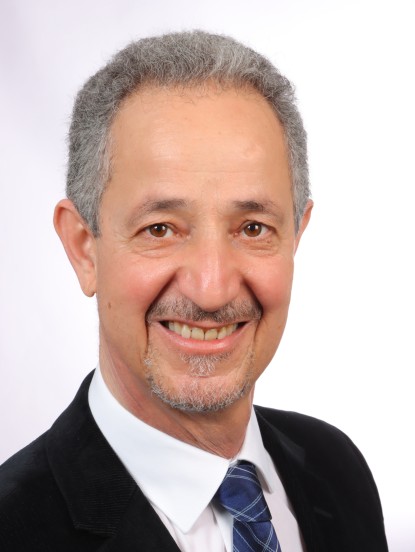
Abdelhak M. Zoubir is a Professor of Signal Processing and Head of the Signal Processing Group at Technische Universität Darmstadt, Germany. He has held leadership roles including Head of the Department of Electrical Engineering and Information Technology (2012–2014 and 2020–2022), and President of the European Association for Signal Processing (EURASIP, 2017–2018). His research focuses on statistical signal processing with applications in radar imaging, biomedical engineering, and automotive systems. Zoubir has authored over 500 publications and is a Fellow of IEEE and EURASIP. He currently leads projects on radar communication integration, robust signal processing algorithms, and radiation-hardened sensor development. Education: Dipl.-Ing. (BSc/MSc) from Fachhochschule Niederrhein and Ruhr-Universität Bochum, followed by a Dr.-Ing. (PhD) in Electrical Engineering from Ruhr-Universität Bochum (1992). Research Interests: Bootstrap techniques, robust detection/estimation, cooperative sensor networks, radar for landmine detection, and automotive safety systems. He has pioneered methods in robust statistical signal processing, including low-rank matrix completion and sparsity-aware algorithms. Recognition: Recipient of the IEEE Meritorious Service Award (2018), IEEE Signal Processing Magazine Best Paper Award (2017), and the M. Barry Carlton Award (2014). He has been a keynote speaker at major conferences such as ICASSP and EUSIPCO, and served as Editor-in-Chief of the IEEE Signal Processing Magazine (2012–2014). Current Projects: Focus on automotive radar signal processing, radiation-hardened sensors (MALTA), and distributed learning robustness. His work bridges theoretical advancements with practical applications in defense, healthcare, and automotive industries.
Yolanda Becerra Fontal is a faculty member at the Universitat Politècnica de Catalunya (UPC), affiliated with the Department of Computer Architecture within the Barcelona School of Informatics (FIB). She is actively involved in research projects and collaborations, notably with the Barcelona Supercomputing Center, and is a member of prominent research groups such as the High Performance Computing Group (CAP) and CROMAI (Computing Resources Orchestration and Management for AI). Research Interests: Her research spans a broad spectrum of computer systems, with a consistent focus on performance, efficiency, and scalability. Key areas include Computer Architecture , High-Performance Computing (HPC) , Distributed and Cloud Systems , Resource and Energy Management in virtualized environments, and Data-Intensive Computing . More recently, her work has centered on innovative time-series database systems and data management for edge and cloud analytics. Publication Trends: Her recent scholarly output (2020-2022) shows a strong emphasis on time-series data management, proposing novel database architectures like NagareDB and strategies for polyglot persistence. Earlier work (2009-2013) was pivotal in MapReduce workload management, energy accounting for virtualized systems, and optical data center networks, demonstrating a long-standing contribution to foundational distributed computing challenges. Scientific Contributions: Her work has been published in top-tier journals and conferences such as Future Generation Computer Systems , IEEE Transactions , and Nucleic Acids Research . She has also contributed to significant competitive R&D projects and holds patents related to data flow management and distributed indexing. Advising and Grants: Dr. Becerra Fontal has served as a thesis advisor for doctoral students. Her research has been funded through competitive grants from national and regional programs, including Spanish State Research Plans (Plan Estatal de Investigación) and Catalonia's RIS3CAT strategy, supporting projects on high-performance computing and data management. Research Groups and Labs: She is a core member of the CAP - High Performance Computing Group and the CROMAI - Computing Resources Orchestration and Management for AI group at UPC. Her work is closely associated with the Barcelona Supercomputing Center (BSC) , one of Europe's leading supercomputing facilities, indicating access to advanced computational infrastructure.
Félix García is a prominent professor at the University of Castilla-La Mancha in Ciudad Real, Spain, with extensive contributions to software engineering, sustainable computing, and business process management. His research spans over two decades with 187 publications indexed in dblp, demonstrating consistent scholarly productivity and leadership in multiple research areas. Dr. García's research interests focus on critical contemporary challenges in software development, particularly green software engineering, energy efficiency in computing systems, and sustainable software development practices. His work bridges theoretical foundations with practical applications, addressing how software design, implementation, and maintenance impact environmental sustainability. He has pioneered research connecting software quality attributes with energy consumption, examining how design patterns, code smells, and refactoring techniques affect resource usage. His recent publications (2023-2025) reveal a strong focus on cutting-edge topics including Green AI, quantum computing sustainability, and energy-aware programming language design. These works demonstrate his ability to anticipate and address emerging challenges at the intersection of software engineering and environmental sustainability. Dr. García has received significant recognition through numerous collaborations, particularly with Mario Piattini (133 co-authored papers), Francisco Ruiz (63 papers), and María Ángeles Moraga (30 papers), establishing him as a central figure in his research community. His work has appeared in prestigious venues including IEEE Transactions on Software Engineering, Journal of Systems and Software, and ACM Computing Surveys. He has mentored numerous researchers who have become established scholars in their own right, including Javier Mancebo, Laura Sánchez-González, and César Jesús Pardo Calvache. His contributions to gamification in software engineering education through serious games like GLOBAL-MANAGER demonstrate his commitment to innovative teaching approaches.

Daniel S. Bergerمشاهده پروفایل
استادیار مدعو
- Cloud Computing
- Sustainability
- System Reliability
- +۷ مورد دیگر
Daniel S. Berger is a Principal Researcher at Microsoft's Azure Systems Research Group in Redmond, focusing on the efficiency, sustainability, and reliability of cloud platforms . He is also an Affiliate Assistant Professor at the Paul G. Allen School of Computer Science at the University of Washington, where he teaches graduate classes. His research spans systems stack innovations for sustainability , including work on memory tiering , repair operations , and cooling systems (Zissou). He leverages system prototyping , simulation , and statistical modeling in his work, often collaborating with PhD students and postdocs from institutions like Columbia, University of Toronto, CMU, and Princeton. Recent publications highlight his leadership in CXL-based memory management , carbon-efficient cloud design , and latency-aware caching . His tools, such as Belatedly and FOO , have demonstrated significant improvements in cache performance and latency optimization. Best Paper Awards: USENIX OSDI 2023, HotCarbon 2023, ACM SOSP 2021. Distinguished Paper: ASPLOS 2023. His work has been integrated into Apache Traffic Server and Microsoft production systems , with open-source tools and datasets released for reproducibility. Collaborations include hardware and OS development teams within Azure and academia.
Salma Emaraمشاهده پروفایل
استادیار
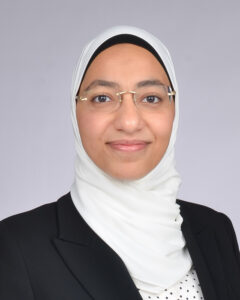
Salma Emara is an Assistant Professor in the Department of Electrical and Computer Engineering at the University of Toronto within the Faculty of Applied Science & Engineering. Her academic journey includes a B.Sc. in Electronics and Communications Engineering from the American University in Cairo (2018) and a Ph.D. in Computer Engineering from the University of Toronto (2022), supervised by Professor Baochun Li. Her research spans two domains: (1) technical work in reinforcement learning for computer networking , including adaptive bitrate selection, edge caching, and congestion control; and (2) pedagogical work focused on debugging skill development for beginner programmers and leveraging natural language processing in engineering education . She emphasizes hands-on learning through in-class activities and problem-solving assignments. Publication trends reveal a focus on reinforcement learning in networking (2018–2023) and a parallel interest in educational technology (2024). Her recent work (e.g., TextCraft ) explores NLP-driven resource recommendation for textbooks, while earlier projects (e.g., Cascade , Pareto ) address network optimization through machine learning. Scientific awards include: Faculty of Applied Science & Engineering Early Career Teaching Award (2025) Departmental Teaching Awards (2022–2024) Shortlisted for TATP Teaching Assistant Excellence (2022)
Xiandong Maمشاهده پروفایل
دانشیار
Dr Xiandong Ma is a Reader in Power and Energy Systems at Lancaster University's School of Engineering, where he has been a faculty member since December 2008. His research focuses on intelligent condition monitoring and fault diagnosis of power systems, with particular expertise in wind energy systems and smart grid technologies. His educational background includes: BEng in Electrical Engineering from Jiangsu University (1986) MSc in Power Systems and Automation from Nanjing Automation Research Institute (1989) PhD in Partial Discharge based High-voltage Plant Condition Monitoring from Glasgow Caledonian University (2002) Dr Ma's research spans intelligent condition monitoring and fault diagnosis/prognosis of wind power systems and electrical assets, condition-based operations and maintenance of power and energy systems, modeling, optimization, and control of smart/micro grids with renewable energy resources, power conversion and renewable energy integration, and associated machine learning and AI technologies and digital twin solutions. His work bridges theoretical advances with practical engineering applications in the renewable energy sector. His recent publications demonstrate a strong focus on quantum machine learning applications for wind turbine monitoring, electric vehicle-grid integration challenges, wave energy conversion systems, and nuclear fuel inspection technologies. The research shows a clear trajectory toward more sophisticated AI-driven solutions for energy systems, with increasing emphasis on multi-physics modeling and cross-domain applications. Dr Ma has received several prestigious recognitions: Chartered Engineer Fellow of the Institution of Engineering and Technology (FIET) Fellow of the Higher Education Academy (FHEA) Member of EPSRC Peer Review College KTP Fellowship awarded by University of Technology Sydney (2018) Ranked in the world's top 2% scientists by Stanford University He actively supervises numerous PhD students and postdoctoral researchers, with current projects including the Leverhulme Trust-funded "Self-Aware Power Networks: Autonomous Operation at Scale" and several EPSRC-funded initiatives. Dr Ma has secured significant research funding and collaborates extensively with industry partners to translate research into practical applications. Dr Ma leads research within Lancaster's Energy research group, focusing on the integration of advanced sensing, AI, and control techniques for next-generation power and energy systems. His team works closely with industrial partners including ALSTOM Power and various renewable energy companies to develop innovative solutions for real-world energy challenges.
Siobhán Clarke is a Professor at the School of Computer Science and Statistics, Trinity College Dublin, specializing in software systems for smart urban environments . Her work addresses dynamic software adaptation in large-scale, mobile IoT ecosystems , with a focus on QoS optimization and collaborative agent models . Director, Enable : National SFI IoT Research Programme Director, Future Cities Centre for Smart & Sustainable Cities Co-Lead, ADVANCE : SFI Centre for Advanced Networks Co-PI, CONNECT (Future Networks) and Lero (Software Research) Her research spans smart city infrastructure , edge computing , and multi-agent coordination , informed by 15+ years of publications on service-oriented architectures , QoS prediction , and self-adaptive systems . Key project contributions include DIVERSIFY (2016) and TRANSFoRm (2015). Scientific awards include election to the Royal Irish Academy (2023) and a Best Student Paper at IEEE ICWS 2011. She has supervised 20+ PhD/MSc students, including Fan Li (2020: SLA Negotiation Systems), Gary White (2020: IoT QoS Forecasting), and Andrei Palade (2019: Stigmergic Optimization).
فقط ۷۵۰ نتیجه اول نمایش داده میشود. برای رسیدن به نتایج دقیقتر، جستوجو را با فیلترها محدودتر کنید.