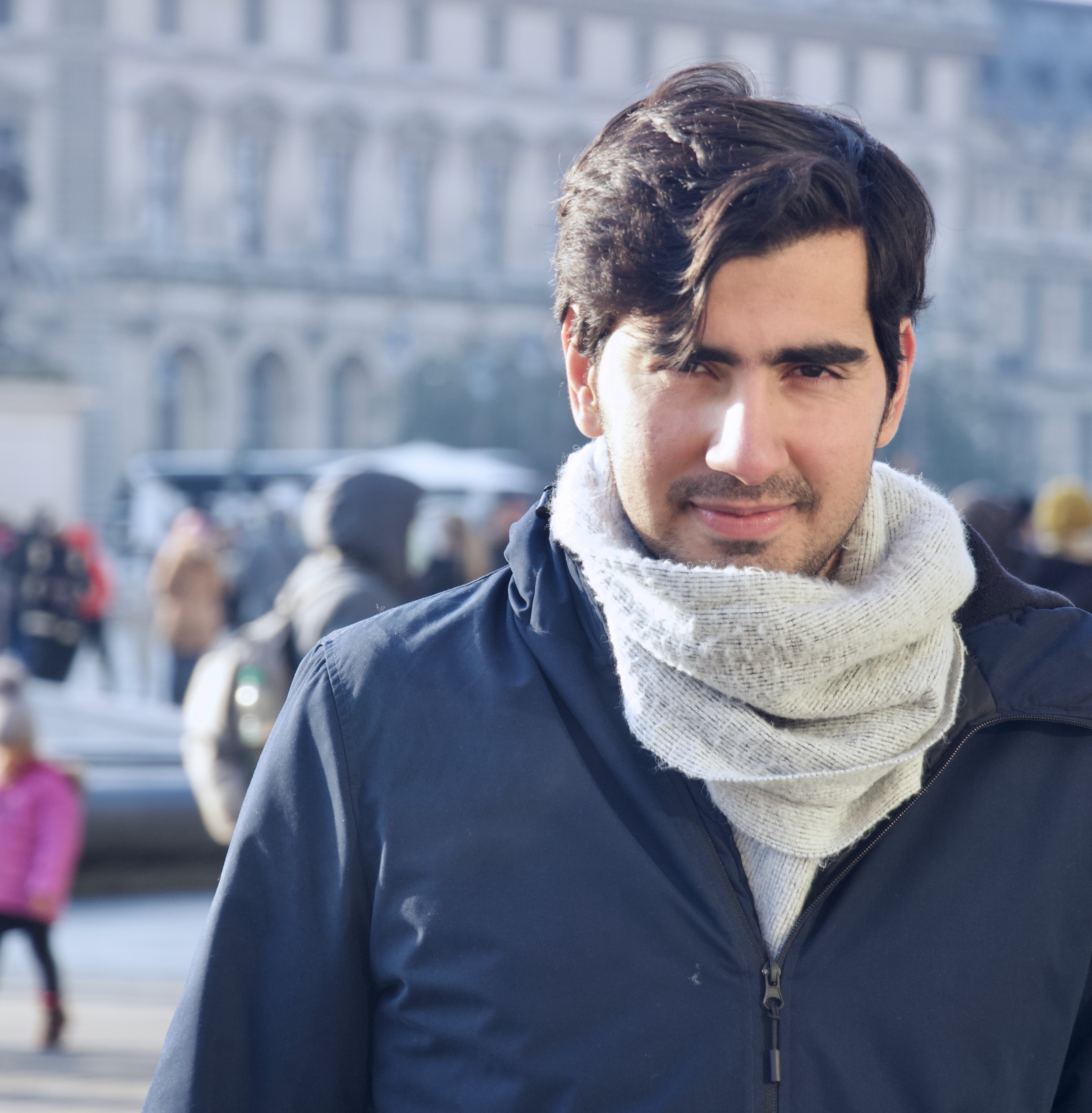
Saleh Ashkboos is a Ph.D. student in the Computer Science Department at ETH Zurich, advised by Professors Torsten Hoefler and Dan Alistarh. He is also a Research Assistant at the Scalable Parallel Computing Lab and an affiliated doctoral student of the ETH AI Center. His research focuses on accelerating deep neural network training and developing systems for large-scale graph processing. Prior to ETH Zurich, he earned his Master's degree in Computer Science from Sharif University of Technology, advised by Professor Amir Daneshgar. His work has led to notable contributions, including the best paper award at SC22 for 'ProbGraph.' Recent research emphasizes efficient LLM training and quantization techniques, with publications on topics like 4-bit inference, quantization-aware training frameworks, and scalable meteorological modeling. He has interned at Apple and Microsoft, and his work is accessible via Google Scholar and GitHub. Key projects include GPTQ (post-training quantization for transformers), SliceGPT (LLM compression), and ProbGraph (high-performance graph mining). His technical contributions span distributed systems, neural network optimization, and climate-related machine learning.
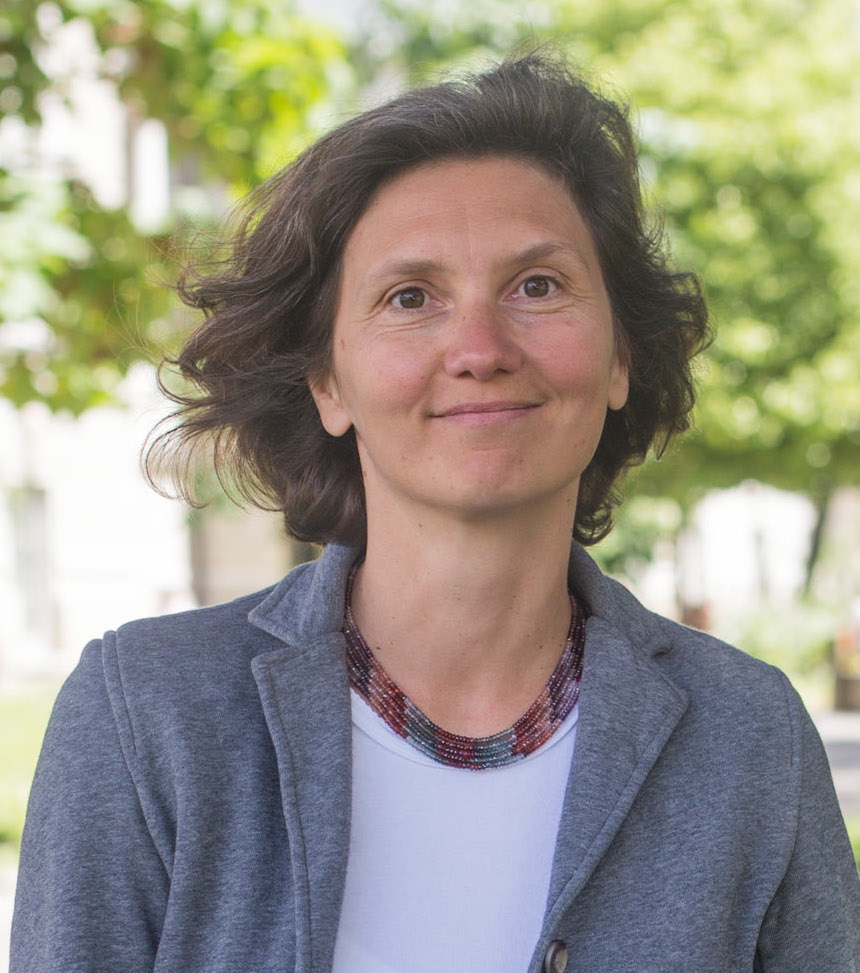
Laura Pozzi is a Full Professor at the Faculty of Informatics, Università della Svizzera italiana (USI), Switzerland, since 2015. She previously held positions as Associate Professor (2011–2015) and Assistant Professor (2005–2011) at USI. Prior to joining USI, she was a postdoctoral researcher at EPFL's Processor Architecture Laboratory (2001–2005), a research engineer at STMicroelectronics (2000), and an Industrial Visitor at UC Berkeley (2000). Education: MS and PhD in Computer Engineering from Politecnico di Milano, Italy (1996–2000). Her research focuses on the interaction between compiler and architecture design, particularly in embedded systems , with key areas including approximate computing , coarse-grained reconfigurable arrays (CGRAs) , high-level synthesis (HLS) , and fuzz testing . She has led projects on automated design space exploration, compiler optimizations for reconfigurable architectures, and error estimation in approximate circuits. Recent Publications span topics like SAT-based mapping for CGRAs , grammar-based fuzzing of shell interpreters , and approximate logic synthesis , reflecting her interdisciplinary work bridging hardware/software co-design and software verification. Scientific Awards: Credit Swiss Best Teaching Award IEEE DAC Best Paper Award Leadership Roles: Co-Program Chair, IEEE Symposium on Application Specific Processors (SASP) Editorial Board Member, IEEE Design and Test Students: Current: Rodrigo Otoni (Postdoc), Morteza Rezaalipour (PhD), Riccardo Felici (PhD), Cristian Tirelli (PhD) Alumni: Ilaria Scarabottolo (PhD/Postdoc), Lorenzo Ferretti (PhD/Postdoc), Georgios Zacharopoulos (PhD), Giovanni Ansaloni (PhD/Postdoc), Paolo Bonzini (PhD)
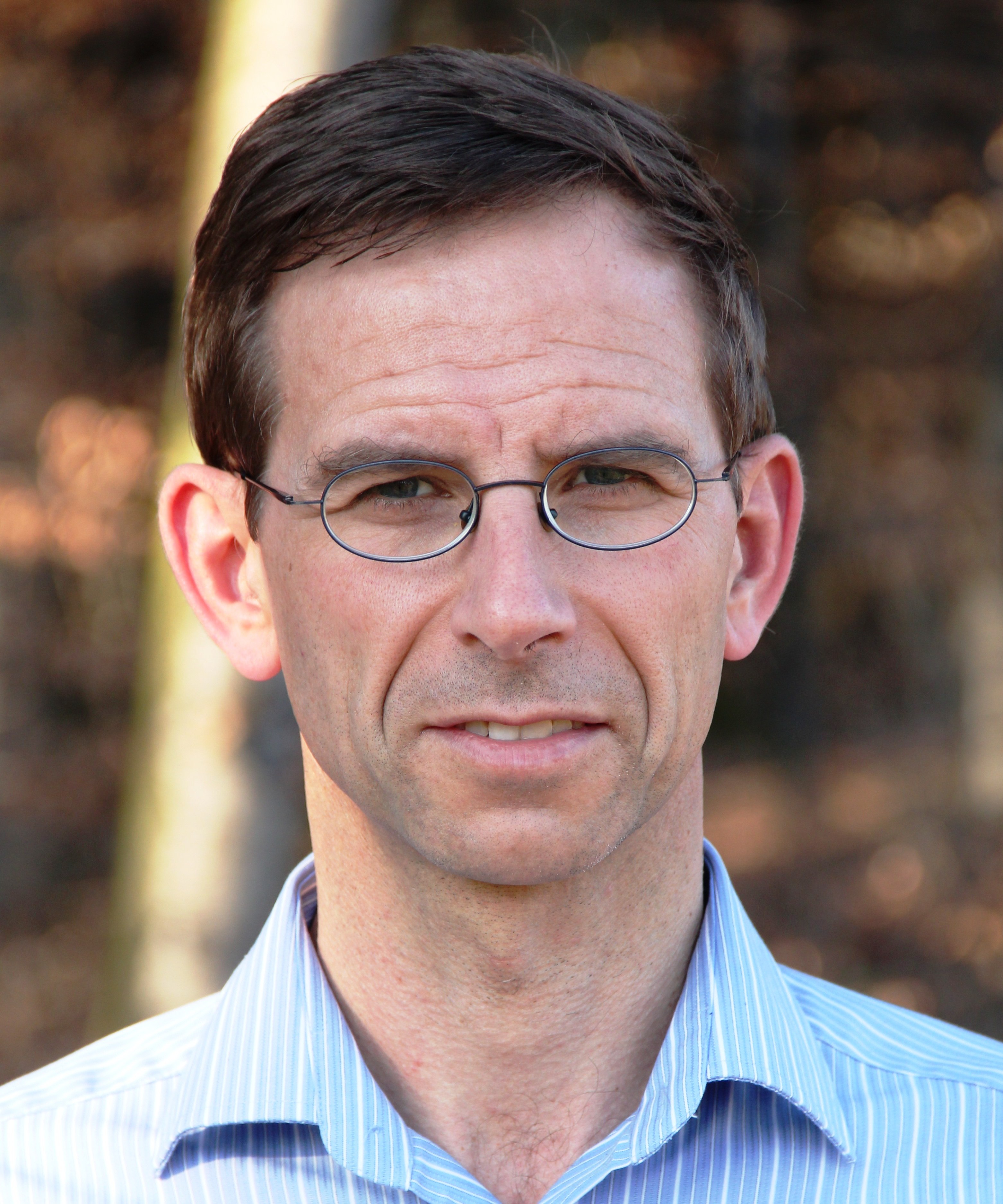
Prof. Ivan De Oliveira Nunes is an Assistant Professor of Cybersecurity at the University of Zurich (UZH), affiliated with the Department of Informatics (IfI) and the Digital Society Initiative (DSI). Previously, he held a similar position at the Rochester Institute of Technology (2021–2025). He earned his Ph.D. from the University of California, Irvine (UCI) in 2021, advised by Prof. Gene Tsudik, and was part of the Sprout Lab. His academic journey includes a B.S. in Computer Engineering from the Federal University of Espirito Santo (Brazil) and an M.Sc. in Computer Science from the Federal University of Minas Gerais (Brazil). His research focuses on Security & Privacy, Computer Networking, Embedded Systems, and Applied Cryptography. Key areas include IoT/CPS Security, System Security, and Provable Execution in resource-constrained systems. Notable contributions include work on remote attestation, secure software updates, and formally verified security protocols. Prof. Nunes advises multiple Ph.D., M.Sc., and undergraduate students, including current Ph.D. candidates Antonio Joia Neto, Liam Tyler, and Alexandra Lengert. Former advisees include Adam Caulfield (now at U. of Waterloo) and Spencer Roth (M.Sc. 2023). He leads the SPINS Research Group, exploring secure systems design, and has secured grants such as the CRII: SaTC grant (2023). His work bridges theoretical foundations and practical implementations, emphasizing real-world applicability in embedded and IoT systems.
Western Switzerland University of Applied SciencesSwitzerland
Dr. Andrea Guerrieri is an Associate Professor at the University of Applied Sciences and Arts Valais-Wallis - School of Engineering , specializing in Reconfigurable Computing, Electronics Design Automation (EDA), and Post-Quantum Cryptography . His work focuses on accelerating FPGA compilation through tools like DynaRapid and optimizing security protocols via Dynamatic , with technologies adopted by industry leaders including Intel, AMD-Xilinx, and CERN . He holds a BSc in Industrial Systems and a MSc in Engineering from HES-SO, and teaches courses in Digital Design and Embedded Hardware. BSc HES-SO in Industrial Systems (2019) BSc HES-SO in Computer and Communication Systems (2017) MSc HES-SO in Engineering (2021) Guerrieri’s research bridges High-Level Synthesis (HLS) and Reconfigurable Architectures to enhance FPGA performance for both terrestrial and space applications . His 2025 publications highlight advancements in heterogeneous computing , energy-efficient PQC , and rapid compilation frameworks . Notably, his 2024 work on DynaRapid achieved 20× speedup in C-to-FPGA implementation. Key scientific contributions span dataflow circuit optimization , dynamic scheduling , and automated code transformations . His 2023 book Applications Enabled by FPGA-Based Technology and 2021 textbook System-on-Chip Design with Arm established foundational references in embedded systems. Awards include Best Paper at FPL 2024 , Outstanding TPC Member at DAC 2024 , and IEEE Senior Membership (2021) . 2024: Best Paper Award (FPL), Outstanding Short Paper Award (HPEC) 2023: H-Saber publication on PQC optimization 2021: IEEE Senior Member recognition As Chair of Onboard Computing for the CHEESE-NASA SSERVI consortium, he leads international collaborations with ETH Zurich, University of Geneva, California State University , and companies like NVIDIA, Arm, and NASA . His projects include the Innosuisse-funded DyReCte initiative (2019–2021) for reconfigurable cryptoengines in nanosatellites.
Francesco Regazzoni is a Senior Researcher at the Faculty of Informatics, Università della Svizzera italiana (USI), and affiliated with the Dalle Molle Institute for Artificial Intelligence (IDSIA USI-SUPSI). His work bridges embedded systems, cybersecurity, and artificial intelligence, with a focus on securing hardware and cyber-physical systems. Research Interests: His expertise spans embedded and cyber-physical systems security, side-channel attacks, post-quantum cryptography, hardware trojans, random number generators, and the security of AI and approximate computing. He also contributes to hardware/software co-design and operating systems security. The analysis of his recent publications reveals a consistent focus on hardware and system-level security , particularly in resource-constrained environments like IoT and embedded devices. His work integrates machine learning for attack detection and applies formal methods to ensure trust in hardware. A growing emphasis is placed on securing AI systems from physical and adversarial threats. Scientific Contributions: Over 100 peer-reviewed publications One book and one patent Extensive international collaboration (Belgium, Netherlands, USA, Switzerland, Singapore) Advising and Grants: While specific advisees and grants are not listed, his leadership in funded research projects and involvement with ALaRI and IDSIA suggest active mentorship and project coordination. His work has been supported by industry (e.g., ST Microelectronics, HP), the Swiss National Foundation, and the European Union. Labs and Teams: He is part of the Graph Machine Learning Group (GMLG) at IDSIA, which evolved from the Advanced Learning and Research Institute (ALaRI). This group focuses on graph machine learning, reinforcement learning, and dynamical systems, particularly in non-stationary environments.
Swiss Federal Institute of Technology in LausanneSwitzerland
Rafael Pereira Pires is a Lecturer and researcher at École polytechnique fédérale de Lausanne (EPFL) , affiliated with the Scalable Computing Systems Laboratory (SACS) and IC-SIN units. His research focuses on systems solutions at the intersection of privacy, efficiency, and machine learning in distributed environments. Education PhD in Computer Science (2019, University of Neuchâtel, Switzerland) Professional Master in Mechatronics (2014, IFSC, Brazil) Master in Computer Science (2009, UFSC, Brazil) His work explores privacy-preserving decentralized learning , trusted execution environments , and resource-efficient distributed systems . Recent publications address techniques like model fragmentation, approximate caching, and secure aggregation in decentralized learning contexts. Key trends in his 2023-2025 publications include: Advancements in federated learning and Mixture-of-Experts (MoE) models Applications of Trusted Execution Environments (SGX) to decentralized systems Optimization techniques for energy-aware and low-cost learning Scientific recognition includes the 2019 Léon Du Pasquier et Louis Perrier award for his PhD thesis. He has contributed to open-source tools like DecentralizePy and served as reviewer/PC member for top conferences including NeurIPS , Middleware , and ICDCS .
Zurich University of Applied Sciences (ZHAW)Switzerland
Prof. Nico Ebert is a Professor of Business Information Systems and Head of the Information Systems Human Factors & Risks Group at the ZHAW School of Management and Law. His work focuses on human factors in privacy/security, usable security, and organizational cybersecurity practices. He leads research projects such as the Cyber Resilience Network (Canton of Zurich) and studies TikTok privacy behavior among Swiss youth. Ebert has authored over 50 peer-reviewed articles, with recent emphasis on cybersecurity decision-making, privacy-aware design, and organizational data collaboration frameworks. Education background not explicitly stated in provided texts, but his academic career spans over 20 years with a focus on business information systems and cybersecurity. Active in professional networks including ACM's Swiss CHI Chapter and the Digital Society Initiative (DSI). Research integrates behavioral science principles with technical cybersecurity solutions. Key research areas include: human-centered cybersecurity strategies, privacy-by-design frameworks, and evaluating security technologies like trusted execution environments. His work bridges organizational practices with user behavior studies, often employing mixed-methods approaches. Grants and collaborations include leadership in multiple EU-funded projects and industry partnerships. Advises on cybersecurity policies for regulated industries and publishes regularly in top venues like Communications of the ACM and Computers & Security.
Western Switzerland University of Applied SciencesSwitzerland
Zapater Sancho Marina is an Associate Professor at the ReDS Institute (Institute of Reconfigurable and Embedded Digital Systems) within the School of Engineering and Management Vaud (HEIG-VD), part of the University of Applied Sciences and Arts Western Switzerland (HES-SO). She holds dual master's degrees in Electronic and Telecommunication Engineering from Universitat Politècnica de Catalunya (2010) and a PhD in Computer Science from Universidad Politécnica de Madrid (2015). Her career includes postdoctoral work at EPFL (2016-2020) and assistant professorship at Universidad Complutense de Madrid (2015-2016). Education BSc & MSc in Electronic Engineering (UPC 2010) PhD in Computer Science (UPM 2015) Research Focus spans cross-layer optimization of heterogeneous architectures for performance and energy efficiency, with emphasis on: Embedded systems (IoT/edge computing) High-performance compute architectures Analog in-memory computing for AI Thermal/power management in 3D chips Cloud-edge AI workload orchestration Publication Trends show expertise in RISC-V simulation frameworks, analog computing tiles for CNNs, virtual memory redesign, and AI-driven cloud performance prediction. Her recent work explores thermal-aware 3D chip management, hybrid-cache reliability optimization, and open-source teaching platforms for radio theory. Awards include a Spanish government PhD fellowship. She has led 4 European H2020 projects since 2016 and currently serves as PI for 4 industrial collaborations (Facebook/Intel/Huawei), Innosuisse projects, and HES-SO initiatives. Labs & Teams include the ReDS Institute, EPFL's Embedded Systems Laboratory, and collaborations with Yale/Edinburgh. She co-developed the ALPINE simulation framework and SO3 operating system modifications for Midgard project validation.
Swiss Federal Institute of Technology in LausanneSwitzerland
Olivier Verscheure serves as the Executive Director of the Swiss Data Science Center (SDSC), a national R&D center organizationally hosted by both École Polytechnique Fédérale de Lausanne (EPFL) and ETH Zurich. He also holds multiple Adjunct Professor appointments at EPFL, specifically within the School of Computer and Communication Sciences (SIN and SSC) and the School of Engineering (SEL). His educational background includes: Ph.D. in Computer Science from École Polytechnique Fédérale de Lausanne (EPFL), June 1999 Verscheure's research focuses on the intersection of data science and real-world applications. His work centers on stream and big data mining, geospatial analysis, and large-scale data management. These technical capabilities are applied across diverse domains including personalized health and medicine, Intelligent Transportation Systems, telecommunications, smart building technologies, Smart Grid infrastructure, healthcare analytics, and waste water management systems. His approach emphasizes creating practical data science solutions that address complex challenges in these sectors while considering the constraints of real-world deployment. An analysis of his recent publication record reveals a strong focus on real-time data processing and analytics, particularly for transportation and urban systems. His work frequently addresses challenges in handling massive time series data, developing efficient architectures for low-latency analytics, and creating practical applications for smart city infrastructure. There's a clear progression from theoretical data science contributions to production-ready systems that can process billions of data points daily, demonstrating his ability to bridge research and practical implementation. His notable achievements include: Two IBM Outstanding Technical Achievement Awards Best Paper Award for his research Student Best Paper Award Verscheure has substantial experience in research leadership and mentoring. During his tenure at IBM, he managed the Exploratory Stream Analytics research group and led a technical and management team of approximately 40 people at the IBM Research lab in Ireland. He has served on PhD committees at major universities and published nearly 100 research papers that have garnered over 2,400 citations. His work has resulted in more than 40 US and international patents, demonstrating both academic and practical impact. As Executive Director of the Swiss Data Science Center, Verscheure oversees a distributed multi-disciplinary team working across domains including personalized health, transportation, earth and environmental science, social science and digital humanities, and economics. The center aims to federate data providers, data and computer scientists, and subject-matter experts around a cutting-edge analytics platform while addressing security and privacy issues. Under his leadership, the SDSC develops embedded data science support, offers end-to-end data science services, and fosters a community to share tools and knowledge in data science.
Prof. Torsten Braun is a Professor and Head of the Communication and Distributed Systems (CDS) research group at the Institute of Computer Science, University of Bern. His research focuses on advanced networking technologies, edge computing, and machine learning applications in telecommunications. He leads projects addressing challenges in 5G/6G networks, federated learning optimization, and intelligent systems for smart cities. His work integrates theoretical frameworks with practical implementations, emphasizing distributed systems, service-oriented architectures, and IoT security. Key research areas include edge caching strategies for VR/AR applications, trajectory prediction using reinforcement learning, and resilient network design against jamming attacks. Braun has contributed to innovations in vehicular networks (V2X), RAN intelligence, and decentralized machine learning frameworks. He holds leadership roles in developing adaptive resource management systems for edge-cloud environments and has pioneered solutions for energy-efficient federated learning in heterogeneous IoT ecosystems. Publications span topics like spatial-temporal point cloud sensing, mobility-aware service orchestration, and secure positioning systems. His team explores cross-disciplinary applications such as LoRaWAN-based urban heat monitoring and blockchain-inspired public key infrastructures for IoT (Veritaa-IoT). Braun actively engages in standardization and industry collaborations to advance next-generation network architectures.
Diego Kuonen is an Adjunct Professor at the Research Institute for Statistics and Information Science at the University of Geneva. He holds a PhD in Statistics from the Swiss Federal Institute of Technology (EPFL). His expertise spans Business Analytics, Big Data Analytics, Data Literacy, Data Science, and Statistical Engineering. Kuonen is a co-founder of Statoo Consulting, a Swiss firm specializing in statistical consulting since 2001. His research focuses on data strategy integration, problem framing in data science projects, and governance mechanisms for data use in public health crises. He has co-authored the Swiss Data Literacy Charter , advocating for nationwide data literacy initiatives. His work emphasizes bridging organizational gaps between technical and non-technical stakeholders to achieve sustainable data-driven solutions. Notable contributions include articles in Harvard Business Review , Sloan Management Review , and interdisciplinary journals addressing AI ethics, healthcare data governance, and statistical engineering applications. Kuonen teaches executive courses on data quality strategies and analytics consulting, reflecting his commitment to advancing professional education in data-driven fields.
Swiss Federal Institute of Technology in LausanneSwitzerland
Mutian He is a PhD candidate and Doctoral Assistant at the École Polytechnique Fédérale de Lausanne (EPFL), Switzerland, affiliated with the Idiap Research Institute and the School of Engineering. He is pursuing his doctoral studies in Electrical Engineering under the supervision of Phil Garner. He holds a B.E. from Beihang University (BUAA) and an MPhil from the Hong Kong University of Science and Technology (HKUST). B.E., Beihang University (BUAA), 2019 MPhil, Hong Kong University of Science and Technology, 2022 PhD Candidate, École Polytechnique Fédérale de Lausanne (EPFL), ongoing His research focuses on spoken language understanding, speech synthesis, and the intersection of speech and language processing with machine learning. He explores efficient model architectures, pretraining strategies, multilingual and low-resource modeling, and the use of large language models in speech tasks. His work spans both theoretical and applied aspects, including distillation to linear-complexity models, robust TTS, and commonsense reasoning via conceptualization. His recent publications at top venues such as ICLR, EMNLP, Interspeech, and KDD demonstrate a strong trend towards efficient and scalable models for speech and language, with increasing emphasis on multilingualism, knowledge transfer, and real-world deployment in low-resource settings. He has also contributed to open-source implementations and community tools like Speech Rankings. Joint Fine-tuning and Conversion of Pretrained Speech and Language Models towards Linear Complexity (ICLR 2025) Acquiring and Modelling Abstract Commonsense Knowledge via Conceptualization (AIJ 2024) The Interpreter Understands Your Meaning: End-to-end Spoken Language Understanding Aided by Speech Translation (Findings of EMNLP 2023) Can ChatGPT Detect Intent? Evaluating Large Language Models for Spoken Language Understanding (Interspeech 2023) Multilingual Byte2Speech Models for Scalable Low-resource Speech Synthesis (2022) Mutian He has served as a teaching assistant for courses including Introduction to Natural Language Processing at HKUST and Introduction to Speech Processing at Idiap. He has also worked on speech synthesis at Microsoft, focusing on robustness and multilingual conditions. He is actively involved in research advising under Phil Garner and has collaborated with multiple researchers across institutions. He is affiliated with the LIDIAP (Laboratory of Intelligent Data Analysis and Pattern Recognition) at EPFL, where he contributes to research in deep learning for speech and language. His lab work involves developing novel neural architectures, conducting experiments on multilingual datasets, and open-sourcing code to promote reproducibility.
Swiss Federal Institute of Technology in LausanneSwitzerland
Philippe Cudré-Mauroux is a Full Professor at the University of Fribourg, Switzerland , where he leads the eXascale Infolab . He has held visiting researcher positions at MIT and Microsoft CISL , and serves on the Research Council of the Swiss National Science Foundation and the Scientific Advisory Board of the CHIST-ERA EU Research Programme . Research Interests: His work spans exascale information management , big data , AI , knowledge graphs , linked data , time series data repair , and emergent semantics . He focuses on building scalable, intelligent data systems that integrate storage, computation, and semantics. Publication Trends: His recent work emphasizes schema-aware knowledge graph completion , time series imputation and benchmarking , hardware-accelerated data systems , and large language models for data cleaning . His research bridges database systems, AI, and systems architecture, often targeting high-performance, real-world applications. Scientific Awards: ERC Consolidator Grant (2016) Google Faculty Research Award (2013) Verisign Internet Infrastructures Award (2012) Best Paper Awards at VLDB (2020), AAMAS (2019), and Swiss Data Science Conference (2020) EPFL Doctorate Award and Press Mention (2007) Best Mentor Award at ISWC (2010) Advising and Grants: He mentors a large group of researchers and students, many of whom are co-authors on his publications. He has secured significant funding, including a €2M ERC Grant and multiple Google and Amazon grants, supporting a vibrant research lab focused on next-generation data infrastructure. Labs and Teams: He leads the eXascale Infolab at the University of Fribourg, a dynamic research group actively publishing in top-tier venues and developing innovative tools for data management and AI integration.
Swiss Federal Institute of Technology in LausanneSwitzerland
Jacopo Staiano is a Senior Assistant Professor (RTDb) at the Department of Economics & Management, University of Trento (Italy). His academic journey includes previous positions as Head of Research at reciTAL.ai, research affiliate at Data-Pop Alliance, senior data scientist at Fortia Financial Solutions, and post-doctoral researcher at LIP6, UPMC - Sorbonne Universités and Fondazione Bruno Kessler. Staiano received his BSc in Computer Engineering from the University of Pisa (2003), an MA in Sonic Arts from Queen's University of Belfast (2005), and an MSc in Human Language Technologies and Interfaces from the University of Trento (2010). He completed his PhD under Prof. Nicu Sebe at the Department of Information Engineering and Computer Science, University of Trento. His academic visits include the Intelligent Systems Lab at University of Amsterdam, Ambient Intelligence Research Lab at Stanford University, Human Dynamics Lab at MIT Media Lab, and Telefonica I+D. Staiano's research spans multiple domains with a strong focus on Natural Language Processing and Human-Computer Interaction. His work ranges from modeling human behavior when interacting with technology to analyzing social network structures and virality dynamics. His recent publications demonstrate a significant shift toward large language models, with applications in sustainability reporting, medical diagnostics, financial analysis, and bias detection. His work shows sophisticated integration of technical AI capabilities with social science perspectives. Staiano has received several prestigious awards throughout his career, including an Honorable Mention at ACM DIS 2012, Best Paper Award at ACM UbiComp 2014, the UMUAI James Chen Award 2016, and most recently the Ten Year Technical Impact Award from ACM ICMI 2024. These awards reflect the sustained impact and quality of his research across multiple domains. His research has been supported by collaborations with major institutions including MIT Media Lab, Stanford University, and Telefonica I+D, as well as industry partnerships. His work on projects like DepecheMood for emotion analysis and SALSA for multimodal group behavior analysis has established him as a significant contributor to affective computing and social signal processing. Staiano maintains active connections with multiple research communities, particularly in the areas of computational social science, natural language processing, and affective computing. His work bridges technical AI development with real-world applications in finance, healthcare, and social good initiatives.
Dr. Fabian Muff is a Senior Researcher at the Department of Informatics, University of Fribourg, within the Interfaculty Informatics unit. He holds a position as Oberassistent (Senior Research Assistant) specializing in Digitalization and Information Systems. His research focuses on the intersection of conceptual modeling with augmented reality (AR) and virtual reality (VR), emphasizing workflow modeling languages, AR application frameworks, and AI integration in modeling tools. He teaches courses on Requirements Engineering, Information Systems Modeling, and Project Development. Dr. Muff's work addresses challenges in hybrid modeling environments, contextual AR applications, and the limitations of large language models in conceptual modeling. His recent projects include developing the M2AR web-based modeling tool and exploring the use of ChatGPT in schema generation. He actively collaborates with academic and industry partners, publishing widely in venues like ER Conference and AAAI workshops. His contributions span technical innovations in AR modeling languages (e.g., ARWFML) and methodological advancements in combining conceptual modeling with emerging technologies. Current research explores AI-augmented visualization, context-aware AR systems, and the ethical implications of digital-physical integration in enterprise systems.