Rosental Alves is a Professor at the University of Texas at Austin's School of Journalism and Media, holding the Knight Chair in International Journalism. A former managing editor of Brazil's Jornal do Brasil , he founded the Knight Center for Journalism in the Americas. He earned a BA from Rio de Janeiro Federal University and was a Nieman Fellow at Harvard. His research explores international reporting, Latin American press freedom, digital journalism innovation, and media democratization. He created UT Austin's first online journalism course and advises global media organizations. Recent publications focus on journalist safety in Brazil, media innovation in Latin America, and digital transitions in news. Awards include the Nieman Fellowship and Knight Chair endowment. He leads training initiatives through the Knight Center, impacting thousands of journalists globally. No specific students or labs are detailed.
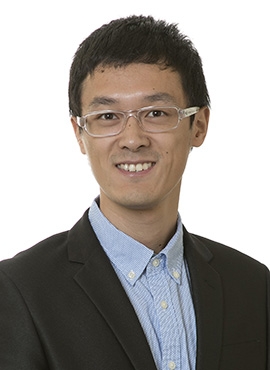
Minshuo Chen is an Assistant Professor in the Department of Industrial Engineering and Management Sciences at Northwestern University. He previously served as an Associated Research Scholar in the ECE department at Princeton University, collaborating with Prof. Mengdi Wang. His research focuses on developing methodologies and theoretical foundations in generative AI, reinforcement learning, and optimization. He holds a Ph.D. from Georgia Tech (supervised by Prof. Tuo Zhao and Wenjing Liao), a Master's from UCLA, and a Bachelor's from Zhejiang University. Key research areas include diffusion models for distribution estimation, foundations of learning (approximation and optimization), and reinforcement learning applications in complex systems. He has presented at major conferences like INFORMS 2024 and NeurIPS 2023, and serves as an area chair for NeurIPS 2023. His recent work emphasizes theoretical guarantees for diffusion models, including statistical rates and optimization perspectives. He has received awards such as the ARC-TRIAD Student Fellowship and William S. Green Fellowship. Collaborations include studies on POMDPs, policy evaluation, and manifold learning.
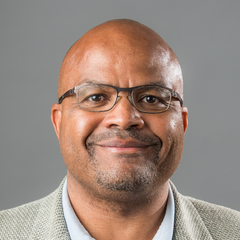
Ray Reagans is the Alfred P. Sloan Professor of Management and Professor in the Work and Organization Studies Group at MIT Sloan School of Management. He also serves as the Associate Dean for Diversity, Equity, and Inclusion. His research focuses on social networks, demographic diversity's impact on team performance, and organizational climate effects on equity. Reagans holds a BA in sociology and economics from Brown University and a PhD in sociology from the University of Chicago. Education: B.A., Sociology and Economics, Brown University PhD, Sociology, University of Chicago Research Interests: Dr. Reagans explores how demographic factors (age, gender, race) influence interpersonal relationships and team dynamics. His work examines social capital's role in team performance, knowledge sharing via networks, and organizational strategies to enhance diversity and inclusion. Recent studies address climate and culture's impact on retention and performance of underrepresented groups. Awards & Recognition: 2022 AOM Fellow for contributions to management science 2022 MIT Teaching with Digital Technology Award Grants & Advising: While specific grants aren't listed, his DEI leadership role and research indicate involvement in institutional initiatives. No advisee names were provided in the text. Labs & Initiatives: Affiliated with the MIT Leadership Center and involved in system dynamics approaches to DEI. His work appears in journals like Organization Science and Social Networks .
Mitchell L. Neilsen is a Professor in the Department of Computer Science at Kansas State University's College of Engineering, where he also serves as the graduate program director. He holds the Warren and Gisela Kennedy - Carl and Mary Ice Keystone Research Scholar position and maintains an active research program with multiple ongoing projects. His educational background includes a Ph.D. in Computer Science (1992), M.S. in Computer Science (1989), and M.S. in Mathematics (1987), all from Kansas State University, plus a B.S. in Mathematics Education from the University of Nebraska-Kearney (1982). After beginning his career as an assistant professor at Oklahoma State University, he returned to K-State in 1996. Research Interests: Cyber-Physical Systems: Design, Analysis, Verification of systems integrating computing, networking, and physical processes Distributed Systems: Algorithms, design, and analysis of distributed computing systems Scientific Computing: Computational Fluid Dynamics, Finite Element Analysis, High Performance Computing, and Simulation Application Areas: Agriculture technology, Dam safety analysis, Mobile applications, Natural resources management, and Real-time Embedded Systems His research program shows clear evolution toward agricultural technology applications, particularly high-throughput phenotyping, while maintaining strong foundations in cyber-physical systems and scientific computing. Recent publications indicate increasing integration of machine learning and computer vision techniques into traditional research areas. Research Funding: National Science Foundation U.S. Department of Agriculture Sandia National Laboratories Department of Homeland Security Private industry partners Dr. Neilsen has mentored numerous graduate students through their M.S. and Ph.D. programs, with recent advisees focusing on applications in agricultural technology, dam safety, and embedded systems. His advising approach emphasizes practical applications of theoretical computer science concepts. Current Teaching (Fall 2024): CIS 450 - Computer Architecture and Operations CIS 625 - Concurrent Software Systems CIS 720 - Advanced Operating Systems
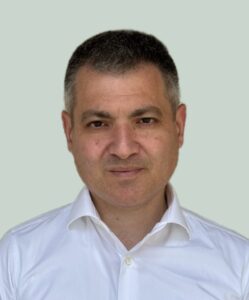
Paolo Trunfio is a Professor of Computer Engineering at the University of Calabria, Italy, and co-founder of DtoK Lab S.r.l., an academic spin-off focused on data analysis and distributed systems. He holds a Ph.D. and is affiliated with the DIMES Department, specializing in big data, cloud computing, and high-performance computing (HPC). His research emphasizes scalable data analysis frameworks, edge-cloud continuum solutions, and machine learning applications for social media and disaster monitoring. Trunfio serves as an Associate Editor for ACM Computing Surveys and Journal of Big Data , and is on the editorial boards of several journals including Future Generation Computer Systems . He has authored four influential books, including Programming Big Data Applications (2024) and Data Analysis in the Cloud (2015). His work spans distributed systems, IoT-based smart objects, and exascale computing. Notable projects include the EU-funded eFlows4HPC and ASPIDE initiatives, which focus on HPC workflows and exascale programming models. Trunfio’s publications (over 200 papers) address topics like social media analytics, energy-efficient P2P networks, and parallel data mining. He leads research in urgent computing for disaster response, edge-cloud integration for urban mobility, and AI-driven data analysis. His contributions to cloud frameworks (e.g., JS4Cloud, ParSoDA) and HPC libraries (e.g., DCEx) highlight his expertise in bridging theory and practice in distributed computing ecosystems.
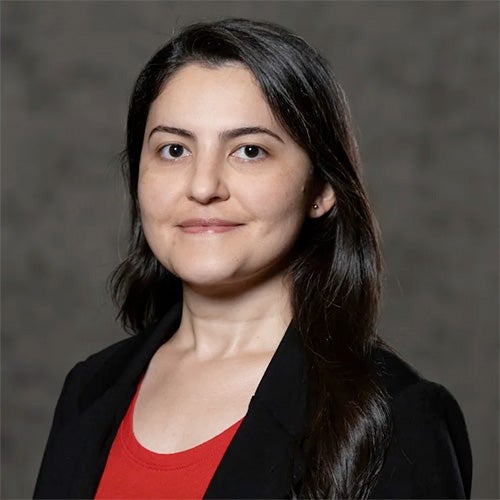
Esra Agca Aktunc serves as a Senior Lecturer in the Department of Industrial and Systems Engineering at Rensselaer Polytechnic Institute (RPI), teaching core courses including Introduction to ISE, Production and Operations Management, Facilities Design, Operations Research Methods, and Engineering Data Analytics across undergraduate and graduate programs. Her educational qualifications include: Ph.D. in Industrial and Systems Engineering from Virginia Polytechnic Institute and State University (2013) M.Sc. in Industrial and Systems Engineering from Virginia Polytechnic Institute and State University (2011) B.Sc. in Industrial Engineering from Bilkent University (2008) Dr. Agca Aktunc's research integrates optimization, simulation, and data analytics across disaster management, healthcare systems, and energy systems . Her work addresses critical challenges including hospital evacuation logistics, pandemic impacts on energy infrastructure, and natural gas management under uncertainty, employing advanced analytical methods to solve resource-constrained real-world problems in dynamic environments. Publication analysis reveals a strategic research evolution: early work (2013-2019) focused on disaster response logistics and healthcare operations, while recent publications (2020-2025) demonstrate increased specialization in energy systems, particularly electricity and natural gas demand forecasting during crises like the COVID-19 pandemic. This progression highlights her adaptive application of operations research to emerging societal challenges. No scientific awards were mentioned in the provided text. Information regarding student advising and research grants was not included in the available materials, though her extensive teaching portfolio indicates significant educational contributions.
Neal D. Goldstein, PhD, MBI, is an Associate Research Professor of Epidemiology at Drexel University's Dornsife School of Public Health. His work focuses on computational methods in epidemiology, particularly leveraging electronic health records (EHR) for infectious disease surveillance and public health resource optimization. He holds a PhD in Epidemiology from Drexel and an MBI from Oregon Health & Science University. Research interests include data analysis methods, infectious disease transmission, spatial epidemiology, and translational epidemiology. Goldstein has authored over 60 peer-reviewed publications, a textbook on EHR-based epidemiological analyses, and co-authored chapters in academic textbooks. His work has been featured in national media outlets including Kaiser Health News and Politico. Key projects include NIH-funded studies on HIV surveillance and predictive modeling of healthcare-associated infections. Goldstein also maintains a blog discussing methodological advances in epidemiology and EHR research. He advises students and collaborates on grants focused on improving public health resource allocation through data-driven approaches. Goldstein's lab emphasizes bridging EHR informatics with epidemiological practice to address challenges in infectious disease management and healthcare equity.
Dr. Lei Fan is an Assistant Professor in the Department of Engineering Technology at the University of Houston, with a joint appointment in the Electrical and Computer Engineering (ECE) Department. His research focuses on power system operations, optimization algorithms, quantum computing, and energy storage systems. He holds a Ph.D. from the University of Florida and a B.S. from Hefei University of Technology. Education: Ph.D., University of Florida B.S., Hefei University of Technology Research Interests: Dr. Fan’s work bridges theoretical optimization and practical energy systems, including quantum algorithms for power grid management, battery storage planning, and distributed quantum computing architectures. His LORE (Learning & Operations Research & Energy) lab explores cutting-edge applications in teleoperation, satellite networks, and environmental monitoring. Publications: Recent work emphasizes quantum computing’s role in solving complex optimization problems, such as entanglement routing in satellite networks and distributed hydrogen-power systems. His research also integrates machine learning for methane plume detection and hyperspectral imaging. Labs/Teams: He leads the LORE lab, advancing interdisciplinary research in energy systems and quantum technologies.
Changcheng Huang is a Professor at Carleton University's Department of Systems and Computer Engineering, part of the Faculty of Engineering and Design. He holds a Ph.D. from Carleton University and is licensed as P.Eng. His research focuses on Machine Learning, Network Architecture, and Optical Networks, emphasizing resource optimization and protocol design. Dr. Huang leads the Advanced Optical Network Laboratory (AONL), funded by CFI and OIT, which explores optical network technologies and interworking with electronic networks. His lab includes state-of-the-art equipment like Nortel switches and photonic switches. Recently, he advised PhD students Qiao Lu, Khoa Nguyen, and others, and completed postdoc Eslam G. AbdAllah. RA positions are available at both master's and PhD levels. His work spans publications in journals like IEEE Transactions and conferences such as Globecom and ICC. Research areas include intelligent network control mechanisms, wireless networks, and network protocol implementation. Education: Ph.D. (Carleton University). Research interests also include modeling/simulation techniques and reliability mechanisms for optical networks. He teaches courses like SYSC 5108 (Deep Learning) and SYSC 4602 (Computer Communications). Grants funded by CFI and OIT support his lab's optical networking projects. Over 150+ publications highlight his contributions to virtual network embedding, edge computing, and optical data center networks. Lab facilities include OMM photonic switches, Nortel routers, and Dell servers. Collaborative projects involve industry and academic partnerships, advancing interworking technologies between optical and electronic networks. His work bridges theoretical research with practical implementations, addressing challenges in network scalability, energy efficiency, and reliability.
Jun Yan is an Associate Professor and Concordia University Research Chair in Artificial Intelligence in Cyber Security and Resilience at the Concordia Institute for Information Systems Engineering (Concordia University). His research focuses on cybersecurity, smart grid systems, and AI-driven solutions for energy and communication networks. He supervises graduate students in programs such as Information Systems Security (MASc), Computer Science (MCompSc), and Information and Systems Engineering (PhD). Research Highlights : Cybersecurity of distributed energy systems, AI penetration testing frameworks, and resilient transactive energy markets. Awards : Holds a prestigious university research chair in AI-driven cybersecurity. His work integrates machine learning with domain-specific challenges in smart grids, IoT security, and multi-agent systems. Notable contributions include frameworks for detecting adversarial attacks on power systems, optimizing renewable energy integration, and developing AI tools for penetration testing. His articles reflect a strong emphasis on interdisciplinary solutions blending cybersecurity, energy systems, and advanced computing. Yan’s research also addresses policy and infrastructure challenges in sustainable energy systems, including waste management policy analysis and optimal configuration of hybrid renewable systems. He has pioneered open-source co-simulation platforms like PEMT-CoSim and Quantum-Sim for secure energy trading and quantum communication in grids. He actively engages in grant-funded projects and advises on both academic and applied aspects of cybersecurity and intelligent systems.
Dr. Md Arifuzzaman is an Assistant Professor in the Department of Computer Science at Missouri University of Science and Technology (Missouri S&T). He specializes in High-Performance Systems, Quantum Networking, and Distributed Systems, focusing on optimizing large-scale system performance and scalability. His work addresses challenges in next-generation networks and storage systems, with publications in top venues like IEEE TPDS and ACM Supercomputing. Education: Ph.D. in Computer Science and Engineering, University of Nevada, Reno (2023) B.S. in Computer Science and Engineering, Bangladesh University of Engineering and Technology (2016) Research Interests: Dr. Arifuzzaman's work spans cutting-edge topics including quantum entanglement routing, reinforcement learning for network optimization, and high-speed file transfer protocols. His research emphasizes practical solutions for emerging technologies like terabit networks and quantum communication systems. Publications: Recent work focuses on quantum network protocols, machine learning-driven network probing, and storage reliability. His articles highlight advancements in both theoretical frameworks and real-world system implementations. Awards: No specific awards mentioned in the provided information. Advising/Grants: Details regarding student advising and grant activities are not explicitly stated in the text.
Eyran Gisches is a Senior Lecturer in Management Information Systems at the Eller College of Management , University of Arizona, and serves as Manager of the Organizational Behavior Laboratory. He joined the college in 2010 after completing his PhD at the University of Arizona. PhD in Management Information Systems, University of Arizona Focus on behavioral aspects of game theory, operations management, and network decision-making Teaches foundational and advanced Operations Management courses His research integrates behavioral game theory and network dynamics to study phenomena like social dilemmas in ridesharing, coordination failures in networks, and dynamic pricing under capacity constraints. Publications highlight empirical and theoretical explorations of interactive decisions in complex systems. Recent work emphasizes behavioral operations management , examining how individuals and groups navigate stochastic environments, resource allocation, and strategic pricing. Collaborations with scholars like Rapoport and Mak span topics in revenue management and experimental economics . Teaching Innovation Award (2017) Course Improvement Award (2014) James F. LaSalle Award (2008) As Manager of the Organizational Behavior Laboratory, Gisches contributes to experimental research infrastructure and methodology. His work bridges theoretical game models with real-world applications in transportation and market dynamics.
Sudhakar Ganti is an Associate Professor in the Department of Computer Science at the University of Victoria, part of the Faculty of Engineering and Computer Science. He holds a PhD from the University of Ottawa. His research focuses on cloud computing resource management, software-defined networking (SDN), traffic management, quality-of-service optimization, and performance evaluation through queueing theory. His work bridges theoretical frameworks with practical applications in network efficiency and distributed systems. Dr. Ganti’s expertise includes optimizing resource allocation in fog-cloud systems, enhancing telehealth IoT energy efficiency, and developing dynamic defense frameworks for SDN security. His contributions span network traffic prediction, large file transport protocols, and formal verification of networking systems. He has published extensively in top-tier conferences and journals, addressing challenges in distributed computing, cyber security, and edge computing. His research trends emphasize leveraging reinforcement learning for fog-cloud resource allocation, multi-objective optimization in IoT, and SDN-driven network security. Earlier work includes foundational studies on optical router bypass, cloud workload characterization, and conversational agents for smart environments. Despite his prolific output, no academic awards or grants are explicitly mentioned in his profile.
Dr. Gloria Crisp is a Professor of Adult and Higher Education at Oregon State University and currently serves as Associate Dean in the College of Education. With 25 years of experience in community colleges and bachelor’s granting institutions, her work focuses on equity in higher education , particularly for Latinx students and other minoritized populations. Research Focus : Transfer pathways, mentoring frameworks, and policies reducing educational inequities Key Contributions : Created the College Student Mentoring Scale (CSMS), used globally to assess mentoring effectiveness Awards : ASHE 2020 Mentoring Award Leadership : Former Editor-in-Chief of New Directions for Institutional Research , President of Council for the Study of Community Colleges (2022-23) Publications include over 60 articles in journals like American Educational Research Journal and Research in Higher Education , with citations exceeding 10,000. Her co-edited book Unlocking Opportunity through Broadly Accessible Institutions (2022) challenges deficit narratives about broad-access universities.
Shaun M. Dougherty is a Professor and Department Chair of Measurement, Evaluation, Statistics, and Assessment (MESA) at Boston College's Lynch School of Education & Human Development. He directs the Catholic Education Research Initiative and serves as a Strategic Data Project (SDP) Faculty Adviser at Harvard University's Center for Education Policy Research. His work bridges academia and policy, focusing on equity and effectiveness in career and technical education (CTE), educational accountability systems, and regression discontinuity methodologies. Dougherty holds an Ed.D. in Quantitative Policy Analysis from Harvard University. Education: Ed.D., Harvard University, Quantitative Policy Analysis Research Interests: Dougherty's research emphasizes education policy analysis , causal program evaluation , and CTE program impacts . He examines how CTE can address human capital development while addressing systemic inequities related to race, class, gender, and disability. His work integrates advanced statistical methods (e.g., regression discontinuity designs) with policy implementation studies in K-12 systems and postsecondary transitions. Grants & Awards: PI: $647,499 grant from Institute for Education Sciences (2020–2025) Co-PI: $1.7 million grant from Institute for Education Science (2022–2026) Co-PI: $250,000 grant from Institute for Education Sciences (2019–2021) His awards include the Outstanding Reviewer (2017, 2020) and Outstanding Research Paper (2020) from leading journals. Labs & Teams: Leads the MESA department's research initiatives and collaborates with the Catholic Education Research Initiative and Harvard's SDP program. His work engages with states and large districts on applied policy analysis, including Massachusetts, Michigan, and Connecticut.