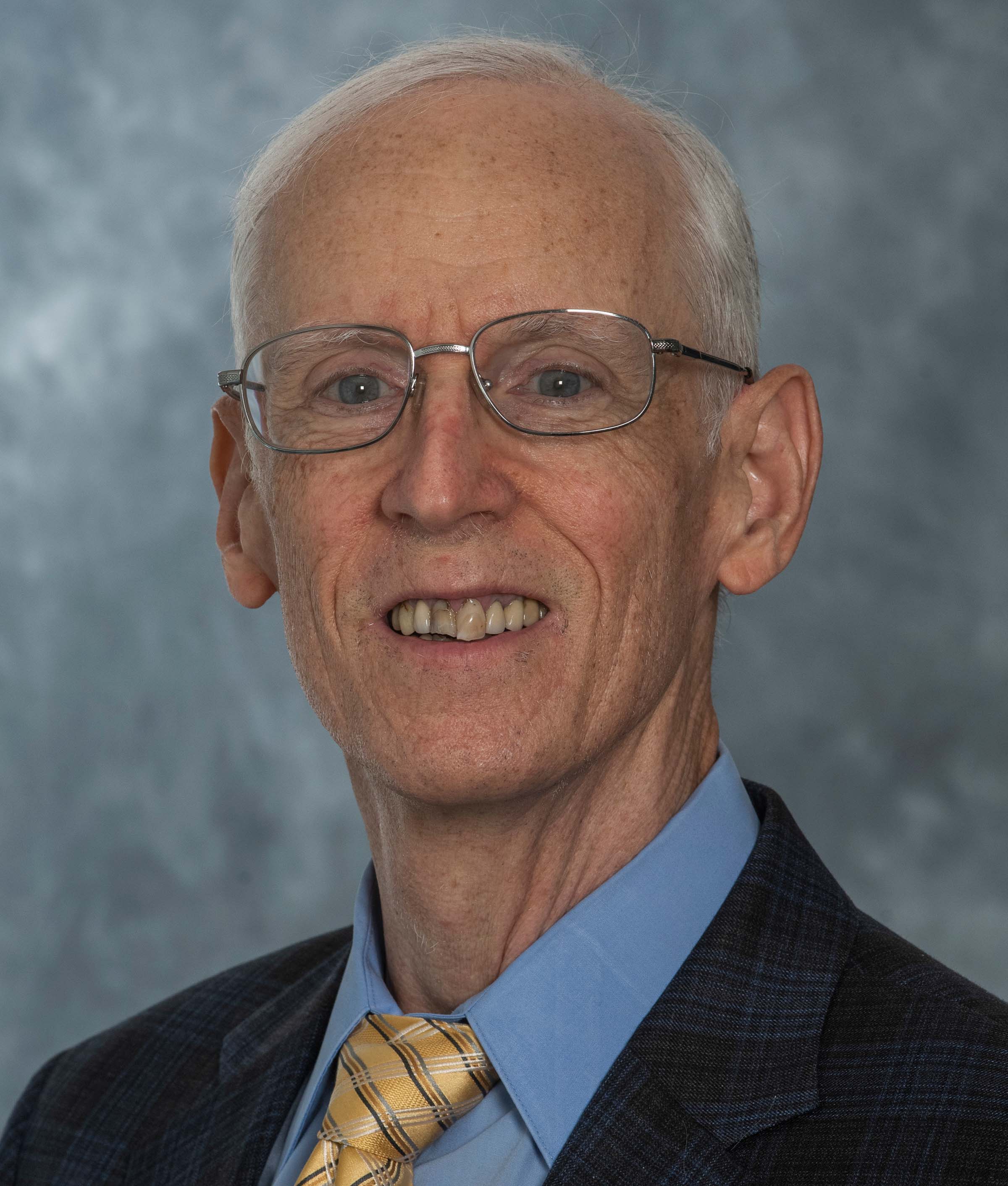
Allen N. Berger is the Carolina Distinguished Professor and H. Montague Osteen, Jr. Professor of Banking and Finance at the University of South Carolina's Darla Moore School of Business. He co-founded and co-directs the Center for Financial Institutions, chairs the Fixed Income-Financial Institutions Conference organizing committee, and is a Senior Fellow at the Wharton Financial Institutions Center. Education includes: Ph.D. in Economics, University of California, Berkeley (1983) M.A. in Economics, University of California, Berkeley (1979) B.A. in Economics, Northwestern University (1976) Research expertise spans financial institutions, with 138 refereed publications in leading finance and economics journals. Major contributions include developing liquidity creation measures used globally, analyzing bank efficiency, and examining crisis interventions. His work has received over 104,000 Google Scholar citations with an H-index of 113. Honors include the Southern Finance Association's Lifetime Service Award (2023), Best Paper Award from Review of Corporate Finance (2023), and University of South Carolina's top research award. He has addressed central banks worldwide and serves on eight editorial boards. Before academia, he spent 26 years at the Federal Reserve Board. Research areas: Bank liquidity creation and financial crises Government interventions (TARP, PPP) Bank competition and FinTech International banking comparisons Small business lending dynamics
Rajesh Karki is a Professor in the Department of Electrical and Computer Engineering at the University of Saskatchewan’s College of Engineering. He holds a B.E., M.Sc., and Ph.D. in related fields. His research focuses on power system reliability, renewable energy integration, and microgrid resilience, with particular emphasis on addressing challenges posed by extreme weather, cyber threats, and decarbonization targets. Dr. Karki’s work spans theoretical modeling, probabilistic analysis, and practical implementation strategies for smart grids, energy storage systems, and distributed generation. His educational background includes advanced degrees in electrical engineering, complemented by professional engineering licensure (P.Eng.). His research has explored diverse topics such as wind energy curtailment mitigation, energy storage optimization, and demand response mechanisms in developing economies like Nepal. He has authored numerous peer-reviewed publications on grid resilience, reliability economics, and cyber-physical system security. Key themes in his work include: (1) quantifying the reliability value of energy storage in active distribution systems, (2) modeling cyber-physical threats to microgrids, and (3) developing frameworks for extreme weather-resilient infrastructure. Despite the volume of his publications (over 50 articles), no specific awards or grants are explicitly listed in the provided materials. His research often intersects technical, economic, and policy dimensions of sustainable energy systems.
Benjamin F. Hobbs serves as the Theodore M. and Kay W. Schad Professor of Environmental Management at Johns Hopkins University, holding a primary appointment in the Department of Environmental Health and Engineering and a joint appointment in the Department of Applied Mathematics and Statistics. He is co-director of the USEPA Yale-JHU SEARCH Center and director of the NSF-funded Electric Power Innovation for a Carbon-free Society (EPICS) Center, focusing on interdisciplinary research at the intersection of energy systems, environmental management, and public health. Hobbs' educational background includes a BS from South Dakota State University (1976), an MS in Resources Management and Policy from SUNY-Syracuse (1978), and a PhD in Environmental Systems Engineering from Cornell University (1983). Prior to joining Johns Hopkins in 1995, he worked at Brookhaven and Oak Ridge National Laboratories and served as a professor at Case Western Reserve University, with additional visiting appointments at institutions including Cambridge University. His research integrates systems analysis, economics, and optimization to address critical challenges in electric utility planning, renewable energy integration, and environmental resource management. Key focus areas include solar forecasting using AI, green infrastructure for urban water management, health impacts of energy transitions, and grid reliability under high renewable penetration. His work emphasizes practical applications through engineering-economic modeling with rich technological and environmental detail. Analysis of his recent publications reveals a strong trend toward addressing grid reliability in decarbonizing systems, with increasing emphasis on market design innovations, resource adequacy under uncertainty, and storage-transmission tradeoffs. His research consistently bridges theoretical optimization with real-world policy implementation, particularly evident in his leadership of the EPICS Center's 100% renewable grid initiatives. Lifetime Achievement Award by Energy Systems Integration Group (ESIG), 2024 Fellow of the Institute of Electrical and Electronics Engineers (IEEE) Fellow of the Institute for Operations Research and Management Science (INFORMS) Hobbs advises graduate students through Johns Hopkins' interdisciplinary programs, with alumni employed as energy consultants, policy analysts, and researchers. His current grants include leadership of the NSF Global Center EPICS and co-direction of the USEPA SEARCH Center, focusing on energy-air-climate-health interactions. He chairs the Market Surveillance Committee for the California Independent System Operator and serves on editorial boards for Energy Economics and other leading energy journals. He leads the Hobbs Energy & Environment Decisions Research Group, which collaborates with institutions including IBM, National Renewable Energy Laboratory, and University of Texas at Dallas. The group participates in the Global Power Systems Transformation Consortium and Columbia-JHU Future Power Markets Forum, conducting fieldwork initially in California and the central United States.
Thomas Berger is a Professor at the University of Hohenheim , affiliated with the Faculty of Agricultural Sciences and leading the Department of Economics of Land Use . He also contributes to the Computational Science Hub and Hohenheim Tropics initiatives. Focus Areas: Climate change adaptation, land-use modeling, biodiversity-productivity trade-offs, agent-based simulation, and machine learning in agricultural systems. Key Projects: Simulation frameworks for smallholder resilience in Ethiopia, bioeconomic modeling in the Amazon, and hybrid intelligence applications in European agricultural policy. Recent Publications: 2025 study on climate change effects on insecticide reduction in Germany, 2024 work on reconciling biodiversity with productivity via hybrid models, and 2023 methodological contributions to surrogate modeling and seasonal forecast integration. Research Trends: Interdisciplinary integration of climate science, agricultural economics, and computational modeling, with increasing emphasis on AI-assisted decision support systems and sustainability policy validation. Teaching & Outreach: Offers Agricultural Economics seminars and Hohenheim Tropics discussions, requiring advance email registration for office hours.
Max Planck Institute for Security and PrivacyGermany
Michael D. Ernst is a Professor in the Computer Science & Engineering department at the University of Washington's College of Engineering. His research aims to make software more reliable, more secure, and easier (and more fun!) to produce. Previously, he was a tenured professor at MIT and a researcher at Microsoft Research. Ernst's primary technical interests are in software engineering, programming languages, type theory, security, program analysis, bug prediction, testing, and verification. His research combines strong theoretical foundations with realistic experimentation, with an eye to changing the way that software developers work. He focuses particularly on programmer productivity and developing practical tools that can be integrated into developers' workflows. Analysis of his recent publications (2018-2025) reveals a continued focus on verification techniques, program analysis, and testing methodologies. His work spans from theoretical foundations of type systems to practical applications of NLP for test generation and LLMs for test oracle creation. A consistent theme is developing lightweight, modular approaches that can be practically applied in real-world development environments. Scientific Awards: ACM Fellow (2014) John Backus Award (2009) NSF CAREER Award (2002) ACM SIGSOFT Impact Paper Award (2013) 8 ACM Distinguished Paper Awards across multiple conferences ECOOP 2011 Best Paper Award Microsoft Academic Search ranked #2 in software engineering research (2013) Ernst has received significant research funding including the NSF CAREER Award, supporting his work on program analysis and verification techniques. His research combines theoretical rigor with practical impact, often resulting in tools that are adopted by the software engineering community. He actively collaborates with researchers across institutions and has served in leadership roles for major conferences in programming languages and software engineering. His research group develops practical tools that address real challenges in software development, with a focus on making verification and analysis techniques more accessible to working developers. Current projects include applying machine learning techniques to software engineering problems while maintaining strong theoretical foundations.
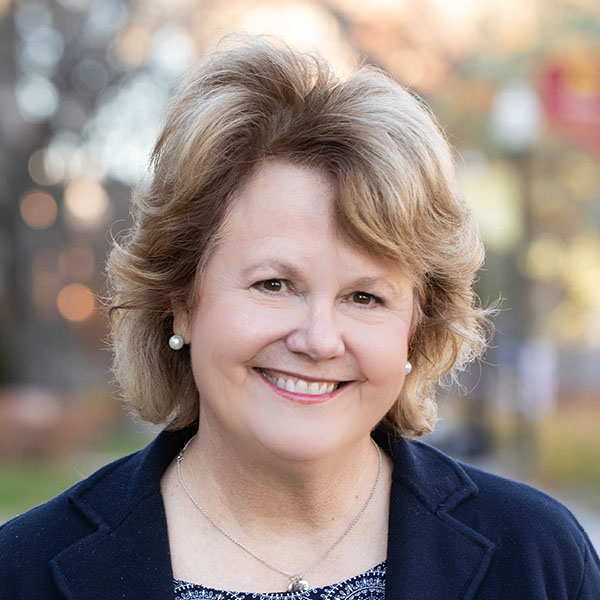
Lynn Blewett is a Professor in the Division of Health Policy & Management at the University of Minnesota's School of Public Health. She serves as the Director of the State Health Access Data Assistance Center (SHADAC), a research and policy center funded by the Robert Wood Johnson Foundation that supports state efforts to monitor and evaluate programs to increase access and coverage. PhD in Health Services Research, Policy and Administration, School of Public Health, University of Minnesota MA in Public Affairs, Hubert H. Humphrey School of Public Affairs, University of Minnesota BA in Psychology, University of Wisconsin Dr. Blewett's research focuses on health care policy and access to care, with expertise in health disparities, Medicaid/CHIP, immigrant health, survey research, and international health systems. As an advocate for information access, she helped bring a Census Research Data Center to the University of Minnesota, which is the only RDC with a health services and policy focus. Her work bridges academic research with practical policy applications at the state level. Analysis of Dr. Blewett's publications reveals a consistent focus on health insurance coverage, access to care, and state-level health policy implementation. Her research spans methodological approaches including survey research, policy analysis, and data resource development. Recent work has increasingly addressed the impacts of the COVID-19 pandemic on healthcare access and material hardship, while maintaining her longstanding focus on underinsurance, Medicaid policy, and state health policy monitoring systems. Dr. Blewett directs SHADAC, which provides high-level access to federal surveys for state policymakers. Her work has been instrumental in developing state capacity to monitor health coverage and access. While specific awards aren't listed in the available information, her leadership of a major Robert Wood Johnson Foundation-funded center indicates significant recognition in her field. As Director of SHADAC, Dr. Blewett leads a team focused on supporting state efforts to monitor and evaluate health access and coverage programs. Her work involves collaborating with state policymakers, researchers, and advocates to translate data into actionable policy insights. The Census Research Data Center she helped establish at the University of Minnesota serves as a critical resource for health services and policy researchers requiring access to restricted federal data.
Paolo Mastropietro is a Research Professor at the Institute for Research in Technology (IIT) of Comillas Pontifical University in Madrid. He holds a Master's degree from the University of Rome Tor Vergata (2009) and a PhD from Comillas University (2016), focusing on capacity remuneration mechanisms. His career includes private sector work in Italy and Spain, a UNV Project Officer role in Ethiopia (2011), and joining IIT in 2012 under the SETS Erasmus Mundus PhD program. Affiliations: IIT, School of Engineering (ICAI), Comillas Pontifical University Research Interests: Power sector regulation, security of supply, capacity remuneration mechanisms, regional markets, tariff design, and energy sustainability His research emphasizes regulatory frameworks for energy transition and decarbonization, with contributions on hydrogen markets, electricity storage, and demand response integration. Recent work includes analysis of EU market reforms, pandemic-related energy poverty measures, and capacity mechanisms in Latin America. Key projects include the EU-funded ONESYSTEM (2023–2028) and DEFINER (2022–2025) initiatives, focusing on energy system integration and demand flexibility. He advises on regulatory modernization in Peru, Colombia, and Panama, and has authored over 40 journal articles, books, and technical reports. Awards: 2015 ICER Distinguished Scholar Award, Iberdrola Scholarship (2020) Grants: Projects funded by MICIU, World Bank, European Commission, and others He supervises doctoral research, including P. Brito Pereira’s work on future-proof capacity mechanisms. His expertise spans international energy policy, with engagements at ACER and MIT, and contributions to energy transition strategies globally.
Matthew Landry, PhD, RDN, FAND, is an Assistant Professor in the Department of Population Health and Disease Prevention at the University of California, Irvine. He directs the Nutrition Promotion & Disease Prevention Research Lab, focusing on plant-based nutrition interventions for chronic disease prevention and health equity. His work bridges clinical research and public policy, particularly addressing nutrition disparities in underserved communities. Dr. Landry holds a BS in Nutrition and Food Sciences from Louisiana State University (2015), a PhD in Nutritional Science from the University of Texas at Austin (2019), and is a Registered Dietitian Nutritionist (Commission on Dietetic Registration, 2020). His research examines: Optimal dietary patterns for chronic disease prevention Clinical trial methodologies for dietary interventions Behavioral strategies promoting plant-forward diets Nutrition equity in food-insecure populations Policy translation of nutrition science His publications demonstrate consistent focus on plant-based nutrition, health disparities, clinical trial design, and public health interventions, utilizing diverse methodologies from community-based studies to systematic reviews. Honors and awards include: UCDC Presidential Faculty Fellow (2025) Ethan Sims Young Investigator Award (2022) Fellow of the Academy of Nutrition and Dietetics (2022) Nutrition Education and Behavioral Science Early Career Award (2021) He secured a $90,000 grant from Ardmore Institute of Health (2025) to develop OB/GYN nutrition education resources. Leads a research team investigating diet-disease relationships and intervention strategies.
Jack Ågren is a Professor of Criminal Law at Karlstad University, serving as Subject Representative. His work focuses on Swedish penal law, legal education, and criminal liability theories. He has authored/co-authored numerous textbooks and commentaries on straffrätt (criminal law), including foundational works like Brott och Straff and Straffansvar . His research interests span criminal law principles, penal policy debates, mental capacity defenses, and academic pedagogy. Notable contributions include critiques of social adequacy defenses ( Social adekvans - Ansvarsfrihet utan lagstöd ), analyses of penal sanctions ( 25 kap. Om böter m.m. ), and reflections on abstract/concrete legal values ( Abstrakt, konkret och fiktivt straffvärde ). Ågren collaborates extensively with legal scholars such as Mats Persson and Magdalena Giertz on foundational texts and case collections. His publications consistently engage with Swedish jurisprudence and penal code interpretation, emphasizing pedagogical clarity in legal education. Although no scientific awards are explicitly listed, his prolific output and textbook contributions indicate significant academic influence within Scandinavian legal circles.
Dr. Luiz Augusto Nobrega Barroso is a Research Affiliate at Comillas Pontifical University's Institute for Research in Technology (IIT), where he has been a visiting researcher since 2007. He is also the CEO of PSR Energy Consulting and Analytics, a global firm specializing in energy economics, consulting, and software development. His career spans industry, government, and academia, with expertise in energy policy, power system economics, and stochastic optimization. Barroso holds a PhD in Systems Engineering from COPPE/UFRJ (2006) and has served as Director General of Brazil’s Energy Research Office (EPE), a visiting fellow at the International Energy Agency (IEA), and editor for top journals like IEEE Power and Energy Magazine . He is an IEEE Fellow and recipient of the 2010 IEEE PES Outstanding Young Engineer Award. His research focuses on energy market design, renewable integration, and grid resilience. Notable contributions include studies on capacity mechanisms, retail liberalization, and pandemic-era grid operations. He has authored over 50 peer-reviewed articles and contributed to global energy policy frameworks through roles in CIGRE and the Florence School of Regulation.
Professor Mark Howells is a Principal Research Fellow at the Centre for Environmental Policy within Imperial College London's Faculty of Natural Sciences. His work focuses on energy systems modelling and policy analysis for sustainable development in low and middle-income countries, with a particular emphasis on open-source frameworks and context-specific transition pathways. His research spans energy transition modelling, environmental policy, and sustainable development, utilizing tools like OSeMOSYS and CLEWs to address energy trilemma challenges across Africa, Asia, and South America. Key interests include integrating qualitative factors into quantitative models, green hydrogen planning, power sector reliability, and resource nexus management, with significant contributions to country-specific energy planning in Ghana, Nigeria, Kenya, Egypt, and Indonesia. Analysis of his 2023-2025 publications reveals a strong focus on open-source energy modelling applications for decarbonization, with recurring themes of data kit development, grid flexibility solutions, and water-energy-land nexus assessments. His work consistently bridges technical modelling with policy implementation needs, particularly in contexts of infrastructure constraints and climate vulnerability. No scientific awards were mentioned in the source materials. Professor Howells operates within Imperial College London's Centre for Environmental Policy, an interdisciplinary hub conducting research on global environmental challenges through integrated systems approaches that connect technical, economic, and policy dimensions of sustainability transitions.
Robert Sinclair is a Professor of Industrial/Organizational Psychology at Clemson University, serving as graduate program coordinator for the Department of Psychology’s PhD and MS programs. He holds affiliations with the College of Behavioral, Social and Health Sciences and the Department of Psychology. His academic journey includes degrees from the University of Maine at Farmington (B.A., 1990), Wayne State University (M.S. and Ph.D., 1992 and 1995), and prior faculty positions at Portland State University (2000–2008) and the University of Tulsa (1995–1999). Research focuses on occupational health psychology, emphasizing economic stressors (job insecurity, income adequacy), organizational climate, and military resilience. He co-edited key texts like Building Psychological Resilience in Military Personnel (2013) and serves as Editor-in-Chief of Occupational Health Science . His work spans peer-reviewed articles in journals such as Journal of Occupational Health Psychology and Group and Organization Management . Awards include Fellowships from APA and SIOP, the Distinguished Contribution to Occupational Health Psychology Award (2011), and numerous grants. Sinclair mentors doctoral students and teaches courses on organizational psychology and occupational health. Professional service includes editorial roles and SOHP leadership. Personal interests include music, sports, and a passion for guitar.
Elaine Petro is Assistant Professor in Cornell University's Sibley School of Mechanical and Aerospace Engineering, where she directs the ASTRAlab. She holds a Ph.D. from the University of Maryland and develops sustainable space exploration technologies with focus on plasma propulsion systems and novel propellants. Her research program: Designs water-based propulsion systems for deep space missions Models complex plasma behaviors in electric thrusters Develops miniaturized propulsion for small satellites Investigates next-generation ionic liquid propellants Recent publications demonstrate applications of computer vision for space weather prediction and economic analyses of space development. She received the AFOSR Young Investigator Award to study ionic liquid stability in propulsion systems. Prior to academia, Professor Petro worked on NASA missions including MAVEN Mars Orbiter, James Webb Space Telescope, and Hubble Space Telescope at Goddard Space Flight Center. She participated in JPL's Planetary Science Summer School mission design for Enceladus exploration.
John Clark is a Professor of Computer and Information Security at the University of Sheffield since 2017 and Director of the Siemens Digital MINE. Previously, he held roles as Professor of Critical Systems at the University of York (1992–2017) and worked at Logica in security R&D. He studied Mathematics and Applied Statistics at the University of Oxford. His research focuses on cybersecurity, software engineering, and AI applications, particularly in threat modeling, intrusion detection, quantum cryptanalysis, and secure autonomous systems. Clark leads the Security of Advanced Systems research group and has secured grants totaling over £36 million. Notable projects include the EPSRC-funded DAASE (2012–2019) and the Active Building Centre (2018–2022). His work on phishing detection (e.g., analyzing user behavior) and malware analysis has been widely recognized. He has been awarded the Royal Society Wolfson Merit Award (2013), GEECO medals (2005, 2013), and multiple best-paper prizes. Clark’s research spans theoretical and applied domains, including evolutionary computation for cryptanalysis, robotic system security, and smart grid protection. His labs explore areas like digital twin authentication and privacy-aware energy theft detection. He has supervised numerous grants and maintains active collaborations with industry and academia.
Eberswalde University for Sustainable DevelopmentGermany
Prof. Dr. Georg Miribung holds the Chair of Law and Politics in the Forest and Environmental Sector at Eberswalde University of Sustainable Development. His work focuses on interdisciplinary legal frameworks for sustainable resource management. Research Areas: Environmental Law, Agricultural Law, Cooperative Law, Sustainability Law, Common Land Governance Key Affiliations: Georgofili Academy, World Union for Agricultural Law (UMAU), Italian Food Law Association (AIDA-IFLA), International Institute for Cooperative Research in the Alpine Region Recent publications analyze EU environmental policies, agricultural cooperatives' role in climate change mitigation, and comparative legal studies of common land systems. He actively participates in legal webinars and radio lectures on sustainability and human rights intersections.