Professor Scott Croom is an astrophysicist at the University of Sydney's School of Physics, affiliated with the Sydney Institute for Astronomy (SIfA). He holds a PhD from Durham University (1998) and has held positions at Imperial College London and the Anglo-Australian Observatory. A former QEII Fellow and Australian Research Council Future Fellow, he leads the Sydney node of ASTRO 3D and was a Chief Investigator of CAASTRO. His research focuses on galaxy dynamics, kinematics, and large-scale surveys such as SAMI and MAGPI. Key interests include stellar populations, environmental effects on galaxies, and instrumentation like the Hector spectrograph. He has contributed to observational cosmology, X-ray astronomy, and multi-wavelength analyses. Recent work explores galactic structure evolution, kinematic asymmetries, and the interplay between star formation and environment. Awards include his fellowships and grants totaling over $37 million in funding. His collaborative projects address cosmic evolution and galaxy formation mechanisms through advanced observational and computational methods.
Professor Inga Kamp is a faculty member in the Astronomy — Kapteyn Astronomical Institute at the University of Groningen . Her research focuses on Star and Planet Formation and Astrochemistry , with emphasis on protoplanetary disks and molecular gas dynamics. She co-chairs the COST Action CM1401 'Our Astrochemical History' and serves on the board of the Graduate School of Science and Engineering . Her work utilizes advanced observational data from telescopes like the James Webb Space Telescope (JWST), analyzing mid-infrared spectra to uncover disk chemistry and dynamics. Key projects include the MINDS survey, exploring inner disk environments around young stars. Kamp's contributions bridge observational astronomy with theoretical models, advancing our understanding of planet formation processes. Professional activities include roles in international collaborations, public outreach lectures, and mentoring early-career researchers. Her office is located at Landleven 12, Groningen, with research focused on molecular line spectroscopy, disk wind dynamics, and hydrocarbon chemistry in low-mass star systems.
Dr. Andrew Danos is a Lecturer in Experimental Condensed Matter Physics at Queen Mary University of London's School of Physical and Chemical Sciences, affiliated with the Centre for Experimental and Applied Physics. He holds a PhD from the University of New South Wales (2018) and previously worked as a postdoctoral fellow and senior researcher at Durham University. His research focuses on organic electronics, spectroscopy, and physical chemistry, particularly triplet-triplet annihilation, thermally activated delayed fluorescence (TADF), and room-temperature phosphorescence. He designs and interprets time-resolved spectroscopy for optoelectronic materials, with expertise in device fabrication and characterization for OLEDs. Education: Bachelor's/Master's in Physics and Chemistry, University of Sydney PhD in Physics, University of New South Wales (2018) Research Interests: Danos investigates photophysical processes in molecular excitons, including triplet-triplet annihilation, TADF, and room-temperature phosphorescence. His work combines laser spectroscopy, time-resolved and temperature-dependent emission/absorption studies, and device engineering for OLED applications. Key themes include optimizing molecular design for efficient light emission and understanding exciton dynamics in organic semiconductors. Publications: His recent work explores hyperfluorescent OLEDs, TADF material design, and light-upconversion mechanisms. Articles span topics like triplet exciton diffusion, mediator effects, and balanced energy gaps in organic phosphorescence. The most recent studies address material properties for visible-to-UV up-conversion and exciton utilization in OLEDs. Grants: Recipient of a £2,500 grant from the Great Britain Sasakawa Foundation (2025) for research exchange. Labs/Teams: Active in the Centre for Experimental and Applied Physics, focusing on advanced spectroscopic techniques and optoelectronic device development.
Prof. José Joaquín De Rojas Roca de Togores is an Associate Professor in the Department of Civil Law at the University of Alicante, specializing in Insurance Law, Civil Liability, and Personal Injury Law. He is also Managing Partner at De Rojas Law Firm (since 1994) and Director of Legal Affairs at Grupo Maraz (since 2010). His teaching includes Introduction to Civil Law and Civil Law courses for Law and Criminology degrees. Academic Training: Bachelor's in Law, University of Alicante (1993) Research Interests span legal practice in insurance and civil liability, alongside astrophysics (High-Mass X-ray Binaries, Stellar Winds, Neutron Stars) and physics education innovations. His recent publications analyze orbital modulations in X-ray systems and Compton cooling effects, though these appear unrelated to his legal faculty role. Scientific Recognition includes the 2016 ISDE Award for Excellence in Legal Practice. He has not directed postgraduate theses in the last five years and lacks recent journal publications or research grants. Professional Network includes 16 specialized lawyers across Murcia, Elche, Alicante, Valencia, Balearic Islands, and Albacete. He also served as Claims Head for Helvetia Insurance's eastern region (1995-2001) and leads Civil Liability research at ISDE Higher Institute of Law and Economics (since 2015).
Dr. Anthony Brown is an Assistant Professor in the Department of Physics at Durham University, affiliated with the Institute of Hazard, Risk and Resilience. His research focuses on high-energy astrophysics and dark matter detection through gamma-ray observations. Key research areas: Dark Matter Detection, Gamma-ray Astronomy, Cherenkov Telescopes, Cosmic Ray Interactions Instrumentation expertise: Atmospheric Cherenkov Detectors, Balloon-borne Platforms, UAV Calibration Systems Supervision: Mentored three postgraduate research students (Amrit Nayak, Ed Dewit, Ieva Jankute) Recent publications highlight his work on Cherenkov Telescope Array calibration techniques (2022), millisecond pulsar gamma-ray modeling (2024), and dark matter signatures in globular clusters (2018). His research spans ultra-high energy neutrino detection (2021), extragalactic cosmic ray propagation (2017), and multi-messenger astronomy approaches combining gamma-ray and neutrino observations (2015). Scientific contributions include: Development of airborne calibration systems for ground-based observatories Analysis of gamma-ray emission from active galactic nuclei (2017-2024) Investigations into dark matter annihilation signatures in galaxy clusters Innovations in stratospheric imaging telescope performance (2020) Current projects involve the Cherenkov Telescope Array's line search capabilities for dark matter (2024) and studying pulsar geometry effects on emission spectra (2024). His work bridges experimental astrophysics with particle physics, particularly in high-energy cosmic phenomena and neutrino detection.
Dr. Anna McLeod serves as Associate Professor in the Department of Physics and Co-Director of IDEA at Durham University's Institute for Computational Cosmology. Her work bridges theoretical and observational astrophysics with focus on stellar feedback mechanisms. Her research centers on stellar feedback processes in diverse environments, particularly examining how massive stars influence their surroundings through radiation, winds, and outflows. Key areas include pre-supernova feedback in dwarf galaxies, ionized gas dynamics in star-forming regions, and the evolution of protoplanetary disks under external irradiation. Her observational approach heavily utilizes integral field spectroscopy (MUSE/VLT, HARMONI/ELT) to achieve sub-kiloparsec resolution in nearby galaxies and nebulae. Recent publications (2023-2025) reveal strong emphasis on observational constraints for feedback models , with recurring studies of the Carina Nebula, Orion proplyds, and Magellanic Cloud star-forming regions. Her work consistently combines multi-wavelength datasets (Hα, Paα, ALMA, X-ray) to dissect gas kinematics and ionization structures. As supervisor to PhD students Emmy Escott, Yuankang Liu, and Zoe Le Conte, she mentors the next generation in observational techniques and data analysis. Her leadership in the SIGNALS and DUVET surveys demonstrates commitment to large-scale collaborative projects addressing fundamental questions in star formation physics.
Professor Jayne Birkby is a distinguished Professor of Exoplanetary Science at the University of Oxford and a Fellow of Brasenose College. She leads research in exoplanet atmospheres using the world's largest telescopes and highest resolution instruments, with a focus on understanding the composition and dynamics of exoplanetary systems. Her work bridges astronomy, chemistry, geology, and biology in the pursuit of answering fundamental questions about planetary formation and potential habitability. Education: PhD in Astrophysics from the University of Cambridge Professor Birkby specializes in observational techniques for characterizing exoplanet atmospheres, particularly through high-resolution spectroscopy. Her research interests span exoplanets , exoplanet atmospheres , high-resolution spectroscopy , Extremely Large Telescopes , low-mass stars , open clusters , eclipsing binaries , and young stars . She has pioneered methods for detecting molecular signatures in exoplanet atmospheres using ground-based observations, with notable successes including the detection of water in the atmosphere of the hot Jupiter HD 189733 b. Her work on M-dwarf stars aims to address discrepancies between stellar evolution models and observational data, which has significant implications for understanding exoplanetary systems around the most common stars in our galaxy. Professor Birkby's research portfolio demonstrates a consistent focus on advancing observational techniques for exoplanet characterization, with particular emphasis on atmospheric composition and dynamics. Her work increasingly integrates multi-wavelength observations and leverages the capabilities of next-generation telescopes, positioning her at the forefront of preparing for future discoveries with Extremely Large Telescopes. Scientific Awards: ERC Starting Grant Laureate (PI of the "exoZoo" project) 2021 Philip Leverhulme Prize in Physics Finalist in the 2024 Blavatnik Awards for Young Scientists in the UK Professor Birkby leads an active research group at Oxford comprising multiple PhD students and postdoctoral researchers. She is principal investigator of the ERC-funded "exoZoo" project, which focuses on high-definition and time-resolved studies of exoplanet atmospheres. Her group develops innovative observational techniques to study the extreme diversity of exoplanets, with particular emphasis on connecting exoplanet studies with chemistry, geology, and biology in the pursuit of understanding planetary habitability. Professor Birkby's research group, part of the Astrophysics sub-department at Oxford, utilizes world-class observational facilities and collaborates with international teams to advance our understanding of exoplanetary systems. Her work is closely tied to the development of instrumentation for future Extremely Large Telescopes, ensuring her research remains at the cutting edge of exoplanet discovery and characterization.
Thomas Giesen is a Professor of Experimental Physics at the University of Kassel, specializing in laboratory astrophysics. His research centers on high-resolution spectroscopy of molecules relevant to astrophysical environments, utilizing advanced techniques such as terahertz and infrared spectroscopy. Education: Diplom in Physics, University of Cologne (1988) Ph.D. in Physics, University of Cologne (1992) Habilitation, University of Cologne (2001) Research Interests: Thomas Giesen's research focuses on the spectroscopic characterization of astrophysically relevant molecules, including carbon clusters, radicals, and ions. He develops and applies high-resolution spectroscopic techniques, particularly in the terahertz and infrared regions, to study molecular structure and dynamics. His work bridges laboratory experiments and astronomical observations, contributing to our understanding of molecular processes in space. Scientific Awards: Max-Kade-Forschungsstipendium (1992) Sir Thompson Memorial Award (2003) Albertus-Magnus-Lehrpreis (2007) Advising and Mentorship: Thomas Giesen has supervised numerous students across Bachelor, Master, and Ph.D. levels. His mentorship has guided research projects ranging from spectroscopic instrumentation to molecular characterization, fostering a new generation of scientists in experimental physics and astrochemistry. Laboratory and Teams: He leads the Laboratory Astrophysics group at the University of Kassel, equipped with state-of-the-art spectroscopic instruments. The group collaborates extensively with national and international partners, participating in projects such as the European Union's Framework Programmes and the Sonderforschungsbereich collaborative research centers.
Anil Seth is a Professor in the Department of Physics & Astronomy at the University of Utah, where he has been employed since 2017 (as Associate Professor until 2022). His research focuses on galaxy formation and evolution, particularly the detection of black holes in low-mass galaxies and the study of nuclear star clusters. BA in Physics, Astronomy & Music from Wesleyan University (1998) PhD in Astronomy from the University of Washington (2006) Postdoctoral fellow at Harvard-Smithsonian Center for Astrophysics His work has led to the discovery of over 10 new black holes in low-mass galaxies, including the first dynamical measurement of black holes below a million solar masses. He utilizes telescopes such as Gemini, VLT, ALMA, Hubble, and JWST for his research. Additionally, he contributes to citizen science projects and serves on the James Webb Space Telescope Time Allocation Committee. He advocates for dark sky preservation and founded the Bryce Canyon National Park Astronomy Outreach Internship , which has trained 20+ undergraduates since 2014. He also co-created the University of Utah's Dark Sky Studies minor and a Capitol Reef National Park internship program.
Professor Daniel Doherty is a nuclear physicist at the University of Surrey's School of Mathematics and Physics. He holds the academic rank of Professor and leads research in experimental nuclear physics, focusing on nuclear structure, astrophysics, and medical physics applications. His work involves collaborations at major facilities like CERN's ISOLDE, Argonne National Laboratory, and FRIB. His research interests include nuclear shape coexistence, neutron-rich/exotic nuclei studies, and reaction mechanisms relevant to astrophysical processes such as the r-process and p-process. He employs techniques like Coulomb excitation, gamma-ray spectroscopy, and recoil-decay tagging. Doherty has pioneered the BlueSTEAl detector system for studying direct reactions with radioactive beams. In teaching, he leads modules on modern experimental methods, medical physics, and engineering mathematics. He also serves in academic governance as Associate Head of School (Education) and has roles in external committees including the STFC Cross-Community Panel and the ATLAS User Executive Committee at Argonne National Laboratory. Key contributions include measuring critical reaction rates for stellar nucleosynthesis (e.g., weak r-process reactions on radioactive nuclei) and resolving long-standing puzzles in proton emission and isomer decay. His work impacts understanding of galactic element production and cosmic gamma-ray sources.
Dr. Rebecca Davies is an ARC DECRA Fellow and faculty member at Swinburne University of Technology's Centre for Astrophysics and Supercomputing, within the School of Science, Computing and Emerging Technologies. She holds a PhD from Ludwig Maximilian University of Munich and a Bachelor of Philosophy from the Australian National University. Her research focuses on galaxy evolution, particularly galaxy-scale outflows and feedback mechanisms across cosmic history. She actively supervises PhD students in topics like galactic winds, outflows, and star formation processes. Notable awards include the Superstar of STEM (Science and Technology Australia) and the Gruber Foundation Fellowship. She collaborates internationally, leading projects such as the ALMA-CRISTAL survey and RUBIES program. Recent grants include the ARC-funded 'Galactic Outflows: Pushing the Distance Frontiers' (2024–2027). Her work combines observational data from JWST, ALMA, and ground-based telescopes to study AGN feedback, quasar evolution, and reionization. Key themes include outflow dynamics, ionization signatures, and multiphase gas behavior in high-redshift galaxies.
Emma Ryan-Weber is a Professor at Swinburne University's School of Science, Computing and Emerging Technologies, leading the intergalactic medium research group. She was the Director of the Australian Research Council Centre of Excellence for All Sky Astrophysics in 3 Dimensions (ASTRO 3D) until 2024. Her research focuses on detecting elements in the early Universe using quasar absorption spectroscopy, particularly studying the intergalactic medium, reionization, and high-redshift galaxy evolution. Ryan-Weber holds a PhD from the University of Melbourne (2004) and has held postdoctoral positions at the University of Cambridge. She mentors PhD students and postdoctoral researchers, emphasizing careers in both academia and industry. Education: PhD in Astrophysics, University of Melbourne (2004) Postdoctoral Fellow, University of Cambridge (2004–2008) Research Interests: Ryan-Weber’s work explores cosmic reionization, intergalactic medium chemistry, and galaxy evolution. Her team uses large telescopes like Keck and VLT to analyze metal absorption systems in quasar spectra. Key topics include Lyman-continuum leakage, neutral hydrogen distribution, and Pop III star signatures. Grants & Collaborations: She led ARC grants including the $30M ASTRO 3D program and studies on PanSTARRS imaging and intergalactic medium evolution. Notable collaborations involve XQR-30 quasar spectroscopy and MOSEL surveys. Awards: Recipient of the Australian Research Council Queen Elizabeth II Fellowship (2009–present). Labs/Teams: Leads the ASTRO 3D collaboration and the intergalactic medium group at Swinburne, fostering international partnerships in observational cosmology.
Dr. Chloe Fisher is a Research Fellow at the University of Oxford and a Junior Research Fellow at Brasenose College. She holds a PhD in exoplanet atmospheres from the University of Bern, Switzerland, and is a recipient of the Swiss National Science Foundation Postdoctoral Mobility Fellowship. Her research focuses on characterizing exoplanet atmospheres using machine learning and Bayesian inference, particularly leveraging data from the James Webb Space Telescope (JWST). Educational Background: BA & MSci (Mathematics/Astrophysics) - University of Cambridge PhD in Exoplanet Atmospheres - University of Bern Research Interests: Exoplanet atmosphere modeling, atmospheric retrieval methods, machine learning applications in astrophysics, JWST observational strategies, and Bayesian statistical techniques. Key Projects: Principal Investigator (PI) of two JWST Cycle 2 programs targeting super-Earths and sub-Neptunes (TOI-1685 b, TOI-125 b/c). Co-Investigator (Co-I) on the Hot Rocks Survey (PI: Hannah Diamond-Lower), studying rocky exoplanets. Leading studies comparing JWST/NIRISS and HST/WFC3 capabilities for exoplanet characterization. Awards: Swiss National Science Foundation Postdoctoral Mobility Fellowship (SNF). Grants & Collaborations: PI of JWST observational programs (IDs 4126, 4195). Contributions to open-source tools like the HELIOS-K opacity calculator. Labs/Teams: Part of the Department of Physics' Astrophysics subgroup at Oxford, collaborating with international teams on exoplanet data analysis.
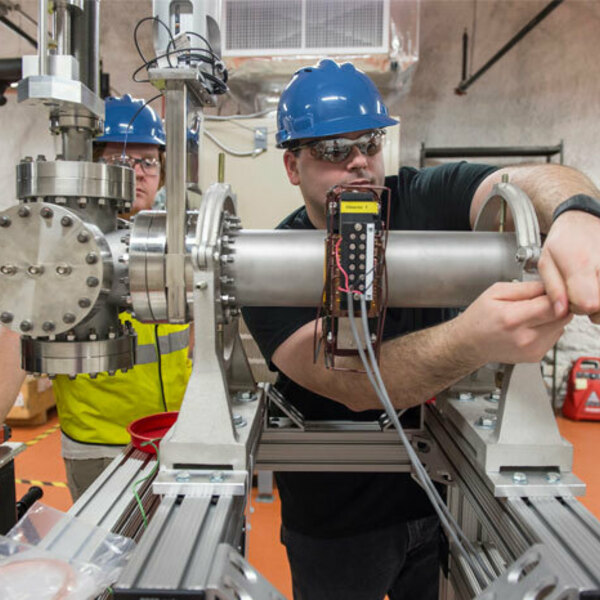
Daniel Robertson is an Associate Research Professor in the Department of Physics & Astronomy at the University of Notre Dame. His research focuses on recreating stellar element-producing reactions in laboratory settings and developing advanced accelerator technologies for underground astrophysics experiments. He holds an MPhys from the University of Surrey and MS/PhD degrees from Notre Dame. MPhys, Nuclear Astrophysics, University of Surrey (2003) M.S., Nuclear Physics, University of Notre Dame (2005) Ph.D., Nuclear Physics, University of Notre Dame (2010) His work bridges experimental nuclear physics and astrophysical observations, emphasizing underground facilities like CASPAR to study low-energy reactions critical to stellar nucleosynthesis. Recent studies include neutron capture processes, resonance measurements, and innovations in detector systems. He leads efforts to improve accelerator technology for studying elusive reactions in environments mimicking stellar interiors. Key contributions include advancements in neutron moderation techniques (NTD project) and multi-isotope analyses using accelerator mass spectrometry. His research addresses gaps in understanding element production mechanisms across the periodic table, particularly in γ-process and CNO cycle contexts. Dr. Robertson collaborates on developing deep underground laboratories to minimize cosmic-ray interference, enhancing precision in low-background nuclear astrophysics measurements. His experimental tools and methodologies are foundational for modeling stellar explosions and the cosmic creation of heavy elements.
Vasilis Charmandaris is a Professor of Physics at the University of Crete and an Adjunct Research Professor at the European University Cyprus . He previously served as Director of the Institute of Astrophysics at the Foundation for Technology & Research (FORTH) and of the Skinakas Observatory , and was elected President of FORTH in March 2025. His research focuses on observational astrophysics, particularly extragalactic systems, active galactic nuclei (AGN), and star formation in infrared-bright galaxies. Education University of Crete Degree in Physics, Aristotle University of Thessaloniki (1989) Ph.D. in Astrophysics, Iowa State University (1995) Charmandaris’ work leverages JWST , Spitzer , and ALMA data to study the interplay between AGN, star formation, and the interstellar medium (ISM) in merging galaxies. His recent publications emphasize dust-obscured activity , molecular outflows , and high-redshift galaxy analogs , with a strong focus on PAH emission , gas dynamics , and feedback mechanisms . Scientific Awards Marie Curie Fellowship As a leader in observational astrophysics, Charmandaris has directed major research institutes and contributed to GOALS-JWST campaigns. His work spans galactic winds , cluster formation , and instrumentation development (e.g., CAFE tool ), with ongoing efforts in high-redshift galaxy mergers and cosmic feedback processes . Research Infrastructure Director, Skinakas Observatory (2019–2025) Director, Institute of Astrophysics at FORTH (2013–2018, 2019–2025) Principal Investigator on multiple JWST and ALMA programs