Dr. Gowri Sankar Ramachandran is a Senior Lecturer in the School of Information Systems at Queensland University of Technology (QUT), specializing in cybersecurity and distributed systems. She holds a PhD from KU Leuven (Belgium) and a postdoctoral position at the University of Southern California (USC). Her research focuses on open-source software security, runtime threat detection, blockchain applications, and IoT vulnerabilities. Notable contributions include the FUSE tool for detecting malicious packages and the discovery of hyperlink hijacking vulnerabilities affecting millions of domains. Research interests span software supply chain security, metadata-based risk analysis, and generative AI for cyber risk modeling. Awards include Best Paper Awards at ACM CBSE (2016), Mobiquitous (2017), and BigMM (2019). Collaborations include projects with CSIRO, the City of Los Angeles, and the University of São Paulo. She teaches courses on cybersecurity, database management, and network security, and actively supervises PhD students in cybersecurity and blockchain domains. Recent publications address blockchain-based data governance, quantum-resilient IoT protocols, and decentralized identity systems. Her work bridges academic research with real-world impact, addressing critical challenges in digital systems security and privacy.
Li Yin is an Associate Professor in the Department of Urban and Regional Planning at the School of Architecture and Planning, University at Buffalo. Her research integrates spatial modeling, GIS, and simulation methods to study urban systems, with applications in environmental planning, urban design, and sustainable development. She actively collaborates across disciplines to develop strategies for smart urban growth. Her educational background includes a Ph.D. in Design and Planning from the University of Colorado, an M.S. in Urban Planning from the Asian Institute of Technology, and a B.S. in Architecture from Kunming University of Science and Technology. Ph.D., University of Colorado, Design and Planning M.S., Asian Institute of Technology, Urban Planning, Land and Housing Development B.S., Kunming University of Science and Technology, Architecture Dr. Yin's research focuses on applying innovative analytical methods to urban planning and design, particularly through the use of GIS, 3D modeling, and simulation tools. She explores how amenities influence urban growth patterns and location choices, aiming to enhance planning efficiency and communication. Her work emphasizes data-driven approaches to understanding urban dynamics and supports sustainable community development. She teaches courses in computing for environmental analysis, GIS applications, and planning support systems, reflecting her commitment to technological integration in planning education. Dr. Yin is also engaged in public service, particularly in examining the relationship between public health and the built environment in the Buffalo-Niagara region. She leads the Urban Analytics Lab, a research group focused on leveraging data and technology to improve urban planning outcomes. Dr. Yin has played a key role in several multi-million-dollar funded research projects, collaborating with researchers from engineering, medicine, science, and public health. These interdisciplinary efforts have focused on the interactions between technology, society, and urban planning, contributing to smarter and more resilient urban communities. The Urban Analytics Lab, which she is affiliated with, brings together researchers passionate about applying advanced data methods to urban challenges. The lab benefits from recent advancements in data availability and computational tools to deepen understanding of how cities function and are planned.
Ricardo Valerdi is a Professor and Department Head in the Department of Systems and Industrial Engineering at the University of Arizona's College of Engineering. He is a Distinguished Outreach Professor, Faculty Athletics Representative for the Big 12 Conference and NCAA, and a member of the Graduate Faculty. His academic journey includes positions at MIT (2005–2011) and continuous service at the University of Arizona since 2011, with current roles beginning in 2018 and ongoing leadership since 2020. His educational background includes a PhD in Industrial and Systems Engineering from the University of Southern California, an MS in System Architecture and Engineering from the same institution, and a BS in Electrical Engineering from the University of San Diego. Valerdi's research spans systems engineering, cost estimation, model-based systems engineering (MBSE), digital engineering, sports analytics, and test and evaluation of complex systems. He is renowned for his work on the Constructive Systems Engineering Cost Model (COSYSMO) and has pioneered the integration of virtual reality with MBSE. His recent publications reflect a strong focus on executable modeling, systems thinking education, cost modeling convergence, and applications in space and defense systems. His body of work from 2020 to 2025 shows a consistent trajectory in advancing digital engineering tools, integrating immersive technologies into systems design, refining parametric cost models, and assessing systems thinking competencies in education. The publications emphasize interdisciplinary applications, including space missions, ERP systems, and cyber resiliency, demonstrating a blend of theoretical and applied systems engineering. Best paper award, Journal of Systems Engineering International Council of Systems Engineering, Summer I 2016 Foreign Member, Mexican Academy of Engineering, Summer I 2016 Frank Freiman Award for Lifetime Achievement in Cost Estimation and Parametric Modeling, International Cost Estimating & Analysis Association, Fall 2015 Dr. Valerdi has advised numerous graduate students and led educational initiatives integrating industry-focused projects. He founded and co-edited the Journal of Enterprise Transformation and served as editor-in-chief of the Journal of Cost Analysis and Parametrics. He has received significant recognition and grants supporting research in systems engineering cost modeling, human systems integration, and digital transformation. His leadership extends to service as a Fulbright Scholar, visiting professor at West Point, and visiting fellow of the UK Royal Academy of Engineering. He leads research teams focused on cost estimation, digital engineering, and systems integration, often collaborating with defense and aerospace stakeholders. His labs and initiatives emphasize virtual reality integration, executable modeling, and systems thinking assessment. Future work is expected to further explore AI-driven cost models, digital twins for complex systems, and scalable frameworks for MBSE adoption across domains.
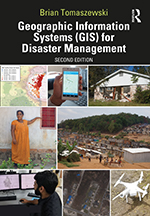
Brian Tomaszewski is a Professor at the Rochester Institute of Technology (RIT) within the School of Interactive Games and Media , Golisano College of Computing and Information Sciences. He also holds an Adjunct Professor position at the Centre for Disaster Management and Mitigation, Vellore Institute of Technology, India. Education : BA (University at Albany), MA (University at Buffalo), PhD (Pennsylvania State University) Research Interests focus on Geographic Information Science applications for Disaster Management , Forced Displacement , and Geovisual Analytics . His work bridges Spatial Thinking with Serious Games for crisis response and mitigation. Recent Publications (2023-2014) emphasize LLM-driven refugee camp analysis , geospatial resilience modeling , and serious games for disaster education , with fieldwork spanning Rwanda, Jordan, and Poland. Scientific Awards : Fulbright Scholar (2018) Grants & Collaborations include US National Science Foundation (NSF) funding for international projects and partnerships with UNHCR and IEEE . He leads the RefuGIS project and the Center for Geographic Information Science and Technology at RIT.
Dr. Huadong Mo is a Senior Lecturer at the School of Systems and Computing, University of New South Wales (UNSW) Canberra, Australia. He holds a B.E. degree in automation from the University of Science and Technology of China (2012) and a Ph.D. in systems engineering and engineering management from the City University of Hong Kong (2016). Prior to his current position, he was a research associate at ETH Zurich's Reliability and Risk Engineering Lab (2016-2019) and a Lecturer at UNSW Canberra (2019-2021). Dr. Mo's educational background includes a strong foundation in systems engineering with international experience across China, Switzerland, and Australia. His career trajectory demonstrates a progression from academic research to faculty positions with increasing responsibilities in teaching and research leadership. His research focuses on enhancing the resilience, performance, and security of complex systems using learning-based algorithms, primarily in power and energy systems, cyber-physical systems, and manufacturing systems. He applies data analytics to understand system evolution under uncertainties, with particular emphasis on prognostics and health management, sustainable transportation, robust operation of power systems under extreme events, and reinforcement learning-based asset management. His work bridges theoretical advances with practical applications in critical infrastructure. Analysis of Dr. Mo's recent publications reveals a strong focus on energy systems, particularly in the integration of machine learning with power grid management, battery storage systems, and resilience against cyber threats. His research shows a clear trajectory toward increasingly complex system integration, with growing emphasis on multi-vector energy communities, cross-domain prediction, and uncertainty-aware energy management. The interdisciplinary nature of his work spans electrical engineering, computer science, and operations research. 2024 IEEE SMC Early Career Award 2023 Visiting Research Fellowship (Jean d'Alembert Pour Fellowship) Gold Medal in 2024 China International College Student Innovation Competition (as supervisor) Arc PGC Supervisor Award (2021) IEEE SMC Outstanding Chapter Award (2021) Alumni Achievement Award from City University of Hong Kong (2019) Dr. Mo actively supervises numerous HDR students working on cutting-edge research topics including battery health monitoring, quantum control, reinforcement learning for power systems, and explainable AI for energy management. He leads multiple significant research grants totaling over 3 million AUD, including projects funded by ARC, Energy Innovation Fund, and international collaborations with institutions like ETH Zurich, Cambridge, and Tsinghua University. His research group maintains strong international connections, facilitating student exchanges and collaborative research. As Postgraduate Course Coordinator of Systems Engineering and Chair of IEEE SMC ACT Chapter, Dr. Mo plays a significant role in academic leadership and professional community building. His research team collaborates with industry partners on practical implementations of their theoretical work, particularly in the energy sector.
Dr. Siqi Ma is a Senior Lecturer at the UNSW Institute for Cyber Security (IFCYBER) within the School of Systems & Computing at the University of New South Wales (UNSW). He previously served as a Lecturer at the University of Queensland's School of Information Technology and Electrical Engineering (ITEE). He holds a Ph.D. in Information Systems from Singapore Management University (2018) and was a Postdoctoral Research Fellow at Data61, CSIRO. He also visited Carnegie Mellon University (CMU) in 2015. Current Role: Senior Lecturer, UNSW Institute for Cyber Security Former Role: Lecturer, University of Queensland Education: Ph.D. (Singapore Management University), Postdoc (Data61, CSIRO) His research spans automated vulnerability detection, mobile security, IoT security, network authentication, and graph-based adversarial robustness. Recent work focuses on drone configuration bugs, Android malware analysis via GNNs, federated learning privacy, and credential leakage in open-source projects. Key trends in his 2024-2025 publications include automated security analysis for embedded systems, deepfake detection in multimedia, and privacy-preserving mechanisms for distributed networks. He collaborates with institutions like Purdue University, Singapore Management University, and CSIRO Data61.
Sean Z. Qian is a Professor at Carnegie Mellon University with joint appointments in the Department of Civil and Environmental Engineering (College of Engineering), Heinz College of Information Systems and Public Policy, and the Department of Electrical and Computer Engineering. He directs the Mobility Data Analytics Center (MAC) and founded the spinoff firm TraffiQure Technologies in 2020 to commercialize AI/ML technologies in infrastructure and mobility services. His academic credentials include: 2012: MS in Statistics, Stanford University 2011: Ph.D. in Civil Engineering, University of California, Davis 2006: MS in Civil Engineering, Tsinghua University 2004: BS in Civil Engineering, Tsinghua University Qian's research centers on large-scale dynamic network modeling and data analytics for multi-modal transportation systems, applying AI, network flow theory, and economics to address aging infrastructure challenges. His work spans Infrastructure Resilience under climate stress, Urban Systems Interdependency , and Intelligent Transportation Systems , with emphasis on sustainable network optimization and cyber-physical-social system integration. Key methodologies include remote sensing, transportation economics, and digital twin technologies for infrastructure management. His notable scientific awards include: NSF CAREER Award (2018) Greenshields Prize, Transportation Research Board (2017) Research funding has been secured from diverse sources: Federal Agencies: National Science Foundation (NSF), U.S. Department of Energy (DOE), U.S. Department of Transportation (DOT) State Agencies: Pennsylvania Department of Transportation (PennDOT), Maryland Department of Transportation (MDOT), Pennsylvania Department of Community and Economic Development (DCED) Industry Partners: IBM, Honda Research Institute, Fujitsu Inc. Foundations: Benedum Foundation, Hillman Foundation As Director of the Mobility Data Analytics Center (MAC), Qian leads collaborations with Fujitsu on digital twin technologies for infrastructure management in southwestern Pennsylvania, while actively mentoring graduate students and recruiting Ph.D. candidates with strong quantitative backgrounds for Fall 2025.
Dr. Isabel Straw is an Assistant Professor in Healthcare Artificial Intelligence & Cybersecurity at the Faculty of Population Health Sciences, University College London. She leads the CRASH Team (Cybersecurity Resiliency & AI Safety in Healthcare) and collaborates with the Centre for Healthcare Cybersecurity at the University of California San Diego. As an Emergency Doctor at Homerton Hospital NHS Trust, her research bridges clinical practice, AI development, and cybersecurity. PhD in Artificial Intelligence Contributed to UNESCO's Recommendation on the Ethics of AI Developed CIPHER: tool for modeling patient harms from cyberattacks Co-led international workshops on healthcare cybersecurity Featured in 15+ international media outlets Her research examines technology-facilitated abuse, algorithmic bias in healthcare, and risks from interconnected medical technologies. She has delivered over 70 invited talks, including DEF CON and May Contain Hackers events. Recent publications include: 2025: Cybersecurity in family medicine clinics 2024: Sex-based disparities in cardiac ML algorithms 2023: Biotechnological syndromes and digital pathologies 2022: Ethical model calibration in medical AI 2020: AI biases in mental health She leads UCL postgraduate modules on Healthcare AI and Cybersecurity, and mentors MSc students on topics including AI fairness in oncology and cardiology. Her work has informed WHO policy, UK parliamentary frameworks, and UN AI governance reports.
Paul R. Genssler is a Dr.-Ing. researcher at the Chair of AI Processor Design (AI-Pro) within the Technical University of Munich (TUM), actively advancing hardware solutions for artificial intelligence under Prof. Hussam Amrouch. His work bridges computer engineering and emerging technologies, focusing on overcoming fundamental limitations in conventional computing architectures through brain-inspired paradigms. His research spans critical domains in next-generation computing: Hyperdimensional Computing for robust pattern recognition and bioinformatics applications Neuromorphic and In-Memory Computing architectures for energy efficiency Reliability engineering for emerging memory technologies (FeFET, etc.) Quantum computing support systems including cryogenic embedded electronics Machine learning-driven transistor aging prediction and mitigation Analysis of his 15 most recent publications (2023-2024) reveals a dominant trend toward hyperdimensional computing as a unifying framework for addressing reliability challenges in emerging technologies. His work consistently integrates in-memory computing techniques to bypass von Neumann bottlenecks while targeting real-world applications like genome matching and unsupervised learning. A significant portion focuses on error-resilient implementations for unreliable nanoscale devices, demonstrating exceptional cross-stack expertise from transistor physics to algorithm design. As a core member of TUM's AI Processor Design group affiliated with the Munich Institute of Robotics and Machine Intelligence (MIRMI), Genssler collaborates extensively on projects spanning cryogenic quantum control systems, FPGA-based AI resilience, and monolithic 3D integration. The team operates at the intersection of semiconductor physics, computer architecture, and machine learning, with strong industry connections evident through publications at DATE, ASP-DAC, and ICCAD.
A. Asadi is an Assistant Professor at the Faculty of Electrical Engineering, Mathematics and Computer Science at TU Delft. He leads the Wireless Communication and Sensing (WISE) Lab within the Embedded Systems Group, focusing on the integration of wireless communication and sensing systems for Beyond-5G and 6G networks. His research leverages machine learning to develop practical solutions for next-generation wireless networks, with strong industrial collaborations from companies such as Nokia, NEC, and National Instruments. Research Themes : Wireless Sensing, 6G Networks, Physical Layer Security, Reconfigurable Intelligent Surfaces (RIS), mmWave Communication Key Collaborations : Industry partnerships with Nokia, National Instruments, and NEC Recent research outputs highlight his work on Reconfigurable Intelligent Surfaces (RIS) for 6G systems, including liquid crystal-based designs for fast beam switching and temperature compensation. His publications emphasize practical implementations in mmWave communication, security protocols, and experimental validation. Scientific Awards : Athene Young Investigator Prize (2017) Educational Fellowship (2025) Asadi contributes to the academic community through committee roles at major conferences like IEEE INFOCOM , IEEE ICNP , and ACM CoNEXT , and his work on D2D communication has been cited as an ESI highly cited paper.
Annette R. Grilli is a Research Professor in the Department of Ocean Engineering at the University of Rhode Island , focusing on ocean renewable energy and coastal hazard assessment. Her work integrates numerical modeling and statistical analysis to study extreme events like tsunamis and storms. Ph.D. in Climatology, University of Delaware (2000) M.S. in Oceanography, University of Liege (1984) B.S. in Geography & Education, University of Liege (1983) Her research spans offshore wind farm siting optimization , tsunami propagation modeling , and coastal erosion dynamics . Recent publications highlight applications of phase-resolving wave models and machine learning to coastal resilience and marine renewable energy systems. Grants include collaborations with NOAA , Department of Energy , and NSF , focusing on coastal hazard visualization , tsunami detection algorithms , and design elevation mapping under climate change scenarios. She contributes to digitalCommons@URI with over 100 publications in Ocean Engineering and Civil Engineering domains.
Lorin D. Warnick is currently serving as the Austin O. Hooey Dean of Veterinary Medicine at Cornell University College of Veterinary Medicine. He is a tenured Professor in the Department of Population Medicine and Diagnostic Sciences, where his research focuses on the epidemiology of Salmonella infections and antimicrobial resistance in enteric bacteria affecting both domestic animals and humans. A key contributor to Cornell's response to the COVID-19 pandemic, he has led research on SARS-CoV-2 diagnostic testing and campus outbreak dynamics. Education : B.S. in Microbiology (1984) from Brigham Young University DVM (1988) from Colorado State University Ph.D. in Veterinary Medicine (Epidemiology) and Statistics from Cornell University (1994) Professional Experience : Assistant Professor (1994-1996) at Virginia-Maryland Regional College of Veterinary Medicine Assistant/Associate Professor (1996-2008) and Professor (2008-present) at Cornell University Section Chief in Ambulatory and Production Medicine (1997-1999) Research Interests span veterinary epidemiology, antimicrobial resistance, foodborne pathogens, and public health. His work connects animal and human health through One Health frameworks, particularly in Salmonella transmission dynamics between dairy cattle and humans. He has pioneered surveillance systems for infectious diseases, including the model used during Cornell's COVID-19 response. Scientific Awards include: Phi Zeta Veterinary Honor Society (1987) Phi Kappa Phi Honor Society (1988) Honorary Diploma from American Veterinary Epidemiology Society (2018) One Cornell Award for Leadership in Pandemic Testing (2021) Advising and Grants highlight his role in mentoring students and leading interdisciplinary research teams. His grants focus on antimicrobial resistance mitigation, dairy calf health, and pandemic response infrastructure. He has collaborated extensively with institutions like USDA and CDC on foodborne disease research. Labs and Collaborations include leadership in Cornell's Veterinary Diagnostic Laboratories and contributions to the American College of Veterinary Preventive Medicine. His work integrates epidemiological modeling, microbiome analysis, and policy development for sustainable agricultural practices.
Istvan David is an Assistant Professor in the Department of Computing and Software at McMaster University , with research expertise spanning Digital Twins , Model-Driven Engineering , and Sustainability . His work bridges theoretical and applied domains, focusing on smart ecosystems , collaborative modeling , and AI-driven simulation . Key contributions include frameworks for digital twin evolution and interoperability in sustainable systems. Education : BSc, MSc, and PhD in Computer Engineering and Computer Science from Budapest University of Technology and Economics, and University of Antwerp. Research Areas : Digital Twins, Model-Driven Engineering, Reinforcement Learning, Smart Ecosystems, Sustainability, Collaborative Modeling, Cyber-Biophysical Systems, and Software Architecture. Recent Article Trends emphasize AI integration with digital twins, collaborative modeling in industrial contexts, and sustainable systems engineering . His work often combines machine learning with formal modeling to address challenges in technical sustainability and smart agriculture .
Dr. Zhi Chen is a Lecturer in Computing at the School of Mathematics, Physics and Computing, University of Southern Queensland, specializing in Artificial Intelligence and Machine Learning with applications spanning digital agriculture and healthcare systems. Education: Master of Information Technology (MIT), University of Queensland, 2018 PhD, University of Queensland, 2023 Research Focus: His work centers on zero-shot learning, domain adaptation, and multimodal systems, addressing core challenges in computer vision and deep learning. Current projects integrate AI with agricultural risk modeling and medical diagnostics, emphasizing real-world deployment of robust algorithms under data-scarce conditions. Publication Trends: Recent output (2022-2025) shows concentrated expertise in source-free domain adaptation and generalized zero-shot learning, with significant contributions to plant disease recognition (via mobile multimodal systems) and diabetes subgroup analysis. His work consistently appears in premier venues including AAAI, CVPR, and ACM MM, demonstrating methodological innovation applied to critical domains like climate-resilient agriculture and precision medicine. Supervision: Currently serves as Associate Supervisor for a doctoral candidate developing parametric insurance models for oyster farms to mitigate climate-related risks from king tides and extreme weather events. Awards: No scientific awards were documented in the provided materials.
Dr. Joshua M. Pearce is a Professor at Western University, holding appointments in the Department of Electrical & Computer Engineering and the Ivey Business School. He is the John M. Thompson Chair in Information Technology and Innovation at the Thompson Centre for Engineering Leadership & Innovation and a Fellow of the Canadian Academy of Engineering. His research focuses on open-source appropriate technology for sustainability and poverty reduction, spanning solar photovoltaics, 3D printing, distributed recycling, and policy analysis. Ph.D. in Materials Engineering from Pennsylvania State University Former Richard Witte Professor at Michigan Tech Editor-in-Chief of HardwareX Author of multiple open-source sustainability books His work integrates engineering, economics, and policy to solve global sustainability challenges. Recent projects include agrivoltaic systems, open-source medical devices, and climate-resilient food production frameworks. He leads the Free Appropriate Sustainability Technology (FAST) research group, which has produced over 200 open-access publications cited in top-tier journals like Renewable and Sustainable Energy Reviews (IF=16.3) and HardwareX (IF=2). Dr. Pearce's scientific contributions include: Fulbright-Aalto University Distinguished Chair Top 0.06% most cited scientist (Elsevier metrics) Leading open-source hardware certification frameworks Developing low-cost scientific instruments His research team includes cross-disciplinary collaborators from Mechanical Engineering, Environmental Science, and Policy Studies. The FAST group emphasizes practical open-source solutions for energy, water, and food security in both developed and low-resource contexts.