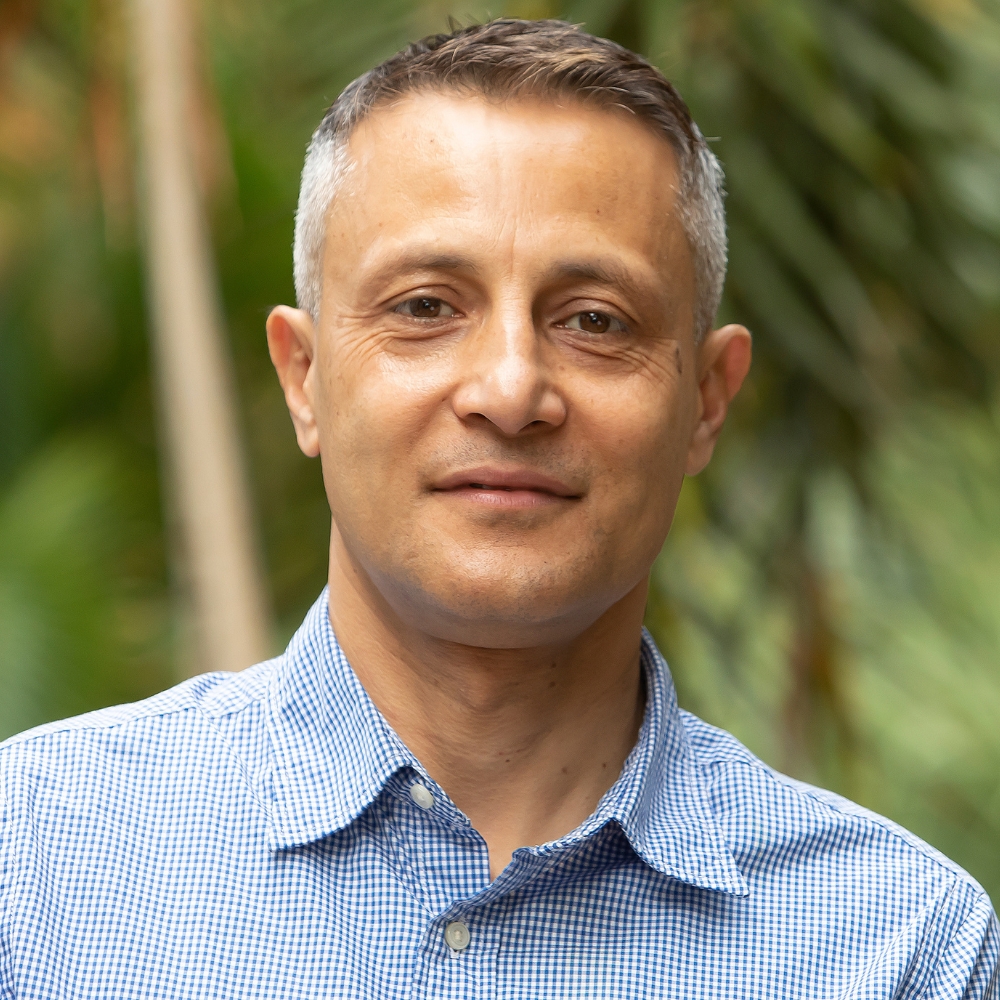
Dr. Gavin Morris is a Lecturer in Education at Charles Darwin University's College of Education, with over two decades of teaching experience in Australian schools. His academic qualifications include a PhD from Charles Darwin University (2019), Master of Education from University of Sydney (2016), and Bachelor of Education from James Cook University (2000). Morris specializes in Indigenous research methodologies, Health & Physical Education, and Sport Science. His qualitative work focuses on trauma healing, truth-telling, and decolonization practices in Aboriginal communities, particularly using Dadirri (deep listening) methodologies. Recent research explores digital platforms for cultural preservation and community resilience. As a registered postgraduate research supervisor, Morris contributes to undergraduate and postgraduate programs while maintaining active fieldwork in remote Northern Territory communities like Nauiyu at Daly River.
Sarah Billington is the UPS Foundation Professor of Civil and Environmental Engineering at Stanford University and a Senior Fellow at the Woods Institute for the Environment. Her research program focuses on sustainable building design, human wellbeing, and ethical supply chain practices. Education: PhD, University of Texas at Austin, Structural Engineering (1997) MSE, University of Texas at Austin, Structural Engineering (1994) BSE, Princeton University, Civil Engineering & Operations Research (1990) Her lab employs interdisciplinary methods to study how built environments impact human physical, psychological, and social wellbeing. Current projects include developing tools to quantify nature exposure in buildings, exploring affordable housing's role in wellbeing, and using AI to assess forced labor risks in material supply chains. While no longer active in this area, her group previously pioneered research on sustainable construction materials like bio-based composites and ductile cement-based composites. Her recent publications address topics such as nature integration in architecture, workplace design optimization, and health impacts of building materials. The Billington Lab at Stanford fosters collaborative team science, welcoming partnerships to advance occupant-centric engineering solutions.
Professor Nancy W. Y. Law is a leading scholar in Learning Sciences and Technology at the University of Hong Kong's Faculty of Education . She has served as Founding Director of the Centre for Information Technology in Education (CITE) (1998-2013) and currently holds the Chair of Learning Sciences and Technology . Her career spans over 25 years of international comparative studies, policy analysis, and large-scale educational innovation. Current roles: Associate Dean (Strategic Development), HKU Key affiliations: Sciences of Learning Strategic Research Theme (co-convener) Research Expertise Her work focuses on technology-enhanced learning , digital literacy , knowledge building communities , and multilevel educational change . She pioneered network models of teacher innovation and socio-technical frameworks for sustainable pedagogical transformation, particularly in STEM education and Cyberbullying prevention . Scientific Leadership With over 25 major research grants (2000-2023) exceeding HK$50 million, she leads projects like: Learning and Assessment for Digital Citizenship Jockey Club Self-directed Learning in STEM Design-Aware Learning Analytics A Fellow of the International Society of Learning Sciences and recipient of the HKSAR Humanities and Social Sciences Prestigious Fellowship , she has supervised numerous international comparative studies including SITES 2006, ICILS 2013, and longitudinal digital citizenship research (2019-2021).
Professor Siân Bayne is a leading academic in digital education at the University of Edinburgh , where she serves as Assistant Principal for Education Futures and directs the Centre for Research in Digital Education . Her work bridges critical theory and practical innovation in higher education. Interdisciplinary research on digital education and futures studies Leadership in the Edinburgh Futures Institute and Moray House School of Education and Sport Global impact through UNESCO collaborations and UKRI GCRF projects Bayne’s research explores higher education futures , utopian theory , and digital enhancement , with a focus on: AI’s role in teaching and learning Ethical implications of educational technologies Anonymous social media in academic spaces Speculative scenarios for educational systems Global South digital education models Augmented reality applications in assessment Her 15 most recent publications span 2017-2025 , covering critical perspectives on: Generative AI and educational innovation Utopian design in universities Data governance in learning analytics Augmented reality pedagogy Digital cultural heritage Scientific recognition includes: IASH Sabbatical Fellowship (2023) Bayne leads Higher Education Futures initiatives and partners with institutions worldwide, including: UNESCO Global Education and Technology Report World Bank collaborations European university leadership programs She also drives major research centers like: Centre for Research in Digital Education UKRI GCRF Urban Disaster Risk Hub
Nancy M. Wells is a Professor in the Department of Human Centered Design and serves as the Senior Associate Dean for Research and Graduate Education in the College of Human Ecology at Cornell University. Her work bridges environmental psychology and public health, examining how built and natural environments impact human health and behavior across the lifespan. Dr. Wells received a joint PhD in Psychology and Architecture from the University of Michigan and completed National Institute of Mental Health (NIMH) post-doctoral training at the University of California, Irvine. Her educational background uniquely positions her to investigate the intersection of physical environments and human wellbeing through both psychological and architectural lenses. Her research focuses on how environmental contexts—from homes to neighborhoods to schools—affect health outcomes, cognitive functioning, and resilience. A central theme examines nature's role in human resilience, particularly how natural environments buffer against adversity and challenge. She has conducted influential work on school gardens and their effects on children's physical activity, dietary habits, and learning. More recently, she has pioneered research on nature and autism, conducting a randomized controlled trial examining natural environments' effects on autistic youth wellbeing. Analysis of Dr. Wells' recent publications reveals consistent focus on nature's health benefits, with strong emphasis on experimental methodologies including randomized controlled trials and natural experiments. Her work spans environmental psychology, public health, and education, with particular attention to vulnerable populations including low-income communities and children of color. NSF Funding for environmental health research USDA Funding for school garden studies Robert Wood Johnson Foundation Funding MacArthur Foundation Funding Senior Associate Editor of Environment and Behavior (4 years) Research Advisory Board of Children and Nature Network Board of Directors for reDirect Dr. Wells actively mentors undergraduate and graduate students through the Wells Lab, involving them in all research stages from data collection to publication. Her research has been supported by multiple significant grants examining housing quality effects on mental health, neighborhood design impacts on physical activity, and school garden interventions. She leads interdisciplinary research teams that integrate perspectives from environmental psychology, public health, landscape architecture, and education. The Wells Lab operates as an integrated research-teaching-outreach unit that develops practical yet rigorous studies to assess causal relations between environment and health, creates valid measurement tools, and identifies causal pathways. Current projects include examining nature's effects on autistic youth wellbeing in partnership with The Center for Discovery in New York, and investigating multi-sensory design in urban public spaces.
Angelika Sjöstedt serves as Professor and Chair of Gender Studies within the Department of Humanities and Social Sciences at Mid Sweden University. Her academic leadership spans teaching across Bachelor's, Master's, and PhD programs in Gender Studies and Sociology, while actively contributing to institutional discourse through roles such as delivering the 2024 academic celebration lecture. She maintains significant engagement with contemporary academic freedom debates, notably co-organizing the 2024 seminar series addressing responsible internationalization amid the Gaza conflict. Her research profile reveals deep expertise in intersectional analysis of gender, settler colonialism, and labor precarity, particularly examining how chronic crises manifest in peripheralized regions. Recent work demonstrates acute responsiveness to geopolitical emergencies, with 2024 publications directly confronting academic complicity in genocide. Her methodological approach bridges ethnographic rigor with activist scholarship, evident in long-term collaborations like the Båskoes Sámi research network and Forum for Gender Research. Sjöstedt's scholarly trajectory shows consistent thematic development from early work on flexible knowledge-work subjectivity (2012) through nuanced examinations of rural resilience (2017-2020) to current urgent interventions in academic freedom. Her publications reveal distinctive geographic focus on Norrland's inland regions while maintaining transnational theoretical relevance, particularly regarding mining resistance movements and crisis management frameworks. The 2021-2024 output demonstrates accelerated engagement with acute political emergencies, signaling scholarly adaptation to escalating global crises. Professional networks constitute a critical dimension of her work, with sustained involvement in the Forum for Gender Research since at least 2015 and leadership in the Båskoes network advancing Indigenous research methodologies. Her editorial work on critical anthologies like Aktivism: En antologi om arbete för social och politisk förändring (2022) demonstrates commitment to bridging academic and activist knowledge production.
Pawan Adhikari is a Professor of Accounting at Essex Business School, University of Essex , where he serves as Director of Impact and Enterprise and Director of Essex Accounting Centre . He is an Associate Editor of the Journal of Public Budgeting, Accounting and Financial Management and a Executive Board Member of the Comparative International Governmental Accounting Research Network (CIGAR) . Previously, he led accounting reforms at Nepal’s Accounting and Auditing Standards Board and lectured at Nord University, Norway. PhD, Nord University Business School Fellow of the Higher Education Academy His research focuses on public sector accounting in developing countries, particularly accounting reforms , public value creation , and climate accountability . He explores how accrual accounting and participatory budgeting can enhance transparency in South Asian and African contexts. His work has influenced policy-making in Nepal and is recognized with the 2023 Best International Research Impact award by the University of Essex. Recent publications analyze wellbeing economies (2025), NGO accountability in disasters (2024), and climate budgeting (2023). He collaborates with institutions like the World Bank , European Commission , and British Academy , focusing on projects related to financial resilience , circular economy , and health sector accountability . Supervising 8 current PhD students, his advisees have produced work on topics like accrual accounting in Bangladesh and NGO accountability in Palestine . World Bank/PEFA Research Award African Accounting and Financial Association (AAFA) Award ESRC IIA Impact Fund GCRF and SeNSS Grants 2019 Best Postgraduate Supervisor (Essex)
Dr. Young Yun Kim is a Professor in the Department of Communication at the University of Oklahoma's Dodge Family College of Arts and Sciences, where she has developed nationally recognized Intercultural Communication graduate programs since joining in 1988. Her academic journey spans continents, beginning in Seoul, Korea, and continuing through significant scholarly institutions in the United States. B.A.: Seoul National University, Seoul, Korea M.A.: University of Hawaii (East-West Center Communication Institute) Ph.D.: Northwestern University, Evanston, Illinois Dr. Kim's research pioneers the theoretical foundations of cross-cultural adaptation and interethnic communication. Her Integrative Communication Theory of Cross-Cultural Adaptation positions communication as the central mechanism for achieving internal equilibrium in new cultural environments, while her Contextual Theory of Interethnic Communication examines associative and dissociative behaviors across ethnic boundaries. Her work uniquely bridges personal transformation with systemic cultural dynamics, emphasizing how intercultural experiences foster expanded human understanding. Analysis of her recent publications reveals consistent theoretical refinement with increasing focus on identity transformation, synchrony in communication, and the emergence of intercultural personhood beyond traditional cultural boundaries. Her scholarship demonstrates remarkable continuity in core themes while progressively incorporating globalization's impact on individual and collective identity formation. Scientific Awards Fellow of the International Communication Association (2002) Top Scholar Award for Lifetime Achievement, Intercultural Communication Division, International Communication Association (2006) Dr. Kim has directed numerous doctoral theses and collaborated on significant cross-cultural research projects examining adaptation patterns among diverse populations including Korean and Indonesian expatriates, Hispanic youth, international students, and refugees. Her research funding includes a two-year study of Indochinese refugees (1978-1980) sponsored by the U.S. Department of Health and Human Services, reflecting sustained external validation of her methodological rigor and theoretical significance. As a foundational leader in intercultural scholarship, Dr. Kim serves on 11 editorial boards including Journal of Communication and Human Communication Research, and has held executive positions in the International Communication Association and International Academy for Intercultural Research, culminating in her presidency (2013-2015) of the latter organization.
Briana S. Last is an Assistant Professor of Clinical Psychology at Stony Brook University, with a PhD from the University of Pennsylvania (2022). Her work focuses on improving mental health equity through policy research, implementation science, and community-based approaches. She examines social determinants of mental health, mental health workforce development, and clinical decision-making in public systems. Dr. Last leads the Mental Healthcare for All Lab, collaborating with governments, agencies, and clinicians to strengthen public mental health systems. Her research emphasizes workforce sustainability, anti-transgender policy impacts, and clinician well-being. She has published in high-impact journals like The Milbank Quarterly and Psychiatric Services . Her interdisciplinary methods combine qualitative and quantitative approaches, including mixed methods and implementation science frameworks. Current projects address workforce retention strategies, telehealth policy implications, and the sociopolitical context of gender-affirming care. Education: PhD in Clinical Psychology, University of Pennsylvania (2022) Labs: Mental Healthcare for All Lab Key Themes: Behavioral health policy, health equity, clinician-patient dynamics, LGBTQ+ mental health
Leibniz Institute of Ecological Urban and Regional DevelopmentGermany
Martina Artmann is a Research Professor in Green Infrastructure at the University of Applied Science Weihenstephan-Triesdorf, Germany. She leads the Leibniz Junior Research Group URBNANCE on Urban Human-Nature Resonance at the Leibniz Institute of Ecological Urban and Regional Development (IOER) in Dresden. Her work spans urban ecology, green infrastructure, and sustainability transformation, with a focus on human-nature interactions in cities. PhD in Natural Sciences, University of Salzburg & Bavarian Academy for Nature Protection MSc in Landscape, Regional and Urban Management, University of Salzburg BSc in Agricultural Science, University of Hohenheim Her research centers on urban ecosystem services, green infrastructure, and edible cities as nature-based solutions for urban sustainability. She investigates how urban agriculture, soil sealing, and green space planning contribute to resilient cities. Her work integrates transdisciplinary methods, citizen science, and policy evaluation to foster human-nature resonance and transformative change. Her recent publications reflect a strong trend toward systemic assessments of urban agriculture, sustainability transformation, and the role of relational values in urban ecology. Themes include edible cities, green infrastructure, urban human-nature interactions, and the integration of ecological and social dimensions in urban planning. Student Award, German IALE-D (2012–2014) Doctoral Scholarship, German Federal Foundation for Environment (DBU, 2011) TUD Young Investigator, TU Dresden (2013) Fellowships for study in China (2005) and New Zealand (DAAD) Artmann has led multiple funded research projects, including DFG’s Edible Cities, BMBF’s Future Town Dresden, and BMVI’s meinGrün. She mentors students through project-based teaching at TU Dresden and has served as a visiting professor at the University of Bucharest. She is a Review Editor for Frontiers in Environmental Science and actively contributes to academic networks such as the Society for Urban Ecology (SURE) and the China Centre for Urban Ecology (CCUE). She is involved in research labs and teams including the URBNANCE Junior Research Group at IOER and collaborates with interdisciplinary teams on urban sustainability projects. Her work emphasizes transdisciplinary research, stakeholder engagement, and the co-creation of knowledge for sustainable urban development.
Aeli Roberts is a Professorial Teaching Fellow at The Bartlett School of Sustainable Construction, University College London, specializing in sustainability, health and safety, and sustainable construction practices. She is a member of BSSC's Centre for Sustainable Governance and Law in the Built Environment, a partnership between UCL and Gatehouse Chambers. Her educational background includes a diverse range of qualifications: PhD from Open University (2004), Bar Vocational Course from BPP Law School (2005), BSc in Construction Management from University College London (2003), MSc from Royal Holloway (1988), BSc from Royal Holloway (1986), and Higher National Diploma from Camberwell College of Art (1990). Initially trained as a chemist, she worked in industry and taught material science to conservation students before transitioning to construction management. Roberts' research focuses on integrating green space within urban environments for environmental and social benefits, health and safety in construction, and sustainable building practices. Her work examines sustainability in small and medium enterprises (SMEs), which employ 85% of UK construction workers, and explores architect-client interactions for sustainable domestic construction. She has conducted comparative studies of health, safety, and well-being in UK and Hong Kong construction industries. Her publication record shows a strong focus on operational failure mitigation, knowledge transfer for safety culture, and the role of building control in sustainable construction. Recent work emphasizes climate change impacts on construction, wellbeing in the industry, and sustainable design integration. Her research bridges academic theory with practical application in the construction sector. Scientific Awards: Significant contributions serving the Design Futures Council's London and Cambridge Think Tank (2012) Roberts has held teaching positions across multiple subject areas including materials science, law, and sustainability. She has developed a third-year module on built asset management, emphasizing the importance of post-occupancy building performance. Her teaching philosophy connects historical building conservation with contemporary sustainability challenges, particularly in the context of upgrading existing housing stock to meet carbon reduction targets. She has been involved in collaborative research projects with organizations including the London Chamber of Commerce and Industry (LCCI), focusing on eco-design training for the construction supply chain. Her work with the CIC 2050 Group demonstrates engagement with industry-wide sustainability initiatives.
Prof Terry O'Neill serves as Executive Dean at the Bond Business School , Bond University, while also holding the title of Professor and Director at the Centre for Data Analytics. His research spans applied statistics , big data analytics , and financial modeling , with over 80 publications (20% in A* journals). Grants: Lead investigator on five ARC Discovery/Linkage grants totaling $2.99M, including studies on retirement savings, climate change modeling, and financial crisis resilience. Research Trends: Focus on financial literacy , retirement economics , and myelopoiesis , bridging finance with computational biology through collaborations with his spouse Helen O'Neill. Academic Leadership: Established Bond University's University Centre in Actuarial and Financial Big Data Analytics to elevate institutional research prominence in data science.
Max Koch is a Professor at Lund University's School of Social Work, specializing in the intersection of social policy, ecological sustainability, and postgrowth theories. His research explores how capitalist restructuring impacts welfare, inequality, and climate action, with a focus on sustainable welfare systems and degrowth. Current projects: 'Economic Elites in the Climate Change Transformation' (PI, 2023-2028), 'Regulating the Polluter Elite' (2024-2027), 'FLYWELL' (2023-2026). Former projects: 'Postgrowth Welfare Systems' (2021-2025), 'Sustainable Welfare for a New Generation' (2020-2023). He teaches political economy, social inequality, and ecological sustainability at Lund University, directing the 'Social Policy in Europe' course. As a Visiting Scholar, he has collaborated with institutions in Spain, the Netherlands, Scotland, and Chile. His work contributes to UN Sustainable Development Goals (SDGs) related to climate action and reduced inequalities. Scientific award: Atlas Prize (2019) for degrowth research. Editorial roles: Environmental Values, advisory boards for ORSI and Collorative Future Making. Recent publications analyze planetary boundaries, postgrowth welfare models, and climate policy synergies. His research emphasizes interdisciplinary approaches combining social practices with policy innovation.
Dr. Alice Earley is a Researcher at the UK Collaborative Centre for Housing Evidence (CaCHE) within the Division of Urban Studies and Social Policy at the University of Glasgow. Her work focuses on urban regeneration, gentrification, housing inequalities, and community enterprises. Prior roles include Research Fellow at UCL’s Bartlett School of Planning and Tutor in Urban Studies at the University of Glasgow. Education: PhD in Urban Studies (University of Glasgow, 2022) MRes in Urban Research (University of Glasgow) MSc in Urban Regeneration (Bartlett School of Planning, UCL) MA(Hons) in Geography (University of Edinburgh) Research Interests: Alice’s research explores debates on regeneration vs. gentrification, housing inequalities, community asset management, and urban governance. Her work emphasizes structural inequalities and the role of partnerships in policy processes. She advocates for equitable urban development through community-led initiatives and policy reforms. Teaching & Collaboration: At the University of Glasgow, Alice has taught courses on urban policy, public policy, and planning. She also contributed to teaching at UCL. Her collaborations include projects with CaCHE, the Scottish Government, and community organizations like BS3 Community Development. Current projects address housing policy in Scotland and England, including affordable housing strategies and private rented sector regulation. Labs/Teams: Affiliated with CaCHE and the Neighbourhoods, Welfare and Wellbeing Research Group at Glasgow’s Urban Studies department. Engaged in interdisciplinary collaborations across urban studies, public policy, and geography.
Neil Pembroke is a Lecturer in Studies in Religion at the University of Queensland , affiliated with the School of Historical and Philosophical Inquiry . His academic work bridges theology, philosophy, and pastoral care, with a focus on spiritual formation, healthcare ethics, and the intersection of psychology and religion. Education : B.Eng (Agric.), B.Th (B.C.T.), BA (Hons), PhD (Edin) Teaching interests : Jung and Human Spirituality, Religion and Health, Mysticism, Psychology of Religion, Religion and Psychotherapies His research explores therapeutic preaching, spiritual maturity, and the role of empathy in Christian and interfaith contexts. He has contributed to organizational spirituality, particularly in church-sponsored healthcare, and examined compassion fatigue through Christian and Buddhist perspectives. Publications include books like Divine Therapeia and the Sermon and Renewing Pastoral Practice , with over 50 journal articles and 10 book chapters. Collaborative projects span international studies on pastoral care models and interdisciplinary dialogues on ethics. Neil Pembroke's work emphasizes the integration of theological and psychological insights into personal and communal spiritual growth, with a particular focus on shame, identity, and the relational Trinity as frameworks for pastoral practice.