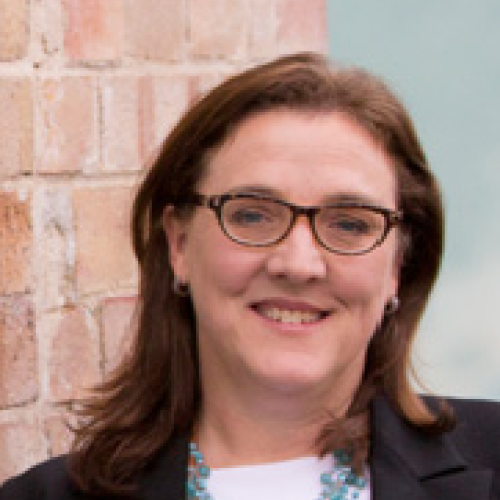
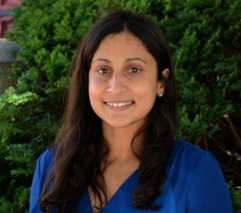
Renate Egan is a Professor and Deputy Head of School (Engagement) at the School of Photovoltaics and Renewable Energy Engineering , University of New South Wales (UNSW). She leads UNSW's activities in the Australian Centre for Advanced Photovoltaics , a national research consortium involving multiple Australian institutions. Her research focuses on: Techno-economic analysis of photovoltaic technologies Energy data analytics for decentralized systems Electricity market restructuring Technology transfer and commercialization Recent work examines machine learning applications in energy demand forecasting, thermal storage optimization, and bushfire resilience. She collaborates extensively across academia, industry, and government sectors. Key affiliations include: Co-Founder of Solar Analytics (Australia's largest independent energy monitoring provider) Executive Committee member of the IEA PV Power Systems program
Tina Gupta will join the University of Oregon as an Assistant Professor in the Department of Psychology under the College of Arts and Sciences in Fall 2025. With expertise in clinical psychology and affective neuroscience, she focuses on adolescent emotional development and severe mental illness risk markers. Research Interests: Adolescent Development, Psychosis-risk, Resilience, Emotion Processing, Reward Processing, Early Intervention Methods: Clinical interviews, behavioral measures, facial expression coding, neuroimaging, eye-tracking, computational statistics Her work bridges clinical psychology and developmental psychopathology to identify biological and environmental factors contributing to severe mental illnesses like schizophrenia. She specifically examines disruptions in emotional processes and protective resilience mechanisms in at-risk adolescents. Dr. Gupta employs multi-modal approaches including fMRI , EMG , and longitudinal tracking to map brain-behavior relationships. Her recent publications analyze anhedonia trajectories, facial expressivity changes, and inflammation's role in adolescent mental health.
Abayomi Baiyere serves as an Associate Professor in the Department of Digitalization at Copenhagen Business School (CBS), where he conducts cutting-edge research at the intersection of digital technologies and organizational transformation. His work significantly contributes to UN Sustainable Development Goals through digitally-enabled societal impact initiatives and has yielded 69 research outputs including high-impact publications in premier journals like Information Systems Journal and Information Systems Research . His research program focuses on: Digital transformation frameworks (notably the MIND framework for capability assessment) Platform design and governance mechanisms Smart service systems development Workplace transformation through digital subtraction logic Digital strategy implementation challenges Analysis of his 15 most recent publications (2024-2025) reveals a strong theoretical grounding in institutional and practice-based perspectives, with increasing emphasis on ethical dimensions of digital transformation, AI implementation constraints, and methodological innovations in computational research. His work consistently bridges conceptual rigor with practical applicability for organizational leaders. Dr. Baiyere actively shapes academic discourse through editorial roles including co-editing The Routledge Companion to Management Information Systems (2025) and organizing key events like the African IS Paper Development Workshop (2020). His public engagement includes 6 media contributions discussing digital workplace transformation and strategic implementation challenges, demonstrating commitment to translating research into practical insights for broader audiences. Within CBS, he has supervised 8 academic works while contributing to the department's international recognition in digitalization research. His activities reflect deep engagement with both theoretical advancement in information systems and practical solutions for organizational digital maturity.
Prof. Dr. Rachid Ouaissa serves as University Professor and Head of the Department of Middle Eastern Politics at the Center for Near and Middle Eastern Studies (CNMS), Philipps University of Marburg since March 2009. He concurrently holds affiliations with the Center for Interdisciplinary Religious Studies and Center for Conflict Research at the same institution, and maintains active roles in Berlin-based research networks including EUME and the Wissenschaftskolleg zu Berlin. His academic formation includes a PhD from the University of Leipzig (2004) supervised by Prof. Hartmut Elsenhans, preceded by undergraduate studies at Martin-Luther-Universität Halle-Wittenberg (1994-1999) where he received the DAAD-Preis in 1997. His scholarly trajectory includes a Visiting Scholarship at Dalhousie University (2008) and prior research positions at the University of Leipzig. Ouaissa's research program centers on Middle Eastern and North African political dynamics with four interconnected pillars: cultural-identitarian political movements (comparing BJP in India and Algerian parties), moderate Islamist parties as potential EU partners, state-class behavior during resource scarcity (Iraq case study), and fundamentalist movement development (FIS in Algeria vs. Mahdia in Sudan). His conceptual innovation emphasizes blocked middle classes mobilizing religious identity to challenge state power, while his recent work develops 're-configuration' frameworks for understanding post-Arab Spring transformations. His publication trajectory from 1999-2021 reveals evolving scholarly priorities: early work focused on Algerian state formation and political Islam, shifting toward comparative cultural-identitarian movements (2007-2009), then moderate Islamist parties' foreign policy (2009-2012), with contemporary research addressing Hirak protests and theoretical re-configuration models. The corpus demonstrates consistent engagement with Algeria while expanding to regional comparative frameworks, particularly through co-edited volumes on Maghreb entanglements and MENA transformation processes. His scientific recognition includes: DAAD-Preis der Martin-Luther-Universität (1997) Friedrich-Ebert-Stiftung PhD Fellowship (2000-2002) Friedrich-Ebert-Stiftung Scholarship (1998-1999) Professor Ouaissa has secured major research funding including two German Research Foundation (DFG) projects: 'New Cultural-Identitarian Political Movements' (2007-2009) and 'Moderate Islamist Parties as EU Partners' (2009-2012). He actively mentors emerging scholars through the Friedrich-Ebert-Stiftung's doctoral programs and serves on its selection committees, while his policy engagement manifests through frequent media contributions analyzing Algerian protests and regional dynamics for outlets including Le Monde, El Watan, and Deutsche Welle. He leads the Department of Middle Eastern Politics at CNMS while contributing to the university's interdisciplinary research infrastructure through the Center for Interdisciplinary Religious Studies and Center for Conflict Research. His international scholarly integration is evidenced by co-editing the book series 'Politik und Gesellschaft des Nahen Ostens' and 'Studien zur Geschichte und Zeitgeschichte Westasiens und Nordafrikas', alongside editorial leadership of the journal META (Middle East Topics and Arguments).
Dr. Jonathan T. Overpeck is the Samuel A. Graham Dean of the School for Environment and Sustainability (SEAS) at the University of Michigan, where he also holds the William B. Stapp Collegiate Professorship of Environmental Education. He is a Professor of both Climate and Space Sciences and Engineering, and Earth and Environmental Sciences, with a career spanning climate-vegetation interactions, abrupt climate change, monsoon dynamics, drought hydroclimate, sea level rise research, and interdisciplinary climate assessment. Overpeck has published over 230 works cited 60,000+ times, emphasizing public education, university-community partnerships for climate solutions, and environmental justice initiatives. PhD in Geological Sciences, Brown University MSc in Geological Sciences, Brown University BA in Geology (Honors), Hamilton College His research spans climate-biosphere interactions , climate variability and abrupt change , monsoon dynamics , drought and hydroclimate , sea level rise , climate law , and climate adaptation . Overpeck pioneered studies on megadrought terminology, temperature-driven drought intensification, and the aridification of North America. His work with the NOAA Paleoclimate Program and World Data Center for Paleoclimatology established foundational understanding of climate dynamics through annually-laminated sediment analysis in the Cariaco Basin. Overpeck's 2020-2024 research includes climate aridification , hydroclimate scaling mismatches , and temperature-precipitation interactions , with recent focus on Antarctic heatwaves, Mississippi River Basin changes, and corporate climate accountability. His article trends show concentration in climate attribution , hydrological extremes , paleoclimate modeling , and climate policy analysis . Scientific Honors: 2024 U.S. National Academy of Sciences 2015 American Geophysical Union Fellow 2009 AAAS Fellow 2007 Nobel Peace Prize contributor (IPCC) 2005 Guggenheim Fellowship Multiple U.S. Department of Commerce awards Overpeck has led or participated in significant climate adaptation projects , including NSF grants totaling $5.1M+ for Southwest Hydroclimatic Extremes (2017-2020), Amazon Drought Impacts (2014-2018), and Quantifying Drought Risk (2013-2018). He serves on the Colorado River Research Group (2014-present) and advises Climate Communication (2011-present). Current initiatives include Great Lakes University positioning, Michigan's climate resilience planning, and the Audacious Water podcast series examining Mississippi River Basin transformations. Overpeck actively contributes to climate policy discourse , advocating for science-informed decision-making and stakeholder collaboration across government, military, and corporate sectors.
Maria Rumyantseva is a Senior Lecturer and Academic Fellow in Innovation Studies at the University of Sydney Business School . She serves as Deputy Director of the Sydney Nano Institute and is affiliated with the Sydney Environment Institute. With a PhD from the University of St. Gallen, Maria employs longitudinal process-based methodologies to advance innovation management theory and practice. Interdisciplinary research intersecting strategy, international business, and ecosystem analysis Industry collaborations with startups (Genesis, Incubate programs) and scientists Multiple teaching awards and media recognition for pedagogical innovation Research Focus : Commercialisation of nano-scale inventions (Sydney Nano Institute), mapping innovation ecosystems (CSIRO spinoffs), assessing Australian international competitiveness, and developing process-based qualitative methodologies. Selected Awards : Best Paper Award (R&D Management Journal Workshop, 2024) Top Citations (Strategic Management Journal, 2023; Journal of International Business Studies, 2023) Dean's Citations and USS Teaching Awards (2020-2024) Supervision & Grants : Supervises research students on topics like government roles in ecosystem emergence and innovation in state-owned enterprises. Leads grants including the 2024 Innovation and Commercialisation Policy Node and 2021 Nano Technology-Economy-Society project.
Ismene Petrakis is a Professor of Psychiatry at Yale School of Medicine and Director of the Mental Health Service Line at VA Connecticut Healthcare System since 2010. She also leads the ACGME-accredited Addiction Psychiatry Residency program at Yale and serves as Principal Investigator for NIAAA- and NIDA-funded training grants . Her clinical and research focus bridges alcohol dependence , comorbid psychiatric disorders , and veterans' health . Research Pillars : Pharmacotherapies for dually diagnosed patients Neurobiological mechanisms of alcoholism PTSD-alcohol comorbidity Genetic risk in substance use Methodological Expertise : Multicenter clinical trials Neurotransmitter system analysis Population-based epidemiology Translational neuroscience Key Publications (2024-2025) : Investigations into GLP1R gene expression in kidney disease Dexmedetomidine for comorbid alcohol-PTSD Cognitive training combinations for alcohol use disorder PTSD treatment effects on neurobiological markers Chronic pain-alcohol use syndemic Collaborative Networks : Yale-Drug use, Addiction, and HIV prevention Research Scholars Neuroscience Research Training Program Collaboration with Department of Anesthesiology
Professor David D. Yao is a Senior Fellow at the Hong Kong Institute for Advanced Study, City University of Hong Kong, and a full Professor of Industrial Engineering and Operations Research at Columbia University , where he has held distinguished chairs since 1988. A member of the US National Academy of Engineering and Fellow of IEEE, INFORMS, and SIAM, his career spans over four decades with groundbreaking contributions to stochastic systems, supply chain optimization, healthcare operations, and financial engineering. Ph.D. (1983), M.A.Sc. (1981) from the University of Toronto Academic appointments: Assistant Professor at Columbia (1983-86), Associate Professor at Harvard (1986-88), Professor at Columbia (1988–present) Research Interests center on stochastic modeling, optimization of complex systems, and risk management , with applications to healthcare logistics, semiconductor manufacturing, internet traffic modeling, and financial networks. He has pioneered theories in polymatroid optimization, dynamic scheduling, and systemic risk analysis. Recent Trends in Publications emphasize financial systemic risk via network models , asymptotic inventory optimization , healthcare resource allocation , and multi-bottleneck stochastic networks , reflecting his interdisciplinary approach. Scientific Awards include the 2024 Presidential Award for Outstanding Teaching, 2015 Markov Lecture, 2015 National Academy of Engineering membership, 2005 INFORMS and IBM Faculty Awards, 2003 SIAM Outstanding Paper Prize, and 1999 Franz Edelman Award. Grant Leadership spans $302,875 NSF-CMMI-1462495 for systemic risk modeling to $20.45M Hong Kong RGC Theme-Based Grant for healthcare systems. His editorial roles and co-founding of Columbia’s Center for Applied Probability and the Financial and Business Analytics Center underscore his institutional impact. Patents cover semiconductor job configuration, warranty inspection systems, and inventory optimization, with 8 US patents. He has supervised over 15 postdoctoral fellows and advised 20+ doctoral students.
Huy T Tran is an Assistant Professor in the Department of Aerospace Engineering at the University of Illinois at Urbana-Champaign's College of Engineering, with additional appointments at the Applied Research Institute. His research focuses on the intersection of robotics, artificial intelligence, and multi-agent systems, with applications spanning autonomous navigation, critical infrastructure resilience, and intelligent transportation. Dr. Tran earned his Ph.D. in Aerospace Engineering from Georgia Institute of Technology in 2015, following advanced degrees from Georgia Tech and University of Wisconsin-Madison. His academic journey includes research assistant professor positions before achieving his current assistant professor role in 2021. He previously worked as a Senior Multi-Disciplinary Systems Engineer at The MITRE Corporation and served as a Visiting Scholar at the Air Force Institute of Technology. His research interests encompass Autonomy, Reinforcement Learning, Artificial Intelligence, Machine Learning, Robotics, Multiagent Systems, Intelligent Transportation Systems, and Critical Infrastructure Resilience. As director of the Lab for Intelligent Robots and Agents (LIRA), he leads cutting-edge research in autonomous systems that interact with humans and other robots. His work has evolved from foundational resilience modeling in aerospace systems toward increasingly sophisticated AI applications in multi-robot coordination and explainable decision-making. Dr. Tran's publication record demonstrates a clear trajectory toward explainable AI and human-AI collaboration, with recent work focusing on generating explanations for reinforcement learning policies, coordination in ad hoc teams, and neuro-symbolic approaches to robot policy interpretation. His research bridges theoretical advances with practical applications in air traffic control, field robotics, and critical infrastructure management. Best Paper Award: Theoretical (2016 Complex Adaptive Systems Conference) Selected for oral presentation at IROS 2023 Workshop 27% full paper acceptance rate at AAMAS 2022 44% acceptance rate at ICRA 2020 As an educator, Dr. Tran teaches core aerospace courses including Computational Systems Engineering, Aerospace Numerical Methods, and Reinforcement Learning. He has secured significant research funding from NASA's Transformational Tools and Technologies program, ARL A2I2 program, ONR Science of AI program, and DARPA. His current projects span ad hoc teaming in multi-robot systems, collective autonomous air mobility, hierarchical reinforcement learning, and interpretable AI agents.
Maarten Sap is an Assistant Professor at Carnegie Mellon University's Language Technologies Institute with a courtesy appointment in the Human-Computer Interaction Institute. He also holds a part-time research scientist position at the Allen Institute for AI (AI2) as an AI safety lead. Current affiliations: CMU (2022–present), AI2 (2022–present) Prior: Postdoctoral Researcher at AI2 (2021–2022), Research Intern at AI2 (2018–2019) and Microsoft (2019) His research focuses on enhancing AI systems with social intelligence and addressing social biases in language technology. Key themes include: Ethical AI and Human-Centric Design Narrative Dynamics and Social Context Analysis AI Agents and Social Intelligence Toxic Language Detection and Cultural Bias Mitigation Recent publications examine: AI safety frameworks like HAICOSYSTEM Clinical reasoning alignment (ALFA) Multilingual moderation (PolyGuard) Cultural sensitivity in non-verbal AI (Mind the Gesture) Personality shaping in LLMs (BIG5-CHAT) Scientific Recognition: 2025 Okawa Research Grant Best Paper Runner Up - NAACL 2025 Outstanding Paper - EMNLP 2023 Best Paper - FAccT 2023 Best Paper - WeCNLP 2020 He advises a diverse group of PhD students across CMU and MIT, and has served on multiple program committees including ACL, EMNLP, and FAccT. His work appears in top venues like Nature Machine Intelligence, PNAS, and ACL.
Vesa Pursiainen is an Associate Professor at the School of Business and Economics , University of St. Gallen (SBF-HSG). His research focuses on corporate finance, fintech, environmental economics, crowdfunding, and behavioral finance, with a particular emphasis on how technology, social dynamics, and crises impact financial decisions and market behavior.
Lindsay Bernhagen serves as Interim Program Director for the Master's in Community and Organizational Leadership and Sustainability and Resilient Food Systems, and Lecturer in the Ed.D. in Educational Sustainability at the University of Wisconsin-Stevens Point's College of Professional Studies. She is also a Global Affiliate Scholar in the Ed.D. program. Her educational background includes: Ph.D. in Comparative Studies, The Ohio State University, 2013 M.A. in Women's, Gender, and Sexuality Studies, The Ohio State University, 2008 M.A. in Ethnomusicology, The Ohio State University, 2008 B.A. in Music, Luther College, 2005 Bernhagen's research centers on higher education, gender studies, professional development, and emotional labor. She investigates the gendered nature of academic work, particularly in educational development, and advocates for equity and inclusion. Her interests also extend to leadership development, sustainability, and AI applications in coaching. Her publications (2014-2023) consistently address the intersection of gender, labor, and academic development. She has pioneered work on "pink-collar" labor in academia and the emotional demands of educational development roles, recently exploring AI's potential to enhance human leadership. Scientific Awards: None listed. Bernhagen advises doctoral students and has extensive consulting experience in leadership, strategic planning, and DEI. She has held administrative roles including Director of the Center for Inclusive Teaching and Learning and Diversity Officer for Academic Affairs. She has built the Center for Inclusive Teaching and Learning at UW-Stevens Point and served as Editor-in-Chief for To Improve the Academy. Her community involvement includes the Ice Age Trail Alliance and JusticeWorks.
Leonora C Angeles is a Professor at the University of British Columbia's School of Community and Regional Planning (SCARP), serving as Admissions Chair with joint appointments as Associate Professor in Women's and Gender Studies and Director of the Institute for Gender, Race, Sexuality and Social Justice. Previously a Faculty Research Associate at UBC's Centre for Human Settlements, she conducted international development projects across Southeast Asia, Brazil, and Vietnam. Her academic credentials include a Diploma, Bachelor of Arts, Master of Arts, and Doctor of Philosophy from Queen's University, reflecting foundational training in interdisciplinary social sciences. Angeles' research critically interrogates community development through participatory planning, governance, and transnational feminist frameworks. She examines how gender, race, class, sexuality, and (dis)ability intersect in planning processes, with deep regional expertise in Southeast Asia. Her scholarship challenges conventional development paradigms by centering feminist participatory action research that prioritizes community agency and social justice, particularly in agrarian transitions and urban governance contexts. Analysis of her recent publications reveals consistent interdisciplinary engagement with political economy, disaster resilience, and feminist planning methodologies. Her work demonstrates methodological rigor in qualitative and participatory approaches while maintaining regional specificity in Philippine and Southeast Asian contexts. Key thematic threads include pandemic governance, food security, transnational marriage systems, and climate adaptation, all analyzed through intersectional power dynamics. As Graduate Program Advisor for the Centre for Women's and Gender Studies, Angeles mentors emerging scholars in critical methodologies. Her international research collaborations, particularly in the Philippines and Vietnam, have generated significant insights into participatory governance and capacity building, though specific grant mechanisms are not detailed in available sources. She actively shapes UBC's research ecosystem through leadership in the Institute for Gender, Race, Sexuality and Social Justice and Centre for Women's and Gender Studies, driving interdisciplinary scholarship at the nexus of planning, gender, and social justice while maintaining strong community-university partnerships in the Global South.
Carolle Charles is an Associate Professor in the Department of Sociology and Anthropology at the Weissman School of Arts and Sciences, Baruch College, City University of New York. With a career spanning several decades, she has established herself as a leading scholar in Haitian Studies, Gender Studies, and Immigration Studies, with particular focus on the Haitian diaspora experience in the United States. Education: Ph.D., Sociology, SUNY-Binghamton M.A., Political Science, UQUAM, Montreal Canada B.A., Political Science, UQUAM Montreal, Canada B.A., Political Science, U. de Chile Professor Charles's research centers on the complex intersections of race, gender, and immigration, particularly examining how Haitian immigrants navigate identity formation in the United States. Her work challenges conventional understandings of Blackness by exploring how Haitian immigrants experience and redefine racial categories within the American context. She has made significant contributions to understanding Haitian women's experiences, both in Haiti and in diaspora communities, with particular attention to how gender intersects with class, race, and national identity. Her scholarly work reveals consistent themes across decades of research: the fluidity of racial identity among Haitian immigrants, the gendered dimensions of migration and settlement, and the political consciousness that emerges from the Haitian diaspora experience. Professor Charles has documented how Haitian immigrants have actively reshaped American understandings of Blackness while simultaneously maintaining connections to their homeland. Scientific Awards: Fulbright Fellow (2000-2001) Community Services Award from Haitian Cultural Society (1994) Baruch College Research Fellowship (1982) Sociology Department Fellowship at SUNY-Binghamton (1979-1982) Professor Charles has served as a dedicated mentor to numerous students through independent study courses and has been actively involved in institutional service at Baruch College, including serving on the Latin American and Caribbean Studies Committee, the Social Affairs Committee (as Chair), and the School of Social Sciences Mentoring Program. She has also contributed significantly to professional organizations, notably serving as President of the Haitian Studies Association (2016-2017) and holding leadership positions in the Caribbean Studies Association. Her community engagement extends to founding roles in organizations like AFSC/Haitian Community Dialogue and DWA FANM, a Haitian Immigrant Women Organization.
Julian Knight is a Professor of Genomic Medicine at the University of Oxford, with affiliations including the Centre for Human Genetics , Merton College , and leadership roles in the NIHR Oxford Biomedical Research Centre and Central and South NHS Genomic Medicine Service . His work bridges clinical practice and research, focusing on translational genomics. Principal Investigator Deputy Director, Centre for Human Genetics Honorary Consultant Physician Tutor and Fellow, Merton College Director, Medical Sciences Division Graduate School Genomic Medicine Theme Lead, NIHR Oxford BRC Research interests include mechanisms of dysregulated immune responses in sepsis , autoimmune disease , and infection . Key contributions involve RNA signature stratification for sepsis outcomes and HLA allele associations in COVID-19 immunogenicity. Current work explores genetic/epigenetic modulators of innate immunity and causal relationships in multi-omic datasets. Recent publications highlight diverse applications of his group’s work: from pleural infection endotyping (2025) to TLR7 variants in severe COVID-19 (2024), with methodological advancements in single-cell demultiplexing (2024) and pathway analysis (2025). Keywords span genomic medicine , immunology , and multi-omic integration . Knight’s leadership extends to clinical implementation of genomics, education (DPhil/MSc programs), and public engagement. Collaborations span institutions including Imperial College , Wellcome Sanger Institute , and Queen Mary University of London .