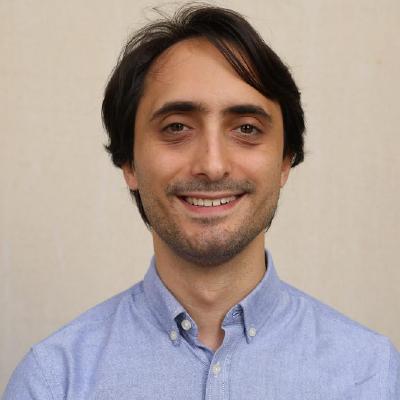
Peter Nilsson is a Professor of Economics at the Institute for International Economic Studies (IIES) , Stockholm University. He also holds a guest professorship at Linnaeus University and serves as a research fellow at IFAU , Uppsala Center for Labor Studies , CESifo , and CEPR . Previously, he was a postdoctoral fellow at Stanford University and obtained his PhD from Uppsala University (2010). Research Focus: His work bridges Labor Economics , Health Economics , and Environmental Economics , analyzing how early-life exposures (alcohol, lead), workplace dynamics, and policy interventions (unemployment insurance, congestion pricing) shape long-term socioeconomic outcomes. Key themes include Environmental Health Impacts on Cognition and Crime Labor Market Responses to Insurance Policies Peer Effects in Workplace Behavior Policy Design for Social Equity Scientific Awards: Nilsson has been recognized through research fellowships at leading institutions and editorial roles, including Associate Editor at The Economic Journal since 2021. His work has been featured in American Economic Review , Journal of Political Economy , and NBER platforms. Key Contributions: He provided testimony for Connecticut’s HB-5045 to reduce childhood lead exposure and contributed to Sweden’s Corona Commission report on pandemic responses. His empirical methods combine natural experiments with administrative datasets to identify causal relationships in health, labor, and environmental economics.
Stephen Billings is an Associate Professor of Finance at the Leeds School of Business, University of Colorado Boulder, where he holds the Global Real Estate Capital Markets Chair position. He serves as the faculty director of the MS in Real Estate program and research director for the CU Real Estate Center. His work spans multiple research centers including the Center for Research on Consumer Financial Decision Making and the Michael A. Klump Center for Real Estate. Billings received his PhD in Economics from the University of Colorado, a MS in urban planning from the University of North Carolina, and a BS in economics from Georgetown University. Prior to joining CU Boulder in 2016, he was faculty at the University of North Carolina Charlotte with appointments in both economics and public policy, where he also served as faculty director for the real estate center. His research focuses on the intersection of housing, schools, neighborhoods and crime, addressing critical policy issues including the impact of public investment in light-rail transit on neighborhoods, school segregation's influence on academic achievement and crime, neighborhood gentrification causes, lead-based paint in low-income housing, and the effects of sea level rise and natural disasters on neighborhood sorting and household finances. Billings employs sophisticated analysis of large micro-datasets with studies based on data and policies in Charlotte, NC and Denver, CO. His work connects urban economics with public policy, demonstrating how neighborhood environments shape individual outcomes across multiple dimensions. Billings' recent publication record demonstrates a consistent focus on neighborhood effects, school choice impacts, crime economics, and housing market dynamics. His work frequently examines the intersection of race, housing, and economic outcomes, with particular attention to policy implications. He has developed innovative methodological approaches to studying residential amenities and neighborhood spillovers, with increasing attention to climate change impacts on housing markets. His research appears in top journals including The Quarterly Journal of Economics, American Economic Review: Insights, and Journal of Urban Economics. As an educator, Billings teaches undergraduate and masters classes in real estate finance and economics, as well as doctoral and masters level courses on cost-benefit analysis and statistical methods. He has extensive consulting experience conducting economic impact studies, including assessments of North Carolina's public higher education system, affordable housing needs in Colorado communities, and the economic effects of marijuana legalization on property markets. His practical policy work complements his academic research, creating a bridge between theoretical insights and real-world applications. Billings leads significant research initiatives through the CU Real Estate Center, where he directs studies examining the impact of business improvement districts and other urban development policies. His work bridges academic research with practical policy applications, making substantial contributions to our understanding of how housing, education, and neighborhood environments shape individual outcomes and community development. His December 2023 memo on the HUD Officer Next Door Program exemplifies his engagement with current housing policy issues.
Asaf Bernstein is an Associate Professor of Finance at the University of Colorado Boulder’s Leeds School of Business, a Faculty Scholar, Co-Director of the Center for Research on Consumer Financial Decision Making, and a Research Associate at the National Bureau of Economic Research. He earned his Ph.D. in Financial Economics from MIT in 2016 and served as Senior Academic Advisor on Climate Issues to the U.S. Securities and Exchange Commission during 2021-22. Education: Ph.D. Financial Economics, Massachusetts Institute of Technology, 2016 B.S. Economics & Mathematics, Harvey Mudd College Research Focus: Bernstein’s work lies at the intersection of policy and finance, using plausibly identified empirical designs to study financial regulation, climate risk, household balance-sheet dynamics, and the real effects of credit markets. His current agenda spans macro-prudential policy, public-pension wealth transmission, historical introduction of credit ratings, and partisan sorting under climate change. Publication Trends: Across more than a dozen forthcoming or published papers, Bernstein consistently exploits natural experiments—regulatory shocks, historical clearinghouses, Dutch amortization reform, Great-Depression bank distress, SLR exposure—to quantify how financial frictions affect prices, allocations, and innovation. The corpus maps broadly onto household finance, corporate finance, and climate-finance fields, with frequent overlap in real-estate and financial-history contexts. Honors & Awards: 2019 AQR Insight Distinguished Paper Award 2016 AQR Top Finance Graduate Award (global top-six PhD honor) 2022 Brattle Group Distinguished Paper Prize, Journal of Finance 2018 Northern Finance Association Best Paper in Risk Management Kahle Family Research Award Grants & Advising: While specific grant amounts are not disclosed, his projects have been supported by data access from Dutch administrative panels, U.S. credit-bureau micro-data, and historical securities archives. He advises PhD students in empirical finance and climate-economics and collaborates extensively across Leeds, NBER, MIT, and Stanford networks. Centers & Labs: Bernstein co-leads the Center for Research on Consumer Financial Decision Making at Leeds, an interdisciplinary lab linking finance, real-estate, and public-policy scholars to external regulatory partners including the SEC, Federal Reserve, and FINRA.
Leonardo Rosado is an Associate Professor at the Department of Water Environment Technology (School of Architecture and Civil Engineering) at Chalmers University of Technology . His work focuses on Urban Metabolism , developing methods to analyze cities' resource flows through the Urban Metabolism Analyst framework. His research spans: Circular Economy implementation Waste Management systems Household consumption modeling Agent-based urban scenario analysis Recent publications (2025–2021) cover geospatial sharing economy frameworks, behavioral modeling of waste sorting, and machine learning applications for infrastructure analysis. Major funded projects include: Digital Twin Cities Centre (VINNOVA, 2020–2024) CREATE (Swedish Energy Agency, 2022–2025) SEsam (Kamprad Family Foundation, 2020–2023) Contact: rosado@chalmers.se | ORCID
Jorge Gil is an Associate Professor in Urban Analytics and Informatics at Chalmers University of Technology's Department of Architecture and Civil Engineering. His research focuses on integrated urban models, Smart Cities, City Information Modelling (CIM), and Urban Digital Twins, with applications in sustainable mobility, social inclusion, energy transition, and circular economy. He develops GIS solutions and open science methodologies. Teaching includes GIS, sustainable mobility, and spatial data science courses. He supervises Bachelor, Master's, and PhD students. Current projects include LogiNets (logistics network flows analysis), ComCy (cycling safety), and FlowSense (traffic flow data). Key research outputs span agent-based modeling of waste sorting behavior, mobility equity analysis, and multimodal urban network frameworks. He co-authored over 50 publications and actively contributes to interdisciplinary urban planning initiatives.
Dr. Qian Zhang serves as Assistant Professor in the Robert M. Buchan Department of Mining at Queen's University's Smith Engineering, leading the Green Mining Value Chain (GreeMVC) Lab. His research develops strategic frameworks for sustainability and resilience throughout mining value chains, with emphasis on climate change mitigation and resource efficiency in global mineral systems. His academic foundation includes a Ph.D. in Urban Engineering from the University of Tokyo (awarded Japanese Government MEXT Scholarship), complemented by MSc and BSc degrees in Environmental Science plus a Minor in Economics from Peking University. Prior to his current role, he conducted postdoctoral research at the University of Victoria and University of Tokyo while consulting for the World Resources Institute on climate-energy initiatives. Dr. Zhang's expertise spans carbon footprint analysis , life-cycle assessment , and industrial ecology applied to mining systems. He employs advanced methodologies including input-output analysis and material flow accounting to model environmental pressures across urban infrastructure and mineral supply chains. His work specifically addresses greenhouse gas accounting, water-energy nexus challenges, and circular economy implementation in resource-intensive sectors. Recent publications reveal strong methodological convergence between artificial intelligence and environmental assessment, particularly in optimizing mining operations through reinforcement learning and geospatial analysis. Key thematic clusters include carbon accounting standardization, critical mineral sustainability, and policy-oriented modeling of environmental pressures throughout mineral value chains. His research program is supported by major competitive grants: NSERC Discovery Grant (2022-2027) SSHRC Institutional Grant (2023, 2025) NSERC Alliance Missions Grant (2023, 2024) Mitacs Accelerate Grant (2023, 2025) NFRF Exploration Grant (2025-2027) NRCan Energy Innovation Program (2025) Dr. Zhang actively mentors a dynamic research group comprising 10+ graduate students and postdocs, securing collaborative funding through institutional and federal channels. His GreeMVC Lab maintains active partnerships with industry leaders and government agencies to translate research into practical sustainability solutions for the mining sector, with current projects focusing on AI-driven fleet management and life-cycle assessment of mineral supply chains. The GreeMVC Lab operates as a multidisciplinary hub with structured mentorship programs, regular industry engagement events, and international collaborations including the COM symposium on sustainable circularity. The lab's physical space in Goodwin Hall supports advanced computational analysis of mining value chains while fostering innovation in green mining technologies through student-led research initiatives.
AnneMarie Luijendijk is the William H. Danforth Professor of Religion at Princeton University and Head of New College West , one of Princeton’s residential colleges, where she has served on the faculty since 2006. A leading papyrologist and historian of early Christianity, she specializes in the social history of Christianity in late-antique Egypt using both literary and documentary papyri. Education Ph.D., Harvard Divinity School, 2005 (New Testament and Early Christianity) Specialization in New Testament Studies, Vrije Universiteit Amsterdam (prior to Harvard) Research Interests Luijendijk’s scholarship bridges papyrology, early Christian studies, and social history. She investigates the everyday lives of early Christians through the papyrus letters and documents that survive from Roman and late-antique Egypt. Her current projects include: From Gospels to Garbage – a forthcoming monograph on the readers, owners, and eventual discard of the earliest Christian manuscripts; Papyrus acquisitions in the 1920s; Fashion, Footwear, and Faith in Late Antiquity – an exploration of dress, status, and religious identity. Her earlier work has illuminated Christian lot divination, the Gospel traditions in Oxyrhynchus, and the role of women and clergy in Egyptian communities. Selected Publications & Editorial Projects Greetings in the Lord: Early Christians and the Oxyrhynchus Papyri (Harvard University Press, 2008) Forbidden Oracles? The Gospel of the Lots of Mary (Mohr Siebeck, 2014) My Lots Are in Thy Hands: Sortilege and its Practitioners in Late Antiquity (co-edited with William E. Klingshirn, Brill, 2018) Re-Making the World: Christianity and Categories (co-edited, Mohr Siebeck, 2019) From Roman to Early Christian Cyprus: Studies in Religion and Archaeology (co-edited, Mohr Siebeck, 2020) Leadership & Service From 2013 to 2020 she chaired Princeton’s Committee for the Study of Late Antiquity , fostering interdisciplinary research across the humanities. She regularly organizes and participates in international workshops, including Princeton–Humboldt Strategic Partnership events, and has secured collaborative grants to advance papyrological research. No individual Ph.D. or master’s advisees are explicitly listed in the provided sources. Laboratories & Collaborations While no dedicated laboratory is mentioned, Luijendijk works closely with the Institute for the Study of the Ancient World (ISAW) at NYU, the Princeton Humanities Council , and international papyrology networks. Her research benefits from digital humanities resources such as the Papyrological Navigator and her Academia.edu profile, which has over 27,000 public views and ranks her among the top 2 % most followed scholars on the platform.
Marko Terviö is Professor of Economics at Aalto University School of Business, where he teaches intermediate microeconomics and labor economics. He is affiliated with Helsinki GSE (Helsinki Graduate School of Economics), a collaboration between Aalto University, University of Helsinki, and Hanken School of Economics. His research focuses on labor market dynamics, economic inequality, housing economics, and institutional design. Professor Terviö employs theoretical models combined with empirical analysis to address questions about talent markets, wage determination, housing policy, and political economics. His work demonstrates particular expertise in assignment models applied to housing and labor markets, with significant contributions to understanding cognitive ability and earnings, superstar phenomena in labor markets, and housing policy impacts. His publication record spans top economics journals including Review of Economic Studies , American Economic Review , Journal of Political Economy , and Economic Journal . Recent work (2022-2025) shows continued high-impact research in labor economics and housing markets, with publications in European Sociological Review and Economic Journal . His research demonstrates consistent methodological rigor combining theoretical modeling with empirical validation. Professor Terviö has contributed significantly to Finnish economic policy discussions, notably as lead author of the influential 2018 report 'On the transfer of residential plots in Helsinki' for the Aalto Economic Institute. This work provided economic analysis of land allocation practices in Helsinki, examining how residential plots should be priced and allocated to maximize economic efficiency while considering urban development goals.
Pablo Warnes is an Assistant Professor at Aalto University's Department of Economics and Helsinki GSE. His research spans Urban Economics, International Trade, Transportation Economics, Development Economics, and Applied Microeconomics. Education: PhD in Economics, Columbia University (2021) Research focuses on urban infrastructure, spatial sorting, commuting behavior, and policy impacts. Recent work includes studies on pedestrianization, bike-friendly cities, and gender differences in commuting. Key trends in publications: Urban mobility and infrastructure Gender disparities in commuting Resilient road networks Public investment in tech clusters Educational policy in Argentina and Ibero-America Contact: pablo.warnes@aalto.fi
Sotirios Thanos is a Senior Lecturer (Associate Professor) in Real Estate and Urban Economics at the University of Manchester within the School of Environment, Education and Development's Department of Planning, Property and Environmental Management. He actively teaches Urban and Environmental Economics and Real Estate Modelling courses while accepting PhD students for supervision. His academic credentials include: PhD in Economics, University of Leeds (awarded 2008) MA in Transport Economics, University of Leeds (awarded 2001) Thanos specializes in real estate, urban, transport, and environmental economics with methodological expertise in spatial econometrics, panel data analysis, choice experiments, and non-market valuation. His current research focuses on spatio-temporal house price modeling and transportation noise impacts, contributing directly to UN Sustainable Development Goal 11 (Sustainable Cities and Communities). Analysis of his recent publications reveals consistent application of advanced spatial econometric techniques to housing market dynamics, environmental externalities, and transportation economics. His work demonstrates increasing policy relevance through studies on housing supply constraints, flood risk valuation, and pandemic-induced housing market shifts, often bridging theoretical econometric innovation with practical urban planning applications. Thanos actively supervises postgraduate researchers and leads significant research initiatives including: Manchester Real Estate and Urban Economics (MREUE) group (ongoing) Community Infrastructure Levy housing market impacts study (2021) Societal cost of flooding research (2017-2018) Food and drink retail location patterns feasibility study (2021) He directs the MREUE research group, which investigates real estate markets across the UK and India through interdisciplinary collaboration between faculty and postgraduate students, focusing on housing policy, spatial economics, and environmental valuation.
Sinan Sarpca is a Professor of Economics at Koc University, serving as Director of the Graduate School of Social Sciences and Humanities. He maintains an affiliation with École Normale Supérieure de Lyon (currently on leave), with research spanning public economics, economics of education, industrial organization, and applied econometrics. His work examines market competition in education systems and policy impacts on educational access. Education: PhD in Economics, Carnegie Mellon University Sarpca investigates how market structures in educational choice systems affect outcomes through theoretical, computational, and empirical methods. His research analyzes peer effects, price discrimination, voucher programs, and residential sorting due to school quality, focusing on income-ability dynamics in educational equity and efficiency. His 15 most recent publications (2023-2006) consistently explore higher education markets and K-12 school choice systems. Dominant themes include university market power, peer effects in high schools, housing-education welfare linkages, and voucher policy impacts. Methodologically, he integrates industrial organization theory with econometric analysis to evaluate real-world educational systems. Funded by TUBITAK (Turkey) and IDEXLyon (France), Sarpca's research examines competition and policy design in education. As Graduate School Director, he oversees graduate programs though specific advisees aren't listed. He holds additional affiliations including CESifo Research Fellow status.
Peter Nilsson is a Professor of Economics at the Institute for International Economic Studies (IIES), Stockholm University, where he has held academic positions since 2011, rising from Assistant to Full Professor. He is also a guest professor at Linnaeus University and a research fellow at IFAU, Uppsala Center for Labor Studies, CESifo, and CEPR. His academic journey includes a postdoctoral fellowship at Stanford University’s SIEPR and a visiting research role at Princeton University. His research centers on labor, health, and environmental economics, with a strong emphasis on identifying causal effects using natural experiments and administrative data. Key areas include the long-term impacts of early-life exposures (alcohol, lead, pollution) on health and economic outcomes, peer effects in the workplace, unemployment insurance design, and environmental policy. He has made significant contributions to understanding how prenatal conditions affect adult mental health and how congestion pricing improves child respiratory health. His recent publications appear in top-tier journals such as the American Economic Review , Journal of Political Economy , and Journal of Health Economics . The research shows a consistent focus on policy-relevant questions, often informing public debate and government commissions, including the Swedish Corona Commission and U.S. legislative hearings on lead exposure. Scientific Awards and Affiliations: Research Fellow, IFAU Research Fellow, Uppsala Center for Labor Studies Research Fellow, CESifo Research Fellow, CEPR Guest Professor, Linnaeus University Associate Editor, The Economic Journal (since 2021) Nilsson advises and collaborates extensively with PhD students and researchers across institutions, though formal advisees are not explicitly listed. His work is supported by major research grants from Swedish and international funding bodies, though specific grants are not detailed. He is actively involved in peer review for leading economics journals. He leads and contributes to research teams at IIES, IFAU, and international collaborations, particularly in studies using Swedish administrative data. His lab-like environment involves large-scale data analysis and policy evaluation, often in interdisciplinary settings combining economics, epidemiology, and public health.
Dr. Muhammad Sajid is an Assistant Professor in Automotive Engineering (Fluid Mechanics) at the School of Mechanical and Materials Engineering, University College Dublin. He holds a B.Eng. from NUST (Pakistan), a Master's from ENSAM ParisTech (France), a PhD from University of Cergy Pontoise (France), and completed postdoctoral research at Texas A&M University Qatar and NUST. His research focuses on integrating AI/ML with mechanical engineering challenges, particularly in fluid dynamics, renewable energy systems, and smart building technologies. He coordinates courses like Computational Fluid Mechanics and Mechanics of Fluids. His work spans experimental and numerical studies in energy harvesting, HVAC optimization, and sustainable urban infrastructure. As PI of the AIMS laboratory, he leads projects on AI-driven mechanical systems. He actively participates in international conferences and has authored over 50 peer-reviewed publications. Education: Bachelor of Engineering (B.Eng.), National University of Sciences and Technology Master’s Degree, École Nationale Supérieure d’Arts et Métiers (ENSAM) Paris Tech PhD, University of Cergy Pontoise Postdoctoral Research: Texas A&M University at Qatar and NUST Research interests include cloud-based high performance computing for fluid dynamics simulations, solar/wind energy forecasting using machine learning, IoT sensor analytics for HVAC systems, and aerodynamic design optimization. His recent work emphasizes achieving net-zero energy buildings through smart environmental control systems.
Gregorio Caetano is an Associate Professor of Economics at the University of Georgia, where he conducts research at the intersection of urban economics, public economics, and labor economics. His work focuses on neighborhood sorting, school segregation, and the valuation of public school quality, with significant contributions to methodological approaches in econometrics. His educational background includes a B.A. in Economics from Universidade Federal do Rio Grande do Sul (2000), an M.A. in Economics from Fundação Getúlio Vargas (FGV-RJ) (2003), and a Ph.D. in Economics from the University of California, Berkeley (2009). Caetano's research interests span social interactions, urban economics, local public economics, education, labor economics, and applied econometrics. His work often employs innovative econometric techniques, particularly bunching designs and regression discontinuity approaches, to study complex social phenomena. He has made significant contributions to understanding neighborhood sorting mechanisms, school segregation dynamics, and the economic valuation of public school quality. His publication record shows a consistent focus on methodological innovation applied to substantive questions in urban economics and education. Recent work demonstrates increasing sophistication in causal identification strategies, with multiple papers developing and applying bunching designs to address endogeneity concerns in studying educational outcomes, maternal labor supply effects, and neighborhood sorting patterns. Caetano is affiliated with the Inequality: Measurement, Interpretation, and Policy (MIP) research network, which connects his work to broader policy-relevant research on economic inequality. His research has been published in top economics journals including Journal of Labor Economics, Journal of Public Economics, Journal of Urban Economics, Quantitative Economics, and Journal of Applied Econometrics, demonstrating both methodological rigor and policy relevance.
Clemens Kroneberg is a Professor of Sociology at the Institute of Sociology and Social Psychology at the University of Cologne, where he joined the Faculty of Management, Economics and Social Sciences in April 2013. He serves as spokesperson for the Competence Area 'Social and Economic Behavior' at the University of Cologne and is a faculty member of the International Max Planck Research School on the Social and Political Constitution of the Economy (IMPRS). Kroneberg is also an external fellow of the Mannheim Centre for European Social Research and an elected Fellow of the European Academy of Sociology, reflecting his significant contributions to the field. After studying Social Science at the University of Mannheim, Kroneberg received his PhD from the same institution in 2009. His academic journey has been marked by prestigious appointments and recognition, including an ERC Starting Grant for his SOCIALBOND project and membership in multiple research networks. His work bridges theoretical innovation with empirical rigor, contributing to both European and international scholarly discourse. Kroneberg's research centers on analytical sociology, with particular expertise in social networks, ethnic boundary making, crime and deviance, and migration studies. He has made significant theoretical contributions through the development and application of the Model of Frame Selection, an integrative theory of action that covers framing and variable rationality. His empirical work often focuses on school contexts, examining how ethnicity, gender, and social structures interact to shape identities, friendships, and behavioral outcomes. Recent research has increasingly addressed the post-pandemic rise in juvenile delinquency and the integration of immigrant children in European educational systems. His publication record demonstrates consistent scholarly productivity across multiple high-impact journals in sociology and criminology. The research trajectory shows increasing focus on multilevel analyses of social networks, the interplay between individual agency and structural constraints, and comparative studies across European educational contexts. Recent work has expanded to include methodological innovations in measuring criminogenic exposure and developing scales for key constructs in situational action theory. Robert K. Merton Best Paper Award 2021 for 'More than a Sorting Machine: Ethnic Boundary Making in a Stratified School System' (with Hanno Kruse) Best Article Award of the Rationality and Society section of the American Sociological Association, 2013 for 'Struggling over the boundaries of belonging. A formal model of nation building, ethnic closure, and populism' (with Andreas Wimmer) Kroneberg has supervised numerous doctoral students including Maria Gerth, André Ernst, Sonja Schulz, Harald Beier, and Hanno Kruse, several of whom have gone on to receive recognition for their work. He has secured significant research funding, including an ERC Starting Grant for the SOCIALBOND project (2017-2022) and DFG funding for the 'Friendship and Violence in Adolescence' panel study and the 'Juvenile delinquency in urban school and residential contexts' project. His research collaborations extend internationally, with partnerships at institutions including Cambridge University, Harvard University, and Nuffield College, Oxford. Kroneberg leads the SOCIALBOND project examining peer dynamics across multiple European countries to develop a theory of boundary making. He also directs the 'Friendship and Violence in Adolescence' study and collaborates with German state police on understanding youth violence. His work bridges academic research with practical applications for social policy, particularly in education and crime prevention.