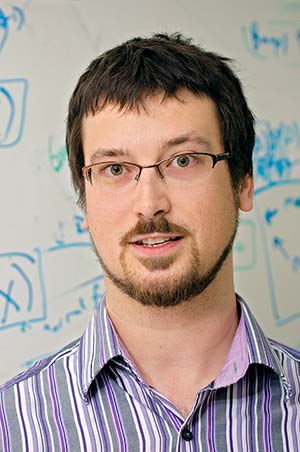
Eric Forgoston is a Professor in the School of Computing at Montclair State University, within the College of Science and Mathematics. His expertise spans Applied Mathematics, Deterministic and Stochastic Dynamical Systems, Mathematical Biology, and Fluid Mechanics. He holds an office in Conrad J. Schmitt Hall 332 and can be contacted at forgoston@montclair.edu. Specialization: Applied Mathematics, Stochastic Dynamics, Mathematical Epidemiology Research Interests: Focuses on complex systems, including ecological stability, epidemic modeling, and fluid dynamics. Recent work includes studies on stochastic control of epidemic extinction and machine learning applications in fluid dynamics. His research integrates mathematical theory with real-world phenomena, such as ecological infrastructure impacts and ocean circulation modeling.
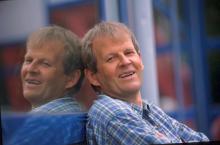
Petter E. Bjørstad is a Professor of Computer Science and Mathematics at the University of Bergen, Norway, where he has served as Head of the Department of Informatics since 2010. Previously, he was Director of the Bergen Center for Computational Science (2000-2010) and Professor in both the Department of Mathematics (2006-2010) and Department of Informatics (1985-2005). He also held a position as Professor of Mathematics at the University of Minnesota during 1996-1997 on unpaid leave from Bergen. Dr. Bjørstad earned his PhD in Computer Science from Stanford University in 1980, following which he completed a postdoctoral fellowship at the Courant Institute of Mathematical Sciences at New York University. Before entering academia, he worked as a Principal Engineer at Det Norske Veritas from 1981-1985. Dr. Bjørstad's research focuses on numerical analysis and high-performance computing, with particular expertise in domain decomposition methods, parallel algorithms for elliptic partial differential equations, and scientific computing. His work bridges theoretical mathematics with practical computational challenges, especially in industrial applications. He has led significant research projects including 'Multiscale Domain Decomposition: Algorithms and Analysis' (2010-2014), funded by the Research Council of Norway and the University of Bergen. His publication record demonstrates consistent contributions to the field of numerical methods and parallel computing over several decades. The research trends show a strong focus on developing efficient algorithms for solving partial differential equations through domain decomposition techniques, with applications spanning structural analysis, reservoir simulation, semiconductor device modeling, and other industrial contexts. His work increasingly emphasizes practical implementation on modern parallel architectures including SIMD and MIMD systems. Large number of research grants from Norway and the European Union Dr. Bjørstad has been actively involved in mentoring students and collaborating with industry through projects like the Europort effort, where industrial codes were ported to parallel computing platforms. His laboratory for parallel computing (Parallab) has been instrumental in advancing practical applications of high-performance computing since its establishment in 1985 with Europe's first 64-processor Intel hypercube. The lab has evolved to include multiple MIMD machines including an Intel Paragon, Parsytec GC/Power-Plus, and DEC α-cluster. As Head of the Department of Informatics, Dr. Bjørstad leads one of Norway's premier computing research units with expertise spanning theoretical computer science, numerical methods, and practical applications in various scientific domains. His leadership has helped establish Bergen as a significant center for computational science in Europe.
Dr. Rebecca A. Fischer is an Associate Professor in the Department of Earth & Planetary Sciences at Harvard University. Her research focuses on planetary formation, core-mantle dynamics, and geochemical evolution of terrestrial planets. She employs high-pressure experiments, computational modeling, and isotopic analysis to address questions about planetary interiors, volatile cycling, and early solar system processes. Her work spans topics such as core formation mechanisms, mantle water storage capacity, and the geochemical signatures preserved in planetary materials. Fischer's studies often integrate N-body simulations with geochemical data to model planetary accretion and differentiation. She leads a research group exploring planetary materials under extreme conditions, contributing to advancements in understanding Earth's and Mars' thermal and compositional histories. Key areas of interest include the role of redox evolution in magma oceans, the interplay between core dynamics and mantle convection, and the implications of high-pressure phase transitions for seismic and geodynamic observations. Her findings have implications for habitability studies of rocky exoplanets and the origins of Earth's volatile inventory.
Paul Edlefsen is a Principal Staff Scientist at Fred Hutchinson Cancer Research Center and holds the position of Clinical Associate Professor in the Department of Biostatistics at the University of Washington's School of Public Health. His work focuses on advancing infectious disease vaccine research through interdisciplinary approaches that integrate biology, biostatistics, and bioinformatics. He leads the Edlefsen Group at Fred Hutch, which collaborates with multiple labs and consortia on globally relevant problems in vaccine development. His educational background includes a PhD in Statistics (2009) and an AM in Statistics (2005) from Harvard University, and a BA in Computer Science (2000) from Wesleyan University. During his academic training, he also held a position as a Harvard College Fellow. Dr. Edlefsen's research program spans multiple critical areas of infectious disease research. His primary focus is on the genomics of pathogens, particularly HIV-1, with the goal of developing both prophylactic vaccines and cures. He has made significant contributions to sieve analysis methods, which examine pathogen sequence variation across clinical trial arms to identify evidence of vaccine-induced immunity. His methodological work encompasses three main areas: developments in Dempster-Shafer theory with Art Dempster, methods for inferring parameters of profile hidden Markov models applied to viral sequences, and sieve analysis methodology that accounts for subject-level heterogeneity. His publication record demonstrates consistent productivity in high-impact areas of HIV vaccine research, statistical methodology, and virology. Recent work shows a strong emphasis on understanding viral evolution in response to vaccine pressure, immune responses to co-infections (particularly SIV/HIV with other pathogens), and developing novel statistical methods for analyzing vaccine trial data. His research often bridges clinical applications with advanced statistical theory, reflecting his dual expertise in both domains. As a clinical trials statistician, Dr. Edlefsen works with multiple major HIV research networks including the HIV Vaccine Trials Network, HIV Prevention Trials Network, HIV Microbicide Trials Network, and the Gates Foundation's Coalition for AIDS Vaccine Discovery. His group at Fred Hutch maintains strong collaborative ties with researchers around the globe, contributing statistical and computational expertise to numerous vaccine development efforts. The Edlefsen Group operates as a small but diverse team of researchers who cross expertise barriers to communicate effectively about complex topics in statistics, bioinformatics, and infectious disease biology. The group actively participates in study design, grant writing, and reproducible data analysis, working closely with vaccine researchers throughout the scientific process. They welcome collaborations and maintain strong ties throughout the research community with the primary goal of advancing infectious disease vaccine research to improve public health worldwide.
Dr. Michelle McDonald is a Senior Lecturer in the School of Medical Sciences within the Faculty of Medicine and Health at the University of Sydney. Her research program focuses on skeletal biology with particular emphasis on bone metastasis, osteoclast biology, and multiple myeloma bone disease. Dr. McDonald's research interests span bone biology, osteoporosis, multiple myeloma, and bone metastasis. Her work has significantly advanced our understanding of osteoclast biology, particularly regarding osteoclast recycling through osteomorphs and the rebound phenomenon following denosumab discontinuation. She has pioneered research on bone imaging techniques, developing minimally invasive approaches to visualize cellular dynamics in intact long bone and single-cell resolution imaging of tumor cells in bone. Analysis of her recent publications reveals a strong focus on translational bone research with significant contributions to understanding the mechanisms of bone metastasis, particularly in breast cancer and multiple myeloma. Her work on osteomorphs has opened new avenues for therapeutic intervention in bone diseases. Her 2024 publications demonstrate continued innovation in bone imaging technologies and computational approaches to understanding bone diseases. Dr. McDonald has secured significant research funding including NIH grants for bone-targeted therapies to improve bone health and prevent relapse in multiple myeloma, as well as targeted funding from Tour de Cure Ltd for research on the skeleton as a reservoir for metastatic tumor cells in breast cancer. Her research program involves extensive collaboration with leading bone researchers internationally and utilizes advanced imaging technologies to investigate cellular dynamics in bone. She is actively contributing to the development of new therapeutic approaches for bone diseases and metastatic cancers that affect bone.
Clinical Associate Professor Matthew O'Sullivan is an academic at the University of Sydney's Westmead Clinical School, affiliated with the Department of Medicine. He holds memberships in the Sydney Infectious Diseases Institute (Sydney ID) and has expertise in infectious diseases and medical microbiology. His clinical work focuses on staphylococcal infections, tropical medicine, HIV, and high consequence infectious diseases (HCIDs) like Ebola and COVID-19. He also specializes in genotyping-based surveillance of hospital-acquired pathogens such as methicillin-resistant Staphylococcus aureus (MRSA). Dr. O'Sullivan graduated with an MBBS from the University of Queensland (1996). He later obtained a Master of Medicine (Clinical Epidemiology) from the University of Sydney and a PhD (2013) for his thesis on MRSA typing systems. He also holds a Diploma in Tropical Medicine and Hygiene from the London School of Hygiene and Tropical Medicine. His research interests span molecular epidemiology of bacterial pathogens, particularly MRSA, and translational applications of microbial genotyping in infection control. He actively explores HCID clinical biocontainment protocols, SARS-CoV-2 transmission dynamics, and diagnostic methodologies for emerging viral threats. His work emphasizes integrating genomic data with clinical practice to improve antimicrobial stewardship and outbreak management. Recent studies include the ASCOT ADAPT adaptive platform trial for MRSA therapeutics and the SABRes project analyzing SARS-CoV-2 drug resistance mutations. He has contributed to national pandemic response initiatives through genomic surveillance and seroprevalence studies. Dr. O'Sullivan has led multiple grants including NHMRC-funded projects on MRSA transmission and genomic analysis. His work involves collaboration with major institutions like the National Health and Medical Research Council (NHMRC) and the Sydney ID team. He has not listed any formal advisees in his profile. His contributions to infection control include developing the mPCR/RLB binary typing system and evaluating diagnostic assays like the BD Max StaphSR. He advocates for patient-centered approaches in preventing healthcare-associated infections through visual ethnography and clinician feedback mechanisms.
Bernardo Gutierrez is a Postdoctoral Researcher at the University of Oxford’s Department of Biology and the Oxford Martin School Pandemic Genomics Programme, affiliated with the Pybus and Kraemer research groups. His work focuses on evolutionary genetics of emerging viruses, genomic epidemiology, and integrating genomic, epidemiological, and mobility data to model epidemic trajectories. He explores early viral spread, spillover events, and the impact of human mobility on infectious disease dynamics. Research Interests Evolutionary mechanisms of viral emergence and adaptation Genomic sampling biases in pathogen surveillance One Health approaches to zoonotic disease surveillance Geographic spread modeling of SARS-CoV-2 and other pathogens Key Themes in Publications Development of genomic epidemiology tools (e.g., GRAPEVNE pipeline) Analysis of mobility networks and hypergraphs for disease spread prediction Global influenza dynamics reshaped by pandemic interventions Conservation genetics of endangered species (e.g., Ecuadorian spider monkeys) Lab/Tech Affiliations Collaborates with the Pybus and Kraemer groups to advance pandemic genomics research, leveraging phylogenetic and computational methods to address real-time public health challenges.
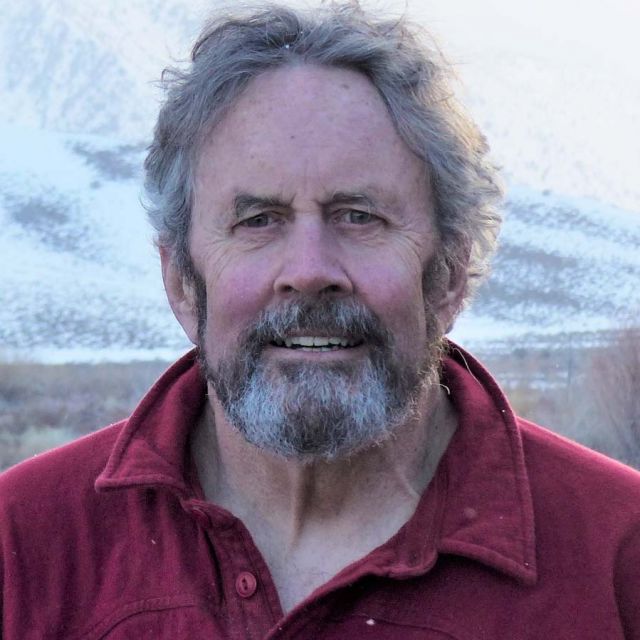
Jeff Dozier was a distinguished academic and researcher in environmental science, serving as a Research Professor and Distinguished Professor Emeritus at the University of California, Santa Barbara (UCSB). He was the founding Dean of the Bren School of Environmental Science & Management (1994–2000) and held affiliations with the Department of Geography until his retirement in 2018. His work focused on snow hydrology, remote sensing, and mountain ecosystems, with global impacts on water resource management and climate research. Education: B.A. in Geography (Cal State Hayward, 1968), M.Sc. and Ph.D. in Geography (University of Michigan, 1969–1973). Research Interests: Snow properties, remote sensing algorithms, satellite data applications, and mountain hydrology. His expeditions to the Hindu Kush range in Afghanistan inspired his academic focus on avalanche dynamics and snow science. He pioneered methods for detecting wildfires from space and advised on the film Frozen for accurate snow representation. Awards: NASA William T. Pecora Award (2005), NASA Public Service Medal, Fellow of the American Geophysical Union (1991), and Fellow of the American Association for the Advancement of Science (1999). Advising & Teaching: Advised 20 Ph.D. and 34 M.Sc. students, taught the popular Alpine Snowpack course, and collaborated on global projects like the Airborne Snow Observatory and NASA’s Earth Observation System. Labs/Teams: Collaborated with NASA’s Jet Propulsion Laboratory, Bren School researchers, and international teams on snow science and satellite missions. His work extended to the International Space Station and interdisciplinary studies linking environmental science with computer technology.
Xiao Lin is a Senior Lecturer at the York Management School, University of York, specializing in Operations Management with a focus on sustainable transportation and socio-technical transitions. Prior to this, she held roles as an Assistant Professor and postdoctoral researcher at Aarhus University, Denmark. Her expertise spans sustainable mobility, urban logistics, and circular economy practices. She holds an MSc and PhD in Logistics and Operations Management from Cardiff Business School, UK. Her research explores interdisciplinary intersections between operations management, energy policy, and environmental science, with a particular emphasis on electric vehicles, vehicle-to-grid technologies, and China's transportation landscape. Recent publications highlight her work on public procurement's role in circular economy adoption, carbon-neutral supply chains, and shared e-micromobility systems. She actively contributes to peer review for journals like Transportation Research Part A and Technological Forecasting & Social Change . Teaching includes courses in Operations Management and Project Management at both undergraduate and postgraduate levels. Her academic service roles include Programme Leader for the BSc Business and Management program.
Dr. Morteza Esmaeil Pour is a Lecturer at the Department of Earth and Planetary Sciences at ETH Zurich. He is affiliated with the Geothermische Energie u. Geofluide research group, located at NO F 61, Sonneggstrasse 5, Zurich, Switzerland. His research focuses on geothermal energy systems, fluid dynamics, and numerical simulations in the context of sustainable energy exploitation. Key research interests include geothermal system design, supercritical CO2 applications, fluid property modeling, and thermodynamic analysis. He has contributed to advancing understanding of multilateral closed-loop systems, interfacial instabilities in fluid displacement, and stochastic performance assessment of geothermal reservoirs. His recent work emphasizes optimizing geothermal energy extraction through enhanced fluid displacement techniques, nanoparticle applications, and electro-magneto-hydrodynamic methods. Dr. Esmaeil Pour’s publications span technical workshops like the Geothermal Reservoir Engineering series and address challenges in long-term reservoir sustainability and system efficiency. No scientific awards or grants are explicitly mentioned in the provided texts. He advises no listed students and is part of the Geothermische Energie u. Geofluide team at ETH Zurich’s Institute of Geophysics, contributing to cutting-edge geothermal energy research and engineering solutions.
Luis Felipe Pereira is a Professor in the Department of Mathematical Sciences at the School of Natural Sciences and Mathematics, University of Texas at Dallas. His research focuses on mathematical modeling and numerical simulation of multiphase flows in porous media, uncertainty quantification, CO2 storage, oil recovery, contaminant transport, and high-performance scientific computing. He specializes in developing advanced multiscale methods and parallel algorithms to address complex subsurface flow problems. His work combines computational mathematics with applications in energy and environmental systems, including reservoir engineering and geomechanics. Key contributions include the development of multiscale mixed methods, Bayesian frameworks for subsurface characterization, and efficient parallel implementations for billion-cell reservoir simulations. Recent research trends emphasize improving algorithm scalability, integrating machine learning techniques, and addressing challenges in heterogeneous media. His computational tools enable predictive modeling of subsurface processes under uncertainty, with applications in CO2 sequestration, groundwater contamination, and enhanced oil recovery. No scientific awards or grants are explicitly listed in the provided texts. Advising information is not documented here, though his research group likely engages in graduate student mentorship in applied mathematics and computational science. He collaborates on interdisciplinary projects involving porous media flow across multiple scales.
Professor Sean Ulm is a Theme Leader for Cultural & Linguistic Transformations at The Cairns Institute and holds a Professorial Chair at James Cook University's College of Arts, Society & Education . He is affiliated with the Language and Culture Research Centre and the Centre for Tropical Environmental and Sustainability Studies , focusing on archaeology in northern Australia and the western Pacific. His research addresses persistent problems in tropical archaeology, including coastal and underwater archaeology , Indigenous cultural heritage , landscape evolution , and human adaptation to environmental change . Recent work explores submerged cultural landscapes , shell midden preservation , and long-term demographic patterns through computational modeling and field excavation. Professor Ulm contributes to major databases like SahulArch and OCTOPUS , advancing methodologies in radiocarbon calibration , palynological analysis , and 3D digital zooarchaeology . His projects emphasize collaboration with Indigenous communities and interdisciplinary approaches to sustainability challenges.
Gustavo Paneiro is an Assistant Professor at the Department of Mineral and Energy Resources Engineering, part of the School of Engineering at Instituto Superior Técnico (University of Lisbon). He is affiliated with the CERENA - Center for Natural Resources and Environment research unit. His research focuses on geomechanics, rock mass stability, tunneling engineering, and environmental geotechnics, with particular emphasis on vibration analysis, acoustic emission techniques, and subsurface resource characterization. Teaching responsibilities include advanced courses such as 'Computational Geomechanics,' 'Spatial Uncertainty Modeling,' and 'Instrumentation and Signal Acquisition in Geoengineering.' His work integrates theoretical modeling with field data analysis, addressing challenges in mining engineering, infrastructure development, and heritage material preservation. Key research trends from his publications include: Quantitative analysis of rock behavior under varying stress/temperature conditions Vibration prediction and control in tunneling and blasting operations Machine learning applications for geospatial and material science problems Development of novel methodologies for subsurface stability assessment He has contributed to projects involving environmental impact studies, mine pillar design, and the optimization of geotechnical support systems. His work bridges academic research with practical engineering solutions for complex subsurface projects.
Prof. Dr. Omer Inanc Tureyen is a Professor in the Department of Mining, Petroleum and Natural Gas Engineering at Istanbul Technical University (ITU). His research focuses on geothermal reservoirs, reservoir engineering, and sustainable energy systems, with particular expertise in carbon dioxide management and well testing. He has held academic positions at ITU since 1998, including Assistant Professor (2005–2013) and Associate Professor (2013–present). Education : PhD in Petroleum Engineering, Stanford University (2000–2005) MSc in Petroleum and Natural Gas Engineering, ITU (1997–2000) BSc in Petroleum and Natural Gas Engineering, ITU (1993–1997) Research Interests : Prof. Tureyen’s work addresses challenges in geothermal energy extraction, reservoir sustainability, and CO2 containment in geothermal systems. He develops lumped-parameter models and transient analysis methodologies to optimize production and reinjection strategies. His research bridges theoretical approaches with practical applications in low-temperature geothermal systems, wellbore heat transfer, and multi-well interference analysis. Projects & Grants : Executive of the TUBITAK-funded Modeling of Carbon Dioxide-Containing Geothermal Reservoirs in Türkiye (2013–2015) Researcher on multiple industry and government-funded projects, including geothermal field performance studies and underground gas storage design Advising & Collaboration : He has advised over 20 graduate theses, focusing on topics like CO2 inventory management, well placement optimization, and thermal front dynamics. Collaborates with institutions such as Stanford University and the Society of Petroleum Engineers. Serves as a Magazine Editor for Journal of Natural Gas Science and Engineering . Labs & Teams : His work is conducted within ITU’s Energy Institute and Department of Mining, Petroleum and Natural Gas Engineering, with contributions to geothermal field simulations and reservoir modeling initiatives.
Dr. Joseph Wilder is a Professor in the Department of Mathematics at the University of Akron, where he has served since 2006. Prior to this, he spent 15 years as a professor at a state university and three years overseeing research groups at a Department of Energy National Laboratory. His roles at UA include Chair of the Math Department, Interim Chair of Statistics, Associate Dean for Graduate Studies and Research, Director of Research for the Buchtel College of Arts & Sciences, and Vice-Dean of BCAS, alongside other Provost's Office roles. His research focuses on mathematical modeling, scientific computation, and algorithmically generated art, particularly fractals derived from polynomial zero analysis. He has published extensively in journals and contributed to numerous research grants. His work spans corrosion modeling, porous media dynamics, and gas hydrate thermodynamics. Dr. Wilder’s publications reflect a strong emphasis on computational and applied mathematics, with recent efforts addressing galvanic corrosion mechanisms and hydrate dissociation processes. His earlier work includes fluidized bed modeling and gypsy moth population dynamics studies. While no specific awards are listed, his contributions highlight interdisciplinary applications of mathematical techniques.