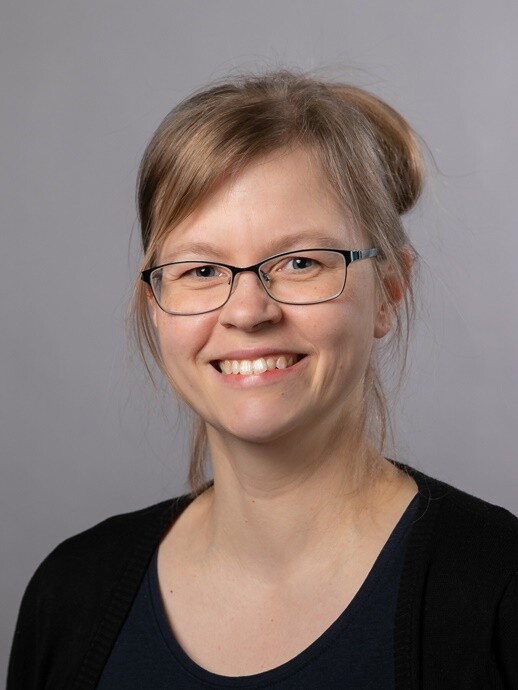
Oleksandr Kapranov is an Associate Professor of English at NLA University College's Teacher Education program. His work intersects discourse analysis, climate change communication, and English language teaching (ELT), with a focus on sustainable development education and intercultural communication. Research areas include political speeches (e.g., Keir Starmer, Rishi Sunak), corporate disclosures (Bank of England, Vedanta Resources), and media framing (Greenpeace branches, King Charles III). Key pedagogical interests: digital competence, beginner EFL training, and discourse markers in academic writing. His recent publications analyze climate change discourse through syntactic structures, metonymy, modality, and evidentiality, emphasizing institutional and political narratives. While no formal awards are listed, his work spans interdisciplinary collaborations with NGOs, governments, and universities.
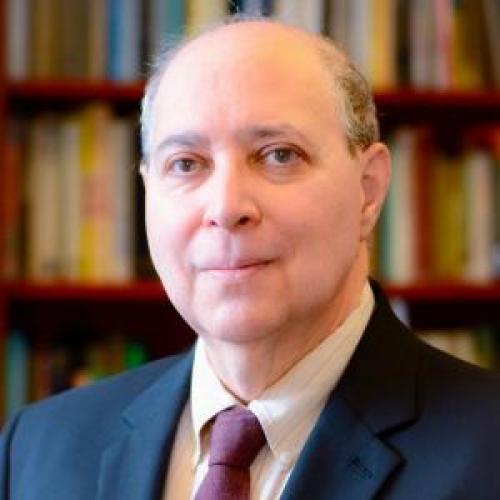
Genesea M. Carter serves as the Associate Director of Composition and Associate Professor in the English and University Composition Program at Colorado State University. She holds a PhD from the University of New Mexico. Her research focuses on administrative systems in higher education, including curriculum design, teacher training, and workload equity, and their impact on instructors’ well-being. She also investigates how students from diverse backgrounds navigate academia, with a focus on working-class pedagogy and identity development. Her recent co-edited collection Systems Shift: Creating and Navigating Change in Rhetoric and Composition Administration (2023) addresses institutional transformation. Earlier work includes Class in the Composition Classroom: Pedagogy and the Working Class (2017), exploring socioeconomic diversity in education. Her articles span topics like digital literacy, interdisciplinary pedagogy, and critical theory in composition studies. Dr. Carter’s scholarship emphasizes equity, intersectionality, and dismantling neoliberal structures in academia. She has contributed to journals such as Composition Studies , Journal of Teaching Writing , and Open Words , and her work bridges practical administration with theoretical frameworks in rhetoric and composition.
Justin Russell Greene serves as an Advanced Instructor in the Department of English within Virginia Tech's College of Liberal Arts and Human Sciences. With over 15 years of teaching experience across multiple institutions, he currently teaches courses in film, literature, and writing at Virginia Tech, where he has been employed since 2019. His academic journey spans various teaching positions at Virginia Tech, Hampden-Sydney College, Virginia Commonwealth University, and several community colleges. Greene earned his BA, MA, and PhD in English and Media, Art, and Text from Virginia Commonwealth University. His educational background reflects his interdisciplinary approach that bridges traditional literary studies with contemporary media and cultural analysis. He has also completed professional development certifications in Anti-Racist Teaching and Foundations of Online Teaching at Virginia Tech. His research focuses on the intersections of cinema, media, and cultural studies, with particular attention to authorship, celebrity, and gender performance. Greene examines how authors and celebrities construct their identities across various media platforms, exploring topics ranging from Quentin Tarantino's cinematic masculinity to Roxane Gay's digital presence. His work often analyzes the performative aspects of identity in contemporary culture, particularly through fashion, social media, and visual storytelling. Greene's scholarly output demonstrates a consistent focus on authorial identity construction across media platforms. His publications reveal a trajectory from examining literary authors' fashion choices to analyzing digital performances of identity on social media, and more recently to cinematic studies of directors like Quentin Tarantino and Jordan Peele. The evolution of his work reflects broader cultural shifts toward digital and visual media while maintaining a consistent theoretical framework centered on performance and identity construction. Joyce Gentry Smoot Award (2025) for Excellence in Teaching by an Instructor As an educator, Greene has served as a reader on graduate student capstones and has been actively involved in curriculum development and pedagogical innovation. He has participated in numerous professional development activities focused on writing instruction, anti-racist pedagogy, and the integration of AI in teaching. His teaching philosophy emphasizes building student confidence in writing abilities, recognizing diverse student backgrounds, and providing individualized feedback to help students develop their unique voices. Greene is currently working on projects examining Jordan Peele's Nope (2022) regarding point-of-view and gore, as well as speculative adaptations in contemporary US media. His research interests continue to evolve with cultural trends while maintaining his core focus on performance, identity, and media representation.
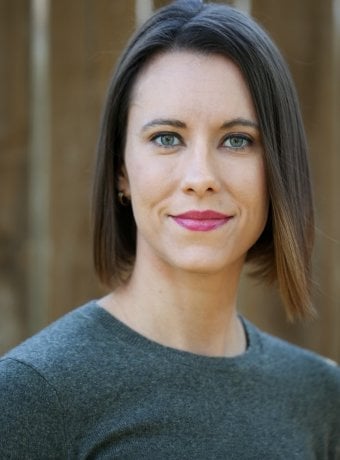
John Gallagher is Associate Professor in English and Information Sciences at UIUC. His research examines how writers adapt to participatory audiences in digital environments, including social media interactions and AI writing tools. Using case studies and computational methods, he explores algorithmic audiences, ethical implications of AI, and technical communication in institutional contexts. He teaches courses in professional writing, digital rhetoric, and research methodologies. Recent projects analyze content creators' narratives about platform algorithms, inclusive emoji design, and academic integrity challenges posed by generative AI.
Imogen Forbes-Macphail is an Assistant Professor at the University of California, Davis, specializing in the interdisciplinary intersections of nineteenth-century British poetry and mathematical thought. Her current book project, Line and Number: Formal Problems in Nineteenth-Century Poetry and Mathematics , examines how Victorian poets and mathematicians engaged with analogous formal challenges. Victorian Poetry Caucus Representative, North American Victorian Studies Association Co-Editor (with Anna Henchman), Special Issue of Nineteenth-Century Gender Studies on women’s writing and scientific knowledge production (“Longing to Know”) Research Focus: Forbes-Macphail’s work bridges literary formalism and historical scientific methodologies, particularly exploring topics like computational proof, topological poetics, and the mysticism inherent in Victorian-era mathematical and poetic discourse. Her interdisciplinary approach highlights how mathematical concepts influenced poetic structures and vice versa. Scientific Contributions: Her publications span analyses of the Four-Color Theorem, Ada Lovelace’s literary-scientific legacy, and the gendered dynamics of 19th-century knowledge production. Key trends include the aestheticization of mathematical rigor, the role of formalism in shaping Victorian intellectual paradigms, and crossdisciplinary epistemological inquiries. Honorable Mention, “Expanding the Field” Essay Prize, Northeast Victorian Studies Association (2022) Susan Morgan Graduate Student Essay Prize, Interdisciplinary Nineteenth-Century Studies (2019) Sally Mitchell Prize, North American Victorian Studies Association (2018) Honorable Mention, Susan Morgan Graduate Student Essay Prize (2018) Sussex-Samuel Prize, Australasian Universities Language and Literature Association (2013) Forbes-Macphail’s teaching includes courses such as ENL 164: Writing Science Publications , emphasizing the synthesis of scientific and literary communication. She previously held a Junior Fellowship at the Harvard Society of Fellows (2022–25), underscoring her prominence in Victorian studies.
John H. Arnold is Professor of Medieval History at the University of Cambridge and Fellow of King's College. Educated at the University of York (BA History, D.Phil Medieval Studies), his academic career includes positions at University of East Anglia and Birkbeck, University of London before joining Cambridge in 2016. He holds editorial roles at Cultural and Social History, Past & Present, and directs publication series at both York Medieval Press and Cambridge University Press. Arnold's research centers on medieval religious culture, particularly lay belief, heresy, inquisition, and the history of gender. His monograph 'The Making of Lay Religion in Southern France' (2024) exemplifies this focus. Current projects investigate the social history of confession and the repression of usury. Analysis of Arnold's 15 most recent publications reveals consistent engagement with medieval religious dissent and belief systems. Key themes include: reinterpretations of heresy trials (2019), sensory dimensions of faith (2018), historiographic debates about Catharism (2016), and methodological examinations of archival sources (2022). His work frequently employs theoretical frameworks from sociology and philosophy to reinterpret medieval religious conflict. Arnold maintains active research networks through editorial leadership and supervision. His Cambridge Studies in Medieval Life and Thought series promotes innovative scholarship in medieval history.
Raakel Plamper is a Doctoral Researcher at the Department of Education, University of Turku, with additional roles as Project Specialist in Geography and Development Specialist in Research Services. Her research focuses on higher education sociology, academic work dynamics, student roles in marketized systems, and university history. She teaches courses on social class and education, research methods, and multivariable analysis. Her work critically examines the marketization of universities, student-as-customer discourses, and managerialism in academic leadership. Key themes include tuition fee policies, institutional identity shifts, and equality in education systems. Recent publications analyze leadership rhetoric, writing retreats for researchers, and cross-country education strategies. Plamper actively contributes to interdisciplinary projects, such as the EU-funded Young Adulllt study on skill governance, and maintains a blog (Kas! blogi) discussing academic work and education policy. She holds an MA and is pursuing a PhD examining student roles in neoliberalized higher education.
Alexander Tulin is an Associate Professor in the Department of English at Howard University, within the College of Arts & Sciences. He has been a faculty member at Howard since 1990, originally in the Department of Classics, which he chaired from 2017 to 2021 before its closure led to his transition to the English Department. Institution: Howard University School: College of Arts & Sciences Department: Department of English Academic Rank: Associate Professor Email: atulin@Howard.edu Education: PhD in Classics, Columbia University, 1990 Dr. Tulin's research and teaching span classical antiquity and modern literature. His primary scholarly interests include Ancient Greek Philosophy, Plato, Ancient Law, and Rhetoric, with a current focus on the interstices between Antiquity and Modernity. In the English Department, his teaching centers on Modernism, modern art from 1870–1950, and the 20th-century novel in Europe and America. His publications reflect a deep engagement with classical philosophy and textual analysis. The most recent works show a sustained interest in Platonic dialogues, Socratic method, philosophical rhetoric, and the interpretation of ancient legal and literary texts. He has also contributed numerous scholarly reviews, demonstrating active participation in the academic discourse of classical studies. Scientific Awards: No specific awards or honors are mentioned in the provided text. Advising and Grants: There is no information available regarding students advised, research grants, or funding received. Labs and Research Teams: No information is provided about laboratories, research groups, or collaborative teams associated with Dr. Tulin.
Jacqueline Vayntrub is an Associate Professor of Hebrew Bible at Yale University's Yale Divinity School (YDS). Her expertise spans the Hebrew Bible, wisdom literature, biblical poetry, philology, and the reception history of biblical scholarship. She holds a PhD in Near Eastern Languages and Civilizations from the University of Chicago (2015), along with earlier degrees from UCLA and Hebrew University. Dr. Vayntrub’s research examines biblical genres within ancient Near Eastern literary contexts, focusing on how textual values evolve through transmission and reception. Her first monograph, Beyond Orality: Biblical Poetry on its Own Terms (Routledge, 2019), critiques scholarly assumptions about biblical poetry’s oral origins. Her current projects include Reframing Biblical Poetry (Yale U.P.) and Seeking Eternity , exploring transmission and mortality in biblical texts. She directs the international Renewed Philology working group and chairs SBL units in Hebrew Bible and philology. Vayntrub has published widely in journals like Harvard Theological Review and Catholic Bible Quarterly , and her work has been reviewed at prestigious institutions including Yale and NYU. She received a 2019-20 Katz Center fellowship for her Seeking Eternity project. Her academic service includes organizing conferences at Yale, Harvard, and Princeton, and editorial roles for Studies in Cultural Contexts of the Bible . Her teaching and scholarship emphasize critical engagement with ancient texts and their enduring cultural impact.
Wolfgang R. Mann is a Professor of Philosophy and Director of Undergraduate Studies at Columbia University. He joined the Philosophy Department in 1992 and holds degrees from Princeton University (A.B., 1978; Ph.D., 1987). His research spans Ancient Philosophy, German Idealism, and Metaphysics, with a focus on theories of argumentation (logic/rhetoric), metaphysical contrasts in antiquity, and ethical concepts of freedom. He also explores English/German Romanticism (Wordsworth, Hölderlin) and the reception of classical antiquity in 19th-century thought. His work frequently bridges philosophical analysis with historical and literary methodologies. Professor Mann’s publications include The Discovery of Things: Aristotle’s Categories and Their Context (2000) and co-edited volumes like Oxford Studies in Ancient Philosophy (2011). His articles address topics such as Stoic paradoxes, Seneca’s ethical writings, and the intersection of ancient philosophy with political figures like Helvidius Priscus. His research emphasizes interdisciplinary approaches, blending metaphysics, ethics, and classical textual analysis. Though no specific awards are listed, his contributions to ancient philosophy and historiography reflect sustained scholarly engagement. His advising and grants focus on mentoring students in these areas, though specific grant details are not provided. His work contributes to both academic philosophy and the broader humanities through its rigorous historical contextualization.
Courtney Rivard is an Assistant Professor in English & Comparative Literature at the University of North Carolina, Chapel Hill, with a secondary appointment at the School of Data Science & Society. She directs the Digital Literacy and Communications (DLC) Lab, focusing on digital humanities, critical game studies, and archival rhetorics. Her research bridges rhetoric, digital methods, and social justice, examining how archives and digital tools shape narratives around race, gender, and national identity. Dr. Rivard holds a Ph.D. from the University of California, Santa Cruz (2012). Her book Layered Lives (2022) combines archival and computational methods to analyze Depression-era life histories. She has secured grants from NEH, ACLS, and UNC initiatives, supporting projects like the Critical Gaming Initiative and oral history archives on PFAS contamination. Her teaching emphasizes digital literacy and public engagement, including courses on data rhetoric, game studies, and multimodal composition. The DLC Lab hosts the Greenlaw Gameroom, a game-based classroom funded by Lenovo, fostering critical pedagogies through play. Research Labs: Digital Literacy and Communications Lab, Greenlaw Gameroom Grants: NEH, ACLS Digital Extension Grant, UNC Arts & Humanities Fellowships Key Projects: Critical Gaming Initiative, Photogrammar collaboration, “Forever Chemicals” oral history archive
Kristen Cole serves as an Associate Professor in the Department of Communication Studies within San Jose State University's College of Social Sciences. Her academic work centers on critical interrogations of health communication systems, disability justice, and the socio-linguistic construction of personhood, with particular attention to marginalized communities navigating healthcare barriers and systemic inequities. Her research is anchored in two foundational inquiries: how individuals negotiate health/illness meanings under cultural constraints, and how communication assumptions shape human categorization. Methodologically grounded in critical/cultural studies, disability frameworks, feminist/queer theories, and autoethnography, her work examines pandemic-era health communication dynamics, citizenship language in immigration processes, and pedagogical innovations for inclusive classrooms. Personal experiences with chronic illness and ELL instruction directly inform her commitment to health justice and communicative equity. Analysis of her 15 most recent publications reveals persistent thematic engagement with disability studies and health communication, featuring methodologies like duoethnography and critical discourse analysis. Key trends include socio-emotional disablism during COVID-19, feminist disability pedagogy through participation menus, and neuroqueering communication theory. Her scholarship consistently exposes how communication practices reinforce or challenge power structures in healthcare, education, and political discourse. While specific grant details remain unlisted in available materials, her research directly addresses urgent contemporary issues: health inequality in pandemic response systems and language-based exclusion in citizenship processes. Her chronic illness narrative and ELL classroom experiences demonstrate profound personal investment in dismantling communication barriers, particularly regarding how vulnerability categorization affects healthcare access and how language determines political inclusion.
Jennifer Nish serves as Associate Professor of Rhetoric and Composition at Michigan Technological University, holding dual affiliations with the Academy of Teaching Excellence and the Institute of Computing and Cybersystems (ICC). Her interdisciplinary work critically examines power dynamics in digital activism and transnational feminist movements. Her academic credentials include: Ph.D. in English from the University of Kansas B.A. in English & Psychology from the University of Nebraska at Lincoln Dr. Nish's research centers on intersections between rhetorical practices and systems of power, with signature contributions in transnational feminist rhetoric, disability justice advocacy for Long Covid/ME communities, and digital media activism. Her monograph Activist Literacies: Transnational Feminisms and Social Media Rhetorics establishes frameworks for analyzing contemporary activism, while recent projects expand into chronic illness narratives and globalization's impact on rhetorical studies. She teaches graduate courses in Disability Studies and undergraduate Advanced Composition. Analysis of her 2016-2024 publications reveals evolving methodological priorities: early work focused on digital campaign rhetoric (e.g., Humans of New York analysis), while current research integrates crip theory with transnational feminist approaches to address disability justice in academic labor and chronic illness communities. This trajectory demonstrates increasing engagement with embodied knowledge systems and intersectional activism. As an ICC member, Dr. Nish contributes to cyber-social systems research through rhetorical perspectives on technology-mediated activism and community formation.
Leigh Gruwell is an Associate Professor in the Department of English at Auburn University's College of Liberal Arts. She specializes in composition and rhetoric, with a focus on digital and multimodal rhetorics, feminist methodologies, and composition pedagogy. Her research explores intersections between feminist theory, material rhetorics, and digital spaces. Education: PhD in Composition and Rhetoric, Miami University (2015) MA in English, Florida State University BA in English, Florida State University Research Focus: Gruwell's work interrogates how digital technologies shape feminist rhetorical practices, particularly in contexts of harassment and ethical access. Her recent studies emphasize materialist approaches to digital rhetoric and methodological innovations in feminist research. Article Trends: Her publications span digital humanities, feminist rhetorical methodologies, and critical analyses of online spaces. Recent work (2022-2024) prioritizes trauma-informed research practices and interdisciplinary bridging of rhetorical theory. Awards/Grants: No specific awards listed, though her research demonstrates sustained innovation in feminist digital studies. Advising & Labs: Advises graduate students in composition studies and rhetoric. No dedicated lab mentioned, but collaborates on digital humanities projects and feminist pedagogy initiatives.
Peter Knight is a Professor of American Studies at the University of Manchester , affiliated with the School of Arts, Languages and Cultures (English, American Studies & Creative Writing). He focuses on conspiracy theories and cultural approaches to finance , with over two decades of research grants and leadership in major interdisciplinary projects. UN Sustainable Development Goals (SDG151: United States) Co-editor of Routledge Handbook of Conspiracy Theories His research reconfigures conspiracy theory analysis through cultural lenses, challenging psychological dismissals. Key projects include Everything Is Connected (AHRC, 2016-20) and REDACT (EU CHANSE, 2022-25). Publications span Routledge, Edinburgh UP, and Cambridge UP. Recent work with Clare Birchall and Michael Butter explores coronavirus pandemic conspiracies , while his Reading the Market (2016) examines Gilded Age financial narratives. He co-curated the Show Me the Money exhibition (2014-16), visualizing financial history. Scientific Awards BAAS Book Prize (2017) Peter supervises projects on topics like 19th-20th century American literature , digital conspiracy theories , and financial epistemology . His media commentary (The Conversation, BBC) addresses public understanding of economic and conspiratorial discourse.