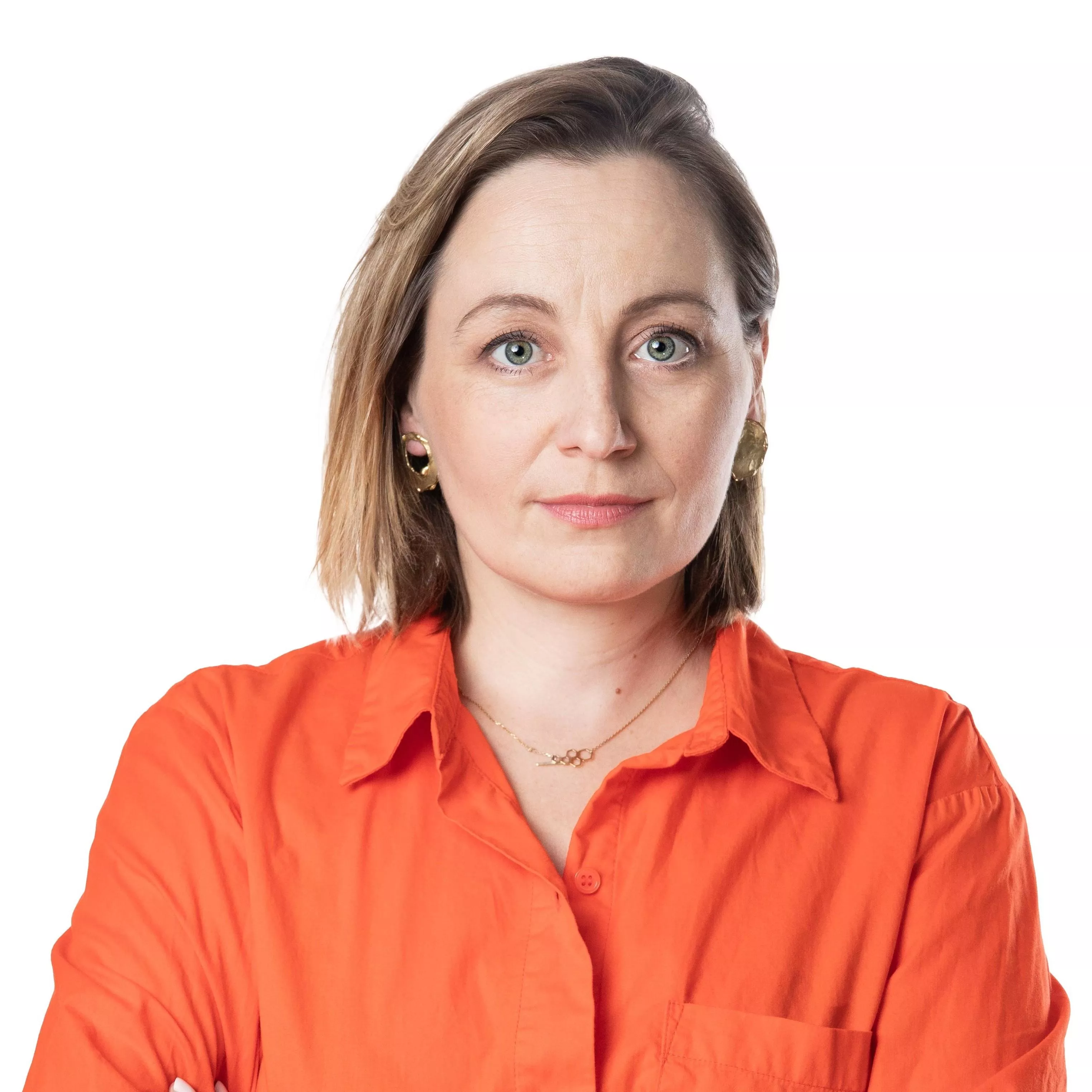
Dr. Damian Mazurek, M.A., is a researcher at the Department of Rural Geography and Local Development, Institute of Geography and Spatial Organization (Polish Academy of Sciences). He holds a Master's degree in Geography from Maria Curie-Skłodowska University (2015), specializing in regional development and geoinformatics. Research Focus: Application of GIS in regional development analysis, methodological approaches to identifying regional specializations, and spatial planning for rural areas. Key Contributions: Co-author of 15+ publications (2017-2025) addressing peri-urban dynamics, small town typologies, waste management systems, and digital accessibility in rural Poland. Notable work includes mapping suburban zones using diagnostic indicators and analyzing Wi-Fi distribution patterns. Collaborative Projects: Regular contributor to cross-border initiatives like the PL-SK 2007-2013 program and co-PI on National Science Centre (NCN) grants. Active participant in international conferences (IGU, European Geographical Society).
Professor Andrzej Aksamitowski serves at the Institute of Political and Security Sciences within the Faculty of Humanities at the University of Szczecin, where he maintains active research and academic duties. His distinguished career spans decades of scholarly contribution to military history and security studies, including prior leadership roles as Head of the Department of Conflict and Peace Studies (2012-2019) and significant positions at Poland's National Defence University and Military Historical Institute in Warsaw. Aksamitowski's research program centers on national security frameworks, historical military operations, and the specialized field of military cartography. His expertise in fortification systems and armed conflict analysis bridges historical scholarship with contemporary security applications, particularly through his innovative integration of geographic information into military history. This interdisciplinary approach has established him as a leading authority on 20th-century Polish military engagements and cartographic documentation of warfare. His publication trajectory from 1992-2014 reveals a sustained focus on World War II military campaigns, with particular emphasis on Polish defensive operations and North African theaters. Aksamitowski's signature contribution lies in historical atlases that combine rigorous archival research with precise cartographic representation, creating indispensable reference works for understanding battle dynamics and strategic decision-making. These publications consistently demonstrate his methodological innovation in visualizing complex military operations through specialized mapping techniques. Professional recognition includes: Silver Cross of Merit (1992) Gold Cross of Merit (2000) Medal of the National Education Commission (2005) Honorable Mention for Historical Book of the Year (2019) While specific graduate student mentorship details remain undocumented in public sources, Aksamitowski's institutional leadership roles—including departmental head positions and editorial responsibilities for major reference works—demonstrate substantial academic supervision capacity. His current work at the University of Szczecin continues to advance security studies through the Institute of Political and Security Sciences, where he contributes to both teaching and research infrastructure development in national security disciplines.
Mateusz Rafał Potoczny serves as Professor at the Institute of Theological Sciences within the Faculty of Theology at the University of Opole, where he also holds the position of Rector. His academic profile demonstrates deep specialization in Syriac liturgical traditions with particular focus on Eastern Christian churches and Indian Christian communities. Fluent in Polish and English, he maintains active scholarly communication through his institutional email address. His research centers on West and East Syriac Liturgical Traditions , Oriental Liturgies, and the history of Indian Christianity. Through meticulous analysis of sacramental theology, liturgical history, and ecclesial identity, Potoczny bridges historical scholarship with contemporary pastoral concerns. His work examines how ancient Syriac traditions inform modern worship practices and ecclesial formation. Analysis of his 64 publications reveals consistent scholarly output focused on liturgical theology, with significant attention to Syriac Christian traditions (West Syriac and East Syriac), sacramental practice in Eastern churches, and the unique identity of St. Thomas Christians in India. His recent works increasingly address Vatican II's liturgical reforms and their reception in Eastern Catholic contexts. His academic leadership is evident through editorial work on the journal "Liturgia Sacra" and organization of major scholarly events including the 50th Anniversary Conference on Sacrosanctum Concilium. Potoczny actively participates in international scholarly networks, evidenced by his attendance at the 8th World Syrology Conference in Kottayam and Syro-Arabic Symposiums. As Rector of the University of Opole, he oversees institutional academic strategy while maintaining his research profile. His scholarly impact is registered through an ORCID profile (0000-0001-5746-4218) and bibliometric indicators including a Scopus h-index of 1. Potoczny's work demonstrates sustained contribution to theological scholarship with particular significance for Eastern Christian liturgical studies.
Dr. Paweł Kwaśnicki is an Assistant Professor at the Department of Analytical and Engineering within the Faculty of Natural and Technical Sciences, John Paul II Catholic University of Lublin. His research focuses on advanced photovoltaic technologies, particularly third-generation solar cells, quantum dots, and transparent conductive oxides. He has contributed to scalable electrodeposition methods for platinum nanoparticles in dye-sensitized solar cells and explored TiO₂-based nanocomposites for energy applications. Research Trends: Specializes in photovoltaic materials (perovskite, TiO₂), thin-film deposition, and circular economy strategies for waste-to-energy systems. Key Collaborations: Works with institutions like Agricultural University of Krakow and ML System S.A. Laboratory. Supervisory Roles: Serves as a PhD thesis supervisor and has guided numerous bachelor's and master's theses on topics ranging from diet impacts to microplastics in food.
Jerzy Kukuczka Academy of Physical Education in KatowicePoland
Michał Krzysztofik is a Professor at the Academy of Physical Education in Katowice, specializing in sports science and exercise physiology. He holds a Master's degree (2014), PhD in Physical Culture Sciences (2018), and a post-doctoral habilitation in Medical and Health Sciences (2022). His research focuses on resistance training strategies, post-activation performance enhancement (PAPE), eccentric training, and blood flow restriction techniques. He collaborates with national sports associations like the Polish Athletic Association and Handball Association, providing scientific support to elite athletes. Notable awards include the Silesian Science Award (2021) and a Ministry of Education Scholarship (2022). Research interests emphasize optimizing athletic performance through biomechanical and physiological interventions. Key areas include sprint mechanics, muscle-tendon stiffness modulation, and training protocols for combat sports. His work integrates practical applications with elite athletes in volleyball, soccer, and track & field. Over 50 peer-reviewed articles since 2021 explore topics like PAPE repeatability, plyometric-isometric combinations, and sprint performance optimization. Personal athletic achievements include Vice-Champion of Poland in Bodybuilding (2017) and Wielkopolska Champion in Bodybuilding (2017). His studies often employ crossover trials and randomized controlled designs to evaluate acute and chronic adaptations in trained populations.
Barbara Pazur is a Professor at the Department of Choral Studies and Vocal Education, Faculty of Arts, Maria Curie-Skłodowska University. She specializes in Edwin E. Gordon's Music Learning Theory, focusing on audiation, choral improvisation, and early childhood music education. She leads the "Teoria uczenia się muzyki E.E. Gordona" scientific circle and serves as treasurer of the Lublin Division of Polish Choral Conductors' Association. Completed music education at Wrocław Music Academy (1985) Postgraduate studies in Vocal Emission and Choral Conducting Habilitated in Music Arts (Choral Conducting) at Fryderyk Chopin University (2014) Her research focuses on musical creativity development through Gordon's methodology, autism-friendly music approaches, and Polish folk/popular song adaptation for choral education. She pioneered the "Lubelski Festiwal Chórów Parafialnych" and co-developed national choral programs. Key awards include the Srebrny Krzyż Zasługi (2018), multiple Rector's Awards, and the Pro Maris Medal (2016). She has published numerous books and articles on Gordon-based pedagogy and choral arrangements.
Dr Wojciech Ryszard Lipski holds the position of Lecturer at the Department of Speech Therapy and Applied Linguistics , Maria Curie-Skłodowska University. His work focuses on speech and communication disorders across developmental and psychiatric conditions, with an ORCID identifier 0000-0003-4445-9940. Specializes in language disorders in schizophrenia Researches narrative coherence in psychiatric patients Develops therapeutic frameworks for autism Investigates connotative language breakdown Focuses on preschool/school-age speech development His recent publications emphasize neurolinguistic analysis of disordered speech patterns, particularly in schizophrenia and autism. Key methodologies include case studies , semantic field mapping , and connotation diagnostics . Research spans both clinical applications and theoretical investigations of language system disintegration. Current research explores: Neural network models of speech disorders Metaphorical language in psychosis Delusional discourse analysis Neurocognitive speech therapy approaches Language ontogenesis patterns Multi-center speech disorder studies
Bartosz Zalewski is a Polish legal historian and Roman law expert currently serving as Assistant Professor at the Department of Political-Legal Doctrines and Roman Law, Institute of Legal Sciences, Maria Curie-Skłodowska University. He completed his law studies at the same faculty in 2014 with distinction, earned attorney-at-law qualifications in 2018, and received his PhD in 2020 with highest honors for his dissertation Humanitas in the Legislation of Constantine the Great , which was honored in the Polish Society for Legal History Competition (2020-2022). Member of Scientific Thomistic Society Representative of junior staff at UMCS Institute of Legal Studies Active in legal NGO collaborations His research focuses on Roman criminal law reception in medieval and modern European law, Christian influence on Roman jurisprudence , and St. Thomas Aquinas' legal philosophy . Teaching includes Roman Law, Latin legal terminology, and specialized lectures on Roman economic institutions and European legal foundations. Current projects explore Roman law's impact on early modern public international law concepts. Scientific achievements include 20 publications, with 2024 articles analyzing: Retributive punishment in Roman kingship St. Isidore's natural law theories Medieval glossators' maritime law interpretations He has contributed to understanding how Roman legal institutions evolved through accusatorial procedure transformations and insanity exemption jurisprudence in medieval Sicilian and canon law. The 2016 Leksykon tradycji rzymskiego prawa prywatnego dictionary entries reflect his expertise in foundational Roman legal concepts.
Professor Jacek Banasiak holds a prestigious DST/NRF SARChI Chair in Mathematical Models and Methods in Biosciences and Bioengineering at the University of Pretoria, Department of Mathematics and Applied Mathematics. He also maintains strong academic ties with Lodz University of Technology in Poland where he serves as a research professor in the Department of Mathematical Modeling. His career spans several decades with extensive contributions to mathematical modeling, particularly in population dynamics, fragmentation-coagulation processes, and epidemiological modeling. Professor Banasiak's research interests center on mathematical modeling of biological and physical processes, with particular expertise in singular perturbation theory, semigroup theory, and transport equations on networks. His work bridges theoretical mathematics with practical applications in epidemiology, ecology, and population biology. He has developed sophisticated mathematical frameworks for understanding fragmentation-coagulation phenomena, malaria transmission dynamics, and savanna ecosystem modeling. His publication record shows a consistent trajectory of high-impact research, with recent work focusing on climate-based malaria models, multiscale epidemiological systems, and mathematical analysis of growth-fragmentation equations. His publications appear in top-tier journals across mathematical analysis, epidemiology, and mathematical biology fields, demonstrating the interdisciplinary nature of his work. DST/NRF SARChI Chair in Mathematical Models and Methods in Biosciences and Bioengineering Author of numerous influential publications spanning from 1984 to 2025 Editor of special issues and author of several books including 'Introduction to Mathematical Methods in Population Theory' (2025) Professor Banasiak has supervised over 15 PhD students, many of whom have gone on to successful academic careers. His mentoring spans topics including fragmentation-coagulation with transport effects, telegraph systems on networks, and mathematical modeling of malaria transmission. His research has attracted significant funding, particularly through his SARChI Chair position which supports advanced mathematical research in biosciences and bioengineering.
Marek Miśkowicz serves as a Professor at the Department of Metrology and Electronics within the Faculty of Electrical Engineering, Automatics, Computer Science and Biomedical Engineering at AGH University of Science and Technology in Kraków, Poland. His primary institutional contact is miskow@agh.edu.pl, with physical location in building B-1, room 212. His research spans signal processing, biomedical engineering, and electronics, specializing in event-based sampling methodologies, time-to-digital conversion techniques, and reconstruction of bandlimited signals from nonuniform samples. Key contributions include QRS detection algorithms for ECG monitoring, POCS-based reconstruction frameworks, and event-driven control systems for industrial IoT applications. His work emphasizes resource efficiency in embedded systems and mobile health monitoring through approximate computing and adaptive sampling strategies. Recent publications (2022-2025) demonstrate consistent focus on signal reconstruction from irregular samples, with growing emphasis on spiking neural networks for event classification and industrial IoT optimization. Biomedical applications (particularly ECG analysis) and industrial control systems represent dominant application domains, while methodological innovations center on iterative reconstruction algorithms and temporal accuracy evaluation in noisy environments. No scientific awards were referenced in the source materials. No information regarding student advising or research grants was available in the provided documentation. The source texts contained no details about laboratory facilities, research teams, or collaborative groups associated with Professor Miśkowicz.
Stanislaw Moniuszko Academy of Music in GdańskPoland
Katarzyna Myćka is a Professor at the Stanisław Moniuszko Academy of Music in Gdańsk, where she has served since the 2018/19 academic year. A marimba virtuoso and one of the leading pioneers of concert marimba performance, she represents a unique specialization within the Faculty II – Instrumental department, specifically in percussion studies. Her academic journey began as a piano student at the same institution under Grażyna Fiedoruk-Sienkiewicz, and since 2001 she has worked at her alma mater, initially as an accompanying pianist for various instrumental classes before focusing on marimba performance and education. Myćka's research interests center on marimba performance practice, contemporary percussion repertoire development, and the scholarly investigation of women composers. Her doctoral dissertation on women composers, defended in 2023, represents a significant contribution to musicology and gender studies in music. She actively promotes Polish musical heritage through editing sheet music collections of forgotten Polish composers and has developed a comprehensive discography that showcases both traditional repertoire adaptations and contemporary works. Her seven commercially released CDs demonstrate remarkable versatility, spanning from Bach transcriptions to modern compositions by artists like Emmanuel Séjourné and Anna Ignatowicz. Meritorious for Polish Culture distinction from the Minister of Culture and National Heritage (2016) Medal of the National Education Commission (2023) As an educator, Professor Myćka founded the International Katarzyna Myćka Marimba Academy (IKMMA), an intensive masterclass program that has become a significant training ground for emerging marimba specialists. Her teaching extends beyond technical mastery to encompass artistic interpretation and professional development for percussionists. She actively promotes the work of women composers both through her scholarly research and performance practice, contributing to greater representation in concert programming. Myćka maintains an active performance career, having collaborated with prestigious ensembles including the Beijing Symphony Orchestra, Camerata Israeli, Wiener KammerOrchester, and Stuttgart Philharmonic Orchestra, demonstrating her international stature in the percussion world.
Cardinal Stefan Wyszyński University in WarsawPoland
Marlena Kilian serves as an Associate Professor (adiunkt habilitowany) at the Faculty of Education, Cardinal Stefan Wyszyński University in Warsaw. Her academic work centers on education within social studies, with 100% specialization in educational sciences, focusing on the intersection of aging, disability, and inclusive practices. Her research spans special education, geragogy (education of older adults), ageism, and assistive technologies. Key areas include disability in late adulthood, social participation of seniors, aging stereotypes, and tools like RoboBraille for accessibility. She examines how educational frameworks can address the needs of older adults with disabilities within rapidly aging societies, emphasizing inclusive methodologies and policy implications. Analysis of her 15 most recent publications (2024-2015) reveals consistent thematic focus on special geragogy development, age-related stereotypes, and assistive technology implementation. Her work bridges theoretical frameworks with practical applications, showing particular emphasis on Poland's educational context and the societal impacts of demographic aging. No scientific awards were documented in the provided materials. Consultation schedules indicate active teaching engagement with both full-time (Fridays 10:20-11:20) and part-time students (Saturdays 16:10-16:40 during sessions). Details regarding student advising, research grants, or laboratory affiliations were not specified in the source information.
SWPS University of Social Sciences and HumanitiesPoland
Mariusz Czubaj is a Professor of Cultural Anthropology at SWPS University in Warsaw, where he is affiliated with the Faculty of Humanities and Department of Cultural Studies. He is a prominent cultural studies scholar with extensive expertise in cultural anthropology, literature, and popular culture. His academic work spans both scholarly research and creative writing, making significant contributions to understanding contemporary cultural phenomena. Professor Czubaj specializes in fan culture, sports anthropology, and alternative movements. His research explores the intersections between popular culture, literary forms, and social dynamics. He has developed particular expertise in crime fiction as both a literary form and cultural phenomenon, examining how this genre reflects and shapes societal attitudes and values. His approach combines anthropological methods with literary analysis to provide nuanced insights into cultural practices and representations. His publications reveal a consistent focus on cultural representation, particularly through the lens of popular genres. Czubaj's work demonstrates how crime fiction serves as both entertainment and cultural testimony, while his studies of fan culture illuminate the complex relationships between audiences and cultural icons. His research shows particular interest in how historical contexts shape contemporary cultural expressions, especially in music and sports narratives. Wielki Kaliber Award for best Polish crime and thriller novel in 2008 for '21:37' Professor Czubaj teaches cultural theory, crime and thriller fiction, and specialized journalism at SWPS University. He is also a faculty member of SWPS University's School of Ideas, an innovative program dedicated to design thinking and innovation. As an active public intellectual, he publishes regularly in the weekly 'Polityka' and the quarterly 'Kultura Popularna,' bridging academic scholarship with public discourse on contemporary cultural issues.
SWPS University of Social Sciences and HumanitiesPoland
Dr. Anna Kubiak is a psychologist and researcher at SWPS University in Poznań, Poland, affiliated with the Faculty of Psychology and Law, Department of Clinical and Health Psychology, and the Institute of Psychology's Personality Development Research Center. She specializes in adult clinical psychology with expertise in self-destructiveness, psychological assessment, and systemic therapy. Institution: SWPS University Faculty: Faculty of Psychology and Law in Poznań Department: Department of Clinical and Health Psychology Research Center: Personality Development Research Center Contact: akubiak1@swps.edu.pl Her research focuses on non-suicidal self-harm, indirect self-destructiveness, and their relationships with attachment, emotion regulation, and inhibitory control. She has published extensively on borderline personality disorder, self-harm mechanisms, and clinical assessment methods. Her work spans both theoretical frameworks and practical clinical applications, with publications appearing in Polish and international journals. Dr. Kubiak's research demonstrates a clear progression from foundational work on self-harm mechanisms to more recent sophisticated analyses using the DSM-5 Alternative Model for Personality Disorders. Her publications show consistent focus on understanding the psychological underpinnings of self-destructive behaviors through multiple lenses including attachment theory, emotion regulation, and personality pathology. She is an associate member of the Greater Poland Society for Systemic Therapy and has practical experience working in primary and secondary schools for 10 years. Currently, she maintains a private therapeutic practice alongside her academic work. At SWPS University, Dr. Kubiak teaches psychological diagnosis, professional ethics of psychologists, and master's seminars. Her teaching reflects her clinical expertise and research interests, providing students with both theoretical knowledge and practical applications in clinical psychology.
SWPS University of Social Sciences and HumanitiesPoland
Professor Agnieszka Popiel is a psychiatrist, psychotherapist, and psychotherapy supervisor at SWPS University's Institute of Psychology in Warsaw. She serves as the Scientific Director of the Cognitive-Behavioral Therapy Clinic and heads the Center for Clinical Research and Psychotherapy Improvement. With over 25 years of experience, she has significantly contributed to developing psychotherapy as a scientifically grounded treatment method in Poland. Scientific Director of Cognitive-Behavioral Therapy Clinic Head of Center for Clinical Research and Psychotherapy Improvement Co-founder of School of Cognitive-Behavioral Psychotherapy Representative to European Association for Behavioral and Cognitive Therapies Professor Popiel's research primarily focuses on psychotherapy effectiveness based on evidence-based practice, psychopathology of mental disorders, and emotional problems associated with personality disorders. Her clinical work emphasizes cognitive-behavioral approaches, particularly in treating trauma and PTSD. She has developed specialized protocols including a cognitive therapy protocol for PTSD that forms the basis of the 'Effective Action Under Stress' prevention program published in 2019. Analysis of Professor Popiel's recent publications reveals a strong focus on PTSD research, particularly examining treatment effectiveness across different modalities. Her work spans trauma from motor vehicle accidents to war-related trauma and pandemic stress. A distinctive thread throughout her research is the investigation of how temperament and personality factors influence treatment outcomes. She has conducted pioneering cross-cultural validation studies of PTSD assessment tools and has extensively documented the comparative effectiveness of psychotherapy versus pharmacotherapy for PTSD. MedWoman 2023 Award for lifetime achievement Global CBT Ambassador program selection Publication award from Polish Academy of Sciences Professor Popiel, together with Dr. Ewa Pragłowska, directs postgraduate programs in Cognitive-Behavioral Psychotherapy and Supervision at SWPS University. They have trained approximately 1,000 psychotherapists working with adults, children, and adolescents, with another 1,000 specialists currently undergoing training. Through the TRAKT, TRAKT II, and TRAKT III programs, she conducted Poland's first clinical trials comparing psychotherapy and pharmacotherapy for PTSD. Her work has established evidence-based standards for psychotherapy practice in Poland. Professor Popiel directs the Center for Clinical Research and Psychotherapy Improvement and co-founded the School of Cognitive-Behavioral Psychotherapy at SWPS University. She initiated the Polish Association for Cognitive and Behavioral Therapy in 1998 and serves as its representative to the European Association for Behavioral and Cognitive Therapies. She is an active member of the EABCT Working Group on Training Standards, contributing to international psychotherapy education guidelines.