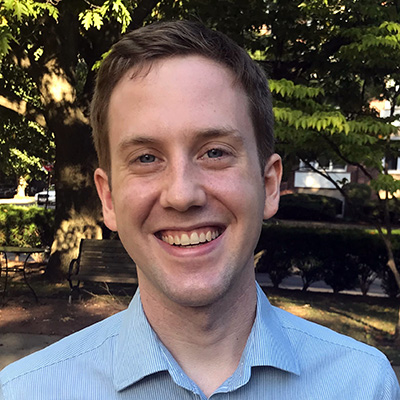
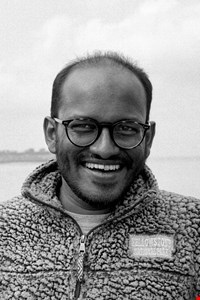
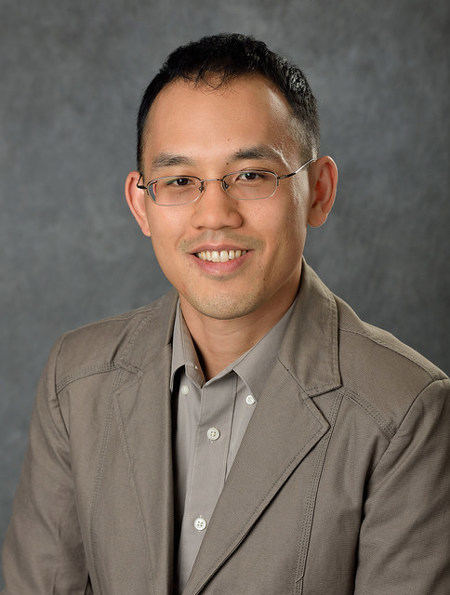
Dennis Dobler is an Assistant Professor in Statistics at TU Dortmund University, appointed in September 2023. His academic foundation includes a doctorate from Ulm University (2016) and dual bachelor's degrees in Mathematics and Computer Science from Heinrich-Heine-Universität Düsseldorf (2011). Research expertise centers on Resampling methods, Survival analysis, Multivariate techniques, and Asymptotic statistics, with applications spanning clinical trials, risk modeling, and nonparametric inference. His methodological work frequently addresses censored data challenges in survival contexts. Prior roles include Assistant Professorship at Vrije Universiteit Amsterdam, postdoctoral research at Ulm University, and a research stay at the University of Copenhagen. Current publications reflect sustained focus on survival analysis innovations, particularly in competing risks and resampling methodologies.
Dr. Neil Spencer is an Assistant Professor in the Department of Statistics at the University of Connecticut. His research integrates Bayesian inference, network analysis, and computational statistics, with applications ranging from forensic science to neurological disorders. He earned a PhD in Statistics and Machine Learning from Carnegie Mellon University, MSc from University of British Columbia, and BScH from Acadia University. Research focuses on developing novel methods for network data analysis (latent position models, efficient MCMC), robust Bayesian inference, and forensic statistics. Publications demonstrate consistent innovation in computational techniques for complex data structures and interdisciplinary applications. Teaching includes STAT5410 (Statistical Computing) and STAT3345Q (Probability Models for Engineers). He co-advised PhD candidate Tolani Olarinre and participates in the New England Statistical Society's NextGen committee. Research publications emphasize methodological innovations in network modeling, Bayesian computation, and experimental design, with significant applications in neuroscience and forensic science.
Dr. Pratheepa Jeganathan is an Assistant Professor in the Department of Mathematics and Statistics at McMaster University. Her research focuses on developing statistical methods for multi-view learning, particularly in modeling dependencies across heterogeneous data sources. Applications span molecular microbiology, spatial omics, sensor-based traffic data, and loss reserving. Her methodological work includes generative models, Bayesian sampling, constrained clustering, and spatio-temporal statistics. Education: PhD in Mathematics (Statistics) from Texas Tech University (2016), Postdoctoral Fellowship at Stanford University (2016–2020). Research Interests: Spatial statistics, statistical learning, high-throughput data methods, and statistical theory. Recent work includes analyzing microbiome interventions using transfer functions, studying vaginal microbiota communities, and applying recurrent neural networks to multivariate loss reserving. She has published in journals like PLoS Computational Biology and Genome Biology . Teaching: Instructs courses in data science (STATS 3DA3, CSE 780), statistical research projects, and graduate-level topics in statistics.
Professor Heike Trautmann is a distinguished academic at Paderborn University, where she serves as Professor of Machine Learning and Optimisation in the Department of Computer Science within the Faculty of Computer Science, Electrical Engineering and Mathematics. Since April 1, 2025, she also holds the position of Vice President for International Relations at the university. Her academic career spans prestigious institutions including the University of Münster, where she was Professor of Data Science: Statistics and Optimization from 2013 to 2023, and the University of Twente, where she serves as Guest Professor of Data Science until February 2026. Dr. Trautmann's educational background includes: University Studies in Statistics (Diploma), TU Dortmund, Germany (1997-2000) University Studies in Economic Mathematics (First Diploma), TU Dortmund, Germany (1996-1998) PhD student at Graduate School of Production Engineering and Logistics, TU Dortmund University (2002-2004) Habilitation in Statistics, TU Dortmund University, Germany (April 15, 2013) Professor Trautmann's research program centers on cutting-edge topics in artificial intelligence and optimization. Her primary research interests include (Trustworthy) Artificial Intelligence, Machine Learning, Data Science, Automated Algorithm Selection and Configuration, Exploratory Landscape Analysis, (Multiobjective) Evolutionary Optimisation, and Data Stream Mining. She leads the Machine Learning and Optimisation research group at Paderborn University, which develops innovative approaches for understanding and improving optimization algorithms through landscape analysis and automated configuration techniques. Her work bridges theoretical foundations with practical applications, particularly in the domains of trustworthy AI and algorithm selection. Her extensive publication record reveals a clear trajectory toward increasingly sophisticated integration of deep learning with traditional optimization techniques. Recent work demonstrates a strong focus on multi-objective optimization problems, exploratory landscape analysis using deep learning methods, and the development of automated algorithm configuration systems. A notable trend is the application of transformer architectures to landscape analysis, as seen in her Deep-ELA work, which represents a significant innovation in the field. Her research consistently addresses the challenge of characterizing complex optimization problems to enable better algorithm selection and configuration. Professor Trautmann has received notable recognition for her scholarly contributions, including: GECCO Best Paper Award for "Deep reinforcement learning for instance-specific algorithm configuration" As an academic leader, Professor Trautmann has secured significant research funding for projects including "Towards Robustness of Disinformation Campaign Detection Algorithms in Open Online Media in the Context of Trustworthy AI" and "Automated rail transport as a backbone for sustainable, networked mobility in rural areas." She actively mentors students through her teaching of advanced courses in machine learning, optimization, and data science. Her industry connections, stemming from her previous work as an Analytics Consultant at Roland Berger Strategy Consulting, enable her to bridge academic research with practical applications. Professor Trautmann leads the Machine Learning and Optimisation research group at Paderborn University, which collaborates extensively with international partners. She is a key supporter of the Confederation of Laboratories for Artificial Intelligence Research in Europe (CLAIRE) and a member of the European Research Center for Information Systems (ERCIS). Her group maintains strong connections with research centers across Europe, particularly through her involvement with the Transregional Collaborative Research Centre 318.
Dr. Kasun Fernando Akurugodage is a Lecturer in Mathematics at Brunel University London, within the College of Engineering, Design and Physical Sciences. He is a member of the EPSRC Mathematical Sciences Early Career Forum, blending expertise in probability theory, dynamical systems, and machine learning. Education: PhD in Mathematics (2018), University of Maryland; BSc in Mathematics, University of Colombo. Research Interests: He focuses on statistical properties of dynamical systems, Markov processes, and higher-order asymptotics for limit theorems, employing spectral theory and techniques from probability, stochastic analysis, and statistics. Recent work explores machine learning applications to dynamical systems and interdisciplinary research opportunities. Publications span limit theorems, Edgeworth expansions, large deviations, and robust normalizing flows, with a 2025 paper on unbounded observables in ergodic theory. His work bridges theoretical and applied mathematics, including outreach initiatives in Canada, Sri Lanka, and the U.S.
Yuta Koike is an Associate Professor at the Graduate School of Mathematical Sciences, University of Tokyo . His research focuses on statistical inference for stochastic processes , particularly in high-frequency financial data and high-dimensional statistics . He has contributed to covariance estimation under non-synchronous observations, microstructure noise, and jumps, and recently explores lead-lag relationships between stochastic processes. Research Interests : Stochastic processes, high-dimensional statistics, financial econometrics, high-frequency data, probability theory. Awards : The 32nd JSS Ogawa Award The 1st ISI Tokyo Memorial Award Editorial Roles : Associate Editor for Asia-Pacific Financial Markets (2019–present), Bernoulli (2025–present), and Japanese Journal of Statistics and Data Science (2023–present). Teaching : Courses in statistical analysis, econometrics, and probability theory at the University of Tokyo, Seijo University, and Tokyo Metropolitan University. His publications span journals like Annals of Statistics , Stochastic Processes and their Applications , and Journal of Theoretical Probability . He actively presents at international conferences, including the Joint Statistical Meetings and SPA Conference .
Kevin Liu is an Associate Professor at Michigan State University, affiliated with the Genetics & Genome Sciences Program and the Ecology, Evolution & Behavior Program . His research focuses on computational biology, phylogenetics, and genomics, particularly developing statistical methods for evolutionary analysis. Institution: Michigan State University Programs: Genetics & Genome Sciences Program, Ecology, Evolution & Behavior Program Kevin Liu’s work centers on advancing phylogenetic reconstruction techniques, addressing challenges in species tree estimation, multiple sequence alignment, and handling non-tree-like evolutionary histories. He employs coalescent-based models, hidden Markov models, and resampling methods to improve accuracy in genomic data analysis. Recent trends in his research include developing scalable algorithms for phylogenetic network inference, integrating statistical resampling techniques, and exploring the impact of alignment and tree estimation errors on evolutionary studies. His publications highlight collaborations in computational method development for large-scale genomic datasets.
Kevin J. Liu is an Associate Professor in the Department of Computer Science and Engineering at Michigan State University, with affiliations in the Ecology, Evolution, and Behavior (EEB) Program and the Genetics and Genome Sciences (GGS) Program. His research focuses on developing computational methodologies for comparative genomics, particularly under complex evolutionary scenarios, to connect genomic insights to biological function and phenotype. The lab employs big-data-driven approaches to generate hypotheses for biological and biomedical discoveries. Research interests include phylogenetic analysis, evolutionary genomics, computational methods for handling non-tree-like evolutionary histories, and statistical resampling techniques. Liu emphasizes interdisciplinary work at the intersection of bioinformatics and computational biology, addressing challenges in alignment-free phylogenetics and species network inference. Publications reflect a strong focus on statistical methods for phylogenetic reconstruction, error estimation in sequence alignment, and scalable genomic analysis tools like Fastnet and Coal-Miner. His work bridges computational innovation with biological interpretation, aiming to advance our understanding of evolutionary processes and genomic diversity. Prospective students and researchers interested in interdisciplinary bioinformatics are encouraged to contact him via email at kjl@msu.edu .
Dr. Geert van Kollenburg is an Assistant Professor in the Department of Operations Planning Accounting & Control at Eindhoven University of Technology, affiliated with the EAISI Foundational initiative. His research focuses on integrating artificial intelligence, data analysis, and process control in industrial contexts, emphasizing transparent and explainable AI models. He holds a multidisciplinary background with a BSc in Psychology, MSc/PhD in Statistics, and postdoctoral work in chemometrics and machine learning. Key research areas include data-driven process optimization in semiconductor manufacturing, chemical production, and sustainable supply chains. His work addresses challenges such as predictive modeling in multiblock process data (Process PLS), food authenticity using NIR spectroscopy, and AI explainability in medical diagnostics. He has published over 24 peer-reviewed articles, including notable contributions to Computers and Chemical Engineering , Food Control , and Sustainable Development . Teaches courses: Fundamentals of Financial Accounting, Sustainable Supply Chains, System Dynamics Supervised 6 academic works Contributed to UN Sustainable Development Goals through supply chain and environmental studies His methodologies emphasize practical applications, such as low-cost NIR spectroscopy for quality control and predictive discarding in Industry 5.0. Collaborations span academic and industrial partners globally, addressing real-world problems with holistic, data-driven solutions.
Professor Chenlei Leng is a faculty member in the Department of Statistics at the University of Warwick. Previously, he held positions at Peking University, the University of Munich, and the National University of Singapore. He earned a bachelor's degree in mathematics from the University of Science and Technology of China and a PhD in statistics from the University of Wisconsin-Madison. His research focuses on developing statistical methodologies for analyzing complex, high-dimensional data, including network analysis, longitudinal data modeling, and machine learning applications. He has organized workshops on statistical network analysis and co-directed the Oxford-Warwick Statistics Centre for Doctoral Training (CDT). Elected Member of the International Statistical Institute Fellow of the Institute of Mathematical Statistics His current research group at Warwick explores network structures and high-dimensional statistical challenges. Advising includes PhD candidates like Yuanhe Zhang and Xinyuan Fan, alongside visiting students from institutions such as Tsinghua University. He actively participates in academic leadership roles, including chairing the Research Section of the Royal Statistical Society. Publications span topics like network models, covariance estimation, and sparse regression, with a focus on methodological advancements in statistics and machine learning.
Greg Tkacz is a Professor of Economics at Saint Francis Xavier University (StFX), serving since 2010. Previously, he spent 14 years at the Bank of Canada as a researcher and manager, specializing in monetary policy analysis and macroeconomic forecasting. His current research focuses on high-frequency electronic payments data (e.g., debit/credit card transactions) to measure economic activity in real-time, funded by SSHRC grants. Tkacz has published extensively in journals like the Journal of Econometrics and served on editorial boards including the Canadian Journal of Economics and Canadian Public Policy . He earned his Ph.D. in Economics from McGill University. His work often addresses policy-relevant questions, such as the impact of the 2008 financial crisis and the economic effects of extreme events like 9/11. Tkacz’s research has been featured in global media including the Wall Street Journal , Le Figaro , and Canadian outlets like CBC. As Economics Department Chair (2013–2021), he oversaw significant growth in student enrollment and hosted the 2017 Canadian Economics Association conference, attracting 800+ delegates. Tkacz’s teaching emphasizes applying economic theory to real-world problems, mentoring over 20 Honours students who have won national scholarships, Rhodes Scholarships, and top Canadian undergraduate research awards. His students have entered top graduate programs and secured roles at institutions like the Bank of Canada.
Afendras Giorgos is an Associate Professor in the Department of Statistics and Operations Research at Aristotle University of Thessaloniki since January 2023. Previously, he served as an Assistant Professor at the same institution (2018–2023) and held roles at the University at Buffalo (USA), including Adjunct Assistant Professor (2018–2022) and Research Associate (2015–2018). His research focuses on statistical theory, probability, and machine learning, with a strong emphasis on variance bounds, covariance identities, and cross-validation techniques. Giorgos holds a PhD in Mathematics from the National and Kapodistrian University of Athens (2008), a Master's in Statistics and Operations Research (2004), and a degree in Mathematics (2001). His professional experience includes visiting roles at the University of Cyprus and external associate positions at Athens University of Economics and Business. His research interests span distribution families, orthogonal polynomials, asymptotic statistics, dependency measures, and statistical machine learning. Recent work includes advancements in cross-validation methodologies and model selection criteria, with applications to resampling effectiveness and training/test size optimization. No scientific awards are explicitly mentioned in the text. His professional trajectory reflects extensive contributions to academic research and teaching in statistical theory and applied mathematics.
Yicong Lin is an Assistant Professor at the Department of Econometrics and Data Science, Vrije Universiteit Amsterdam, and a Research Fellow at the Tinbergen Institute. He holds a PhD from Maastricht University. His research focuses on time series econometrics, particularly in developing methods for nonlinear, nonstationary, and endogenous models. Key areas include resampling techniques, functional time series, extreme value theory, and climate econometrics. Recent work emphasizes time-varying coefficient models, bootstrap inference in nonparametric settings, and clustering approaches for extreme value indices. Teaching responsibilities include courses on data science fundamentals, probability theory, and big data statistics. Research outputs span applied econometric methodologies, with datasets openly shared via platforms like YODA and GitHub. Collaborative efforts involve institutions across the globe, addressing challenges in housing markets, climate-related economic trends, and financial volatility modeling.
Raghu Pasupathy is a Professor of Statistics at Purdue University, affiliated with the Department of Statistics within the College of Science. He holds a Ph.D. from Purdue University (2005) and a B.Tech from the Indian Institute of Technology, Chennai (1995). His research focuses on stochastic optimization, simulation methodologies, uncertainty quantification, empirical processes, and stochastic processes. He teaches courses such as Stochastic Processes (STAT/MATH 532) and has contributed to software tools like RA-Level for stochastic linear programs and PyMOSO for multiobjective simulation optimization. His work emphasizes bridging theoretical foundations with practical applications, including algorithm development for simulation optimization and statistical inference methods. Notable contributions include ASTRO-DF for derivative-free optimization and R-SPLINE for integer-valued problems. He has advised several PhD students, including Jingyuan Chen and Guy Feldman. Pasupathy's research also involves collaborations on computational solvers and experimental comparisons through platforms like SimOpt.
Nicola Lunardon is an Associate Professor of Statistics at Ca' Foscari University of Venice. He holds a PhD in Statistics from the University of Padua and has held academic positions at the University of Milan-Bicocca, University of Trieste, and others. His research focuses on robust statistics, bias reduction methods, pseudo-likelihoods, and asymptotic theory. He has contributed to advancements in estimation functions and computational statistical methodologies. Current Affiliation: Department of Environmental Sciences, Computer Science and Statistics Previous Roles: Associate Professor at University of Milan-Bicocca (2019–2023), Research Fellowships at Padua and Trieste Universities (2012–2016) Research Interests: Lunardon's work emphasizes improving inferential procedures through robust statistical techniques. He has developed methods to address bias in estimating functions, tackle incidental parameters, and enhance computational efficiency. His Bayesian non-parametric approaches have been applied to molecular systems analysis. Publications span methodological contributions in top journals like Biometrika , Journal of the Royal Statistical Society , and Biometrics . Themes include global sensitivity analysis, longitudinal data modeling, and small-sample GEE estimation. Notable Software: Co-developed the ROSE package for imbalanced learning in R