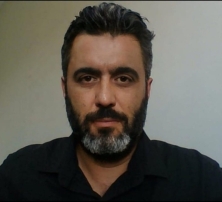
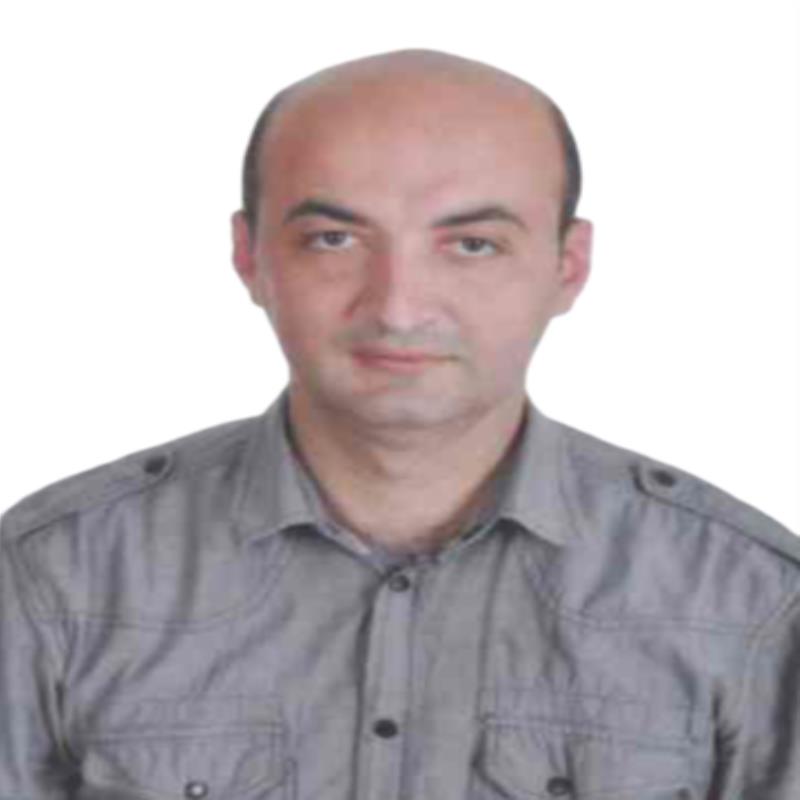
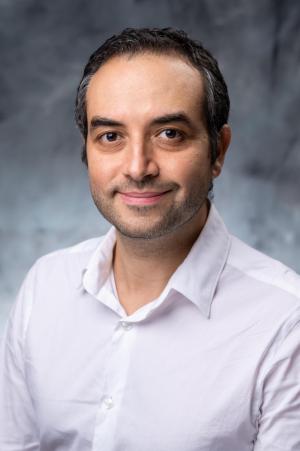
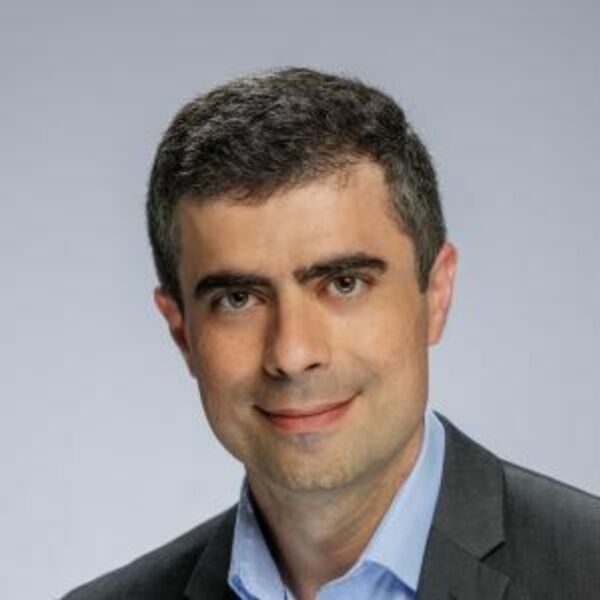
Shan-Lu Liu is a Professor and Director of the Viruses and Emerging Pathogens Program at the Infectious Disease Institute, The Ohio State University. His research focuses on molecular virology, virus-host interactions, innate immunity, and cell signaling. He holds an M.D. from Zhengzhou University School of Medicine (1989) and a Ph.D. in Microbiology from the University of Washington School of Medicine (2003), followed by postdoctoral training at the University of Washington and Fred Hutchinson Cancer Research Center. Research interests include host restriction mechanisms against viral infections, viral cell-to-cell transmission, and immune responses to SARS-CoV-2. Key projects involve IFITM proteins' role in viral entry inhibition, Ebola virus fusion mechanisms, and HIV Nef's interaction with TIM proteins. He investigates SARS-CoV-2 variants' immune evasion and cell-cell fusion dynamics, with recent work on Omicron subvariants and vaccine development. Dr. Liu's affiliations include the Center for Retrovirus Research, Biomedical Sciences Graduate Program, and Molecular, Cellular, and Developmental Biology Program. His work spans viral pathogenesis, host defense mechanisms, and translational strategies to combat emerging pathogens.
Dr Theo Pepler is a Lecturer and Lead Biostatistician at the Robertson Centre for Biostatistics, University of Glasgow. He holds academic appointments at both the University of Glasgow and Stellenbosch University, specializing in biostatistics, epidemiology, and multivariate analysis. His work bridges academia, industry, and government policy through roles such as co-leading data initiatives at the Scottish Government’s EPIC Centre. Education PhD in Statistics (Stellenbosch University, 2014) MComm in Statistics (specializing in factorial experiments) BComm Honours in Statistics BComm in Economic & Management Sciences Research Interests focus on statistical computing, open science, and applications in veterinary public health. Key areas include biomarker discovery for mastitis management, transition cow health optimization, and genomic epidemiology of livestock diseases. His work emphasizes practical statistical solutions for real-world agricultural challenges. Grants & Projects EPIC Centre of Expertise in Animal Disease Outbreaks (Scottish Govt, 2022-2025) Movenet Livestock Movement Toolkit (EPSRC, 2024) Mastitis Diagnosis Innovations (Innovate UK, 2018-2020) His research integrates statistical methodologies with veterinary medicine, contributing to evidence-based practices in dairy farming and infectious disease control.
Francesca Chiaromonte is a Professor of Statistics and the Dorothy Foehr Huck and J. Lloyd Huck Chair in Statistics for the Life Sciences at the Pennsylvania State University. She holds a courtesy affiliation with the Department of Public Health Sciences and leads the Institute for Genome Sciences within the Huck Institutes of the Life Sciences. She is also affiliated with the Sant’Anna School of Advanced Studies in Pisa, Italy, where she coordinates the EMbeDS initiative and contributes to PhD programs in Data Science and AI for Society. Education: She earned a Laurea (cum laude) in Statistics and Economic Sciences from the University of Rome La Sapienza (Italy) and a Ph.D. in Statistics from the University of Minnesota (USA). Her research focuses on statistical methodologies for high-dimensional data, with applications in genomics, climate science, and economics. Key areas include dimension reduction, feature selection, and functional data analysis. Research Interests: Her work bridges statistical theory and interdisciplinary applications, particularly in 'Omics' sciences, meteorology, and economics. She develops computational techniques for analyzing complex datasets, such as resampling methods and latent structure modeling. Recent projects include studies on mitochondrial mutations, child obesity biomarkers, and the economic impacts of natural disasters. Articles Trends: Her publications emphasize methodological innovations in statistics (e.g., group elastic net algorithms) and their applications in genetics (e.g., L1 transposition dynamics) and public health (e.g., metabolomic obesity studies). She also explores non-B DNA structures and their genomic implications. Awards: She is a Fellow of the American Statistical Association (2016) and the Institute of Mathematical Statistics (2022), recognized for her contributions to statistical methodology and interdisciplinary research. Advising & Grants: While specific grant details are not listed, her leadership roles and collaborative projects suggest significant contributions to funding and mentoring. She directs the Institute for Genome Sciences and collaborates globally, including with NYU, UCLA, and the Santa Fe Institute. Labs/Teams: Active in the Center for Computational Biology and Bioinformatics, Center for Medical Genomics, and the Institute of Economics at Sant’Anna School. Her work integrates computational biology, statistical theory, and interdisciplinary training programs.
Prof. Dr. İbrahim Halil GÜMÜŞ is a distinguished faculty member at Adıyaman University, Faculty of Arts and Sciences, Department of Mathematics, where he currently holds the position of Professor (since 2023). Previously, he served as Associate Professor (2017-2023) and Assistant Professor (2011-2017) at the same institution. Before his academic career, he worked as a Teacher at Public Schools under the Ministry of National Education from 2002 to 2011. He earned his educational qualifications from Selçuk University: B.Sc. in Mathematics (1998-2002), M.Sc. in Mathematics (2002-2005), and PhD in Mathematics (2005-2011). His Master's Thesis focused on 'On the Hadamard Product of Matrices' (2005), while his PhD Thesis examined 'Bounds on arithmetic, geometric and Heinz means of positive definite matrices' (2011). Prof. GÜMÜŞ's research primarily centers on Matrix Theory and Operator Inequalities, with significant contributions to Positive Operators, Matrix Analysis, and Optimization. His work demonstrates a strong theoretical foundation in mathematical inequalities with increasing applications in data science and medical informatics. He has published extensively in high-impact journals such as Linear and Multilinear Algebra, Journal of Mathematical Analysis and Applications, and Operators and Matrices. His publication record shows a clear evolution from theoretical matrix inequalities toward practical applications in data analysis, particularly evident in his recent work on synthetic data generation for imbalanced datasets using geometric means and Heinz averages. This interdisciplinary approach bridges pure mathematics with machine learning applications, especially in medical data analysis. TÜBİTAK Publication Incentive Award, 2012 TÜBİTAK Publication Incentive Award, 2015 TÜBİTAK Publication Incentive Award, 2017 TÜBİTAK Publication Incentive Award, 2018 TÜBİTAK Publication Incentive Award, 2019 TÜBİTAK Publication Incentive Award, 2021 Prof. GÜMÜŞ has successfully supervised multiple Master's theses on topics including inequalities for positive multilinear mappings, geometric inequalities via majorization methods, determinants of positive semi-definite matrices, and mathematical approaches to synthetic data sampling. He serves as a referee for prestigious journals including Journal of Inequalities and Applications and Mathematical Reviews/MathSciNet. His administrative roles include Farabi Coordinator, Erasmus Coordinator, Bologna Coordinator for both the Faculty of Arts and Sciences and Institute of Science, and Mevlana Exchange Program Institutional Coordinator. His work bridges theoretical mathematics with practical applications in data science, particularly in addressing challenges related to imbalanced datasets in medical informatics through innovative mathematical approaches.
Alper Kürşat Uysal is an Associate Professor of Computer Engineering at Alanya Alaaddin Keykubat University. His research develops advanced text classification algorithms and feature selection methods, with applications ranging from spam detection to educational analytics. Research foci: Novel feature selection metrics for text data Imbalanced text classification techniques Short text analysis methodologies Multilingual spam detection systems Affective computing in educational contexts Uysal's publications introduce innovative approaches to feature selection, including the Extensive Feature Selector method and specialized metrics for short text datasets. His work addresses practical challenges in Turkish-language social media content moderation and develops automatic classification systems for educational applications. Recent research examines how feature selection impacts classifier performance on imbalanced text corpora.
Carmelo Fruciano is an Associate Professor of Zoology at the University of Catania, Italy. His research focuses on phenotypic evolution, morphometrics, and evolutionary biology, particularly in fish systems. He holds a PhD in Evolutionary Biology from the University of Catania (2010) and has held appointments at institutions including the University of Konstanz, Queensland University of Technology, and the Ecole Normale Supérieure in Paris. His work combines genomics, transcriptomics, and geometric morphometrics to study adaptation and speciation. Fruciano leads a lab focused on morphometric methods and has developed R packages like GeometricMorphometricsMix and resampleWGCNA . He has received awards including the Marie Curie Fellowship (2012) and the Accademia Gioenia dissertation prize (2013). Research Interests: Phenotypic evolution and integration Sympatric speciation mechanisms Geometric morphometrics methodology Cichlid fish adaptation Phenotypic plasticity Awards: Doctoral dissertation prize (Accademia Gioenia, 2013) Marie Curie Intra-European Fellowship (2012) ARC Discovery Project (2021) Labs/Teams: Fruciano Lab at the University of Catania Past collaborations with Axel Meyer’s lab (Konstanz) and Matt Phillips’ lab (Queensland)
Ivan Kojadinovic is a Professor at the University of Pau and the Pays de l'Adour, specializing in multivariate analysis, nonparametric statistics, and copula modeling. His research develops statistical methods for environmental and financial applications. Previously he held positions at Polytech Nantes and the University of Auckland.
Saad Mouti is a Visiting Assistant Professor at the Department of Statistics & Applied Probability, University of California, Santa Barbara, specializing in statistical modeling at the intersection of finance and public health. His academic work combines quantitative finance, causal inference, and epidemiological risk analysis. Education: PhD from Paris Dauphine University Research spans financial risk management and dietary impacts on metabolic diseases, with recent work on: Rough volatility models in financial markets Sustainable investing and drawdown analysis Causal pathways linking diet to cardiovascular risk Optimal hedging strategies for insurance liabilities The cross-disciplinary nature of his publications highlights methodological contributions to statistical finance and population health. Current work focuses on resampling techniques for two-point health time-series analysis.
Qian Zhao is an Assistant Professor in the Department of Mathematics and Statistics at the University of Massachusetts Amherst. Their research focuses on statistical methodology, high-dimensional data analysis, and applications in computational biology. They are affiliated with the Lederle Graduate Research Tower (LGRT 1444) and actively contributes to interdisciplinary programs in data science and biostatistics. Dr. Zhao has been recognized for award-winning teaching and mentoring, including initiatives like near-peer mentoring in data science. Their work bridges theoretical statistics with practical applications in genomics and biomedical research. Education & Background: Details about educational background are not explicitly provided in the text, but their academic focus aligns with advanced statistical training typical for such roles. Research Interests: Dr. Zhao's research emphasizes developing statistical methods for high-dimensional data, with applications in genomics and computational biology. Their work often involves bootstrap methods, asymptotic theory, and interactive visualization tools for biological data analysis. Recent projects include exploratory gene ontology analysis and alignment techniques for cytometry data. Grants & Advising: Specific grants or advising records are not listed in the provided text. However, their involvement in mentoring programs and interdisciplinary initiatives suggests active engagement in student supervision and collaborative research projects. Labs/Teams: No specific lab or team affiliations are mentioned, but their research likely intersects with computational and biological science groups at UMass Amherst.
Marinho Bertanha is a tenured Associate Professor of Economics at the University of Notre Dame, serving as concurrent faculty in Statistics and a faculty fellow at the Kellogg Institute. His academic work bridges econometrics and applied microeconomics with significant contributions to causal inference methodologies. His educational background includes a Ph.D. in Economics from Stanford University (2015), an M.A. from Fundação Getúlio Vargas in Rio de Janeiro (2009), and a B.A. from Universidade de São Paulo (2006). Prior to his current position, he completed postdoctoral work at the University of Louvain and served as a visiting professor at the University of Chicago. Bertanha's research focuses on causal inference , resampling methods , and policy evaluation , with particular expertise in regression discontinuity designs, bunching estimation, and permutation testing. His methodological innovations address critical challenges in econometric identification and statistical inference, especially in contexts with strategic reporting and imperfect compliance. His publication record shows consistent high-impact output in top journals including the Journal of the American Statistical Association , Journal of Econometrics , and Review of Economics and Statistics . Recent work demonstrates increasing focus on practical implementation through software development (Stata and MATLAB packages) that has become standard in empirical economics research. Through his concurrent appointment in Statistics and faculty fellowship at the Kellogg Institute, Bertanha contributes to interdisciplinary research initiatives focusing on economic policy evaluation and statistical methodology development. His current work-in-progress examines causal effects in matching mechanisms, returns to education with strategic reporting, and tax elasticity estimation across multiple countries.
Hans Isakson is a Professor of Economics at the University of Northern Iowa, holding this position since 1990. His academic career spans over three decades, initially in the Department of Finance (1990-2001) before transitioning to the Economics Department (2002–present). His work focuses on real estate economics, environmental impacts on property values, and quantitative methodologies in valuation. He has contributed extensively to the understanding of housing market dynamics, automated valuation models (AVMs), and the interplay between environmental hazards and real estate markets. Research interests include spatial econometrics, public policy implications of real estate practices, and business ethics education. Notable contributions address topics like contamination effects on housing values, school closure impacts, and agricultural CAFOs' rural property valuations. Over 50 publications demonstrate his expertise in real estate analytics, environmental economics, and urban development. No scientific awards are listed in the provided records. His career includes roles such as Director of the Real Estate Education Program, reflecting leadership in academic program development. Though no formal grants or advising roles are noted, his publications indicate sustained research engagement. No lab affiliations or teams are explicitly mentioned in the source materials.
Dr. Keerthan Poologanathan is an Associate Professor and Head of Structural Engineering at Northumbria University. His expertise spans steel and aluminum structures, fire safety, modular construction, and advanced numerical modeling. He leads over 30 PhD students and has secured grants from Innovate UK, EU, and industry partners. Education: PhD in Engineering (2010–present). Research focuses on cold-formed steel beams, modular building systems, lightweight concrete, and fire performance of structures. Key areas include web crippling behavior, composite materials, and sustainable construction. Awards include multiple Vice-Chancellor’s Performance Awards and the Holcim Award. Grants: ERDF IIIP projects, KTP collaborations with ESS Modular Construction and Redbrooks. Supervised 12 PhD students on topics like modular bracing, stainless steel beams, and FRP strengthening. Professional activities include membership in Eurocode committees (Aluminium/Steel) and editorial roles in journals like Structures and Fire Safety Journal .
Charles J Geyer is a Professor in the Department of Statistics at the University of Minnesota, Twin Cities, within the College of Science and Engineering. He has been an active researcher since at least 1988, with a sustained record of scholarly output in statistical theory and methodology. His research focuses on advanced statistical methods including maximum likelihood estimation, exponential families, Markov Chain Monte Carlo (MCMC), likelihood-free inference, and aster models. These methods are applied in interdisciplinary contexts such as evolutionary biology, genetics, and ecological modeling, particularly in life history analysis and phenotypic selection. His work bridges theoretical statistics with practical computational tools for complex data. The recent publications highlight a strong trend toward computationally efficient inference, especially in models where traditional maximum likelihood fails. He has contributed to the development of the R package glmm for generalized linear mixed models and has worked extensively on envelope methods and variance reduction techniques. His research outputs include numerous peer-reviewed articles, book chapters, and publicly shared datasets, reflecting a commitment to open science. Scientific contributions include: Development of MCMC methods for dependent data Foundational work on likelihood inference when MLE does not exist Integration of aster models with envelope methodology Applications in evolutionary and ecological statistics He has collaborated with researchers such as D. J. Eck, R. G. Shaw, and R. D. Cook. While formal advisee relationships are not listed, his collaborative work suggests mentorship and academic leadership. He has not received any explicitly mentioned awards in the provided text, but his sustained impact is evident through citations and methodological influence. His datasets are archived in the University of Minnesota Data Repository, supporting reproducible research.
Emil Alstrup Jensen is a PhD student at the Department of Applied Mathematics and Computer Science , Technical University of Denmark. His research focuses on integrating Raman spectroscopy , machine learning , and microfluidic platforms for biomedical applications, including blood typing and flow cytometry innovations. Current projects include Raman spectroscopy and Multi-Modal Machine Learning Models (2024–2027), supervised by L. K. H. Clemmensen, A. Kristensen, and L. E. Pedersen. Collaborations span microfluidics , biomedical engineering , and applied data analysis . His publications highlight advancements in high-throughput Raman spectroscopy , label-free blood analysis , and viscoelastic fluid-based cytometry , often utilizing optical fiber coupling and particle suspension dynamics to improve diagnostic accuracy and efficiency. Project details: Raman spectroscopy and Multi-Modal Machine Learning Models (Active PhD project, 2024–2027) Supervisors: Lars Kai Hansen (Main Supervisor) Anders Kristensen Lars Erik Pedersen Research trends: Combining Raman spectroscopy with artificial intelligence for clinical diagnostics Designing microfluidic platforms for capillary flow cytometry using viscoelastic fluids Optimizing non-transparent solution analysis via flow cell engineering Contact: ealje@dtu.dk
Denis Chetverikov is a Professor of Economics at the University of California, Los Angeles (UCLA). His research focuses on econometric theory, with emphasis on high-dimensional models, empirical process theory, bootstrap methods, and applications to asset pricing and policy analysis. He has published in top journals such as Econometrica , Review of Economic Studies , and Annals of Statistics . Education: PhD from the Massachusetts Institute of Technology (MIT). His work bridges theoretical econometrics and computational methods, addressing challenges in modern data analysis. Key contributions include advancements in nonparametric estimation, rank-based inference, and regularization techniques for high-dimensional datasets. Research trends in his articles emphasize methodological innovations for handling complex economic data structures, including factor models, quantile regression, and robust inference frameworks. He has developed statistical software tools like the csranks R package for rank-based analysis. His grants and lab affiliations (if any) are not explicitly detailed in the provided text.