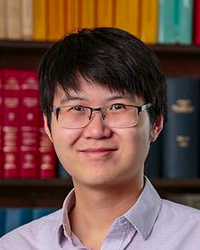
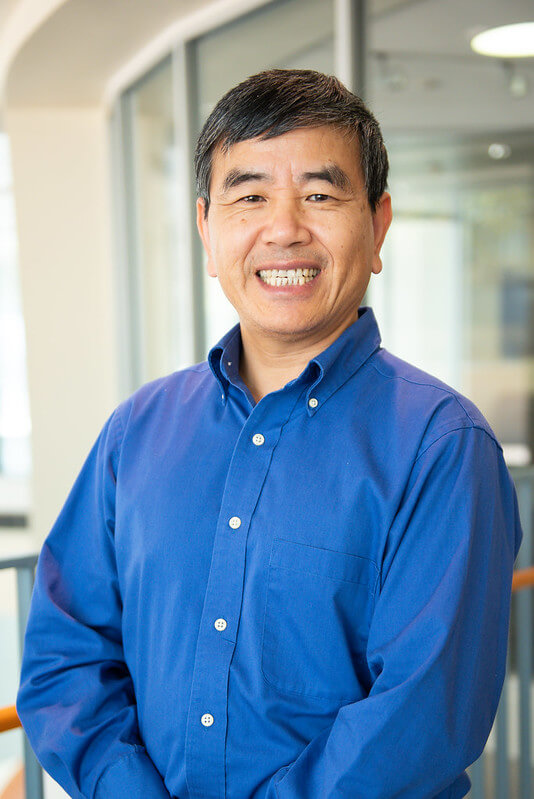
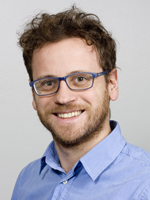
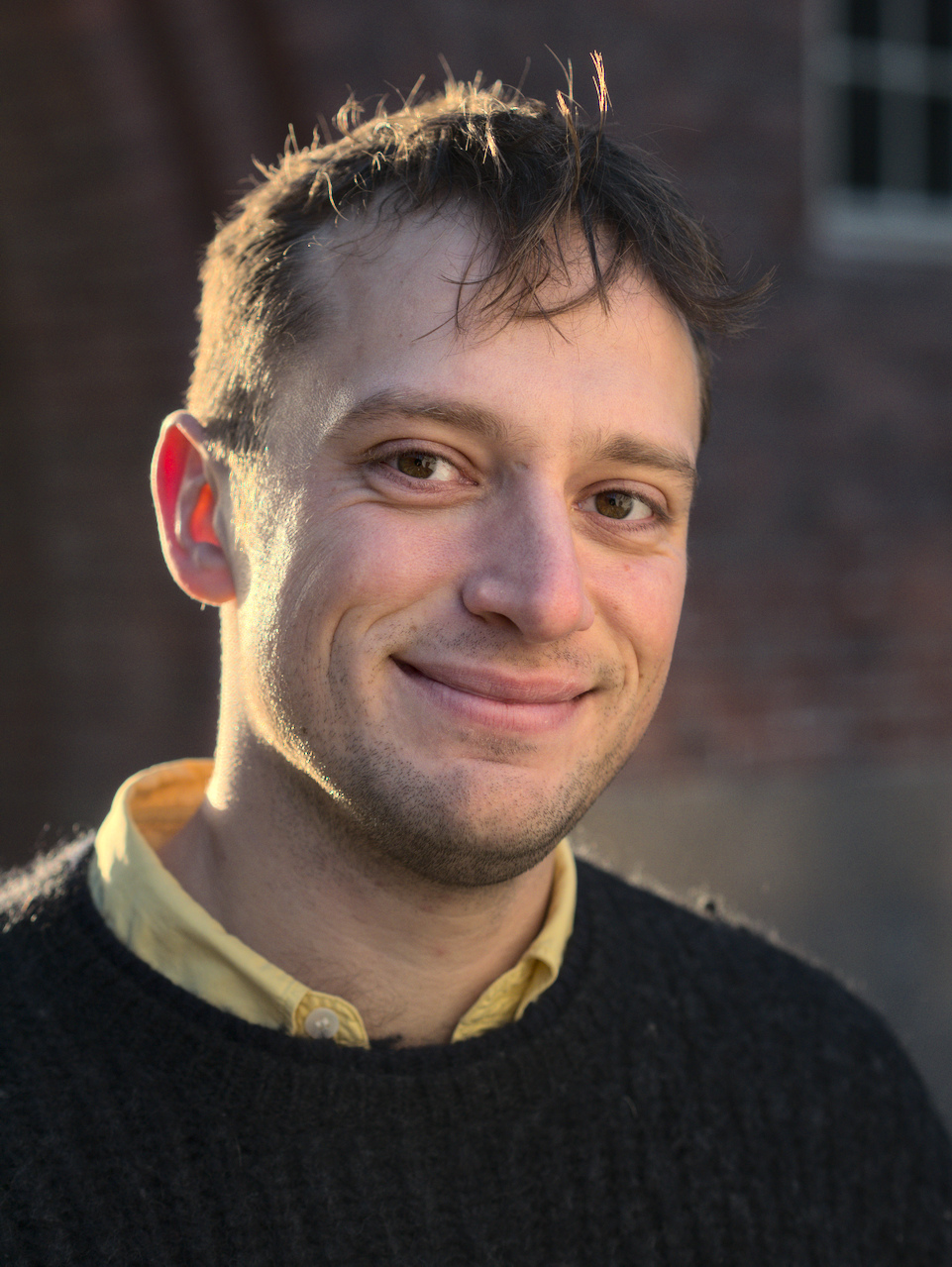
Fang Han is Adjunct Associate Professor of Economics at the University of Washington, with joint affiliation in Statistics. He holds a PhD in Biostatistics from Johns Hopkins University and served as Google PhD Fellow during his doctoral studies. His methodological research develops novel statistical tools for dependence measurement, high-dimensional inference, and time series analysis. Research contributions include: Rank-based correlation measures for complex data structures Bootstrap methods for dependence testing Manifold-adaptive statistical techniques Semiparametric regression methods Han serves as Associate Editor for Bernoulli and editorial board member for Dependence Modeling. His NSF-funded work advances statistical learning theory with applications in econometrics and biostatistics.
Dr Catriona Scrivener is a Researcher at the University of Glasgow's School of Psychology & Neuroscience. Her work focuses on cognitive neuroscience, particularly in neuroimaging techniques like TMS-fMRI and EEG-fMRI. She investigates visual perception, memory recall, and attentional processes using advanced neuroimaging methodologies. Roles: Research Associate, University of Glasgow Affiliations: School of Psychology & Neuroscience Her research interests span visual imagery, neural coding in parietal cortex, and optimizing neuroimaging protocols. She actively contributes to international consensus guidelines for TMS-fMRI methods and explores technical challenges in concurrent neuroimaging. Publications highlight interdisciplinary approaches to neuroimaging, emphasizing methodological rigor and translational applications. She collaborates on projects addressing attentional modulation via parietal alpha stimulation and the role of retinotopy in scene processing. Supervision notes: Listed under supervision by Marios Philiastides, though her primary role is as a researcher.
Francois Rheault is an Adjunct Assistant Professor at Vanderbilt University's School of Engineering, Department of Computer Science, and an Adjunct Professor of Computer Science at Université de Sherbrooke. His work focuses on medical image analysis, neuroimaging, and algorithmic reproducibility. He holds a Ph.D. and M.S. in Computer Science from Université de Sherbrooke, Canada. Research Interests: Development of algorithms and tools for medical image analysis Multimodal neuroimaging (processing, segmentation, statistical analysis) Brain connectivity, development, and clinical pathologies Algorithmic reproducibility and open-source initiatives His publications emphasize tractography, diffusion MRI, and reproducibility in neuroimaging. He leads the development of tools like TractoFlow and scilpy, fostering collaboration with clinicians and researchers.
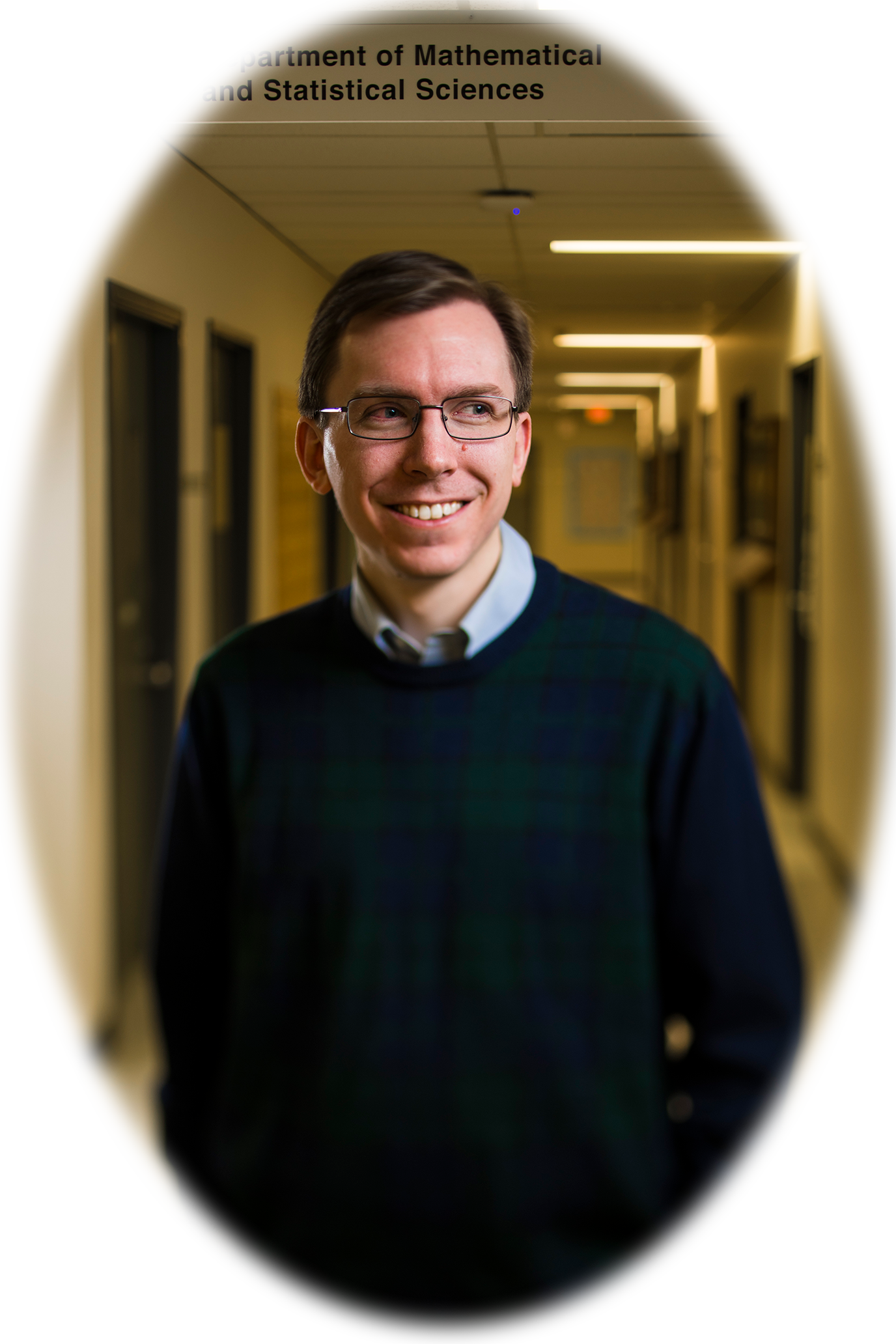
Dr. Kashlak is an Associate Professor in the Department of Mathematical & Statistical Sciences at the University of Alberta. He holds a PhD from the University of Cambridge (2017), MSc from Johns Hopkins University (2011), and BSc from McGill University (2008). His research focuses on nonasymptotic statistics, concentration inequalities, functional data analysis, and probabilistic methods in Banach spaces. He is particularly known for developing permutation and randomization tests, integrating group theory into statistical frameworks, and applying statistical methods to diverse datasets ranging from sleep apnea diagnosis to electoral analysis. **Research Contributions**: His work bridges theoretical statistics and applied problems, with key contributions in covariance operator inference, topological hidden Markov models, and sparse precision matrix estimation. Notable publications include advancements in bootstrap methods for generalized linear models and analytic permutation testing for functional ANOVA. He has collaborated with institutions globally, including the University of Cambridge and Baylor University. **Teaching & Outreach**: He teaches advanced courses like Applied Regression Analysis (Stat 378) and Probability and Measure (Stat 571). His YouTube channels, 'Cache Lack Stats' and 'Cache Lack Math & Stats Lectures', provide accessible explanations of statistical concepts and dataset analyses. He has developed R packages like sparseMatEst for sparse covariance estimation and fdcov for functional data analysis. **Awards & Service**: Kashlak has received an NSERC Discovery Grant ($161,000), SSC New Investigator Award, and multiple grants from the University of Alberta. He organized workshops like the Alberta Math Dialogue (2019) and served as Session Chair at EcoSta 2019 and WNAR 2018. His work has been featured in Significance Magazine and presented at global conferences such as the IMS-Bernoulli Symposium and the RSS Conference. **Lab & Collaborations**: His research group focuses on statistical methodology with applications in healthcare, spatial analysis, and high-dimensional data. He actively mentors students, including Xinyu Zhang, and collaborates with researchers in machine learning and biomedical fields.
Jason Osborne is a Professor in the Department of Statistics at North Carolina State University. He holds a Ph.D. in Statistics from Northwestern University (1997). His research focuses on statistical applications in sports analytics, statistical consulting, and mixture models. Notable contributions include developing the 'hiddenF' R package for testing hidden additivity and the 'MBLDecideR' Shiny app for baseball analysis. Osborne has been recognized with the Dr. D. D. Mason Award (2012-2013). He teaches courses such as ST422 (Mathematical Statistics II), ST431 (Design of Experiments), and ST512 (Statistical Methods for Researchers II). His methodological work spans areas like particle flow measurement and robust statistical software. He consults for departments in the College of Agriculture and Life Sciences, including Bio & Ag Engineering and Poultry Science. Osborne’s research interests also include statistical applications in sports, with recent work on NFL field goal probability estimation and sports analytics. His software contributions emphasize practical tools for statistical testing and data analysis.
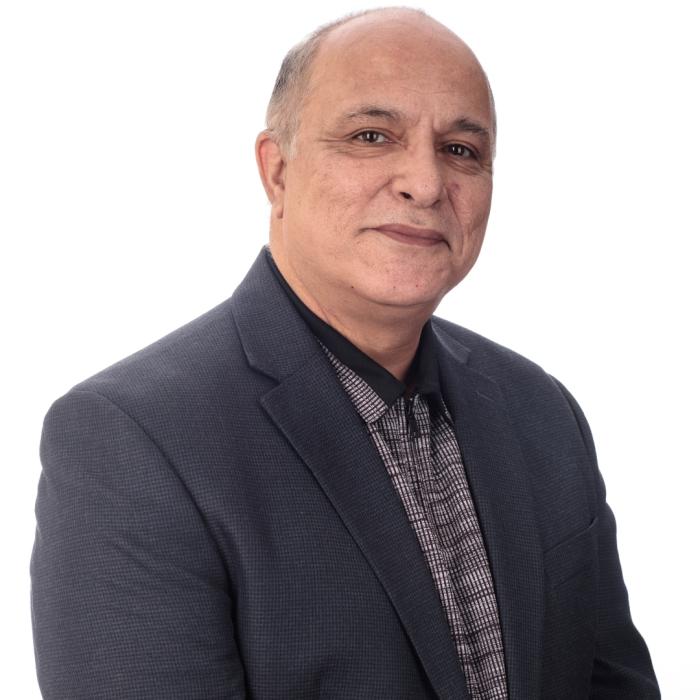
Reza Modarres is a Professor of Statistics at The George Washington University, where he has served since 1991. He held the position of Chair of the Department of Statistics from 2007 to 2013. His expertise spans Statistical Computing, Multivariate Analysis, Environmental Statistics, and Nonparametric Statistics. He received his Ph.D. in Statistics from The American University (1990), following earlier degrees in Computer Science (M.S., 1982) and a combined B.S. in Computer Science and Mathematics (1981). His research focuses on interpoint distances in high-dimensional spaces, nonparametric methods, and applications in environmental and ecological statistics. Notable contributions include work on hotspot detection, multivariate hypothesis testing, and classification algorithms. Modarres has held sabbaticals at the Pennsylvania State University and the U.S. Environmental Protection Agency. His publications emphasize methodological advancements in handling complex data structures, with recent work addressing high-dimensional statistical challenges in classification and outlier detection.
Suojin Wang is a Professor in the Department of Statistics at Texas A&M University, affiliated with the College of Arts & Sciences. His research focuses on biostatistical methodologies, including missing data modeling, nonparametric and semi-parametric techniques, and survey sampling. His work addresses challenges in variance analysis, resampling methods, and small sample asymptotics. Key research areas include developing robust statistical frameworks for handling non-ignorable missing responses, creating efficient estimation methods for functional data, and applying machine learning to healthcare and environmental problems. Recent studies examine opioid treatment program effectiveness, public transit impacts on aging populations, and shale gas reservoir predictions using clustering algorithms. Wang has contributed to over 80 peer-reviewed articles since 2010, focusing on methodological advancements in statistics with applications in health sciences, environmental studies, and energy research. He holds a leadership role in the Texas A&M Department of Statistics, guiding academic and research initiatives.
Tanzy Love, PhD is an Associate Professor in the Department of Biostatistics and Computational Biology at the University of Rochester. She holds a PhD from Iowa State University (2005) and specializes in advanced statistical methodologies with applications in environmental health, genomics, and public health. Her research focuses on clustering algorithms, Bayesian models, and machine learning for complex data analysis. Education: Ph.D. in Biostatistics from Iowa State University (2005). Research Interests: Environmental health statistics, latent variable models, mixed regression, Bayesian ensemble learning, network data analysis, and applications in virology and neurodevelopmental studies. She has contributed to projects involving HIV-1 infection modeling, mercury exposure impacts on child development, and agricultural water safety using machine learning techniques. Her recent work emphasizes scalable statistical methods for large datasets, including spatial network models and ensemble learners. She collaborates on studies involving microbial source tracking, food safety, and public health epidemiology. Key contributions include the HIITE algorithm for HIV infection timing and the SPMM framework for multi-variant infection analysis. Her research has been funded through NIH grants and applied to global health challenges like mercury toxicity and pandemic-related healthcare trends.
Charisios Grivas is an Assistant Professor in the Department of Mathematical Sciences at the Faculty of Engineering and Science, Aalborg University, Denmark. His research lies at the intersection of econometrics, statistics, and environmental modeling, with a strong emphasis on methodological rigor and robust inference. His primary research interests include Econometrics , Statistical Methods , Non-parametric Econometrics , Resampling , Robust Estimation , and Measurement Error Models . He develops and applies advanced statistical techniques to address challenges in linear and time-varying models, particularly in the presence of data imperfections such as measurement errors. The recent articles demonstrate a consistent focus on improving inference in econometric models—especially through automated bandwidth selection, testing for nonlinear dependence, and robust estimation under measurement error. These works span applications in both theoretical econometrics and environmental research, notably in estimating the carbon dioxide airborne fraction. Scientific Awards: No scientific awards mentioned in the provided text. Charisios Grivas actively collaborates with researchers such as Z. Psaradakis and J.E. Vera-Valdés. While no formal advisees are listed, his publications and ongoing research output suggest active supervision and mentorship. There is no mention of specific grants, but his work on measurement error and environmental statistics may be supported by external funding. His research contributes to methodological advancements with practical implications in climate science and economics.
Erin Gordon, MD is an Associate Professor at the School of Medicine , University of California, San Francisco (UCSF). Her research focuses on airway epithelial dysfunction in asthma , particularly how genetic risk variants translate to molecular disease mechanisms . Using conditionally reprogrammed cells , CRISPR , and human biospecimens , her work aims to identify novel drug targets and subpopulations of asthmatics who may benefit from targeted therapies. Education: B.A. in Molecular Cell Biology (UC Berkeley, 2001), M.D. (USC, 2005), Internal Medicine Residency (UCSD), Pulmonary & Critical Care Fellowship (UCSF). Grants: NIH R01AI136962 (2018-2022), K08HL114645 (2013-2018), F32HL107004 (2011). Research Networks: Collaborations with researchers like Maya Kotas , John Fahy , and Prescott Woodruff across UCSF and other UC institutions. Article Trends: Recent publications emphasize genetic mechanisms in asthma , epithelial-immune interactions , and therapeutic innovations in pulmonary diseases.
Riccardo De Bin is an Associate Professor at the University of Oslo, affiliated with the Department of Mathematics and the Statistics and Data Science group. His research focuses on statistical methodology, including high-dimensional data analysis, survival analysis, boosting methods, and resampling techniques. He has contributed to interdisciplinary applications in biomedical research, energy systems, and aviation safety. Research Interests : Asymptotic theory and resampling techniques Variable selection and penalized regression Statistical learning methods for survival analysis Integration of clinical and omics data Applications in energy storage and environmental engineering Recent Work : Recent publications highlight advancements in survival modeling using boosted first-hitting-time approaches, degradation analysis for lithium-ion batteries, and Bayesian methods for nonlinear models. He also addresses methodological challenges in high-dimensional biomedical data and publication bias in statistical practice. Teaching : Teaches advanced courses in statistical learning, including STK2100 (Machine Learning for Prediction), STK4030 (Statistical Learning: Advanced Regression), and STK-IN4300 (Statistical Learning Methods in Data Science).
Oskar Kviman is a doctoral student at KTH Royal Institute of Technology working in the Lagergren Lab within the Division of Computational Science and Technology. His research bridges machine learning, statistics, and computational biology with a focus on developing and applying advanced probabilistic methods. His primary research interests include: Bayesian phylogenetics and probabilistic machine learning Variational inference, variational auto-encoders, and sequential Monte Carlo methods Generative AI techniques including flow matching, Schrödinger bridges, and diffusion models Computational cancer research focusing on differential expression testing and spatial transcriptomics Kviman's publication record demonstrates significant contributions to variational inference methodology, particularly in phylogenetics and generative modeling. His work spans top machine learning conferences including ICML, NeurIPS, and AISTATS, showing consistent development of techniques that improve efficiency and accuracy in probabilistic modeling. Recent publications focus on multi-marginal flow matching, variational resampling, and mixture learning in black-box variational inference. He has been recognized for his peer review contributions as a Top reviewer (10%) for AISTATS 2023. Kviman has supervised master's theses for Xindi Liu and Ricky Molén at KTH and serves as a lecturer for 'Statistical Methods in Applied Computer Science' since 2021, while previously working as a teaching assistant for 'Machine Learning, Advanced Course' and 'Deep Learning, Advanced Course'.
Omer Bobrowski is a Professor in Mathematical Data Science at Queen Mary University of London, affiliated with the School of Mathematical Sciences. His research focuses on stochastic topology, topological data analysis (TDA), and their applications in signal processing and natural language processing. He explores theoretical aspects like phase transitions in stochastic topology and noise distribution in TDA tools, while developing statistical methods for practical applications. His work has been supported by grants from the EPSRC (£396,018, 2024–2027) and the Leverhulme Trust (£330,778, 2024–2027). Collaborators include Primoz Skraba and others in the Centre for Probability, Statistics, and Data Science. Research Interests include: Random Topology, Applied Topology, Stochastic Geometry, and Probability Theory. His lab includes Research Staff Dr. Shu Kanazawa, Dr. Uzu Lim, and Dr. Duncan Parker. Bobrowski’s publications span foundational TDA theory and applied methodologies across diverse datasets.
Ciprian Crainiceanu is a Professor in the Department of Biostatistics at the Bloomberg School of Public Health, Johns Hopkins University. His research spans biostatistical methodology and applications in public health, with a focus on high-dimensional data from wearable devices and medical imaging. Education: PhD, Cornell University, 2003 MS, University of Bucharest, 1998 His research interests include functional data analysis, measurement error, longitudinal modeling, Bayesian inference, and nonparametric statistics, with applications in sleep, aging, multiple sclerosis, Alzheimer’s disease, and cancer. He develops statistical tools tailored to complex data from accelerometers, neuroimaging (MRI, CT, SPECT), and surgical monitoring. His recent work involves dynamic prediction models, step-counting algorithms for NHANES and ARIC data, and methods for high-dimensional functional and imaging data. The most recent publications highlight advancements in wearable data analysis, medical imaging platforms like Neuroconductor, and novel resampling methods such as the upstrap. His work integrates statistical theory, software development, and interdisciplinary collaboration. Scientific Awards: Fellow of the American Statistical Association (ASA) Chair, Statistics in Imaging Section of ASA (two terms) Chair, Biostatistics Methods and Research Design (BMRD) NIH review section Crainiceanu is actively involved in mentoring, teaching, and collaborative research. He co-founded the SMART (Statistical Methods and Applications for Research in Technology) research group and Neuroconductor, fostering interdisciplinary innovation. His work emphasizes scalable, software-backed methods and close collaboration with domain scientists. He has led methodological developments in variance components testing, functional regression, population value decomposition, and dynamic prediction, applied to real-world health challenges. Labs and Research Groups: Co-founder, SMART (Statistical Methods and Applications for Research in Technology) Co-founder, Neuroconductor (open-source platform for medical imaging in R) Wearable and Implantable Technology (WIT) group MAGIC (Methods and Applications Group for Imaging in the Clinic)
Wolfgang Polonik is a Professor in the Department of Statistics at the University of California, Davis, where he conducts research at the intersection of mathematical statistics, nonparametric methods, and topological data analysis. His work combines deep theoretical foundations with applications in high-dimensional and complex data structures. His research interests include Mathematical Statistics, Statistical Learning Theory, Nonparametric Statistics, Shape Constraints, Modality, Nonstationary Time Series, Empirical Process Theory, Topological Data Analysis, and Random Networks . He applies these to problems involving geometric and topological inference, manifold learning, and anomaly detection. The recent publications highlight a strong focus on persistent homology, bootstrap methods for topological features, nonparametric regression on manifolds, and multiscale geometric analysis . His work often bridges theoretical statistics with computational topology and machine learning, particularly through the use of persistence diagrams, level sets, and filament estimation. Collaborations with researchers like W. Qiao and G. Chandler are frequent. Dr. Polonik has served as an Associate Editor for several top-tier journals, including: Journal of the Royal Statistical Society – Series B (2012–2015) Journal of Multivariate Analysis (since 2003) Journal of Statistical Planning and Inference (2004–2012) Annals of Statistics (2007–2012) He is a member of leading professional societies such as the Institute of Mathematical Statistics, American Statistical Association, Bernoulli Society, and International Statistical Institute . While no formal advising or grant information is listed, his editorial roles and publication record reflect significant scholarly impact. He is affiliated with the College of Letters and Science at UC Davis.