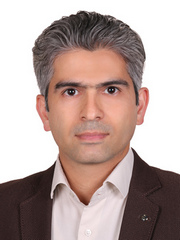
Mahdi Jampourمشاهده پروفایل
پژوهشگر
Dr. Mahdi Jampour is a Researcher at the Centre for the Study of Manuscript Cultures (CSMC), University of Hamburg, and a member of the Cluster of Excellence ‘Understanding Written Artefacts’ (UWA). He holds a Ph.D. in Computer Science (Artificial Intelligence) from Graz University of Technology (2016), with postdoctoral research at Iran Telecommunication Research Center (ITRC) (2016–2017). He previously served as Assistant Professor at Quchan University of Technology (2017–2024) and led Project RFA05 (2022–2025) focusing on visual pattern similarity in written artefacts. Education: Ph.D. in Computer Science (Artificial Intelligence), TU Graz, Austria (2016) Postdoctoral Fellowship, ITRC, Iran (2016–2017) Assistant Professor, Quchan University of Technology (2017–2024) Research Interests: Dr. Jampour specializes in applying AI and computer vision to cultural heritage preservation, including palimpsest analysis, historical document digitization, and pattern recognition. His work integrates generative models, deep learning, and semi-supervised methods to address challenges in manuscript analysis and multispectral imaging. Publications Trends: Recent work focuses on generative AI for palimpsest deciphering, dataset creation for sports and cultural heritage analysis, and facial expression recognition surveys. His articles bridge computer science with digital humanities, emphasizing cultural artifact preservation through technological innovation. Awards: Kazemi-Ashtiani Award (2019) Chamran Award (2017) KUWI Prize (2015) Marshal Plan Fellowship (2015) Best MSc Thesis Award (2009) Advising & Grants: Led UWA’s Project RFA05 (2022–2025) and contributed to international preservation initiatives like the Timbuktu Manuscript Training Project. His research is supported by grants from the Iran National Elites Foundation and the Iranian Ministry of Science. Labs & Collaborations: Active in CSMC’s labs, including the Written Artefact Profiling Guide and Mobile Lab Container projects. Collaborates with institutions globally on digitization and cultural heritage safeguarding.