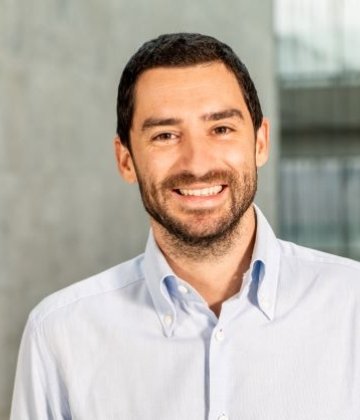
Luca Braghieri is an Associate Professor in the Department of Decision Sciences at Bocconi University. His affiliations include CEPR, CESifo, IGIER (Innocenzo Gasperini Institute for Economic Research at Bocconi), and BELSS (Bocconi Experimental Laboratory for the Social Sciences). He serves as a board member of the Review of Economic Studies (REStud) . Education: PhD in Economics, Stanford University Bachelor’s Degree in Economics, Harvard University Research Interests: Braghieri’s work centers on applied microeconomics , behavioral economics , and political economy . He explores how behavioral insights shape economic decision-making in markets, organizations, and political systems. His affiliations with experimental laboratories like BELSS suggest a focus on empirical and behavioral research methodologies. Advising & Grants: No specific advisees or grants are mentioned in the provided texts. His CV and personal page may contain further details, which are available upon request. Labs & Teams: Active in IGIER and BELSS, which support interdisciplinary economic research and experimental social science studies.
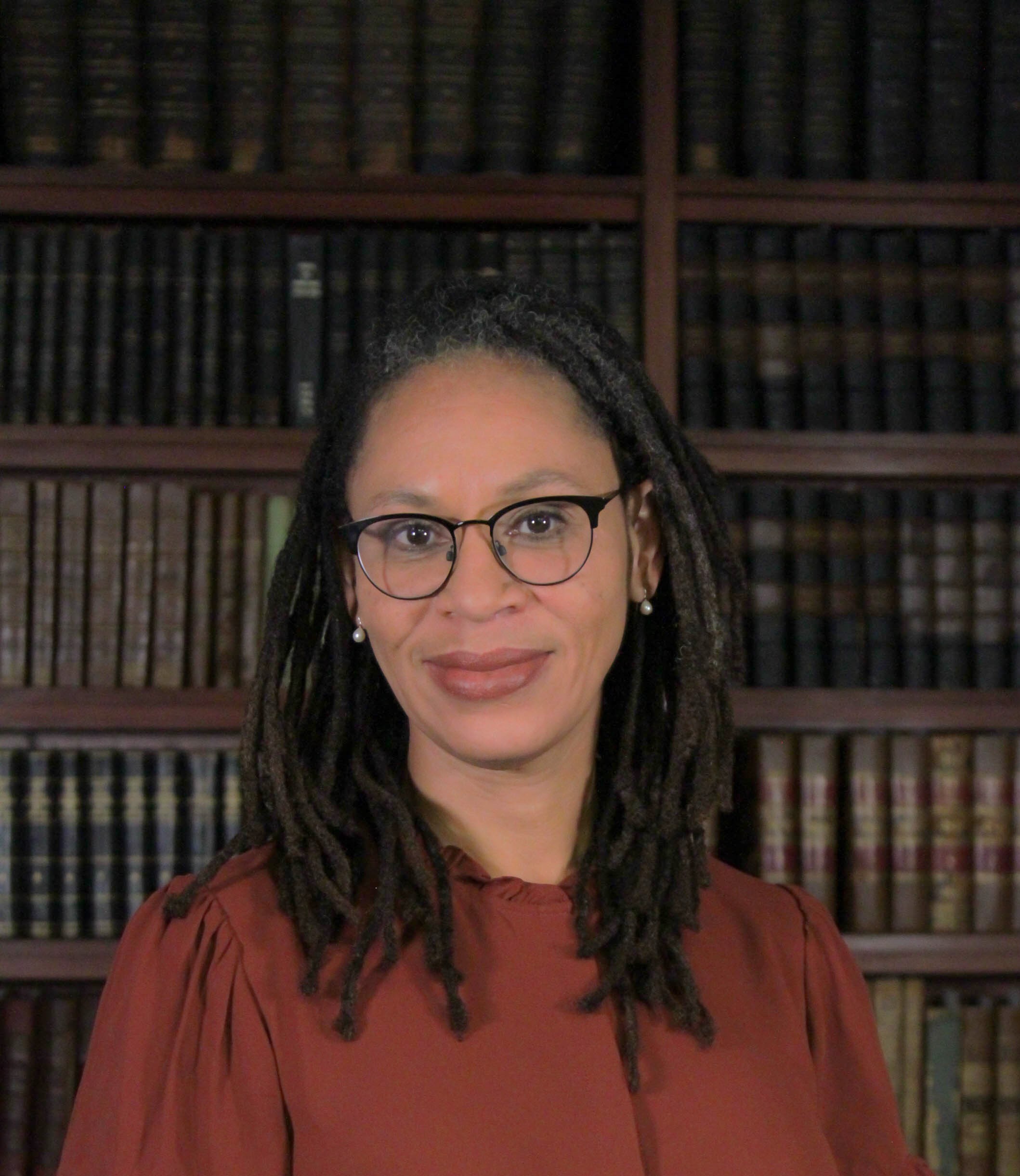
Andrea Armstrong is the Dr. Norman C. Francis Distinguished Professor of Law at Loyola University New Orleans College of Law and a 2023 MacArthur Fellow. She joined the faculty in 2010 and is a leading expert on prison and jail conditions, certified by the U.S. Department of Justice as a Prison Rape Elimination Act auditor. J.D., Yale Law School, 2007 M.P.A., Princeton University School of Public and International Affairs, 2001 B.A., New York University, 1996 Her scholarship focuses on the constitutional dimensions of prisons and jails, particularly prison labor practices, the intersection of race and incarceration, public oversight of detention facilities, and healthcare disparities. She integrates law with history, public policy, and the arts to highlight the human costs of incarceration, advocating for systemic reforms through environmental justice and anti-discrimination frameworks. Andrea’s research includes 15 recent articles, spanning public health in prisons, constitutional challenges to labor practices, and environmental justice analyses of death row conditions. Her work emphasizes transparency, government accountability, and the systemic failures in carceral healthcare. Scientific Awards: 2023 MacArthur Fellow 2019 Interdisciplinary Research Leader, Robert Wood Johnson Foundation Armstrong has testified before Congress on prison labor and deaths in custody, served on Louisiana legislative committees, and collaborated with museums and foundations to make incarceration law accessible. She founded IncarcerationTransparency.org and leads grant-funded projects requiring IRB approval.
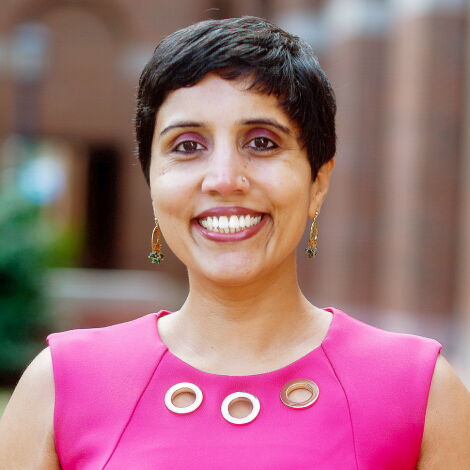
Sreedhari Desai is an award-winning, tenured Associate Professor of Organizational Behavior and Crist W. Blackwell Scholar at the Kenan-Flagler Business School, University of North Carolina at Chapel Hill. Her research focuses on negotiations, ethical decision-making, and gender dynamics in organizations. She holds a PhD in Organizational Behavior from the University of Utah, an MS in Finance, and a BS in Metallurgical Engineering from Punjab Engineering College. Dr. Desai’s academic career includes roles as a visiting assistant professor at Duke University’s Fuqua School of Business and research fellowships at Harvard University’s Edmond J. Safra Center for Ethics and Harvard Kennedy School’s Women and Public Policy Program. She has been honored with prestigious awards such as the Mariner S. Eccles Graduate Fellowship and finalist recognition for the ASPEN Dissertation Proposal Award. Her research explores topics like unethical behavior mitigation, gender and racial disparities in negotiations, and the impact of organizational income inequality. Notable findings include the role of virtuous quotes in curbing unethical requests and the link between marital structure and workplace gender attitudes. Her work has been featured in outlets like Harvard Business Review, Wall Street Journal, and BBC. As an educator, Desai teaches MBA, Master of Accounting, and PhD courses on leadership, negotiations, and ethics. She is a sought-after keynote speaker and consultant for global organizations, military leaders, and Fortune 500 companies, advising on strategic decision-making and ethical practices. Her consulting clients include Boeing, IBM, ExxonMobil, and the U.S. Army. Dr. Desai’s grants and fellowships include funding from the National Stock Exchange of India and UNC’s University Research Council. She has also received the MBA Teaching All-Star award multiple times for her engaging pedagogy.
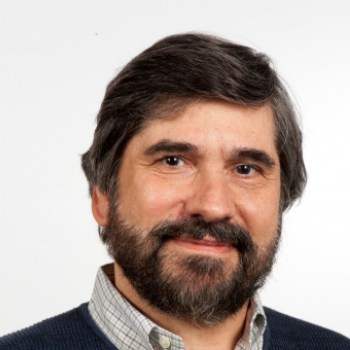
Christos G. Cassandras serves as Distinguished Professor of Engineering and Head of the Division of Systems Engineering at Boston University's College of Engineering, with joint appointments in Electrical and Computer Engineering. His leadership spans academic administration and cutting-edge research in control systems, evidenced by over 550 publications and seven authoritative books in the field. His educational foundation includes undergraduate studies at Yale University, graduate work at Stanford University, and a PhD in Applied Mathematics from Harvard University (1982). This multidisciplinary background underpins his research approach. Dr. Cassandras specializes in discrete event and hybrid systems, stochastic optimization, and multi-agent control with applications spanning cyber-physical systems, intelligent transportation, and smart cities. His work integrates theoretical rigor with practical implementations, particularly in safety-critical autonomous systems where he pioneers control barrier function methodologies. Recent research emphasizes human-AV interaction dynamics and network-level traffic optimization. Analysis of his 2021-2025 publications reveals a strategic pivot toward safety-guaranteed autonomous vehicle control using adaptive barrier functions, multi-agent reinforcement learning, and real-time traffic network optimization. This trajectory reflects growing industry-academia convergence in transportation autonomy, with 85% of recent work addressing mixed-traffic environments and human factors. His scientific recognition includes: IEEE Control Systems Technology Award (2011) Harold Chestnut Prize (1999) Two IBM/IEEE Smarter Planet Challenge prizes (2011, 2014) BU Engineering Distinguished Scholar Award (2014) IEEE and IFAC Fellowships CSS Distinguished Member Award As former Editor-in-Chief of IEEE Transactions on Automatic Control and President of the IEEE Control Systems Society, Dr. Cassandras has shaped global research directions. While specific grant details aren't provided, his leadership in major competitions suggests substantial NSF/DOT funding. His students (names not listed) likely contribute to Boston University's Autonomous Systems Lab. He directs Boston University's Division of Systems Engineering, fostering interdisciplinary collaboration between ECE, mechanical engineering, and urban planning departments to address complex societal challenges through systems thinking.
Dr. Nidhi Hegde is an Associate Professor in the Department of Computing Science at the University of Alberta and a Canada CIFAR AI Chair at the Alberta Machine Intelligence Institute (Amii). Her research focuses on privacy-preserving machine learning, algorithmic fairness, and robust algorithm design for networked systems. Dr. Hegde's current research investigates differential privacy in bandit algorithms, debiasing frameworks for language models, and long-term fairness guarantees for minority groups. Her work combines theoretical foundations with practical applications in distributed systems and multi-agent learning environments. Recent publications address covariate shift effects in optimization, private matroid optimization, and reinforcement learning with functional noise. She teaches graduate courses on Responsible AI and Ethical Issues in Data Analytics, covering topics including data privacy, fairness in algorithms, interpretability, and accountability. Dr. Hegde maintains active research collaborations and previously led privacy research at Borealis AI (RBC's research institute).
Stephen Glaeser is an Associate Professor of Accounting and Associate Dean of the PhD Program at the Kenan-Flagler Business School of the University of North Carolina at Chapel Hill. He holds a PhD in Business Administration from the Wharton School of the University of Pennsylvania, along with an MBA and BA from the Fisher College of Business at Ohio State University. His research focuses on the intersection of accounting and economics, particularly in taxation, innovation, and corporate disclosure strategies. Dr. Glaeser studies how firms balance the benefits of investor communication against risks of revealing non-excludable innovations, and how tax policies influence corporate decisions. He also explores agency conflicts arising from imperfect information. His research interests include intellectual property rights, tax complexity effects on entrepreneurship, and ESG disclosure integrity. He has published in top journals like The Accounting Review , Journal of Accounting and Economics , and Review of Accounting Studies . Notably, he received the 2019 Best Dissertation Award from the American Accounting Association's Financial Accounting and Reporting Section for his work on trade secrets and corporate transparency. Teaching: Courses in managerial and financial accounting. Work Experience: Former Assistant Vice President at Citi Hedge Fund Services and Internal Audit Team Leader at Huntington National Bank. His recent articles highlight trends in AI-driven workforce changes, corporate R&D transparency, and tax policy's role in innovation. He critically examines how firms navigate disclosure challenges while managing risks linked to intellectual property and labor markets.
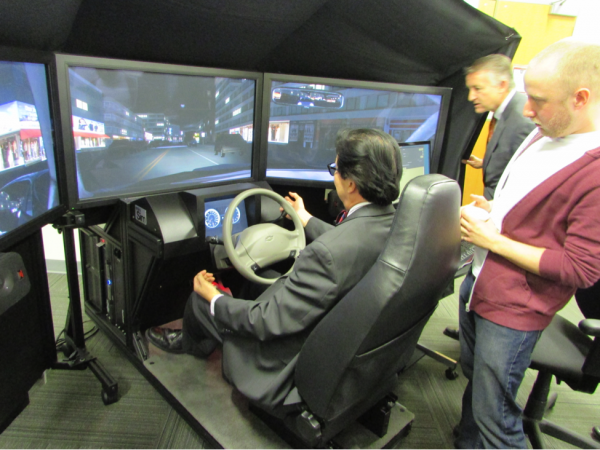
Professor Chris Lee is a faculty member in the Department of Transportation Science and Engineering at the University of Windsor's Faculty of Engineering. His research focuses on advancing transportation safety through the analysis of driver behavior, traffic flow dynamics, and the integration of emerging technologies like autonomous vehicles and machine learning. Key areas include collision risk prediction, driver vigilance assessment, and the development of advanced car-following models. He has contributed to initiatives such as the Transportation Science and Engineering scholarship program, supporting student research in innovative technologies like driving simulators for lane change behavior studies. His work bridges engineering and human factors, addressing challenges such as driver response to autonomous systems, heavy vehicle traffic management, and cross-cultural automotive design. Lee's interdisciplinary approach leverages data analytics, physiological signals, and machine learning to solve real-world transportation problems. His research has implications for policy-making, infrastructure design, and vehicle safety standards. Lee has collaborated extensively on projects analyzing crash precursors, variable speed limits, and the impact of ITS (Intelligent Transportation Systems) on safety. His publications span over two decades, demonstrating a commitment to both academic rigor and practical applications in transportation engineering. Notable contributions include refining car-following models, studying driver aggression, and evaluating the effectiveness of traffic management strategies.
Dr. Gül Calikli is a Lecturer in Software Engineering at the University of Glasgow specializing in empirical software engineering and human factors in software development. Her research investigates cognitive biases, code review practices, and human-centered aspects of software quality. Current work focuses on LLM-generated code evaluation, financial incentive design for software experiments, and variability management in software product lines. She develops methodologies to study developer behavior, team dynamics, and decision-making processes in software projects. Recent publications examine the impact of request formats on effort estimation, financial incentive guidelines for experiments, and vulnerability detection during code reviews. Her research bridges software engineering practice with cognitive psychology and organizational behavior. Dr. Calikli teaches software engineering courses and supervises research in human aspects of software development. She contributes to international collaborations on adaptive decision-support systems and privacy dynamics in social software.
Mary Harrison is a Visiting Associate Professor of Marketing in the Department of Entrepreneurship, Management and Marketing at Samford University’s Brock School of Business. She brings more than a decade of prior experience from Birmingham-Southern College (BSC), where she served from 2011 to 2024 as faculty member, department chair, and program leader. Education Ph.D. in Marketing (concentration in Social Psychology) – University of Alabama MBA – University of Alabama B.S. in Business Administration – Mississippi College (including a semester of study in London) Research Interests Harrison’s scholarship centers on consumer behavior and services marketing, with particular emphasis on customer–firm relationships, service employee behavior, and the emotional dynamics of service encounters. She investigates how consumers react to service failures, penalties, and special requests, and explores factors that create “lock-in” and long-term loyalty. More recently, her work examines the intersection of artificial intelligence and personal branding in higher-education contexts. Across her publications, three consistent themes emerge: (1) understanding and managing customer emotions during and after service experiences; (2) frontline employee decision-making when faced with ethically or operationally “gray” customer requests; and (3) mechanisms—psychological, relational, and technological—that deepen or dissolve customer–brand relationships over time. Scientific Awards & Honors Omicron Delta Kappa Excellence in Teaching Award – Birmingham-Southern College Bob Whetstone Faculty Development Award – Birmingham-Southern College ACS Career Advancement Pathways Program Fellow – Associated Colleges of the South ACS Summer Teaching & Learning Experience Fellow – Associated Colleges of the South Service & Professional Engagement Harrison currently serves on the Editorial Review Board of the Journal of Marketing Theory and Practice and previously acted as Co-Associate Editor for Services Marketing at the Journal of Global Scholars of Marketing Science . She has delivered more than 25 conference presentations or panel discussions at leading marketing academic conferences, and advises Samford’s student chapter of the American Marketing Association.
Anne Thompson is an Associate Professor of Accountancy at the University of Illinois Urbana-Champaign's Gies College of Business, where she also serves as Director of the Ph.D. Programs and holds the Arthur Andersen Faculty Fellow distinction. Her research focuses on auditing, financial reporting quality, regulatory compliance, and corporate governance, with a particular emphasis on assurance services, audit quality, and SEC regulatory processes. Her work addresses issues such as sustainability reporting, auditor litigation risk, and the impact of non-GAAP earnings. Thompson's recent publications (2020–2024) highlight trends in audit quality, regulatory challenges in SEC filings, and the strategic implications of internal controls. Her findings often bridge theoretical frameworks with practical implications for auditors, regulators, and corporate stakeholders. Notable topics include the effectiveness of assurance providers, the role of explanatory audit report language, and the consequences of political connections in regulatory processes. Scientific Awards: Arthur Andersen Faculty Fellow Advising & Grants: Oversees the Gies Ph.D. Program, though specific grant details are not listed in the provided materials. Labs/Teams: No specific lab affiliations are mentioned; however, her research likely involves collaborations within the Gies College of Business and external institutions.
Professor Andrew Bayliss is a Professor in Psychology at the University of East Anglia's School of Psychology, where he serves as Social Cognition Research Group Lead and UEA UOA4 Psychology REF coordinator. He joined UEA in 2011 after completing his PhD at Bangor University and holding postdoctoral fellowships with the ESRC, Leverhulme Trust, and University of Queensland. Undergraduate Degree: Bangor University PhD: Bangor University Postdoctoral Fellowships: ESRC, Leverhulme Trust, University of Queensland His research spans social cognition, attention-action interactions, and individual differences, with specific focus on face perception, eye gaze processing, and objects in social contexts. Utilizing methodologies including eye tracking, motion capture, EEG, and fMRI, his work examines how social cues guide attention and influence behavior. Current projects investigate gaze understanding development, interpersonal agency, and autism interventions using natural scenes. Analysis of his recent publications reveals a strong emphasis on social attention mechanisms, particularly gaze leading phenomena, interpersonal distance effects, and neural correlates of shared attention. His work increasingly integrates autism research with social cognition paradigms while maintaining core investigations into attentional orienting and agency perception. Bayliss actively contributes to the academic community through editorial roles at Psychological Review and Psychonomic Bulletin and Review, peer review activities, and consultancy work including the Social Neuroscience of Cinema Attendance project. He maintains international collaborations, notably with Paris Nanterre University. As Social Cognition Research Group Lead, he oversees a dynamic team investigating the neural and cognitive mechanisms underlying social interactions. His lab employs multimodal approaches to study real-time social processing, with recent work expanding into human-robot interaction and pandemic-related social adaptations.
Professor Lisa Barnett is a leading academic in Physical Activity and Health at Deakin University's Institute for Physical Activity and Nutrition within the Faculty of Health. She currently serves as Associate Head of School for Research and has held progressive academic positions since 2009, advancing from Lecturer to her current Professorship (2022-present). Her internationally recognized work focuses on developing measurement tools and interventions to improve physical literacy, with particular expertise in motor skills assessment. Doctor of Philosophy, University of Sydney Master of Public Health, University of New South Wales Graduate Certificate of Higher Education, Deakin University Bachelor of Social Science, Edith Cowan University Professor Barnett's research has established her as the number one researcher in the world in motor skills according to Expertscape. Her work bridges academic research with practical application through extensive industry partnerships and international collaborations. She developed the pictorial scale for Perceived Movement Skill Competence in 2016, now used in 35 countries, and co-led the development of the Australian Physical Literacy Definition and Framework in 2019. In 2021, she led development of an innovative pictorial tool to measure children's physical literacy for the Australian Sports Commission, requested by researchers from 22 countries across 17 language groups. Her research interests focus on Motor Skills, Physical Self-Perception, Physical Literacy, and Physical Activity measurement and intervention. Her recent publications demonstrate strong continuity in her research program, with 2025 articles focusing on physical literacy measurement tools, motor competence assessment, and interventions targeting children's physical activity. These works show increasing methodological sophistication with applications of artificial intelligence, longitudinal program evaluation, and digital health approaches. Number one researcher in the world in motor skills (Expertscape) Past President of the International Motor Development Research Consortium Co-leads the Physical Literacy Special Interest Group for the Asia Pacific Society of Physical Activity Professor Barnett has secured substantial research funding, including current grants such as 'Culturally adapting the Resistance Training for Teens movement intervention for Middle Eastern adolescent girls' and 'Implementation of a physical activity and physical literacy tool in schools.' She actively supervises doctoral students across diverse topics related to physical literacy, motor competence, and inclusive physical activity practices. Her leadership extends to directing research centers and contributing to national frameworks, demonstrating significant impact beyond traditional academic boundaries. She leads the Institute for Physical Activity and Nutrition research group and has been instrumental in developing international physical literacy standards and assessment tools that are transforming how children's movement skills are measured and developed worldwide.
Dr. David Smith is a Reader in the School of Allied Health and Social Care at Anglia Ruskin University, specializing in social and health inequalities, with particular expertise in Gypsy, Roma and Traveller (GRT) communities. His work focuses on understanding social divisions, health beliefs and practices, and the internationalization of the healthcare workforce, especially concerning Filipino nurses migrating to the UK. Education: Post Graduate Certificate in Learning and Teaching (Higher Education), Canterbury Christ Church University, 2010, 2:1 PhD Social Policy, Royal Holloway College, University of London, 2003 BA (Hons) Sociology and Social Policy, Royal Holloway College, 1996, 1st class Certificate in TESOL, Trinity College London, 1996, 2:1 Dr. Smith's research interests span social theory, social and health inequalities, and the experiences of marginalized communities, with a particular focus on Gypsies, Roma and Travellers. His work examines health beliefs and practices, neighborhood dynamics, and the internationalization of the healthcare workforce, particularly focusing on the Philippines. He has extensive expertise in community-based research with working-class communities and GRT populations, especially regarding housing settlement impacts. His research often employs qualitative and ethnographic methods alongside participatory approaches to health development. Dr. Smith's recent publications reveal a strong focus on health inequalities among marginalized populations, particularly Gypsy, Roma and Traveller communities in the UK. His work consistently addresses structural barriers to healthcare access, cultural factors affecting health beliefs and practices, and the experiences of migrant healthcare workers. There's a clear progression from his early work on social exclusion and housing to more recent studies on international nurse migration and end-of-life care for minority communities. His research demonstrates interdisciplinary approaches, bridging sociology, public health, migration studies, and social policy. Scientific Awards: 2006 Social Policy Association Prize for Best New Publication (for "On the Margins of Inclusion") 2018 Emerald Literati Award for Outstanding Paper (with Dr. Zoe James) 2018 Sam Aaronovitch Memorial Prize for Winning Paper Dr. Smith has successfully secured numerous research grants totaling over £300,000 as Principal Investigator or Co-Investigator. His funding comes from diverse sources including the British Academy/Leverhulme Trust, EU Fundamental Rights Agency, Health Education England, and various university internal funds. Current projects include investigating national legislation regarding Gypsy/Traveller accommodation (2024-2026), studying UK/Philippines Migrant Nurse networks, and examining older EU migrants' access to health services post-Brexit. He supervises PhD and Master's students, particularly those researching GRT communities, working-class studies, migration, and qualitative research methods. Dr. Smith actively participates in several research networks and communities, including the European Academic Network on Romani Studies, the Working Class Studies Association, and the Network of Academic Institutions in Romani Studies where he serves as Institutional Representative. He is also Editorial Board Member of Romani Studies and Advisory Board Member of The Traveller Movement. His work extends beyond academia through his role as Trustee of Medway Plus, a registered charity.
Ayushi Rastogi is an Assistant Professor at the University of Groningen, affiliated with the Software Engineering group in the Bernoulli Institute under the Faculty of Science and Engineering. She holds a PhD from IIIT-Delhi and has conducted postdoctoral research at TU Delft and the University of California, Irvine, with additional experience as a visiting researcher at Microsoft Research. Her research focuses on data analytics and AI-driven solutions for software engineering challenges, particularly in open-source ecosystems and developer communities. Key interests include psychological safety in OSS, pull request dynamics, and fairness in software practices. She actively contributes to EDI initiatives through Informatics Europe and the Netherlands' IPN EDI committee. Her work combines empirical software engineering and repository mining to address real-world software challenges. Notable contributions include analyzing fork sustainability in developer communities and exploring code review velocity. She has received the MSR Rich Holt Early Career Achievement Award 2025 and serves as an Associate Editor for IEEE Software. Her GitHub repository 'fsoc' investigates fork impact on developer community sustainability, and she leads projects like OpenDataology for AI dataset compliance. Awards include the 2022 Best Disruptive Paper Award (ISSRE) and supervision of the MSR 2024 Distinguished Doctoral Award-winning thesis by Dr. Gunnar Kudrjavets. She chairs MSR 2025 and frequently presents on topics like gender equality in tech and burnout prevention. Her research spans compiler analysis, memory management, and EDI policy design in ICT sectors.
Shane Halse is an Assistant Professor at the University of Cincinnati in the School of Information Technology , specializing in crisis response and social media technologies for emergency communication. PhD in Information Science and Technologies, Pennsylvania State University (2019) MSE in Software Engineering, Pennsylvania State University (2014) BSP in Psychology and BSEE in Electrical Engineering, University of Central Florida (2008, 2011) His research focuses on enhancing emergency responders' decision-making through social media data analysis , trust detection , and information filtering during disasters. He has contributed to frameworks for multimedia emergency protocols and hyperlocal data collection . Recent publications analyze crisis social media dynamics (e.g., retweetability, trust metrics, sensor data integration), reflecting his expertise in sociotechnical systems for disaster management. Grants include collaborations with the National Science Foundation and Texas Tech University on Next-Generation 911 training and technology. Key contributions appear in journals like Information, Communication & Society and conferences such as ISCRAM and Hawaii International Conference on System Sciences .