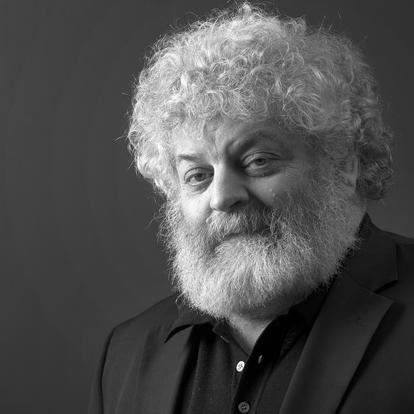
George J. Mailath is the Walter H. Annenberg Professor in the Social Sciences and Professor of Economics at the University of Pennsylvania, and an Honorary Professor at the Research School of Economics, Australian National University. He specializes in microeconomics, noncooperative game theory, repeated games, and the theory of reputations. His research explores pricing strategies, evolutionary game theory, and social norms. Mailath is a Fellow of prestigious institutions including the American Academy of Arts & Sciences and the Econometric Society. He served on the Econometric Society Council (2013-2015, 2020-2023), Game Theory Society Council (2005-2011), and co-founded Theoretical Economics . His editorial roles include editorships at Econometrica , Review of Economic Studies , and others. His 2019 book Modeling Strategic Behavior provides graduate-level insights into game theory and mechanism design. Mailath’s articles focus on strategic interactions, reputation effects, and dynamic game theory. Notable works include analyses of trust in risk-sharing mechanisms and coalition-proof strategies under frictions. His research emphasizes long-term strategic behavior and institutional design.
Jonas Tallberg is a Professor of Political Science at Stockholm University and Co-Director of the Stockholm Center on Global Governance . His research focuses on global governance, European Union politics, and legitimacy dynamics in international organizations. Primary Affiliation: Department of Political Science, Stockholm University Research Leadership: Directs DemCoop (European Research Council-funded) and GGAI (Marianne and Marcus Wallenberg Foundation-funded) Editorial Roles: Serves on editorial boards of International Organization , European Political Science Review , Cooperation and Conflict , and Political Research Exchange Key Research Areas: Legitimacy in Global Governance EU Institutional Dynamics Artificial Intelligence Governance International Organization Performance Transnational Actor Participation Comparative Global Governance Frameworks Publications Trends: Focus on legitimacy-building mechanisms in international institutions Analysis of EU decision-making and institutional design Emerging AI governance frameworks Methodological contributions to content analysis Comparative studies of democratic and autocratic regimes Performance indicators in international organizations Scientific Recognition: Wallenberg Scholar (2024) Friedrich Wilhelm Bessel Research Award (2012) Distinguished Mentor Award (2023) Multiple grants from European Research Council, Swedish Research Council, and Wallenberg Foundations Academic Leadership: Former Chair of SNS Democracy Council (2009-2011, 2023) Executive Committee of European Consortium for Political Research (2009-2015) Recipient of research grants from Riksbankens Jubileumsfond, Fulbright Commission, and other major institutions
Edward H. Hagen is a Professor of Evolutionary Anthropology at Washington State University, Vancouver. He holds a BA in Mathematics from UC Berkeley and a Ph.D. in Anthropology from UC Santa Barbara (1999). His postdoctoral work was at Humboldt University, Berlin, under Peter Hammerstein. Since 2007, he has been at WSU, leading the Bioanthropology Lab. His research integrates evolutionary approaches to medicine, focusing on substance use, mental health, child development, and leadership evolution. Key themes include evolutionary medicine, signaling theory in depression/suicidality, and the role of pharmacological plant use in human evolution. He has conducted fieldwork in the Central African Republic, Ecuador, and India. Hagen's work spans theoretical models (e.g., depression as bargaining signals) and empirical studies (e.g., tobacco use and helminth infection in hunter-gatherers). He has secured over $387,000 in grants, including NSF funding for projects on leadership, child signals of need, and smoking behavior. His lab explores topics like music's evolutionary roots (credible signaling hypothesis) and predator deterrence. He is active in academic discourse, critiquing popular theories like Dunbar's social bonding hypothesis for music evolution. His publications span evolutionary psychology, anthropology, and medical journals, emphasizing interdisciplinary approaches.
Ulrich Berger is a Professor of Economics at the Department of Economics of WU Vienna University of Economics and Business (WU Vienna). He serves as Editor-in-Chief of the journal Games and is actively involved in promoting science through the Vienna Skeptics Society. His research focuses on game theory, including non-cooperative, evolutionary, behavioral, and experimental variants. He has been recognized with multiple awards, including the WU Best Paper Award and an Outstanding Reviewer Award. His work explores dynamics of cooperation, reputation systems, and strategic behavior in economic contexts. Key research areas include evolutionary stability in reputation games, indirect reciprocity, and cognitive hierarchies in strategic interactions. His publications span peer-reviewed journals like PLoS ONE and Scientific Reports , as well as popular science articles in outlets like derStandard.at . Berger has led research projects on topics such as cognitive hierarchies in minimizer games and has contributed to policy discussions on access pricing in telecommunications. His academic contributions reflect a blend of theoretical rigor and practical engagement, with recent work emphasizing evolutionary mechanisms of deterrence and experimental validation of equilibrium concepts.
R. Edward Freeman is Stephen E. Bachand University Professor of Business Administration and Olsson Professor of Business Administration at the University of Virginia Darden School of Business. He serves as academic director of the Institute for Business in Society and previously directed Darden's Olsson Center for Applied Ethics from 1986 to 2009. Freeman maintains additional academic appointments as adjunct professor of stakeholder management at Copenhagen Business School, visiting professor at Nyenrode Business School, and adjunct professor of management at Monash University. Freeman's research focuses on stakeholder management, business ethics, and business strategy. His work explores how businesses can create value for multiple stakeholders without tradeoffs. He has developed innovative teaching methods incorporating theater, music, and philosophy into business education, including the popular 'Leadership and Theater' course. His publications reveal a consistent focus on stakeholder theory applications across diverse contexts, from sports ethics and gender equality to sustainable business practices and organizational decision-making. Recent work examines contemporary issues like transgender athletes in sports, sustainable food systems, and ethical leadership in crisis situations. His scientific achievements have been recognized through numerous awards: Seven honorary doctorates from institutions across Europe and Canada Lifetime Achievement Awards from World Resources Institute, Aspen Institute, Humboldt University, Academy of Management, and Society for Business Ethics Multiple teaching awards from Wharton, Carlson School, Darden, and Virginia State Council Freeman has advised numerous global corporations and has served as Co-editor in Chief of the Journal of Business Ethics. His stakeholder theory framework has influenced business practice worldwide and been translated into multiple languages. Beyond academia, he co-founded Stakeholder Media LLC, hosts The Stakeholder Podcast, and is active in music as a co-founder of Red Goat Records.
Josep Llach is a Senior Lecturer at the Barcelona School of Management, Universitat Pompeu Fabra, and a part-time Professor Agregat in the Department of Business Administration, Management and Product Design at the University of Girona. He is an active researcher in innovation management, organizational innovation, sustainability, and operations, with extensive involvement in European and national research projects. University: University of Girona Department: Department of Business Administration, Management and Product Design Secondary Affiliation: Barcelona School of Management, Universitat Pompeu Fabra Academic Rank: Senior Lecturer Part-Time: Yes His research focuses on the intersection of innovation, quality, and sustainability in manufacturing and service firms. He studies how lean practices, digital transformation, circular economy strategies, and green technologies impact firm performance. His work often employs advanced statistical methods such as structural equation modelling and fuzzy-set qualitative comparative analysis. The recent publications highlight a strong trend toward sustainability, digital transformation, and methodological robustness in empirical models. His work spans industries including manufacturing, hospitality, and education, with a methodological emphasis on survey-based research and configurational analysis. Scientific Awards: Emerald Literati Awards – Most Outstanding Paper in 2018 for 'Creating value through the balanced scorecard: how does it work?' Top Downloaded Paper 2018–2019: 'Socially responsible companies: Are they the best workplace for millennials?' Josep Llach has directed five doctoral theses and actively mentors PhD students. He collaborates with the Catalan University Quality Assurance Agency (AQU) as a methodological secretary in accreditation processes. His research is supported by multiple national and European grants, particularly through participation in the European Manufacturing Survey. He is a member of the Grup de Recerca Avançada sobre Dinàmica Empresarial i Impacte de les Noves Tecnologies a les Organitzacions (GRADIENT), a research group focused on organizational dynamics and the impact of new technologies.
Arnaud LACAN is a Permanent Professor at KEDGE Business School , specializing in Management . With a Doctor of Economics and Political Science background, he combines 15 years of managerial experience in insurance (MAIF Group) with academic work since 2017. His expertise focuses on postmodern management , collaborative management practices , and social and solidarity economy (SSE) . Education : Doctor of Economics Graduate in Political Science Research trends from his 15 most recent publications (2016-2024) emphasize managerial transformation , value-based governance in SSE organizations, and workplace wellbeing . Key themes include occupational health policies , collaborative leadership , and sustainable management across 18 works. Awards : DISC Certified He contributes to academic discourse through publications with keywords spanning organizational ethics , psychosocial risks , and innovative governance . His work bridges theory and practice through executive education programs on team management and leadership .
Dr. Pedro Henrique D. Batista is a Senior Research Fellow at the Max Planck Institute for Innovation and Competition, specializing in intellectual property law with a focus on innovation, biotechnology, genetic resources, and traditional knowledge. His research addresses regulatory frameworks for biodiversity, patent law reforms, and the intersection of IP with public health and climate change. Education: PhD in Law, Ludwig-Maximilians-Universität München (2013-2024) LL.M., Ludwig-Maximilians-Universität München (2012-2013) Bachelor of Law, University of São Paulo (2006-2011) Research explores the legal challenges of emerging technologies, including CRISPR and digital genetic sequences, and policy solutions for equitable innovation. His work critically examines international agreements like the Nagoya Protocol and TRIPS flexibilities. Publications emphasize regulatory coherence in intellectual property, with recent focus on WIPO reforms, antimicrobial resistance incentives, and climate-related patent frameworks. Articles frequently engage with EU law, Latin American IP systems, and global governance. Awards: Finalist, Best Diploma Thesis Award, University of São Paulo Law School (2011) Coordinates the Smart IP for Latin America Initiative and contributes to international bodies like the CBD Working Group on Digital Sequence Information. Part-time roles included editorship of GRUR International and IIC journals.
Molly Crockett is a Professor at Princeton University's Department of Psychology and affiliated with the University Center for Human Values . Her research integrates cognitive science, social psychology, philosophy, and data science to examine how systems of power shape knowledge production, and how technologies like artificial intelligence reinforce social inequalities. Education: Ph.D. from the University of Cambridge Her lab focuses on epistemic injustice , using behavioral experiments, computational modeling, and machine learning to study moral cognition, narrative testimony, and the cultural evolution of ethics. Recent work highlights AI's role in distorting scientific understanding and explores how social norms constrain self-knowledge. Key article trends include analyses of algorithmic bias in social networks, moral outrage dynamics, and the interplay between self-perception and societal expectations. She actively mentors postdoctoral, PhD, and undergraduate researchers, emphasizing diversity and inclusion in scientific practice. Publications span topics from neurobiological markers of guilt to positive illusions in relationships , reflecting her interdisciplinary approach. Her lab avoids tech industry funding to maintain research autonomy.
Zhang Yi-Cheng is a Full Professor of Theoretical Physics at the University of Fribourg, Switzerland, since 1992. His academic career includes visiting professorships at Nordita (Denmark) and INFN (Italy), and postdoctoral research at Brookhaven National Lab (USA). He specializes in interdisciplinary fields such as Econophysics , Statistical physics , and Complex network sciences , focusing on applications in financial markets, social systems, and global trade networks. His research explores topics like market dynamics, network structures, and algorithmic ranking systems. Notable awards include the 2011 Honorary Director of the Complexity Sciences Research Center and recognition as a 2011 Chinese '1000 Talents' awardee . His work bridges physics-based methodologies with socio-economic systems, addressing challenges in information-driven economies and networked societies. Zhang has contributed to influential studies on ranking algorithms, percolation theory in networks, and the interplay between economic complexity and trade. His interdisciplinary approach has led to advancements in understanding systemic risks, market inefficiencies, and the role of information in shaping global economic interactions.
Gita Reese Sukthankar is a Professor in the Department of Computer Science at the University of Central Florida (UCF) , where she directs the Intelligent Agents Lab . Her research focuses on activity and plan recognition , with applications in multi-agent systems, robotics, and human-robot interaction. She earned her Ph.D. from the Robotics Institute at Carnegie Mellon University and joined UCF in fall 2007. Research Interests: Her work spans activity recognition , intent inference , multi-agent coordination , and human-robot teams . She has applied these techniques to domains such as adversarial games (e.g., military simulations, Unreal Tournament), assistive technologies, and cooperative robotics. Her research integrates AI, machine learning, and probabilistic models to understand and predict complex team behaviors. Publication Trends: Her publications emphasize spatio-temporal modeling , probabilistic graphical models (e.g., HMMs, CRFs) , and multi-agent plan recognition . She frequently publishes in top venues like AAMAS, AAAI, and ICRA, with a focus on robust recognition of team behaviors, transfer learning, and real-world AI applications. Scientific Awards: NSF CAREER Award (2009) AFOSR Young Investigator (2009) ONR Summer Faculty Fellow (2008) UCF Faculty Excellence for Doctoral Mentoring (2012) CECS Dean's Research Professorship (2013) AAAI Senior Member (2021) ACM and IEEE Senior Member Advising and Grants: She mentors graduate students in AI and robotics and has led research funded by DARPA, AFOSR, and ONR. Her lab develops systems for intelligent agents that can understand and collaborate with humans. She has served on numerous program committees and editorial boards, including ACM Transactions on Autonomous and Adaptive Systems . She teaches courses such as Intelligent Systems , Robotics , and Machine Learning , and has been recognized for both research and teaching excellence. Labs and Teams: She leads the Intelligent Agents Lab at UCF, which focuses on data-driven social informatics and AI for human-agent teams. Her group collaborates with researchers in robotics, computer vision, and cognitive science to build adaptive, intelligent systems.
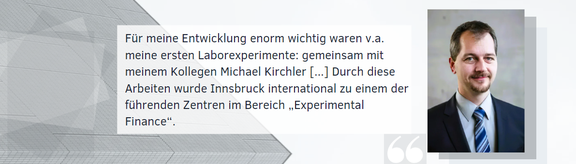
Jürgen Huber is a Full Professor in Finance and Head of the Department of Banking and Finance at the University of Innsbruck. He has been a central figure in experimental finance since 1998, founding the Society for Experimental Finance and leading international collaborations with institutions like Stockholm School of Economics and VU Amsterdam. Education: PhD in Political Sciences (2001) and Business Administration (Habilitation, 2007), both from University of Innsbruck. Research Interests: His work spans Experimental Economics , Behavioral Finance , and Meta Science , focusing on market microstructure, replicability of scientific research, and communication behavior. Recent projects explore: Climate change policy through CO2 taxation and climate dividends . Digital finance implications of cryptocurrencies and NFTs . Communication differences (face-to-face vs. online) and their impact on decision-making. Scientific objectivity in peer review via the Nobel and Novice project. Article Trends: His 2024 publications in Nature Human Behaviour and PNAS emphasize replicability crises, climate economics, and communication behavior. Earlier work in Management Science and Journal of Economic Behavior and Organization analyzes market microstructure, financial transaction taxes, and crowd-sourced research validation. Scientific Awards: Voted Professor of the Year by students (2019-2023), with multiple FWF and OeNB grants totaling over €1 million. Received the Pater Johannes Schasching SJ-Preis (2016) and Forschungspreis der Stiftung Südtiroler Sparkasse (2015). Teaching: Integrates research into interactive lectures, including lab-based simulations for stock market experiments. Taught at universities in Austria, Germany, USA, Thailand, Vietnam, and Indonesia.
Tariq Thachil is Professor of Political Science and Madan Lal Sobti Professor for Contemporary India at University of Pennsylvania, where he directs the Center for Advanced Study of India. His research examines political parties, urbanization, identity politics, and governance in India. Core research themes: Urban migrant political integration Brokerage systems in informal settlements Ethnic politics and welfare distribution Hindu nationalism's electoral strategies Recent publications include award-winning book 'Migrants and Machine Politics' (2023), analyzing how poor migrants navigate urban politics through local brokers. Fieldwork-based studies reveal how slum leaders build reputations through responsive governance across ethnic lines. Pandemic research documented COVID-19 impacts on informal settlements. Methodological innovations combine ethnography, surveys, and experiments to study political behavior. Current projects examine environmental politics and governance in India's understudied small towns.
Prof. Dr. Reinhold Decker is a full professor of business administration with a focus on marketing and market research at Bielefeld University's Faculty of Economics, where he has been affiliated since 1997. He currently serves as the Rector's Representative for Cooperation with Business, BRIC, and Research Transfer (since October 2023), following previous roles as Vice Rector for Information Infrastructure and Business (2019-2023), Vice Rector for Information Management (2015-2019), and Vice Rector for Financial Affairs and Resources (2012-2015). He is also the Scientific Director of BI2000plus - Research Projects on the Region since 2005 and a member of the Bielefeld Graduate School of Economics and Management (BiGSEM). Decker earned his degree in industrial engineering with a focus on OR/Computer Science in 1988, received his doctorate in 1993, and completed his habilitation in 1997, all from the University of Karlsruhe (KIT). His academic career includes visiting professorships at the University of Vienna, Moscow Academy of Economics, University of Veliko Turnovo, Universidade NOVA de Lisboa, Université Paris III – Sorbonne Nouvelle, and the University of Maryland. His research focuses on the development and empirical testing of methods and models for acquiring and analyzing consumer data, particularly from social media, and data-driven, consumer-centric development of intelligent products and services. His work spans social media analysis, buyer behavior modeling, brand image analysis, web mining in marketing, and internet-based preference measurement. Decker's interdisciplinary approach bridges marketing, data science, and consumer behavior, with increasing emphasis on intelligent systems and digital transformation in marketing contexts. Analysis of his 15 most recent publications reveals a strong focus on emerging technologies in marketing, including augmented reality, voice assistants, and social media analytics. His research increasingly examines privacy concerns in the digital age, sustainability communication, and the integration of AI in consumer decision-making processes. The interdisciplinary nature of his work is evident in publications spanning marketing journals, data science publications, and technology-focused outlets. Member of the Scientific Council of the journal Argumenta Oeconomica Cracoviensia (since 2013) Associate Editor of the journal Behaviormetrika (since 2012) Member of the Editorial Board of the Springer series Studies in Classification, Data Analysis, and Knowledge Organization (since 2004) Vice President of the European Association for Data Science – EuADS (2018-2022) Decker has served on numerous editorial boards and scientific program committees, including for the International Federation of Classification Societies. His extensive reviewing work spans prestigious journals such as Journal of Business Research, Journal of Product Innovation Management, and Review of Managerial Science. His leadership extends to project management, including BiLinked (2025), Bielefeld 2000plus (2024), and Bielefelder DatenNarrative (2022). Decker has also edited multiple volumes and special issues on data analysis and marketing, demonstrating his commitment to advancing methodological approaches in business research. As Scientific Director of BI2000plus, Decker leads interdisciplinary research projects focused on regional development. His work bridges academia and industry through initiatives like the Bielefeld Center for Data Science (BiCDaS) and the Bielefeld Graduate School in Theoretical Sciences. His recent projects emphasize data narrative techniques, linking data analysis with effective communication strategies for diverse audiences.
Matthew Embrey is an Associate Professor in Economics at the University of Sussex Business School, where he has been since July 2015. Previously, he served as an Assistant Professor at Maastricht University (2009–2015) and earned his PhD in Economics from New York University in 2009. His research focuses on Microeconomics and Experimental Economics, particularly using experiments to analyze strategic behavior in contexts like bargaining, cooperation, and repeated games. He has published extensively in top journals such as the Quarterly Journal of Economics and Games and Economic Behavior . His academic training includes a PhD from NYU and prior roles at Maastricht University, where he taught courses in behavioral economics and experimental methods. Teaching interests span microeconomics, game theory, and experimental economics at both undergraduate and graduate levels at Sussex and Maastricht University. He has received grants from the British Academy and the European Union for research on bargaining dynamics and evolutionary stability. Education: PhD in Economics, New York University, 2009 Previous roles: Assistant Professor at Maastricht University (2009–2015) Grants: "Bargaining and reputation: understanding commitment tactics" (British Academy, 2022–2025) "Observable Stability" (European Union, 2018–2022) His recent work explores topics like collusion in repeated games, experimental studies of renegotiation-proof strategies, and the impact of strategy revision on cooperative behavior. He has also contributed methodological insights in experimental econometrics through collaborations with leading scholars.