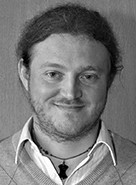
Simone Fior is a Lecturer at the Department of Environmental Systems Science , ETH Zürich , focusing on ecological genetics and plant adaptation. Their research integrates genomic, quantitative genetics, and ecological field experiments, particularly on Dianthus (Caryophyllaceae) along altitudinal and climatic gradients. Recent work explores climate-induced range shifts, local adaptation, and genomic responses to environmental changes. Professional experience includes roles at ETH Zürich since 2013 (Senior Assistant, Postdoc) and prior positions at the Edmund Mach Foundation (2009-2012) and University of Insubria (2007-2008). Education spans a PhD in Plant Biology (University of Milan, 2007) and an MSc in Natural Sciences (University of Milan, 2003). Simone co-organizes the Bioinformatics for Adaptation Genomics Winter School . Key research areas include adaptive divergence , polygenic adaptation , climate change biology , and phylogenomics . Articles emphasize genomic selection signatures, functional-structural modeling, and ecological-genetic interactions. Notable collaborations involve Jake Alexander, Alex Widmer, and interdisciplinary teams at ETH Zurich.
Sabrina Stallone is a lecturer and postdoctoral researcher at the University of Bern , affiliated with the Unit of Social Anthropology . Her work bridges feminist theory with urban studies, examining how marginalized groups engage with urban future-making processes. PhD in Social Anthropology with a Diploma Supplement in Gender Studies, University of Bern MA in Cultural Analysis , University of Amsterdam BA in English and Social/Cultural Anthropology , University of Zurich and Hebrew University of Jerusalem Research Interests focus on: Anthropology of the future and planning Gender and urban space dynamics Social movements in cities Social reproduction theory Urban citizenship and migration Publication Trends highlight feminist critiques of urban planning, affect theory applications in city studies, and social movements' role in shaping urban futures. Her work spans ethnographic studies of Zurich's land reserves, Tel Aviv's urban LGBTQ+ politics, and crisis-driven knowledge production. Scientific Awards include the prestigious Doc.CH Excellence Scholarship by the Swiss National Science Foundation (SNSF). Advising and Collaborations involve partnerships with institutions like City University New York , Humboldt University Berlin , and University of Amsterdam . She has participated in international conferences and workshops, including the SIAC National Conference and SIEF Congress .
Thomas Auer is an Assistant Professor at the Department of Biology within the Faculty of Science and Medicine at the University of Fribourg. His research bridges genetics, neuroscience, and molecular biology to explore sensory processing and developmental mechanisms in ecological specialists. Email: thomas.auer@unifr.ch ORCID: 0000-0003-3442-0567 Dr. Auer's work focuses on olfactory system adaptation , vertebrate body asymmetry , and CRISPR/Cas9 applications . He has contributed to molecular diagnostics in resource-limited settings and investigated neural circuit evolution in Drosophila and zebrafish. Recent publications highlight his expertise in sensory gene regulation and neuroecological adaptation , with studies on odorant receptor dynamics, left-right organizer development, and mosquito olfactory encoding. His research often integrates evolutionary perspectives with technical innovation. Dr. Auer actively participates in global scientific initiatives like TReND in Africa , advocating for equitable biotechnology dissemination. His laboratory explores the genetic basis of sensory specialization and neural circuit evolution.
Jorge Peña serves as an Assistant Professor at the University of Toulouse 1 Capitole and is a core member of the Institute for Advanced Study in Toulouse (IAST), where he conducts interdisciplinary research at the intersection of mathematics, biology, and social sciences. His institutional affiliation combines university faculty responsibilities with advanced research activities at IAST, an independent institute fostering innovative approaches to complex societal challenges. His research program centers on Evolutionary Game Theory, Social Evolution, and Collective Action Problems, with specific expertise in mathematical modeling of cooperation dynamics. Key investigation areas include: Stability analysis of Nash equilibria in dynamic game environments Group-size effects on collective action in public goods games Evolution of environmentally mediated social interactions Institutional evolution and cultural transmission mechanisms Cooperation dynamics in spatially structured populations Mathematical foundations of social dilemmas Analysis of his 15 most recent publications (2016-2025) reveals consistent methodological rigor in evolutionary dynamics modeling, with increasing focus on large-group cooperation (2023-2025) and interdisciplinary applications spanning biological symbiosis to institutional design. His work demonstrates sophisticated integration of graph theory, population dynamics, and game-theoretic stability concepts, particularly evident in studies of Wolbachia symbionts and voter participation games. As an active IAST researcher, Peña contributes to an environment that bridges theoretical mathematics with empirical social science, leveraging the institute's collaborative framework for cross-disciplinary innovation in evolutionary social theory.
Anna Lindholm is an Adjunct Professor in the Department of Evolutionary Biology and Environmental Studies at the University of Zurich . Her research spans behavioural ecology , evolutionary genetics , and social selection , with a focus on meiotic drive and reproductive strategies in house mice.
James Sims is a Professor holding the Professorship for Biocommunication and Ecology at ETH Zürich's Institute of Agricultural Sciences. His research focuses on plant-microbe interactions, phytoalexin biosynthesis, and ecological signaling mechanisms. Key areas include plant defense responses to pathogens and herbivores, the role of volatile organic compounds in plant communication, and the discovery of bioactive natural products from marine environments. His work bridges plant biology, microbiology, and chemical ecology, with applications in crop protection and drug discovery. Notable contributions include studies on maize innate immunity pathways and the identification of novel compounds with anti-cancer properties. Recent research highlights include investigations into how elevated CO2 levels affect plant defense mechanisms, and the elucidation of genetic pathways governing phytoalexin production. Sims has also explored sensory biases in pollinators and the ecological implications of floral scent components. His interdisciplinary approach integrates computational methods with field and lab experiments, advancing understanding of plant stress responses and ecological interactions.
Oliver Hawlitschek is a Lecturer for Biodiversity of Invertebrates at the University of Zurich's Department of Evolutionary Biology and Environmental Studies, Switzerland. Previously, he served as Head of the Molecular Genetic Lab at the Leibniz Institute for the Analysis of Biodiversity Change (LIB) in Hamburg (2019-2023), Postdoctoral Researcher at the Bavarian State Collection of Zoology (ZSM) in Munich (2017-2019), and at the Institut de Biologia Evolutiva (CSIC-UPF) in Barcelona (2015-2017). His research spans species concepts and delimitation , herpetology , entomology , phylogenetics/phylogenomics , and conservation biology . He specializes in integrative taxonomy using molecular, morphological, and osteological data, with fieldwork focused on Western Indian Ocean islands (Comoros, Mayotte), Iran, Madagascar, and Central Europe. His work frequently addresses conservation gaps between biodiversity hotspots and protected areas. Recent publications reveal strong trends in genomic conservation applications (e.g., reference genomes for endangered species), Orthoptera systematics (grasshoppers/crickets), and island biogeography . His team combines DNA barcoding, phylogenomics, and ecological niche modeling to study speciation, invasive species, and climate change impacts. Hawlitschek actively contributes to conservation initiatives as a member of the IUCN SSC Snake and Lizard Specialist Group since 2011. His work includes freelance biological consultancy and conservation assessments for German environmental agencies. He leads a research group at UZH focused on biodiversity genomics and species conservation, with historical projects including DNA Barcoding Fauna Bavarica II and the DFG-funded TaxonOMICS framework. His lab emphasizes integrative approaches to resolve taxonomic uncertainties and inform conservation prioritization.
Florian Schiestl is an Associate Professor and Director at the University of Zurich, where he leads a research group focused on evolutionary biology and plant ecology. His laboratory investigates the complex interactions between plants and their biotic and abiotic environments, with particular emphasis on plant-pollinator and plant-herbivore relationships. His educational background includes: 1995: Magister in Biology, University of Vienna 1999: PhD in Evolutionary Biology, University of Vienna 1999-2001: Postdoctoral Fellow at The Australian National University, Canberra 2001-2005: Oberassistant at Geobotanical Institute, ETH Zürich 2005: Habilitation in Evolutionary Ecology, ETH Zürich 2007: Assistant Professor with tenure track at University of Zürich 2012: Promotion to Associate Professor at University of Zürich Professor Schiestl's research targets the question of how and why diversity evolves, with a focus on plant interactions with their biotic and abiotic environment. His laboratory employs field experiments, greenhouse experimental evolution, genomic tools, and analytical chemical methods such as gas chromatography and HPLC. They also conduct behavioral experiments with pollinator insects and herbivores to study how insect behavior impacts selection on plants. The group investigates coadaptation of plants and pollinators, herbivores, as well as plant adaptation to abiotic factors such as soil and climate. They are particularly interested in the function and evolution of floral signals, rewards, and defense against herbivores. Analysis of Professor Schiestl's recent publications reveals a strong focus on experimental evolution approaches to understand plant adaptation. His work frequently examines the interplay between pollination, herbivory, and environmental factors like soil composition and temperature. Much of his recent research utilizes Brassica rapa as a model system to study rapid evolutionary changes. Key trends include examining how biotic interactions promote local adaptation to soil, how temperature changes affect plant-pollinator-herbivore systems, and the genomic basis of adaptation to different environmental pressures. Professor Schiestl actively mentors several graduate students and postdoctoral researchers. His current research team includes PhD students Zhirou Zhou, Simone McNamara, and Tyler Figueira, as well as postdoctoral fellows Corinne Hertäg and Ding Yanqian. Quirinus Sebastianus Rusman serves as a Senior Teaching and Research Assistant in the group. The laboratory also includes technical assistants Laura Dällenbach and Martha Cardini who support the research operations. The Schiestl laboratory maintains a strong experimental approach, utilizing greenhouse facilities for experimental evolution studies, chemical analysis equipment for floral scent research, and field sites for ecological studies. Their work bridges molecular, organismal, and ecological levels to understand evolutionary processes in real time.
Christian Klug serves as an Adjunct Professor of Paleontology and Curator of the Collection and Museum at the Palaeontological Institute, University of Zurich, where he maintains an active research profile in marine paleontology. His work bridges academic scholarship with museum curation, focusing on fossil analysis and collection management. His primary research interests encompass: Cephalopod evolution (ammonoids, nautiloids, and coleoids) Vertebrate paleontology (sharks, ichthyosaurs, and early fish) Mesozoic and Paleozoic marine ecosystem dynamics Taphonomic processes and fossil preservation Paleobiogeographic patterns across geological time Analysis of his 2024-2025 publications reveals a strong emphasis on cephalopod systematics, with recurring themes in morphological variation, evolutionary adaptations, and predator-prey relationships. His work frequently integrates field data from Switzerland, Morocco, and Poland with advanced analytical techniques like finite element analysis and microwear texture studies. Notable contributions include descriptions of new fossil species (e.g., hybodontiform sharks, chimaera egg capsules) and investigations into macroecological patterns across deep time. As Curator of the Collection and Museum, Dr. Klug oversees fossil repositories at the University of Zurich, contributing to both research infrastructure and public scientific engagement. His role exemplifies the integration of academic research with museum-based stewardship of paleontological heritage.
Dr. Anna Feller is a Lecturer at ETH Zürich in the Department of Ecological Plant Genetics. Her research focuses on evolutionary genetics, speciation mechanisms, and the genetic basis of adaptive traits in plants and animals. She investigates reproductive isolation processes, genomic architecture of adaptive radiation, and the role of ecological factors in driving speciation. Her work spans plant species like Phlox and animal models such as cichlid fishes, addressing topics like postzygotic incompatibilities, prezygotic barriers, and sex chromosome evolution. Dr. Feller’s studies emphasize the interplay between genetic variation and ecological adaptation, contributing to our understanding of how new species arise under different selection pressures. Recent publications highlight her exploration of asymmetrical reproductive isolation in Phlox, novel sex chromosomes in cichlids, and the genetic drivers of behavioral novelty in hybrid populations. Her research integrates field observations, experimental genetics, and genomic analyses to unravel complex evolutionary processes.
Dr. Oliver Yves Martin is a Lecturer in the Department of Biology at ETH Zurich, investigating evolutionary conflicts and their impact on biodiversity under rapid environmental change. His research uses insect models to study selection mechanisms. Research Focus: Interplay between natural and sexual selection dynamics Environmental change effects on reproductive isolation Evolutionary consequences of sexual conflict Host-parasite coevolutionary mechanisms Extinction risks in changing ecosystems Experimental approaches include manipulating temperature variables and inbreeding pressures to assess impacts on reproductive traits. Current projects examine how climate change alters selection pressures in insect populations.
Prof. Dr. Olivier Voinnet is a Full Professor at the Department of Biology and Head of the Institute of Molecular Plant Biology at ETH Zürich. His research focuses on RNA silencing mechanisms in plants, particularly their roles in antiviral defense, developmental regulation, and epigenetic processes. Key areas include small RNA biogenesis, mobility, and functional interactions with viral pathogens. His work explores how plants utilize small RNAs (siRNAs, miRNAs) to combat viral infections, regulate gene expression, and maintain genome integrity. Notable contributions include studies on the suppression of RNA silencing by viral proteins and the systemic spread of small RNAs via phloem and plasmodesmata. Voinnet’s research integrates molecular genetics, biochemistry, and computational approaches to dissect RNA silencing pathways. His findings bridge basic biology with applications in agriculture and biotechnology, such as enhancing crop resistance to pathogens. Leading the Institute of Molecular Plant Biology, fostering interdisciplinary plant science research. Teaching courses in Plant Biology and Molecular Genetics at ETH Zürich. Publications highlight breakthroughs in understanding small RNA dynamics, including their roles in meristem activity, transposon silencing, and cross-kingdom RNA communication. His work underscores the importance of RNA-based regulatory networks in plant immunity and development.
Dr. Lionel Di Santo is a Postdoctoral Research Associate in the Plant Ecology and Evolution research group at the Department of Environmental Sciences , University of Basel, Switzerland. His work focuses on the interplay between genetic variation, environmental stress, and species distribution limits within the Faculty of Humanities and Natural Sciences. Research Focus : Climate adaptation, mutational load, self-fertilization genomics, and chromosomal evolution in plants. Key Collaborations : Coauthor in studies involving Arabidopsis lyrata , Erebia butterflies, and urban/rural ecological comparisons. Email : lionel.disanto@unibas.ch
Rie Shimizu-Inatsugi is a Research Associate at the Department of Evolutionary Biology and Environmental Studies, University of Zurich, Switzerland. Her work focuses on plant evolutionary biology, particularly genome duplication (polyploidization) and its role in adaptation and speciation. Current Position: Research Associate (2011-present) Prior Positions: SNF Marie Heim-Vögtlin Programme Research Associate (2011-2014), Postdoctoral Fellow at The University of Tokyo (2004-2006) Key research areas include: Environmental tolerance of plants Speciation through polyploidization Evolution of mating systems after genome duplication Evolutionary and ecological genomics Recent work explores polyploid transcriptome plasticity, homeolog expression patterns, and neighbor genotypic effects in plant communities. She has contributed to developing genomic tools for polyploid species analysis (e.g., ARPEGGIO workflow, low-coverage RNA-seq methods). Her publications span high-impact journals like Nature and Molecular Ecology . Scientific Awards SNF Marie Heim-Vögtlin Programme Research Associate
Dr. Riddhi Deshmukh is a Postdoctoral Researcher in the Department of Ecology and Evolution at the University of Lausanne, working in the Chapuisat Group since November 2021. Her research focuses on the genetic bases of polymorphisms and complex adaptive traits in insect systems, particularly social ants and mimetic butterflies. Her educational background includes: PhD in Biology, National Centre for Biological Science, Tata Institute of Fundamental Research (2014-2020) M.Sc. Biotechnology, Indian Institute of Technology Bombay (2012-2014) B.Sc. Biotechnology, Ramnarain Ruia College, Mumbai (2009-2012) Dr. Deshmukh's work integrates evolutionary genetics , molecular biology , and behavioural ecology to investigate how genetic elements shape morphological and behavioural diversity. Her current projects examine the social supergene in Formica selysi ants and mimetic polymorphism in Papilio butterflies, utilizing genomic and transcriptomic approaches to unravel developmental mechanisms and evolutionary histories. Her publication record (2017-2022) reveals consistent focus on genetic architecture of adaptive traits across insect taxa, with recurring themes including doublesex -mediated mimicry, supergene evolution, and molecular predictability in adaptation. These works demonstrate sophisticated integration of comparative genomics with evolutionary theory. As a postdoctoral researcher, Dr. Deshmukh collaborates within the Chapuisat Group on social insect genetics. No independent grants or student advising are documented in available materials. She contributes to the Chapuisat Group's research on ant social evolution, which employs field studies, genomic analyses, and experimental approaches to understand the genetic foundations of social polymorphism maintained over millions of years.