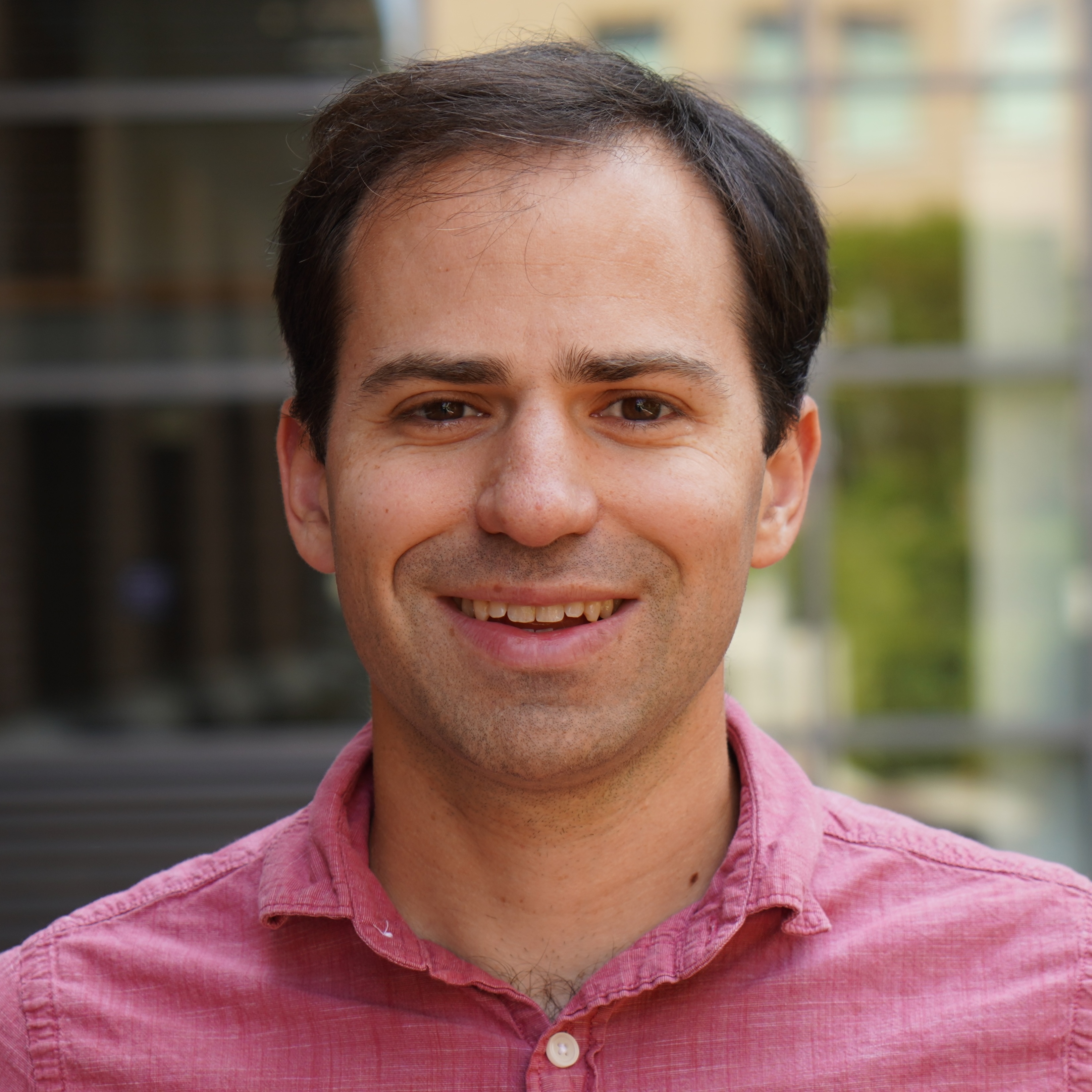
Adam Hollowell is an Adjunct Assistant Professor in the Program in Education at Duke University, where he also serves as Senior Research Associate at the Samuel DuBois Cook Center on Social Equity and Director of the Inequality Studies Minor. His teaching spans ethics, inequality studies, and history across Duke’s Kenan Institute for Ethics, Sanford School of Public Policy, and Department of History. Hollowell holds a Ph.D. from the University of Edinburgh (2009). His research focuses on inequality, higher education, public policy, and ethics, with notable work on pandemic impacts, telemedicine in education, and reproductive health access during crises. In Inequality Studies , Hollowell emphasizes understanding policies to drive social change, as highlighted in recent media coverage. His publications explore topics like student behavior shifts during the pandemic, telemedicine adoption in universities, and James Baldwin’s ethical challenges. He is a finalist for the Judith Deckers Prize (2024). Professionally, Hollowell leads projects such as Bass Connections on college contraception access and Story+ initiatives. His work bridges academia and public engagement, addressing systemic inequities through interdisciplinary approaches.
Herman Barkema is a Professor in Epidemiology of Infectious Diseases at the Faculty of Veterinary Medicine, University of Calgary, with a joint appointment in the Department of Community Health Sciences, Cumming School of Medicine. His research focuses on preventing infectious diseases in cattle herds (e.g., mastitis, Johne’s disease) and antimicrobial resistance, integrating animal and public health perspectives under the One Health framework. He founded the Department of Production Animal Health and leads the AMR – One Health Consortium and CAN-AMR-Net. DVM, Veterinary Medicine, Utrecht University (1988) PhD, Veterinary Science, Utrecht University (1998) His work spans clinical veterinary epidemiology, antimicrobial resistance mechanisms, and zoonotic disease control. He has over 425 publications and collaborates globally, including as a Foreign Expert at China Agricultural University. Recent research trends highlight his focus on multi-omics approaches, ceRNA networks, and antimicrobial stewardship in dairy systems, with significant contributions to Johne’s disease diagnostics and mastitis prevention. Roger Morris ISVEE Award (2024) Plowright Prize (2022) Killam Annual Professorship (2019) Multiple Journal of Dairy Science Most Cited Awards (2011–2024) Fellow, Canadian Academy of Health Sciences (2014) Dr. Barkema supervises graduate students and postdoctoral fellows, emphasizing interdisciplinary mentorship. He co-developed the Veterinary DialogueTrainer for clinical communication training and participates in public engagement initiatives like Breakfast on the Farm. He leads the AMR – One Health Consortium and CAN-AMR-Net, integrating stakeholders across Canada and internationally. His affiliations include the Snyder Institute for Chronic Diseases and strategic initiatives on Infectious Diseases and One Health (2015–2025).
Daniel Epstein is an Associate Professor in the Department of Informatics at the University of California, Irvine (UCI), where he leads the Personal Informatics Everyday (PIE) Lab. He holds a courtesy appointment in the Department of Computer Science and is affiliated with the Connected Learning Lab, Institute for Future Health, and Accessibility Research Collective. Epstein earned his Ph.D. in Computer Science & Engineering from the University of Washington and a B.S. in Computer Science from the University of Virginia. His research focuses on how personal tracking technology can better serve diverse users' needs, emphasizing ethical design, health equity, and long-term user engagement. Notable areas include pregnancy tracking, wearable technology for children and ADHD management, and AI-driven health chatbots. Epstein has received grants from NSF, Snap Inc., and UCI programs, totaling over $650k in funding. Epstein's work bridges HCI and health informatics, with over 60 peer-reviewed publications. He advises six Ph.D. students and has mentored numerous undergraduates. Awards include the ACM Senior Member distinction (2025), CHI Best Paper (2023), and NSF CAREER Award (2023). Professional service includes program committees for CHI, CSCW, and UbiComp, plus leadership roles in workshops like the Workgroup on Interactive Systems in Healthcare (WISH). Beyond academia, Epstein enjoys hiking, collecting turtle figures, and advocating for accessible technology.
Dagfinn Aune serves as a Research Fellow at the Department of Epidemiology and Biostatistics within the School of Public Health, Faculty of Medicine at Imperial College London. He concurrently holds positions as Associate Professor at Oslo New University College and Senior Researcher at the Cancer Registry of Norway in Oslo. His work centers on large-scale epidemiological investigations into diet, obesity, and chronic disease mechanisms across international populations. Education: PhD in Epidemiology, Norwegian University of Science and Technology (2016) MSc in Nutrition, University of Oslo (2008) Research interests focus on the interplay between dietary patterns, adiposity, physical activity, and smoking with chronic disease outcomes. His work examines how these factors influence cancer risk (particularly breast, gastrointestinal, and hematological malignancies), pregnancy complications, diabetes progression, and mortality across diverse populations. He employs systematic review methodologies and analyzes data from major cohorts including EPIC and Norwegian registries. Publication trends reveal consistent emphasis on obesity-cancer relationships, with recent work (2023-2025) expanding into metabolomic mediators, cardiometabolic interactions, and rare cancer epidemiology. His research frequently utilizes systematic reviews, meta-analyses, and multinational cohort studies to establish evidence for cancer prevention guidelines. Scientific Awards: No awards specified in source materials Advising and grant activity centers on major collaborative projects including the World Cancer Research Fund's Continuous Update Project, the EPIC study, and South American case-control research. While specific student mentorship isn't documented, his leadership in systematic review protocols suggests substantial training responsibilities. His grant portfolio includes funding from WCRF International and Norwegian research councils for large-scale epidemiological analyses. Labs and teams include the Centre for Translational Nutrition and Food Research at Imperial College London, where he collaborates with nutrition scientists and biostatisticians. He maintains active roles in the EPIC consortium and WCRF International's CUP Global Programme, coordinating multinational analyses of diet-cancer relationships through the Cancer Registry of Norway.
Aylin Gunes is a Lecturer in the Department of Obstetrics, Gynaecology and Gynaecology Nursing at the Faculty of Health Sciences. Her academic role focuses on clinical nursing education and research within reproductive health domains. Her research interests align with maternal and reproductive health, reflecting her departmental affiliation. While specific publications or projects are not detailed in the provided text, her work likely emphasizes clinical applications in obstetrics and gynaecology nursing.
Emily Hannum is a Professor of Sociology and Education at the University of Pennsylvania's College of Arts & Sciences, where she also serves as Associate Dean for Social Sciences. She is affiliated with the Population Studies Center, Center for the Study of Contemporary China, Graduate School of Education, and Penn Development Research Initiative. Education: PhD in Sociology from University of Michigan (1998) Research Focus: Poverty and child welfare, gender and ethnic stratification, sociology of education Projects: Gansu Survey of Children and Families, climate-environment-childhood inequalities in LMICs Workshops: Co-organizer of Penn Education and Inequality Workshop Her research explores childhood poverty in China, demographic impacts on education systems, and climate risks affecting children's welfare. She investigates environmental hazards, educational disparities, and family separation effects across China, India, and low/middle-income countries. Recent publications analyze educational expansion in East Asia, climate crisis impacts on child health, and gender disparities in Latin America. She directs longitudinal studies on rural poverty and collaborates on cross-national projects related to environmental and educational equity. Scientific awards include the Stanley I. Sheerr Term Professorship in Social Sciences.
Elena Agapie is an Assistant Professor in the Department of Informatics at the Donald Bren School of Information & Computer Sciences, University of California, Irvine. Her research lies at the intersection of human-computer interaction (HCI), health, and behavior change, focusing on designing technologies that support individuals in adopting and maintaining healthy behaviors through human-centered approaches. She is affiliated with the Connected Learning Lab and the Institute for Future Health at UCI. Her educational background includes a PhD in Human Centered Design and Engineering from the University of Washington, an MS in Computer Science from Harvard University, and a BS in Computer Science from Jacobs University Bremen in Germany. She has also conducted research at Microsoft Research, FXPAL, Intel Labs, and NASA Jet Propulsion Lab. Elena's research focuses on designing tools that integrate evidence-based behavioral interventions with user needs, particularly in mental health, chronic disease management, and social support systems. She explores how technology can support therapist-client collaboration, enable tailored health interventions, and leverage crowd expertise for personalized behavior change plans. Her work often involves participatory design, qualitative studies, and prototyping of interactive systems for diverse populations, including youth, hospitalized patients, and underserved communities. Her recent publications, primarily in top-tier venues like CHI and CSCW, reflect a strong trend toward social computing in health, longitudinal behavior support, and the design of inclusive digital health tools. Key themes include goal setting, conversational agents, social sharing in health tracking, and cross-disciplinary collaboration in health technology development. Best Paper Award (top 1%) at CHI 2017 Honorable Mention Best Paper Award (top 5%) at CHI 2016 Best Paper Award (top 1%) at HCOMP 2015 Honorable Mention Best Paper Award (top 5%) at CHI 2013 Elena has been funded by the National Science Foundation, National Institutes of Health, and UCI internal grants. She actively mentors PhD students including Bruna Oewel, Meeshu Agnihotri, and Mehreen Masood, and is currently recruiting students interested in HCI, health, and behavior change. She previously led the outreach program in the HCDE department at the University of Washington, creating workshops that introduced K–12 students to engineering and human-centered design, reaching over 2,000 students across public schools and community events. She runs initiatives to broaden participation in computing and advises undergraduate students in outreach and curriculum development. Her lab collaborates with clinical partners and interdisciplinary teams to ensure real-world impact of her research.
Jillian Bohlen is an Associate Professor at the University of Georgia within the College of Agricultural & Environmental Sciences , specifically the Department of Animal and Dairy Science . Her work focuses on dairy cattle reproduction, teaching, and youth development in agricultural sciences. Education: B.S. in Dairy Science, University of Georgia (2003) M.S. in Dairy Science, University of Georgia (2005) Ph.D. in Animal Sciences, Clemson University (2012) Dr. Bohlen's research emphasizes applied reproduction in cattle , including synchronization techniques, ultrasound applications in reproductive programs, and embryo competency. She integrates students into all research projects despite lacking a formal research appointment. Her teaching interests span dairy cattle production , reproductive management , and contemporary agricultural issues , with courses like ADSC 3620 (Dairy Cattle Production), ADSC 4010 (Issues in Animal Agriculture), and ADSC 4410 (Applied Reproductive Management). Scientific awards include: Student Career Success Influencer Award (2024) Russell Award for Excellence in Undergraduate Teaching (2023) UGA Creative Teaching Award (2022) CAES Early Career Teaching Award (2022) Hoard's Dairyman Youth Development Award (2021) Larry Benyshek Teaching Award (2017) She actively promotes agricultural education through programs like the Commercial Heifer Project , Dairy Cattle Judging , and Dairy Quiz Bowl . Additionally, she participates in funded projects related to methane emissions , heat stress mitigation , and antibiotic alternatives in dairy farming.
London School of Economics and Political Science (LSE)United Kingdom
Eric Schneider is a Professor of Economic History at the London School of Economics and Political Science (LSE), where he has worked since 2015. He serves as Co-Director of the LSE Historical Economic Demography (HED) Group and is a Research Fellow at the Centre for Economic Policy Research (CEPR). His research focuses on health and historical economic demography, including children’s health and growth, early life health outcomes, and fertility differentials in early modern England. He holds a BA in History from the University of Puget Sound, an MPhil in Economic and Social History from the University of Oxford, and a PhD from Nuffield College (Oxford). His research spans topics such as child stunting, nutritional status, and the long-run effects of historical health shocks. Notable projects include analyzing child growth patterns across global contexts and studying the impact of the Second World War on Japanese children’s health. His work frequently employs interdisciplinary approaches, combining historical data with demographic and economic methodologies. Recent publications include studies on smallpox case fatality rates, child health in London’s Foundling Hospital, and the effects of war-induced nutritional stress in Japan. His articles frequently appear in journals like the Journal of Economic Surveys , Population and Development Review , and Explorations in Economic History . Dr. Schneider is involved in academic networks such as the London Universities Population Seminar and teaches courses on economic history, health history, and population dynamics. His work contributes to understanding how historical health and demographic trends shape long-term economic growth and societal development.
Martin T. Wells is the Charles A. Alexander Professor of Statistical Sciences at Cornell University, with joint appointments in the Department of Statistical Science, Department of Biological Statistics and Computational Biology, Department of Social Statistics, and as Professor of Clinical Epidemiology and Health Services Research at Weill Medical School. He serves as Editor-in-Chief of the ASA-SIAM Book Series and Co-Editor of the Journal of Empirical Legal Studies. Cornell University, Ithaca, NY Weill Cornell Medical College Research Interests span applied and theoretical statistics, Bayesian methods, biostatistics, clinical epidemiology, and computational biology. His work bridges disciplines like finance, legal studies, and health services research. Article Trends highlight advancements in Bayesian modeling, quantum cognition machine learning, tensor analysis, and misclassification correction, with applications in genomics, finance, and public health. Fellow of the American Statistical Association Fellow of the Royal Statistical Society Contributions include developing statistical software (e.g., rTensor), methodological innovations in clinical trials, and empirical legal studies on civil rights and the death penalty.
Daniela Iorio is an Associate Professor at the Department of Economics, University of Bologna, and holds a part-time professorship at the European University Institute’s School of Transnational Governance. She specializes in Political Economy, Health Economics, and Public Economics. Her work addresses topics like voting behavior, eating disorders, reproductive health, and parental investments. She earned a Ph.D. in Economics from the University of Pennsylvania and has held positions at institutions including USC, Universitat Autònoma de Barcelona, and the Barcelona Graduate School of Economics. Her research focuses on health policy, behavioral economics, and political institutions. Notable contributions include analyzing the link between eating disorders and addictive behaviors, evaluating IVF success disparities, and developing parenting measurement tools through digital interventions. She has been awarded the 2016 Oliver E. Williamson Prize and the Rita Levi Montalcini grant. Iorio teaches advanced courses on political economy and health economics at the PhD and master’s levels. She directs the Health Economics, Management and Policy master’s program at Bologna and has advised over a dozen graduate students. Her grants include a €758k MIUR project on child development and parental engagement. She serves as an Associate Editor for the European Economic Review and referees for top journals like the American Economic Review .
Craig Davis is a Professor and holds the Bollenbach Chair in Wildlife Management at Oklahoma State University's Department of Natural Resource Ecology & Management. He has been a faculty member since 2001, advancing from Assistant Professor (2001-2007) to Associate Professor (2007-2012), and has served as Bollenbach Chair since 2014. Davis earned his PhD in Wildlife Science from Texas Tech University (1996), an MS from Iowa State University (1991), and a BS from Ohio State University (1988). He is also a Certified Wildlife Biologist through The Wildlife Society. His research focuses on avian ecology, wetland restoration, and gamebird management, with specific interests in fire-grazing interactions, invertebrate communities, and climate change impacts on ecosystems. Key areas include grassland bird survival, wetland classification systems, and the effects of anthropogenic development on wildlife habitats. Davis actively collaborates with conservation organizations and agencies, addressing challenges like invasive species management and water infrastructure resilience. Teaching responsibilities include undergraduate courses on Wildlife Management Techniques and Wetland Ecology, as well as graduate courses like Advanced Wetland Ecology. His grants emphasize wetland restoration outreach, climate adaptation strategies, and studies on northern bobwhite and wild turkey populations. Notable projects include evaluating cellular transmission technology in wildlife monitoring and assessing the impact of extreme weather on gamebird survival. Grants (Selected): Expansion of potential wetland restoration opportunities in Oklahoma (2024-2027) Linking Research and Stakeholder Engagement for Wetland Conservation (2024-2026) Effects of Extreme Weather and Hunting on Northern Bobwhite (2023-2025) Research Themes: Aligns with UN Sustainable Development Goals 15 (Life on Land), 13 (Climate Action), 6 (Clean Water), 11 (Sustainable Cities), 14 (Life Below Water), and 9 (Industry/Infrastructure).
Rachel Morley is an Associate Professor at the School of Slavonic and East European Studies (SSEES), University College London. She holds a BA in French Language and Literature from the University of Oxford (1992), followed by BA, MA, and PhD degrees from UCL (1999, 2001, 2011). Her roles include Academic Director of Education and Student Experience at SSEES (2022–2027) and Co-Convenor of the UCL SSEES Cinema Research Group. Dr. Morley's research focuses on Cinema studies Cultural studies Feminist and queer theory Literary studies with emphasis on Soviet/Russian cinema, gender representation, and film historiography. She held a Leverhulme Trust Research Fellowship (2020–2022) for her project on female subjectivity in contemporary Russian cinema. Her teaching spans Russian cinema, poetry, language, and translation. Past roles include Postgraduate Teaching Assistant at SSEES (1999–2009) and lecturer at the University of Cambridge (2006, 2008). She has also supported international students as SSEES International and Affiliate Tutor (2014–2018). Key Achievements: Leverhulme Trust Research Fellowship Fellow of the Higher Education Academy (2016) Her work bridges film, literature, and cultural history, emphasizing underrepresented narratives and feminist perspectives in Russian and Soviet cinema.
Susan L. Burns is a Professor at the University of Chicago, where she holds appointments in the Department of History, Department of East Asian Languages and Civilizations, and The College. She currently serves as Department Chair and Chair of the Undergraduate Studies Committee. Education: PhD, University of Chicago (1994) Her research focuses on Japan’s nineteenth-century social history, emphasizing intellectual and cultural practices, the intersection of medicine and public health, gender analysis, and legal discourses. She explores continuities between Japan’s early modern and modern eras, particularly how medical and legal frameworks shaped national identity. Recent publications span leprosy’s impact on citizenship, the rise of medical marketplaces, and gendered dimensions of reproductive health. Her digital humanities work on Mapping Medical Tokyo integrates GIS and text mining for historical analysis. Scientific Awards: Fulbright-Hays Fellowship IIE Fulbright Japan Foundation Japan Society for the Promotion of Science National Endowment for the Humanities She has secured grants for research on medical commodities, psychiatric practices, and the spatial dimensions of Meiji-era health policies. Her courses include Gender and Japanese History and Medicine and Culture in East Asia .
Laura Elo serves as Professor of Computational Medicine and Head of the Medical Bioinformatics Centre at the University of Turku, Finland. She concurrently holds the position of Research Director at Turku Bioscience Centre and acts as InFLAMES Flagship Contact, driving interdisciplinary biomedical research initiatives. Her academic foundation includes a PhD in Applied Mathematics (2007) and Adjunct Professorship in Biomathematics (2011), establishing her quantitative expertise before transitioning into biomedical applications. Her research program focuses on transforming molecular and clinical datasets through statistical modeling and advanced machine learning . Key thrusts include robust computational tools for proteome/epigenome analysis, AI-driven digital health diagnostics, and computational systems immunology for immune-mediated diseases. This work directly addresses challenges in reproducibility and scalability of high-throughput biotechnology data. Analysis of her recent publications reveals dominant themes in type 1 diabetes biomarker discovery , multi-omics integration , and immune system modeling , with strong emphasis on clinical translation through collaborations with experimental and medical teams. Her scientific recognition includes: JDRF Career Development Award Professor Elo actively trains MSc/PhD students and postdoctoral fellows while leading major research initiatives including ERC grants. Her teaching portfolio spans Bioinformatics Journal Club, AI in Diagnostics, and Systems Biology courses. The Elo Lab (https://elolab.utu.fi) operates as a hub for computational biomedicine, developing open-source tools like CellRomeR while maintaining close ties with Turku Bioscience Centre's experimental facilities for validating computational predictions in immunology and metabolic disease contexts.